Brand Equity in Professional Services: B2B Operational Guide
Most mid-market professional services firms treat their brand as a creative wrapper—a collection of logos, colour palettes, and polished website copy designed to look acceptable in a pitch deck.
This approach treats the brand as an expense line rather than an asset.
In reality, brand equity dictates whether a 100-person consulting practice, law firm, or engineering consultancy can command a 20% fee premium over local competitors or find itself forced into a margin-diluting price war during procurement tenders.
Brand equity is not a feeling, a logo, or a late-stage corporate luxury. It is a measurable operating asset that reduces client acquisition friction, defends profit margins, improves account retention, and compounds business valuation over time.
However, it delivers these commercial advantages only when executive leadership manages it with a focus on tangible business outcomes rather than superficial marketing metrics.
When a professional services firm prepares for a strategic growth phase, market repositioning, or an M&A liquidity event, unmanaged brand perception becomes a direct financial liability.
Understanding how brand equity accumulates (and where it degrades) is the difference between selling a firm on a standard revenue multiple and securing an enterprise valuation driven by sustainable pricing power.
To evaluate where your firm stands, conducting structured brand audits provides the diagnostic foundation needed to identify commercial leakage before entering a repositioning phase.
- Brand equity is an operating asset, not mere visual identity; managed by leadership to improve fees, retention and valuation.
- Core mechanics: market presence, risk premium and client inertia create fee realisation, reduced acquisition friction and account continuity.
- Common failures: partner silos, commodity positioning, strategic drift gradually erode brand equity and depress margins.
- Rebuild framework: focused audits, sharpened positioning, codified IP and governance can restore pricing power within 6 to 18 months.
- Measure brand via commercial metrics: fee realisation, unsolicited RFPs, win rates, client concentration and retention.
What Is Brand Equity?
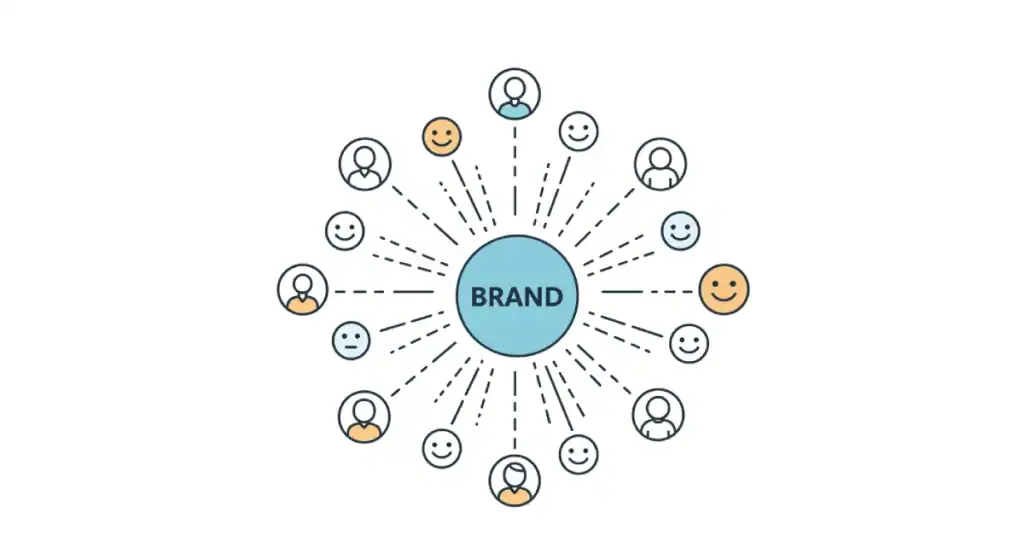
Brand equity is the commercial value a business generates from customer perception, awareness, and trust, distinct from the functional value of its underlying services.
Positive brand equity allows a firm to command higher fees, lower client acquisition costs, and secure greater client lifetime value than an unbranded or generic competitor.
The core mechanics of brand equity rest on three structural pillars:
- Market Presence and Consideration: The degree to which target buyers spontaneously recall and respect the firm when a strategic need arises.
- Risk Premium and Fee Defence: The willingness of corporate buyers to pay higher rates to minimise the operational risk of project failure.
- Client Inertia and Retention: The psychological and operational trust that prevents existing clients from testing the market during annual fee reviews.
Ultimately, brand equity measures the financial and operational advantage a business holds simply because of who it is perceived to be.
Why Brand Equity Matters for Professional Services Leadership
Managing a professional services practice employing 50 to 200 people requires balancing partner productivity, talent retention, and fee realisation.
In this environment, brand equity directly influences the firm’s income statement and balance sheet.
When a firm lacks distinct brand equity, every partner operates as an isolated sales channel.
Pitch win-rates fluctuate based on individual charisma, fee proposals are routinely challenged by client procurement teams, and client acquisition relies heavily on expensive, time-consuming business development cycles.
- High perceived institutional safety
- Standard rate cards approved without challenge
- Shortened sales cycles and direct procurement sign-off
- High personal risk for internal sponsor
- Routine fee discounting and budget challenges
- Extended due diligence and stalled negotiations
According to a 2026 econometric analysis of brand value, a $1 increase in brand value is associated with a $1.76 increase in company turnover and a $0.16 increase in net income. Brand equity actively expands both top-line revenue and bottom-line efficiency.
Furthermore, empirical data from Nielsen demonstrates that a 1-point gain in core brand metrics—such as corporate awareness and consideration—drives a direct 1% increase in sales. Nielsen’s research also reveals that marketing and brand positioning account for 10% to 35% of a business’s total brand equity.
In mid-market professional services, brand equity operates through three specific commercial levers:
1. The Mitigation of Buyer Risk
Corporate buyers of legal, financial, or strategic advice are fundamentally risk-averse. Selecting an unknown or poorly positioned firm poses a personal professional risk to the buyer’s internal sponsor. A recognised, authoritative brand eliminates this perceived risk, accelerating the deal flow and bypassing prolonged procurement challenges.
2. Fee Realisation and Inelasticity
Firms with established brand equity do not negotiate their rate cards down during competitive proposals. Because the market perceives their institutional expertise as distinct, buyers display lower price sensitivity. Research published by Kantar in their BrandZ analysis confirms that high-equity brands maintain significantly greater pricing power, as corporate clients willingly accept higher fee structures when the brand clearly justifies its value proposition.
3. Enterprise Value in M&A Transactions
For equity partners eyeing a partial sale, private equity recapitalisation, or full acquisition, unmanaged brand equity represents lost transaction value. Data from Kantar shows that brand value accounts for an average of 32% of total company value among leading corporate entities.
When a professional services firm relies entirely on the personal relationships of three founding partners, an acquirer will discount the valuation multiple due to key-person dependency. Conversely, institutional brand equity transfers cleanly to new owners, securing a higher earnings multiple.
“Brand equity in professional services is the institutionalisation of trust. If your firm’s commercial reputation vanishes the moment a senior partner leaves the room, you do not own a brand—you own an expensive co-working agreement.”

The Four Components of B2B Brand Equity
To manage brand equity as an operating asset, executive leadership must break the concept down into its four constituent functional components. Each component plays a distinct role in translating market perception into financial returns.
| Pillar | Core Mechanism | Commercial Outcome |
|---|---|---|
| 1. Perception Inelasticity | Prompted & unprompted market recall | Shortened RFP shortlisting; lower outbound sales costs. |
| 2. Institutional Reputation | Enterprise trust over partner dependency | Protection against key-person attrition; account continuity. |
| 3. Perceived Excellence | Specialized domain authority | 15–30% higher fee realization; zero procurement discounting. |
| 4. Client Retention | Embedded operational relationships | 25%+ profit boost via reduced client churn. |
1. Brand Perception and Inelasticity
Brand perception in B2B markets differs fundamentally from consumer recognition. It is not about universal fame; it is about absolute clarity within a defined target market segment.
A 100-person commercial litigation firm in Manchester does not need consumer-level recognition. It requires 100% prompted awareness among general counsel at FTSE 250 corporations facing regulatory disputes.
High market consideration ensures the firm is placed on every relevant RFP shortlist without requiring expensive, outbound business development campaigns.
2. Institutional Reputation vs. Personal Relationships
In low-equity firms, client loyalty belongs exclusively to the individual fee-earner. If a key partner departs, the client account follows them.
High brand equity shifts client allegiance from the individual practitioner to the enterprise. The firm builds institutional reputation by codifying its strategic methodologies, intellectual property, and service delivery standards. The corporate brand serves as the guarantor of quality, ensuring account stability through partner transitions.
3. Perceived Excellence and Fee Differentiation
Perceived quality governs a firm’s pricing ceiling. When a business fails to articulate a distinct market positioning, buyers default to evaluating the firm on billable hours or day rates—reducing complex professional services to a commodity transaction.
A firm with high brand equity grounds its positioning in a clear, specialised domain authority. According to BCG market research, strong B2B brands achieve 74% higher marketing ROI and secure 46% higher market share than their weaker competitors. This market dominance allows high-equity firms to structure fees around outcome-based value rather than commoditised time tracking.
4. Client Retention and Systematic Expansion
Acquiring a new corporate client requires substantial expenditure across executive time, pitch development, and legal onboarding. Brand equity protects these early investments by institutionalising client retention.
Landmark research by Bain & Company demonstrates that a 5% increase in customer retention increases overall profits by more than 25%. Strong brand equity creates structural inertia: existing clients remain with the firm because switching introduces administrative friction, uncertainty, and perceived operational risk.
Where Professional Services Firms Destroy Their Own Brand Equity
Most mid-market professional services firms do not suffer from a catastrophic brand crisis. Instead, their brand equity quietly degrades over time through incremental missteps, internal fragmentation, and lack of governance—a process known as brand decay.
| Erosion Misstep | Root Cause | Financial Impact |
|---|---|---|
| Partner Silos | Individual partner positioning overrides firm brand | Diluted market trust; capped enterprise valuation multiple. |
| Commodity Positioning | Generic “full-service” messaging dilution | Severe fee discounting; prolonged sales negotiation cycles. |
| Strategic Drift | Chasing misaligned, short-term revenue | Elevated client churn; eroded margin quality. |
Brand Equity as an Aesthetic Layer
The most common mistake made by Managing Directors is treating brand equity as a visual design update. A firm notices declining pitch win-rates and responds by commissioning a new logo or tweaking its website colour scheme, leaving its underlying positioning, service design, and market strategy untouched.
Visual identity is merely the visual container for brand equity; it is not the equity itself. Refreshing graphic assets without clarifying the firm’s core positioning is like repainting a vehicle with a broken engine. It looks updated in the driveway, but it fails to perform when pushed on the road.
Partner-Led Positioning Fragmentation
In many 50- to 200-person practices, individual partners run isolated fiefdoms. Partner A markets the firm as a high-end strategic boutique; Partner B pitches the practice as a cost-effective, high-volume delivery partner; Partner C uses obsolete marketing decks from five years prior.
This structural fragmentation confuses the market and destroys brand equity. When three partners describe the firm’s core value proposition differently during the same client procurement process, the client correctly infers a lack of internal alignment. Corporate buyers punish this ambiguity by demanding price concessions or selecting a better-aligned competitor.
Chasing Misaligned Revenue
During market downturns or sudden budget contractions, firms often panic and accept work outside their primary domain of expertise. A specialised IT transformation firm begins taking on low-margin desk-side support contracts; a high-end corporate tax practice starts handling basic bookkeeping.
While this tactical pivot produces short-term cash flow, it permanently degrades brand equity. It dilutes the firm’s market positioning, confuses existing corporate clients, and burdens fee-earners with low-margin work. Over time, the market re-categorises the firm from a specialised authority to a generic, low-cost vendor.
To prevent this erosion, firms must regularly reference a B2B brand audit checklist to systematically identify where brand consistency and positioning are failing across operational touchpoints.
Rebuilding Brand Equity Ahead of an M&A Exit
To understand how brand equity behaves as an operating asset, consider the real-world scenario of a mid-market UK technology consultancy preparing for a transaction.
- Proprietary IP codified
- Collateral standardized
- Category research published
- Fee realization secured
- Key-person risk decoupled
- Expanded M&A exit multiple
The Baseline Scenario
An 80-person IT management consultancy based in Leeds generates £14 million in annual turnover with £2.1 million in EBITDA. The firm intends to bring in a private equity partner within 18 months.
However, an initial audit reveals significant structural brand vulnerabilities:
- 65% of annual revenue is tied directly to the personal relationships of two founding partners.
- The firm markets itself broadly as a “full-service digital transformation partner,” competing against global consultancies with far greater scale.
- Pitch win-rates sit at 28%, and client procurement routinely negotiates a 15% discount off standard rate cards.
- The firm’s enterprise valuation is capped at an estimated 6x EBITDA multiple (£12.6 million) due to key-person exposure and commoditised market positioning.
The Strategic Brand Equity Rebuild
The leadership team initiates an 18-month program to systematically transform its brand from a generic service provider into a defensible operating asset:
- Sharpening the Market Positioning: The consultancy drops its generic “full-service” messaging and repositions exclusively around legacy systems migration for UK financial institutions.
- Codifying Institutional IP: The firm packages its proprietary migration process into a named, structured methodology. The sales conversation shifts from selling billable developer hours to deploying an institutionalised, risk-managed solution.
- Establishing Category Thought Leadership: The firm publishes rigorous, data-driven research detailing system failure rates during banking migrations, positioning its leadership team as authoritative industry experts.
- Enforcing Brand Architecture Governance: All partner-led presentation decks, pitch proposals, and client deliverables are standardised around unified visual assets and explicit value messaging.
The Commercial Outcome
By month 18, the commercial metrics reflect a transformed brand equity profile:
- Pitch win-rates increase from 28% to 48% within the financial services sector.
- Rate card discounting drops to zero; the firm commands a 20% fee premium based on its specialised domain authority.
- Key-person dependency drops significantly as corporate clients buy into the firm’s proprietary methodology rather than individual partners.
- During M&A negotiations, private equity suitors compete actively for the business. The firm secures a 9.5x EBITDA multiple on an expanded £3.2 million EBITDA, delivering a final enterprise valuation of £30.4 million—more than double its baseline figure.
The Operating Asset Paradigm
The prevailing view across corporate marketing departments holds that brand equity is a qualitative, long-term byproduct of marketing spend. Corporate leaders are told to invest in broad brand awareness campaigns and wait patiently for sentiment to improve over time.
This traditional framework fails in B2B environments because it decouples marketing expenditure from commercial performance.
| The Traditional View | The Operating Asset Paradigm |
|---|---|
| Abstract marketing luxury | Quantifiable balance sheet asset |
| Measured by vanity impressions | Measured by fee realization & win-rates |
| Focuses on visual graphics updates | Focuses on positioning & domain IP |
| Delegated strictly to marketing staff | Governed directly by executive leadership |
| Cost-center budget model | Capital investment multiplier model |
The sharper, highly defensible framework is to treat brand equity as an active operating asset that must be managed with the same analytical rigour as property, plant, and capital investments.
Data from Gartner’s 2024 CMO Spend Survey indicates that overall marketing budgets contracted to 7% of total company revenue in 2024, down from 9.1% in 2023. In an era of reduced budgets and rising financial scrutiny, marketing expenditures can no longer be justified by vanity metrics such as social impressions, website traffic, or design accolades.
Furthermore, HubSpot’s 2026 State of Marketing Report reveals that 61% of marketing executives identify artificial intelligence as the single largest operational disruptor over the past two decades. As AI tools flood digital channels with automated, generic content, the market value of unpositioned, generic corporate messaging drops to zero.
Distinct, verifiable brand equity—grounded in proven domain authority, proprietary intellectual property, and real-world client case evidence—becomes the primary defensible barrier against commoditization for professional services firms.
Executive leadership must evaluate brand equity through clear operational metrics:
- Fee Realisation Percentage: The variance between standard rate cards and final collected fees.
- Unsolicited Inbound RFP Rate: The proportion of pitch opportunities generated without direct outbound business development costs.
- Proposal Win-Rate Efficiency: The percentage of formal tenders won against competitive peer groups.
- Client Concentration Risk: The degree to which a firm’s revenue depends on top fee-earners rather than institutional accounts.
Managing brand equity requires executive management to know precisely how to conduct a brand audit across all client touchpoints, ensuring that internal operational reality matches external market perception.
Overcoming Key B2B Leadership Objections
When proposing a brand equity overhaul, Managing Directors and Senior Partners frequently encounter two major internal objections. Addressing these concerns directly with empirical evidence is essential for securing partner consensus.
Objection 1:
“Our business is built strictly on personal relationships and referrals. A brand overhaul will not change that.”
Response: Personal relationships trigger the initial conversation, but institutional brand equity closes the deal and defends the fee structure. While a senior partner’s personal network opens doors, corporate procurement teams, board members, and risk committees ultimately approve the engagement.
If the firm’s corporate brand appears outdated, ambiguous, or generic during executive due diligence, the buyer’s internal sponsor faces elevated personal risk. Institutional brand equity validates the partner’s personal relationship, providing the organisational credibility required to sign high-value contracts without rate-card discounting.
Objection 2:
“We cannot afford to narrow our positioning—we will lose out on general service opportunities.”
Response: Broad positioning does not capture more market share; it dilutes buyer trust and reduces pitch win-rates. Corporate buyers rarely hire a generalist firm to resolve complex, mission-critical challenges.
By sharpening your positioning around specialised domain authority, your firm moves from a crowded pool of interchangeable vendors to a dominant position within a defined market sector. Specialised positioning drives higher conversion rates, eliminates fee discounting, and creates a defensible market position.
“A professional services firm that attempts to stand for everything to everyone ultimately represents nothing of distinct value to anyone. Broad positioning is simply commoditisation disguised as opportunity.”
The Verdict
Brand equity is not an abstract design exercise or a discretionary marketing expense. For mid-market UK professional services firms, it is an operating asset that dictates pricing power, client acquisition costs, partner alignment, and enterprise valuation.
Firms that treat brand equity as a visual layer will continue to experience squeezed margins, extended sales cycles, and rate discounting during competitive tenders.
Conversely, executive teams that systematically measure, manage, and defend their brand equity as capital build a resilient commercial enterprise capable of commanding market-leading fees and elevated transaction multiples.
The Single Action to Take Today
Before committing capital to new business development hires, website redesigns, or marketing campaigns, assess where your firm is losing commercial ground.
Request a structured Brand Equity Audit™ at Inkbot Design Brand Audits.
This rigorous diagnostic identifies positioning gaps, evaluates market perception against commercial reality, and provides a clear operational roadmap to build lasting brand value.
For firms seeking to accelerate their market impact, reviewing our dedicated resource on building brand equity offers immediate strategic clarity.
FAQs
What is brand equity in B2B professional services?
Brand equity in B2B professional services is the commercial value a firm derives from market perception, authority, and trust. It enables a practice to command higher fee rates, lower client acquisition costs, improve retention, and secure higher earnings multiples during corporate acquisitions compared to generic, unbranded competitors.
How does brand equity differ from brand value?
Brand equity refers to the customer perceptions, associations, and behavioural loyalty that create competitive advantage. Brand value is the specific financial valuation of that asset on a balance sheet. Brand equity is the operational cause; brand value is the quantifiable financial effect.
Can a B2B firm build brand equity without large advertising budgets?
Yes — B2B brand equity is built through sharp market positioning, proprietary intellectual property, authoritative thought leadership, and consistent client delivery. Specialised domain expertise and targeted market presence create significant B2B brand equity without relying on expensive, consumer-style advertising campaigns.
How does strong brand equity protect fee realisation?
Strong brand equity reduces perceived buyer risk and establishes clear domain authority. When corporate clients perceive a firm as a specialised market expert, they exhibit lower price sensitivity, enabling the firm to defend its standard rate card and avoid margin-diluting procurement discounts.
What is the fastest way to destroy brand equity in a professional services firm?
The fastest way to destroy brand equity is partner-led messaging fragmentation and taking on misaligned work outside the firm’s core positioning. When individual partners communicate conflicting value propositions or accept low-margin, generic engagements, market perception dilutes and pricing power erodes.
How does brand equity impact firm valuation during an M&A exit?
Brand equity increases enterprise valuation by institutionalising client loyalty and reducing key-person dependency. Acquirers pay higher earnings multiples for firms whose revenue streams are secured by a recognised corporate brand and proprietary methodologies rather than personal partner relationships.
Is a logo redesign sufficient to rebuild brand equity?
No — a logo redesign updates only the visual identity container. Rebuilding brand equity requires sharpening core market positioning, standardising service delivery methodologies, aligning partner messaging, and ensuring operational execution consistently delivers on the brand’s commercial promise.
How long does it take to measure tangible returns from a brand equity overhaul?
Initial commercial improvements—such as higher proposal conversion rates and reduced rate-card discounting—typically emerge within 6 to 9 months of strategic execution. Full financial returns, including increased client retention and elevated enterprise valuation, compound over an 18 to 24-month horizon.
What role does client retention play in brand equity?
Client retention is a primary financial indicator of brand equity. High brand equity creates institutional trust and operational inertia, reducing churn. According to Bain & Company research, a 5% increase in retention can boost overall company profitability by more than 25%.
How do you measure B2B brand equity accurately?
B2B brand equity is measured through key commercial indicators: fee realisation rates, unsolicited inbound proposal requests, pitch win-rates, client retention metrics, rate-card elasticity, and the proportion of firm revenue decoupled from individual partner networks.
