How to Preserve SEO Equity During a Rebrand
The two top-ranking guides for this term both open the same way: implement your 301 redirects.
Both are correct, and both bury what actually decides whether your SEO survives the relaunch.
A 301 is like a lorry that moves cargo from one address to another. It has no decision on whether the cargo still makes sense when it arrives, or whether the proof that earned trust is still on the page.
That judgement is part of the real rebranding process, and it is where equity is won or lost.
Google is pretty clear that permanent 301 and 308 redirects do not (on their own) cause PageRank loss.
That single fact is misread across most rebrand content as “redirects preserve equity. They don’t.
Google itself is equally clear that a redirect does not mean the new page automatically keeps the old page’s rankings, traffic or conversion rate. The redirect protects the pipe. Something else has to protect the meaning flowing through it.
- Permanent 301 and 308 redirects transfer link signals but do not guarantee rankings; they protect transport, not the meaning.
- Lock identity before launch: same services, same people, retained proof and corroborating profiles; entity continuity decides ranking survival.
- Map every old URL to a specific new URL; use one-to-one 301s, avoid blanket redirects, and retain them for at least one year.
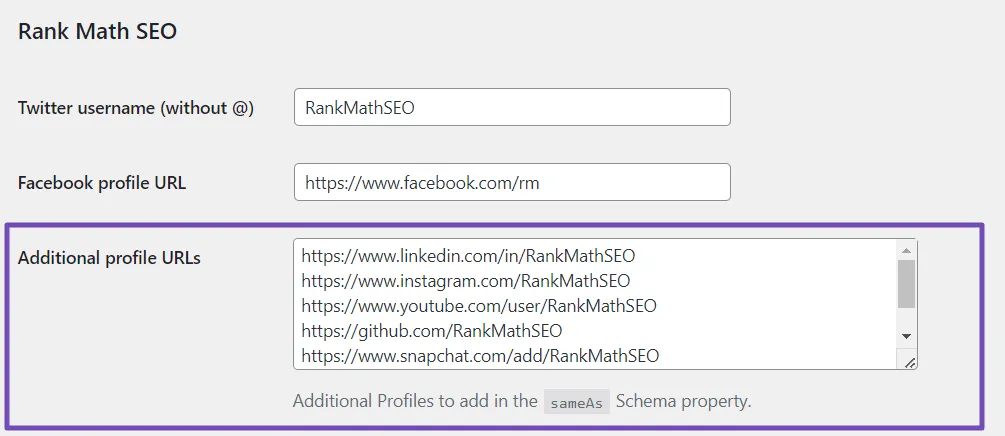
- Update Organisation schema and third-party profiles in the same window, using sameAs links to corroborate the new identity.
- Before any redirects, complete a full URL inventory, decide which content survives, and resolve the new brand identity.
How SEO Equity Survives a Rebrand
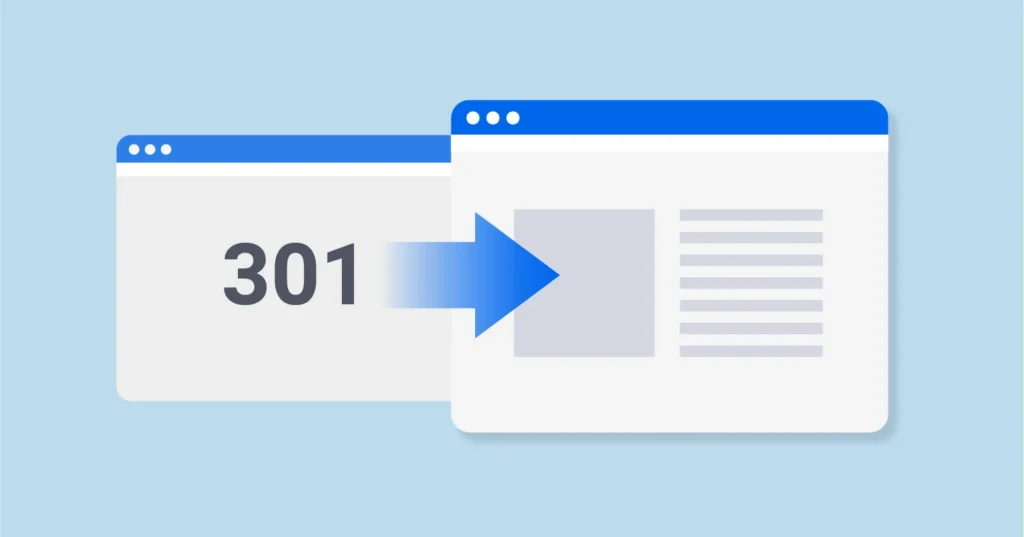
SEO equity survives a rebrand when permanent 301 redirects transfer link signals to matching new URLs, retained for at least a year. At the same time, consistent identity signals confirm to Google that the organisation behind the new name is the same real-world entity.
Redirects handle the transport. Entity continuity handles the trust.
- Google recommends permanent server-side redirects (301 or 308) for any URL-changing site move, and says these do not cause PageRank loss.
- Google recommends retaining those redirects for at least a year, and longer where possible, so it can recrawl old URLs and reassign signals from external links that still point to them.
- A redirect transfers a technical signal between URLs, but cannot resolve a changed offer, contradictory external profiles, or deleted proof.
Preserving SEO equity during a rebrand requires that permanent 301 redirects be retained for at least one year, alongside consistent entity signals confirming the organisation remains unchanged.
Why “Clean” Rebrand Migrations Still Lose Rankings
A technically flawless migration can still lose rankings because Google is not only remapping URLs but also redeciding whether the entity is one it already trusts.
Redirects and canonical tags are strong signals in Google’s systems; a sitemap entry is a weak one.
So a company can submit a perfect XML sitemap, implement clean one-to-one 301s, and still watch positions slide when the new name, the new services page, and the old LinkedIn company profile tell three slightly different stories about who this business is.
301s work; they are Google’s own recommendation, and thousands of migrations succeed on their strength. That is true.
The gap is that those migrations succeed when the entity beneath the URLs stayed coherent: same services, same people, same proof, same corroborating profiles.
When a rebrand changes both the offer and the name, the redirect does its job perfectly, and the rankings still move because the thing being ranked has changed. The URL map was never the risk.
“A 301 redirect indicates that two URLs point to the same page. It is not a promise that two brands are the same business. Google resolves the second question separately, using signals that a redirect cannot carry — and that is the question a rebrand actually asks.”
For firms treating the name change as the strategic event rather than the technical one, the sequencing in a proper rebranding equity strategy matters more than any single redirect rule.
What Has to Be True Before You Touch a Single Redirect
Three conditions must hold before migration, and most guides skip all three because they aren’t technical.
First, a complete URL inventory of the old site, so every page that holds a link or ranks for anything has a mapped destination. Nothing gets dropped to a 404.
Second, a decision, made deliberately, about which content survives and which retires; retiring a page that earns enquiries is a self-inflicted wound.
Third, a resolved brand identity: the new name, the new positioning, and the new service definitions locked before launch, not discovered during it.
That third condition is the one firms underestimate. If three partners still describe the firm in three different ways the week you relaunch, no redirect will resolve that for Google.
It is identity readiness, and it gates everything downstream. Getting the rebrand timeline right means treating identity as a hard dependency rather than a parallel workstream.
The Technical Stages, in Order
The technical stages are sequenced, and the order is load-bearing: skip ahead, and a later stage inherits a broken assumption from the one you rushed.
Map every old URL to one new URL before launch.
One-to-one 301 redirects are the baseline: every old URL points to its closest new equivalent, not a blanket redirect to the homepage.
Blanket homepage redirects tell Google the old page has no specific successor, and the ranking signals dissipate.
Where a page genuinely retires with no equivalent, redirect it to the most relevant surviving page – never let it 404.
Google states permanent redirects do not cause PageRank loss, so the value transfers if the mapping is specific.
Cover www, non-www, and subdomain variants.
In June 2026, Google updated its site-move guidance to clarify that a rebrand involving a domain move must account for the www and non-www versions, as well as any relevant subdomain versions, rather than merely the preferred canonical hostname.
Equity leaks through overlooked technical edge cases, not only through high-profile page redirects.
You can redirect every content URL perfectly and still lose signals because the old non-www variant resolves to nothing.
Submit the change of address and the new sitemap in Search Console.
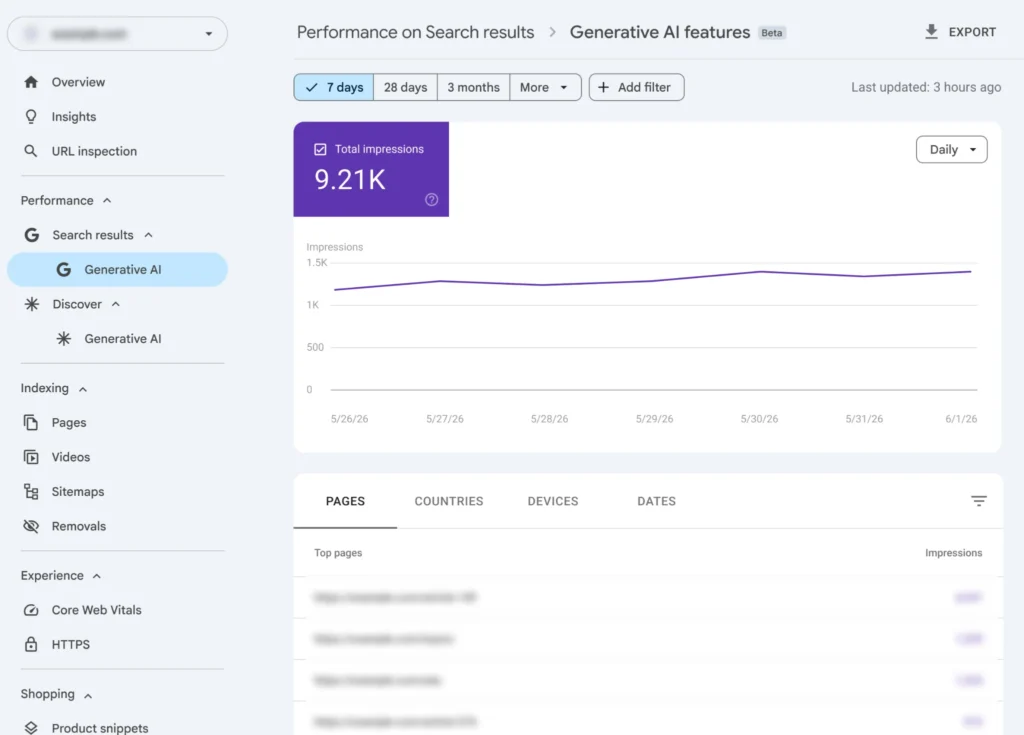
Verify both old and new domains in Google Search Console, submit the change-of-address request from the old domain, and upload the new sitemap.
Treat the sitemap as an assist, not the mechanism: Google calls sitemap inclusion a weak canonicalisation signal, so it speeds discovery but does not confer equity.
For a medium-sized site, Google says recognising the URL changes may take a few weeks; larger sites take longer – Ours took several months.
Update the schema and the third-party profiles together.
Update Organisation schema on the new site with the new name, domain and social links, and update the external profiles (Google Business Profile, directories, citations) in the same window.
Google’s Organisation markup supports multiple “sameAs” references to external profiles, giving a structured way to connect the new site to the identity sources that already corroborate it.
This is the hinge between the technical stages and the entity work below.
Where Redirects Stop and Judgement Starts: The Entity-Continuity Layer
Here is the reframe the two ranking guides miss: everything above is transport, and transport is the easy part.
The hard part is keeping Google’s (and now AI systems) understanding intact that the organisation behind the old name, domain, services, people, proof and reputation is the same real-world entity after the change.
That is not a redirect task. It is an identity task, and a 301 cannot help it.
Consider what a redirect cannot fix.
- It cannot resolve a confused brand identity in which the new positioning contradicts the retained content.
- It cannot reconcile contradictory third-party profiles, where an old directory still lists the former name and the new site claims another.
- It cannot restore lost authorship signals when the named people who wrote the trust-building content vanish from the new bylines.
- And it cannot undo a wholesale deletion of proof: the testimonials, case studies and credentials that told Google and buyers this firm was real and competent.
Delete those in the redesign, and the redirect faithfully transports a page that has lost the evidence of its own authority.
“Redirects preserve the address. Entity continuity preserves the belief that the same trustworthy business still lives there. Skip the second, and you will migrate a perfectly redirected ghost — technically correct, commercially hollow, and slowly forgotten by the systems that used to recommend you.”
One practical consequence for anyone auditing a live site: if you have rebranded already and traffic is weak despite clean redirects, stop re-checking the redirects. They’re rarely the fault.
The break is in the people, the proof, or the profiles, and it’s fixable when you stop staring at the URL map.
What AI Search Changed About Preserving SEO Equity
AI search has moved the task from maintaining rankings to maintaining a coherent, verifiable identity wherever a search system assembles an answer about your brand.
Google reported that AI Overviews had surpassed 2.5 billion monthly active users by May 2026, and AI Mode had surpassed 1 billion monthly active users.
Your rebrand is now being read not only by a ranking algorithm but also by systems that synthesise a description of your business from whatever they can corroborate across the web, and contradictory profiles give them contradictory material to synthesise.
In the Pew Research Centre’s analysis of browsing data from 900 US adults, people clicked a traditional result in 8% of visits where an AI summary appeared, versus 15% where none did; links cited within the AI summary were clicked in just 1% of such visits.
It’s US consumer data, not UK B2B, but the mechanism travels: when an AI answer is present, far fewer people click through to the site at all. So being the brand that the AI names correctly and cites is worth more than it was, not less.
The sceptical reader’s fair objection: this is speculative future-proofing, and I have a migration to ship next month. It isn’t speculative.
The sameAs markup, the consistent external profiles, and the retained proof that defend your AI-era identity are the same actions that defend classical rankings. You are not doing extra work; you are doing the existing work with the correct understanding of why it matters.
Measuring whether it worked now means watching brand-name recognition and citation, not sessions alone; the fuller picture of how to measure rebrand success has to account for answers a buyer sees but never clicks.
Start With the Entity, Not the URL Map
The redirect map is the part everyone gets right and the part that was never at risk.
Preserving SEO equity in a rebrand is an entity-continuity project: the redirects transport the signal, but the coherence of your identity (same services, same people, same proof, same corroborating profiles) is what Google and AI systems actually re-evaluate when the name changes.
Get the identity locked before launch, keep the proof, force all external profiles into a single story, and retain the redirects for at least a year while Google reassigns the signals.
Do one thing today: before you brief a single redirect, write down the one-sentence description of your firm that the new site, your LinkedIn profile, and your Google Business Profile will all have to match. If you can’t write it, or the three won’t match, that is your real migration risk... not the URLs.
Request a free Brand Equity Audit™, and we’ll identify exactly where your brand is losing commercial ground and what to do about it before you relaunch.
FAQs
How long should you keep 301 redirects after a rebrand?
Google recommends retaining permanent 301 redirects for at least one year after a site move, and longer where possible. That interval lets Google recrawl the old URLs, process the redirects, and reassign signals from external links that still point to the former pages. Removing those early strands that equity.
Do 301 redirects cause you to lose SEO equity?
No — Google states that 301 and other permanent redirects do not cause PageRank loss. But a redirect that transfers a link signal does not guarantee that the new page retains the old page’s rankings, traffic, or conversions. The redirect protects the technical signal; brand and content coherence protect the ranking.
Why did my traffic drop after a rebrand despite clean redirects?
Because Google re-evaluates the entity, not just the URLs, if your new positioning, retained content, and external profiles describe the business inconsistently, or you deleted proof and authorship signals during the redesign, rankings can drop even as every redirect works perfectly. The URL map was never the actual risk.
What is the difference between a redirect project and an entity-continuity project?
A redirect project maps old URLs to new ones so that link signals transfer. An entity-continuity project ensures that Google and AI systems still recognise the same real-world organisation — the same services, people, proofs, and profiles — after the name change. Redirects are the transport layer; entity continuity is the trust layer.
Does a rebrand affect how AI Overviews describe my business?
Yes — AI systems assemble descriptions from signals corroborated across the web, so contradictory profiles after a rebrand give them contradictory material. With Google AI Overviews having past 2.5 billion monthly users by May 2026, a confused entity risks the AI naming an outdated or inconsistent version of your firm to buyers who never click through.
When should I update my Google Business Profile and citations during a rebrand?
Update them in the same window as your on-site schema and redirects, not weeks later. Consistent identity signals across the new site, Google Business Profile and directories confirm to Google — via sameAs markup — that this is one continuous entity. A lag between updates is where contradictory profiles appear and equity leaks.
