Rebranding ROI: You Cannot Preserve What You Never Measured
Most rebrands do not destroy brand equity. They redesign something nobody had measured, and then everyone argues about what happened to it.
That is the actual condition of rebranding ROI in professional services. A Managing Partner signs off £120,000 across identity, website, signage and stationery, launches in March, and by the following March is being asked by the board whether it worked.
The honest answer is that nobody can say, because nobody recorded what the brand was worth in February. The rebrand did not lose the equity. The measurement never existed.
The stakes are documented. PwC and Brand Finance, analysing 614 rebranding campaigns between 2022 and 2025, found a 38% failure rate — rebrands that missed positive ROI. The failures were attributed to strategy and execution, not to the act of rebranding.
That distinction matters more than it first appears: it means the rebrand is rarely the thing that fails. The absence of a strategy that could be measured against is.
Before committing budget, most firms need to settle when and how to rebrand — but the measurement question sits upstream of even that decision.
- Measure brand equity before launch: without a pre-launch baseline, post-launch ROI is an assertion, not a calculation.
- Baseline and track the four constructs: awareness, perceived quality, associations, loyalty; remeasure at 12 and 18 months.
- Muzellec and Lambkin show aesthetic change moves least; instrument partner narrative consistency and referral-network recall.
- For professional services the equity group is nameable: clients, referrers, partners; produce a one-page equity register before the design brief.
Rebranding ROI Is a Pre-Launch Measurement, Not a Post-Launch Calculation

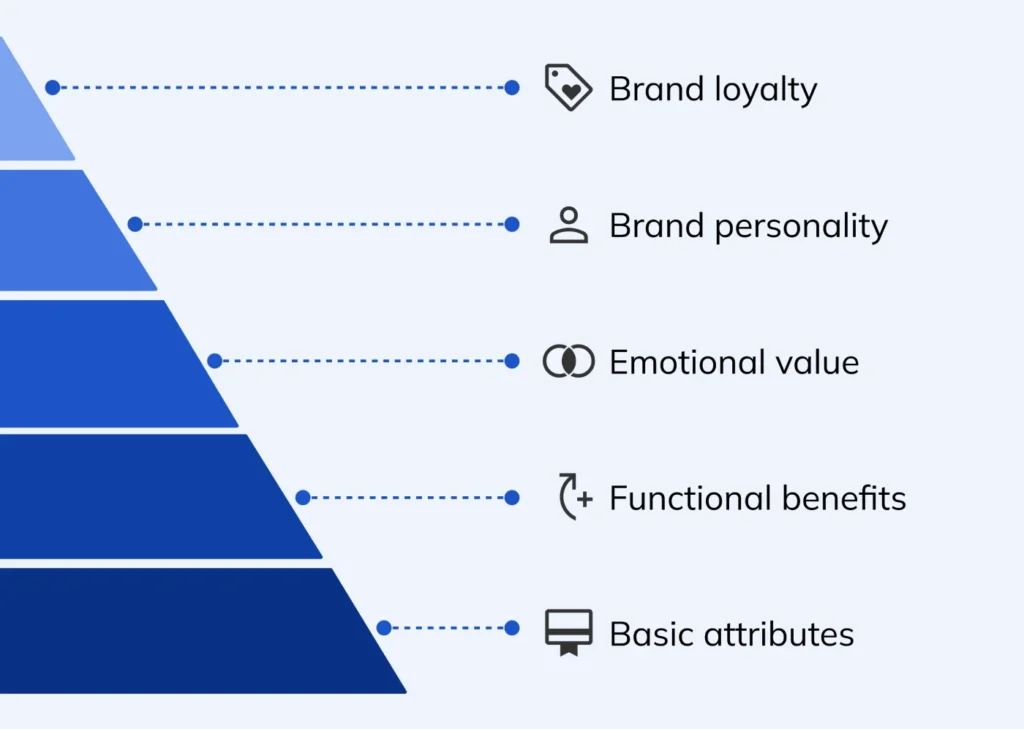
Rebranding ROI is determined by whether brand equity was instrumented before the rebrand launched. Without a pre-launch baseline of awareness, perceived quality, brand associations and loyalty, the post-launch figures have nothing to be compared against, and any ROI claim is an assertion rather than a calculation.
- PwC and Brand Finance’s analysis of 614 rebranding campaigns (2022–2025) attributed a 38% failure rate to strategy and execution rather than to rebranding itself.
- Marques et al., writing in the Journal of Business Research (2020), demonstrated that pre- and post-rebranding equity constructs — awareness, perceived quality, associations, loyalty — can be measured and tracked across a rebrand.
- Adrenaline’s ROI of Rebranding report, cited in the ABA Banking Journal (2025), found banks that rebranded achieved 13.6% compound annual growth versus a 7.4% industry average — a figure that only means anything because the comparison population was defined in advance.
Rebranding ROI requires baselining brand equity — awareness, perceived quality, associations, loyalty — before launch, then remeasuring at 12, 18 and 24 months.
The Case for Measuring After Launch Is Stronger Than It Sounds
The prevailing approach — define objectives, launch, then measure against them — is not stupidity. It is a rational response to three real constraints.
The first is cost sequencing. A partnership that has just approved £120,000 for identity work does not want to hear that a further £15,000 of baseline research is required before a single design file opens. The research feels like overhead on overhead.
The second is that the objectives genuinely are clearer afterwards. Luth Research’s six-step framework — set goals, establish baselines, implement tracking, analyse, calculate, adjust — is followed most often in the order 1, 3, 4, 5.
Baselining gets skipped because at the point it should happen, the firm is still arguing about whether the rebrand is a name change or a repositioning. You cannot baseline a target you have not agreed.
The third is that it appears to work. Adrenaline’s research reports that 83% of financial institutions saw business growth after rebranding, with named cases: Everwise Credit Union recording 0.3% attrition against 2% anticipated, Bravera reporting 30%+ growth since its 2021 launch.
Those are real outcomes at named organisations. A Managing Partner reading them concludes, reasonably, that rebrands work and the measurement is a formality.
Intelligent people hold this position because the counterfactual is invisible and the case studies are loud.
The Turn: Aesthetic Change Is Not Where the Equity Moves
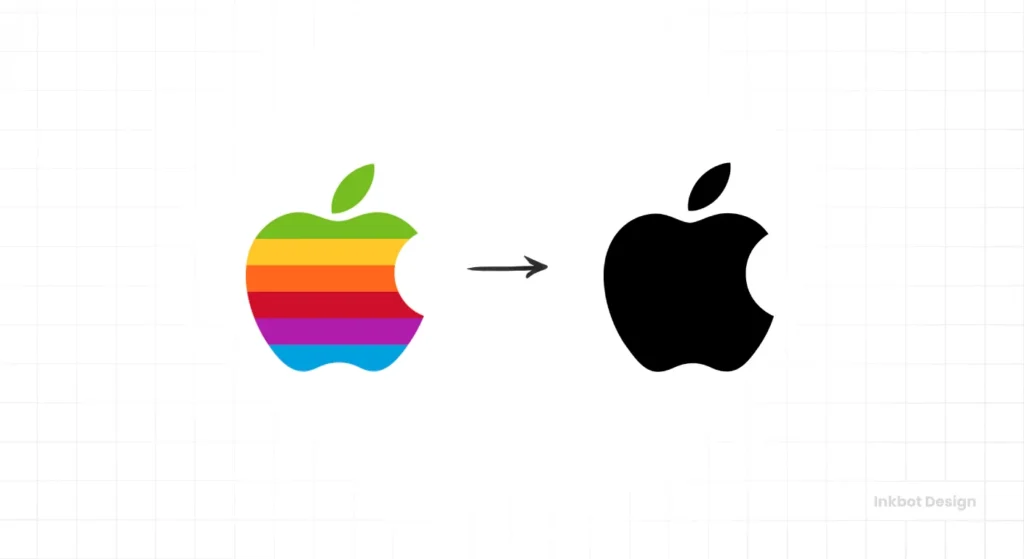
Muzellec and Lambkin, in Corporate Rebranding: Destroying, Transferring or Creating Brand Equity? (Journal of Brand Management, 2006), studied 166 rebranded companies and found that changes in marketing aesthetics — logo, colours, visual system — affect brand equity less than employee behaviour and strategic alignment do.
Read that against what firms actually measure. The post-launch dashboard tracks logo recognition, website traffic, social engagement, awareness lift. Every one of those instruments points at the aesthetic layer. Muzellec and Lambkin’s finding says the aesthetic layer is the part that moves least.
So the standard measurement apparatus is calibrated to the wrong variable. It will report a signal, and the signal will be broadly flat, because the thing being measured was never the thing that was going to change.
Meanwhile the variables that do carry equity — whether the partners describe the firm the same way in a pitch, whether the referral network still knows what to send you, whether a 15-year client feels the firm they hired still exists — go uninstrumented in both directions.
“A rebrand that fails is almost never a rebrand that destroyed something. It is a rebrand that redesigned an asset nobody had counted, launched it into a market nobody had surveyed, and then invited a board to judge the result against a memory. The equity did not erode. It was never on the balance sheet to begin with.”
Adrenaline’s banking data cuts the same way.
The 13.6% CAGR against 7.4% is a real comparison, but it is a comparison between a population that chose to rebrand and a population that did not. Firms with the capital, confidence and strategic clarity to commission a rebrand are already firms on a different trajectory.
The rebrand may be a marker of that condition rather than its cause. Nobody who cites that statistic addresses the selection effect. It is still the strongest number in the category — which tells you how thin the category is.
The Implication for Professional Services Firms: Your Equity Is Nameable

Here is what makes this specifically a professional services problem, and specifically a solvable one.
Every article on rebranding ROI is written about consumer brands or retail banks — populations of hundreds of thousands, measurable only through survey panels and awareness studies costing five figures.
In a 50–200-person professional services firm, the population that holds your brand equity is a list. It is the 60 clients who account for 70% of fee income.
It is the 20 referral sources — the corporate finance boutiques, the accountants, the two barristers’ chambers — who send you work. It is the 14 partners who describe the firm to prospects.
You can name every one of them. You can survey them in three weeks for the cost of one senior associate’s week.
This is the asymmetry nobody exploits. The retail bank in Adrenaline’s dataset needs a panel study to measure brand associations. A 12-partner tax practice needs 34 phone calls.
The measurement problem that makes rebranding ROI genuinely hard for consumer brands is, for this reader, an administrative task they have decided not to do.
The cost of not doing it is specific. Twelve months after launch, when fee income is up 6%, the partnership will split into two camps: those who credit the rebrand and those who credit the two lateral hires from January. Both camps will be arguing from anecdote.
There is no evidence that settles it, because the evidence had to be collected before March and was not. The £120,000 becomes permanently unauditable, which means the next brand investment gets argued on faith and usually gets cut.
What to Instrument Before Launch
Marques et al. (Journal of Business Research, 2020) establish four constructs that survive a rebrand and can be measured on both sides of it: awareness, perceived quality, brand associations, and loyalty. For a professional services firm, each has a concrete instrument.
Awareness: unprompted recall among your named referral network. Ask 20 referral sources to list three firms they would send a specific matter type to. Record position, not just presence.
Perceived quality: the fee premium you currently sustain against the two firms you most often lose to on price. This is already in your data.
Associations: ask 15 clients to complete “I’d describe [firm] as the sort of firm that…” in one sentence. Record verbatim. The variance across responses is the measurement — and if your 14 partners produce 14 different sentences, you have found your rebrand’s actual job.
Loyalty: client retention by cohort year, plus the proportion of new work arriving from existing clients versus cold. Available from your practice management system this afternoon.
None of this requires an agency. All of it requires doing it before the design starts.
“Your brand equity is not mystical, and in a professional services firm it is not even large. It is roughly 90 people — clients, referrers, partners — who hold a set of associations you have never written down. You can call all 90 of them in a fortnight. The reason firms do not is that the answers would constrain the rebrand, and most rebrands are commissioned to be liberating.”
The Best Objection: “We Already Know What Our Brand Stands For”
The strongest counter-argument is that a partnership of 14 people who have worked together for a decade already knows the firm’s positioning, and formalising it into constructs is consultancy theatre.
Sometimes true. And testable in one meeting: ask each partner to write, independently and without discussion, the one sentence they use to describe the firm to a prospect who has never heard of it. Collect the sheets.
If they broadly agree, the objection holds and you can proceed with a light baseline. If they do not, you have just discovered that the thing you were about to redesign was never a shared asset.
The second objection is harder: baseline research delays the rebrand by two months, and we launch in Q1. That one is real. The answer is not that two months does not matter.
It is that a rebrand without a baseline is not a £120,000 investment — it is a £120,000 expense, because an investment is a thing whose return can be established.
If the board would not accept “we cannot say” as an answer on a capex decision, it should not accept it here.
Where This Stands Now: Rebranding Became Recurring, Measurement Did Not
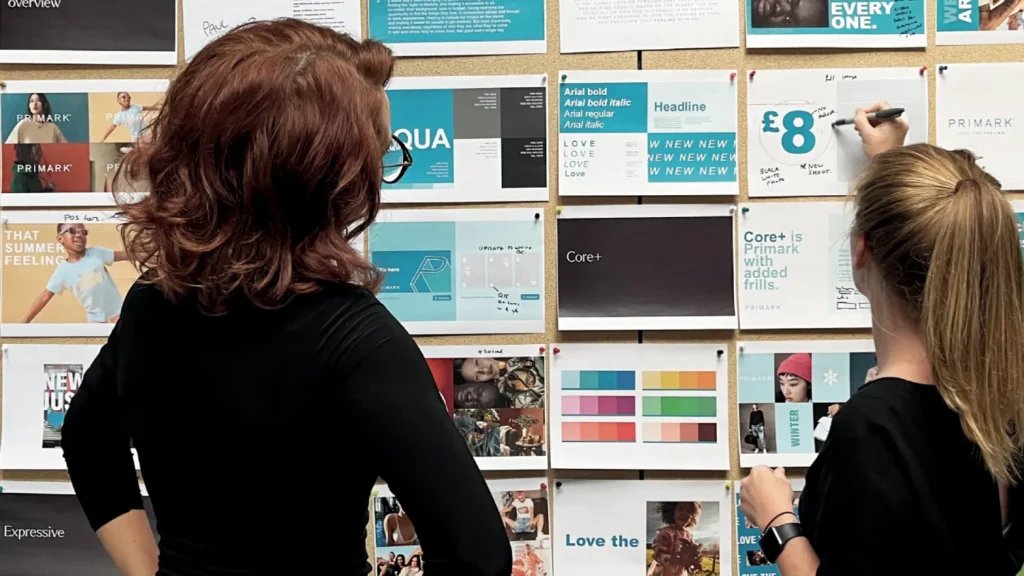
Rebranding shifted from a rare event to a recurring strategy.
Trend analysis through 2025 identifies three drivers: renewing visual identity for digital platforms, aligning brand narrative with consumer values around sustainability, inclusion and purpose, and building emotional connection with engaged communities.
The emphasis moved toward evolving a brand’s essence rather than changing logos and colours, with direct customer involvement through surveys, polls and co-creation entering the creative process itself.
That last development is quietly significant. If customers are being surveyed during the creative process, the instrument for baselining them already exists in the workflow. Firms are conducting the research and using it as design input rather than as a measurement baseline. The data is being collected and thrown away.
The academic position has firmed up alongside it. Brand Equity Retention After Rebranding: A Resource-Based Perspective (Journal of Brand Management, 2022) frames equity retention as a strategic challenge in contexts such as divestitures and spin-offs — settings where equity must be actively transferred rather than left to decay.
Equity is treated as a resource with a transfer plan, not an atmosphere that hangs around the logo.
A 2025 study of retail brand MO9’s repositioning, based on 333 consumer responses, found that more positive perceptions of the brand’s evolution produced higher trust and purchase intention, with attitude and trust partially mediating the relationship.
The mechanism is legible: perception shifts precede behavioural change, which means perception is the leading indicator you can measure before revenue confirms or denies it.
Sector examples from 2025 show the same pattern.
A plant-based food brand adopted a playful, family-oriented identity with purpose-led packaging to signal category fit. A digital bank repositioned as a catalyst for sustainable regional development, shifting tagline and narrative together.
Both tied the rebrand to business strategy rather than aesthetics — which is exactly the context where measuring equity preservation matters most, and exactly where the measurement apparatus remains pointed at the logo.
The Default Approach and What It Costs
| The Default Approach | What It Costs | The Better Approach | Why |
| Baseline established at launch minus one week | A snapshot with no trend line — you cannot separate rebrand effect from market drift | Baseline 12 months of the four constructs before launch | Variance data, not a single point, is what makes the post-launch delta legible |
| Measure logo recognition and awareness lift | Instruments the variable Muzellec and Lambkin (2006) found moves least across 166 companies | Measure partner narrative consistency and referral-network recall | The aesthetic layer is not where professional services equity sits |
| ROI = revenue delta ÷ rebrand cost | Attributes every commercial change in the period to the rebrand, including lateral hires and market movement | Isolate the equity constructs and track them separately from revenue | Perception is the leading indicator; revenue is confounded |
| Survey clients as design input during the creative process | Collects the exact baseline data, then discards it after the design decision | Retain the same instrument and re-run it at 12 and 18 months | The research cost is already sunk — only the reuse is missing |
| Judge the rebrand at 6 months | Adrenaline’s framework runs awareness studies at 12, 18, 24 and 36 months for a reason | Set the review at 18 months with a 12-month interim | Perception change precedes revenue change by quarters, not weeks |
| Compare to industry growth averages | Ignores selection effects — firms that rebrand are already firms with capital and clarity | Compare to your own pre-rebrand trend line | You are the only valid control group you have access to |
Equity Blindness, Not Equity Erosion
The consensus says rebrands risk destroying brand equity, and the risk must be managed through careful post-launch measurement.
Intelligent practitioners hold this because they have watched rebrands go visibly wrong — Gap in 2010, Tropicana in 2009 — and concluded the danger lies in the change itself. Studying what rebranding failures actually reveal tends to reinforce that reading.
The evidence does not support it as a general rule.
PwC and Brand Finance’s 614-campaign analysis attributes the 38% failure rate to strategy and execution, not to the act of rebranding. Muzellec and Lambkin’s 166 companies show the aesthetic change — the part everyone fears — is the part that moves equity least.
Set those two findings side by side and the standard story collapses. Rebrands that fail do not fail because something valuable was broken. They fail because there was never a strategy specific enough to measure against, and therefore no way to detect the failure until it appeared in the fee income eighteen months later.
The failure is upstream. It is pre-rebrand equity blindness: proceeding without an inventory of what the brand currently is, held by whom, worth how much, and evidenced how.
A firm in that condition cannot preserve equity because it has no register of what to preserve. It cannot destroy equity either, in any provable sense. It can only redesign, and then narrate.
The replacement directive is unambiguous. Before the design brief is written, produce a one-page equity register: the four constructs from Marques et al. (2020), each with a named instrument, a named owner, a current reading, and a re-measurement date at 12 and 18 months.
If a construct cannot be given a reading, that is the finding — you have located the blindness, and it is now on paper where the board can see it.
In 17 years of brand work, the pattern I see most often is that the firms most anxious about losing brand equity are the ones with the least documentation of ever having had any.
The Verdict
The question was never whether your rebrand will destroy brand equity. It is whether you can currently produce a document stating what that equity consists of, who holds it, and what it reads today.
If you cannot, the rebranding ROI conversation you will have in eighteen months is already decided: it will be an argument between people with different memories, and the person with the most conviction will win it. That is not measurement. That is politics with a spreadsheet attached.
What the evidence establishes is narrower and more useful than the consensus. PwC and Brand Finance’s 614 campaigns locate failure in strategy and execution. Muzellec and Lambkin’s 166 companies locate equity movement outside the aesthetic layer entirely.
Marques et al. establish that the four constructs are measurable on both sides of a rebrand. Together they describe a discipline that is entirely available and almost never practised — and for a 60-client, 20-referrer, 14-partner firm, one that costs a fortnight of phone calls rather than a panel study.
Rebranding ROI is not a calculation you run afterwards. It is a decision you make before the design brief exists, about whether this will be an investment or an expense. Everything after that is arithmetic.
The action today: write the equity register. Four constructs, four instruments, four current readings, four owners. One page. Do it before you brief anyone.
If you would rather have that register produced for you, request a free Brand Equity Audit™ from Inkbot Design — a written diagnostic identifying exactly where your brand is losing commercial ground before you spend anything on changing it. No sales call, delivered in 48 hours.
For the wider strategic picture, see Inkbot Design’s rebranding services for professional services firms.
For worked cases on both sides of the outcome, see rebranding examples with documented results and the distinction between rebranding and renaming.
FAQs
What is rebranding ROI?
Rebranding ROI is the measurable return generated by a brand change, calculated by comparing pre-launch brand equity readings against post-launch readings across awareness, perceived quality, associations and loyalty. Without a pre-launch baseline, rebranding ROI cannot be calculated — only asserted.
Why do most rebrands fail to deliver positive ROI?
PwC and Brand Finance analysed 614 rebranding campaigns between 2022 and 2025 and found a 38% failure rate, attributed to strategy and execution rather than to rebranding itself. The failure is upstream: no strategy specific enough to measure against, so no way to detect drift early.
How do you measure brand equity before a rebrand?
Marques et al. (Journal of Business Research, 2020) identify four measurable constructs: awareness, perceived quality, brand associations and loyalty. For a professional services firm, instruments include unprompted recall surveys among named referral sources, sustained fee premium against price competitors, verbatim client association statements, and retention by cohort year.
What’s the difference between equity erosion and equity blindness?
Equity erosion means measurable brand value declined after a change. Equity blindness means no measurement existed before the change, so no decline can be demonstrated or ruled out. Most rebrands described as destroying equity are cases of equity blindness — the register never existed.
Is it true that changing a logo damages brand equity?
No — Muzellec and Lambkin, studying 166 rebranded companies in the Journal of Brand Management (2006), found that changes in marketing aesthetics affect brand equity less than employee behaviour and strategic alignment do. The logo carries less equity than most boards fear.
When should a professional services firm measure rebranding ROI?
Baseline before the design brief is written, then remeasure at 12 and 18 months, with a further reading at 24 months. Adrenaline’s framework, reported in the ABA Banking Journal (2025), runs awareness studies at 12, 18, 24 and 36 months post-launch.
How much does pre-rebrand equity baselining cost?
For a firm of 50–200 people, the measurable population is roughly 60 significant clients, 20 referral sources and the partner group — a nameable list. The work amounts to structured phone calls and existing practice-management data, typically one senior person’s fortnight rather than a commissioned panel study.
Do the banking rebrand statistics apply to professional services firms?
Partially. Adrenaline’s finding that rebranded banks achieved 13.6% CAGR versus a 7.4% industry average, reported in the ABA Banking Journal (2025), is a comparison between self-selected populations. Firms that rebrand already have capital and strategic clarity, so the growth may reflect that condition rather than the rebrand.
What should a brand equity register contain?
Four constructs — awareness, perceived quality, associations, loyalty — each with a named instrument, a named owner, a current reading, and a re-measurement date. One page. Any construct that cannot be given a reading is itself a finding and should be recorded as unmeasured.
How long before a rebrand shows up in revenue?
Perception change precedes behavioural change. A 2025 study of retail brand MO9’s repositioning, based on 333 consumer responses, found positive perception of brand evolution produced higher trust and purchase intention, with attitude and trust partially mediating. Perception is the leading indicator; revenue confirms it quarters later.
Can brand equity be transferred rather than rebuilt?
Yes — Brand Equity Retention After Rebranding: A Resource-Based Perspective (Journal of Brand Management, 2022) frames equity retention as a strategic challenge in divestitures and spin-offs, where equity must be actively transferred. Equity behaves as a resource with a transfer plan, not an atmosphere surrounding a logo.
Why do firms survey clients during a rebrand but not measure ROI?
2025 trend analysis identifies direct customer involvement through surveys, polls and co-creation entering the creative process. That research is used as design input and then discarded rather than retained as a baseline. The data is collected; only the reuse is missing.
