Rebranding vs Renaming: Which Strategy Does Your Firm Need?
Misjudging the choice between updating a corporate moniker and shifting market positioning destroys institutional equity. This guide establishes an equity-first framework for UK professional services firms, outlining when to execute an isolated corporate rename versus a comprehensive strategic rebrand to protect fee premiums and market share.
 By Stuart Crawford
 Reviewed by Tabitha Ayers
Updated 10 min read

On this page10 min left
- Which Identity Option Should Your Firm Choose?
- The Honest Criteria That Govern Your Identity Choice
- Brand Renaming: Tactical Nomenclature Changes
- Strategic Rebranding: Layered Corporate Repositioning
- Corporate Identity Decision Framework for UK Professional Services Practices
- The Superficial Refresh Trap: Why Cosmetic Changes Subvert True Identity Value
- An Equity-First Stance: Deploying the Brand Equity Audit™ Before Identity Deployment
- Balancing Nomenclature Evolution and Strategic Market Positioning
- Frequently asked questions
Managing partners frequently mistake a market positioning failure for a nomenclature problem.
A mid-sized professional services firm faces growth stagnation, notes a dip in pitch conversion rates, or discovers that prospects confuse its corporate identity with regional competitors.
The immediate executive impulse is often to demand an immediate name change, operating under the assumption that a fresh moniker will automatically reverse declining client acquisition metrics.
This narrow focus on verbal terminology overlooks the underlying causes of market friction. Deploying corporate capital toward a structural name change without identifying the cause of the disconnect leads to fragmented client communication and squandered marketing budgets.
McKinsey & Company research demonstrates that strong B2B brands outperform weak-branded competitors by 20% in total shareholder return. Achieving that corporate premium requires separating your verbal nomenclature assets from your broader commercial strategy.
To build long-term market authority, leadership teams must distinguish between changing a legal moniker and overhauling a corporate identity.
Knowing when to rebrand requires a quantitative assessment of your firm's existing market assets. Businesses must align their outward identity with their operational capabilities to capture measurable value.
For organisations seeking specialised advisory support, partnering with an expert corporate identity restructuring service provider ensures that structural shifts preserve historical goodwill while opening new avenues for institutional client acquisition.
Which Identity Option Should Your Firm Choose?
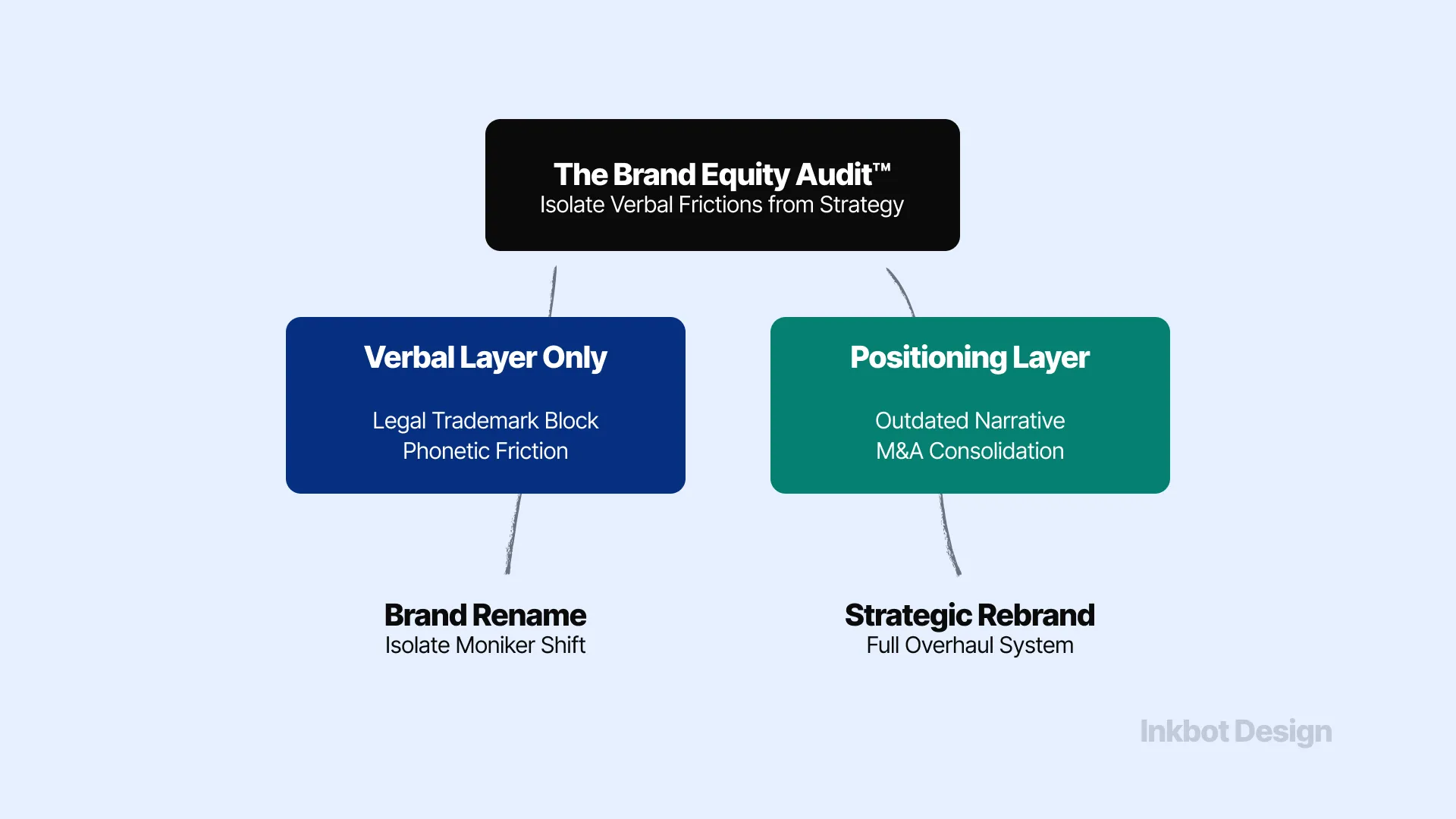
Choose a corporate rename exclusively when the verbal moniker causes direct legal trademark conflicts or insurmountable phonetic friction that actively blocks transactions.
Choose a strategic rebrand when your underlying business model, target audience, or market positioning shifts, requiring an overhaul of how your organisation communicates its specialised expertise.
- Renaming modifies the legal and verbal anchor of an organisation while leaving the core market positioning, corporate culture, and service architecture completely unchanged.
- Rebranding redefines the entire commercial promise, digital infrastructure, client delivery experience, and visual system to align with forward-looking corporate growth targets.
- Evaluating corporate identity through data-driven diagnostics preserves historical market equity. It prevents the misallocation of growth capital on superficial visual updates.
Renaming changes a company's legal nomenclature, whereas rebranding alters the underlying market positioning, visual identity system, and corporate client experience.
The Honest Criteria That Govern Your Identity Choice
Mid-market B2B organisations cannot afford to alter their identity based on internal boardroom consensus or executive intuition. Selecting the correct operational intervention requires assessing objective market realities and strategic growth parameters.
Does Legal Trademark Foreclosure Force a Name Change?
Trademark infringement risks represent an absolute trigger for a corporate rename. Legal trademark foreclosure occurs when an existing brand legally blocks your organisation from expanding into new geographical territories or digital service lines.
For example, an eleven-partner Edinburgh advisory practice discovered an active trademark conflict when opening a London branch, forcing an immediate verbal transition to avoid litigation.
When legal exclusivity is unavailable in target markets, maintaining the historical moniker becomes a systemic operational liability. Legal conflict represents an explicit mandate for an isolated corporate rename rather than a wider strategic overhaul.

How Does the Share-of-Search Metric Predict the Need for an Identity Shift?
Tracking the digital share of search metrics indicates whether an organisation is losing market relevance or experiencing simple verbal friction.
A 2025 trend brief notes that modern corporate brand teams track the share of search and AI-retrieval visibility alongside conventional brand health data to monitor digital discoverability.
When public search volumes for a specific firm decline despite stable industry demand, the commercial bottleneck points directly to positioning misalignment rather than an unappealing corporate name.
Digital discoverability data reveals whether your organisation requires deep structural repositioning or a localised nomenclature modification.
Does Post-Acquisition Integration Require a Corporate Structural Overhaul?
Corporate consolidation in the professional services sector requires proactive alignment of brand architecture before transaction finalisation to maintain institutional client trust.
The 2025 trend brief confirms that mid-market acquisition and roll-up activity now drives more B2B rebrand inquiries than isolated corporate repositioning.
For instance, when a 150-person engineering consultancy acquires regional practices, retaining multiple legacy names dilutes corporate market authority and fragments operational messaging.
Strategic identity alignment ensures that the newly consolidated corporate entity retains maximal market share and commands premium fee rates post-transaction.
Why Partner Preferences and Subjective Design Tastes Must Be Ignored
Subjective stylistic preferences and internal partner opinions carry zero statistical validity when assessing corporate identity requirements.
Lucidpress and Demand Metric research demonstrate that consistent brand presentation across all client touchpoints correlates with revenue growth of 23% to 33%.
Allowing individual partner consensus to dictate identity parameters results in diluted corporate positioning that fails to attract institutional buyers.
Data-backed market metrics and external client insights must override internal boardroom debates about aesthetics during identity assessments.
Brand Renaming: Tactical Nomenclature Changes
Altering a business's verbal anchor is a high-friction legal and operational process. It must be treated as a targeted tactical intervention designed to clear specific transactional bottlenecks.
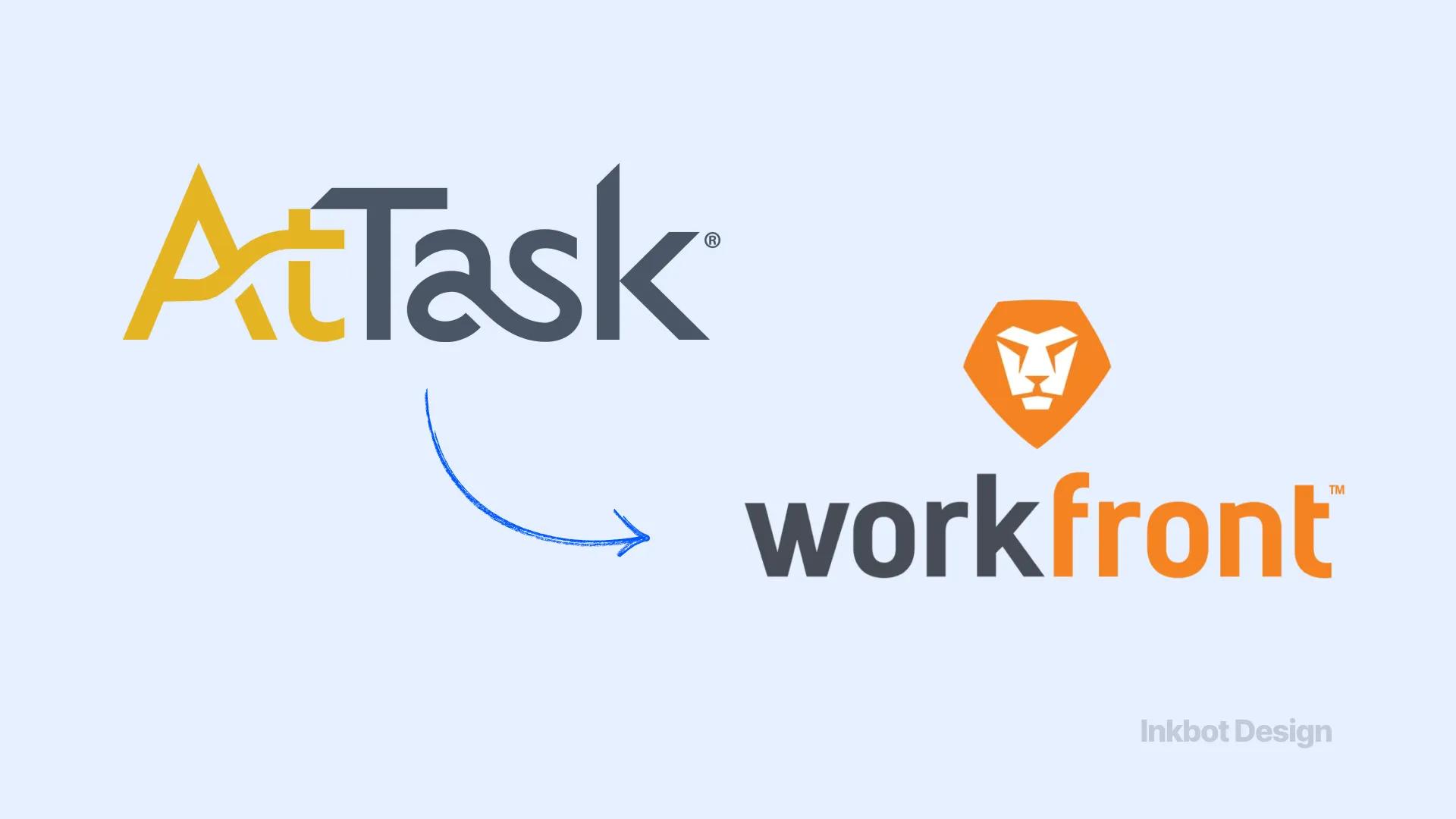
What Is the Primary Strategic Function of a Corporate Rename?
A corporate rename alters the verbal asset of an organisation while keeping the visual identity system, service delivery, and market positioning intact.
Industry data from identitymakers.co indicates that a localised name change costs between £2,500 and £10,000 per market, successfully avoiding the massive indirect costs associated with a full digital asset overhaul.
This technical modification works well for firms addressing clear-pronunciation issues, unspellable founder names, or regional constraints. Isolating the corporate name change allows an organisation to resolve explicit verbal friction without disrupting broader operational frameworks.
Where Does an Isolated Corporate Name Change Fail?
Changing a corporate name fails when the underlying business challenge is a broken operating model, outdated capabilities, or a damaged market reputation.
Edelman's 2025 trust research reveals that corporate trust operates as a critical purchase driver alongside cost and quality in B2B procurement decisions.
Introducing a new name to an unchanged, poorly positioned firm creates immediate buyer scepticism among institutional procurement heads. Moniker updates cannot fix deep-seated operational deficiencies or structural communication failures.
Strategic Rebranding: Layered Corporate Repositioning
When an organisation must realign its outward appearance with its modern operational reality, a comprehensive structural intervention becomes necessary. This process addresses the commercialisation of expertise.

What Commercial Benefits Does a Comprehensive Corporate Rebrand Deliver?
A strategic rebrand transforms how a professional services organisation presents its collective intelligence, proprietary methodologies, and market authority to corporate buyers.
Independent research from McKinsey & Company shows that firms with highly developed corporate branding outperform weak competitors by 20% in total shareholder return.
This operational process includes rewriting core market messaging, rebuilding enterprise digital infrastructure, and aligning internal culture with new growth targets.
Reviewing documented rebranding examples illustrates how corporate entities successfully realign their market appearance with changing buyer demographics. A systematic identity transformation turns a dated professional practice into an aggressive, clearly differentiated market leader.
Where Do Corporate Rebranding Initiatives Frequently Fail to Deliver Value?
Corporate rebranding initiatives fail to generate positive financial returns when management treats the project as a superficial graphic design exercise instead of an operational strategy change.
Historical data indicates that 40% of rebranding campaigns fail to deliver positive returns on investment when executed without rigorous upfront diagnostics.
For example, changing a corporate colour palette without updating the partner pitch methodology, client onboarding sequence, or fee structure leaves institutional buyers completely unaffected.
Superficial identity adjustments spend valuable growth capital without resolving structural market challenges. Understanding the factors behind historical rebranding failures helps leadership teams avoid identical capital misallocations during corporate updates.
Corporate Identity Decision Framework for UK Professional Services Practices
The following framework maps common operational scenarios faced by mid-market practices to the appropriate strategic identity intervention.
Corporate Scenario | Recommended Choice | Strategic Commercial Rationale |
|---|---|---|
A 75-person Leeds accountancy firm merges with a Manchester practice; both require equal representation. | Strategic Rebrand | Merging disparate cultures and legacy delivery systems requires a unified brand architecture, corporate narrative, and integrated client experience rather than a cosmetic name patch. |
A 140-person London IT advisory firm finds its legacy on-premise infrastructure name blocks recruitment for its cloud analytics division. | Strategic Rebrand | The core business model has pivoted; the firm must restructure its complete value proposition, visual authority, and corporate messaging to attract premium technical talent. |
An 80-person Bristol environmental consultancy discovers an active trademark block in Germany during European expansion. | Brand Rename | The core positioning, service structure, and visual identity remain highly effective; only the verbal legal anchor requires modification to clear the market entry bottleneck. |
A 50-person Belfast architecture practice struggles with international corporate clients misspelling its historical founder names. | Brand Rename | Client satisfaction and market positioning are excellent, but high phonetic friction reduces digital search efficiency, making an isolated nomenclature shift optimal. |
A 110-person Birmingham corporate law firm notes a 15% drop in pitch win-rates against younger, digitised competitors. | Strategic Rebrand | The corporate name retains high recognition, but the outdated aesthetic, pitch materials, and digital touchpoints signal a lack of modern technical capabilities to buyers. |
The Superficial Refresh Trap: Why Cosmetic Changes Subvert True Identity Value
Corporate leadership teams frequently default to visual modifications because confronting structural operational weaknesses requires deeper management effort.

What Is the Corporate Fresco Trap in Identity Management?
The corporate fresco trap occurs when an organisation deploys capital into a visual identity refresh to solve fundamental client acquisition problems or partner misalignment.
Management teams routinely choose a superficial logo update because altering graphic assets feels faster than confronting broken delivery methodologies or outdated fee structures.
To avoid this error, leadership must review successful logo rebranding frameworks to confirm whether visual changes connect directly to measurable market shifts.
Treating strategic positioning problems as superficial design issues wastes capital while leaving commercial vulnerabilities completely exposed.
An Equity-First Stance: Deploying the Brand Equity Audit™ Before Identity Deployment
Most publishing platforms and marketing consultancies collapse, renaming and rebranding into a single linear checklist. Traditional brand managers argue that any modification to a company name must automatically trigger a total, multi-layer identity restructuring to maintain visual cohesion.
This consensus is logical when advising early-stage consumer brands with minimal market footprints.
However, for a UK professional services firm employing 50–200 people, this advice introduces massive, unwarranted capital risk. Leaders must adopt a decision-first, equity-first framework: treat renaming as an isolated, high-friction tactical tool reserved exclusively for cases in which the name impedes business strategy.
Conversely, treat rebranding as a layered operational intervention that begins with an objective diagnostic.
The global rebranding services market report for 2026 indicates that demand is shifting rapidly toward rigorous pre-project analysis. The 2025 trend brief confirms that AI-assisted discovery is shortening traditional brand audit timelines, making pre-project analysis highly cost-effective.
Before altering a single asset, firms must deploy a structured Brand Equity Audit™ to map out exactly where the current brand configuration commands a premium and where it loses commercial ground.
This analytical sequence prevents businesses from destroying historical client goodwill to fix superficial visual awkwardness.
Balancing Nomenclature Evolution and Strategic Market Positioning
The choice between executing a corporate rename or a comprehensive rebrand depends entirely on whether your growth bottleneck is verbal or strategic.
Do not allow design agencies to upsell your firm into an expansive identity restructuring when a targeted legal name change clears the path. Equally, recognise that an isolated moniker update cannot cure an obsolete business model or a disjointed client experience.
Before committing capital to any identity evolution, leadership must objectively isolate the root cause of corporate market friction. Protect your established goodwill, measure your digital share of search, and base your identity strategy on quantified market metrics.
For corporate boards preparing for a growth phase, an acquisition, or a market repositioning, the next step is to eliminate strategic guesswork.
Request a free Brand Equity Audit™ at /services/brand-audits// to access a structured diagnostic that identifies exactly where your brand loses commercial ground and how to secure your market position.
Frequently asked questions
What is the difference between rebranding vs renaming?
Renaming alters only the organisation's verbal and legal moniker while keeping its service offerings, corporate strategy, and visual assets intact. Rebranding is a comprehensive structural restructuring that alters the firm's market positioning, brand narrative, visual identity system, and overall client experience.
How much does a corporate name change cost compared to a rebrand?
An isolated corporate name change for a single market typically costs between £2,500 and £10,000, focusing on legal filings and basic nomenclature updates. A comprehensive strategic rebrand for a mid-market firm costs between £50,000 and £500,000. It covers research, messaging systems, complete website rebuilds, and cultural alignment.
Can a professional services firm change its name without changing its logo?
Yes — an organisation can change its corporate name while preserving its existing typography, icon systems, layout structures, and corporate colour palettes. This targeted intervention resolves specific legal trademark conflicts or regional naming limitations without incurring the high capital costs of a full visual identity redesign.
Does renaming a business damage existing client trust?
Yes — changing a corporate moniker introduces immediate brand friction and risk if executed without proactive, strategic communication. Edelman's 2025 trust research demonstrates that institutional trust operates as a critical purchase driver, meaning an unannounced name change can alienate long-term clients who associate the historical name with operational stability.
When should a UK professional services firm choose a rebrand over a rename?
Select a strategic rebrand when the current corporate positioning no longer reflects your operational capabilities, target client demographics, or underlying business model. If your firm struggles with low pitch conversion rates against modern competitors and updating the corporate moniker fails to resolve the underlying competitive disadvantage, then a strategic rebrand is warranted.
Is a full rebrand necessary after a corporate merger or acquisition?
Yes — combining disparate professional practices requires a unified brand architecture to eliminate internal cultural fragmentation and external market confusion. The 2025 trend brief indicates that post-acquisition integration increasingly drives corporate rebranding projects to maximise market authority and protect combined shareholder returns.
How long does a strategic corporate rebrand typically take to execute?
A comprehensive corporate rebrand for a mid-sized practice requires six to twelve months of structured execution. This timeline includes deep market discovery, brand architecture design, visual asset production, enterprise digital infrastructure development, internal culture onboarding, and external marketing launch sequences.
Will a new corporate name fix declining lead generation volumes?
No — an isolated corporate name change cannot repair an obsolete service offering, weak sales messaging, or poor digital discoverability. If your target buyers reject your pitches due to positioning misalignment, changing the verbal anchor merely masks operational deficiencies without addressing the root cause of commercial failure.
Can a company use digital metrics to decide between a rename and a rebrand?
Yes — corporate leadership teams must monitor objective data points like digital share of search and AI retrieval visibility to diagnose identity health. Declining search volumes relative to competitors signal a failure in strategic positioning, indicating that the firm requires a deep corporate rebrand rather than a cosmetic name change.
Does a brand refresh require a legal name change?
No — a corporate brand refresh focuses on modernising visual components, corporate typography, and digital user interfaces while leaving the legal name anchor completely untouched. This execution allows established firms to update their market appearance without undergoing the high-friction legal processes of shifting registered corporate monikers.