How to Measure Rebrand Success: The 12-Month Metrics That Matter
A rebrand is not successful because it drew attention or lifted traffic for a month. It works only if the market understands your firm faster, values it more highly, and converts more easily. Measure rebrand success as a business-change programme across twelve months, judged on the quality of demand created.
 By Stuart Crawford
 Reviewed by Tabitha Ayers
10 min read
On this page10 min left
A rebrand is not successful because people noticed it. It is successful only if it improves the quality of the demand your firm attracts and removes the commercial friction the old brand created.
Those are different things, and the gap between them is where most measurement goes wrong.
A £180k rebrand can generate a launch spike, a flurry of LinkedIn congratulations, and a 40% traffic bump — and still leave you losing the same pitches to the same competitors at the same discounted fees. Attention is cheap.
Changed demand is the whole point, and it is what your rebranding process should have been built to produce.
The firms that measure this well treat the rebrand as a business-change programme, not a marketing campaign.
Over twelve months, the question is not “did more people see the new identity?” It is “did the market understand us faster, value us more highly, and become easier for sales to convert?” Everything below follows from that.
What Does a Successful Rebrand Actually Look Like?
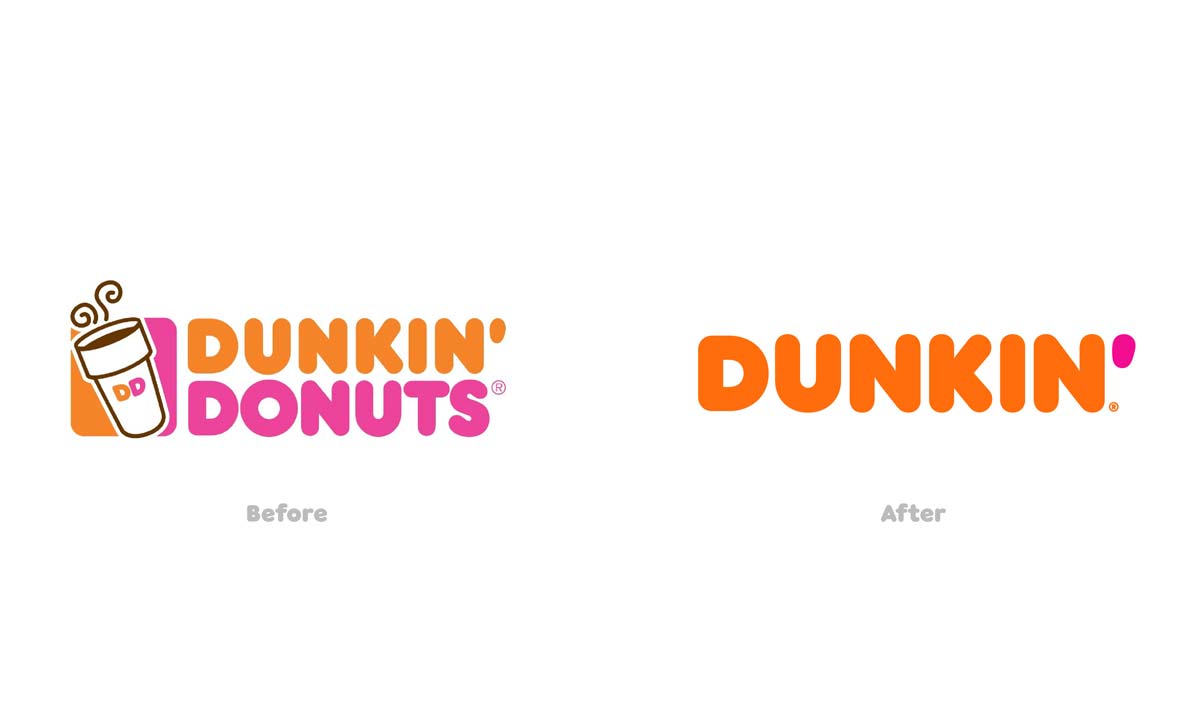
A successful rebrand changes the quality of demand: the market comprehends your positioning more quickly, assigns your firm a higher value, and moves toward a decision with less friction than the old brand allowed. Awareness and traffic are inputs, not proof. The measurable outcome is commercial — better-fit enquiries, stronger price power, faster conversion.
- Rebrand success is a change in who enquires and how they buy, not how many people saw the announcement.
- The clearest signal is reduced commercial friction: shorter comprehension, less discounting, and higher win rates against named rivals.
- A launch spike that fades within a quarter is a campaign result, not a rebrand result.
A rebrand succeeds when it improves the quality of demand — faster comprehension, higher perceived value, easier conversion — not when it merely raises awareness or traffic.
What a Rebrand Actually Changes — and What to Measure Instead
Start by being fair to the checklist everyone uses, because it isn't stupid.
Tracking awareness, website traffic, engagement, lead volume and revenue is defensible: those numbers exist, they move, and they populate a board slide. Intelligent people rely on them because they are available and comparable.
The problem isn't that they're wrong. It's that they answer a question a professional-services firm rarely asked when it commissioned the rebrand.

You didn't rebrand for more traffic. You rebranded because the old identity, positioning or category perception had become a constraint — you looked smaller than you were, or dated, or indistinguishable from three other firms in the same tender.
That constraint had a price. Measure whether the rebrand removed it.
There are four things worth tracking, and none of them is a headcount of impressions.
Price power. A stronger position reduces perceived risk, and lower risk allows a buyer to accept a higher fee without flinching. The mechanism is buyer psychology, not magic: when a firm is clearly understood and credibly positioned, the client stops pricing in the uncertainty of “will these people deliver?” Research on brand strength has linked it to an 11% reduction in price sensitivity, with a further 6% effect where differentiation is strongest — evidence that a rebrand should let you hold fees, discount less, and compete for more valuable work. If your realised fees, discount frequency and proposal-to-fee ratio don't move over twelve months, the rebrand hasn't touched your economics.
Quality of demand. Count the shape of your enquiries, not the volume. Are you being invited to larger mandates? Fewer tyre-kickers? More inbound from the sectors you repositioned toward? A 12-partner tax practice that repositions from “generalist accountants” to “advisers to owner-managed manufacturers” should see the manufacturing enquiries rise as a proportion of the total — even if total enquiries stay flat. Flat volume with a better fit is a win; the traffic dashboard will misread it as a failure.
Comprehension speed. How long does it take a prospect to understand what you do and why you're the right firm? This shows up in sales calls, in how often prospects arrive already knowing your specialism, and in the length of the “so what exactly do you do?” conversation. Trust and credibility carry real commercial weight here — one body of evidence associates them with effects on 93% and 66% of business outcomes, respectively, which is why credibility belongs in the KPI framework alongside the hard numbers.
Conversion friction. Win rate against named competitors, sales-cycle length, and proposal acceptance. If the same pitches now close faster or convert more often, the rebrand did its job where it matters most.
“A rebrand that raises awareness but not price power has refreshed your appearance without changing your economics. The market sees you more clearly and still values you the same. That is a cost centre wearing a new coat, and twelve months later the board will ask what the money bought.”
The Default Approach | What It Costs | The Better Approach | Why |
|---|---|---|---|
Track total traffic lift | Misreads better-fit demand as failure when volume is flat | Track enquiry composition by target sector | A repositioning changes who enquires, not always how many |
Count total lead volume | Rewards tyre-kickers; ignores buying-group progression | Track win rate vs named competitors | The won mandate dwarfs the lead count |
Report launch-window awareness | Captures a spike that fades in a quarter | Measure price, power, and discount frequency | Proves that the position changed the economics |
NPS as a single perception score | Too blunt to isolate the rebrand effect | Measure comprehension speed in sales calls | Faster understanding is the rebrand working |
Revenue is one lagging number | Absorbs every other business variable | Isolate proposal-to-fee ratio and cycle length | Ties the signal to the brand, not the market |
This is where the brand assets you built have to earn their keep — not by looking consistent, but by making the firm quicker to understand and harder to discount.
How to Measure Rebrand Success Over 12 Months (Without Fooling Yourself)
Here's the objection a sharp MD raises immediately: “How do I know it was the rebrand and not the market, the new hire, or the referral that would have come anyway?”
Fair. You often can't isolate it perfectly.
But you can measure it honestly, and honest measurement starts before launch.
Set the baseline first. Before the new identity goes live, record the numbers you'll judge it against: current win rate against your three most common competitors, average realised fee versus proposed fee, discount frequency, sales-cycle length, and enquiry composition by sector.
Most firms skip this and then argue about results from memory. If you have no pre-rebrand baseline, your twelve-month review becomes a debate rather than a measurement.
Then read the signal in the right order, because the metrics mature at different speeds. Comprehension and enquiry-quality shift first — often within one to two quarters, because they respond to the new positioning immediately.
Price, power and win rate move in the middle window, roughly months four to nine, as the repositioned firm works through live pitches.
Revenue is last and least trustworthy because it absorbs every other variable in the business. Judging a rebrand on revenue at month three is the single most common way firms wrongly conclude it failed.
Isolate what you can with control comparisons. Compare win rates in the sectors you repositioned toward against sectors you left untouched — if the repositioned segments improve and the others hold flat, the brand is a plausible cause.
Compare enquiry composition against the same quarter last year, not against the launch spike. Neither is laboratory proof. Both are far better than reading a revenue line and guessing.
The trap is the launch spike itself. A rebrand launch reliably produces a burst of traffic, mentions and congratulations that says almost nothing about commercial change.
Walker Sands and others advise waiting six to twelve months before evaluating precisely because the early window is noise. The firms that mistake that noise for success stop measuring at month two — right before the data that matters arrives. Track the trajectory after the spike settles, not the height of the spike.
The two objections worth answering head-on: that this is unmeasurable, and that it takes too long. It is not unmeasurable — win rate, realised fee and cycle length are all things your firm already records or easily can.
And it does take twelve months, because that is how long a professional-services buying cycle takes to turn over enough decisions to read. A faster answer would be less true.
What Rebrand Measurement Looks Like in 2026

Two shifts have changed what “brand visibility” even means, and both matter for how a professional-services firm measures a rebrand now.
The first is AI-mediated discovery.
Kantar's 2026 BrandZ report identifies personalised feeds, large language models and machine-curated discovery as a major change in how buyers encounter and choose brands.
The market context is not small: Kantar valued the Global Top 100 brands at $13.1 trillion in 2026, up 22% year on year, with Google's brand value rising 57% and ChatGPT recording a 285% year-on-year increase.
The implication for measurement is direct — as algorithms increasingly surface and weigh information, a brand has to be meaningfully differentiated to be selected, and the person measuring the rebrand has to separate signals that matter from dashboard noise.
A rebrand that makes your firm easier for a machine to categorise and recommend is doing measurable work that a raw traffic count won't show.
The second is the move beyond leads in B2B. LinkedIn's B2B Institute argues that marketers default to what is convenient to count — impressions, clicks, lead volume — even when those measures reveal little about whether a buying group is moving toward a decision.
For a professional services firm, where a committee decides on a single mandate over months, this is the whole game. Counting individual leads tells you nothing about whether the finance director, the managing partner and the procurement lead are collectively warming to your firm.
Credibility is becoming the metric that ties this together.
LinkedIn's B2B Institute and Ipsos published The Credibility Code in 2026, framing the central B2B challenge as buyer confidence rather than simple awareness, and arguing that credibility compounds through four reinforcing voices: the brand itself, its employees, its customers, and trusted external experts.
That gives you something concrete to measure after a rebrand — whether your firm now shows up credibly across all four, not just whether the logo landed well. A firm managing its brand equity through the transition should be tracking exactly this.
Fewer Metrics, Better Demand
Measure the rebrand your board actually paid for. It didn't buy attention or a traffic spike; it bought the removal of a constraint on growth — a brand that made the firm look smaller than it was, harder to understand, or easier to discount.
So judge it on whether the market now understands you faster, values you more highly, and converts more readily.
Price power, enquiry quality, comprehension speed and win rate against named competitors — measured against a pre-launch baseline, read over twelve months in the order those signals mature.
Traffic and awareness are inputs you glance at, not the verdict.
The one thing to do today: before your next brand decision, write down the baseline numbers you'll be judged against in twelve months.
Then request a free Brand Equity Audit™ — a structured diagnostic that identifies exactly where your brand is losing commercial ground and what to do about it.
Frequently asked questions
How do you measure the success of a rebrand?
Measure it as a business-change programme over twelve months, not a launch campaign. Track whether the market understands the firm faster, values it more highly, and converts more easily — using price power, enquiry quality, comprehension speed and win rate against named competitors, judged against a pre-launch baseline.
How long does it take to see rebrand results?
Expect twelve months for a full read. Comprehension and enquiry-quality shift within one to two quarters, price power and win rate move around months four to nine, and revenue is last because it absorbs every other business variable. Judging a rebrand on revenue at month three is the most common measurement error.
What KPIs prove rebrand ROI to a board?
The KPIs a board accepts are commercial: realised fee versus proposed fee, discount frequency, win rate against named competitors, sales-cycle length, and enquiry composition by target sector. These tie the rebrand to money and demand quality, rather than to awareness or traffic figures, which are too influenced by other variables to prove a return.
Is it true that a rebrand can succeed even if traffic stays flat?
Yes — flat traffic with improved enquiry composition is often a win. A repositioning changes who enquires more than how many. A firm attracting better-fit, higher-value mandates from its target sectors has succeeded commercially, even where total volume is unchanged, and a traffic dashboard reads it as a failure.
How do you separate rebrand impact from other business changes?
Compare performance in the sectors you repositioned toward against sectors left untouched. If the repositioned segments improve while the others hold flat, the brand is a plausible cause. Set a pre-launch baseline, compare against the same quarter last year rather than the launch spike, and read the trajectory over months.
Does a rebrand affect what a firm can charge?
Yes — a clearer position reduces the buyer's perceived risk, allowing them to accept a higher fee. Brand strength has been linked to an 11% reduction in price sensitivity. If realised fees and discount frequency don't move within twelve months, the rebrand hasn't reached your economics.