Pricing Psychology for UK Professional Services: How Fee Shapes Perceived Value
Most professional services firms treat fees as math. Buyers treat them as a signal. How a fee is presented, anchored and structured changes what identical work appears to be worth. This guide shows UK CEOs and MDs where fee presentation helps, where it backfires, and exactly what to fix first.
 By Stuart Crawford
 Reviewed by Tabitha Ayers
10 min read

On this page10 min left
- What Is Pricing Psychology in Professional Services?
- What Pricing Psychology Actually Does in Professional Services
- How Fee Presentation Shapes Perceived Value
- Hourly, Fixed or Value-Based: What Each Fee Model Signals
- Do Decoys and Tiers Work for Professional Services Firms?
- How Much Price Should You Show Upfront?
- Scenario Decision Table: Which Lever to Change First
- The Default Trap and What Your Fees Say About Your Brand
- Fix the Fee Story Before the Fee
- Questions people ask
Pricing psychology is the way context shapes what a buyer believes a fee is worth.
In professional services, that context is mostly your own proposal. The number matters less than what surrounds it: the order, the options, the explanation.
Get that wrong, and a fair price reads as a cost. It sits inside wider brand psychology, where the job is to reduce the risk a buyer feels. Fee presentation is where that risk becomes visible.
This guide covers one question: how does the way you present a fee change what the work appears to be worth?
What Is Pricing Psychology in Professional Services?

Pricing psychology explains how context, framing and reference points change which fee a buyer sees as fair. For UK professional services firms, it matters most in how a fee is presented: the first number shown, the options around it and how clearly the components are explained.
Choose clarity first, tactics second.
- Buyers judge a fee against the reference points you give them, so the proposal sets the frame before negotiation starts.
- Fee model, structure and layout each signal how confident and how scoped your firm is.
- Tactics such as anchoring and tiering work only when the underlying scope and proof are credible.
Pricing psychology is the study of how context, framing and reference points shape which price a buyer perceives as fair, independent of the number itself.
What Pricing Psychology Actually Does in Professional Services
Pricing psychology in professional services works on groups, not individuals.
A finance director, a general counsel and a managing partner each read the same fee page for a different risk.
One scans for overspend. One scans for exposure. One scans for something to defend.
Your fee presentation either answers all three or hands them a reason to stall.
Which Pricing Psychology Effects Matter for Services Buyers
Five effects carry most of the weight in B2B pricing psychology, according to the supplied competitor material from Luth Research (2026) and B2BLead.io.
- Anchoring. The first figure a buyer sees becomes the reference. A £138,000 full-scope option shown first makes a £96,000 core programme feel measured.
- The decoy effect. A third option can make the target option appear to be the sensible middle.
- Loss aversion. Buyers tend to weigh a potential loss more heavily than an equivalent gain. Your fee competes with the cost of doing nothing, not just with rival quotes.
- ROI framing. The same fee reads differently as an annual total, a monthly figure or a share of a revenue target.
- Social proof. Price pushback often hides personal risk. Named client outcomes and reference calls lower that risk.
Two of these, anchoring and decoys, have their own pages. Anchoring is covered in the guide to price anchoring in proposals, and decoys in the guide to decoy pricing.
Where Pricing Psychology Tactics Backfire With Senior Buyers
Pricing psychology tactics fail when they are visible.
A senior buyer weighing a six-figure appointment will spot a countdown timer or a manufactured "limited slot" claim, and will mark the firm down for it.
Scarcity and urgency appear on the competitor lists, but they sit awkwardly with a considered, committee-based purchase.
This article excludes them for that reason. How that kind of buyer actually decides is covered in how professional services are bought.
The first strong objection from a sceptical MD: "Our clients are sophisticated. This is manipulation." The answer is partly yes.
Tactics aimed at an individual's bias do read as manipulation. Presentation aimed at a group's need to justify a decision does not.
A clear structure, honest options and visible reasoning help the buyer defend the choice internally. The boundary is simple. If the buyer would feel misled upon seeing how the fee page was built, do not use it.
How Fee Presentation Shapes Perceived Value
This is the section that matters most. Fee presentation shapes perceived value because the buyer has no objective price for expertise.
A packaged programme, a clever strategy or a partner's judgement has no shelf price. So the buyer reads your presentation as the evidence of what it is worth.
Three elements do most of that work: the structure of the options, the first figure shown, and the way the return is described.
One Scope, Three Presentations
Hypothetical illustration for explanation only, not evidence. A 90-person management consultancy wants a six-month positioning and brand programme. The scope is identical in all three versions.
Presentation | What the buyer sees | What it signals |
|---|---|---|
Single line | "Total fee: £96,000" | A figure to negotiate against, with no visible logic |
Hourly estimate | "£240 per hour, estimated 400 hours (£96,000)" | A cost of time, open to audit and to challenge |
Structured options | Foundation £72,000, Complete £96,000, Extended £138,000, each with defined deliverables | A scoped decision with a visible range, and a reference point either side |
The total is the same in the first two rows, yet each reads differently.
The single line invites a discount request. The hourly version invites the buyer to question every hour. The third gives the buyer a decision, not a negotiation, but only because the three options correspond to real scope differences.
If they do not, the structure is decoration and a sceptical committee will see through it.
Boundary: structured options suit engagements where scope can be defined in stages.
Where scope is genuinely unknowable, such as an open-ended turnaround, a phased fixed fee with a stated review point is more honest than tiers.
Anchoring in Proposals
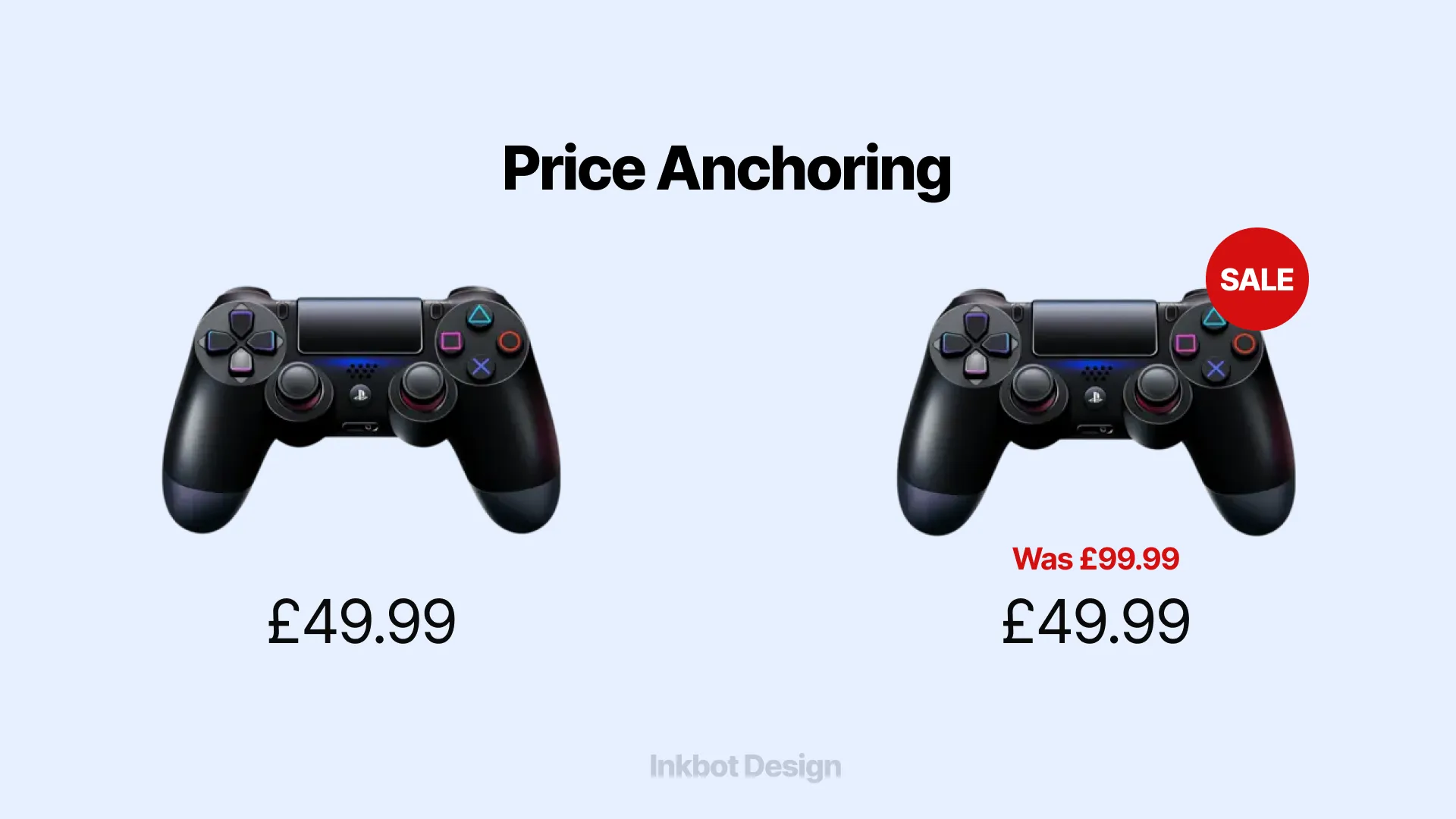
Anchoring in proposals works by putting the highest credible figure first, so lower figures are judged relative to it.
In the example above, the £138,000 Extended option sits at the top.
The £96,000 Complete option then reads as the considered middle.
The anchor must be credible: an inflated top option that no client has ever bought reads as a trick.
It also fails when the buyer has already seen a rival's number, because the first figure no longer sets the frame.
The full method, with proposal layouts, is in the guide to anchoring and fee presentation in proposals.
ROI Framing and Cost of Inaction
ROI framing changes how a fee compares with the return, and cost-of-inaction framing changes what it is compared with.
Take the same hypothetical firm. If it pitches for £8m of new fees a year, each percentage point of win rate is worth £80,000. Against that, a £96,000 programme is roughly one point of win rate. That is a calculation the buyer can check, not a promise.
Use only the buyer's own numbers. If the firm cannot provide a win rate or pipeline figure, do not invent one. Frame the fee against a cost the buyer can verify, or omit ROI.
Hourly, Fixed or Value-Based: What Each Fee Model Signals
Fee models are themselves a choice in pricing psychology. Each one tells the buyer something before any figure appears.
The shift away from hourly billing is well documented in accounting, though the data below is accounting-specific and mostly US-sourced.
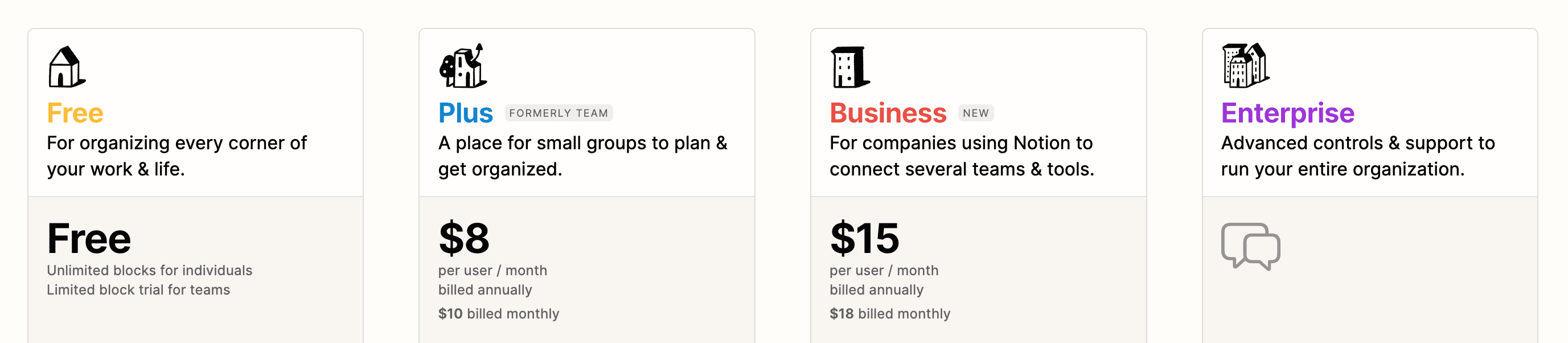
- Hourly. The 2024 CPA.com and AICPA PCPS Client Advisory Services Benchmark Survey found reliance on hourly billing fell to 10% in 2024, from 53% in 2018.
- Fixed fee. In the same survey, 84% of respondents were moving towards fixed-fee billing, payable monthly, quarterly or annually (Benchmark Survey, 2024).
- Value billing. The 2025 National MAP Survey Executive Summary found 30% of surveyed accounting firms used value billing, up from 25% in 2022. It also found 63% still used hourly billing and 29% used fixed pricing (MAP Committee, 2025). The figures overlap because firms use more than one method.
What each model signals:
- Hourly presents effort as the product, which invites the buyer to count hours.
- Fixed fee presents the firm as confident about scope, and gives the buyer a number they can budget and defend.
- Value-based positioning presents the firm as accountable for an outcome, but only works when the firm can provide evidence of prior outcomes.
Decision boundary: fixed fees suit well-defined work and firms with experience of how long it takes. A 5-partner firm with limited history on a scope type is at risk of absorbing overruns. A 50-partner firm with repeatable engagements can price with more certainty.
Value-based fees need proof and a measurable outcome. Without both, the model reads as an unsupported premium.
Do Decoys and Tiers Work for Professional Services Firms?
Yes, with limits.
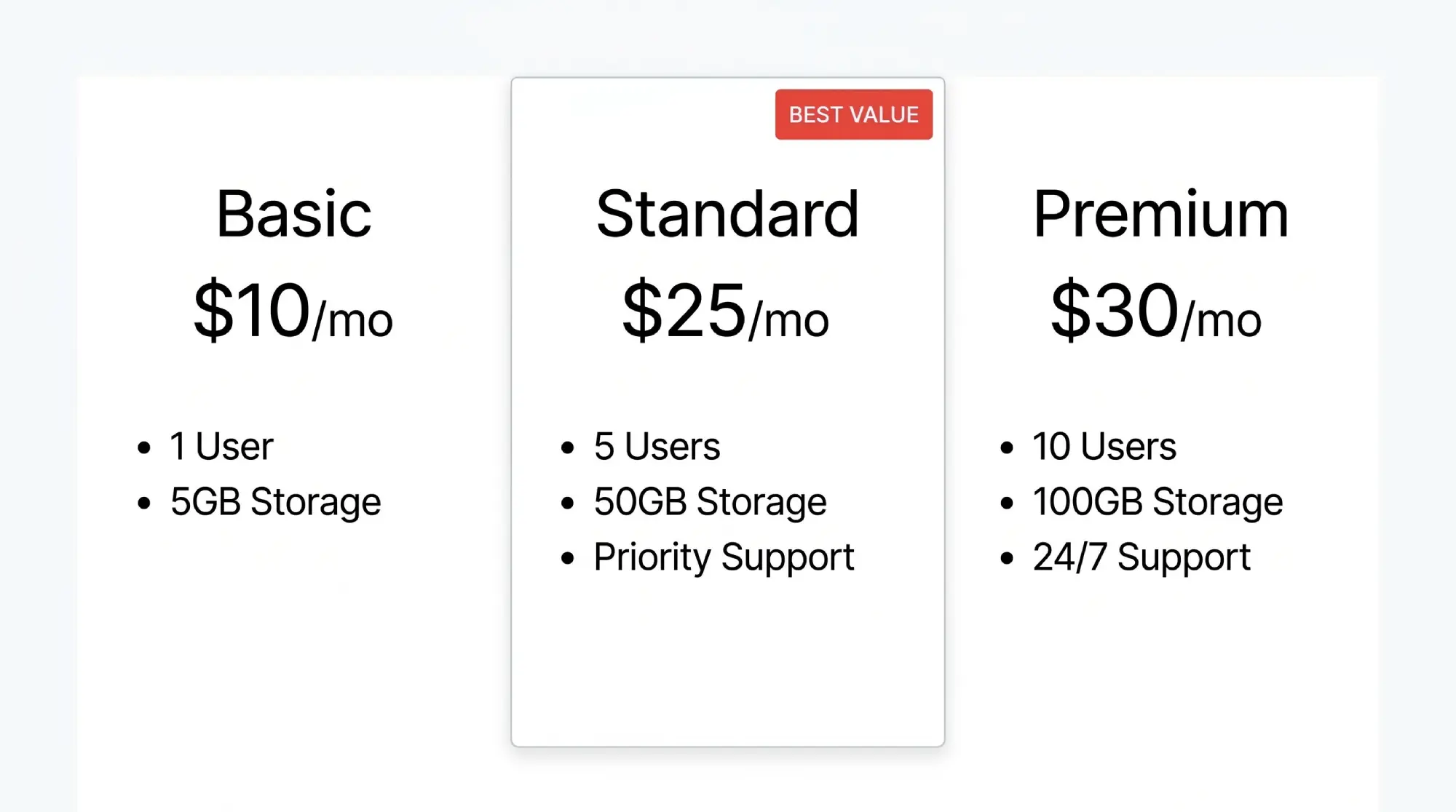
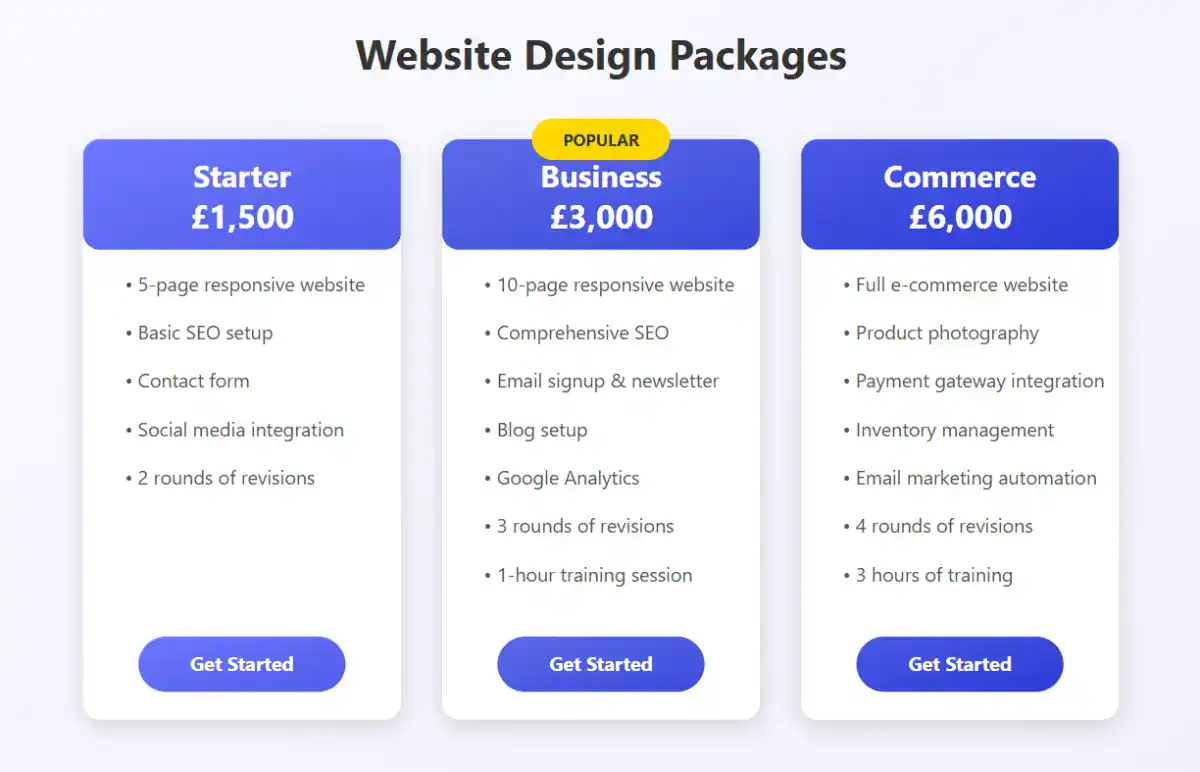
Decoy pricing and tiered structures work in professional services when the options map to real differences in scope and the buyer can see why they differ.
The decoy effect introduces an option that is clearly worse than the target on one dimension, making the target look better by comparison.
Competitor sources describe it using a Starter, Professional and Enterprise structure. In services, the equivalent is a defined Foundation, Complete and Extended scope. The mechanics are explained in the decoy pricing guide.
The second strong objection: "Every engagement is different. We can't tier." Fair. Many are.
The workable answer is to tier the part that can be standardised, such as a diagnostic, a strategy phase or a defined first stage, and price the open-ended remainder separately.
Bundling follows the same logic. Packaging a diagnostic with an implementation plan at a visible saving lets the buyer see value, but only if the bundle reflects work you would actually do together.
Boundary: do not use a decoy to steer a buyer to an option that does not suit them. A committee that later finds the "obvious choice" was engineered will question the rest of the proposal.
The same bias mechanics also appear in interface design, which is covered in the guide to cognitive bias in UX.
How Much Price Should You Show Upfront?
The default answer for UK professional services buyers is more than most firms show. A transparent fee structure reduces anxiety about hidden costs, and the supplied buyer data does the same.
What to Reveal and What to Frame
Pricing transparency in B2B buying is an expectation, not a bonus.
The 2025 B2B Buyer Report by Mixology Digital found 74% of surveyed B2B buyers expected clear and detailed pricing upfront.
22% were comfortable discussing price later in the process. Only 3% said they did not mind vague pricing if the solution was high quality (Mixology Digital, 2025).
That does not mean publishing a rate card. It means showing what the buyer needs to judge fairness:
- What is included, and what is excluded.
- How the fee is structured: fixed, phased or milestone-linked.
- What triggers a change in scope, and how that is priced.
- What the buyer receives at each stage.
Show the fee architecture and frame the fee against the return. Keep exact day rates and margin logic private. If your sector has fee disclosure rules, such as those for solicitors or accountants, check them first.
Boundary: a published price range suits firms with repeatable services. Firms selling genuinely bespoke advisory work may be better served by a stated starting point and a clear scoping process.
Proof That Lowers Price Risk
Social proof in fee proposals lowers the perceived risk behind price objections.
A fee reads as high when the buyer cannot picture the outcome. Named client results, reference calls and a clear delivery process answer that doubt directly.
Where a buyer is judging the firm on layout, tone and consistency, the signals sit in the document itself. How buyers read those signals is covered in the brand semiotics framework.
Scenario Decision Table: Which Lever to Change First
Pricing psychology levers differ in cost and risk. This table maps a firm's situation to the first change worth making.
Your situation | First lever | Why | Do not use when |
|---|---|---|---|
Proposals get a single "can you do better?" reply | Structured options with an anchor | Moves the conversation from discount to choice | Scope cannot be defined in stages |
Buyers question the hours | Move from hourly to fixed or phased fee | Shifts focus from effort to outcome | Scope is open-ended or poorly understood |
Buyers say you are expensive but cannot say why | Show fee architecture and inclusions | 74% expect clear, detailed pricing upfront (Mixology Digital, 2025) | Sector rules limit what you can publish |
Strong results but pricing at market average | Value-based framing with proof | Ties the fee to a result the buyer can check | You lack case evidence or a measurable outcome |
Committee stalls after the pitch | Add proof and cost-of-inaction framing for each stakeholder | Gives each person a defensible reason | The stall is about fit, not price |
Premium fee, generic brand | Fix the brand signal before the fee model | A premium fee on a generic brand reads as overreach | The brand is already distinct and credible |
The Default Trap and What Your Fees Say About Your Brand
The default trap is sending one number in a plain document. It feels clean.
It is also the least informative option for the buyer because it hides the logic behind the fee. A buyer given one figure has only two moves: accept or negotiate.
Fee presentation is also a brand signal. A proposal with clear structure, defined scope and visible reasoning tells the buyer the firm is organised.
A proposal with a single line and no explanation tells them nothing, so they fill the gap with their own caution. The fee page is part of the brand, whether or not anyone designed it.
“Fee presentation does not make expertise worth more. It makes the existing value visible to people who must defend the decision. Clarity is the safer bet than cleverness.”
Fix the Fee Story Before the Fee
Fee presentation shapes perceived value because buyers cannot price expertise directly.
They read your structure, your first figure and your explanation as evidence of what the work is worth. The tactics in this guide only help when the scope and evidence beneath them are real.
Action today: take your last three proposals and read each as a sceptical finance director would. Mark every place the fee is stated without the logic behind it.
If you do that and the problem is only layout, fix the document yourself. If buyers still hesitate, the issue may be the brand signal.
A free Brand Equity Audit™ is a structured diagnostic that identifies where your brand is losing commercial ground and what to do about it.
Questions people ask
Is pricing psychology manipulative?
No — not when it makes a decision easier to defend. Clear structure, honest options and visible reasoning help buyers justify a choice. Tactics become manipulative when they hide information or create false pressure. Test every element by asking whether the buyer would feel misled if they saw how the fee page was built.
Should professional services firms charge fixed fees or hourly?
Fixed fees suit defined scope and experienced firms. The 2024 CPA.com and AICPA PCPS CAS Benchmark Survey found 84% of accounting respondents shifting towards fixed-fee billing. Hourly suits open-ended work. The data is accounting-specific, so check applicability to your sector.
Does decoy pricing work for consultancies and agencies?
Yes — when the options reflect real differences in scope. A decoy makes a target option look sensible by comparison, but a committee buying a six-figure service will notice an engineered choice. Tier the standardised part of your work and price open-ended elements separately.
Should I show prices upfront to B2B buyers?
Yes — to a degree. The 2025 B2B Buyer Report by Mixology Digital found that 74% of B2B buyers expected clear and detailed pricing upfront, and only 3% accepted vague pricing. Show structure, inclusions and triggers. Keep day rates private unless sector rules say otherwise.
What is value billing in professional services?
Value billing prices are based on the outcome for the client, not the time spent. The 2025 National MAP Survey found that 30% of surveyed accounting firms used it, up from 25% in 2022. It needs proof of prior results and a measurable outcome to be credible.
How do I present a fee so it feels fair?
Show what is included, how the fee is structured and what the buyer gets at each stage. Place a credible higher-scope option first so the core option is judged against a reference. Frame the fee as a cost or a return the buyer can verify.