Internal Brand Alignment: The 5-Pillar Framework
Most brand alignment programmes fail because they change what employees know about the brand, not how they behave because of it. The 5 Pillars of Internal Brand Alignment give SMB owners a behavioural infrastructure — not another document — that makes your brand message consistent from first contact to final invoice.
 By Stuart Crawford
 Reviewed by Tabitha Ayers
Updated 18 min read
On this page18 min left
- What Is Internal Brand Alignment?
- The Internal Brand Alignment Crisis Most Businesses Don't Know They Have
- The 5 Pillars of Internal Brand Alignment
- The Brand Guidelines Document Myth (And Why It's Costing You Money)
- The State of Internal Brand Alignment in 2026
- Internal Brand Alignment in Practice
- The Verdict
Your employees are undermining your brand every day — not out of malice, but because nobody gave them a reason not to.
Internal brand alignment is a revenue problem disguised as a culture problem, and the sooner SMB owners stop treating it as a box-ticking HR exercise, the sooner it will start generating revenue.
Brand guidelines documents don't align teams. Workshops don't align teams. A single town-hall presentation from the CEO absolutely does not align teams.
What aligns teams is a behavioural infrastructure that makes brand-consistent action the path of least resistance — one that is repeated, reinforced, and measurable.
If your business has ever lost a client because a salesperson promised something your delivery team couldn't honour, or had a customer say your website felt nothing like your actual service, you already know the cost of getting this wrong.
Before building anything, you need to know what's actually broken.
A proper brand audit will surface the specific gaps between your intended brand and your delivered brand — and those gaps are almost always wider than founders expect.
What Is Internal Brand Alignment?
Internal brand alignment is the process of ensuring that every employee understands, believes in, and consistently communicates the brand's core identity across all customer interactions and internal decisions.

Key Components:
- Shared brand understanding: All staff can articulate what the brand stands for, not just what it sells
- Behavioural consistency: Brand values translate into daily decisions and customer-facing actions
- Operational integration: Brand standards are embedded in processes, not just presented in documents
Internal brand alignment is achieved when the brand your customers experience matches the brand your employees believe they're delivering — measured through consistent NPS scores, reduced messaging variance across touchpoints, and higher employee advocacy rates.
The Internal Brand Alignment Crisis Most Businesses Don't Know They Have
Most SMB owners assume internal alignment is a problem for large corporations with thousands of staff spread across multiple sites. It isn't. It's a founding-team problem first.
71% of marketing professionals reported employees were unable to find brand assets when they needed them, and 60% admitted to creating off-brand materials simply because the correct assets weren't accessible when needed.
That's not a headcount problem. That's a systems problem — and it starts the moment the second person joins the business.
The misalignment compounds quickly. Gallup's State of the Global Workplace Report found that organisations with highly engaged employees — defined in part by understanding and believing in the company's mission — outperformed competitors by 147% in earnings per share over a ten-year measurement period.
Engagement and brand alignment aren't the same thing, but they share the same root cause: employees who don't know why the company exists the way it does can't represent it authentically.
The most damaging form of misalignment doesn't look like an employee saying the wrong thing.
It looks like an employee saying nothing distinctive at all — defaulting to generic, uncommitted language about “great service” and “quality products” because they've never been given the language or the conviction to say anything more specific.
That verbal vagueness is your brand dying in real time.
Internal brand misalignment rarely announces itself as a brand problem. It shows up as pricing inconsistency, sales conversion underperformance, and unusually high early-stage churn — all symptoms of customers receiving a different brand from the one they were sold.
The 5 Pillars of Internal Brand Alignment
Pillar 1: Brand Clarity — The Foundation No Document Can Provide
Brand clarity is not the same as having a brand guidelines document.
Brand clarity is the condition in which every person in your organisation can, without prompting, explain what your brand stands for and why it matters to a specific type of customer. Most businesses have the document. Almost none have the condition.
The distinction matters because documents are static and people are dynamic. A 40-page brand bible tells an employee what the brand is; it does nothing to help them understand what the brand means in the context of the conversation they're having right now.
That gap — between brand as artefact and brand as living working knowledge — is where most internal alignment failures originate.
McKinsey & Company's “The Business Value of Design” report (2018) tracked over 300 publicly listed companies across five years and found that design-led companies outperformed the S&P 500 by 211%.
The common factor among top performers wasn't having better brand guidelines — it was leadership that continuously reinforced brand rationale at a strategic level, making brand decisions a normal part of business conversation rather than an annual creative review.
Brand clarity for an SMB requires four operational elements: a single positioning statement short enough to memorise; a vocabulary list of words the brand uses and words it explicitly avoids; three or four real customer stories that illustrate the brand's values in action; and regular leadership narration of brand decisions so employees understand the reasoning, not just the outcome.
Brand clarity is not documentation — it is the organisational ability to make brand-consistent decisions instinctively, at speed, without escalation. When your customer service team handles a complaint, when your salesperson quotes a price, when your social media manager responds to a comment: those are brand clarity moments. Documents don't help. Practised conviction does.
Pillar 2: Leadership Narration — The Alignment Multiplier Nobody Measures
Leadership narration is the practice of leaders explicitly connecting everyday business decisions to brand values, out loud, in real time. It sounds simple. Almost no SMB leadership teams do it consistently.
The mechanism is straightforward: when a founder explains why they turned down a contract that didn't fit the brand's positioning, or why a pricing decision was made the way it was, they give employees a reference point applicable in future situations.
When leaders make brand-opaque decisions in silence, employees fill the reasoning gap with assumptions — and those assumptions are rarely brand-aligned.
Lego's near-bankruptcy in 2003 and subsequent recovery under CEO Jorgen Vig Knudstorp are among the most documented examples of leadership narrative as a brand alignment tool.

Knudstorp's core intervention wasn't a rebrand. It was a relentless internal clarification: Lego is the brick. Every product extension, licensing deal, and operational decision was tested against that internal standard, with the results explicitly narrated to staff and senior management.
By 2015, Lego had become the world's most profitable toy company by revenue—a recovery extensively tracked by The Financial Times and documented in Harvard Business Review's analysis of the Lego turnaround.
For SMB owners, leadership narration operates on a much smaller scale, but the principle remains the same. When you communicate the why behind decisions that touch brand identity — pricing, client selection, hiring criteria, the type of work you decline — you give your team a repeatable reasoning framework. That's the framework they use when you're not in the room.
Leadership narration is the mechanism by which brand strategy becomes organisational common sense. Every unexplained decision is a missed alignment opportunity — and in a team of ten, a month of such decisions can lead to ten different interpretations of what the brand actually stands for.
Pillar 3: Behavioural Brand Standards — Where Most Frameworks Stop Too Early
Behavioural brand standards define how brand values manifest as specific, observable actions — not feelings, principles, or aspirations.
This is the pillar where most brand frameworks collapse. They define values (“we are innovative, we are customer-first, we are honest”) without specifying what those values look like in practice, which makes them functionally useless as behavioural guides.
“Customer-first” means nothing until it is operationally defined. Does it mean the customer is always right, even when they're wrong? Does it mean proactive outreach when there's a problem, before the customer notices?
Does it mean a 24-hour response guarantee, or a 4-hour one? Those are radically different operational realities. Until the value is grounded in behaviour, it stays aspirational — and aspirational values don't align teams.
The failure mode is visible in the WeWork collapse. WeWork's external brand promised community, transparency, and shared success.
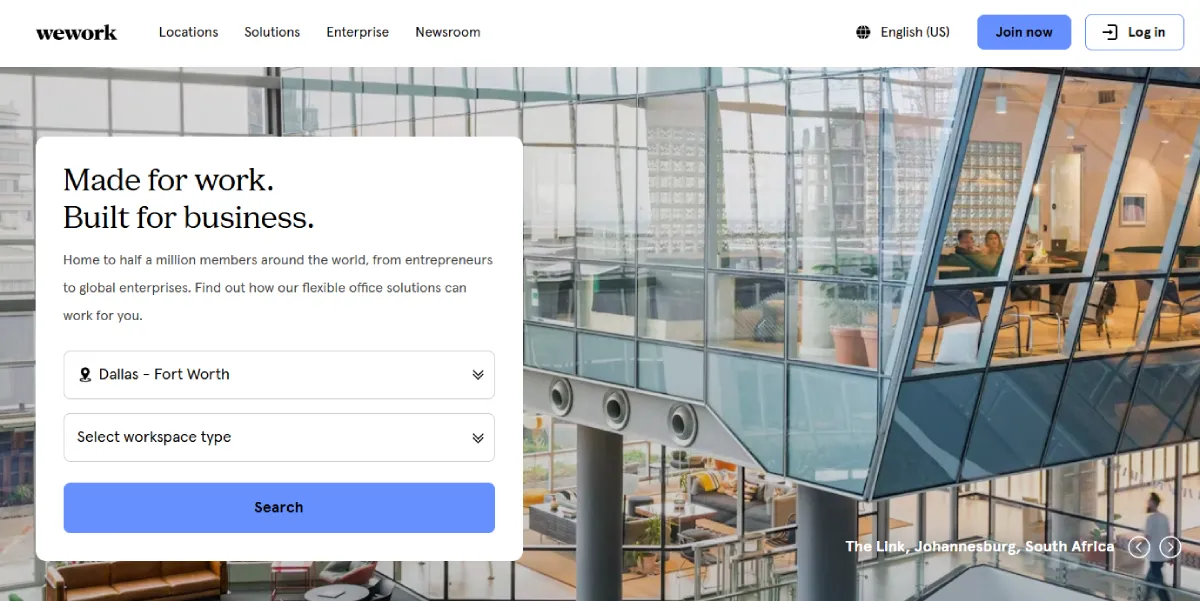
Adam Neumann's internal culture — documented extensively in Wall Street Journal investigations published in 2019 and later substantiated in New York Times reporting — operated on secrecy, personal enrichment, and punitive management.
The external brand and the internal behavioural reality were in direct contradiction. When that contradiction became public during the failed IPO process in September 2019, the company lost over 80% of its estimated $47 billion valuation within weeks, according to Bloomberg's reporting at the time.
Behavioural brand standards for an SMB don't require an enterprise HR system. They require five to ten specific behavioural commitments per function — sales, delivery, support, finance — written as observable actions rather than value statements.
“We respond to all client queries within four working hours, even if only to acknowledge receipt and set a timeline” is a behavioural standard. “We value responsiveness” is a hope.
Behavioural brand standards convert values into protocols. The test is simple: can you observe whether or not this standard is being met? If the answer is “it depends” or “you'd have to use your judgement,” it's not a standard — it's a wish.
Pillar 4: Brand Onboarding Infrastructure — The 30-Day Window Most Businesses Waste

The first 30 days of employment are the highest-leverage window for brand alignment a business has. New employees arrive with no assumptions, no entrenched habits, and high receptivity to understanding “how things work here.”
Most businesses waste this window entirely by treating brand onboarding as a document handover rather than a belief-formation process.
Brand onboarding infrastructure is the set of structured interactions, exposures, and experiences that a new employee goes through in their first 30 days — specifically designed to build authentic brand conviction, not just functional job competency.
It is distinct from HR onboarding (contracts, tools, policies) and role training (how to do the job). It exists to answer one question: why does this brand exist the way it does, and why does that matter to our customers?
The practical architecture for an SMB includes: a founder or senior leader brand narrative session (not a presentation, a conversation) in the first week; access to three to five real customer stories that illustrate brand values in action; a role-specific brand moment map showing the five most likely brand-defining moments in their specific job function; and a 30-day check-in specifically on brand confidence, separate from performance review.
Patagonia's internal alignment model — documented in multiple Forbes profiles and the company's own environmental and social responsibility reports — consistently produces above-average employee advocacy scores and below-average turnover despite operating in a low-margin retail sector.
A core component is their extensive new-employee exposure to the company's environmental mission through product training, supply chain transparency, and direct founder narrative. The brand conviction their staff demonstrate isn't accidental. It's the product of deliberate onboarding infrastructure.
The 30-day onboarding window determines whether a new employee becomes a brand asset or a brand neutral. Neutral employees don't actively damage your brand — but they dilute it at every interaction by defaulting to generic, uncommitted language. Brand conviction cannot be retrospectively installed. It is built in the first month, or it isn't built at all.
Pillar 5: Brand Measurement Systems — The Pillar That Makes the Others Accountable
Brand measurement systems are the internal mechanisms that make brand alignment visible, trackable, and improvable.
Without measurement, alignment is an aspiration with no feedback loop. With measurement, it becomes a managed operational function.
Most SMBs measure brand performance externally — NPS scores, review ratings, social sentiment. Very few measure it internally, meaning they assess outcomes without measuring inputs.
By the time an NPS score drops, the internal alignment failure that caused it is already weeks or months old.
The internal brand measurement stack for an SMB doesn't require enterprise software.
It requires four data points collected regularly: brand confidence surveys (quarterly, anonymised, asking staff to rate their own ability to explain the brand's difference to a stranger); message consistency audits (quarterly review of a random sample of client-facing communications scored against core brand language); brand moment reviews (monthly team review of one real example — either a success or a failure); and a simple brand alignment score tracked over time as a leading indicator of customer experience quality.
The connection between internal measurement and external outcomes is direct. Research published in the Institute of Practitioners in Advertising (IPA) Effectiveness Databank — the UK advertising industry's longitudinal database of commercial effectiveness cases — consistently shows that brands with strong internal-external alignment outperform sector benchmarks on long-term revenue growth, not marginally, but significantly and repeatedly over five to ten-year periods.
Internal brand measurement is the difference between a brand alignment programme and a brand alignment system. Programmes end. Systems compound. Every business that treats internal brand health as a measurable operational metric will outperform those that don't — because they catch misalignment before it reaches the customer.
The Brand Guidelines Document Myth (And Why It's Costing You Money)
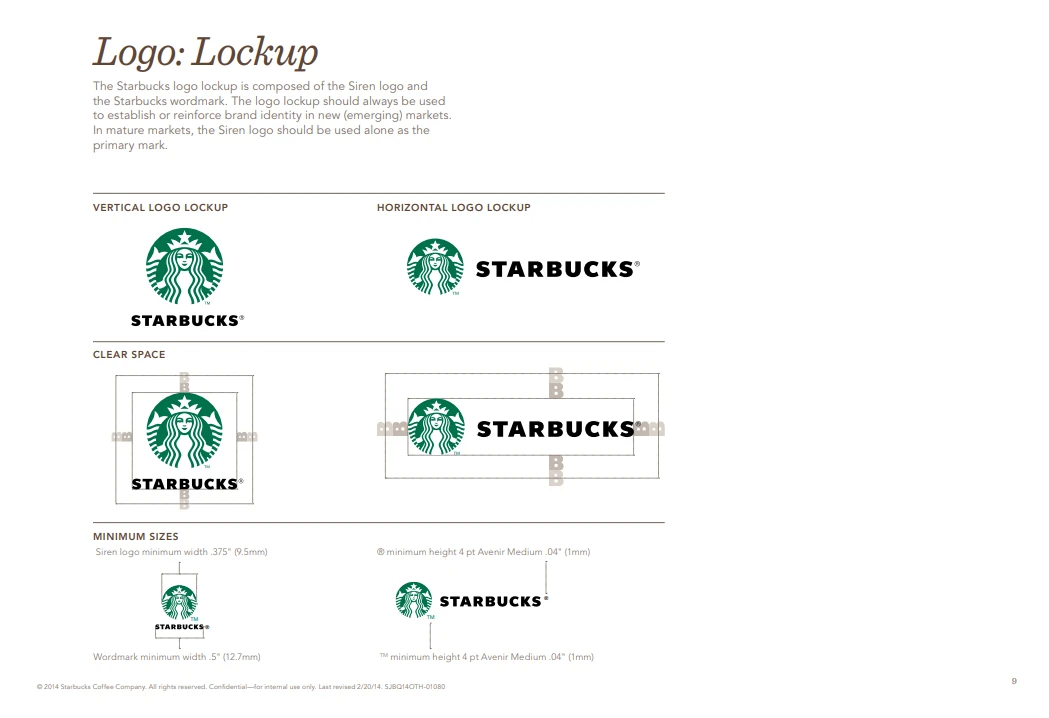
Brand guidelines documents do not align teams. They never did — or more precisely, they did once, in a world where brand management was print-based, centralised, and slow.
That world no longer exists, and continuing to rely on the document as the primary alignment mechanism is one of the most expensive operational decisions an SMB can make without realising it.
The original rationale for a comprehensive brand document was legitimate. The Lufthansa corporate identity manual — developed by designer Otl Aicher in the 1960s and running to over 200 pages — was a genuine operational tool because the brand touchpoints it governed (aircraft livery, print collateral, wayfinding) were physical, slow to produce, and required precise specification to manage at scale. The document was the only viable coordination mechanism.
Papirfly's 2023 Brand Consistency Report found that 60% of marketing professionals admitted to creating off-brand content not because they didn't know the guidelines existed, but because the correct assets were inaccessible when they needed them. The document wasn't the problem.
The system around the document was. In most SMBs, there is no system — there is a PDF nobody has opened since it was created.
This matters because the document creates a dangerous false confidence. A founder commissions a brand identity from an agency, receives a brand guidelines document, and believes the alignment problem has been addressed. It hasn't. It has been documented. Those are not the same thing.
The alternative is not abandoning documentation — it is making documentation part of a living behavioural system.
Brand guidelines should be living knowledge bases, updated quarterly, built with input from the people who use them, and tested regularly for accessibility and comprehension. A brand guidelines document that scores below 80% comprehension in an annual staff survey is not a brand asset. It is an operational theatre.
The brand guidelines document is a diagnostic tool and a reference resource. It is not an alignment mechanism. Confusing the two is like handing someone a map and assuming they know how to drive. The map tells them where to go. It does not teach them how to navigate.
The State of Internal Brand Alignment in 2026
Internal brand alignment has changed fundamentally in the last 18 months — and the primary driver is not artificial intelligence, though AI is a significant accelerant.
The primary driver is the collapse of physical co-location as the default working model and the resulting breakdown of passive brand transmission.
For most of the 20th century, brand culture was transmitted osmotically. New employees absorbed how things were done by sitting in the same building as people who already knew. They heard how the founders talked about clients.
They observed the informal standards nobody ever wrote down. Physical proximity was an accidental but highly effective brand alignment mechanism.
Hybrid and remote working has substantially weakened that mechanism for a significant portion of the SMB workforce. Employees who join remotely, work in distributed teams, or rarely interact with senior leadership are operating without the informal cultural transmission that physical co-location provided.
Gallup's 2024 State of the Global Workplace Report documents a measurable decline in employee-reported understanding of company mission and values, with fully remote employees showing the largest gaps compared to their on-site counterparts.
The AI dimension compounds this. Tools, including Microsoft Copilot, Notion AI, and sector-specific workflow automation, are now generating first-draft customer communications on behalf of employees who have not been adequately brand-briefed.
The result is brand-neutral content at scale — technically competent, grammatically correct, and completely devoid of distinctive brand voice. Copilot generates from patterns in existing data; if your existing communications are inconsistent, Copilot's outputs will be inconsistent in scale.
Brand asset management platforms have responded to this gap.
Papirfly, Frontify, and Bynder — all brand management SaaS platforms that expanded their internal communications modules significantly in 2024 and 2025 — have added features designed specifically to close the alignment gap for distributed teams: template libraries with pre-approved brand language, real-time brand compliance checking for digital assets, and integration with Slack and Microsoft Teams for in-workflow brand prompting.
The pricing shift is notable.
Frontify's team tier, which includes brand compliance and asset approval workflows, moved from a per-seat model to a workspace model in late 2024, making brand alignment tooling economically accessible for businesses with fewer than 50 staff for the first time.
That is a structural market change with direct implications for SMB brand management — the infrastructure that was previously viable only for enterprises is now within reach of any business serious enough to invest in it.
The most important strategic shift, though, is not technological. It is attitudinal. Businesses that treat internal brand alignment as a competitive function — not a communications exercise — are building a structural advantage that compounds over time.
The externally visible brand is only as strong as the internal conviction that drives it. In 2026, with the tools now available to measure, manage, and scale internal alignment, there is no longer an excuse for treating it as optional.
Internal Brand Alignment in Practice
Alignment Aspect | The Wrong Way | The Right Way | Why It Matters |
|---|---|---|---|
Brand onboarding | Hand over a PDF on day one | Deliver a structured 30-day brand conviction programme | Passive document exposure produces no behavioural change |
Values communication | Post values on the office wall | Translate each value into three observable behavioural standards per role | Abstract values cannot be measured or managed |
Leadership alignment | Annual brand workshop | Monthly leadership narration of brand-relevant decisions | Episodic alignment reverts; consistent narration compounds |
Brand compliance | Annual review by marketing | Quarterly brand moment reviews with mixed-function teams | Annual reviews catch problems too late to correct inexpensively |
Measuring alignment | Track NPS and review scores only | Track internal brand confidence scores as a leading indicator | External scores measure outcomes; internal scores measure inputs |
Brand asset access | Share a Google Drive folder with “brand stuff” | Implement a dedicated brand asset management platform (Frontify, Bynder, or Papirfly) | Inaccessible assets cause off-brand content regardless of intent |
New tool integration | Roll out AI writing tools without brand prompting | Build brand voice guidelines into AI tool system prompts before deployment | AI scales whatever pattern exists — good or bad |
The Verdict
Internal brand alignment is not a soft skill, and it is not a culture initiative. It is a revenue function — and businesses that manage it as one consistently outperform those that treat it as an HR programme with a feel-good ROI.
The argument at the centre of this article is uncomfortable for founders who have invested in brand strategy and believe the work is done once the guidelines document exists. It isn't done. The document is the beginning.
The alignment work is what happens when your newest salesperson fields a pricing objection, when your support team handles a complaint they can't fix, and when your social media manager responds to a critical comment at 9 pm on a Friday.
Those are the moments where your brand either holds or doesn't — and they are determined entirely by the internal infrastructure behind them.
The 5 Pillars — Brand Clarity, Leadership Narration, Behavioural Standards, Brand Onboarding, and Measurement — are not a sequential project.
They are a permanent operating system. Build them in order. Run them in parallel. Improve them based on measurement.
Gap Inc.'s 2010 rebrand disaster, reversed within a week after a consumer backlash documented by AdAge, happened because the internal team wasn't briefed before launch.
Lego's extraordinary recovery happened because an internal alignment decision — we are the brick — preceded every external action. The pattern is consistent across scales.
Start with the audit. Not the document, not the workshop — the honest, measured audit of where your internal and external brand currently diverge. Inkbot Design's brand audits are built specifically for this: surfacing the real gap, not the comfortable one, so the alignment work that follows is targeted rather than generic.
Book a conversation and find out where your brand actually stands before investing further in showing it to the world.
Frequently Asked Questions
Why does internal brand alignment matter more than external branding?
Internal brand alignment determines whether your external branding investment produces a return. External branding creates customer expectations. Internal alignment determines whether your team can meet them. A business with strong external branding and weak internal alignment creates customer disappointment at scale, which is more damaging than low brand awareness.
What is the difference between brand alignment and brand guidelines?
Brand guidelines are a documentation tool — a reference for how the brand should look and sound. Brand alignment is an operational condition — the state in which all employees understand, believe, and consistently act on the brand's core identity. Guidelines contribute to alignment; they do not create it on their own.
How do I measure internal brand alignment in a small business?
Four metrics provide a reliable measurement system for SMBs: quarterly staff brand confidence surveys, message consistency audits of a random sample of client-facing communications, brand moment reviews in monthly team meetings, and a simple brand alignment score tracked over time as a leading indicator of customer experience quality.
How long does it take to build internal brand alignment?
Meaningful behavioural change from a structured alignment programme takes three to six months for a team of under 25 people. Observable improvement in customer-facing metrics typically occurs within 6 to 9 months. The mistake is treating alignment as a project with an end date — it is a maintained operational system, not a one-off initiative.
Is internal brand alignment relevant for a business with fewer than 10 employees?
Brand alignment is more urgent for small teams, not less. In a team of five, one person consistently off-brand has a 20% misalignment rate. In a team of 500, one person represents 0.2%. The smaller the team, the higher the individual impact — and the faster misalignment compounds through customer interactions.
What is the most common mistake businesses make with internal brand alignment?
The most common failure is completing a rebrand or brand strategy process and distributing the outputs only to the marketing and sales teams. Operations, delivery, support, and finance staff interact with customers and partners constantly. Excluding them from the brand alignment programme guarantees a fragmented customer experience regardless of marketing quality.
How does employee turnover affect brand alignment?
Each time a brand-aligned employee leaves and is replaced by someone who has not gone through brand onboarding infrastructure, the alignment level drops — often without anyone noticing until it surfaces in customer feedback. Businesses with above-average turnover need a proportionally stronger brand onboarding programme to maintain alignment levels.
What role does leadership play in internal brand alignment?
Leadership narration — the practice of explicitly connecting business decisions to brand values — is the highest-leverage alignment activity available to founders and senior managers. Employees model their reasoning on visible leadership behaviour. A leader who consistently explains brand-relevant decisions out loud creates a far stronger alignment culture than any document or training programme.
When should an SMB invest in brand asset management software?
Brand asset management software becomes operationally justified when a business has more than eight to ten people involved in creating or approving customer-facing content. At that scale, asset inaccessibility results in measurable off-brand content at a rate exceeding the platform's cost. Frontify, Bynder, and Papirfly all offer SMB-accessible pricing tiers.
Is it true that brand alignment improves employee retention?
Research consistently supports this. Organisations with clearly communicated brand values and strong internal alignment report lower voluntary turnover than sector peers. Patagonia — frequently cited in Forbes as among the highest-retention employers in US retail — attributes a significant portion of its retention performance to internal brand conviction built through deliberate onboarding and leadership communication.
How do I align staff who work remotely or in hybrid arrangements?
Remote and hybrid teams require an active brand alignment infrastructure to replace the passive cultural transmission that physical co-location previously provided. Structured brand onboarding programmes, regular leadership narration through video and written communication, and brand asset management platforms with integrated workflow prompting are the three most effective tools for distributed brand alignment.
What is the difference between internal brand alignment and employee engagement?
Employee engagement measures how motivated and committed an employee is to their work and employer. Internal brand alignment measures whether an employee understands and accurately represents the brand in their customer interactions and decisions. The two are related — aligned employees tend to be more engaged — but they are distinct: an engaged employee can still be brand-misaligned if they've never been adequately briefed on brand values and behaviours.