Brand Voice Archetypes: Strategic Shortcut or Creative Crutch?
Most professional services firms treat brand voice archetypes as a static personality choice. For UK firms employing 50 to 200 people, adopting a single archetype creates messaging friction as the business scales. This guide examines how to sequence brand voice archetypes dynamically to protect credibility and build enterprise value.
 By Stuart Crawford
 Reviewed by Tabitha Ayers
Updated 11 min read
On this page11 min left
- What Are Brand Voice Archetypes?
- Why Voice Consistency Drives Revenue
- The Five Core Voice Categories: From Corporate to Chaotic
- The Static Personality Trap: Why Archetypes Fail as Badges
- The Lifecycle Sequencing Framework: Dynamic Voice Governance
- Practical Application: Rebuilding Financial Authority at Scale
- Operationalising Voice Governance with Modern AI Frameworks
- Strategic Archetype Matrix for Professional Services
- The Verdict
- Frequently asked questions
Most professional services rebrands fail in the market long before the new visual identity reaches the homepage.
They fail in the pitch deck, the client proposal, and the technical whitepaper, where well-capitalised firms sound identical to their cheapest competitors.
When leadership teams attempt to solve this generic corporate phrasing, they frequently turn to brand voice archetypes.
They run a half-day executive workshop, select a personality profile from a twelve-part wheel, and instruct the marketing team to adopt that tone across every touchpoint.
Treating archetypal frameworks as a static personality badge turns a useful strategic tool into a creative crutch.
For a UK professional services firm employing 50 to 200 people, locking the firm into a single tone profile creates immediate friction as the business scales.
True verbal differentiation requires managing your firm's total verbal identity as a dynamic, lifecycle-dependent system.
Brand voice archetypes provide an effective starting shortcut, but long-term enterprise value depends on how those voice signals are sequenced as audience expectations evolve from relational warmth to epistemic authority.
What Are Brand Voice Archetypes?
A brand voice archetype is a foundational positioning model that categorises tone, language patterns, and messaging behaviours to maintain brand consistency across organisational communication channels. It translates abstract corporate values into concrete linguistic rules for content creators.
Brand Voice Archetype Atoms 1. Tonality Rules Establishes baseline emotional resonance across client touchpoints.
2. Linguistic Boundaries Defines syntax, jargon, and vocabulary choices explicitly.
3. Governance Systems Controls tone drift via automated AI review workflows.
- Tonality Frameworks: Establish baseline emotional resonance across client touchpoints.
- Linguistic Boundaries: Define strict vocabulary, syntax, and industry-jargon rules.
- Governance Systems: Provide operational guidelines that prevent messaging drift across decentralised teams.
Why Voice Consistency Drives Revenue
For a mid-market UK professional services practice, brand voice is not an aesthetic preference; it is a financial risk-management mechanism.
When an advisory practice, legal firm, or management consultancy scales past 50 employees, voice fragmentation occurs rapidly.
Partners write pitches using their personal habits, marketing produces polished campaign copy, and service delivery teams communicate through dense technical jargon.
This divergence carries documented commercial costs. Research by Shout Out Studio (2026) shows that companies maintaining consistent brand presentation across all touchpoints achieve revenue increases between 23% and 33%.
Furthermore, 68% of organisations prioritising voice and visual alignment report direct top-line growth of 10% to 20%.
Brand Consistency Revenue Impact +23% to +33%
Average top-line revenue lift achieved by firms maintaining aligned brand voice and presentation across all channels.
Source: Shout Out Studio (2026 Brand Performance Synthesis)
Unifying communication patterns directly lowers buyer friction during high-stakes acquisitions or market repositioning.
Data compiled by Iconic Fox (2025) demonstrates that archetype-driven campaigns achieve 31% higher engagement rates than unaligned alternatives, while structured storytelling frameworks reduce overall customer acquisition costs (CAC) by 18%.
When buyer trust determines transaction velocity, establishing a coherent voice framework accelerates pitch conversions.
According to the 2024 Edelman Trust Barometer, 81% of business buyers consider trust a non-negotiable gatekeeper in purchasing decisions. Aligning your firm's core messaging architecture through strategic brand voice examples ensures that every proposal reinforces institutional reliability.
The Five Core Voice Categories: From Corporate to Chaotic
In modern brand strategy, voice archetypes fall into five operational categories. Every professional services firm occupies one primary quadrant, whether by intentional design or default drift.
“Brand voice archetypes achieve commercial impact only when treated as operational constraints rather than corporate decorations. An archetype that fails to dictate what your firm explicitly refuses to say is merely an expensive workshop exercise.”
1. Corporate (Formal and Institutional)
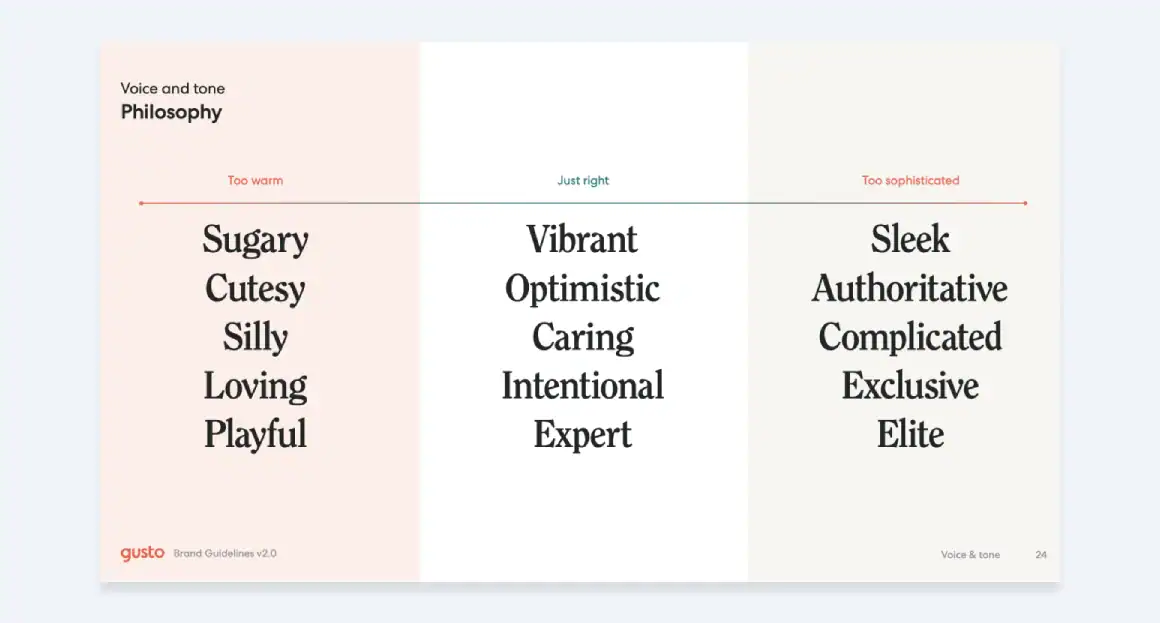
Polished, authoritative, and data-backed, the Corporate voice relies on bulletproof phrasing and zero casual idioms. It conveys stability and institutional weight, making it the default tone for multinational advisory networks such as McKinsey & Company and Deloitte. The risk for mid-market practices is sounding impersonal and interchangeable.
2. Conservative Relational (Professional and Approachable)
Grounded in human-centred storytelling with structured discipline, this archetype balances accessibility with institutional rigour. Firms like Salesforce and American Express deploy this voice to build long-term advisory relationships without sacrificing operational credibility.
3. Conversational (Confident, Human, and Witty)
Clear, direct, and unpretentious, the Conversational archetype replaces corporate hedging with transparent language. Experimental studies cited by Jacob Tyler (2025) reveal that a conversational human voice increases factual knowledge retention by 18% among business readers while boosting overall trust scores by 22%. Brands like Intuit, Mailchimp, and HubSpot use this style to make complex operational tools intuitive.
4. Charismatic (Bold, Direct, and Culturally Fluent)
Sharply opinionated and unreserved, the Charismatic archetype takes direct positions on industry controversies. Deployed by consumer-facing brands like Spotify and Ryanair, this voice demands immediate attention. However, it requires strict risk controls when applied within regulated professional services.
5. Chaotic (Meme-First and Unpredictably Self-Aware)
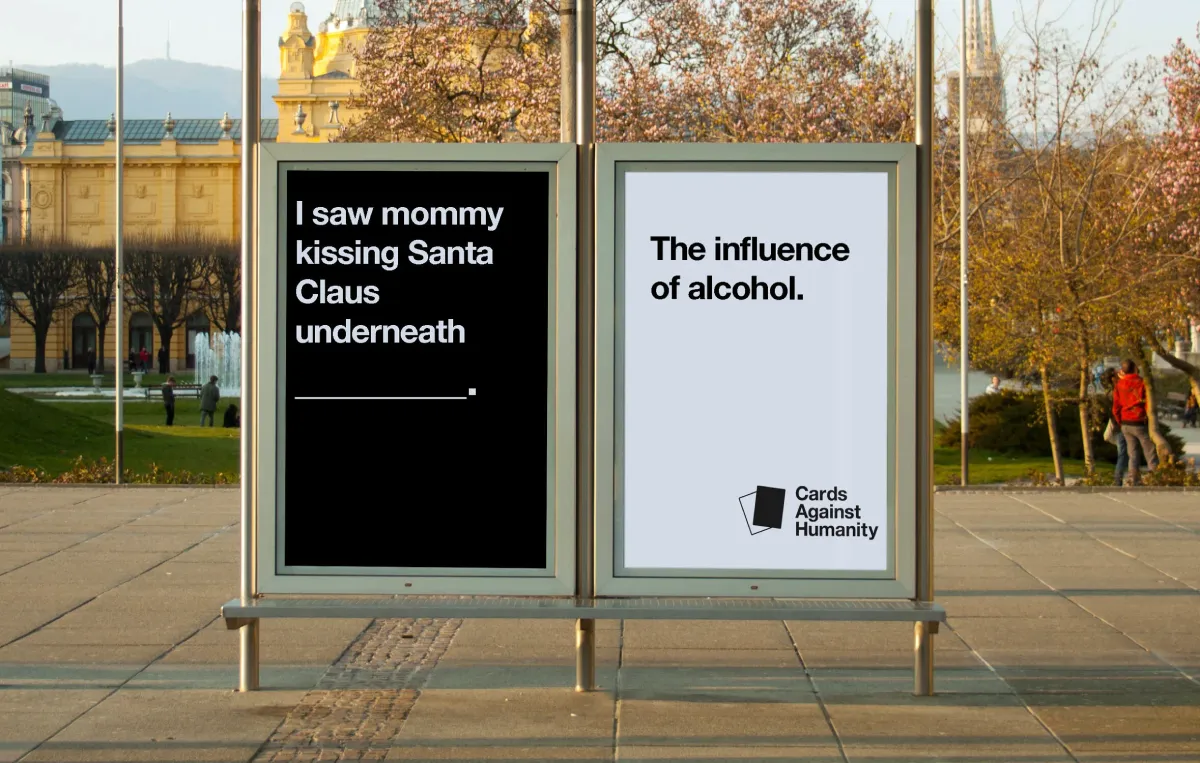
Absurdist and culturally disruptive, this voice leverages irony and viral pop-culture constructs. Popularised by brands like Duolingo and Liquid Death, the Chaotic archetype intentionally breaks traditional communication norms. For B2B professional services practices managing fee-based liability, adopting this category creates unmanageable brand-equity risks.
The Static Personality Trap: Why Archetypes Fail as Badges
The fundamental flaw in standard archetype implementations is the assumption that a brand must choose a single archetype and enforce it permanently. Strategy consultant Rob Meyerson noted in The Drum (2025) that treating brand archetypes as empirical Jungian truths is pseudoscientific. However, Meyerson confirmed that archetypes remain valuable workshop tools if treated as flexible creative frameworks rather than absolute scientific laws.
Similarly, a positioning assessment by the UK strategy firm Saintnicks (2025) found that brand archetypes cannot provide standalone strategic answers. Instead, their true value lies in serving as an operational bridge between abstract positioning concepts and daily marketing execution.
The Voice Evolution Timeline Phase 1: Entry / Launch
Sage + Charismatic
Focus: Establishing clear point-of-view and epistemic authority.
Phase 2: Growth & Scale
Relational + Caregiver
Focus: Lowering perceived buyer risk and building human connection.
Phase 3: Maturity / M&A
Warm Institutionalism
Focus: Enterprise durability, protective governance, and legacy.
When a growing UK professional services firm adopts a single archetype as a permanent badge, three distinct operational failures occur:
- Contextual Inflexibility: A Charismatic voice that draws attention on social media erodes trust when deployed in a fee dispute or a technical compliance audit.
- Homogenised Messaging: Forcing writers to adhere to generic personality traits produces corporate caricature rather than authentic authority.
- Internal Voice Drift: Without strict governance, individual partners revert to legacy writing habits as soon as campaign workshops end.
The Lifecycle Sequencing Framework: Dynamic Voice Governance
Rather than selecting a permanent personality badge, professional services leaders should view brand voice archetypes as a dynamic sequencing model across three distinct growth phases.
Phase 1: Point-of-View Penetration (Sage + Charismatic)
During initial market entry or a strategic repositioning, the brand must establish epistemic authority. The primary objective is challenging incumbent practices with direct, data-backed insights. Voice execution relies heavily on the Sage archetype, supported by Charismatic clarity.
At this stage, memorable market commentary matters far more than broad relational warmth. The firm must state flatly what it believes and what it rejects, often leveraging distinct famous slogans and structured taglines to lock in positioning.
Phase 2: Relational Scale (Conservative Relational + Caregiver)
As the practice scales from £5m to £20m in revenue, the primary commercial friction shifts from gaining initial attention to lowering perceived risk during partner pitches. Here, the voice framework sequences toward Conservative Relational warmth.
The firm highlights client outcomes, operational empathy, and team collaboration. The verbal system shifts from aggressive market commentary to reassuring advisory support.
Phase 3: Institutional Maturity (Warm Institutionalism)
When a business prepares for private equity investment, international expansion, or an M&A exit, the voice strategy must project permanent enterprise durability. The goal is combining institutional authority with human accessibility—a state Inkbot Design terms Warm Institutionalism.
“Brand voice sequencing is the process of adjusting emotional resonance without altering core operational values. Early growth demands provocative authority; institutional maturity demands protective calm.”
Practical Application: Rebuilding Financial Authority at Scale
The practical value of voice sequencing becomes clear when applying the framework to high-stakes financial advisory services. During the rebrand of financial intelligence platform The Technical Traders, the strategic challenge centred on replacing retail-trading anxiety with systematic authority.
Case Study Highlight
The Technical Traders
Legacy Positioning Retail market hype, speculative jargon, and anxiety-inducing messaging.
Warm Institutionalism Calm protective authority, Sage + Caregiver blend, unshakeable risk focus.
In evaluating The Technical Traders, the verbal system needed to step away from aggressive market jargon and hype-driven retail speculation.
The strategy implemented a controlled archetype blend:
- Primary Archetype: Sage (Data-backed market precision and calm analytical focus).
- Secondary Archetype: Caregiver / Guardian (Protective risk management and empathetic investor support).
- Verbal Expression: Warm Institutionalism—delivering complex market analysis through language that feels protective, measured, and unshakeable.
By shifting from speculative noise to calm institutional guidance, the verbal system established immediate credibility with high-net-worth investors.
The rebrand proved that strategic voice alignment is not about adopting a dramatic persona; it is about calibrating authority and empathy to eliminate buyer doubt.

Operationalising Voice Governance with Modern AI Frameworks
Selecting an archetype sequence is only effective if your team can enforce it across daily operations. Historically, brand voice guidelines were contained in PDF brand books that staff rarely read.
In 2026, AI-driven governance tools have transformed voice management from a manual check into an automated system. According to Copy.ai and AVINTIV research (2025), 61% of marketing teams deploy AI tools within their content operations, with 51% actively using AI to monitor brand consistency and language drift.
Automated AI Voice Governance Pipeline 1. Draft Content
→
2. AI Tone Audit
→
3. Archetype Ruleset Check
→
4. Aligned Publication
To build a scalable voice governance engine, professional services firms must establish three technical controls:
- Codified Archetype Rulesets: Feed your primary archetype guidelines, vocabulary lists, and banned phrases directly into custom AI writing models.
- Automated Tone-Drift Audits: Run client-facing proposals, whitepapers, and articles through automated pre-publication checks to detect tone deviations.
- Conversational Channel Alignment: Ensure that AI chatbots and automated client portals adhere to brand voice guidelines. Data show that chatbot interactions aligned with brand voice guidelines deliver 35% higher satisfaction scores than generic automated responses.
Where appropriate, pairing structured messaging systems with clear visual identifiers—for example, by evaluating whether your logo needs a tagline—ensures that verbal and visual touchpoints reinforce the same strategic core.
Strategic Archetype Matrix for Professional Services
Firm Stage | Primary Archetype Blend | Core Strategic Objective | Primary Commercial Risk | Key Messaging Focus |
|---|---|---|---|---|
Early Market Entry (£1m–£5m) | Sage + Charismatic | Challenge incumbent practices and establish a point of view | Sounding unproven or overly aggressive | Data-backed insights, provocative commentary |
Growth & Scale (£5m–£20m) | Conservative Relational + Caregiver | Lower pitch friction and increase client retention | Reverting to generic corporate jargon | Client outcomes, operational empathy, trust |
Institutional Maturity (£20m–£100m+) | Warm Institutionalism (Sage + Ruler) | Protect enterprise value and support M&A goals | Appearing distant or bureaucratic | Industry leadership, stability, protective governance |
Market Repositioning | Explorer + Sage | Shift market perception toward new service lines | Alienating existing retainers | Innovation, future-readiness, strategic evolution |
The Verdict
Brand voice archetypes are neither an absolute law of human psychology nor an irrelevant workshop exercise.
When treated as a static badge, they function as a creative crutch that flattens strategic differentiation into generic corporate noise. When deployed as a dynamic, lifecycle-dependent sequencing framework, they serve as a powerful catalyst for enterprise value.
For UK professional services firms preparing for growth, acquisition, or repositioning, success requires moving beyond simple personality selection.
Define your baseline voice rules, sequence your archetypal signals to match your growth phase, and enforce tone consistency through modern AI governance systems.
If your firm's current messaging sounds identical to your direct competitors, your brand identity is losing commercial ground. Request a free Brand Equity Audit™ at Inkbot Design today.
Our structured diagnostic identifies exactly where your brand identity is leaking market share and outlines the clear strategic steps required to capture market leadership.
Frequently asked questions
What are brand voice archetypes?
Brand voice archetypes are structured models that categorise tone, language patterns, and messaging styles. They translate abstract corporate values into concrete linguistic guidelines, enabling organisations to maintain consistent communication across decentralised teams, marketing campaigns, and client touchpoints.
Do brand voice archetypes increase revenue?
Yes — research demonstrates that consistent brand presentation across channels increases revenue by 23% to 33%. Structured voice archetypes reduce messaging fragmentation, lower client acquisition costs by 18%, and build the buyer trust necessary to command premium advisory fees.
Are brand voice archetypes grounded in Jungian psychology?
No — modern brand archetypes adapt character models inspired by Carl Jung, but their application in marketing is a practical positioning framework rather than an empirical science. They serve as strategic shortcuts for aligning tone rather than psychological facts.
Should a firm stick to one brand voice archetype permanently?
No — locking a growing firm into a single archetype creates messaging friction. Effective brands sequence archetypes dynamically across growth cycles, shifting from provocative, insight-driven tones during early entry toward institutional warmth and stability as the firm matures.
What is the best brand voice archetype for B2B professional services?
The Conservative Relational archetype, often blended with the Sage, works best for B2B professional services. This combination balances data-backed authority with human approachability, reassuring institutional clients without sounding cold, bureaucratic, or overly aggressive.
How do brand voice archetypes differ from visual identity?
Brand voice archetypes govern verbal communications, including vocabulary, syntax, proposal phrasing, and messaging tone. Visual identity governs graphic elements, such as logos, colour palettes, and typography. Both must align to deliver a coherent brand identity.
How does a firm prevent voice drift across large teams?
Firms prevent voice drift by integrating archetype rules into custom AI writing models, conducting automated pre-publication tone audits, establishing clear guidelines for key phrases such as catchy marketing phrases, taglines, and slogans, and setting explicit boundaries on vocabulary.
What is Warm Institutionalism in brand voice strategy?
Warm Institutionalism is a hybrid brand voice model that combines institutional authority with empathetic human accessibility. It communicates enterprise stability, protective risk management, and scale without resorting to cold, robotic, or overly dense corporate jargon.
Can a brand combine two voice archetypes?
Yes — most market-leading brands deploy a primary archetype supported by a secondary archetype. For example, pairing a primary Sage archetype with a secondary Caregiver archetype creates an authoritative yet protective tone ideal for financial, legal, and strategic advisory practices.
How do voice archetypes lower customer acquisition costs?
Voice archetypes establish predictable, high-trust communication patterns that resonate immediately with target buyers. By eliminating confusing messaging and reducing perceived risk during pitches, aligned voice frameworks accelerate sales cycles and cut acquisition costs by up to 18%.