Brand Nomenclature Governance: How to Stop Rogue Sub-Brands
Brand nomenclature governance decides who may create names in your portfolio, under what logic, and through what exception route. Treated as a product architecture control system rather than a style guide, it prevents sprawl, lowers decision latency and protects buyer comprehension. Here is how to properly build the governance guide.
 By Stuart Crawford
 Reviewed by Tabitha Ayers
11 min read
On this page11 min left
A 140-person consultancy launches a new advisory line.
Nobody named it centrally, so the team that built it did – and now “Velocity Partners Transform” sits in the portfolio next to three other service names built on entirely different logic.
No one approved it.
No one can un-approve it either, because there was never a rule about who decides.
That is not a naming problem. That is a governance vacuum, and the name is just the thing that fell through it.
Most guides on brand nomenclature will hand you a taxonomy – descriptive names, evocative names, acronyms – as though the categories were the hard part. They are not.
The categories are the easy part. The hard part is that in a firm of 50 to 200 people, dozens of individuals can create meaning in your portfolio, and almost none of them are supposed to.
A nomenclature governance guide exists to control exactly that. Done well, it is closer to a product architecture control system than to a style manual.
If you are building the naming discipline into a wider rebrand, it should sit inside your brand naming strategy, not bolted on afterwards.
How Brand Nomenclature Governance Is Achieved
Brand nomenclature governance is achieved in six stages: define the naming logic, map the current portfolio, set the decision authority, publish the guardrails, build the exception process, and enforce through review. It works by answering one question most naming rules never ask – not “what should things be called?” but “who is allowed to create a name, and under what constraints?”
- It controls decision authority, not just naming style.
- It prevents portfolio sprawl by making unauthorised naming structurally difficult.
- It lowers decision latency by removing case-by-case debate.
Brand nomenclature governance is a decision framework controlling who may create names in a portfolio, the logic they must follow, and the exception process for new names.
What You Need in Place First
You need three things before writing a single rule, and most firms skip all three. First, a complete inventory of every name currently in use – service lines, sub-brands, internal programmes, client-facing products.
You cannot govern a portfolio you have not counted.
Second, agreement at the partner level that naming is a decision with an owner, not a creative preference to be voted on.
Third, an honest read of why the current sprawl happened.
Recent research links organisational silos to weaker brand consistency and fragmented brand responsibility. That is the usual root cause.
When each department owns its own outputs, each department names them – and no shared logic survives contact with three ambitious team leads.
If your firm is structured in silos, the governance guide has to fight that structure rather than assume it away.
Stage One: Define the Naming Logic
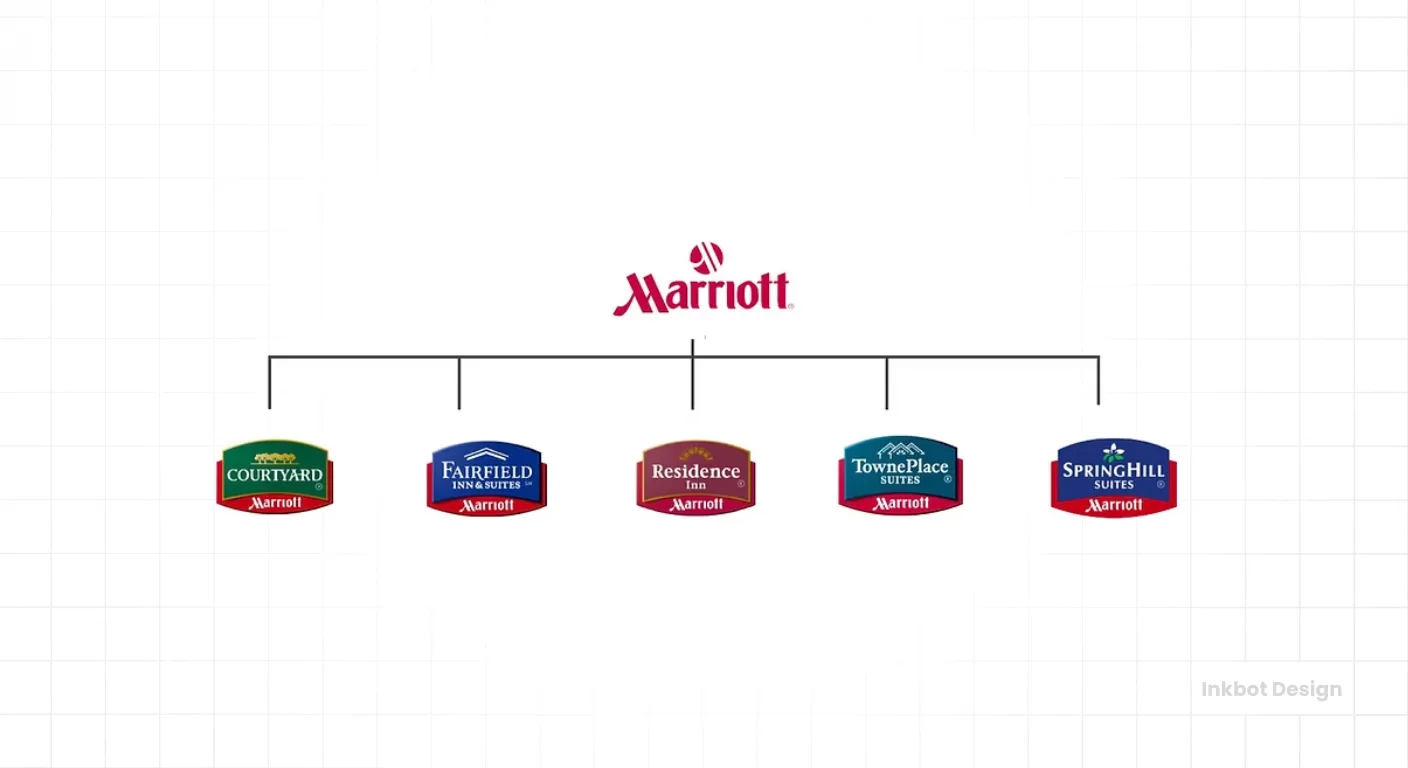
The naming logic is the rule set that determines how any new name relates to the parent brand – and it must exist before any individual name is debated.
Most firms argue over specific names because they never agree on the underlying logic.
Decide first whether you run a branded house (everything carries the master brand, like the Audi Q-series, where the parent name repeats through every model) or a house of brands (distinct names under a quiet parent).
For a professional services firm of this size, a branded house is almost always the right approach because your equity lives in the firm name, and every sub-brand you spin off dilutes it.
You know this stage is done when a team lead can predict what a new service would be called without asking you. If the logic is clear, the name is nearly automatic.
The failure mode here is to define aesthetic preferences (“we like short names”) rather than relational logic (“service lines take the format [Firm] + [Function]”).
Aesthetics do not scale. Relational rules do.
Stage Two: Map the Current Portfolio
Mapping the portfolio means listing every live name and classifying it against the logic you just defined – before you write forward-looking rules.
This is the unglamorous stage that everyone wants to skip, and no one can afford to.
Inconsistent product naming creates confusion and harms browsing and comparison; the principle holds just as firmly inside a service portfolio as on a retailer's shelf.
A buyer comparing your four advisory lines cannot tell which is which if a different logic names each.
The map's job is to surface the offenders. You are looking for names that break the logic, names that duplicate meaning, and names nobody can justify.
You know this stage is done when every name is either “compliant”, “grandfathered with a reason”, or “flagged for retirement”.
The failure mode is treating the map as a spreadsheet exercise rather than a decision exercise – cataloguing sprawl without committing to fix it.
Stage Three: Set the Decision Authority
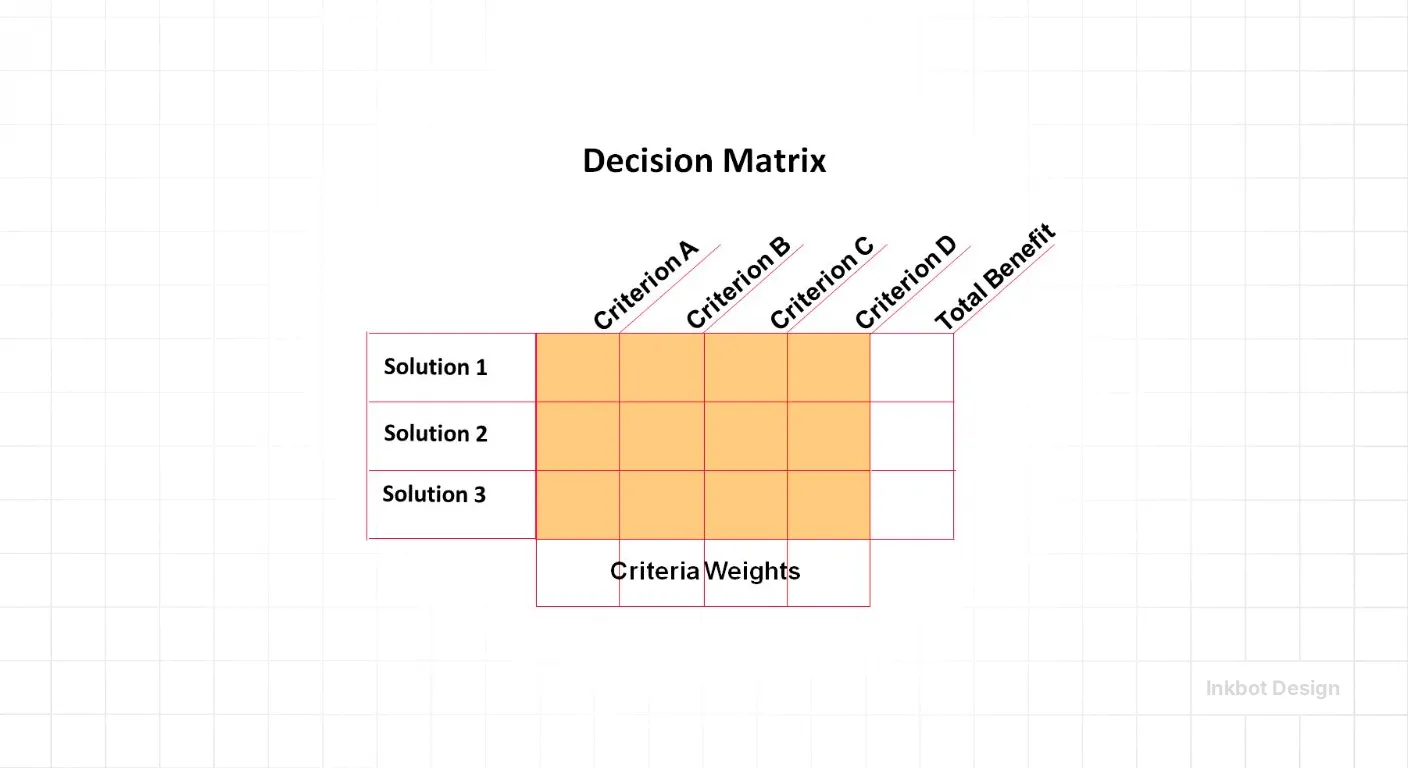
Decision authority is the named individual or role who can approve or reject a new name, and its absence is the single most common reason governance fails.
This is the stage the competing articles omit entirely. They tell you to “get approvals” without saying whose.
A nomenclature guide with no named owner is a document, not a control. Someone – usually the Managing Partner or a brand owner reporting to them – must hold a genuine veto.
“Naming rules do not fail because they are wrong. They fail because no one owns them. A guardrail nobody is authorised to enforce is a suggestion, and suggestions do not survive an ambitious team lead with a launch date.”
You know this stage is done when every person in the firm can name the individual who signs off on a new name.
Naming at scale now requires governance, decision ownership, and cross-functional alignment – the ownership is the load-bearing word.
The failure mode is diffusing authority across a committee, which reintroduces exactly the debate the governance guide was meant to end.
Stage Four: Publish the Guardrails
The guardrails are the written, circulated rules that make compliant naming easy and rogue naming difficult – and they must be published, not filed.
Brand guidelines exist to keep a brand consistent across look, feel and voice; nomenclature guardrails are the naming layer of that same system, not a separate creative exercise.
Keep them short enough that a team lead reads them before inventing a name, not after.
A useful guardrail set for a firm of this size covers: the approved name format for each portfolio tier, the words and structures that are off-limits, the trademark and domain check required before any name goes live, and the one-line reason each rule exists.
You know this stage is done when guardrails are referenced in the actual moment of naming – in the launch template, not a forgotten wiki. The failure mode is a beautiful guide nobody reads at the point of decision.
Stage Five: Build the Exception Process
The exception process is the defined route by which a legitimate new name gets approved outside the standard logic – and it is what separates governance from bureaucracy.
Rigid rules with no exception route do not stop rogue naming; they drive it underground, because a team with a real case and no legitimate path will simply act without asking.
A good exception process is fast, named, and documented: who requests, who decides, how long it takes, and where the decision is recorded.
This is where nomenclature governance stops being branding police and becomes an operating system.
The question it answers is not “is this name allowed?” but “who is allowed to create meaning here, under what logic, and through what exception route?” You know this stage is done when a team with a genuine case uses the process rather than circumventing it.
The failure mode is an exception process so slow that bypassing it is the rational choice.
The Step Everyone Gets in the Wrong Order

Here is the sequence correction that separates a working guide from a cosmetic one: firms write the guardrails first and set the decision authority last, or never.
That is backwards.
Guardrails without an owner are the most common failure I see in nomenclature work – a firm invests weeks in a polished naming rulebook, circulates it, and watches a rogue sub-brand appear within the quarter, because no named person had the authority or the mandate to say no.
Set authority before rules.
A named owner with a mediocre ruleset will hold the portfolio together; a perfect ruleset with no owner will not survive its first ambitious launch.
The prevailing advice – “create rules, get approvals, stay consistent” – is not wrong, but it front-loads the artefact and back-loads the control. Reverse it. Decide who governs, then write what they govern with.
The Verdict
The reason your naming feels inconsistent is not that your team lacks taste. It is that your firm has never decided who is allowed to create meaning in the portfolio.
That is a governance question, and it has a governance answer: name the owner first, publish the logic second, and give legitimate exceptions a fast, documented route so nobody has a reason to route around you.
Treat brand nomenclature as a control system, and the sprawl stops being mysterious.
Every rogue sub-brand traces back to the same vacuum – a decision that had no owner at the moment it was made. Fill that vacuum, and the naming takes care of itself, because a team lead who knows the logic and knows who signs off rarely needs to invent anything.
The taxonomy of names was never the hard part. The authority behind them always was.
Start today with the least glamorous stage: count every name currently living in your firm and classify each against a single logic.
You will find the offenders faster than you expect, and the map alone will tell you where your governance vacuum sits.
If you want an outside read on where your brand is losing commercial ground before a rebrand, request a free Brand Equity Audit™ – a structured, written diagnostic delivered in 48 hours, no sales call. It shows exactly where the brand is leaking value and what to do about it.
For the wider structural work this sits inside, see our brand architecture service.
Frequently asked questions
What is brand nomenclature governance?
Brand nomenclature governance is the system controlling who may create names in a portfolio, the logic those names must follow, and the exception process for new ones. It treats naming as a decision framework with a named owner, not a creative style exercise, which is what prevents portfolio sprawl.
Why do product managers create rogue sub-brands?
Because no one owns the naming decision, when authority is undefined, an ambitious team lead with a launch date will name their own work rather than wait. Rogue sub-brands are a symptom of a governance vacuum, not a discipline problem, and they disappear when a named owner holds a genuine veto.
How is nomenclature governance different from brand guidelines?
Brand guidelines keep look, feel and voice consistent. Nomenclature governance is the naming layer of that same system, but it adds something guidelines rarely do: a named decision owner and an exception process. Guidelines describe the rules; governance decides who enforces them and how new names get approved.
Who should own naming decisions in a professional services firm?
Usually, the Managing Partner or a brand owner reports directly to them. The owner needs a genuine veto and the mandate to use it. Diffusing authority across a committee reintroduces the debate that governance was meant to end, so a single named individual is more effective than a group.
When should I build a nomenclature governance guide?
Before a growth phase, acquisition, or rebrand – the three moments naming discipline reliably breaks. Growth spawns new service lines, acquisitions merge two naming logics, and rebrands expose the absence of an owner. Building the guide beforehand prevents sprawl rather than cataloguing it afterwards.
Is a branded house better than a house of brands for professional services?
Yes – for firms of 50 to 200 people, a branded house is almost always correct. Your commercial equity lives in the firm name, and every distinct sub-brand you spin off dilutes it. Keeping the master brand on every service line concentrates recognition rather than scattering it.
What is the biggest mistake in nomenclature governance?
Writing the guardrails before setting the decision authority. A polished rulebook with no named owner will not survive its first ambitious launch. Authority must come first: a mediocre ruleset with a real owner holds the portfolio together better than a perfect ruleset nobody can enforce.
Do rigid naming rules stop rogue sub-brands?
No – rigid rules with no exception route drive rogue naming underground. A team with a legitimate case and no legitimate path will act without asking. A fast, documented exception process is what keeps naming inside the system rather than pushing capable people to route around it.
How does naming sprawl actually cost money?
Sprawl raises decision latency and damages buyer comprehension. Every unmanaged name adds a case-by-case debate internally and a moment of confusion externally. Inconsistent naming harms comparison and browsing, so prospects evaluating your service lines struggle to tell which is which, which slows their decision and yours.
What causes inconsistent naming in the first place?
Organisational silos. Research links siloed structures to weaker brand consistency and fragmented brand responsibility. When each department owns its outputs, each names them, and no shared logic survives. A governance guide has to work against that structure deliberately rather than assume a unified naming culture exists.
How long does it take to build a nomenclature governance guide?
The writing is fast; the decisions are not. Mapping the current portfolio and securing partner agreement on decision authority takes the longest, because they surface disagreements the firm has avoided. The guardrails themselves can be drafted in days once the authority question is settled.
Where should nomenclature governance sit in a rebrand?
Inside the brand architecture work, it is not bolted on afterwards. Naming logic depends on the portfolio structure, so it should be defined alongside the portfolio's organisation. Treating it as a late-stage style decision produces rules that conflict with the architecture already agreed upon.