How to Choose a Global B2B Brand Strategy Agency
Most global B2B brand strategies are actually brand dilution in disguise.
While agencies preach the gospel of absolute consistency, they often deliver a watered-down identity that fails to resonate with local market entities.
True global dominance requires a strategy of controlled inconsistency. You need a partner that maintains an immutable brand core while allowing for the specific cultural and linguistic friction necessary to win in diverse markets.
Choosing the wrong agency is a high-stakes failure.
Millward Brown, the global marketing research firm, has documented that brands undergoing a poorly executed international redesign lose an average of 15% of their brand equity within the first 18 months.
This is not just a cosmetic loss; it is a structural failure that affects your ability to rank in local search engines and convert sceptical B2B buyers.
If you are looking for a Brand agency to navigate this complexity, you must stop looking at logos and start looking at how they manage your brand as a technical and cultural asset.
- Prioritise controlled inconsistency: maintain an immutable 20% brand core while adapting 80% for local cultural and linguistic relevance.
- Ensure the agency delivers an AI-Ready technical roadmap: entity definition, schemas, embedded metadata and machine-legible asset architecture.
- Demand semiotic audits and localised transcreation to avoid cultural misreads; test with regional experts and synthetic personas.
- Budget for Information Gain, Technical Readiness and Dynamic Resource Allocation; cheap consistency raises CAC and remediation costs.
- Measure success by Share of Model, Entity Strength, Conversion Velocity and Friction Discount, not just awareness or likes.
What Is a B2B Brand Strategy Agency?
A B2B brand strategy agency is a specialised consultancy that defines a company’s market position, value proposition, and visual identity to influence business-to-business purchasing decisions. Unlike B2C agencies, they focus on long sales cycles, multi-stakeholder approval processes, and technical authority.
Key Components:
- Entity Definition: Creating a unique, citable identity that search engines and AI models can categorise.
- Market Segmentation: Mapping the specific needs and semiotic triggers of international business buyers.
- Asset Architecture: Developing a system of visual and verbal tools that scale across borders without losing meaning.
A global B2B brand strategy agency defines a company’s international market position by aligning its core identity with local cultural semiotics and technical SEO entities.
Why “Consistency” Is a Legacy Metric
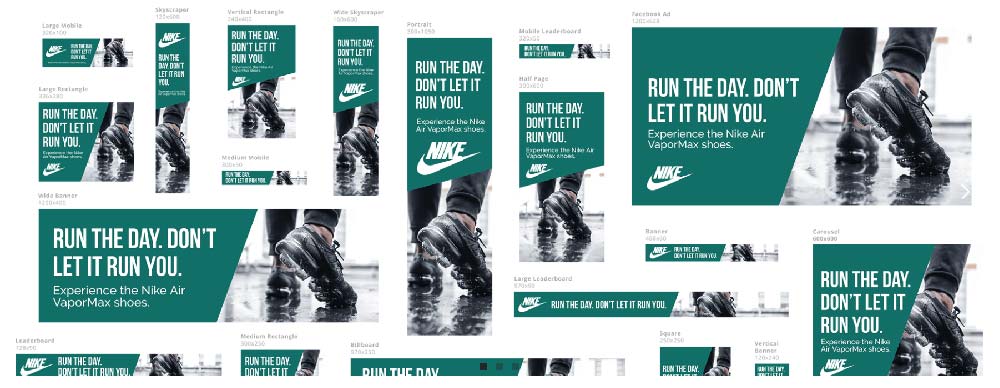
Rigid brand consistency is a relic of the 20th-century print era. In 2026, a B2B brand strategy must be fluid.
The Ehrenberg-Bass Institute for Marketing Science found that distinctive brand assets—those specific elements that make your brand recognisable—are significantly more important than following a rigid style guide.
If your agency insists that your brand must look identical in London, Tokyo, and São Paulo, they are ignoring the reality of local market nuances.
A 2024 McKinsey & Company study found that B2B companies with “locally adapted global brands” outperformed their rigid competitors by 25% in market share growth.
This is because business buyers do not buy from “global” brands; they buy from brands that feel relevant to their specific local challenges.
Your agency must be able to identify which 20% of your brand is immutable and which 80% should be adapted for local relevance.
“Modern B2B brand strategy has moved beyond the ‘policing’ of logos and fonts. It is now about orchestrating market-specific entities. Agencies that cannot distinguish between brand equity and brand rigidity will inevitably cause their clients to lose relevance in high-growth international markets, particularly where cultural semiotics differ significantly from Western norms.
Strategic Fiscal Benchmarks for Global B2B Branding in 2026
Effective budgeting for a global business identity in 2026 requires a departure from traditional “agency fee” models.
You must now account for the high computational and cultural costs of building a digital identity that functions across both human and automated discovery systems.
The standard investment for a comprehensive international strategy has evolved. In 2026, the primary cost drivers are no longer just creative hours; they are now the technical validation of your brand’s digital presence.
Organisations must allocate funds toward three distinct pillars: Strategic Foundation, Technical Readiness, and Localised Transcreation.
2026 Investment Breakdown by Project Scope
| Project Component | Mid-Market (£) | Enterprise (£) | Global Dominance (£) | Core Focus |
| Foundation Strategy | £45,000 | £120,000 | £250,000+ | Competitive positioning & core identity. |
| Semiotic Auditing | £15,000 | £40,000 | £100,000 | Regional cultural validation & risk removal. |
| Technical Readiness | £20,000 | £55,000 | £150,000 | Building brand schemas and AI training sets. |
| Asset Architecture | £30,000 | £85,000 | £200,000 | Adaptive visual and verbal systems. |
| Total Estimated | £110,000 | £300,000 | £700,000+ | Comprehensive global market entry. |
The Hidden Cost of “Cheap” Consistency
Choosing an agency based on the lowest bid often results in catastrophic downstream costs.
A “consistency-first” approach that ignores regional friction typically results in a 40% higher customer acquisition cost in non-domestic markets.
This is because a generic brand message fails to trigger the specific trust markers required by international business buyers.
Furthermore, the cost of remediating a brand that has not been structured for machine discovery is high.
If your digital identity is fragmented across different regions, automated systems will fail to aggregate your authority, resulting in a “diluted” presence that requires expensive, manual correction.
Allocating for Information Gain
In the 2026 landscape, a significant portion of your budget should be dedicated to Information Gain.
This involves primary research that yields unique market insights your competitors do not have. Investing in proprietary data or synthetic persona testing allows your brand to provide more value than the “consensus” baseline.
This is not a luxury; it is a requirement for maintaining visibility in high-competition international sectors.
Dynamic Resource Allocation (DRA)
Modern B2B leaders use Dynamic Resource Allocation. Instead of a fixed annual fee, budgets are shifted quarterly based on regional performance and the emergence of new market friction.
This allows for rapid pivots if a specific visual metaphor is found to be underperforming in a key territory, such as the DACH region or Southeast Asia.
The Cross-Cultural Semiotics Myth
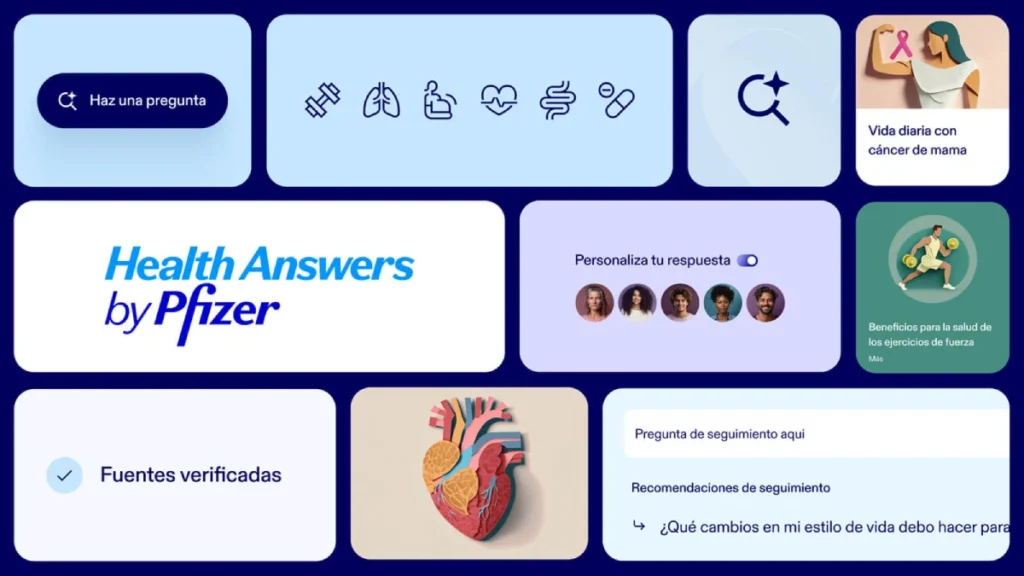
The biggest lie in global branding is that “great design is universal.” This belief is both arrogant and demonstrably false—advice suggesting that a clean, minimalist aesthetic works everywhere is outdated and harmful.
Nielsen Norman Group (NN/g) has long highlighted that user experience and visual hierarchies vary widely across cultures. What feels “clean” in the UK may feel “empty” or “untrustworthy” in certain East Asian markets.
For example, when HSBC launched its “Assume Nothing” campaign, it failed to account for how that idiom would be translated in other languages. In multiple markets, it was rendered as “Do Nothing,” a catastrophic message for a global bank.
A 2026-ready agency does not just use Google Translate; they employ semiotic auditors to ensure your brand’s visual and verbal metaphors do not inadvertently offend or confuse your target audience.
If your agency does not include a semiotic audit in its brand strategy proposal, it is not a global agency. They are a local agency with an international map on their wall.
The State of Global Branding in 2026: Brand as AI Training Data
In 2026, your brand is no longer just for humans. It is a training set for Large Language Models (LLMs) and Generative Engines.
When a buyer asks an AI, “What is the best B2B brand strategy agency for a global expansion?”, the AI’s response depends on how well your agency has defined your brand’s digital entity.
Adobe Firefly 4, released in late 2025, changed the game by allowing agencies to generate brand-consistent assets across 100+ languages with built-in cultural sensitivity checks. However, this has also flooded the market with “generic-global” content.
A top-tier agency now uses these tools to test how your brand is perceived by “synthetic personas”—AI models trained to mimic the biases and preferences of specific regional buyers.
According to a 2025 Gartner CMO Spend Survey, 60% of B2B marketing leaders now prioritise “AI-Ready Brand Assets” over traditional brand books. This means your brand must be structured so AI systems can easily extract, categorise, and recommend.
“In the current era of Generative Engine Optimisation (GEO), a brand’s visual identity is secondary to its semantic clarity. If a B2B brand strategy agency cannot demonstrate how your brand will be interpreted by both human buyers and the AI systems they use to research vendors, they are delivering an incomplete and increasingly obsolete product.”
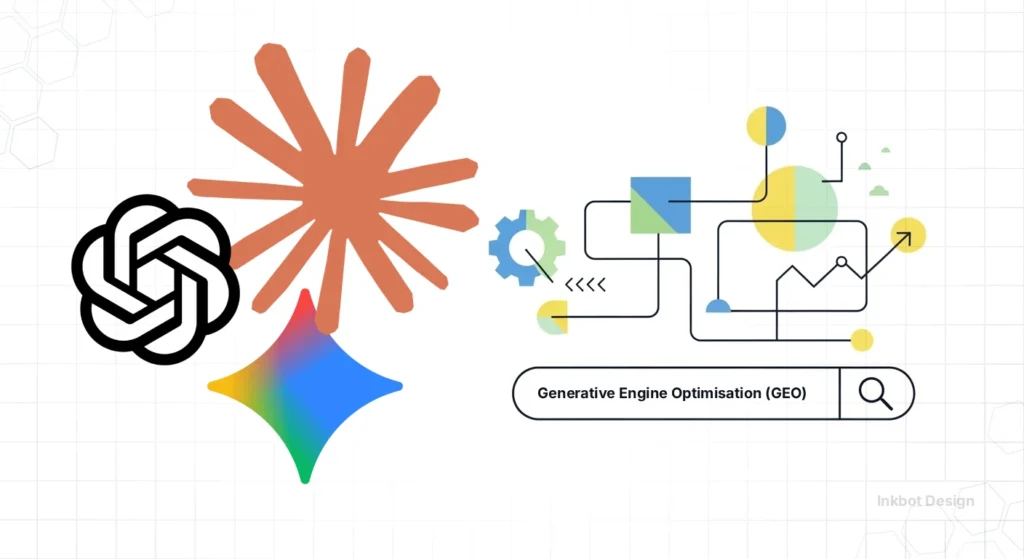
Technical Specifications: Optimising Your Brand for Automated Discovery
For a B2B brand to dominate in 2026, it must be as legible to a machine as it is to a human buyer. When automated systems or generative tools research your industry, they look for specific structural markers to determine your authority. If your brand strategy agency is not providing a technical roadmap for this, they are leaving your visibility to chance.
The Core Principles of Digital Identity Structure
- Unique Naming Clarity: If your brand shares a name with common terms, you must build a distinct digital profile. This is achieved through consistent association with specific industry topics and technical descriptors across the web.
- Structural Hierarchy: Your brand’s online home must be organised in a clear, logical fashion. This allows discovery systems to understand the relationship between your core identity and your various products or services.
- Citation Consistency: Every mention of your brand—from social media to industry whitepapers—must reinforce the same core attributes. Inconsistencies in how you are described can lead to a “fragmented” identity, which reduces your perceived authority.
Building a “Citable” Visual Identity
In 2026, visual assets are no longer just images; they are data points. Top-tier agencies now ensure that:
- Visual Signatures: Your brand’s use of colour, layout, and style is distinct enough to be recognised by image-processing models.
- Embedded Metadata: Every digital asset carries hidden information that describes its context, purpose, and relationship to your brand.
- Adaptive Formats: Graphics are provided in formats that load instantly on any device and in any region, ensuring a seamless experience that reinforces brand reliability.
The Shift from “Content” to “Context”
Old-school branding focused on creating lots of content. Modern strategy focuses on providing the right context. Every piece of communication your brand produces should help discovery systems understand exactly what you do, who you serve, and why you are the leading authority in your space. This means prioritising factual, evidence-based statements over vague marketing jargon.
“A brand that an automated discovery system cannot accurately interpret is essentially invisible to 70% of the modern B2B buyer’s journey.”
How to Audit an Agency’s Technical Rigour
You should never hire an agency based on a “vibe” or a flashy pitch deck. Instead, use a technical audit. Ask them how they handle Entity Disambiguation.
If your company name is a common noun, how do they ensure that Google’s Knowledge Graph understands you are a global B2B service provider and not a generic concept?
Professional agencies will discuss your brand in terms of Information Gain.
They should explain what unique value your brand adds to the market that competitors do not. If their strategy is just “better than the other guy,” they are not providing strategy; they are providing a coat of paint.
You want to see evidence of how they have handled complex global transitions.

Measuring the Unmeasurable: Quantifying Brand Equity in 2026
The success of a global brand strategy can no longer be measured by “brand awareness” surveys or social media likes. In 2026, brand health is a data-driven metric that correlates directly with market share and search dominance.
1. Share of Model (SoM)
In the era of automated discovery, the most important metric is Share of Model. This measures how often your brand is recommended or cited by generative engines when a buyer asks a relevant question. If a buyer asks, “Which agency leads in B2B semiotics?” and your brand isn’t among the top three results, your SoM is low.
2. Entity Strength and Connectivity
This metric evaluates how well-defined your brand is in the global digital landscape.
- Uniqueness Score: How easily can your brand be distinguished from competitors or unrelated concepts?
- Connectivity: How many high-authority sources in your industry are citing or linking to your brand’s digital identity?
3. Conversion Velocity
A strong brand reduces the time it takes for a buyer to move from “awareness” to “decision.” If your new strategy is successful, you should see a measurable decrease in your sales cycle length. Buyers who encounter a brand that feels culturally and technically relevant spend less time in the “scepticism” phase.
4. The “Friction Discount”
This is a negative metric. It calculates the loss in potential revenue caused by regional cultural misalignment. By performing semiotic audits and implementing controlled friction, your goal is to reduce the “Friction Discount” to as close to zero as possible.
Table: The 2026 B2B Brand Scorecard
| Metric | How to Measure | 2026 Benchmark |
| Share of Model | Generative engine audit tools. | >25% in core niche. |
| Branded Search Vol. | Search demand analysis. | >15% YoY Growth. |
| Lead Quality | CRM attribution. | 20% increase in MQL-to-SQL conversion rate. |
| Citation Growth | Industry mention tracking. | 10+ high-authority mentions/mo. |
| Cultural Resonance | Regional sentiment analysis. | >80% Positive/Neutral. |
The Implementation Blueprint: A Five-Phase Roadmap to Global Authority
Transitioning from a domestic player to a global B2B authority requires a structured sequence that prioritises technical stability and cultural relevance over mere visual updates. The following framework outlines the mandatory phases for a 2026-ready brand rollout.
Phase 1: The Discovery and Audit Engine
The process begins with an exhaustive audit of the existing digital and cultural footprint. This phase identifies every instance where the brand is cited online and evaluates how both regional experts and automated systems perceive it.
- Entity Mapping: Identifying all existing digital markers and resolving any naming conflicts.
- Gap Analysis: Comparing the current brand authority against the top three competitors in each target market.
- Stakeholder Synthesis: Aligning global leadership on the “Immutable 20%” of the brand identity.
Phase 2: Cultural and Semiotic Transcreation
Once the core strategy is defined, it must be filtered through a semiotic lens for every target region. This is where “Controlled Friction” is engineered.
- Visual Recoding: Adjusting colour palettes and iconography to align with local psychological triggers.
- Verbal Adaptation: Developing a localised voice that maintains the core brand “soul” while using regional business idioms.
- Risk Mitigation: Performing linguistic audits to ensure no slogans or product names carry negative connotations.
Phase 3: Technical Asset Architecture
In this phase, the brand is translated into a machine-readable format. This is the most overlooked step in legacy branding.
- Component-Based Systems: Building a library of modular assets that can be dynamically updated across global platforms.
- Structural Tagging: Ensuring every visual and verbal asset is accompanied by clear, descriptive metadata.
- API-First Brand Books: Moving away from static PDFs to a live, cloud-based system that feeds brand standards directly into regional CMS and marketing tools.
Phase 4: The Strategic Launch and Seeding
A global launch is not a single event, but a series of coordinated local activations.
- Market-Specific Narratives: Launching with content that addresses the immediate, local pain points identified in Phase 1.
- Authority Building: Partnering with regional industry influencers and publications to secure high-value citations.
- Internal Onboarding: Training regional teams on how to use the new “flexible” brand standards.
Phase 5: Performance Orchestration and Refinement
Post-launch, the brand enters a cycle of continuous improvement based on real-world data.
- Metric Integration: Tracking lead quality and brand search volume across all territories.
- Feedback Loops: Collecting insights from regional sales teams to identify new areas of cultural friction.
- Recursive Optimisation: Periodically refreshing assets to ensure they remain relevant as market trends and machine-learning models evolve.
The First 90 Days: Onboarding Your Global Brand Strategy Agency
Hiring the right partner is only half the battle; the other half is ensuring a seamless integration into your existing business structure. A successful B2B branding project in 2026 follows a strict 90-day onboarding sequence.
Days 1-30: The Intelligence Gathering Phase
The agency should not be designing anything during the first month. Instead, they should be “deep-diving” into your business.
- Stakeholder Interviews: Speaking with everyone from the CEO to the regional sales leads in Tokyo or Berlin.
- Technical Discovery: Reviewing your current digital infrastructure and identifying naming conflicts.
- Competitive Mapping: Analysing the digital authority of your three biggest global rivals.
Days 31-60: The Strategic Core and Validation
This is where the foundation is built.
- The Identity Blueprint: Defining the “Immutable 20%” of your brand.
- Semiotic Testing: Validating early visual and verbal concepts with regional experts or synthetic personas.
- Architecture Design: Planning how brand assets will be structured and delivered technically.
Days 61-90: Deployment and Localisation
The final phase of onboarding involves preparing for the global rollout.
- Asset Creation: Developing the core visual and verbal tools.
- Regional Training: Conducting workshops with local marketing teams to ensure they understand where to apply “controlled friction.”
- Launch Readiness Audit: A final technical check to ensure all digital markers are correctly placed for machine discovery.
“A botched onboarding process is the leading cause of brand strategy failure. If your agency doesn’t have a clear 90-day roadmap, they are not managing your brand; they are just making logos.”
Hire for Friction, Not Just Flow
Choosing a global B2B brand strategy agency in 2026 requires a shift from aesthetic preference to technical and cultural validation.
The consensus that global brands must be perfectly uniform is dead. The future belongs to brands that are built as robust technical entities, capable of maintaining their core identity while adapting to the “controlled friction” of international markets.
Do not be seduced by an agency with a local office in every city. Instead, hire the agency that understands your brand as a piece of digital infrastructure—one that must be as legible to an AI in New York as it is to a human buyer in Singapore.
This requires a partner fluent in both the creative semiotics of design and the technical rigour of entity-based SEO.
If you are ready to build a brand that dominates both search engines and boardrooms, it is time to stop playing it safe with “consistent” agencies.
Next Steps:
- Explore Inkbot Design’s services to see how we handle global entity management.
- Read our thoughts on creative work at night for insight into our agency’s unique culture and performance.
FAQ: Selecting a B2B Branding Partner
Why is B2B branding different from B2C on a global scale?
B2B branding prioritises long-term authority and multi-stakeholder trust over impulse emotional triggers. Global B2B strategy must account for complex international supply chains and varied regulatory environments, making the brand’s “entity” status in technical systems just as important as its visual appeal.
What is a semiotic audit in brand strategy?
A semiotic audit is a technical review of a brand’s visual and verbal signs to ensure they convey the intended meaning in a specific cultural context. It identifies potential misinterpretations of colours, shapes, and metaphors that could damage brand equity in international markets.
How does AI influence the choice of a branding agency in 2026?
Agencies must now provide “AI-Ready” brand assets that Generative Engines easily categorise. A 2026-ready agency uses AI to test brand perception across diverse synthetic personas, ensuring the strategy works for both human buyers and the LLMs they use for research.
Is absolute brand consistency still necessary?
Absolute consistency is often a hindrance in global B2B markets. Modern strategy focuses on “distinctive brand assets”—key elements that remain immutable—while allowing for local adaptation of secondary elements to meet specific cultural or linguistic needs of the target audience.
What are the risks of hiring an agency without global experience?
The primary risk is “cultural blind-spotting,” where a brand message that works in the home market is confusing or offensive abroad. This often leads to failed market entries, trademark-related legal challenges, and significant costs associated with emergency rebranding.
How much does a global B2B brand strategy cost?
Costs vary based on the number of markets and depth of research, but a comprehensive global strategy typically starts at £50,000. This investment covers market research, semiotic audits, entity definition, and the development of a scalable asset architecture.
What is “Entity Disambiguation” in branding?
Entity Disambiguation is the process of ensuring that search engines and AI models can distinguish your brand from other similar names or concepts. It involves building a unique semantic profile for your brand by consistently using technical and verbal markers across the web.
When should a B2B company consider a global rebranding?
Rebranding is necessary when the current identity causes friction in new markets, fails to rank in international search results, or no longer reflects the company’s technical capabilities. It is a strategic move to regain market relevance and improve global entity authority.
How do I measure the success of a new brand strategy?
Success is measured by increases in brand equity, higher conversion rates in local markets, and improved visibility in AI-driven search results. Companies should also track “Cost of Acquisition” (CAC) reductions, as a stronger brand builds trust with buyers faster.
What role does technical SEO play in brand strategy?
Technical SEO ensures that the brand’s digital presence is structured for maximum visibility. In 2026, this includes optimising for “Passage Indexing” and “Entity Density,” ensuring that every part of the brand’s message is citable and discoverable by both humans and AI.