Accountancy Niche Specialisation: How to Choose the Right Market
Accountancy niche specialisation can help a practice develop deeper sector expertise, improve its market position and create more repeatable services. But choosing an industry is only the beginning. Partners must also consider commercial demand, delivery capacity, pricing, staffing and the firm's ability to demonstrate genuine specialist knowledge.
 By Stuart Crawford
 Reviewed by Tabitha Ayers
15 min read

On this page15 min left
- What Is Accountancy Niche Specialisation?
- Which Accountancy Niche Should Your Practice Choose?
- How Do You Test Whether an Accountancy Niche Is Commercially Viable?
- What Must Change Inside Your Practice Before You Specialise?
- How Should Specialist Accountancy Services Be Priced and Packaged?
- How Do You Position and Market a Specialist Accountancy Practice?
- How Do You Measure Whether Your Specialisation Is Working?
- The Verdict: Build the Specialist Practice Before Marketing It
- Questions people ask
Accountancy firms rarely struggle because they lack technical knowledge. They struggle because prospective clients cannot see why they should choose one practice over another.
A generalist firm might offer accounts preparation, corporation tax, VAT, payroll and advisory services. So do dozens of competitors. The service list outlines what the practice does. It says very little about who the practice understands particularly well.
Accountancy niche specialisation means concentrating a practice's expertise, services and commercial resources on a defined industry or client group. The objective is to become a more relevant choice for a particular type of client.
Research supplied by the Hinge Research Institute suggests that high-growth professional-services firms are three times more likely to be highly specialised. That is an interesting finding, although the original publication and methodology require verification before publication.
The commercial opportunity is worth examining. The mistake is assuming that a new website, a few industry-specific landing pages and a revised elevator pitch constitute specialisation.
They do not.
A practice must be capable of delivering the expertise it claims to possess. That requires changes to the business itself, followed by a clear market position that prospective clients can recognise.
For a wider view of how that market position should be developed, see Inkbot Design's guide to accountancy firm branding.
What Is Accountancy Niche Specialisation?

Accountancy niche specialisation is the process of focusing an accounting practice on a defined industry, profession, business model or client group and developing the expertise and services needed to serve that market.
Rather than competing across every available accounting service, a specialist practice builds its proposition around the financial requirements of a particular audience.
Three characteristics distinguish a genuine specialist:
- Defined audience: The practice knows precisely which businesses or individuals it wants to serve.
- Relevant expertise: The team understands the financial, operational and regulatory issues affecting that audience.
- Adapted delivery: Services, pricing, processes and client communication reflect the requirements of the chosen market.
A practice specialising in construction accounting, for example, needs to understand the financial realities of contractors, project costs, cash flow, subcontractors and contract-related financial reporting.
Offering construction companies the same generic bookkeeping package sold to a local retailer does not automatically make a practice a construction accounting specialist.
The distinction matters.
It also gives partners a much clearer basis for deciding which opportunities to pursue.
Which Accountancy Niche Should Your Practice Choose?
The right specialisation is the intersection of three things: identifiable client demand, the practice's ability to deliver specialist expertise and a commercially attractive business model.
Choosing an industry simply because it sounds lucrative is a poor starting point.
A partner might see an opportunity in medical practices, for example, but have limited experience with healthcare businesses, no established referral relationships and insufficient staff capacity to develop the required expertise.
That is a market opportunity, perhaps. It is not yet a viable specialisation.
Start with the clients you already understand
Existing client relationships can provide a useful starting point when evaluating potential markets.
Examine the practice's current portfolio. Look beyond annual fee income.
Consider:
- Which industries generate the strongest recurring relationships?
- Which clients require similar services and advice?
- Where does the team already have meaningful sector knowledge?
- Which clients generate predictable workloads?
- Which engagements require excessive partner involvement?
- Where are clients referring similar businesses to the practice?
Suppose a practice has 35 construction clients among its wider portfolio. Several partners understand the industry's commercial pressures, and the team already handles recurring bookkeeping, VAT and management-accounting work.
That concentration could justify further investigation.
It does not prove that construction is the right niche. The practice still needs to examine market demand, competitive conditions and delivery capacity.
Eight accountancy niches worth evaluating

The following markets are drawn from the supplied ICS Learn competitor summary and Build Your Firm material. They are potential specialisations, not a verified ranking of UK market profitability.
1. Property and real estate accounting
Landlords, property investors, developers and property management businesses. Potential requirements include property portfolio reporting, financial forecasting, tax planning and cash flow management.
2. Hospitality accounting
Hotels, restaurants, event venues and hospitality operators. Relevant financial issues include seasonal income, tight operating margins, payroll and cost control.
3. Dental and medical practice accounting
Dental surgeries, medical practices and healthcare providers. Potential service requirements include practice financial management, patient payments, operating costs and sector-specific compliance.
4. Construction accounting
Contractors, subcontractors and construction businesses. Project costing, contract-related cash flow, financial forecasting and subcontractor payments can create specialist service opportunities.
5. Legal accounting
Solicitors, legal partnerships and other legal practices. Client money accounting, financial controls and regulatory requirements may form part of the service proposition.
6. E-commerce accounting
Online retailers and multi-channel sellers. Payment gateways, refunds, platform fees, transaction reconciliation and inventory-related reporting create distinct requirements.
7. Software and SaaS accounting
Software companies and subscription businesses. Recurring revenue, revenue recognition, subscription metrics and financial forecasting are relevant areas of expertise.
8. Forensic accounting
Businesses, legal advisers and organisations requiring investigative accounting. Financial discrepancies, due diligence, fund tracing and expert witness work can define the specialisation.
Each market presents different opportunities and operating requirements. The fact that a sector has complex accounting needs does not automatically mean it is an attractive market for every practice.
Consider a narrower client group within an industry
A niche does not always need to encompass an entire industry.
A construction accounting practice could focus on specialist subcontractors. A property accounting practice could concentrate on portfolio landlords. A healthcare specialist could work exclusively with independent dental practices.
Narrower positioning can make the service proposition easier to explain.
Compare these two statements:
- We provide accounting services to businesses in the construction sector.
- We provide accounting and financial management services to specialist construction subcontractors.
The second statement gives prospective clients a clearer idea of who the practice serves.
There is a trade-off, however. Excessively narrow positioning can reduce the addressable market, increase dependence on a small number of client types and make the practice vulnerable to sector-specific disruption.
The objective is a commercially meaningful specialisation, not the narrowest possible description.
Do not confuse industry familiarity with market opportunity
Partners sometimes favour a niche because they enjoy working with a particular industry. That is a reasonable starting point, but personal interest cannot substitute for commercial analysis.
A sector might be interesting but difficult to access. Another might generate recurring accounting requirements but have intense price competition.
Assess the market objectively before committing significant resources.
How Do You Test Whether an Accountancy Niche Is Commercially Viable?

A commercially viable specialisation must have enough potential clients, a service requirement the practice can satisfy, a credible route to market and an acceptable financial risk.
The decision needs more than an estimate of how many businesses operate within a particular industry.
Assess market demand
Begin by identifying the number and type of prospective clients within the geographical or service area the practice intends to serve.
Consider:
- The number of potential clients.
- Typical business size and complexity.
- Existing accounting arrangements.
- Common financial problems.
- Demand for advisory services.
- Willingness and ability to pay for specialist support.
- Accessibility through referrals, professional networks and marketing.
For example, a practice considering independent dental surgeries needs to establish whether enough suitable practices exist within its intended market and whether those businesses have requirements the practice can fulfil.
A large national industry does not necessarily translate into a viable local opportunity.
Examine the competitive environment
Identify the accountancy practices already targeting the proposed audience.
Look at how competitors describe their services, what expertise they demonstrate and how convincingly they communicate their understanding of the sector.
A competitor with an established industry reputation will be difficult to displace through a generic website redesign.
That does not mean the market is closed.
There may be underserved client segments, geographic opportunities, service gaps, or specific business sizes that existing specialists overlook.
The important question is whether your practice can give prospective clients a credible reason to choose it.
Test the economics before committing
Partners should model the financial implications of entering a new market.
A simple framework is useful:
Commercial factor | Question to answer |
|---|---|
Market size | Are there enough suitable prospective clients? |
Average fees | Can the practice charge enough to justify the expertise required? |
Acquisition cost | What will it cost to win new clients? |
Delivery capacity | Can existing staff handle the additional work? |
Retention | Are the services likely to generate ongoing relationships? |
Concentration | Would the practice become too dependent on one industry? |
Investment | What training, recruitment, systems and marketing are required? |
The figures should come from the practice's own records and credible market research, not optimistic assumptions.
Calculate the financial exposure
Consider a hypothetical eight-partner practice evaluating construction accounting.
Assume the partners estimate that developing a specialist service requires additional annual expenditure of £60,000 covering recruitment, training, software and marketing.
If the practice expects to generate £5,000 in annual contribution per new client after direct servicing costs, it would need 12 additional clients to cover that incremental expenditure.
This is a simplified break-even illustration, not a forecast. It excludes financing costs, tax, changes in existing overheads and the timing of client acquisition.
The calculation nevertheless exposes an important question: can the practice realistically acquire and retain enough suitable clients to support the investment?
If the answer is uncertain, the partners should test the proposition on a smaller scale before making a full commitment.
Use a weighted niche-selection scorecard
A structured assessment helps partners compare opportunities without allowing personal enthusiasm to dominate the decision.
The following is a proposed Inkbot editorial framework, not a validated industry benchmark.
Rate each candidate market from 1 to 5.
Criterion | Weight |
|---|---|
Existing sector expertise | 20% |
Demonstrable client demand | 20% |
Commercial potential | 20% |
Access to prospective clients | 15% |
Delivery capability | 15% |
Market differentiation | 10% |
Total | 100% |
Calculate each weighted score using:
A market scoring highly on demand but poorly on delivery capability should not automatically win.
The gap identifies an investment requirement.
The partners can then decide whether the capability can realistically be developed before the practice commits to the market.
What Must Change Inside Your Practice Before You Specialise?

This is where the commercial decision becomes real.
A niche is not established because the practice changes its homepage headline. The service delivery model, team responsibilities, pricing, systems and client acceptance criteria must reflect the market the practice intends to serve.
The most common implementation mistake is changing the external presentation first and leaving the business operating as a generalist practice.
That creates a credibility problem.
Change the service delivery model
A specialist accountancy practice should identify the recurring requirements of its chosen audience and develop services around those needs.
Consider an accountancy practice targeting e-commerce businesses.
The service model might need to account for:
- Multi-channel transaction reconciliation.
- Payment processor fees.
- Refunds and chargebacks.
- Inventory reporting.
- Management accounts.
- Cash flow forecasting.
- VAT obligations.
A generic annual accounts package may remain part of the offering, but it cannot be the entire specialist proposition.
The practice needs to understand which services clients require regularly, which problems demand additional advisory support and how the work should be delivered.
This also helps partners identify opportunities for repeatable service packages.
Build the right team
Specialisation changes the capabilities required within the practice.
A firm targeting property investors may need deeper knowledge of property-related tax matters, portfolio reporting and investment structures.
A construction specialist may need staff who understand project-related financial information and the commercial pressures affecting contractors.
Not every employee needs to become an industry expert. The objective is to establish sufficient expertise within the team to deliver the promised service without relying on a single partner to resolve every technical question.
Partners should identify:
- Existing staff capabilities.
- Knowledge gaps.
- Training requirements.
- Recruitment needs.
- Technical leadership responsibilities.
- Processes for sharing sector knowledge.
The practice should also consider what happens when its principal specialist leaves. If the entire proposition depends on one individual, the business has created a succession risk.
Change the client acceptance rules
A specialisation requires decisions about which work the practice should stop pursuing.
This can be uncomfortable.
A long-standing client may fall outside the chosen niche. A new enquiry may generate attractive short-term fees but require knowledge or systems the practice has no intention of developing.
The partners need agreed acceptance criteria.
For example, a specialist construction practice might prioritise contractors above a defined business size, with recurring reporting requirements and sufficient financial complexity to justify its service model.
The criteria should reflect the actual economics and capabilities of the practice.
Existing clients should not be abandoned simply because the firm has chosen a new market position. Any transition needs to consider contractual obligations, client relationships, staff capacity and the financial consequences of declining work.
Introduce sector-specific systems and processes
Repeatable delivery is one of the practical advantages of specialisation.
When a practice works with similar client types, it can identify recurring tasks, standardise information requests and improve reporting processes.
An e-commerce accounting team, for example, may develop consistent onboarding procedures for payment processor integrations, transaction data and inventory reporting.
A property accounting team might standardise the information required for portfolio-level management reporting.
Standardisation does not mean every client receives identical advice. It means the practice does not have to reinvent the basic delivery process for every engagement.
That distinction matters when the firm begins growing.
Make pricing reflect the work
A specialist service may involve greater technical expertise, more complex reporting and a different level of advisory involvement.
The pricing structure should account for those requirements.
A practice that promises specialist support but continues quoting every engagement using a generic hourly-rate calculation may struggle to capture the value of its additional work.
Partners should understand the actual cost of delivery, the time required, the responsibility involved and the level of ongoing support expected.
There is no automatic fee premium attached to a specialist label. Clients need to see a meaningful difference in the service before higher fees become commercially defensible.
Specialisation needs agreement between partners
Partner alignment is one of the most easily overlooked requirements.
One partner might favour construction accounting because of existing relationships. Another may want to pursue a career in healthcare. A third may prefer retaining the generalist model because of concerns about losing existing fees.
Those are legitimate commercial disagreements.
The decision needs to be made using agreed criteria, a financial model and a clear understanding of the practice's intended direction.
Without that agreement, different partners may continue selling different propositions, hiring for different capabilities and accepting clients who do not fit the intended strategy.
The website will not solve that problem.
How Should Specialist Accountancy Services Be Priced and Packaged?
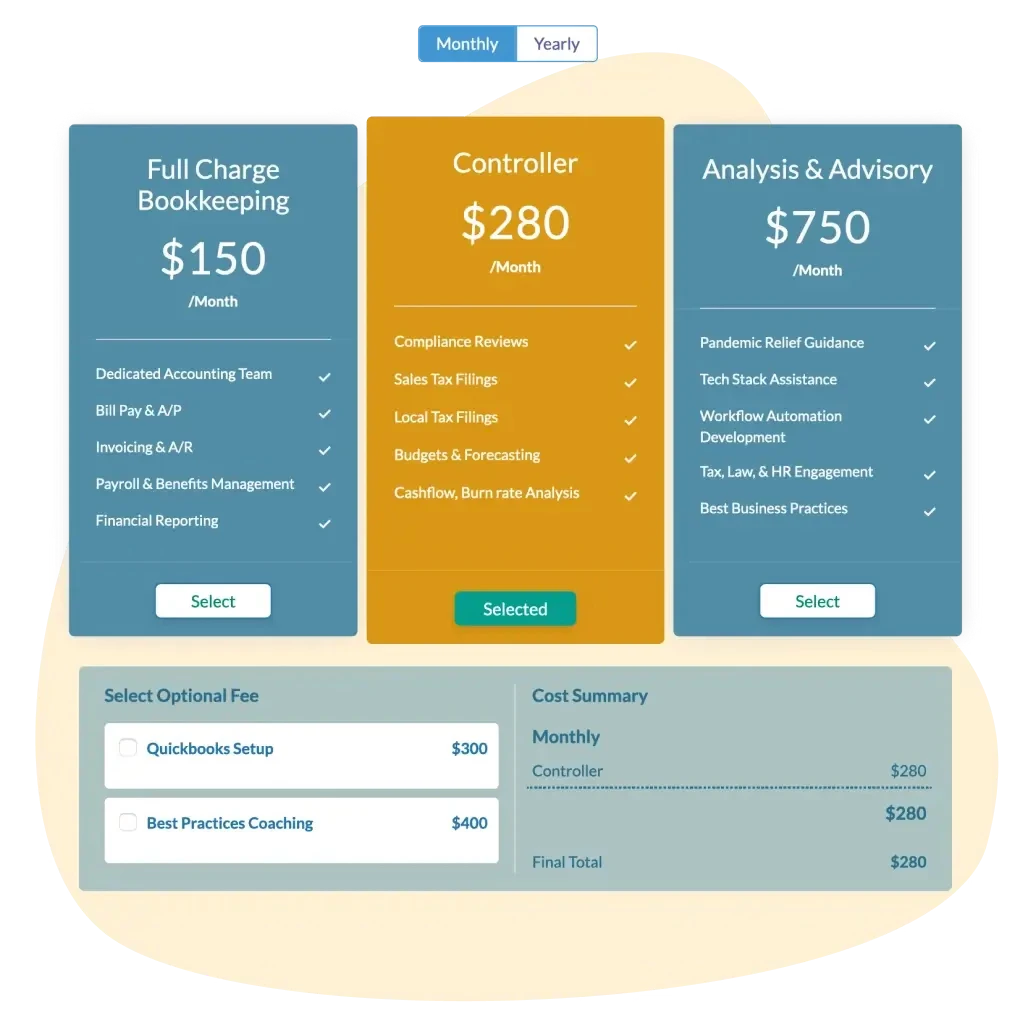
Specialist accountancy pricing should reflect the complexity of the work, the resources required, the service commitment and the commercial needs of the client.
A niche does not justify higher fees by itself.
The practice must be able to demonstrate why its service is worth the proposed price.
Move beyond generic service descriptions
Consider a practice serving independent dental surgeries.
A conventional accounting service description might include:
- Annual accounts.
- Corporation tax.
- VAT.
- Payroll.
- Bookkeeping.
Those services may be necessary, but the description does not explain how the practice understands the financial requirements of a dental surgery.
A more focused proposition could organise the services around the client's needs:
Service package | Potential contents |
|---|---|
Core compliance | Accounts, tax returns and statutory obligations |
Practice finance | Management reporting, cash flow and financial performance |
Growth advisory | Forecasting, investment planning and financial decision support |
These are illustrative package structures, not prescribed services or a claim that every dental practice requires all three.
Consider recurring service arrangements
Where the work supports it, recurring service agreements can provide greater clarity for both the practice and the client.
The agreement should specify:
- Services included.
- Reporting frequency.
- Information required from the client.
- Advisory time or meeting arrangements.
- Additional work charged separately.
- Review dates.
- Responsibilities of both parties.
A clear scope reduces misunderstandings and helps the practice plan delivery capacity.
Avoid pricing based on a specialist label
A practice should not simply add a percentage to its existing fees because it has decided to specialise.
The price needs to be supported by the service.
If a specialist offering requires additional reporting, sector knowledge and advisory input, the practice should calculate the cost and commercial value of providing those services.
Where the service does not materially differ from the generalist alternative, a premium may be difficult to justify.
That is a pricing decision, not a branding problem.
How Do You Position and Market a Specialist Accountancy Practice?
Once the practice can consistently deliver specialist services, the next task is to make that expertise visible to prospective clients.
This is where branding, positioning and marketing become commercially important.
A practice may have years of sector experience, knowledgeable employees and a well-developed service model. If the website communicates nothing beyond generic accounting services, prospective clients may never recognise that expertise.
The market cannot value specialist capability it cannot identify.
Establish a clear market position
A specialist accountancy firm's positioning should answer four questions:
- Who does the practice serve?
- What financial problems does it understand?
- What services does it provide?
- Why should the intended audience consider it?
For example:
We help independent hospitality businesses manage their finances, improve financial visibility and make better-informed commercial decisions.
This is more useful than simply describing the practice as a full-service accountancy firm.
The proposition should be supported by real sector knowledge and appropriate evidence.
Make the website reflect the specialisation
A specialist accountancy website should help prospective clients recognise that the practice understands their business.
That requires more than replacing a few generic stock photographs.
The website should demonstrate:
- A clearly identified target market.
- Sector-specific service descriptions.
- Relevant technical expertise.
- Genuine examples of the problems addressed.
- Appropriate client evidence and testimonials.
- Clear explanations of how the engagement works.
- A straightforward enquiry route.
A construction company visiting a construction accounting specialist should encounter information that reflects the realities of its business.
The same principle applies to legal practices, property investors, healthcare businesses and software companies.
For further detail, see the related guide to accounting firm website design.
Develop a consistent visual identity
A specialist brand needs to communicate credibility before a prospective client has spoken to a partner.
The identity should reflect the firm's positioning and intended audience.
That includes:
- Logo and visual identity.
- Typography and colour.
- Website design.
- Presentation templates.
- Client onboarding documents.
- Proposal and tender materials.
- Digital and printed marketing collateral.
Consistency matters because prospective clients encounter the practice across different channels.
A polished website followed by an outdated proposal document creates an inconsistent impression.
Inkbot Design's guide to accounting firm corporate identity explores the relationship between visual consistency and professional credibility.
Build evidence of genuine expertise
Specialist claims need support.
A practice can demonstrate sector knowledge through:
- Industry-specific articles.
- Practical guides.
- Sector financial commentary.
- Relevant professional qualifications.
- Speaking engagements.
- Genuine client testimonials.
- Anonymised case studies where disclosure is permitted.
- Partnerships with relevant professional organisations.
For example, a construction accounting practice could publish guidance on the financial information contractors should monitor during a major project.
The article should contain useful sector knowledge, not a thinly disguised advertisement.
Content marketing works best when it demonstrates something the intended audience can recognise as relevant to its own business.
Understand the professional and regulatory boundaries
Accountancy marketing must be accurate, professional and consistent with applicable professional obligations.
Firms should review the relevant requirements before publishing claims about technical expertise, client outcomes or professional standing.
The related ICAEW marketing rules and branding resource should be used when reviewing this area.
How Do You Measure Whether Your Specialisation Is Working?
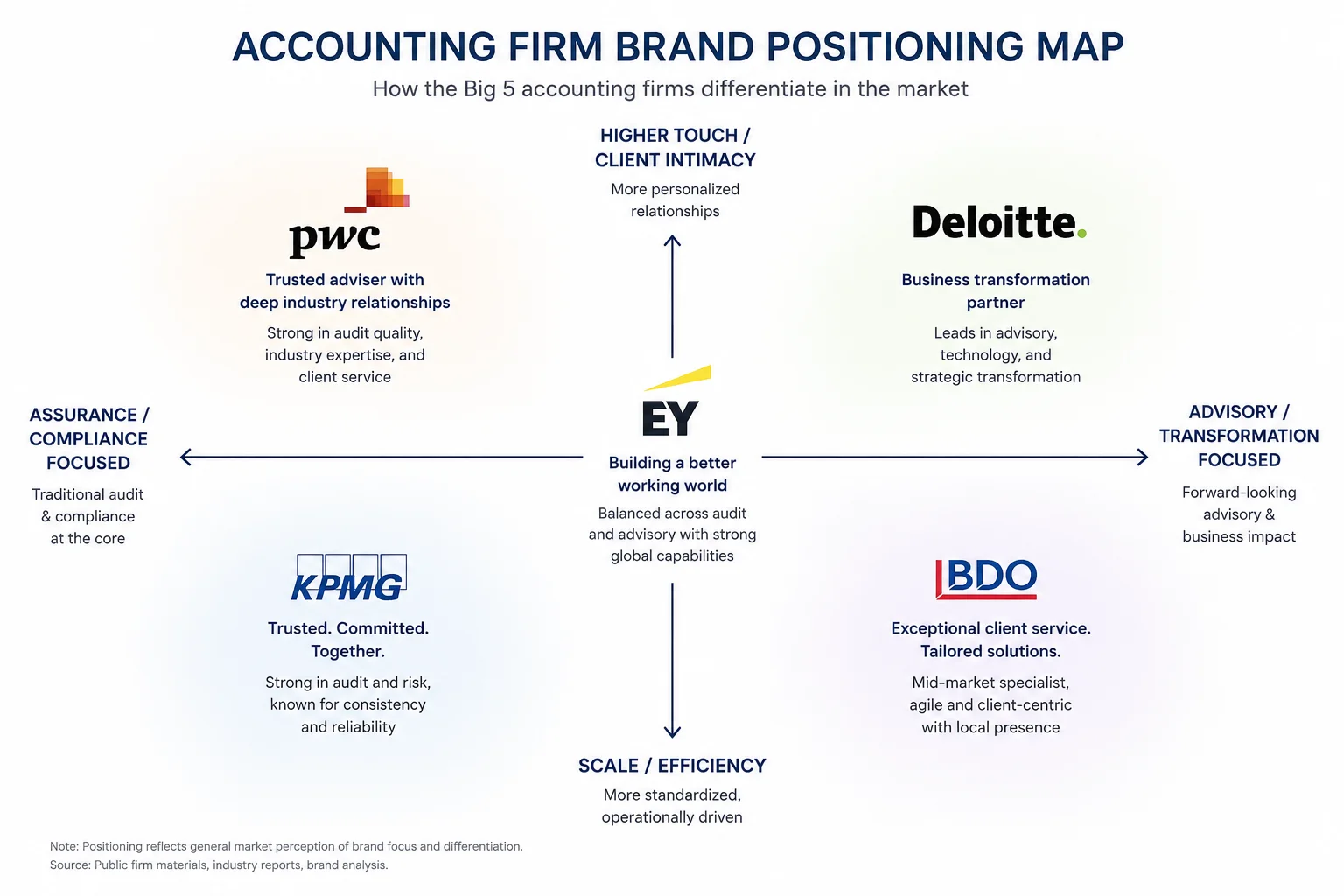
A specialisation should be evaluated through commercial performance, client quality and the practice's ability to deliver the promised services.
Website traffic alone is not sufficient.
A practice could attract thousands of visitors interested in construction accounting and still generate very few suitable enquiries.
Partners need measures that connect the market position to actual business performance.
Track the right commercial indicators
Measure | What it tells partners |
|---|---|
Specialist enquiries | Whether the intended market is responding |
Qualified enquiry rate | Whether enquiries match the practice's ideal client profile |
New specialist clients | Whether the proposition converts into engagements |
Average client fees | Whether the service mix supports the intended economics |
Client retention | Whether clients continue to value the relationship |
Contribution margin | Whether specialist engagements are commercially sustainable |
Referral sources | Whether professional relationships are generating opportunities |
Delivery utilisation | Whether the team can service the growing client base |
The partners should establish a baseline before launching the specialisation.
Otherwise, it becomes difficult to determine whether performance has genuinely improved.
Review client concentration risk
A practice can become too dependent on its chosen niche.
Suppose an accountancy firm generates most of its revenue from one industry. A regulatory change, economic downturn or sector-specific disruption could affect a substantial proportion of the client base.
The appropriate concentration level depends on the practice's size, financial position, market and risk tolerance.
Specialisation should improve the firm's competitive position without creating unnecessary financial fragility.
Review the proposition regularly
The original niche may need refining as the practice develops.
Partners should periodically examine whether:
- The intended clients are actually enquiring.
- The service packages remain commercially viable.
- Staff capabilities match client requirements.
- The practice is winning the right work.
- The brand communicates the firm's actual expertise.
- Competitors have changed their market positions.
- New opportunities justify expanding or narrowing the specialisation.
A niche is a commercial decision that should be reviewed, not a permanent restriction imposed on the business regardless of changing circumstances.
The Verdict: Build the Specialist Practice Before Marketing It
Choosing an accountancy niche is relatively straightforward. Building a practice that can serve that market profitably is harder.
Partners should begin with the clients they understand, test the commercial opportunity and assess whether the practice has the resources to deliver specialist services.
Then comes the internal work: staffing, processes, pricing, client acceptance and service development.
Only after those decisions should the external positioning be built around the specialisation.
The order matters.
A generalist practice with specialist-looking marketing remains a generalist practice. Prospective clients eventually discover the difference.
If your accountancy firm has already developed genuine sector expertise but struggles to communicate that value, Inkbot Design can help identify where the brand is losing commercial ground.
Request a free Brand Equity Audit™. The structured diagnostic examines your brand positioning, identity and market presentation to identify the areas that need attention.
Start by deciding what your practice should become. Then make sure the market can recognise it.
Questions people ask
What is the most profitable niche for an accountancy firm?
There is no universally most profitable accountancy niche. Profitability depends on the firm's client base, technical expertise, service delivery costs, competitive position and ability to win suitable engagements. Construction, property, healthcare, legal, hospitality and SaaS accounting are potential markets, but each requires separate commercial validation.
Should a small accountancy practice specialise?
Yes, a smaller practice can benefit from specialisation where it has sufficient expertise, access to a defined client market and the resources to deliver the required services. A smaller firm should avoid committing to a niche that requires substantial recruitment or investment before demand has been demonstrated.
Can an accountancy firm specialise in more than one industry?
Yes. A practice can serve several related industries where the services, expertise and operating requirements overlap. However, targeting too many unrelated sectors can weaken its positioning and make it harder to establish a recognisable market reputation.
How long does it take to establish an accountancy niche?
There is no fixed implementation period. The timeframe depends on existing expertise, staff capability, recruitment requirements, client acquisition and the investment needed to develop specialist services. Partners should establish milestones for capability development, first specialist engagements and commercial performance rather than assume a particular timeframe.
Should an accountancy firm rebrand when it chooses a niche?
Not necessarily. A firm with an established identity may only need to refine its positioning, messaging and website content. A full rebrand is more appropriate when the existing identity no longer reflects the firm's intended market position, reputation or commercial direction.