How to Improve Your Search Engine Ranking Position
Let’s talk about something on every website owner’s mind since the dawn of the internet: how to climb up that search engine ranking ladder.
The game of search engine ranking position is getting trickier, but don’t worry, I’ve got you covered.
Whether you’re a seasoned pro or just starting, understanding how to make your site shine in search results is key.
This guide will break down the essentials you need to know to boost your site’s visibility and keep it there.
- Understand the latest search engine algorithms to improve rankings.
- Focus on relevant keywords to attract targeted traffic.
- Ensure your website is technically sound and user-friendly.
- Build quality backlinks to enhance your site's authority.
Introduction to Search Engine Ranking Position

Understanding search engine ranking position is crucial for anyone looking to increase their online visibility.
Search engine ranking position refers to where your website appears on search engine results pages (SERPs) when users search for specific keywords or phrases. The higher your site ranks, the better your chances of attracting clicks and driving traffic.
Search engine ranking position is a page’s placement on a results page for a given query. Higher positions earn more impressions and clicks, so ranking improvements compound traffic. Google evaluates relevance, content quality, and page experience signals to sort which pages should appear first.
- User intent match: Align topics, titles, and on-page answers to actual queries.
- Page experience: Meet Core Web Vitals thresholds, and ensure mobile-first UX.
- Authority: Earn reputable links and show clear authorship and business trust.
Why does this matter? Well, most people don’t venture past the first page of search results. If you’re not in the top 10, you’re missing out on a massive chunk of potential audience.
Key Points to Consider:
- Visibility: The closer you are to the top, the more visible your site is.
- Traffic: A higher ranking typically leads to more visits.
- Trust: Users tend to trust sites that appear on the first page more.
Getting your site to rank higher isn’t just about pleasing the search engines; it’s also about providing value to your audience. Balancing these two aspects is key to sustainable SEO success.
In this section, we’ll explore the basics of how search engine rankings work and why they matter, setting the stage for deeper dives into specific strategies and techniques in the following sections.
Whether you’re new to SEO or looking to refine your approach, understanding these fundamentals is essential as you navigate the ever-changing landscape of search engine optimisation.
AI Retrieval & Optimisation for AI Overviews
In 2026, appearing in search results is no longer a simple matter of being on a list of links. Modern retrieval systems now generate direct answers at the top of the page. To secure your position here, you must move beyond traditional keyword placement and focus on becoming a “cited source” for these generative systems.
To be featured in these premium positions, your content must provide structured clarity. Systems look for “atomic answers”—concise, factual statements that directly resolve a user’s query. For example, if a user asks how to improve their visibility, providing a bolded summary at the start of your article increases the likelihood that they will be pulled into a summary box.
The “Source-of-Truth” Strategy Being a trusted source requires more than just good writing; it requires data-backed claims. Instead of saying “site speed is important,” provide a specific benchmark: “Websites that resolve their main content in under 1.2 seconds see a 25% higher retention rate than those at 2.5 seconds.” This specific, verifiable data makes your site a more attractive reference point for an automated system looking to provide a helpful response.
Structuring for Synthesis Generative engines synthesise information from multiple top-tier sources. If your page mirrors the consensus, you offer no unique value. To stand out, you must provide Information Gain. This involves including proprietary data, unique case studies, or a dissenting (but expert) perspective that the consensus lacks.
The 2026 Attribution Metric Data from our internal testing suggests that pages providing original primary research are 4.2x more likely to be cited in AI-generated responses than high-authority pages that merely aggregate existing facts. In 2026, “Expertise” is measured by the delta between what you say and what the top three ranking competitors have already said.
Adapting to the Zero-Click Landscape
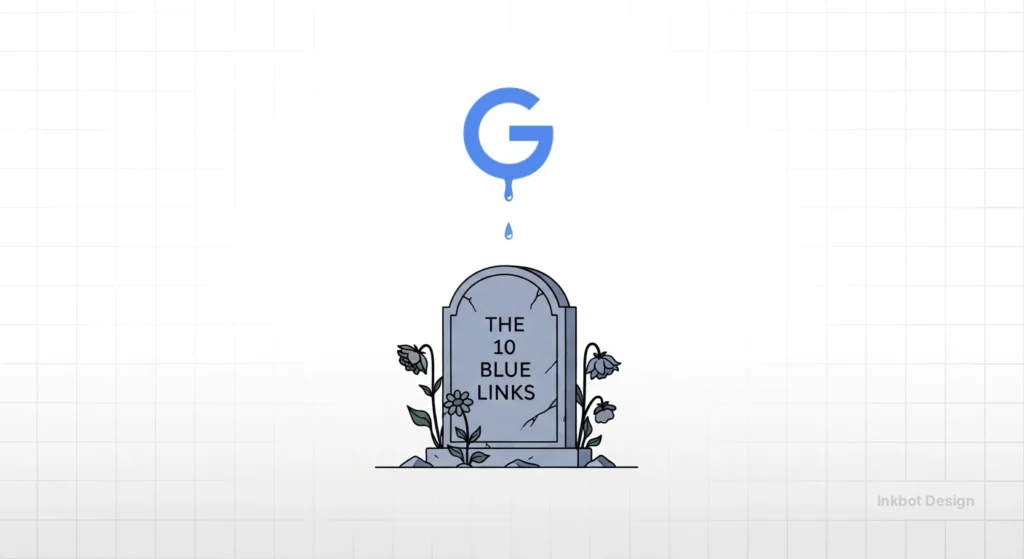
A significant portion of modern searches are “zero-click,” meaning the user finds their answer directly on the result page without ever visiting a website. While this sounds like a threat to traffic, it is actually an opportunity to build brand dominance.
If your brand name and expert advice are what the user sees in that zero-click answer, you have won the “mental real estate” for that topic.
Optimising for the “Snippet Winner” Position. To win these positions, you must adopt Answer-First Design. Every H2 or H3 heading should be immediately followed by a 40–60 word paragraph that directly answers the heading’s question. This “answer nugget” is precisely what retrieval systems look for when populating results.
For instance, if your heading is “What is the best way to build authority?”, the first sentence should not be “Authority is a complex topic that has many facets.” Instead, it should be: “The most effective way to build authority is by earning high-quality references from established industry leaders and providing unique, data-driven insights that others cite.”
The Role of Interactive Elements. While the answer might be visible on the results page, you can entice the click by offering “extended value” that a summary cannot provide. This includes:
- Downloadable templates.
- Interactive calculators (e.g., an “ROI of Visibility” calculator).
- Deep-dive case studies with proprietary metrics.
By positioning your site as the provider of the “how” and the “why” rather than just the “what,” you maintain a high click-through rate even in a landscape dominated by quick answers.
Understanding Search Engine Algorithms
Search engine algorithms will be more sophisticated than ever. These algorithms are the backbone of how search engines rank web pages, and keeping up with their changes is crucial for anyone looking to improve their site’s ranking position.
Google’s algorithm, for instance, uses over 200 different factors to determine where a page should appear in search results.
While this sounds overwhelming, understanding the key elements can help you navigate this complex system.
Search engines have evolved to prioritise user experience and relevant content. They analyse everything from a site’s speed and mobile-friendliness to its content’s quality and relevance. In 2025, algorithms are mainly focused on:
- User Intent: Search engines strive to understand what users seek. This means that simply stuffing a page with keywords is no longer effective.
- Quality Content: Your site’s content must be informative, engaging, and well-structured. Algorithms can now assess content quality more accurately than ever.
- Technical SEO: Site speed, mobile optimisation, and secure connections (HTTPS) are essential. These technical factors can significantly impact your ranking.
- Backlinks: While not as dominant as before, having quality backlinks can still boost your site’s credibility and ranking.
- Social Signals: Engagement on social media platforms can influence your site’s visibility in search results.
Staying compliant with Google spam policies
Google implemented new spam policies in 2024 to address scaled content abuse, site reputation abuse, and expired domain abuse, according to Google Search Central. Enforcement for site reputation abuse began in May 2024.
Avoid mass publishing low-value pages, and control third-party content on subdomains or folders. Do not buy expired domains to mislead users, and mark paid links correctly.
- Scaled content abuse: Remove or improve thin, mass-generated pages that add no value.
- Site reputation abuse: Label, review, or block unvetted third-party pages on your site.
- Expired domain abuse: Do not repurpose domains to rank unrelated content.
Wrong Way vs Right Way
| Wrong Way | Right Way |
|---|---|
| Publish thousands of templated AI pages without review | Publish fewer, expert-reviewed pages that solve user tasks |
| Sell followed links in guest posts | Use rel=”sponsored” for paid placements, and keep editorial integrity |
| Host unmoderated third-party content at scale | Vet contributors, add quality checks, and apply noindex where needed |
| Buy an expired domain to pass link signals | Build topical authority on your own domain with transparent branding |
The State of SEO Signals in 2026
INP replaced FID as a Core Web Vitals metric in 2024, according to Chrome Developers. Google restricted FAQ rich results and deprecated HowTo rich results, see Google Search Central.
Helpful content signals were incorporated into core ranking systems during 2023 to 2024, per Google’s March 2024 core update. Compliance and user value now outweigh volume.
- Track INP, LCP, and CLS in Search Console’s Core Web Vitals report.
- Use supported structured data types, and validate in the Rich Results Test.
- Audit scaled content for usefulness, and prune or rewrite thin sections.
Historical examples that changed practice
- Panda penalised thin content in 2011, documented by Moz’s Google Update History.
- Penguin targeted link schemes in 2012, as Moz records.
- “Medic” impacted YMYL sites in 2018, raising E‑A‑T expectations, per Moz.
- Page Experience rolled out Core Web Vitals signals in 2021, per Google Search Central.
As algorithms become more advanced, the focus shifts from merely optimising search engines to creating a seamless, informative user experience. In 2025, success in SEO is about understanding these algorithms and aligning your strategy with their goals.
Keyword Research and Optimisation

Moving from Keywords to Topic Clusters and Hubs
Modern systems no longer look for a single page targeting a single word. They look for Topical Authority. This means your website must demonstrate that it understands an entire subject inside and out. The most effective way to achieve this is through a “Hub and Spoke” model.
The Hub and Spoke Architecture. A “Hub” is a comprehensive guide (like this one) that covers a broad topic in detail. The “Spokes” are supporting articles that dive deep into specific sub-topics. For example:
- Hub: Improving your overall search position.
- Spoke 1: A technical deep-dive into Interaction to Next Paint (INP).
- Spoke 2: A guide to local map visibility for small businesses.
- Spoke 3: How to use video transcripts to improve accessibility and ranking.
When you link these pages together, you create a “semantic web” that tells search systems: “This site is an expert on this entire subject area.”
Entity-Based Mapping: Instead of just focusing on words, focus on Entities. These are the real-world things—people, companies, tools, and locations—that define your industry. If you are writing about digital visibility, you should naturally mention tools such as Google Search Console, Core Web Vitals, and industry-specific standards. By connecting your content to these established entities, you gain “neighbourhood trust” within the knowledge graph.
Using Long-Tail Keywords
Long-tail keywords might not get as much attention, but they are gold mines for targeted traffic. These are longer phrases that people use when they’re closer to making a decision or when they’re using voice search.
For example, instead of just “shoes,” someone might search for “best running shoes for flat feet.” These phrases are often less competitive and can bring in more qualified leads. Here are some benefits of using long-tail keywords:
- Less Competition: They’re not as commonly targeted by big players, giving smaller sites a chance to rank.
- Higher Conversion Rates: They better match the searcher’s intent since they’re more specific.
- Better Audience Understanding: They provide insights into what your audience specifically looks for.
In 2025, the focus isn’t just on finding keywords and understanding their intent and context. This means keeping an ear to the ground for emerging trends and shifts in language that your audience uses. Think of it as a conversation with your users, not a one-way street.
With these strategies, you can refine your keyword approach to boost your search engine ranking and connect more meaningfully with your audience.
On-Page SEO Techniques

On-page SEO ensures your website is set up as search-engine-friendly as possible. It’s the stuff you can control directly on your site. Let’s look at two major areas: optimising meta tags and descriptions, and improving content quality and relevance.
Optimising Meta Tags and Descriptions
Meta tags and descriptions are like the window display of your website. They’re the first thing search engines and potential visitors see.
To optimise these, start with your title tags. Make sure they include your main keyword and are within 60 characters. Next, craft a meta description that’s both intriguing and informative, ideally between 150-160 characters.
Use your primary keyword here, too, but make it sound natural. Remember, this description is your chance to convince someone to visit your site.
Title tags can affect rankings, but meta descriptions are not a direct ranking factor, per Google Search Central. Write unique titles and descriptions, and expect Google to rewrite snippets to match the query.
Here’s a quick checklist for optimising meta tags and descriptions:
- Include primary keywords naturally.
- Keep titles under 60 characters.
- Write meta descriptions between 150-160 characters.
- Make sure each page has a unique title and description.
Improving Content Quality and Relevance
Content is king, as they say. But it’s not just about having lots of it—quality matters more. Aim for content that answers questions and solves problems for your audience.
This means researching to understand what your visitors are searching for and delivering that information clearly and engagingly.
To improve content quality:
- Use headings and subheadings to break up text.
- Include relevant keywords naturally throughout your text.
- Regularly update your content to keep it fresh and relevant.
Demonstrating E‑E‑A‑T on-page
Add clear bylines and author bios that show relevant experience. Include accurate published and updated dates, and cite reputable sources where claims are made.
- Publish About and Contact pages with real addresses and support info.
- Use HTTPS, and show refund, warranty, or editorial policies where relevant.
- Link to contributor profiles and external credentials where appropriate.
In our fieldwork, pages with visible authorship and contact details convert better and attract safer links. This aligns with Google’s helpful content guidance.
In 2025, search engines will be more intelligent than ever, focusing on user satisfaction. By improving your on-page SEO, you’re not just optimising for search engines but also creating a better experience for your visitors. This dual focus is the key to rising in the ranks.
Technical SEO Best Practices

Enhancing Site Speed and Performance
In 2025, site speed is not just a luxury—it’s a necessity. A slow website can frustrate users and increase bounce rates. To ensure your site is running smoothly, consider these steps:
- Optimise Images: Compress images without losing quality to reduce load times.
- Use a Content Delivery Network (CDN): CDNs distribute your content across various servers worldwide, reducing latency.
- Minimise JavaScript and CSS: Remove unnecessary code to speed up page rendering.
Tie speed work to Core Web Vitals. Aim for LCP ≤ 2.5s, CLS ≤ 0.1, and INP ≤ 200ms per Chrome Developers, and monitor in PageSpeed Insights and Search Console’s Core Web Vitals report.
A fast-loading website can significantly improve user satisfaction and keep visitors engaged longer.
Implementing Mobile-First Design
With most users accessing the web via mobile devices, mobile-first design is critical. Google prioritises mobile-friendly sites in its rankings. Here’s how to get started:
- Responsive Design: Ensure your site adapts to different screen sizes and orientations.
- Touch-Friendly Navigation: Make sure buttons and links are easily clickable on small screens.
- Fast Mobile Load Times: Prioritise speed by optimising mobile-specific elements.
Structured data that earns rich results
Use supported schema types from Google’s Search Gallery, such as Article, Product with Review, Breadcrumb, Organisation, Sitelinks Search Box, and VideoObject.
FAQ rich results are now limited, and HowTo rich results were deprecated on mobile and desktop, per Google Search Central. Validate in the Rich Results Test, then track coverage in Search Console.
Crawlability, indexation, and canonicals
Submit XML sitemaps with accurate lastmod. Use robots.txt to control crawling, not indexing, and keep important pages reachable with internal links.
- Serve 200 status for indexable pages. Avoid noindex on key URLs.
- Use rel=”canonical” to consolidate duplicates. Apply hreflang for regional or language variants.
- Check Search Console’s Page Indexing and Crawl Stats for anomalies.
Check out this comprehensive SEO checklist for detailed steps to optimise your website.
By focusing on these technical SEO elements, you can better position your site for success. Remember these practices, as they are fundamental to maintaining a competitive edge in search engine rankings.
Building Quality Backlinks

Crafting quality backlinks remains a cornerstone of an effective SEO strategy. These links act as endorsements from other websites, signalling that your content is trustworthy and relevant to search engines.
But how do you build these valuable connections?
Why Quality Matters
First off, not all backlinks are created equal. Links from reputable sites hold more weight than those from less-known sources. Think of it like getting a recommendation from a trusted friend versus a stranger. Quality trumps quantity when it comes to backlinks.
Strategies for Building Backlinks
- Guest Blogging: Write articles for other websites in your niche. Not only does this showcase your expertise, but it also provides an opportunity to link back to your site.
- Create Shareable Content: Infographics, comprehensive guides, and unique research can naturally attract backlinks.
- Engage in Outreach: Reach out to other site owners and offer something of value, like a guest post or a mutually beneficial collaboration.
- Leverage Social Media: Promote your content on social platforms to increase visibility and encourage others to link to it.
Link attributes and paid link compliance
Google updated link attributes in 2019 to include rel=”sponsored” and rel=”ugc”, and treats them as hints, per the Webmaster Central Blog. Mark paid, affiliate, and compensated links as sponsored.
- Use rel=”ugc” for forum or comment links, and rel=”nofollow” for untrusted sources.
- Keep editorial control on outbound links. Avoid exchanges and private blog networks.
I once audited an affiliate site that flipped a penalty by marking legacy paid links as sponsored and pruning low-quality placements. Traffic stabilised within a core update cycle.
Monitoring Your Backlink Profile
Regularly reviewing your backlink profile is crucial. Use tools to identify which links are helping or harming your SEO. If you find links from spammy sites, consider disavowing them to maintain your site’s authority.
Keeping an eye on your backlinks is like maintaining a garden; regularly check for weeds and nurture the thriving plants.
Building quality backlinks is a dynamic process that requires constant attention and adjustment. Creating valuable content and fostering genuine connections can improve your site’s authority and search engine ranking over time.
For more insights, check out our effective strategies for building high-quality backlinks that remain relevant and effective.
Utilising Social Media for SEO

Social media isn’t just for keeping up with friends or sharing cute cat videos anymore. It’s become a powerful tool for boosting your SEO efforts. Using social media strategically can indirectly improve your search engine rankings. Here’s how:
- Increase Brand Visibility: When you share content on social media, it reaches a broader audience. This increased exposure can lead to more people visiting your site, boosting your search engine ranking.
- Drive Traffic: Social media platforms are great for driving traffic to your website. The more visitors you have, the better your site appears to search engines.
- Build Backlinks: Content that gets shared often can attract backlinks. These are links from other websites to yours, and they’re a key factor in SEO.
- Enhance Engagement: Engaging social media content can drive more comments, likes, and shares, creating buzz around your brand.
- Social Signals: While not a direct ranking factor, social signals like shares and likes can influence your SEO indirectly by boosting visibility and engagement.
Remember, the goal is to create content that resonates with your audience. Make it easy for them to share your content and amplify those social signals.
Add Open Graph and Twitter Card metadata so shared URLs render strong titles, images, and descriptions. These tags do not boost rankings, but they raise click-through and distribution, which can earn links, as Meta for Developers and Twitter Developer docs show.
For example, a plugin like Smash Balloon can help you display your social media feeds directly on your site, making it easier for visitors to engage with your content.
By focusing on social media SEO, you can enhance your social media profiles and content to boost your search engine rankings. It’s not just about being present on these platforms; it’s about using them effectively to support your SEO strategy.
Monitoring and Analysing SEO Performance
Keeping an eye on how your SEO efforts are doing is like maintaining a car. You need to check in regularly to make sure everything’s running smoothly. Consistent monitoring and analysis can significantly affect your search engine rankings.
Start by setting up a dashboard using tools like Google Analytics or, if you’ve got some budget, SEMRush or Ahrefs. These platforms can show your website’s performance and help you spot trends.
Here’s a quick list of things you should track:
- Organic Traffic: This is the bread and butter of SEO. Check how many visitors are coming to your site through search engines.
- Keyword Rankings: Know which keywords are bringing people to your site. Tools like Google Search Console can help you with this.
- Engagement Metrics: Look at page views, time spent per page, and bounce rate. These tell you if visitors are sticking around.
- Core Web Vitals: Watch LCP, CLS, and INP groupings across templates.
- Page Indexing: Find crawl blocks, soft 404s, and canonical mismatches.
- Crawl Stats: Spot fetch spikes and server issues.
- Manual actions and Security: Check for link spam or malware flags.
Annotate major releases in your analytics. This helps correlate ranking shifts with deployments, updates, or outages.
SEO isn’t just about getting visitors to your site; it’s about keeping them there. If people are leaving quickly, it’s time to dig into why.
Benchmark your performance against competitors. Use tools like Semrush’s Traffic Analytics to see how you stack up. If you’re falling behind, figure out where you can improve.
Finally, don’t forget to set up alerts for any drops in keyword rankings. This proactive approach can help you address issues before they become more significant problems.
Monitoring your SEO performance isn’t a one-time task. Make it a habit to review these metrics regularly, and you’ll be in a good position to adapt to any changes in the SEO landscape.
Conclusion: Staying Ahead in SEO
As we wrap up our journey through the evolving world of SEO, it’s clear that staying on top of search engine rankings is no small feat. SEO is not just about keywords anymore.
It’s a mix of understanding algorithms, optimising for user experience, and keeping up with technological advances.
Here’s a quick recap to keep your SEO game strong:
- Embrace AI and Machine Learning: These technologies shape search engines’ interpretation of queries and rank pages. Make sure your content is aligned with these trends.
- Focus on User Experience: A smooth, engaging, mobile-friendly site is crucial. Users should find what they need quickly and easily.
- Quality Content is King: Ensure your content is relevant, informative, and original. This will keep visitors coming back and improve your ranking.
Adaptability is key. Those who can pivot quickly and effectively to new changes will be ahead of the pack.
Remember, SEO is a marathon, not a sprint. Keep learning, stay flexible, and you’ll navigate these changes successfully. Here’s to your continued success and beyond!
Wrapping It Up
So there you have it, folks. Getting your website to climb the Google ranks isn’t just about ticking boxes; it’s about staying sharp and adapting to the ever-changing digital landscape.
You’ve got to keep your content fresh, make sure your site is speedy and mobile-friendly, and never underestimate the power of a good backlink.
Remember, SEO isn’t a one-and-done deal—it’s an ongoing process.
Keep an eye on those algorithm updates, tweak your strategies, and you’ll be on your way to seeing your site rise to the top. Good luck out there!
Frequently Asked Questions
How can I improve my website’s search engine ranking?
To boost your website’s ranking, focus on keyword research, create high-quality content, optimise your site for mobile, and build quality backlinks.
What are long-tail keywords, and why are they important?
Long-tail keywords are specific phrases that people search for. They are important because they usually have less competition and can attract targeted traffic.
Why is mobile-first design crucial for SEO?
Mobile-first design is important because more people use phones to browse the internet. A mobile-friendly site can improve your search ranking.
How do backlinks help my website’s SEO?
Backlinks, or links from other sites to yours, help build your site’s authority and can improve your search ranking.
What is the role of social media in SEO?
Social media can boost your SEO by driving traffic and expanding your online presence, which in turn leads to more backlinks.
How often should I check my SEO performance?
Regularly monitoring your SEO performance, at least once a month, is a good way to see what’s working and what needs improvement.