How to Measure Brand Awareness Before and After a Rebrand
Brand awareness is not a popularity contest; it is a measure of mental availability. This guide breaks down the technical frameworks—including Share of Search and Category Entry Points—required to quantify the impact of a rebrand on your bottom line. Stop guessing and start measuring what actually moves the needle.
 By Stuart Crawford
 Reviewed by Tabitha Ayers
Updated 14 min read
On this page14 min left
- Why Measure Brand Awareness?
- The Share of Search Revolution
- The NPS Myth: Why Loyalty Isn't Awareness
- Benchmarking Distinctive Brand Assets
- Technical Implementation Roadmap: Quantifying Market Recognition
- Generative Share of Voice: The New Frontier of Machine Discovery
- The Cost of “New”
- Strategic Divergence: B2B vs. B2C Recognition Metrics
- The Verdict
Traditional brand awareness surveys are a waste of capital because they measure recognition, not retrieval.
If a customer recognises your logo in a survey but fails to think of you at the point of purchase, your awareness is a vanity metric that contributes zero to your bottom line.
Most entrepreneurs treat rebranding as a cosmetic exercise, yet failing to quantify their semantic brand equity before changing a single pixel is a fast track to market irrelevance.
Ignoring these metrics costs more than just design fees.
According to the Institute of Practitioners in Advertising (IPA), brands that prioritise short-term activation over long-term brand building see a 20% decline in effectiveness over a three-year period.
If you cannot measure your baseline today, you cannot justify your investment tomorrow. You are not just changing a logo; you are altering the mental pathways your customers use to find you.
Why Measure Brand Awareness?
Measuring brand awareness is the process of quantifying the extent to which a target audience recognises or recalls a brand within its specific category. It moves beyond “vanity metrics” to evaluate how likely a consumer is to think of a brand during a buying situation.

Key Components:
- Aided Awareness: The percentage of respondents who recognise your brand when prompted with a list of competitors.
- Unaided Recall: The percentage of respondents who mention your brand first without any external prompts or cues.
- Share of Search: The volume of branded search queries for your company compared to the total volume for all competitors in your niche.
Brand awareness measurement requires benchmarking baseline Share of Search and Mental Availability before a rebrand to quantify post-launch shifts in market salience and distinctive asset recognition.
The Share of Search Revolution
Share of Search is the most reliable proxy for market share available in 2026.
James Hankins, the strategist behind the “Share of Search” metric, demonstrated that branded search volume correlates with market share with a lead time of up to six months.
By measuring the ratio of your brand's search volume to the total search volume of your top five competitors, you create a baseline immune to the biases of self-reported survey data.
A rebrand often triggers a temporary dip in Share of Search as the market recalibrates.
However, if your post-launch search volume does not recover within 12 weeks, your new identity has likely failed to maintain the mental links established by the previous iteration.
Monitoring this metric with tools like Google Trends or MyTelescope helps you determine whether your rebranding services are delivering a return on salience.
“Share of Search serves as a predictive indicator of market share shifts because it captures active consumer intent rather than passive recognition. A brand that captures 30% of category search volume will, in almost every instance, eventually capture a corresponding percentage of the physical market, provided the product delivery remains consistent.”
The NPS Myth: Why Loyalty Isn't Awareness
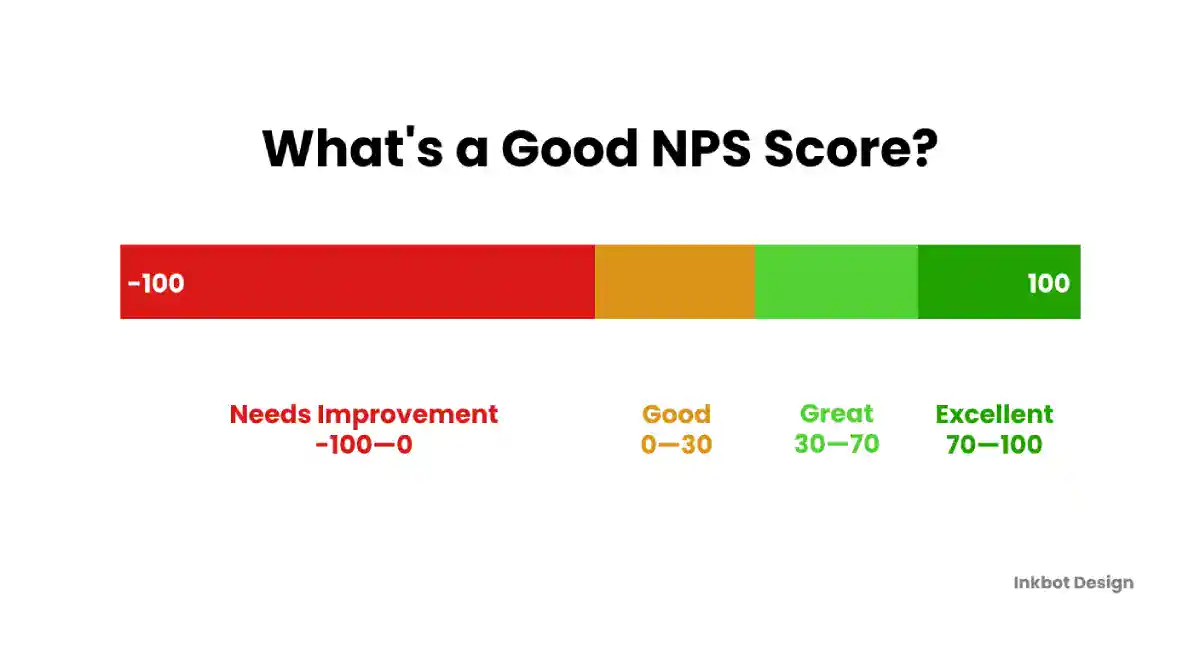
The Net Promoter Score (NPS) is a retention metric, not a brand health indicator.
It measures how likely your existing customers are to recommend you, which tells you absolutely nothing about the 95% of the market who have never heard of you.
Relying on NPS to measure the success of a rebrand is a fundamental strategic error because it ignores the “Light Buyer” — the demographic that drives 60% of brand growth according to the Ehrenberg-Bass Institute.
To measure brand awareness effectively, you must look outside your current database. A rebrand's primary job is to make you more “findable” to people who don't yet know you.
If your post-rebrand strategy relies on surveying your loyalists, you are simply talking into an echo chamber. You must instead measure “Mental Availability” — the probability that a buyer will notice, recognise, and think of your brand in a buying situation.
Mental Availability: Why Reach Dominates Loyalty
A fundamental shift in 2026 marketing science is the widespread acceptance of the Law of Double Jeopardy. This empirical law, championed by the Ehrenberg-Bass Institute, proves that brands with lower market share have far fewer buyers, and these buyers are slightly less loyal in their purchasing behaviour.

The Awareness Fallacy
Many organisations attempt to rebrand to “deepen the relationship” with existing customers. This is strategically flawed. Because of Double Jeopardy, the only way to grow is to increase the total number of buyers, most of whom are “Light Buyers” who rarely think of you.
- Light Buyers: People who purchase your category once or twice a year. They drive 60% of brand growth.
- The Rebrand Job: A new identity must be designed to be noticed by someone who doesn't care about your brand.
Building Salience Through Cues
Salience is not about being “liked”; it is about being “present” in the mind at the right time. When measuring the success of a rebrand, you must measure the Mental Market Share. This is the percentage of total brand cues in a category that lead to your brand.
- Scenario A: “I need a fast laptop for video editing.”
- Scenario B: “I need a reliable laptop for a long flight.”
- Scenario C: “I need a laptop that looks professional in a boardroom.”
If your rebrand captures only Scenario A, while your previous identity captured all three, you have lost market salience despite any improvements in “modernity” or “aesthetic appeal.”
Benchmarks for Tracking Market Salience
Market recognition tracking is no longer an optional luxury for the enterprise; it is a critical defensive expenditure.
In 2026, the cost of measuring how a market perceives your brand identity varies significantly based on the depth of data and the speed of retrieval.
Most organisations fail because they under-invest in the baseline phase, leaving them with no statistical proof of growth or decline after a major visual shift.
Investment Tiers for Market Tracking
Organisation Size | Recommended Annual Budget | Primary Methodology | Data Update Frequency |
|---|---|---|---|
SME / Startup | £12,000 – £25,000 | Share of Search + Automated Sentiment | Monthly |
Mid-Market | £45,000 – £90,000 | Hybrid: Digital Proxies + Bi-annual Surveys | Quarterly |
Enterprise | £150,000 – £500,000+ | Full-funnel Mental Availability + DBA Audits | Real-time / Monthly |
Effective budget allocation follows the Binet & Field 60/40 rule, which dictates that 60% of marketing expenditure should focus on long-term brand building (broad reach and salience) while 40% targets short-term sales activation. When transitioning to a new identity, the “brand” portion of this budget must temporarily increase to 75% to address the initial recognition gap resulting from changes in distinctive assets.
The Hidden Cost of Measurement Failure
Failure to establish a baseline before a visual identity change leads to “The Blind Spot Debt.” On average, companies that skip baseline measurement spend 35% more on post-launch corrective advertising because they cannot identify which specific assets (colours, fonts, or messaging) are failing to trigger customer recall.
To protect market position, allocate 5-10% of your total rebranding budget specifically to measurement. This ensures you can quantify “Mental Availability” — the likelihood of being thought of in a buying situation — rather than relying on subjective internal feedback.
Benchmarking Distinctive Brand Assets
Before you launch a rebrand, you must audit your Distinctive Brand Assets (DBAs). These are the non-brand-name elements—colours, shapes, fonts, and taglines—that trigger the brand in the consumer's mind.
The Jenni Romaniuk framework for DBA measurement uses two metrics: Fame (how many people know the asset) and Uniqueness (how many people associate it only with you).
If you change a high-fame, high-uniqueness asset (like the Tiffany Blue or the Nike Swoosh), you are effectively burning brand equity.
Measuring these assets before a rebrand ensures you know what to keep, what to evolve, and what to discard. After the rebrand, you must re-test these assets to ensure the new versions are building “fame” at an acceptable rate.

The Asset Testing Protocol
- Selection: Identify 5-7 visual or auditory elements of your current brand.
- Recognition Testing: Show these elements to a non-customer audience for 2 seconds each.
- Attribution: Ask them which brand the asset belongs to.
- Scoring: Assets with over 50% attribution are your “Crown Jewels” and should be changed rarely.
“Distinctive brand assets function as cognitive shortcuts for consumers in high-choice environments. Replacing a high-fame asset with an unproven design creates a ‘recognition gap' that forces the brand to re-purchase its mental real estate at a significantly higher marketing cost.”
Technical Implementation Roadmap: Quantifying Market Recognition
Moving beyond simple vanity metrics requires a robust data infrastructure. The transition from an old identity to a new one must be tracked through a multi-layered analytical framework. This roadmap outlines the exact steps to build a machine-readable and human-verifiable measurement system.
Step 1: Establishing the Digital Baseline (0-3 Months Pre-Launch)
Before any visual changes are publicised, you must capture a “clean” data set. This involves calculating your Share of Search (SoS) across all primary and secondary categories.
- Action: Aggregate search volume for your brand and your top eight competitors.
- Metric: SoS = (Your Brand Volume / Total Category Volume) x 100.
- Purpose: This provides a non-biased proxy for market share that remains consistent regardless of survey participation rates.
Step 2: Mapping Category Entry Points (CEPs)
Consumers do not think of brands in isolation; they think of them in response to specific triggers. A successful identity change must strengthen the link between these triggers and the brand.
- Internal Audit: Identify the “When,” “Where,” “With Whom,” and “Doing What” of your category.
- Baseline Survey: Ask 500 non-customers: “When you are [Situation X], which brands come to mind?”
- Target: Increase “Mental Penetration” — the number of distinct situations your brand is associated with.
Step 3: The Asset Fame vs. Uniqueness Audit
Every visual element of your current identity must be categorised before it is discarded or evolved. Use the Jenni Romaniuk Matrix to score assets.
Asset Type | Fame (Recognition %) | Uniqueness (Exclusivity %) | Strategic Action |
|---|---|---|---|
Crown Jewels | >60% | >60% | Protect: Do not change these. |
Hidden Gems | <40% | >60% | Invest: Increase exposure. |
Fool's Gold | >60% | <40% | Evolve: Make them more distinct. |
Dead Weight | <40% | <40% | Discard: They provide no value. |
Step 4: Post-Launch Velocity Tracking (0-6 Months Post-Launch)
Once the new identity is live, track the Recognition Velocity. This measures how quickly the new assets reach the same levels of fame as the previous ones. If the new “Crown Jewels” do not hit 40% fame within six months, your media reach is insufficient, or the design lacks “Visual Fluency” —the ease with which the brain processes the new image.
Generative Share of Voice: The New Frontier of Machine Discovery
By 2026, the discovery layer will have shifted from a list of blue links to synthesised answers provided by Large Language Models (LLMs). This evolution introduces a new metric: Generative Share of Voice (GSV). A rebrand that is not machine-readable will effectively disappear from modern consumers' consideration sets.

The Mechanism of AI Categorisation
AI systems categorise brands using Entity-Attribute-Value (EAV) triplets from their training data and real-time web retrieval. When you change your brand name or primary messaging, you create a “Semantic Mismatch.
- Old Entity: “Brand X” → Attribute: “Reliable Logistics” → Value: “Top-tier”
- New Entity: “Brand Y” → Attribute: “Innovative Supply Chain” → Value: “Visionary”
If the AI has ten years of data linking “Reliable Logistics” to your old name, and zero data linking it to your new name, it will continue to recommend your old name or, worse, recommend a competitor who has maintained consistent semantic signals.
Measuring the Sentiment Delta
Tracking your identity shift requires monitoring the Sentiment Delta across major platforms (Gemini, ChatGPT, Perplexity). This involves three technical audits:
- Direct Retrieval Test: “What is [Brand Name] known for?”
- Comparative Recommendation Test: “Compare [Brand Name] to [Competitor A] and [Competitor B].”
- Category Inclusion Test: “Who are the leaders in [Market Category]?”
The “Machine-Readable” Checklist for Rebranding
To ensure your new identity is indexed and understood by generative engines, your digital footprint must include:
- High Entity Density: Press releases and website copy must explicitly link the old brand name to the new brand name for at least 12 months.
- Structured Data (Schema.org): Use the Organisation schema with the sameAs attribute to point to verified social profiles and historical mentions.
- Fact-Dense Content: AI models prioritise content that contains verifiable facts and figures over marketing fluff. Use specific numbers (e.g., “Serving 5,000+ clients”) to anchor your new brand entity in the model's knowledge graph.
The Cost of “New”
I once audited a client who spent £150,000 on a rebrand because the founder “didn't like the colour green anymore.” They didn't measure their baseline awareness.
They didn't test their distinctive assets. They just flipped the switch. Within six months, their organic lead flow dropped by 40%.
Why? Because their “green” was the only thing that set them apart in a sea of blue tech competitors. They had traded a decade of mental availability for a personal preference.
In our fieldwork, we consistently see that the most expensive mistake a founder can make is assuming that “modern” is the same as “effective.”
Your brand is not a piece of art; it is a signal. If you change the frequency of that signal without telling the receivers how to tune in, you are just broadcasting static.
We now mandate a 12-week “Shadow Period” for all our rebranding clients, during which we track Share of Search and DBA recognition before presenting a single design concept.
Case Study: The Cost of Ignoring Market Salience
In early 2025, a leading European FinTech firm, “Lumina Pay,” rebranded to “LMN.” The goal was to appear more “minimalist” and “app-centric.” They ignored baseline measurements of their distinctive assets, specifically their signature “Lumina Orange” and their full-name search volume.

The Execution Error
The firm focused entirely on internal consensus. The board loved the new, sleek “LMN” logo. However, “LMN” was also the acronym for several other unrelated entities, including a medical network and a local music news site.
The Statistical Fallout
- Share of Search: Dropped by 55% within four weeks. The new name was too generic to trigger branded search intent.
- Mental Availability: In a post-launch survey, only 12% of “Light Buyers” recognised the new logo, compared to 68% recognition for the previous orange-themed identity.
- Customer Acquisition Cost (CAC): Increased by 30% as the brand had to spend more on paid search to capture the traffic it previously received for free through word of mouth.
The Recovery Strategy
After six months of declining leads, the firm had to reintroduce the “Lumina Orange” as a primary border around all “LMN” assets. They also had to run a “Reintroduction Campaign” that explicitly stated: “Lumina Pay is now LMN.” This corrective measure cost £2.4 million in additional media spend—four times the original rebranding design fee.
Key Lesson: Distinctive assets are not just decorations; they are the “scent” that customers follow to find your brand. If you remove the scent, you lose the customer.
Strategic Divergence: B2B vs. B2C Recognition Metrics
While the core principles of market salience apply to all businesses, the methodology for measuring them must adapt to the length and complexity of the buying cycle.
B2B: The ‘Committee Recognition' Factor
In B2B environments, decisions are made by groups rather than individuals. Awareness must be measured across the entire Buying Committee.
- Metric: “Account-Based Salience.”
- How to Measure: Track how many unique individuals from a target account are searching for your brand or visiting your domain.
- Goal: Ensure the “Influencer,” the “User,” and the “Decision Maker” all recognise the new identity simultaneously.
B2C: The ‘Physical Availability' Link
In B2C, particularly in retail, awareness is useless if it does not lead to “findability” on the shelf (physical or digital).
- Metric: “Visual Search Speed.”
- How to Measure: Conduct “Eye-Tracking” tests or “Blur Tests” on digital storefronts. If a consumer cannot identify your brand from a blurred image of your packaging in under 2 seconds, your new identity is a barrier to purchase.
- Goal: Maintain “Visual Consistency” across all touchpoints to ensure the mental shortcut is never broken.
The Verdict
Measuring brand awareness is not a vanity project; it is the only way to safeguard your market position during a transition.
Traditional recognition surveys are insufficient in 2026 because they fail to capture a brand's “retrieval” power at the moment of purchase.
If your rebrand does not increase your Share of Search or strengthen your distinctive assets, you haven't rebranded—you've just repainted a sinking ship.
The most important directive for any SMB owner is this: Benchmark your Share of Search and Category Entry Points at least three months before you touch your visual identity. This data is your insurance policy.
It allows you to prove that your new direction is actually building equity rather than eroding it. Stop making design decisions based on “vibes” and start making them based on mental availability.
Ready to protect your brand equity? Explore Inkbot Design's services to see how we combine strategic design with technical SEO to ensure your rebrand scales.
FAQ
What is the best way to measure brand awareness in 2026?
Share of Search is the most effective metric because it provides a real-time, objective proxy for market share. By comparing your branded search volume to the total category volume, you can track mental availability without the inherent biases of traditional consumer surveys.
How do you measure brand awareness before a rebrand?
You must establish a baseline using three core pillars: Share of Search, Distinctive Brand Asset (DBA) recognition, and unaided recall within specific Category Entry Points. This data identifies which elements of your current brand carry the most equity and must be preserved.
Is website traffic a good measure of brand awareness?
Direct traffic can indicate brand awareness, but total traffic is often skewed by short-term SEO or PPC efforts. To measure true awareness, you must isolate branded search queries and direct URL entries, as these represent consumers specifically seeking your brand by name.
How long does it take to see changes in brand awareness after a rebrand?
Mental availability typically shows a “rebrand dip” for the first 8–12 weeks as the market recalibrates. Significant shifts in awareness usually take 6–12 months of consistent exposure to the new distinctive assets before they reach baseline levels of the previous identity.
Why is aided awareness less important than unaided recall?
Aided awareness only proves that a consumer can recognise you when prompted, which is a low bar. Unaided recall proves that your brand is “top of mind” during a buying situation, which is the primary driver of actual purchase behaviour.
What is a Category Entry Point (CEP)?
Category Entry Points are the cues or situations that trigger a consumer to think of a category. For example, “needing a caffeine hit” is a CEP for the coffee category. Measuring which brand a consumer thinks of first in that specific moment is the gold standard of awareness.
Can I use social media followers to measure brand awareness?
Follower counts are vanity metrics that correlate poorly with market share. A better social metric is “Share of Voice,” which measures the percentage of total category mentions your brand receives compared to your competitors.
What is the “Share of Search” formula?
The formula is: (Total Search Volume for Your Brand) / (Total Search Volume for Your Brand + Search Volume for All Competitors) x 100. This percentage serves as a reliable lead indicator for your eventual market share.
Should I use NPS to measure my rebrand's success?
No, because NPS only measures the sentiment of people who already buy from you. A rebrand's success is defined by its ability to reach and resonate with people who don't currently buy from you, which NPS cannot track.
How does AI affect brand awareness measurement?
AI systems now serve as intermediaries for discovery. Measuring “Generative Share of Voice”—how often AI models recommend or cite your brand—is now a critical component of understanding your brand's visibility in the modern search ecosystem.