How Much Does Logo Design Cost? An Expert Answers
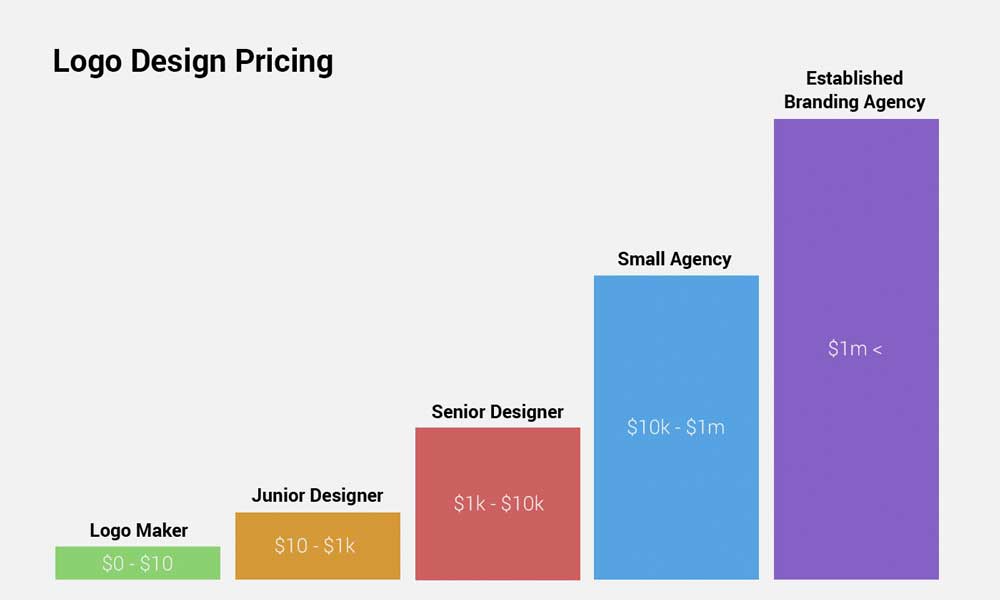
Logo design cost in 2026 ranges from £0 for AI logo generators to over £500,000 with a strategic branding agency, depending on the project’s scope and deliverables.
Key factors influencing the price include the depth of brand strategy, the number of initial concepts and revisions, and the inclusion of comprehensive brand guidelines.
While freelancers on platforms like Upwork may charge £500-£5,000 for a logo package, a full-service agency invests in competitive analysis and market positioning to deliver a brand identity with measurable ROI.
- Logo cost varies widely: free AI to six figures; UK SMEs typically £1,500-£4,500, price driven by strategy, scope and deliverables.
- A professionally crafted logo boosts recognition, credibility and conversion; it creates a measurable trust premium and long term ROI.
- Insist on vector masters, responsive variants, font licences and trademark searches; missing these causes hidden costs and legal risk.
The Value of a Powerful Logo
To get an idea of the value of having a good logo design, just think of some of the most iconic brands – McDonald’s Golden Arches, the Nike Swoosh, or the classic Coca-Cola script.
These are all instantly recognisable and have become the most important visuals to depict the brand’s identity.
When you have a professional logo design:
- It enhances brand recognition and recalls with consumers/customers
- It conveys a sense of professionalism and credibility in your brand
- It differentiates your brand from competitors
- It will increase customer loyalty and trust
- It can boost brand awareness and memorability.
Investing in the best logo design possible is crucial for growth and success. It’s typically one of the first touchpoints customers will have with your brand – a custom logo can make all the difference to how your business is perceived.
And that is the power of a great logo design.
This single image represents your brand’s personality, values and positioning in the market.
A good one can improve brand awareness and boost your marketing strategies. Studies show that a professionally designed logo can increase perceived value by up to 14%. That’s a lot for such a minimal investment.
So, while your logo may seem a small part of your overall brand identity, its importance shouldn’t be underestimated. It’s the face you present to the world – it must be done right!
Common Logo Types and How They Affect Scope and Cost
Direct Answer: Logo type selection affects research time, iteration count, and the number of delivered variants. Wordmarks and lettermarks often move faster than detailed emblems. Icons need more testing for legibility at small sizes and in monochrome. The right choice depends on name length, distinctiveness, and use cases.
- Wordmarks and lettermarks usually need fewer redraws and scale well.
- Icons and emblems require extra exploration and technical variants.
- Combination marks balance recognition with flexibility across channels.
- Wordmark. Best when the name is distinctive and pronounceable. Think Coca-Cola, a script-first identity where typography carries the brand.
- Lettermark. Strong for long or complex names. IBM is a classic example, condensing meaning into a recognisable monogram.
- Symbol/Icon. The Nike Swoosh shows how a simple abstract shape can be owned, yet it took years of consistent use to build recognition.
- Combination Mark. A wordmark paired with a symbol supports flexible layouts, from site headers to social avatars.
- Emblem/Badge. Rich detail inside a container, common in motorsport and education. Harley-Davidson’s shield is iconic, but badges often need simplified small-size variants.
Cost shifts with complexity. Emblems and illustrative marks demand more iterations, more test renders, and more usage proofs to avoid failure at tiny sizes.
Exploring the Factors that Influence Logo Design Pricing
Since we’ve seen the value in a quality logo, let’s get more specific on costs.
What exactly goes into the cost of logo design? Why is there such a wide range in pricing?
The truth is pretty simple. Many factors can impact the final costs.
The Designer’s Experience and Expertise
One of the biggest drivers of logo design cost comes from the experience and expertise of the designer/agency you work with. A teenage freelancer in design school will naturally charge a lot less than a creative director with a few decades of industry experience.
It’s like any industry, but you’re paying for their experience and knowledge that has taken years to obtain.
The Design Process and Revision Cycles.
A quick, one-and-done logo design will naturally cost less than an in-depth process that involves weeks (or months) of revisions and developments.
Agencies and seasoned professionals typically factor this time for research, concept development, strategy, presentation and revisions when quoting a project.
It’s like anything – if you pick something out of a catalogue, compared to having someone tailor something custom for you, one naturally takes longer (and is worth the extra cost).
The Scope of the Project.
Is this a quick logo representing a blog or hobby, or is this logo part of a larger branding project? The more comprehensive the scope, the higher the price tag will likely be.
Consider factors such as developing brand guidelines, additional marketing materials, or stationery design, as well as any other assets that will increase the overall cost.
Deliverables and technical specs that change quotes. Expect higher fees when the package includes multiple logo variants, responsive marks for small sizes, and extended guidelines. At minimum, ask for AI/EPS/SVG masters, PNG/JPG exports, RGB and CMYK values, and Pantone references if spot colours are required in print.
- Variants: primary, secondary, horizontal, stacked, monochrome, reversed.
- Colour modes: HEX/RGB for screens, CMYK for print, Pantone for precise spot usage.
- Guidelines: clear space, minimum sizes, misuse examples, and placement rules.
Your Industry and Company Size.
Yes, this really does come into play. For example, why would a local pet shop with three employees cost less than a Fortune 500 brand that operates globally?
Think about that for a second.
Consider factors such as the adaptability of the logo design across various backgrounds and layouts, and potential language or cultural changes that may be required.
The pet shop may need signage, the logo on a polo shirt and maybe a brochure.
The Fortune 500 brand has a significantly larger need to have its logo design thoroughly researched for growth, adaptation, and scalability. What if they need business cards printed for offices that do not speak Western languages? That giant centred logo doesn’t allow them to print names right-to-left as it was initially designed.
Research is vital.

Geographic Location.
As noted above, the location of your designer or team can significantly impact their rates.
Logo design services in expensive cities like New York, London or Hong Kong will cost more than those in smaller, less affluent markets.
Exclusivity and Licensing.
Finally, in some cases, the level of exclusivity and licencing needed can drive up the cost of logo design. Naturally, all good logo designers will steer clear of clipart, instead creating bespoke designs with their skill – but what about fonts?
If you want a designer to custom-create a typeface for the logo design and branding, don’t expect that to be cheap. Of course, Helvetica is a timeless classic, but it will add to the bill if you want everything custom.
Licensing Debts: Webfonts, Desktop, and App Fees
One of the most frequent “budget killers” in 2026 branding is Typeface Licensing. Many clients assume that if a designer uses a font in a logo, the client “owns” that font for all company use. This is rarely the case.
The Three Types of Licenses You Need
- Desktop License: Allows you to install the font on your computers to create PDFs and presentations. (Avg: £30–£100 per user).
- Webfont License: Allows the font to be used on your website. This is often priced by “Monthly Pageviews.” (Avg: £150–£500/year for mid-sized sites).
- App/Embedded License: If your logo font is used inside a mobile app interface. (Avg: £500+ one-time or annual).
Font licensing in practice. Typefaces are licensed, not owned. Most reputable EULAs allow creating a static logo, but broader brand use needs the right licenses, such as desktop, webfont, or app embedding. Outline logo text in the final vector files, and keep proof of licences to stay compliant.
Logo Performance Audit
Is your logo helping you grow, or holding you back? Answer 8 technical and design questions to get a Letter Grade (A-F) for your current logo.
A Step-by-Step Guide to the Logo Design Process

Okay, you have done your homework, found a designer you’re excited to work with, and are ready to start. What exactly can you expect from the logo design process? Here is a general overview of the typical steps:
1 – Discovery and Research
This would be initiated by understanding your business, your goals, and your target audience. They would conduct competitive research, explore industry trends, and uncover critical insights to inform the design direction.
2 – Concept Development
After the research, the creative team will begin brainstorming and sketching initial logo concepts. You can expect to receive 3-5 unique ideas during this process stage, each exploring a different visual approach.
3 – First Presentation and Feedback
The designer will present the initial logo concepts to you for feedback. This is where you get to have your say with him, point out your favourite, and provide input regarding the direction.
4 – Revisions and Refinement
The designer refines and develops the most promising logo concepts, taking your feedback into consideration. You may go through multiple revisions until you arrive at the perfect design.
5 – Final Deliverables and Guidelines
The designer will finalise the logo and provide the final files to you in various formats, complete with brand guidelines, so that your logo is used appropriately on all your marketing materials.
Detailed Deliverables Checklist (Technical File Audit)
In 2026, a “logo” is a software product as much as a visual one. If your designer doesn’t provide the following technical audit, you are paying for an incomplete asset. Ensure your contract explicitly lists these Tier 1 Deliverables:
- Vector Masters (The “Source”):
- AI (Adobe Illustrator): The industry standard for future editing.
- SVG (Scalable Vector Graphics): Essential for modern web use and animations.
- EPS: For legacy printers and signage.
- Web-Optimised Rasters:
- WebP: The 2026 standard for web performance. Faster and smaller than PNG.
- PNG (Transparent): For general digital use.
- AVIF: High-compression format for top-tier SEO performance.
- The “Responsive Suite”:
- Standard Logo: Full version.
- Stacked Version: For tight vertical spaces.
- Social Avatar: Square/Circular version (no text, just icon).
- Favicon (16px, 32px, 48px): Specifically drawn for pixel clarity.
- Accessibility (WCAG 2.2) Report:
- Proof that your brand colours pass Contrast Tests (AAA or AA) for digital accessibility. This is a legal requirement for many UK public-facing contracts in 2026.
- Motion Assets (The “Stinger”):
- A 2-3 second animated logo (Lottie or MP4) for video intros and social media reels. In 2026, even small brand packages often include a basic “Logo Reveal” animation.
6 – Implementation and Launch
The final stage is to start using your new logo across your website, social media, business cards, and other relevant touchpoints. This is an exciting time to reveal your refreshed brand identity to the world!
Rollout order that limits disruption. Switch high-visibility touchpoints first, then phase print to reduce waste.
- Website header, favicon, and social avatars, then email signatures and office templates.
- Update ad templates and marketplace assets, then signage and uniforms at planned reorder cycles.
- Store final assets in a single shared folder or DAM, and circulate guidelines to staff and partners.
2026 UK Market Pricing Matrix
For a business operating in the United Kingdom in 2026, the price of a professional logo has shifted significantly due to the saturation of automated tools.
You are no longer paying for the “drawing” of the mark; you are paying for the market immunity that a strategic, original identity provides.
The average cost for a professional logo in the UK now sits between £1,500 and £4,500 for established small businesses.
While entry-level options exist, the 2026 market has seen a “flight to quality,” where costs reflect the depth of research required to stand out in an AI-congested digital landscape.
The 2026 Pricing Tiers
| Tier | Estimated Cost | Ideal For | What You Get |
| The Automator | £0 – £150 | Micro-side projects, internal proof-of-concepts. | AI-generated vectors, standard licensing, no human strategy. |
| The Independent | £750 – £2,500 | New SMEs, local service providers, professional consultants. | 3–5 concepts, 2 rounds of revisions, basic style sheet. |
| The Specialist Studio | £3,500 – £12,000 | Scaling startups (Series A+), established regional brands. | Competitive audit, brand architecture, full guideline book. |
| The Strategic Agency | £20,000 – £75,000+ | National enterprises, FMCG, highly competitive fintech. | Consumer psychology, global trademark clearance, multi-market testing. |
The Mid-Market Shift
In previous years, you might have found quality freelance work for £300. In 2026, that segment of the market will have largely been replaced by high-end AI platforms.
Professional human designers have moved up-market, focusing on Visual Systems rather than isolated logos. A “logo-only” project is increasingly rare; most quotes now include a “Minimum Viable Brand” (MVB) package.
This ensures that the mark works across diverse digital touchpoints, from Apple Vision Pro spatial interfaces to standard mobile favicons.
Inflation and Hourly Rates
Senior UK designers now average between £75 and £150 per hour. When you see a quote for £1,500, you are effectively buying 15–20 hours of focused expert time.
This includes the “invisible” work: font pairing, colour accessibility testing (essential for UK government-standard compliance), and technical file preparation.
The AI-Human Hybrid Cost: New Service Models
In 2026, the question is no longer whether AI can design a logo, but whether an AI-generated logo can be legally owned and effectively scaled. The emergence of “Generative Liability” has created a new service tier: The AI-Hybrid Audit.
The Cost of “Free” AI Logos.
While platforms like Adobe Firefly or Canva Magic Studio can produce a visual mark in seconds, the cost of converting that “image” into a professional, legally defensible “brand” often exceeds the cost of hiring a designer from the start.
- Vectorisation Fees: AI output is often raster-based (pixels). Converting this to a scalable vector for print or large-scale signage typically costs £150–£300 in professional cleanup time.
- Legal Clearance: In the UK, AI-generated content (with minimal human intervention) remains a “grey area” under copyright law. Businesses are spending £500–£1,000 on specialist legal reviews to ensure their AI logo doesn’t infringe on existing protected works.
The Human-in-the-Loop Premium Data from the 2025 Creative Industries Report suggests that 74% of UK SMEs who used “pure AI” logos ended up commissioning a human redesign within 14 months. The primary reason? Semantic Drift. Pure AI logos often lack the subtle cultural cues and “brand soul” required for long-term customer trust. High-value designers in 2026 now offer “Human-Verified” branding, which uses AI for rapid ideation but human expertise for the final 20%—the part that creates emotional resonance and ensures technical perfection.
New Service Model: The “Prompt-to-Product” Consultant
A new breed of designer has emerged who specialises in Design System Orchestration. They use advanced generative models to explore 1,000+ variations of your brand concept in hours, then spend days refining the single best version. This has made the £1,000–£2,500 price bracket more powerful, offering “Agency-level” variety at “Freelancer” prices.
How to Choose the Right Logo Designer for Your Budget

With so many logo design price ranges available, how will you know which option best suits your needs and budget?
Here’s a getting-started guide with a few tips below to help you get started. Indeed, here’s how:
Define Your Goals and Budget
Start by clarifying what you are looking for in a logo design.
What aesthetic are you trying to convey? What are your must-have features or non-negotiables? And most importantly, how much can you realistically afford?
A solid understanding of your goals and budget will go a long way toward cutting through many other options.
Research and Compare Portfolios
With a clear idea of what you are looking for, it’s time to begin researching designers and agencies.
Review their portfolios, read their reviews, and familiarise yourself with their style and approach.
Due diligence that prevents rework. Verify portfolio authenticity with case studies and credited clients where permissible. Request references, then compare contracts line by line.
- Define scope, deliverables, timeline, ownership, revision counts, and kill fees in writing.
- Confirm original vector creation, not clipart or stock icons.
- Ask for proof of legitimate asset sourcing, especially font licences and any third-party artwork.
Just because a designer has the lowest price does not mean they are the best fit; make sure their work aligns with your vision.
Consider the Entire Scope of Work
Remember that logo design is often just one piece of a greater branding puzzle.
As such, ensure you know precisely what’s included when fielding quotes.
Will you also receive brand guidelines, business cards, social media assets, and other relevant materials?
The more holistic the package, the greater the value you may receive.
Quality over Quantity
Attempting to have the most “bang for your buck” in logo design may be tantalising. However, one must avoid the compulsion to select the lowest bidder.
A well-designed and high-quality logo that will serve your brand for a long period is far wiser than a cheap, generic mark, which you will likely end up replacing down the line.
Trust Your Instincts
The design of your logo is, ultimately, quite personal.
You want to feel happy with your designer or agency, a relationship where you feel comfortable giving that person carte blanche to interpret your vision.
Never be afraid to trust your instincts – the perfect creative fit makes the process seamless and painless.
Rebrand vs Refresh: Cost-Benefit Analysis
Many businesses mistakenly ask for a “new logo” when what they actually need is a Brand Refresh. Understanding the price difference can save you thousands.
Comparison: Brand Refresh vs. Full Rebrand (2026)
| Feature | Brand Refresh | Full Rebrand |
| Typical Cost (UK) | £1,500 – £5,000 | £10,000 – £50,000+ |
| Focus | Modernising the existing look. | Changing perception and positioning. |
| Changes | Updated font, cleaned-up logo, new colour shades. | New name, new logo, new strategy, new mission. |
| Timeline | 3 – 6 weeks. | 3 – 9 months. |
| Risk | Low (maintains existing recognition). | High (requires major customer re-education). |
When to choose a Refresh (£): Your business model is the same, but your logo looks like “2010.” You want to look more premium but stay recognisable to your current 5,000 customers.
When to choose a Rebrand (£££): You’ve merged with another company, your old brand has a bad reputation, or you are moving from B2B to B2C. A rebrand requires quantitative research and audience testing, which drives the price into the high four- or five-figure range.
Intellectual Property & Trademarking Costs (UK IPO)
A logo you cannot legally own is a liability, not an asset. In the UK, the cost of designing the logo is separate from the cost of protecting it. If your budget doesn’t account for the UK Intellectual Property Office (UK IPO) fees, you are only doing half the job.
Standard Trademarking Costs 2026
- Online Application (One Class): £170.
- Each Additional Class: £50.
- Professional Search Fee: £300 – £800 (Recommended).
Why the “Class” System Matters When you register a logo, you register it within specific “classes” of goods or services. For example, a logo for a coffee shop (Class 43) doesn’t necessarily stop a software company from using a similar mark (Class 9). A professional designer will help you identify which classes are vital for your future growth.
The Hidden Cost of Trademark Conflict. If you choose a “cheap” logo that inadvertently mimics an existing trademark, the costs escalate rapidly:
- Cease and Desist Response: £500+.
- Full Rebrand (Emergency): 2x the original cost.
- Loss of Physical Assets: Signage, uniforms, and stationery waste.
International Protection: If you plan to sell outside the UK, you must consider the Madrid System or individual filings in the EU and the USA. This can add £1,500–£5,000 to your initial brand protection budget. Most high-end UK agencies will include a “Basic Trademark Search” in their £5,000+ packages to mitigate these risks early in the design phase.
Basic Trademark Search and Protection Steps
Copyright protects the artwork, and trademark protects your right to use the mark for goods and services. You should run official database checks and, for clearance and filing, consult an IP professional. Company name or domain registration does not grant trademark rights in the UK.
- Start with identical and similar mark searches via UK IPO, EUIPO, and USPTO databases for relevant classes.
- Check for phonetic and visual conflicts, then review live and pending marks in the same class.
- Keep dated artefacts of concept development and final artwork for evidence of use.
Registering a company at Companies House does not protect a logo. The UK Intellectual Property Office states that company names and trade marks are separate systems, and only a registered trade mark grants exclusive rights in specified classes (UK IPO Guidance).
ROI & Value Attribution: Quantifying Design Spend
How do you justify spending £5,000 on a logo? By calculating the Brand Equity Uplift. While design is subjective, its impact on your bottom line is quantifiable.
The “Trust Premium” Formula. In the 2026 UK market, consumer scepticism is at an all-time high due to the rise of “ghost brands” and AI-generated scams. A professional, high-cohesion visual identity creates a “Trust Premium.”
- Calculation: (Conversion Rate with Professional Logo) – (Conversion Rate with DIY Logo) = Direct ROI.
- Real-World Example: A UK-based SaaS company reported a 22% increase in demo sign-ups simply by moving from a generic £200 logo to a £4,000 strategic identity. The new mark conveyed “Enterprise Grade” stability, allowing them to increase their subscription price by 15% without losing volume.
The Recruitment and Retention Value. A strong logo isn’t just for customers; it’s for talent. In the “War for Talent” 2026, candidates prefer brands that look “established” and “visionary.”
The Internal ROI Research suggests that companies with high-quality, professional branding see a 12% reduction in recruitment costs. Employees are more likely to share company content and wear branded apparel when the design is aesthetically superior. Over a 3-year period, the £5,000 investment in a logo pays for itself through reduced “Cost-per-Hire” alone.
The “Disruption Cost” of a Bad Logo. Conversely, a “cheap” logo has a high Negative ROI. If you have to rebrand in 2 years because your initial logo feels “dated” or “unprofessional,” you aren’t just paying for the new logo. You are paying for the Brand Confusion Tax—the loss of recognition and SEO authority during the transition.
How to Get the Best Value for Your Logo Design Investment

Now that you have a relatively good idea about how logo design pricing works, here are a few ways you can maximise value in your investment:
- Set measurable success criteria: Define pass marks before kickoff, such as improved small-size readability, higher brand recall in quick tests, fewer support tickets for incorrect logo use, and better on-site engagement for branded CTAs.
- Centralise asset management and version control: Maintain a single source of truth with dated versions, clear naming, and partner access rules. This prevents outdated files from circulating and protects the value of your guideline-compliant system.
Remember that a great logo is an invaluable investment that can continue to pay dividends in your business for years to come.
By understanding the factors that drive the price of logo design and following these tips, you will be well on your way to finding the ideal designer who can help bring your brand vision to life.
Unlocking the Value of a Compelling Logo Design
Because logo design costs can be complex, with the right information and strategies, you may find a solution that fits your budget and meets your business needs.
Remember, a well-designed logo is a powerful tool to enhance your brand image, build customer trust, and ultimately contribute to the long-term success of your business venture.
By understanding the factors that determine logo design prices, considering the various price levels for custom logos, and following our tips, you will be better equipped to make the best possible decision and invest in a logo that truly captures the essence of your brand.
Frequently Asked Questions
Why is logo design more expensive in 2026?
Inflation, increased technical requirements (Responsive design), and the rise of legal compliance (Green Claims Code) have driven professional costs up. You are also paying for “AI-Immunity”—ensuring your brand is distinct from millions of generic, generated marks.
Would hiring a professional designer be worth the investment compared to a DIY or crowdsourced option?
Yes, even if it means hiring an experienced designer at higher rates, it would be an excellent investment. A well-designed logo can significantly enhance credibility and set your brand apart, leaving a lasting impression on your target audience.
What must I decide when choosing a freelance designer or a design agency?
Freelance designers generally provide more personalised attention and lower rates. Design agencies offer options for a team-based approach, additional services, and a more comprehensive brand strategy. Consider your budget, the complexity of your project, and the level of support you may need.
How many logo design concepts can I get?
The number of logo design concepts you will have can vary, but a good starting point is usually 3-5 unique concepts. This allows you to see creative approaches and forms a solid foundation for feedback and refinement.
How many revisions does a typical logo design project include?
Depending on the individual designer’s or agency’s process, the time required can range from a few minutes to unlimited. Ensure you understand and ask about the revision policy beforehand to avoid surprises or additional costs.
Do I need to buy the entire copyright and ownership of the logo design?
It is always advisable to have full copyright and ownership of the logo design for free use and to make changes whenever required. Some designers or agencies may only allow a limited license or shared ownership, restricting your rights to use a design.
How long does a logo design process usually take?
It depends on the designer’s or agency’s workload and the project’s level of complexity. Still, the average well-done logo design process usually takes 2 to 8 weeks.
Can I negotiate the cost of designing a logo?
You can often negotiate with freelancers or smaller agencies regarding logo design prices. Be clear about exactly what you want, provide a detailed scope of work, and then demonstrate your understanding of market rates.
What if I do not like the final logo design?
Any reputable designer or agency will revise it for you or offer a money-back guarantee if you are not satisfied with the final logo design. Before starting the project, familiarise yourself with the revision policy and any associated limitations.
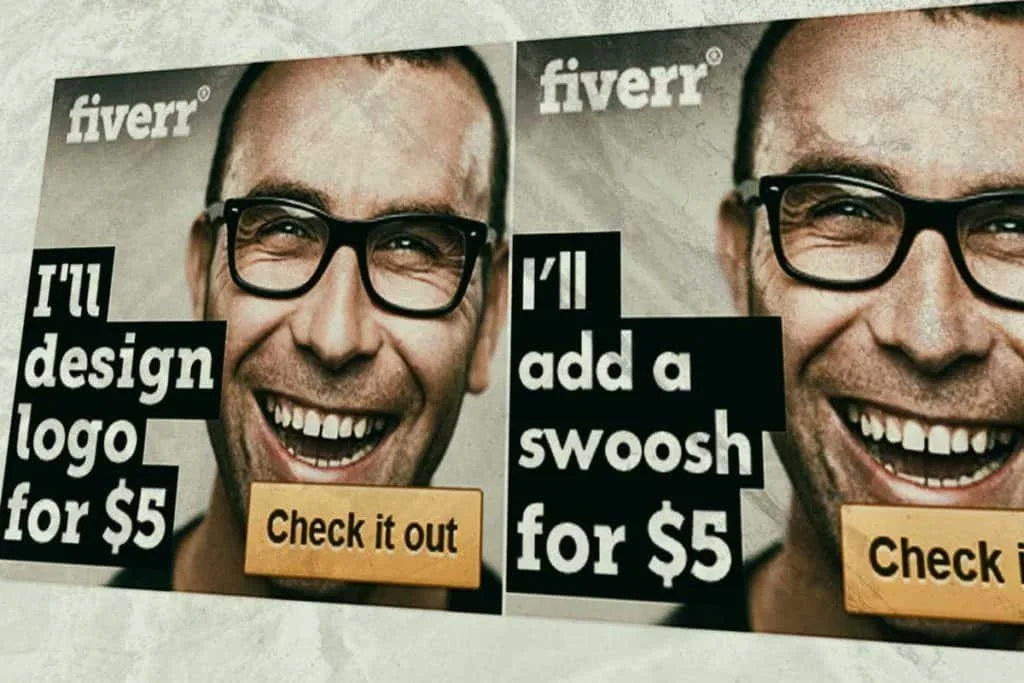
Is it cheaper to get a logo on Fiverr in 2026?
Upfront, yes (£10–£50). However, “Hidden Costs” (vectorisation, lack of copyright, and redesign fees when it fails technical tests) often make it 5x more expensive over a 2-year period than hiring a mid-tier UK freelancer.
Can I trademark a logo I designed myself in the UK?
Yes, you can file with the UK IPO for £170. However, without a professional “Clearance Search,” you risk your application being rejected if it is too similar to an existing mark, resulting in a lost fee.
What file formats should I deliver for the final logo design?
The designer or agency shall provide the final logo in several file formats, including vector formats such as SVG and EPS for high-quality, scalable reproductions, and raster formats such as PNG and JPG for digital and print applications.