Entity SEO: Teaching Google Who You Are With Schema
In 2026, if Google cannot identify you as a distinct node in its Knowledge Graph, you do not exist.
You are just noise.
For entrepreneurs and SMB owners, this isn’t just a technical glitch—it is a commercial catastrophe.
When Google fails to connect your brand to your services, your SEO efforts are essentially a donation to your competitors.
- Entity SEO focuses on defining brands as distinct nodes in Google’s Knowledge Graph using Schema, not just keywords.
- JSON-LD is preferred for robust, maintainable Schema; include Organization, Person, Service, WebSite, and SameAs links.
- Reconciliation across trusted sources raises Google’s entity Confidence Score; consistency beats volume.
- Use PotentialAction schema to enable AI agents to act (ReserveAction, BuyAction); make Schema active, not passive.
What is Entity SEO?
Entity SEO is the practice of optimising a brand’s digital footprint to ensure search engines accurately identify, categorise, and relate it to other known entities.
It shifts the focus from “strings” (keywords) to “things” (entities), providing a machine-readable context that defines who you are, what you do, and why you are authoritative.
Key Components of Entity SEO
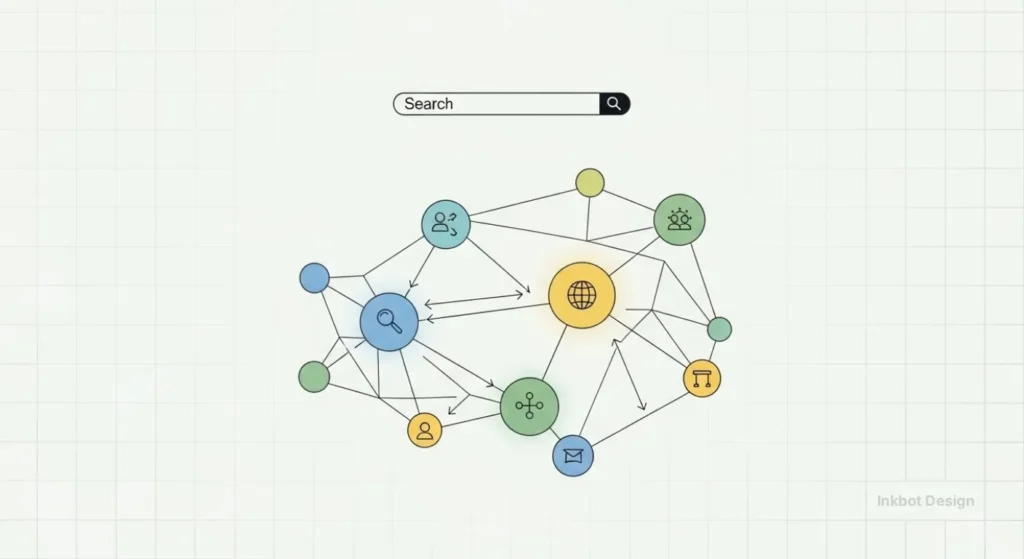
- Entity Identification: Establishing a unique ID (Machine ID) in Google’s Knowledge Graph.
- Relationship Mapping: Defining the links between your brand and its founders, products, and industry topics through Schema.
- Reconciliation: Ensuring third-party data sources (Wikidata, social profiles, directories) align with your self-stated identity.
The Death of the Keyword and the Birth of the Node
For two decades, we’ve been told that keywords are the currency of search. That is no longer true.
Following the 2024 Google API leaks, we have confirmation that Google tracks “Brand Authority” and “Site Focus” as primary ranking signals. These are not keyword-based; they are entity-based.
Google doesn’t just want to see the word “Branding Agency.” It wants to know that Inkbot Design is a Branding Agency based in Belfast, founded by Stuart L. Crawford, and connected to the entity of “Graphic Design.”
The Evolution of Search Signals (2016–2026)
| Era | Primary Signal | Optimisation Tactic | Technical Requirement |
| 2016 | Keywords | Stuffing keywords in H1 tags. | Meta Tags |
| 2021 | Backlinks | Guest posting for link volume. | Mobile Speed |
| 2026 | Entity Confidence | reconciling data across the web. | JSON-LD & Triplets |
| Future | Agentic Utility | Providing API-like access via Schema. | Action Schema |
From Strings to Things: A Logical Evolution
In the past, if you searched for “Apple,” Google had to guess if you wanted the fruit or the trillion-dollar tech giant.
Today, through entity reconciliation, Google understands the user’s intent based on their previous interactions with “node”.
If you’ve been looking at “iPhone prices,” the search engine creates a temporary link between your user entity and the Apple Inc. entity.
According to a Gartner study on search evolution, by 2026, over 40% of search queries will be handled by Generative Engines (SGE and Perplexity).
These engines do not “rank” websites in the traditional sense; they synthesise answers from trusted entities. If you aren’t a trusted entity, you won’t be synthesised.
The Technical Core: Schema as the Translator
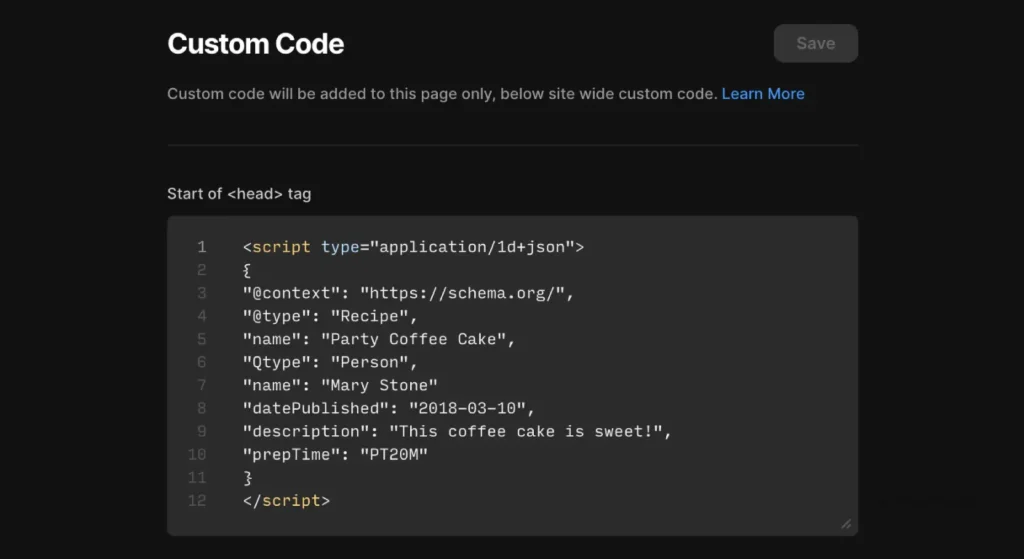
If Entity SEO is the strategy, Schema Markup (JSON-LD) is the language. Think of your website as a book written in a language that Google understands.
A schema is the index at the back that tells the reader exactly what every page is about in a language they speak fluently.
Why JSON-LD is the Gold Standard
While microdata and RDFa still exist, Google has been vocal about its preference for JSON-LD.
It is easier to maintain, less prone to breaking your web design services, and can be dynamically injected via Google Tag Manager if your CMS is being stubborn.
Essential Schema Types for Entity Definition
To build a robust entity, you need more than just the “Organization” Schema. You need a hierarchy:
- Organization / Brand: Defines the entity itself.
- Person: Connects founders and key employees to the brand (crucial for E-E-A-T).
- Service / Product: Defines what the entity provides.
- WebSite / WebPage: Defines the digital container of the entity.
- SameAs: This is the most underrated property. It links your website to your Google Knowledge Panel, LinkedIn, Twitter, and Wikidata.
The Missing Layer: Optimising for Action
Most SEOs stop at defining who they are. In 2026, you must define what you can do. AI Agents (like Gemini Assistant or Apple Intelligence) are looking for PotentialAction Schema. This tells the bot: “You don’t need a human to navigate this site; here is the direct API endpoint to book a call.”
- ReserveAction: Allows an AI to book a consultation directly on your calendar.
- BuyAction: Allows an AI to add a product to a cart.
- If your schema is passive, you are a library. If your schema is active, you are a business.
The “Valid Schema” Myth: Why Your Green Tick is Lying
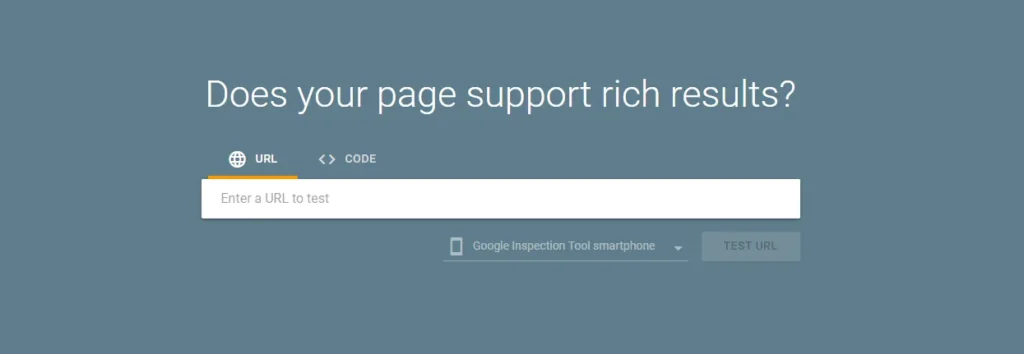
I have seen countless developers boast about “valid” Schema that actually does nothing.
The Google Rich Results Test only checks for syntax and required fields. It does not check for truth.
“A common mistake in 2026 is assuming that because the code is valid, the message is received. If your Schema indicates that you are a ‘Top Branding Agency’ but your LinkedIn profile lists you as a ‘Freelance Photographer,’ Google will disregard your Schema. Contradiction is the death of an entity.”
The Reconciliation Gap
If your technical SEO doesn’t include a strategy for “SameAs” reconciliation, you are wasting your time. Google uses a “Confidence Score” for every entity.
Every time it finds a matching piece of data on a trusted site (like Companies House or a major news outlet), that score goes up. If it finds conflicting data, the score drops, and your Knowledge Panel disappears.
Amateur vs. Pro Technical Implementation
| Feature | The Wrong Way (Amateur) | The Right Way (Pro) |
| Schema Language | Microdata inline with HTML. | Clean, structured JSON-LD in the <head>. |
| SameAs Usage | Linking only to Facebook and Instagram. | Linking to Wikidata, Crunchbase, and niche directories. |
| Entity Mapping | Only defining the company. | Defining the company, founders, and key topics. |
| Dynamic Data | Hard-coded values that become outdated. | Dynamic JSON-LD that pulls from the database. |
| Image Schema | Ignoring image optimisation. | Using ImageObject with license and creator data. |
The State of Entity SEO in 2026: LLMs and Generative Search
We have entered the era of Generative Engine Optimisation (GEO).
In early 2026, ranking studies revealed that LLMs like GPT-5 and Google’s Gemini 1.5 Pro heavily rely on “Entity Salience.”
This is a mathematical score of how “central” an entity is to a specific topic.
If a user asks an AI, “Who is the best branding expert in the UK?”, the AI scans its training data for entities with high salience in the “UK Branding” cluster. It looks for:
- Co-occurrence: How often is the brand mentioned alongside industry terms?
- Sentiment: Are the mentions positive? (Related to online reputation management).
- Connectivity: How many other trusted entities point to this one?
The Shift to “Context Windows”
In 2026, search isn’t about matching a query to a page; it’s about fitting an entity into the AI’s “context window.”
To be included in an AI-generated answer, your entity data must be “compressed” and clear.
Dense, fluff-filled content is often ignored because it requires the AI to expend too much “compute” to process.
This is why we focus on high “Information Gain”—giving the search engine new facts, not just rehashed opinions.
Thinking in Vectors: How AI Actually “Reads” You
To an LLM, your brand isn’t a word; it’s a Vector Embedding—a set of coordinates in a multi-dimensional math space.
- The Goal: You want your brand’s vector to sit as close as possible to the vector for “Trusted Expert” and “High Quality.”
- The Method: Consistent language patterns. If you describe yourself as “Premium” on LinkedIn but “Cheap” on your homepage, your vector gets “smeared,” and the AI loses confidence. Semantic consistency tightens your vector, making you the default answer for high-value queries.
The Consultant’s Reality Check: Fieldwork Observations
During my work, I frequently encounter companies that are essentially “ghosts.” They have a website and a logo—usually a decent one, if they’ve come to us—but they lack a digital presence.
I once audited a client in the local SEO space who couldn’t understand why their search engine ranking position remained stagnant despite a high link-building budget.
When we examined their entity data, we found that they were using three different addresses and two different company names across the web.
To Google, they weren’t one strong entity; they were three weak ones. We spent six months “merging” these identities before the rankings finally moved.
The lesson: Consistency is more important than volume. A single, clear entity profile is worth a thousand messy backlinks.
Step-by-Step Guide to Teaching Google Who You Are

1. Claim Your Nodes
Start with the basics. Ensure you have a Google Business Profile, a Bing Places listing, and an Apple Maps entry. These are the primary “seeds” for your entity.
If you are a person of influence, consider creating a profile on a site that directly feeds the Knowledge Graph, such as MuckRack or a relevant industry association.
Don’t Forget Visual Identity. Your logo is an entity. Your founder’s face is an entity. Google’s Vision AI scans every image to confirm identity.
The Fix: Ensure the filename of your logo is inkbot-design-logo-branding-belfast.svg and wraps it in the ImageObject schema. Never change your logo on one platform without updating it across all others. Visual dissonance kills entity confidence.
2. Implement Advanced Organization Schema
Don’t just use the “Organization” type. Use specific subtypes, such as DesignBusiness or FinancialService. Include:
- legalName: Your official registered name.
- logo: A link to your high-resolution logomark.
- foundingDate: To establish longevity.
- areaServed: To define your local SEO boundaries.
3. Build Your “SameAs” Network
This is the “Proof” layer. Link your Schema to:
- Official social media profiles.
- Wikipedia/Wikidata (if eligible).
- Industry-specific directories (e.g., Clutch.co for agencies).
- Professional bodies (e.g., the IPA or W3C).
4. Create an “Entity Home”
Your “About” page shouldn’t just be a mission statement. It should be the definitive “Entity Home.” This is where you list your founders, history, awards, and core services.
Use clear, declarative sentences. “Inkbot Design is a branding agency,” not “We are a team of passionate creatives who love to build brands.” The first one defines an entity; the second doesn’t.
The Verdict: Entity SEO is the New SEO
If you are still chasing keywords, you are playing a game that ended in 2023.
The future of search is identity. By using Schema to teach Google who you are, you aren’t just “optimising”; you are future-proofing your business against the volatility of AI and algorithm updates.
When Google understands your entity, it gives you the benefit of the doubt.
It trusts your content more, it ranks you higher for navigational queries, and it ensures that when someone looks for your services, they find you, not a car wash in Birmingham.
If your current SEO strategy feels like it’s screaming into a void, it’s time for a forensic audit. Stop being a string. Become an entity.
Ready to claim your spot in the Knowledge Graph?
Request a Quote for a comprehensive Entity SEO audit, and let’s define your brand’s future.
Frequently Asked Questions (FAQ)
What is the difference between a keyword and an entity?
A keyword is a specific word or phrase used in a search query. An entity is a well-defined object or concept, such as a person, place, or brand, that Google recognises as a distinct node in its Knowledge Graph. Keywords are strings; entities are things with attributes and relationships.
Why is Schema important for Entity SEO?
Schema provides the machine-readable data that search engines need to understand the context of your content. It serves as a bridge between human language and the structured data format that search engines utilise to construct their Knowledge Graph. Without a Schema, Google has to “guess” your identity.
How do I get a Google Knowledge Panel?
A Knowledge Panel is automatically generated when Google has a high confidence score in your entity. You can encourage this by implementing correct Schema, having a consistent NAP across the web, being mentioned in trusted third-party sources, and having a Wikidata entry.
Does Entity SEO replace traditional SEO?
No, it enhances it. Traditional SEO (keywords, backlinks, technical health) still matters, but Entity SEO provides the framework that makes those efforts more effective. Think of Entity SEO as the foundation and traditional SEO as the building on top of it.
Can I have an entity without a Wikipedia page?
Yes. While Wikipedia is a powerful “seed” for the Knowledge Graph, it is not the only one. Google uses millions of sources to identify entities, including social media, news sites, official government registers, and your own website’s structured data.
What is ‘SameAs’ in Schema?
The sameAs property is a part of Schema.org used to indicate that two URLs represent the same entity. For example, you use the sameAs property to tell Google that the “Inkbot Design” on your website is the same as the “Inkbot Design” found on LinkedIn and Twitter.
How does Entity SEO affect voice search?
Voice assistants like Alexa and Google Assistant rely almost entirely on entity data to provide answers. Because voice queries are more conversational, the search engine must understand the relationships between entities to provide a relevant, single-source answer.
Is JSON-LD better than Microdata?
Yes. Google explicitly recommends JSON-LD for structured data because it is easier to implement, does not interfere with the visual elements of a page, and can be easily read by search engine crawlers without requiring them to parse the entire HTML body.
How long does it take for Entity SEO to show results?
Entity SEO is a long-term strategy. While Schema can be indexed in days, the “Confidence Score” of an entity takes months to build as Google reconciles your data across the web. However, once established, entity-based rankings are far more stable than keyword-based ones.
Does the Inkbot Design logo help with Entity SEO?
Yes. Google’s Vision AI can identify logos across different websites and images. If your logo is consistent across your site, social media, and directories, it serves as a visual “SameAs” signal that reinforces your brand entity.
What is a Machine ID in the Knowledge Graph?
A Machine ID (or MID) is a unique identifier assigned by Google to every entity in its Knowledge Graph. It usually looks like /m/0_vwy. Having a dedicated MID means Google has officially recognised you as a distinct entity.
Can Entity SEO help with AI-generated search results?
Absolutely. LLMs and Generative Engines use entity relationships to synthesise answers. By defining your entity clearly with Schema, you increase the likelihood that these AI engines will cite your brand as a trusted source for relevant queries.