Top 10 Email Marketing Tools: Save Time & Money
Email marketing is not just a tool; it’s a lifeline for businesses looking to thrive in a crowded marketplace.
Imagine having the power to connect with your audience directly, delivering tailored messages that resonate and convert. But here’s the kicker: not all email marketing tools are equal.
In a world where time is money, finding the right tools can be the difference between a flourishing business and one that flounders in obscurity.
In this article, we’ll dive into the Top 10 Email Marketing Tools that will save you time and maximise your return on investment.
These tools are designed to simplify your processes, enhance your campaigns, and ultimately drive more sales. Whether you’re a seasoned marketer or just starting, this guide will equip you with the insights to make informed decisions and elevate your email marketing game.
Get ready to unlock the potential of your email list and watch your business soar!
- Email marketing offers high ROI, with businesses earning approximately £38 for every £1 spent.
- Choosing the right email marketing tool is crucial for efficiency and effectiveness.
- Key features to assess include cost-effectiveness, user-friendliness, and integration capabilities.
- Personalisation and automation strategies enhance audience engagement and connection.
- Future trends include AI integration and enhanced data analytics for improved campaign performance.
Significance of Email Marketing for Businesses

Now, let’s discuss why email marketing is not just a might-be-cool option; it’s a must-have for your business arsenal.
First off, email marketing boasts an impressive ROI. According to studies, for every £1 spent, businesses earn about £38 back. That’s a fantastic deal.
Email marketing is a no-brainer if you’re looking for a place to invest your resources. But it’s not just about the numbers; it’s about building relationships. You want your audience to feel valued, don’t you?
Think about that one business that sends you regular updates and special offers; you look forward to their emails, right?
That’s the power of effective email marketing—creating a connection that transforms casual viewers into loyal customers. You might wonder, “Why email?” Here are some benefits:
- Direct Communication: You have a direct line to your audience—no algorithms getting in the way of your message.
- Personalisation: You can tailor your messages based on customer behaviour and preferences. Wouldn’t you send the same message to a first-time buyer?
- Segmenting: Effective segmentation means sending targeted campaigns to the right people at the right time. It’s about providing value, not just noise.
Furthermore, email marketing allows for measurable success. Unlike traditional methods like flyers or radio ads, you can track every click, opening, and conversion. This data becomes the gold standard for refining your strategies.
Of course, challenges exist. You might face high unsubscribe rates or emails landing in spam folders. But with the correct email marketing tools, you can tackle these problems head-on. Using A/B testing, monitoring your deliverability rates, and adjusting your content can significantly improve your outcomes.
In conclusion, email marketing tools aren’t just a ‘nice-to-have’; they are fundamental to crafting successful marketing strategies in today’s digital landscape. They provide the framework to build lasting customer relationships, ensure measurable results, and boost revenue.
So, are you ready to dive into the world of email marketing? It’s time to harness the power of these tools and take your business to the next level!
Criteria for Selecting Email Marketing Tools

When you finally decide to venture into the world of email marketing, you’re bound to face a crucial decision—choosing the right email marketing tool. Trust me, I’ve been there.
With so many options available, finding a needle in a haystack can feel like finding a needle. So, how do you cut through the noise? Here are some criteria that can help guide your selection.
Cost-Effectiveness
Let’s kick things off with a no-brainer: cost-effectiveness. As a business owner, you probably know the struggle of tight budgets. After launching Inkbot Design, I learned the importance of optimising costs. Even though some email marketing tools come with a flashy price tag, they might not deliver the bang for your buck.
- Monthly Subscription: Look for tools that offer flexible pricing based on the size of your email list. Some platforms provide free tiers for startups, making it less of a financial gamble.
- Hidden Costs: Always read the fine print! You don’t want to commit to a service only to uncover extra fees for features you assumed were included, like advanced analytics or additional user accounts.
- Return on Investment: Choose a tool that helps you track your ROI quickly. It’s essential to know if the money you’re spending is translating to customer engagement and sales.
It’s like shopping for the perfect pair of jeans; you want something that fits well and is stylish without breaking the bank!
User-Friendly Interface
Next up, let’s talk about a user-friendly interface. You might have the best product in the world, but if the tool you choose is as complicated as assembling IKEA furniture without the instructions, you’re in for a headache. Think about your own experiences. The first email marketing tool I tried was straightforward, allowing me to create stunning emails without tearing my hair out. A user-friendly interface can save time and effort and keep your frustration levels in check.
- Drag-and-Drop Editors: These are lifesavers. You can easily craft attractive emails without needing coding skills. Simply drag the elements into place, and voila!
- Mobile Optimisation: With so many people checking emails on their phones, ensure the tool offers mobile-responsive templates.
- Accessible Support: A solid support system is crucial. Does the tool offer tutorials, quizzes, or chat support if you get stuck? Trust me, you’ll want peace of mind knowing help is just a click away!
A good interface feels like the clear blue skies on a sunny day—easy to navigate and uplifting!
Integration Capabilities
Finally, you can’t underestimate the importance of integration capabilities. Your email marketing tool should work seamlessly with other platforms you’re using. Otherwise, you’ll find yourself playing a frustrating game of digital tug-of-war.
- CRM Software: If you’re using a CRM (Customer Relationship Management) system, ensure your email marketing tool integrates smoothly with it. This will allow you to manage contacts, segment audiences, and nurture leads without changing platforms.
- E-Commerce Platforms: If you’re selling products online, your email tool should easily connect with your e-commerce platform. Imagine sending out a promotion for items out of stock—yikes!
- Analytics Tools: Consider using analytics tools to gain insights into your campaigns. Integrating them with your email platform is critical to tracking performance metrics efficiently.
Imagine you’re on a road trip; you don’t want to drive a car with a faulty GPS. The right integrations ensure you reach your destination faster and smoother. In conclusion, selecting the email marketing tool balances cost-effectiveness, a user-friendly interface, and seamless integration capabilities. When you nail these factors, you set yourself up for success in your email marketing journey. So, roll up your sleeves, research, and pick a tool to elevate your campaigns!
Top 10 Email Marketing Tools
With a solid understanding of your criteria for selecting the right email marketing tools, let’s dive into the crème de la crème—the top 10. Each platform has its perks, and choosing the right one depends on your needs. Grab your coffee, settle in, and let’s explore!
1 – GetResponse
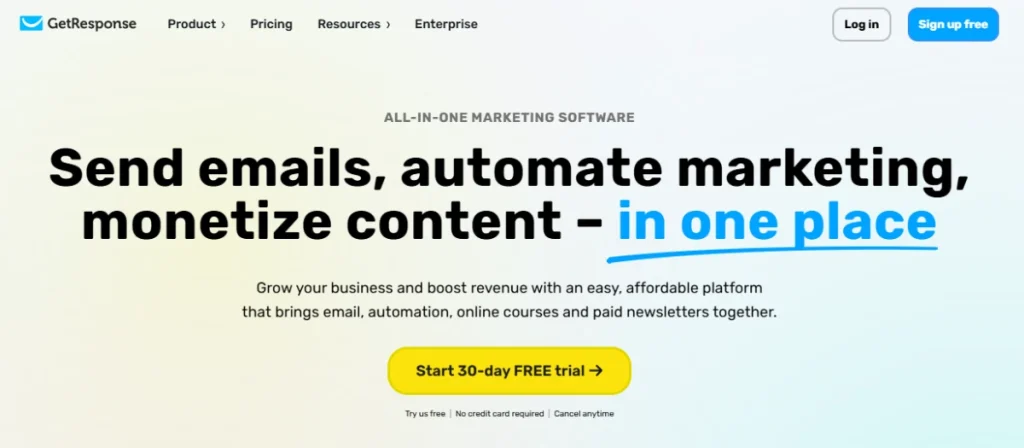
First up is GetResponse. This tool is a true powerhouse, offering features like:
- Email Automation: Easily set up automated workflows to nurture leads.
- Landing Pages: Create sleek landing pages that convert.
- Webinars: An unusual feature that allows you to host webinars directly.
When I first discovered GetResponse, I was sceptical about its webinar capabilities. Yet, they became a game-changer for my online marketing strategy.
2 – Mailchimp

Next, we’ve got the ever-popular choice: Mailchimp. Known for its friendly interface, it won the email marketing world over.
- Free Plan: It offers a robust free plan for beginners.
- Templates: A variety of stunning templates to make your emails pop.
- Analytics: Detailed reports to monitor engagement levels.
When I started with Mailchimp, I loved its simple drag-and-drop features that allowed me to design gorgeous emails like a pro.
3 – Brevo (formerly Sendinblue)

Enter Brevo, a tool that merges email marketing with excellent CRM features. It’s pretty versatile.
- SMS Marketing: An added feature that can boost engagement.
- Pricing: Very affordable, especially for small businesses.
- Transactional Emails: Allows sending order confirmations and receipts.
I chatted with a small business owner who used Brevo and found it immensely helpful for managing customer interactions through emails and SMS.
4 – Moosend
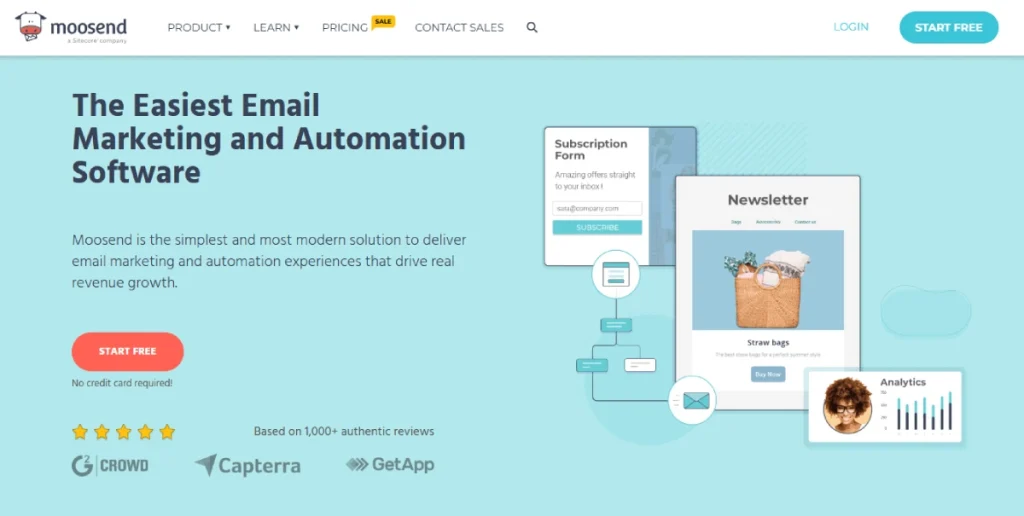
If you’re looking for simplicity, give Moosend a shot.
- User-Friendly: Its intuitive design is perfect for beginners.
- Automation Workflows: Set up complex workflows easily.
- Segmentation: Tailors messages based on customer behaviour.
I once had a friend launch an e-commerce store using Moosend, and she was amazed at how rapidly she could get started without complications.
5 – Omnisend

Omnisend is tailored especially for e-commerce.
- E-Commerce Integrations: Connects seamlessly with platforms like Shopify and WooCommerce.
- Segmentation and Personalisation: Very powerful in targeting specific groups.
- Multichannel Campaigns: Combine emails, SMS, and push notifications.
After grappling with several tools, I finally landed on Omnisend while helping a client with their e-commerce strategy. The results were fantastic!
6 – HubSpot
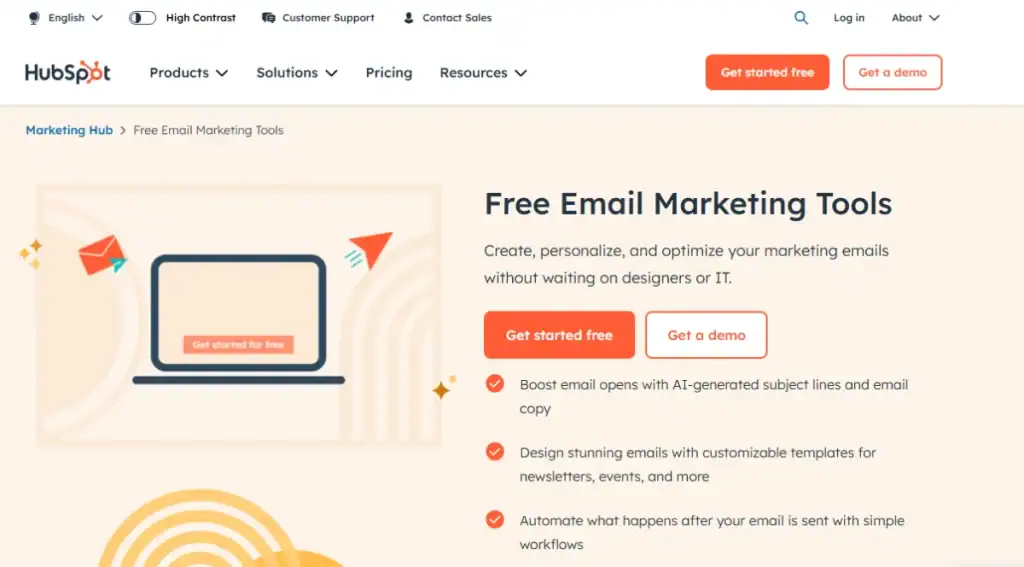
Now, let’s talk about HubSpot—a leader in the inbound marketing space.
- CRM Integration: The integration capabilities are unparalleled.
- Lead Scoring: Help prioritise your leads for better conversion.
- Comprehensive Analytics: Provides insights that help refine strategies.
HubSpot can be a bit more of a commitment budget-wise, but if you’re serious about scaling, it’s worth every penny.
7 – AWeber
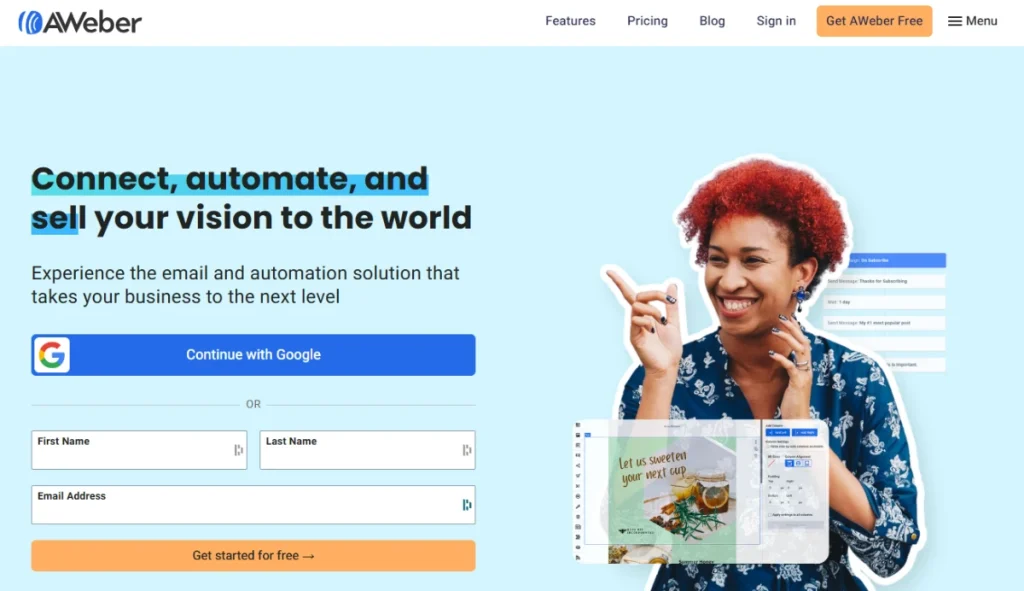
Get ready for AWeber, a classic in the email marketing realm.
- Customer Support: Known for its stellar support.
- Drag-and-Drop Builder: Easy to use for beginners.
- Integrations: Works with popular tools like PayPal and WordPress.
I had a mentor who swore by AWeber for his small business, and he credited it with significantly improving his communication with customers.
8 – Klaviyo

Ladies and gentlemen, introduce Klaviyo, a champ for e-commerce businesses.
- Advanced Segmentation: This lets you target users precisely based on their activities.
- Integrations: Works beautifully with e-commerce platforms.
- Detailed Analytics: Offers insights down to the individual customer level.
A small business I collaborated with saw its sales skyrocket after implementing Klaviyo.
9 – MailerLite

Next, we have MailerLite.
- Affordable Pricing: Great for small budgets.
- User-Friendly Interface: You can get your emails out quickly and painlessly.
- Landing Pages: Effective for collecting leads.
I remember a time when a fledgling start-up I was helping used MailerLite, and the ease of use was a highlight in their weekly updates.
10 – Benchmark Email
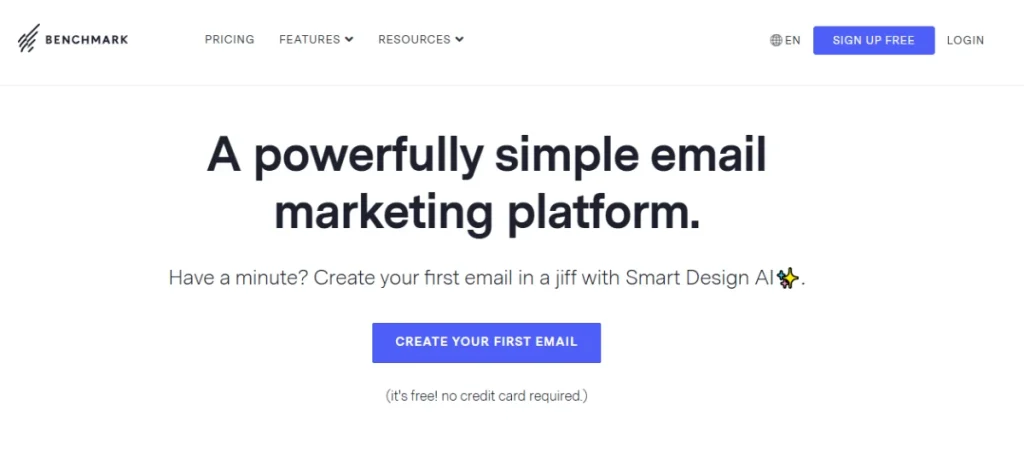
Rounding out our list is Benchmark Email.
- Responsive Templates: These emails look good on any device.
- Ease of Use: Super straightforward setup.
- Analytics: You can easily keep track of what’s working.
A friend recently switched to Benchmark Email and raved about how quickly he could set up campaigns compared to his previous tool. In conclusion, each email marketing tool has something unique to offer. Depending on your specific needs, one may be a better fit than another. Take the time to explore them, and you’ll soon find the perfect match to elevate your email marketing game! 🚀
Comparison of Email Marketing Tools
You’ve researched and gathered a list of email marketing tools that might be perfect for your needs. Now, it’s time to get into the nitty-gritty and compare them. Understanding pricing plans and unique selling points can make all the difference when choosing the right tool for your business. Let’s break it down!
Pricing Plans
First, let’s look at the pricing plans of the top email marketing tools. If you’re like me, pricing often owns the spotlight when making decisions. Here’s how some of the popular ones stack up:
| Tool | Free Plan | Starting Price | Price at 1,000 Subscribers |
| GetResponse | No | £12.30/month | £12.30/month |
| Mailchimp | Yes, limited features | Free | £35/month |
| Brevo | Yes, basic features | Free | £19/month |
| Moosend | Yes, unlimited emails | Free | £8/month |
| Omnisend | Yes, limited features | Free | £16/month |
| HubSpot | Yes, limited features | £40/month | £40/month |
| AWeber | Yes, up to 500 subscribers | Free | £16.15/month |
| Klaviyo | No | £20/month | £20/month |
| MailerLite | Yes, limited features | Free | £10/month |
| Benchmark Email | Yes, basic features | Free | £13.99/month |
As you can see, many tools offer a free plan, which is a fantastic way to dip your toes into email marketing without breaking the bank. This was a lifesaver for me when starting Inkbot Design. I experimented with Mailchimp to learn the ropes before committing to a paid plan. When considering pricing, also factor in:
- Volume Discounts: Some platforms provide better pricing tiers the larger your subscriber list becomes.
- Annual Discounts: Look for upfront payment plans that might give you a break compared to month-to-month billing.
Unique Selling Points
Now that we’ve laid out the pricing plans for the tool, let’s discuss the unique selling points of the email marketing tool’s unique selling points (USPs). These differentiators can help you determine which tool meets your specific needs.
- GetResponse: One standout feature is its webinar hosting capability, which is a rarity. This feature is a dream for marketers looking to educate their audience.
- Mailchimp: Its user-friendly interface has become iconic. It’s perfect for beginners who might feel intimidated by complex software.
- Brevo: Known for affordable SMS marketing, this tool provides a quirky edge that can boost your engagement rates.
- Moosend: Offers advanced automation workflows without the steep learning curve. You can set up various customer journeys with ease.
- Omnisend: Particularly strong in e-commerce integrations, this tool works brilliantly with platforms like Shopify, allowing for targeted, multi-channel marketing campaigns.
- HubSpot: Its integration of CRM features sets it apart. You can track your customer interactions and email success in one platform.
- AWeber: A key selling point is its outstanding customer support, which provides help for those bewildering tech questions.
- Klaviyo: A standout for e-commerce apps, it offers advanced segmentation abilities that allow you to target subsets of your audience with laser precision.
- MailerLite: Praised for its easy navigation, it allows anyone to create beautiful email campaigns without frustration.
- Benchmark Email: Noteworthy for its user-friendly tools for A/B testing, Benchmark Email helps you refine your campaigns based on data-driven insights.
Choosing an email marketing tool goes beyond just pricing or a friendly interface. It often comes down to features that align uniquely with your business strategy. For instance, while benchmarking a few tools for a recent client, the e-commerce features in Omnisend made it the clear choice for their online shop.
Tips for Maximising Email Marketing Tool Efficiency

You’ve navigated the waters of selecting the right email marketing tool, and now it’s time to put that tool to good use. Getting the best results doesn’t just come from choosing the right software—it’s about leveraging powerful strategies.
Here, we’re diving into personalisation strategies and automation techniques that can elevate your email marketing game to the next level.
Personalisation Strategies
First up, let’s discuss personalisation. It’s about more than just inserting a first name into the subject line. That approach may have worked a few years ago, but today’s audiences crave genuine connections. Here’s how to up your personalisation game:
- Segment Your Audience: Start by dividing your subscribers into specific groups based on their interests, purchase history, or location. For example, if you own an e-commerce store, segment your list into “frequent buyers” and “first-time shoppers”. This lets you send targeted messages tailored to each group.
- Dynamic Content: Use tools to insert dynamic content based on subscriber data. For instance, if you know a customer loves a specific product category, show them related products whenever you send an email.
- Personalised Recommendations: Leverage past purchase data to send tailored recommendations. I remember using this strategy with my online store and witnessing a significant increase in upsells. If a customer bought a camera, sending an email about accessories could work wonders.
- Behaviour-Based Triggers: Set up triggered emails based on user actions. For example, send a polite reminder if someone added an item to their cart but didn’t check out. Make it friendly rather than pushy—often, a gentle nudge does the trick.
- Surveys and Feedback Requests: Get direct feedback from your audience! Surveys can provide insights into what content they want, which helps craft messages that resonate.
Remember, personalisation builds relationships. It shows you care enough to tailor your communication to your audience’s wants.
Automation Techniques
Next, let’s dive into automation techniques that can save time and effort while enhancing your emails’ effectiveness. Automating email marketing doesn’t mean losing the personal touch—it’s all about efficiency. Here are some techniques to consider:
- Welcome Series: Set up an automated welcome email series for new subscribers. This is your chance to tell your brand story and set expectations. When I started Inkbot Design, my welcome series helped establish rapport and introduced my audience to services they didn’t know about.
- Drip Campaigns: These are like guided tours for your subscribers. Create a series of emails that drip information over time, nurturing leads. For instance, you can gradually educate subscribers about your offerings, leading them toward a purchase decision.
- Re-engagement Campaigns: For those subscribers who haven’t opened your emails in a while, set up automated campaigns to win them back. This could include special discounts or exclusive content. I had a few inactive subscribers, and a well-crafted re-engagement campaign prompted several to return.
- Event-Based Automation: Invest in event-based automation, like sending birthday greetings or anniversary offers. For instance, if a subscriber’s birthday is coming up, send a unique discount code or offer exclusively for them.
- Analytics and Reporting: Automate your reporting processes by scheduling regular updates on campaign performance—Analyse metrics like open rates and click-through rates to tweak your future campaigns based on what works.
Automation helps ensure your marketing efforts aren’t lost in the hustle and bustle of daily operations. In summary, maximising the efficiency of your email marketing tools boils down to employing effective personalisation strategies and leveraging automation techniques. By doing this, you can establish stronger connections with your audience while saving time and energy. So, roll up your sleeves and dive in—you’re just a few strategies away from email marketing success! 🌟
Future Trends in Email Marketing Technology
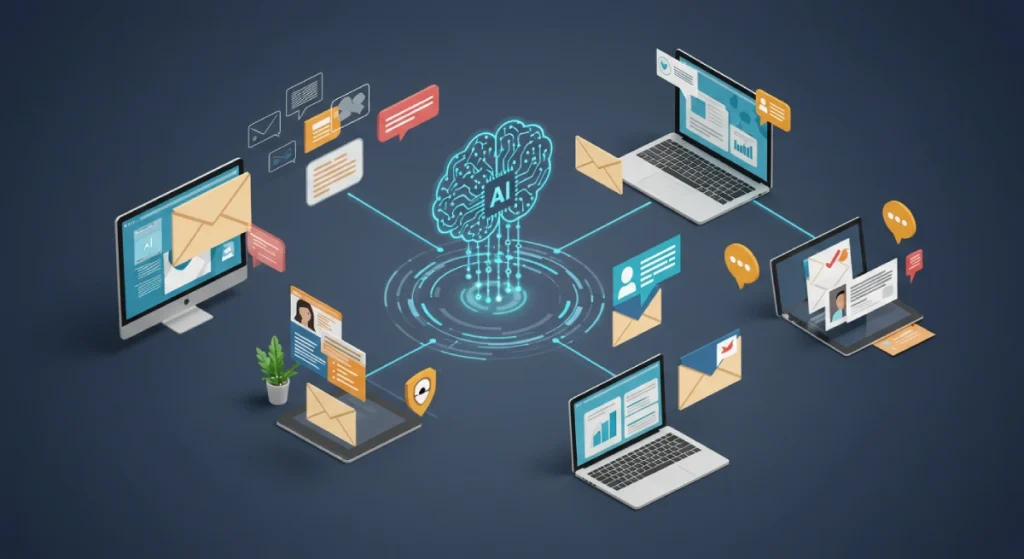
As we move forward in the rapidly changing digital marketing landscape, the future looks bright for email marketing. With technology evolving daily, staying ahead of the curve is essential. In this section, we’ll explore two key trends poised to reshape the future of email marketing: artificial intelligence integration and enhanced data analytics.
Artificial Intelligence Integration
Artificial intelligence (AI) isn’t just a buzzword; it’s a game-changer for email marketing efficiency. Integrating AI tools can drastically enhance how you connect with your audience. Here’s how:
- Personalisation at Scale: AI allows marketers to segment their audience more effectively. Using machine learning, AI can analyse customer behaviour to tailor emails in real time. This means each subscriber receives content that resonates personally—without the manual legwork.
- Predictive Analytics: Imagine being able to predict what your customers might want. AI can sift through mountains of data to provide insights into trends and likely customer behaviour. For example, if a customer frequently purchases running shoes, AI might recommend new gear or complementary products before their next buying decision.
- Automated Content Creation: Ever find yourself staring blankly at your screen, stuck for ideas? AI tools can help generate content suggestions based on what works. Some companies even use AI to write subject lines and body content tailored to various audience segments. For instance, Copy.ai is a tool I experimented with recently, and it generated some authentic-sounding marketing content that resonated well.
- Smarter Send Times: AI can analyse data such as past open times and engagement patterns to determine the best time to send out your emails. It’s like having your marketing assistant make decisions to optimise results.
As AI adoption rises, those who employ these advanced features will likely see improved engagement rates and higher conversions.
Enhanced Data Analytics
The second trend making waves in email marketing is enhanced data analytics. In a world driven by data, the most successful brands are those who can analyse and act upon their information. Here’s what’s shaping the future:
- Granular Insights: Gone are the days of basic metrics like open and click-through rates. Today’s data analytics tools offer detailed insights, including subscriber journeys, touchpoints, and engagement patterns. Marketers can now identify the exact content that resonates, making it easier to refine strategies.
- Attribution Models: Understanding which touchpoints lead to conversions is crucial. Enhanced data analytics allows businesses to create sophisticated attribution models, helping them decipher which email campaigns significantly influence sales.
- Visual Data Displays: Data is only as good as how you interpret it. The latest analytics tools have visualisation features that turn complex data into easily digestible charts and graphs. I remember working on a campaign where a good visualisation tool helped me quickly identify trends I could capitalise on—cutting my campaign adjustment time in half.
- Real-Time Reporting: With improvements in real-time analytics, marketers can respond swiftly to customer needs or changing market conditions. Real-time metrics allow you to pivot strategies quickly if a particular campaign isn’t performing.
The enhanced ability to gather, interpret, and act upon data will enable businesses to fine-tune their email marketing campaigns efficiently and effectively.
Conclusion
After diving deep into the fascinating world of email marketing, it’s clear that harnessing the right tools and strategies can set you up for immense success. In this conclusion, we’ll recap the top email marketing tools highlighted throughout our exploration and discuss some final thoughts on how you can improve your email marketing efficiency moving forward.
Recap of Top Email Marketing Tools
We’ve explored a variety of email marketing tools that cater to different needs, preferences, and budgets. Here’s a quick recap of the top contenders:
| Tool | Notable Features | Best For |
| GetResponse | Comprehensive features, webinar hosting | All-in-one marketing |
| Mailchimp | User-friendly, great for beginners | New businesses |
| Brevo | Affordable SMS marketing, great integrations | E-commerce |
| Moosend | Advanced automation workflows | Small to medium businesses |
| Omnisend | E-commerce-focused, multichannel campaigns | Online retailers |
| HubSpot | CRM features, powerful analytics | Established businesses |
| AWeber | Outstanding customer support | Small businesses |
| Klaviyo | Advanced segmentation for e-commerce | E-commerce |
| MailerLite | Very affordable, user-friendly | Startups |
| Benchmark Email | Excellent A/B testing tools | All business sizes |
Each of these tools has strengths that cater to various marketing goals. Choosing one that aligns with your business needs will be pivotal in executing effective email campaigns. From the robust automation of GetResponse to the ease of use offered by Mailchimp, you have options that can match your strategy perfectly.
Final Thoughts on Improving Email Marketing Efficiency
Now that you have a solid understanding of the tools available and their unique features let’s not forget to improve the overall efficiency of your email marketing efforts. Here are some actionable tips to keep in mind:
- Regularly Evaluate Your Strategies: The marketplace is dynamic. Continuously review your campaigns and adjust based on performance metrics. Flexibility is key!
- Focus on List Quality: A smaller, engaged list often outperforms a larger but dormant one. Concentrate on building a quality subscriber list through value-driven incentives such as exclusive content or discounts.
- Test and Learn: Don’t shy away from A/B testing. Experimenting with subject lines, send times, and email content can yield essential insights. It’s all about finding out what clicks with your audience.
- Integrate with Other Tools: Ensure your email marketing tool integrates smoothly with your CRM and e-commerce platforms. This synergy can provide a 360-degree view of customer interactions, making your campaigns even more effective.
- Stay Updated on Trends: The digital marketing landscape is changing rapidly. Keep an eye out for emerging trends like AI and advanced analytics. Early adopters often reap the most benefits!
Reflecting on my journey with Inkbot Design, I see that my progress with email marketing came from a willingness to adapt and optimise continuously. In one instance, after an unsuccessful campaign, I revised my strategies based on analytics feedback, and the next campaign’s results were staggering.
Continuous improvement is a mantra worth adopting! In conclusion, email marketing is not just about sending messages; it’s about creating engaging, personalised experiences for your subscribers.
Armed with the right tools and strategies, you can dramatically enhance your campaigns, build robust relationships, and drive meaningful engagement. It starts with experimentation, learning, and a genuine desire to connect.
So, gear up, stay curious, and get ready to elevate your email marketing efforts to a new level! 🚀