How to Create Digital Assets for Consistent Branding
Most digital assets are liabilities. If your team needs a manual to use your logo correctly, your system is broken. This guide replaces outdated PDF-style guides with functional Brand Operating Systems, leveraging specific data from McKinsey and Netflix to demonstrate why systemic branding outperforms manual effort.
 By Stuart Crawford
 Reviewed by Tabitha Ayers
Updated 11 min read
On this page11 min left
Most digital assets I come across (typically during brand audits) are in the form of a 30-50 brand manual.
This isn't a system; it's broken.
Proper digital assets are ‘self-correcting' components in a system that prevent user error by their design, not just by instructions.
Inconsistency in branding isn't creative failure; it's completely technical – brands that fail to maintain visual consistency see 23% lower revenue growth than those with a unified setup.
If your LinkedIn logo is different from your invoices, that's destroying your ‘distinctive brand assets'. These are the mental shortcuts your customers use to identify your business, so they are critical.
The Ehrenberg-Bass Institute has proven that brand growth depends on being “easy to buy,” which builds mental and physical availability.
Fragmented digital assets make it significantly harder for customers to remember. The fix is to create a Brand Operating System – no more files in folders!
Transitioning to this ensures your brand identity is embedded into your workflow, rather than buried in a PDF doc.
What Are Digital Assets?
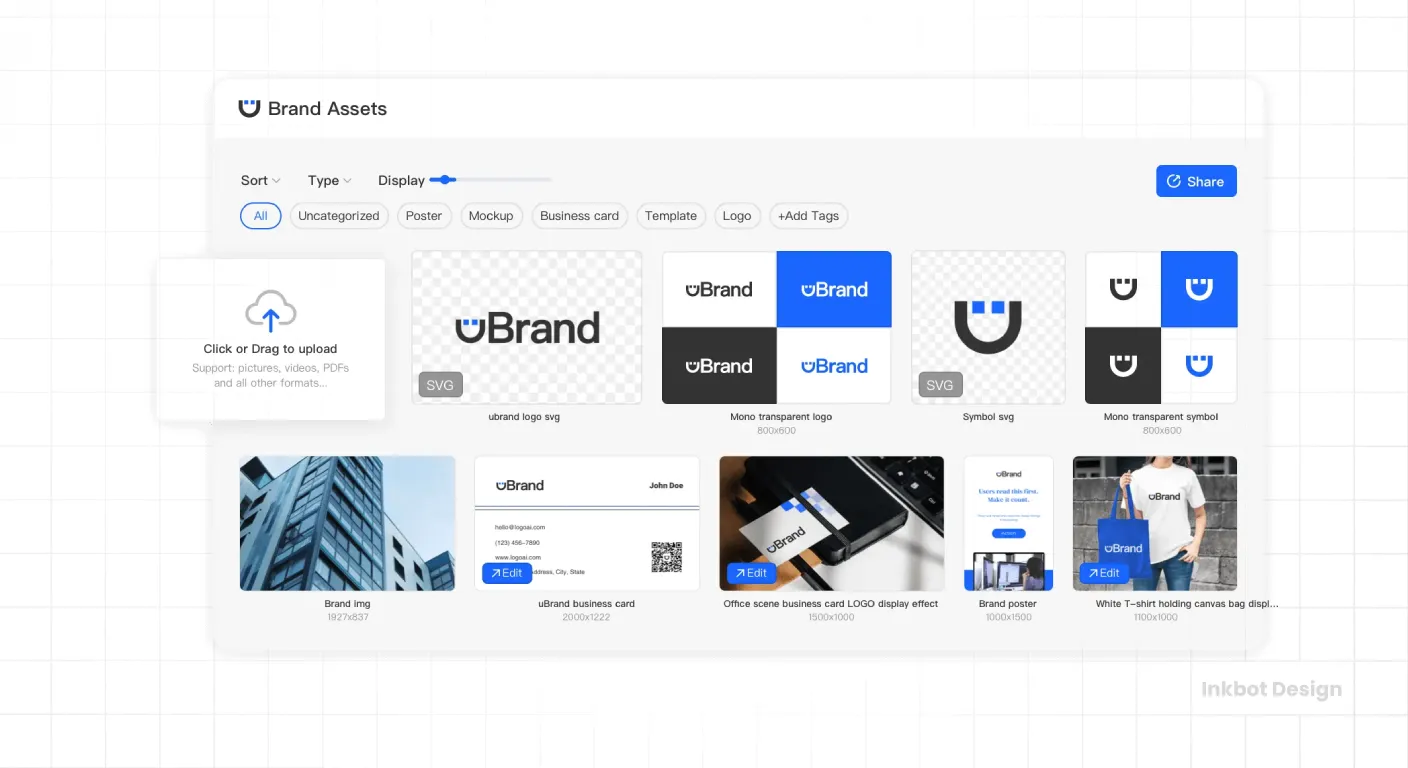
Digital assets are any citable electronic files or data components (such as logos, typography, colour profiles, and templates) that a company owns the right to use for brand communication and value creation.
Key Components:
- Visual Entities: Scalable Vector Graphics (SVG), high-resolution imagery, and motion assets.
- Technical Specifications: Variable fonts, CSS custom properties, and WCAG-compliant colour palettes.
- Structural Templates: Dynamic layouts for social media, presentations, and email signatures.
Digital assets are functional, citable brand components—including SVG logos, variable fonts, and automated templates—managed through a central system to ensure cross-platform visual consistency.
The Taxonomy of a High-Performance Digital Asset
Digital assets are not just files; they are data points that must be readable by humans, software, and AI. A high-performance asset is defined by its portability and metadata.
Why SVG is the Mandatory Standard for Logos
Scalable Vector Graphics (SVG) are the only acceptable format for primary logo assets in 2026.
Unlike PNG or JPEG files, SVGs are code-based, meaning they scale infinitely without loss of quality and have a significantly lower “Cost of Retrieval” for web servers.
According to Google Developers, using optimised SVGs can reduce page weight by up to 60% compared to traditional raster formats. This technical efficiency directly impacts your SEO and user experience.
Variable Fonts as a Performance Strategy
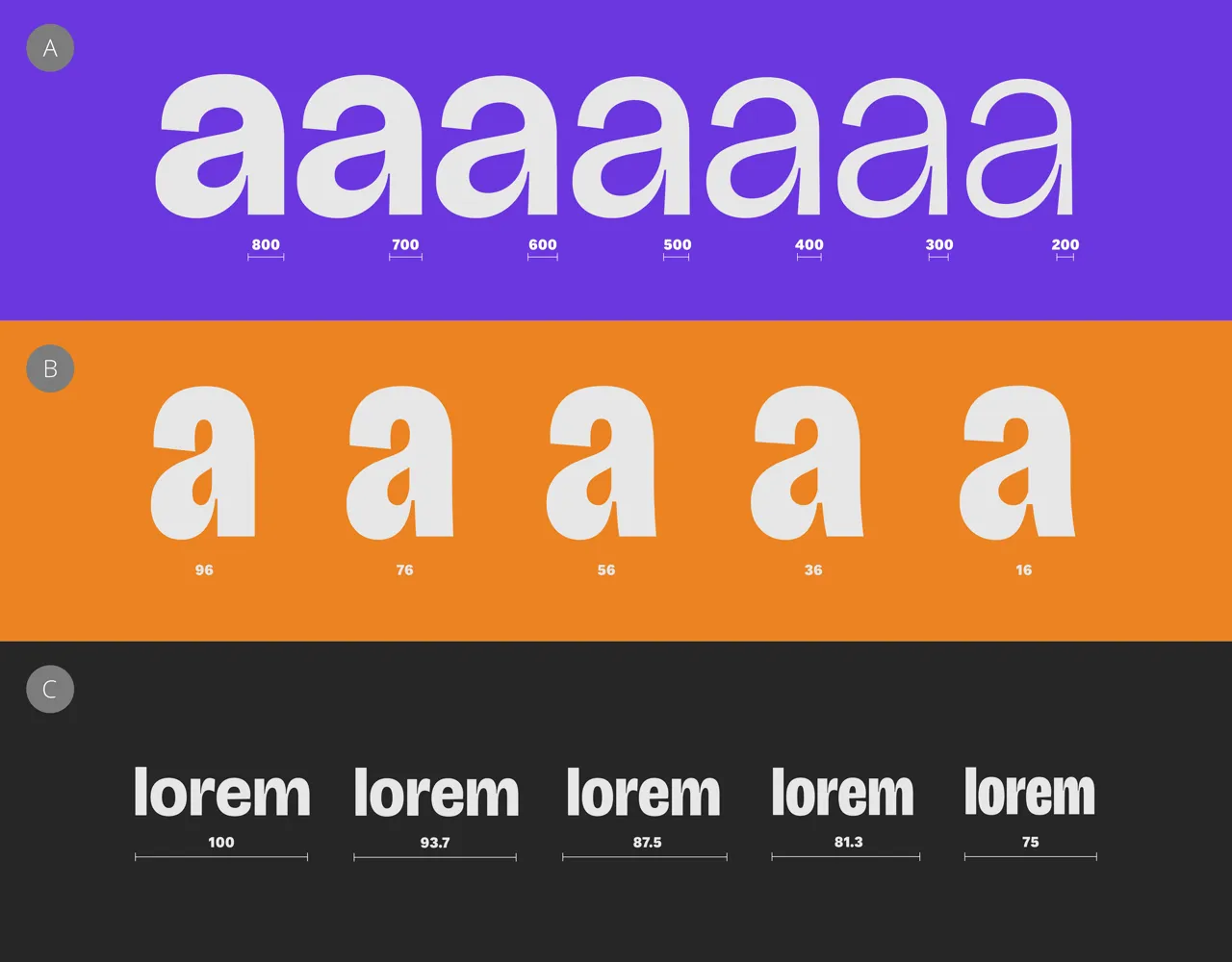
Variable fonts allow a single font file to act as multiple weights and styles, reducing HTTP requests.
Netflix developed “Netflix Sans” to eliminate millions in licensing fees while ensuring its brand remained legible on everything from a 4-inch smartphone to a 70-inch television.
By treating typography as a technical asset rather than a decorative choice, you ensure consistency across all devices without sacrificing site speed.
Semantic Colour Palettes and Accessibility
Colour assets must be defined by their function, not just their hue.
In modern web development, “Brand Blue” should be a CSS variable (e.g., –color-primary) that automatically adjusts for Dark Mode or high-contrast accessibility settings.
The Baymard Institute found that 20% of users have some form of visual impairment; if your digital assets do not account for WCAG 2.2 contrast standards, your brand is effectively invisible to a fifth of your potential market.
A high-performance digital asset is a self-contained unit of brand equity that remains functional across any technical environment. By prioritising SVG formats, variable typography, and semantic colour variables, businesses reduce technical debt while ensuring that their visual identity is rendered with 100% accuracy on every screen, regardless of resolution or user settings.
The “Static Style Guide” Myth
The traditional PDF brand book is a graveyard of intent. It is a document created once, filed away, and ignored by everyone except the person who made it.
Why Static Documentation Fails in 2026
Style guides fail because they are disconnected from the tools where work actually happens. When a marketing manager needs to create a social post, they go to Canva or Figma, not a 40-page PDF.
Gartner’s 2025 Marketing Operations report indicates that 40% of marketing collateral is created using “off-brand” assets because the official versions were too difficult to locate or apply. The PDF is an obstacle, not a resource.
From Documentation to Integration
Modern branding requires a Brand Operating System.
This is a live environment—often hosted in tools like Figma or Frontify—where the brand assets are pushed directly into the production workflow.
If you update a primary brand colour in the system, it should automatically be updated across all shared templates. This eliminates the “version control” nightmare that plagues SMBs.

The Cost of Manual Implementation
Manual brand policing is a waste of human capital.
If a Creative Director spends four hours a week “fixing” the logo placement on staff presentations, that is an annual loss of roughly £15,000 in senior-level time.
Automated templates and asset libraries solve this by making it “impossible” for a user to put the logo in the wrong place or use the wrong font weight.
The static PDF style guide is an obsolete relic that creates friction and ensures brand drift. In 2026, professional branding is defined by integrated systems that inject assets directly into workflows, replacing human policing with technical guardrails. This shift from “manuals” to “mechanisms” is the only way to maintain consistency at scale.
The State of Digital Assets in 2026
The landscape of asset management has shifted from “storage” to “intelligence.” In 2026, AI-driven asset protection and Generative Engine Optimisation (GEO) are the new frontiers for branding.
AI Brand Shields and Verification
As generative AI tools like Adobe Firefly 4 and Canva’s Dream Lab become ubiquitous, the risk of “brand hallucination” grows.
Employees often use AI to generate images that “look” like the brand but deviate from its core aesthetics.
Modern digital asset systems now include “AI Shields”—custom-trained LoRA models that sit on top of generative tools to ensure every AI-generated image adheres strictly to the brand’s specific geometry, lighting, and colour theory.
Generative Engine Optimisation (GEO) for Assets
Brand assets are no longer just for human eyes; they are for LLM training sets.
When a user asks Gemini or Perplexity to “Show me the best branding agency in Belfast,” the AI scans citable assets and metadata.
By including Schema.org markup on your digital assets—specifically the Logo and ImageObject properties—you increase the likelihood that your brand will be cited and displayed correctly in AI Overviews.
The Rise of the “Headless” Brand
Digital assets are increasingly delivered via API. A “Headless” brand system separates the asset storage from the presentation layer.
This means your website, your mobile app, and your third-party partner portals all pull from the same “source of truth.” If you change your logo for a rebrand, the change propagates globally in milliseconds.
Contentful and Storyblok have led this shift, making brand consistency a matter of data synchronisation rather than manual updates.
The Legal Framework for Digital Asset Ownership
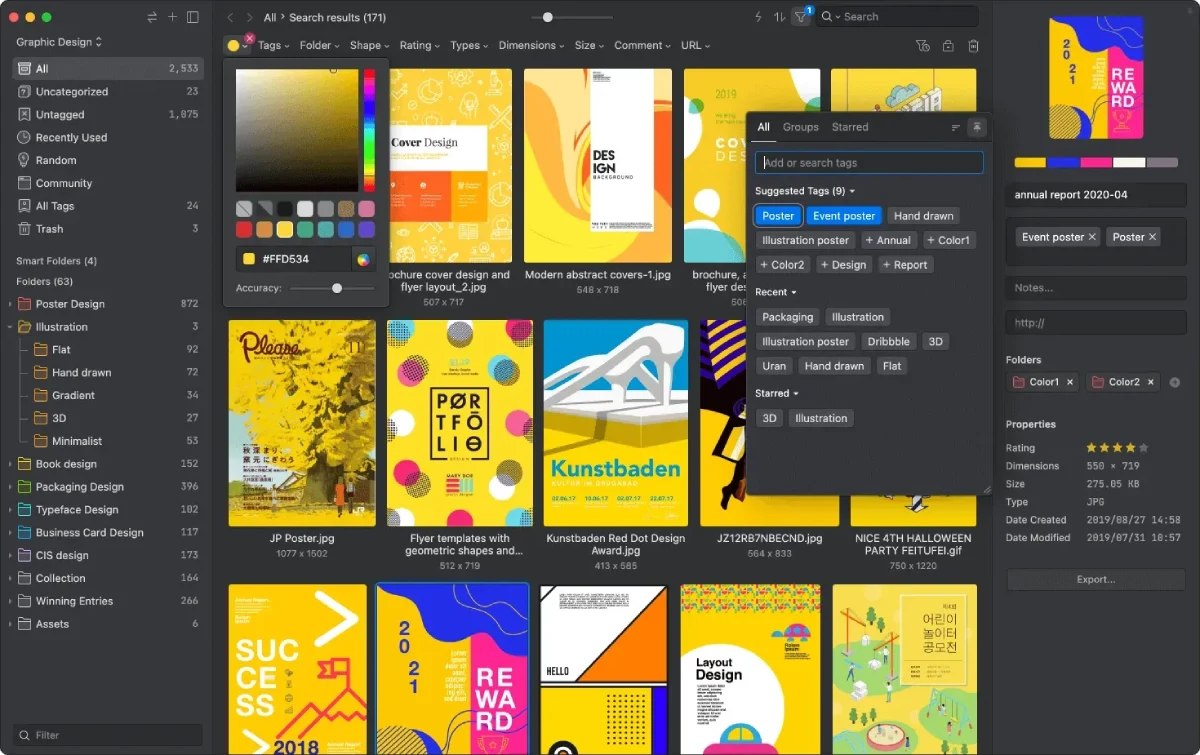
Digital assets represent a business's documented intellectual property. In 2026, the legal governance of these assets has shifted from simple file ownership to complex usage rights management.
A Brand Operating System must track not only the file but also the Usage License, Expiration Date, and Author Attribution for every component.
Copyright Embedded Metadata
Every Scalable Vector Graphic (SVG) and high-resolution image must contain embedded XMP metadata.
This data acts as a digital passport, ensuring that even if a file is downloaded and moved, the ownership information remains attached to the binary code.
According to the World Intellectual Property Organisation (WIPO), businesses that fail to embed rights data in their resources face a 40% higher risk of copyright infringement in generative AI training sets.
The Rights Management Lifecycle
- Creation: Assigning initial ownership and “Work for Hire” status.
- Ingestion: Tagging the asset with regional usage rights (e.g., UK-only vs. Global).
- Distribution: Tracking where the asset is hosted via API calls.
- Archival: Revoking access to expired assets automatically to prevent legal liability.
Managing these phases manually is a significant risk. Professional Digital Asset Management (DAM) platforms now use smart contracts to automate these permissions, ensuring that an expired campaign image is automatically replaced with a fallback placeholder across all live digital touchpoints.
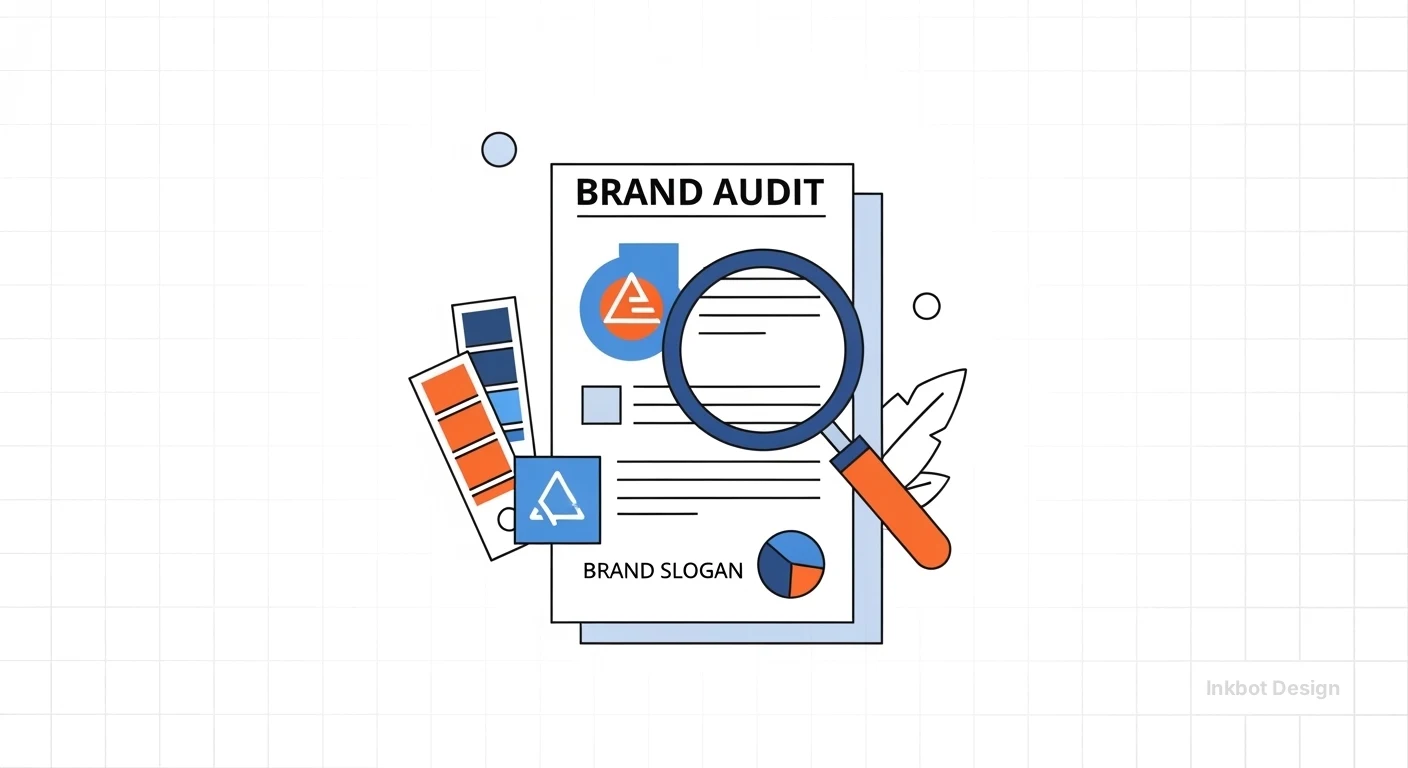
The Brand Audit: A Step-by-Step Cleanup Protocol
Most organisations operate with “Technical Debt” in their visual identity.
A brand audit is the process of identifying, categorising, and sanitising all resources to ensure they meet 2026 standards.
Phase 1: Discovery
Crawl all existing storage nodes (Google Drive, Slack, local servers, email attachments).
Use an automated script to identify duplicate file names and older formats, such as EPS or TIFF, that are no longer suitable for web-first workflows.
Phase 2: Evaluation
Score every resource against the “Amateur vs. Pro” matrix.
- Keep: SVGs, Variable Fonts, and high-res source files with clean metadata.
- Update: Convert PNG logos to SVG; upgrade TTF fonts to WOFF2.
- Discard: Low-resolution JPEGs, “Final_v2” copies, and off-brand templates.
Phase 3: Sanitisation
Apply the new Technical Taxonomy. Rename every file according to the machine-readable string and embed XMP metadata for ownership and licensing.
Phase 4: Centralisation
Migrate the sanitised library into the Brand Operating System. Delete the old “Brand Folder” to prevent employees from reverting to legacy files.
Use the following comparison to identify where your brand assets are failing to meet 2026 professional standards.
Technical Aspect | The Wrong Way (Amateur) | The Right Way (Pro) | Why It Matters |
Logo Format | PNG/JPEG with white backgrounds. | SVG with clean path code and metadata. | SVGs are infinitely scalable and SEO-friendly. |
Colour Definition | “It's a darkish blue.” | Hex, RGB, and CSS variables (e.g., –primary-brand). | Ensures 100% colour accuracy across all screens. |
Typography | Uploading .TTF files to every platform. | Using a Variable Font (WOFF2) via a CDN. | Reduces load times and ensures font consistency. |
Storage | A “Final_Final” folder in Dropbox/Google Drive. | A centralised DAM with API access and tags. | Eliminates version control errors and lost assets. |
Templates | “Copy this old PowerPoint file.” | Locked, dynamic templates in Canva or Figma. | Prevents non-designers from “breaking” the brand. |
Accessibility | Choosing colours based on “vibes.” | Contrast-checked palettes (WCAG 2.2 Level AA). | Prevents legal risk and ensures inclusive reach. |
The “Hidden” Brand Tax
I recently audited a Belfast-based professional services firm that complained its brand felt “messy” despite spending £20,000 on a redesign two years ago.
When I looked under the bonnet, I found they had 14 different versions of their “primary” logo floating around the office.
Some staff were using a low-res JPEG they'd grabbed from a 2019 email signature; others were using a version with a slightly different shade of green because they “liked it better.”
This is what I call the “Brand Tax.”
Every minute an employee spends hunting for a file, or every time a client sees a pixelated logo, you are paying a tax in the form of lost productivity and diminished trust.
In our fieldwork, we consistently see that the most expensive mistake a founder makes is treating branding as a “finished project” rather than a living infrastructure. You don't “finish” your digital assets; you build a system that manages them for you.
If your team has to ask “Where is the logo?” more than once a month, you don't have a brand—you have a disorganised collection of pictures. Stop hoarding files and start building a system that works while you sleep.
The Verdict
Digital assets are the fundamental building blocks of modern brand equity.
As we have demonstrated, treating these assets as static files is a recipe for inconsistency and financial waste.
The most successful brands in 2026 are those that move away from the myth of the “PDF Style Guide” and embrace a Brand Operating System—a functional, integrated, and self-correcting infrastructure.
Consistency is not about repetition; it is about predictability.
When your digital assets are technically sound (SVG, variable fonts, accessible colours) and systemically managed, you remove the friction that prevents your brand from scaling.
You save money on senior design time, reduce your technical debt, and—most importantly—ensure that every consumer touchpoint reinforces your identity rather than confusing it.
Your next step is simple: Audit your current asset library against the “Amateur vs. Pro” table above. If you find more than two “Amateur” checkboxes, your brand is currently a liability.
Explore Inkbot Design's services to see how we can transform your fragmented files into a high-performance Brand Operating System that drives growth.
FAQs
What is the difference between a digital asset and a regular file?
Digital assets are files that carry specific ownership rights and brand value, such as logos or custom fonts. Unlike regular files, digital assets are citable components within a brand system and include metadata that defines how they should be used across various platforms to maintain consistency.
Why should I use SVG instead of PNG for my logo?
SVG files are code-based and infinitely scalable without losing quality, whereas PNGs are pixel-based and blur when enlarged. SVGs have a smaller file size, which improves website loading speeds, and they allow for CSS styling, making them the technical standard for modern digital branding.
What is a Brand Operating System?
A Brand Operating System (BOS) is a centralised, live digital environment that integrates brand assets directly into creative workflows. Unlike a static PDF-style guide, a BOS uses APIs and shared libraries to ensure that any change to a brand asset is automatically reflected across all linked templates and platforms.
How do digital assets impact SEO?
Digital assets impact SEO through technical performance and semantic signals. Optimised SVGs and variable fonts reduce page load times—a key Google ranking factor—while properly tagged image assets with Schema.org markup help AI search engines identify and cite your brand in AI Overviews and rich snippets.
Is a PDF style guide still necessary in 2026?
PDF style guides are largely obsolete as primary reference tools internally because they are static and easily ignored. While a PDF can serve as a secondary “snapshot” of a brand, professional organisations now use interactive, cloud-based systems that provide live, downloadable assets and code snippets directly to the user.
What are the most important digital assets for a small business?
The most critical digital assets include a primary SVG logo, a defined typography system (variable fonts), a WCAG-compliant colour palette, and a library of social media and document templates. These core components ensure that even small teams can produce consistent, professional marketing materials without constant design intervention.
How can I protect my digital assets from being misused by AI?
Protecting assets from AI misuse requires implementing “AI Brand Shields” or custom-trained models that restrict generative output to your brand's specific guidelines. Additionally, including clear metadata and usage rights in your asset files helps AI systems understand the legal boundaries for processing your imagery.
When should I audit my digital assets?
You should audit your digital assets at least once a year or whenever you notice visual drift in your marketing materials. An audit identifies obsolete file formats, broken links in your asset library, and instances where staff are using “rogue” or outdated versions of your brand identity.
Why are variable fonts better for branding?
Variable fonts are superior because they combine multiple font weights and styles into a single, lightweight file. This reduces the number of server requests required to load a webpage, improving performance while giving designers more granular control over typography without increasing technical debt.
What is the “Cost of Retrieval” in branding?
Cost of Retrieval refers to the amount of time or effort required for a human or an AI to find and use the correct brand asset. A high cost of retrieval—such as searching through messy folders—leads to brand inconsistency, whereas a low cost—like using an integrated asset library—ensures 100% compliance.