Centralised Brand Management vs Devolved Brand Control
Centralised brand management should create confident execution, not administrative drag. The strongest model protects the assets that build brand equity while giving teams enough authority to respond to clients, markets, and commercial opportunities.



On this page9 min left
Centralised brand management is the operating model used to control how a brand is created, applied, approved, updated, and retired across teams, markets, channels, and external partners.
It is not simply a better-organised folder of logos.
At its best, it is a decision system: it establishes who can change a template, approve a campaign, publish a local adaptation, or retire an outdated asset.
For decision-makers, the real question is rarely whether consistency matters. It does. The harder question is how much control should sit at the centre without turning the brand team into a bottleneck for every sales presentation, regional event, social post, or recruitment campaign.
I recommend treating centralisation and devolved control as operating-model choices rather than ideological positions. A firm with one offer, one market, and limited regulatory variation can usually centralise heavily.
A multi-region professional services group may need a hybrid model, with central ownership of the brand platform and controlled local authority for market execution.
A brand is not governed when its standards exist in a PDF. It is governed when people know what they may change, what requires approval, and where the current approved version lives.
What Centralised Brand Management Actually Controls

Centralised brand management coordinates the rules, assets, workflows, permissions, and accountability that shape brand execution.
A central team does not necessarily create every piece of content. Instead, it determines the approved system within which others can work safely and efficiently.
Marq’s explanation of a centralised brand system clearly articulates the core principle: approved rules, assets, and templates are stored in a single location. That location becomes the single source of truth, but only if it is actively governed.
A shared drive is not a brand-management system
A shared drive can store files. It generally cannot establish whether a file is current, whether a regional team may adapt it, whether legal review is required, or whether someone used the approved campaign version six months ago.
A functioning centralised system combines several controls:
- Asset taxonomy: A structured way to classify content by asset type, service line, market, audience, campaign, channel, owner, and status.
- Metadata: Information that makes an asset searchable and meaningful, such as approved territory, expiry date, usage restrictions, or required disclaimer.
- Role-based access control: Permissions that distinguish viewers, contributors, designers, approvers, administrators, and external partners.
- Approval workflow: A defined route for review, sign-off, publication, and escalation.
- Asset lifecycle management: Rules for creation, updates, expiry, archiving, and retirement.
- Audit trails: Records showing who approved what, when, and under which conditions.
The difference is operational. If a consultant downloads an old logo from a shared drive, there may be no warning and no visibility. In a governed portal, a retired logo should be unavailable, visibly superseded, or redirected to the current master asset.
Brand governance turns standards into decisions
Brand guidelines explain how the brand should look and sound.
Brand governance establishes how the organisation makes decisions when guidelines are insufficient, incomplete, or challenged by a real commercial need.
This distinction matters. A guideline may state that a proposal cover uses approved colours and typography.
Governance answers more difficult questions: Can a sector team introduce a new sub-brand? May a regional office use a locally relevant image style? Who approves a client co-branded event?
What happens when a regulated service needs mandatory wording that disrupts the standard layout?
Effective brand management connects identity to these day-to-day commercial decisions. Without that link, teams often create unofficial workarounds because the formal system does not meet their needs.
What belongs in the central system
Not every file needs the same level of control. The central system should prioritise assets that affect market recognition, legal exposure, client trust, or the need for costly, repeated production.
Content category | Central control level | Typical local flexibility |
|---|---|---|
Master logo files and colour specifications | Very high | None except approved partner lockups |
Core positioning and messaging framework | Very high | Local proof points within approved message structure |
Proposal and presentation templates | High | Editable text, approved imagery, approved modules |
Campaign creative | Medium to high | Market-specific copy and calls to action |
Social content | Medium | Local scheduling and approved editorial adaptation |
Event materials | Medium | Local venue, speakers, dates, and required notices |
Recruitment communications | Medium | Local role detail and employment requirements |
The goal is not to make every item rigid. It is to protect assets when inconsistency causes genuine harm, while making routine production easier for the people closest to the work.
Centralised Versus Devolved Control: Choosing the Right Model
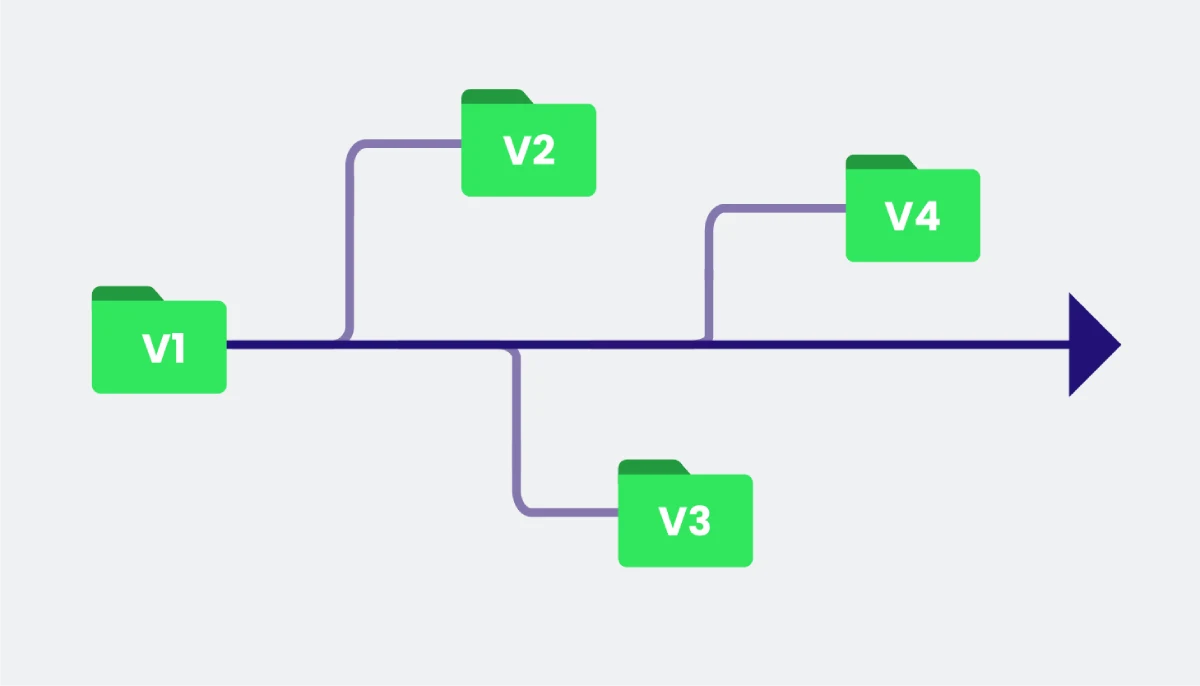
The wrong governance model creates predictable problems. Excessive central control produces queues, missed opportunities, and off-system work. Excessive devolved control produces duplicated assets, inconsistent positioning, competing sub-brands, and weak brand equity.
Foleon’s comparison of brand governance settings distinguishes centralised control, in which designated administrators or designers manage core assets, from decentralised control, in which individual workspaces have greater autonomy. That distinction is useful because it focuses on authority rather than software.
The three operating models
Model | Best fit | Main advantage | Principal risk |
|---|---|---|---|
Centralised | One primary market, high reputational risk, limited local variation | Strong control and coherent execution | Slow response if approvals are over-routed |
Devolved | Distinct local brands, highly independent business units, materially different buyers | Fast local decision-making | Fragmented identity and duplicated effort |
Hybrid | Multi-region or multi-brand organisations with shared equity | Shared standards with defined local adaptation | Ambiguous boundaries if decision rights are poorly written |
I would avoid choosing a model based solely on organisational preference. Use decision criteria instead.
Centralisation is usually appropriate when the firm depends on trust, premium positioning, tightly managed service claims, or a unified reputation.
This often applies to law firms, accounting networks, advisory groups, financial services businesses, and consultancies where a poorly phrased claim can create compliance or reputational exposure.
Devolved control may be appropriate when business units serve genuinely separate markets, operate under different legal entities, or have legacy brands with independent value.
Forcing a single universal template across every market can make local teams less effective, especially where language, regulations, purchasing behaviour, or channel norms differ substantially.
When hybrid governance is the stronger choice
Hybrid governance is not a compromise made because leaders cannot decide. It is often the most disciplined structure for complex organisations.
Brandworkz’s overview of multi-region brand management notes that centralised systems can combine digital asset management, editable guidelines, dynamic templates, and approval workflows for organisations operating across regions. The implication is important: central ownership does not require central production of every local communication. (brand guidelines)
A workable hybrid model often divides authority as follows:
- Central team owns the brand platform. This includes positioning, visual identity, master messaging, taxonomy, template rules, and approval thresholds.
- Local teams own execution within boundaries. They can select approved assets, edit unlocked template fields, add local proof points, schedule content, and adapt calls to action.
- A governance council decides exceptions. It resolves issues that cross regions, service lines, legal entities, or high-value campaigns.
- Specialist reviewers handle risk. Legal, compliance, privacy, or sector experts join approval only when the content triggers a defined condition.
For example, a global advisory firm may allow regional teams to tailor a campaign to a local industry issue and use local client evidence.
The central team still controls the campaign structure, typography, service naming, data-claim standards, and logo usage. That is autonomy with guardrails, not uncontrolled localisation.
Brand architecture should shape authority
Governance cannot be separated from brand architecture. A branded house, house of brands, endorsed brand system, or mixed portfolio requires different controls.
In a branded house, central rules should normally be tighter because every interaction reinforces the same master name.
In a house of brands, each brand may need its own asset library, messaging system, and approvers, while the group maintains minimum standards for risk, accessibility, and shared infrastructure.
Fair warning: the most common structural error is to centralise asset storage while leaving brand ownership unclear. This creates a portal full of files but no answers when teams disagree about naming, local campaign claims, new service launches, or the retirement of a legacy identity.
Building a Workable Governance System

The system succeeds when it reduces friction for compliant work and increases it for non-compliant work. This requires governance design before software configuration.
Marq’s guidance on brand consistency emphasises that governance should clarify who approves templates, updates assets, grants access, and manages the current approved version. Those decision rights should be explicit, visible, and revisited as the organisation changes.
Start with decision rights, not asset migration
Before moving thousands of files, define who owns each decision. A simple responsibility model is enough if it is used consistently.
Decision | Recommended owner | Required contributors | Escalation point |
|---|---|---|---|
Master identity changes | Brand leader | Executive sponsor, legal where needed | Governance council |
New template creation | Brand or creative operations | Channel owner, accessibility reviewer | Brand leader |
Template edits | Named template owner | Local users where practical | Brand operations |
Local adaptation request | Regional marketing lead | Brand, legal if relevant | Governance council |
Asset expiry and retirement | Asset owner | Brand operations | Brand leader |
Portal access | System administrator | Team manager | Brand operations |
The important detail is ownership at the asset level. “Marketing owns the portal” is too vague. Each template, image library, message framework, and campaign module should have a named accountable owner and a review date.
Create an exception process that people will use
Exceptions are inevitable. The mistake is treating every exception as a governance failure. A better approach is to make exceptions visible, time-bound, and reviewable.
A practical process has five steps:
- Request: The local team explains the business need, audience, affected assets, market, and deadline.
- Assessment: The central owner checks whether an existing approved route already solves the need.
- Decision: Approve, reject, or approve with conditions such as legal wording, limited channels, or a specific end date.
- Documentation: Record the decision, rationale, approver, territory, and expiry date in the approval audit trail.
- Review: If the same exception recurs, convert it into a standard capability or revise the rule.
Consider a UK professional services firm launching a sector campaign in another jurisdiction. The regional team requests a locally compliant disclaimer and a translated call to action. The brand team should not merely approve a one-off PDF.
It should determine whether the local requirement is recurring, whether the template needs an approved regional module, and whether the adaptation affects the master message.
Control the asset lifecycle
Assets become risky when they remain available after they are no longer valid.
A campaign may contain an expired offer, imagery of former leadership, obsolete service terminology, or wording that no longer meets legal requirements.
IntelligenceBank’s brand portal capabilities demonstrate how searchable assets, permissions, templates, approval workflows, versioning, and expiry controls can coexist within a centralised system. The governance lesson is that version control alone is incomplete. Teams also need rules for expiry and retirement.
Use a lifecycle status for every controlled asset:
- Draft: Under development and unavailable for general use.
- In review: Awaiting approval or required amendments.
- Approved: Current and available to authorised users.
- Superseded: Replaced by a newer asset and retained only for audit or reference.
- Expired: No longer valid for use because of date, claim, campaign, or regulatory constraint.
- Archived: Retained under record-management rules but removed from routine search.
Review dates matter most for content that changes quickly: campaign templates, leadership photography, service propositions, regulated wording, client proof points, and market statistics. A logo may be stable for years; a financial claim may require review in months.
Measure adoption, compliance, and friction
There is no universal benchmark proving how much centralisation improves marketing ROI. Results depend on content volume, team behaviour, software configuration, and the maturity of existing processes. Still, measurement is possible if leaders focus on operational signals rather than vanity metrics.
Track a small set of indicators over time:
- Portal adoption: Active users by region, function, and role.
- Search success: Searches that lead to an asset download, template use, or completed task.
- Asset reuse: Use of approved assets compared with new content requests.
- Approval cycle time: Median time from submission to decision, segmented by content risk.
- Exception volume: Requests by region and category, including recurring reasons.
- Outdated-asset incidents: Reported use of superseded or expired material.
- Off-system production: Work created outside approved templates or workflows.
Do not assume lower approval time is always better. If a high-risk investment claim is approved in five minutes because the required reviewers were skipped, the system is fast but weak. Segment by risk level.
Routine sales materials should move quickly; high-risk communications should move reliably.
Conclusion
Centralised brand management should create confident execution, not administrative drag. The strongest model protects the assets that build brand equity while giving teams enough authority to respond to clients, markets, and commercial opportunities.
The practical next step
I recommend beginning with a decision-rights audit rather than a software purchase. Identify the assets that create the greatest reputational, commercial, or compliance risk; name their owners; define local flexibility; and establish how exceptions and expiry will be handled.
From there, the right portal, DAM, workflow, and template system becomes far easier to select and implement.
Questions people ask
What is centralised brand management?
It is an operating model in which brand rules, assets, templates, permissions, workflows, and approvals are coordinated through a central system. Its purpose is to create consistent, accountable execution across departments, channels, markets, agencies, and partners.
How is centralised brand management different from brand governance?
Centralised brand management is the operating structure and system. Brand governance is the set of decision rights, rules, ownership, and review processes that make that structure work. You can centralise files without governing them; that usually produces confusion rather than control.
Is a shared drive enough for managing brand assets?
Usually not at scale. A shared drive may be acceptable for a small organisation with limited assets and a single owner. It becomes unreliable when multiple people need permissions, current versions, searchable metadata, templates, approval records, expiry controls, or local adaptation rights.
Who should approve new templates and brand assets?
The answer depends on risk. Brand or creative operations should generally own master identity assets and templates. Channel owners should contribute to usability. Legal, compliance, privacy, or accessibility reviewers should enter the workflow only where defined triggers apply. A named owner should always be accountable for updates and retirement.
How can local teams adapt the brand without weakening it?
Give them controlled editing rights through dynamic templates, approved local modules, and a documented exception process. Lock what protects recognition and trust, such as logos, typography, core layouts, and master claims. Allow flexibility where local relevance matters, such as examples, event details, market-specific proof points, and calls to action.
How should outdated logos, templates, and campaign assets be retired?
Assign an owner, set review or expiry dates, remove retired files from routine search, redirect users to replacements, and retain an audit record where necessary. Simply adding “old” to a filename is not enough, as files can be easily copied and reused outside their intended location.
What are the main risks of over-centralising brand decisions?
The major risks are approval bottlenecks, low local adoption, delayed market response, irrelevant global templates, and shadow processes outside the system. Recovery starts by identifying the decisions that create queues, then delegating low-risk actions through templates, permissions, and pre-approved local options.