Brand Management: Who Decides What, and Which Tools Help
Brand management is the system firms use to make brand decisions at scale: who decides, what supports the decision, and how the firm learns whether buyers received it. Software is one layer. Professional services firms preparing a rebrand need decision rights first, a single source of truth second, tools third.
 By Stuart Crawford
 Reviewed by Tabitha Ayers
13 min read
On this page13 min left
- What is brand management?
- Does a professional services firm need a brand manager?
- Which brand decisions need an owner?
- What brand management tools does a firm actually need?
- How is AI changing brand management?
- How do you know brand management is working?
- Where should a firm start?
- Verdict: Assign the decisions before you buy the software
- Frequently asked questions
Somebody in your firm decided how the last proposal looked. Probably a senior associate at 11 pm, working from a 2021 template, pasting the logo out of an email signature.
Nobody would call that a brand decision. It was one, and it landed on the desk of a buyer comparing you with two other firms.
That is what brand management governs: hundreds of small decisions, made by people who don't think of themselves as brand people, at a volume no single person can check.
Most guides answer the topic with a job description or a software shortlist.
Both are useful. Neither tells a managing director who is meant to decide what, and that is the question that decides whether a rebrand survives its first contact with the fee-earners.
The volume is the problem. 96% of organisations report rising demand for content, 62% of them sharply, and only one in three says they have a scalable way to produce it.
A two-person brand team cannot hand-check that. Nor can a managing partner.
So Inkbot Design treats brand management as infrastructure. Our work on brand operating systems starts with decision rights, then workflows, then tools. This guide follows the same order, one question per section, so you can come back to the part you need.
What is brand management?
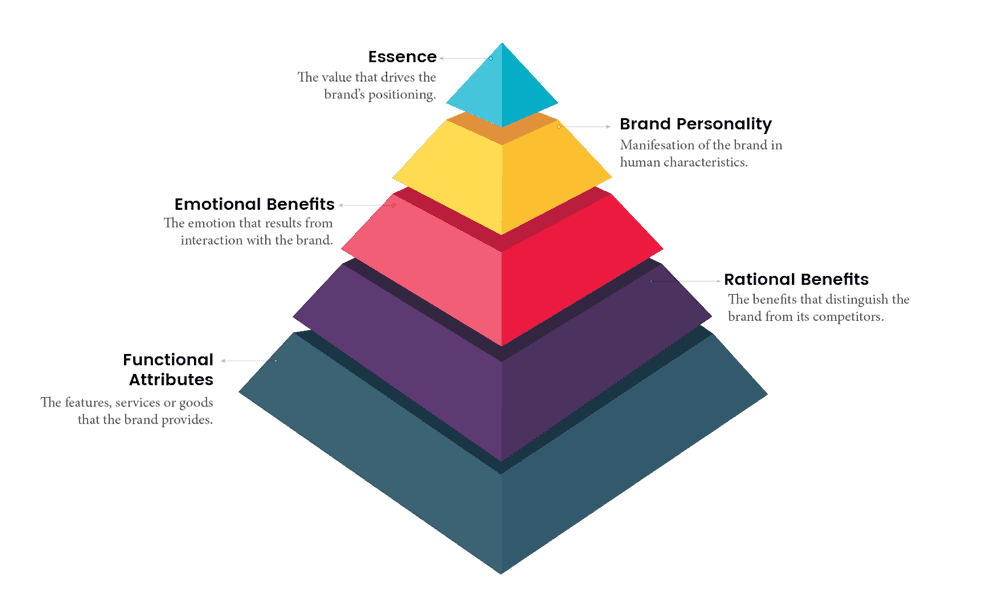
Brand management is the ongoing work of deciding how a company presents itself, making sure those decisions are applied at every touchpoint, and checking whether buyers perceive what was intended.
It covers identity, messaging, conduct and content, and it depends on assigned decision rights more than on any single tool.
- Decisions: brand management assigns who decides positioning, identity, claims and exceptions, and who must be consulted first.
- Execution: brand management turns those decisions into templates, approved assets and workflows, so the approved choice is the easiest one to make.
- Evidence: brand management measures whether buyers perceive the intended brand and feeds that back into the next decision.
Brand management is the system a company uses to make and enforce brand decisions across every touchpoint, combining assigned roles, governed workflows and supporting tools.
Glossary definitions, such as the one published by Acquia, the digital experience software company, describe the outcomes: awareness, equity, consistency and loyalty. Those are what you get. The decisions are what you can actually manage on a Monday morning.
Does a professional services firm need a brand manager?
A firm of 50–200 people rarely needs a single senior “brand manager” as the answer.
It needs named owners for a handful of distinct brand decisions, and one person accountable for making sure those owners exist.
The case for one owner is sound: someone has to be accountable, and diffuse responsibility is how brands drift.
The trouble is where brand decisions actually sit in a partnership. Partners own client relationships and pitch content. Business development writes proposals. HR shapes the recruitment brand. IT controls the Microsoft 365 templates everyone opens.
A brand manager with no authority over any of those becomes the brand police, approving PDFs after they have already gone to the client.
Bain & Company, the management consultancy, built its RAPID decision-rights framework around this exact problem.
Paul Rogers and Marcia Blenko's 2006 Harvard Business Review article “Who Has the D?” separates five roles in any decision: Recommend, Agree, Perform, Input and Decide.
Applied to brand management, the useful question stops being “who is our brand manager?” and becomes “who has the D on each brand decision?”
The obvious objection from a managing partner: we're a partnership, nobody tells partners what to do. Fair. Decision rights don't override partners.
They make explicit which decisions belong to the managing partner (positioning), which are delegated (the proposal template), and which are left to the managing partner's discretion within limits (the tone of a client email).
Partners push back on rules handed down to them. Show them the register before it is signed, give each practice head the Input role, and the pushback tends to arrive as edits rather than vetoes.
Which brand decisions need an owner?
Eight brand decisions need a named owner in a professional services firm. Each one needs a tool that supports it, and each fails in a predictable way when the owner or the tool is missing.
Brand decision | Decides (the D) | Input / agree | A tool that supports it | What fails when the link is missing |
|---|---|---|---|---|
Positioning and proposition | CEO / managing partner | Practice heads, BD director | Positioning statement and messaging framework | Each partner pitches a different firm |
Distinctive assets (name, logo, colour, type) | CEO, on the brand lead's recommendation | Board, agency | Guidelines with an asset register | Assets changed on preference, recognition lost |
Claims and proof points | Marketing / BD director | Compliance agrees | Approved claims and case study library | Unverified claim lands in a regulated tender |
Templates (proposals, pitches, reports) | Brand lead | Practice heads input; brand operations performs | Locked templates inside Microsoft 365 | Forty versions of the pitch deck are in circulation |
Asset access and rights | Brand operations | Legal input | Asset library with licence, consent and expiry data | Expired image licence; departed partner on the website |
Exceptions (co-branding, sub-brands, events) | Brand lead, within set thresholds | CEO for anything above them | Request and approval workflow | Every exception becomes precedent |
AI use in client-facing content | Brand lead and legal jointly | IT, compliance | AI usage policy and approved tools | Client data entered into a public model |
Measurement and correction | CEO / managing partner | Brand Lead, BD | Win/loss interviews, brand tracking, and monitoring | You learn the brand failed from a lost pitch |
Read the table by its right-hand column. Most firms already own some of the tools in the fourth column. What they lack is the second column, and the failures in the fifth column are what that gap costs.
Positioning decisions belong to the managing partner
Positioning is the decision on which all other brand decisions depend, and in a professional services firm, it belongs to the CEO or managing partner, with practice heads providing input.
Delegate positioning to marketing, and it becomes a tagline exercise. Leave it with every partner, and the firm pitches as twelve different firms.
The supporting tool is unglamorous: a one-page positioning statement and a messaging framework that states what the firm says, to whom, and with what proof.
Positioning that lives only in the managing partner's head is not a managed decision. It is a hope.
Distinctive assets need a higher bar for change than anything else
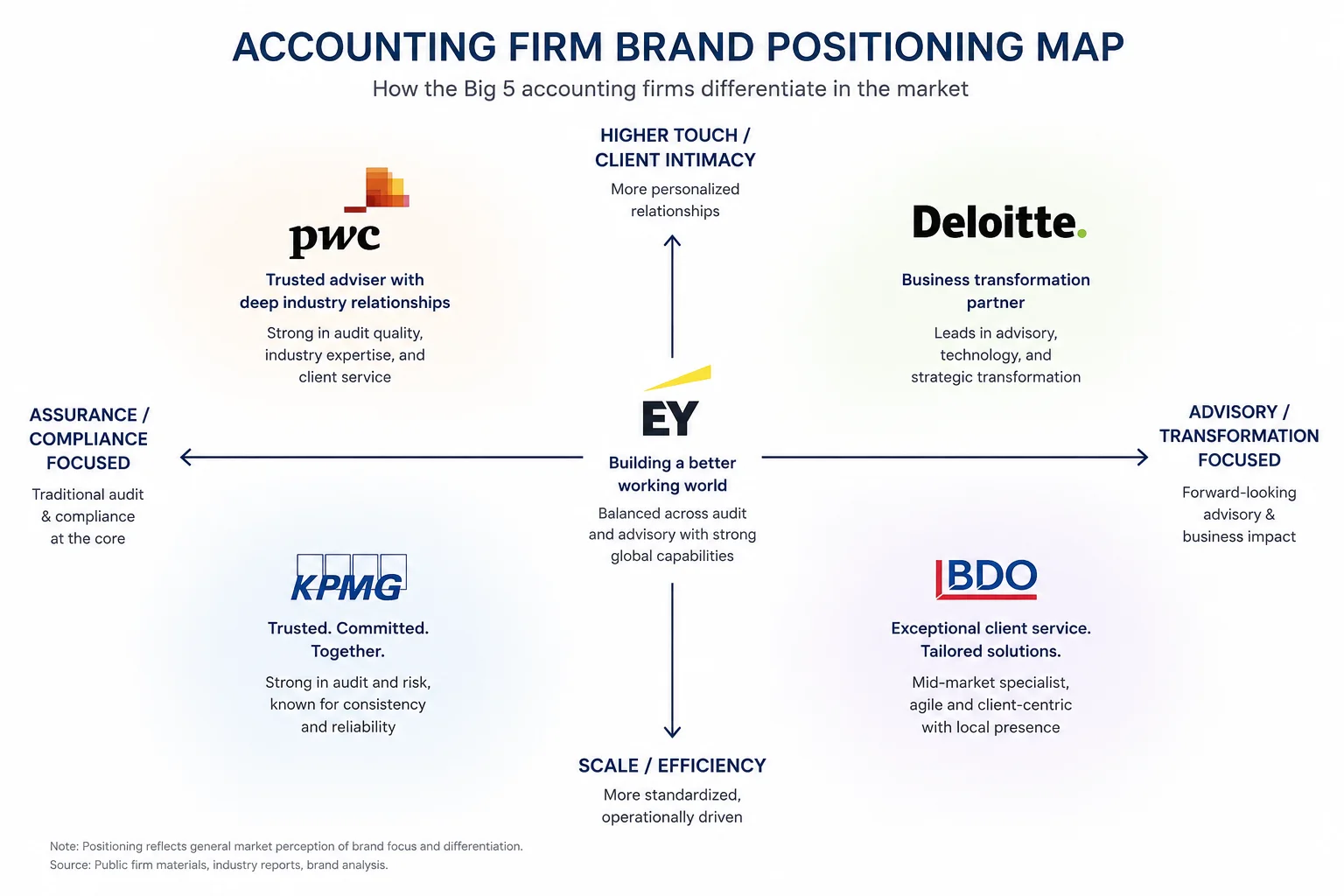
Distinctive brand assets (the name, logo, colour, typography and any recurring visual device) earn their value only through long, consistent use.
Jenni Romaniuk of the Ehrenberg-Bass Institute for Marketing Science argues in Building Distinctive Brand Assets (Oxford University Press, 2018) that an asset works only once buyers reliably link it to the brand, and that link takes years to build.
The best-known cautionary tale is Tropicana: PepsiCo replaced the orange-and-straw carton in January 2009, sales of Tropicana Pure Premium reportedly fell around 20% within two months, and the old packaging returned.
A law firm is not a juice carton, and its buyers are fewer and better informed.
The mechanism still transfers: the clients who pick your firm from a tender shortlist or a conference hall do so based on assets they have seen for years.
Changes to distinctive assets should therefore sit with the CEO, on the recommendation of the brand lead, never with whoever opens the design file.
Templates are where most professional services brand decisions happen
In a professional services firm, the proposal, the pitch deck and the report are the brand artefacts a buyer reads at the moment of decision.
The template is therefore the most consequential brand tool the firm owns, and the least managed.
The owner should be the brand lead, the work done by brand operations, and the tool a locked-template system within the software fee-earners already use: Microsoft 365 with a SharePoint organisation asset library, or a dedicated platform such as Templafy, the document-template software.
Old templates are deleted, not archived, on a shared drive, where they will be rediscovered at 11 pm.
Exceptions are the decision nobody plans for
Every firm eventually gets a request the guidelines never anticipated: a joint event with a client, a new sector team that wants its own logo, a partner who wants the brand on a charity run.
Without an owner and a threshold, each exception is negotiated from scratch, and each approval quietly becomes precedent. A short written rule fixes this.
The brand lead approves exceptions within agreed limits; anything that alters a distinctive asset or the positioning goes to the CEO.
The exceptions log then serves as evidence: if the same exception keeps recurring, the guideline is wrong.
“A brand guideline tells people what good looks like. A decision right tells them who gets to say yes. Firms rebrand with the first and forget the second, then wonder why the new identity looks like the old one by the next pitch season. The guidelines did not fail. Nobody had the authority to enforce them, so every fee-earner quietly kept their own.”
What brand management tools does a firm actually need?
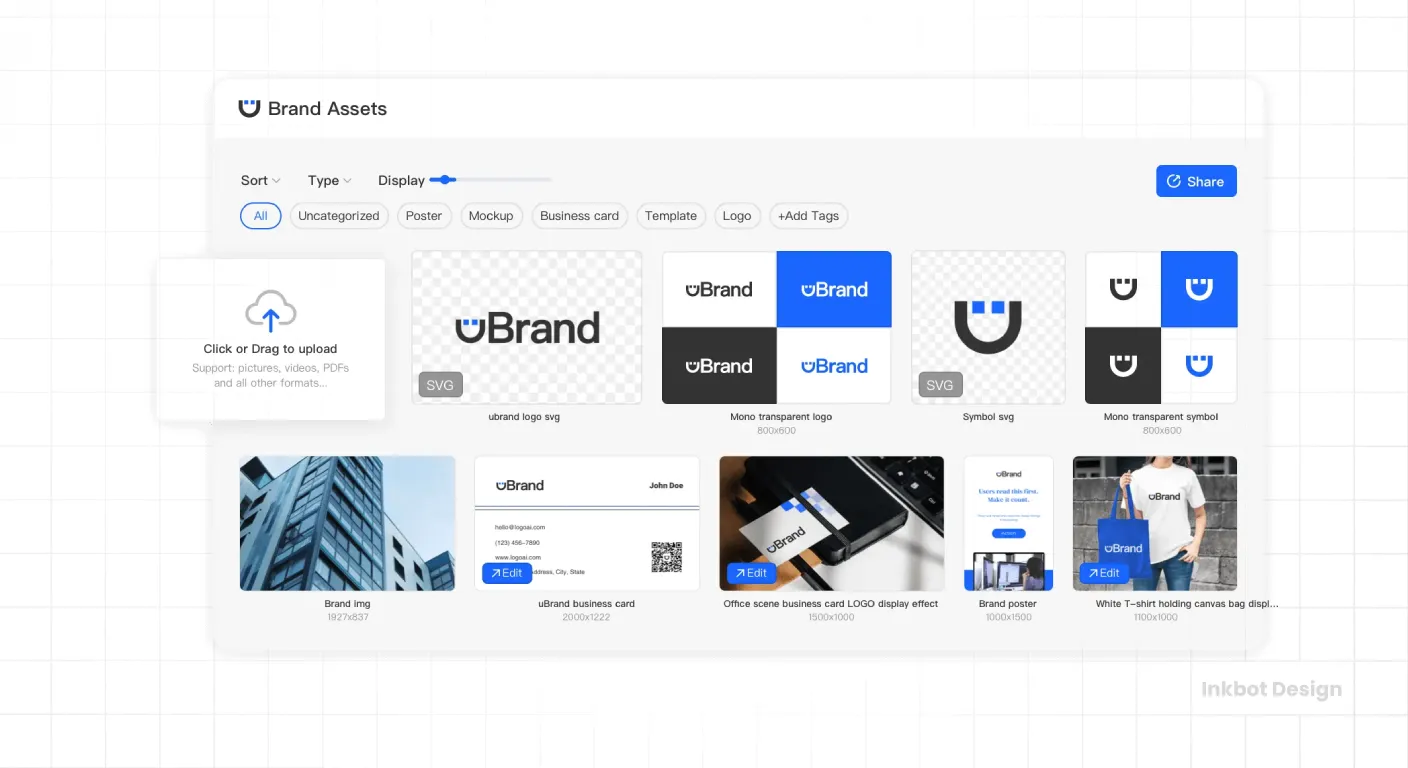
A professional services firm needs tools in four layers, each tied to a decision: a single source of truth, creation controls, governance, and evidence.
Pick tools based on the failing decision, not on the company's size.
The tool-led view of brand management has a real argument behind it.
Scattered assets waste time: the McKinsey Global Institute's 2012 report, The social economy, found that interaction workers spend nearly 20% of their working week searching for internal information or tracking down colleagues who can help.
Centralising assets genuinely recovers some of that time. The mistake is treating the asset library as the whole discipline.
A digital asset management (DAM) platform makes the approved logo easy to find. It cannot decide whether the claim in the proposal is true or whether the sector team gets its own sub-brand.
Competing guides, including those from Lingo and Neurons, sort tools by company size: startup, mid-size, and enterprise. A better filter is the decision.
A 120-person firm whose real problem is rogue proposals needs template locking long before it needs an enterprise DAM.
Only 26% of organisations say they have the right technology for enterprise-wide content management, and buying on a per-headcount basis rather than at the point of failure is one plausible reason.
Layer | Decision it supports | Example tools | Skip it if |
|---|---|---|---|
Source of truth | Distinctive assets: asset access and rights | Frontify, Bynder, Brandfolder, Lingo (DAM and guideline portals); SharePoint asset library | Fewer than a few hundred assets and one office |
Creation controls | Templates | Templafy, Marq, Canva for teams; locked Microsoft 365 templates | Never; this layer matters most in professional services |
Governance | Claims; exceptions; AI use | Approval workflows, AI usage policy, rights metadata | Never; a policy document costs nothing |
Evidence | Measurement and correction | Win/loss interviews; Attest or YouGov tracking; Brandwatch, Brand24 or Sprout Social monitoring | Never drop win/loss interviews; buy paid monitoring only if buyers discuss you publicly |
The second objection, from a CEO who has just paid for a rebrand: Now you want us to buy software too? Often, no.
A minimum viable stack for a 50–200 person firm can be locked Microsoft 365 templates, one SharePoint asset library, a written approvals rule and a quarterly win/loss review.
The investment that matters is assigning the decisions.
The coordination work that keeps the system running is called brand operations (BrandOps), and it is usually a part-time role rather than a department.
How is AI changing brand management?
Generative AI has moved brand governance from a design sign-off to a cross-functional operating responsibility.
The World Federation of Advertisers (WFA), the global trade body for advertisers, identified six GenAI-related intellectual property risks in a January 2025 report:
- loss of control over brand IP and internal data entered into AI tools;
- breach of third-party IP or confidentiality through prompts and uploads;
- outputs that infringe third-party IP;
- unclear ownership of AI-generated outputs; fraudulent AI-generated advertising;
- and AI-enabled impersonation of brands or people.
The WFA's recommended responses map onto roles. Brand, marketing operations and legal write the policy and train people.
Procurement, legal and agency leads settle ownership, data handling and indemnities in contracts.
Brand operations and technology teams monitor usage, rights and output quality.
For a professional services firm, the first risk is the urgent one: a fee-earner pasting client material into a public chatbot to draft a proposal is both a confidentiality and a brand problem. 45% of organisations have no guidelines on AI use.
The software vendors have noticed. Asset libraries used to store files and control downloads; the new pitch is content intelligence: AI tagging, rights and expiry tracking, and automated checks for off-brand material.
Bynder, the Dutch DAM vendor, launched AI agents in 2025, positioned to handle enrichment, transformation and governance tasks with human-in-the-loop review.
Adobe positions its enterprise asset management around role- and region-level governance and on-brand AI-assisted creation. Treat both as vendor claims: they show where products are heading, not proof that AI governance tools solve brand problems.
The practical line for most firms is simple. AI drafts; a named human approves anything client-facing, regulated or brand-defining.
For a fuller view of where the technology genuinely helps creative work, see our guide to AI in brand design.
How do you know brand management is working?
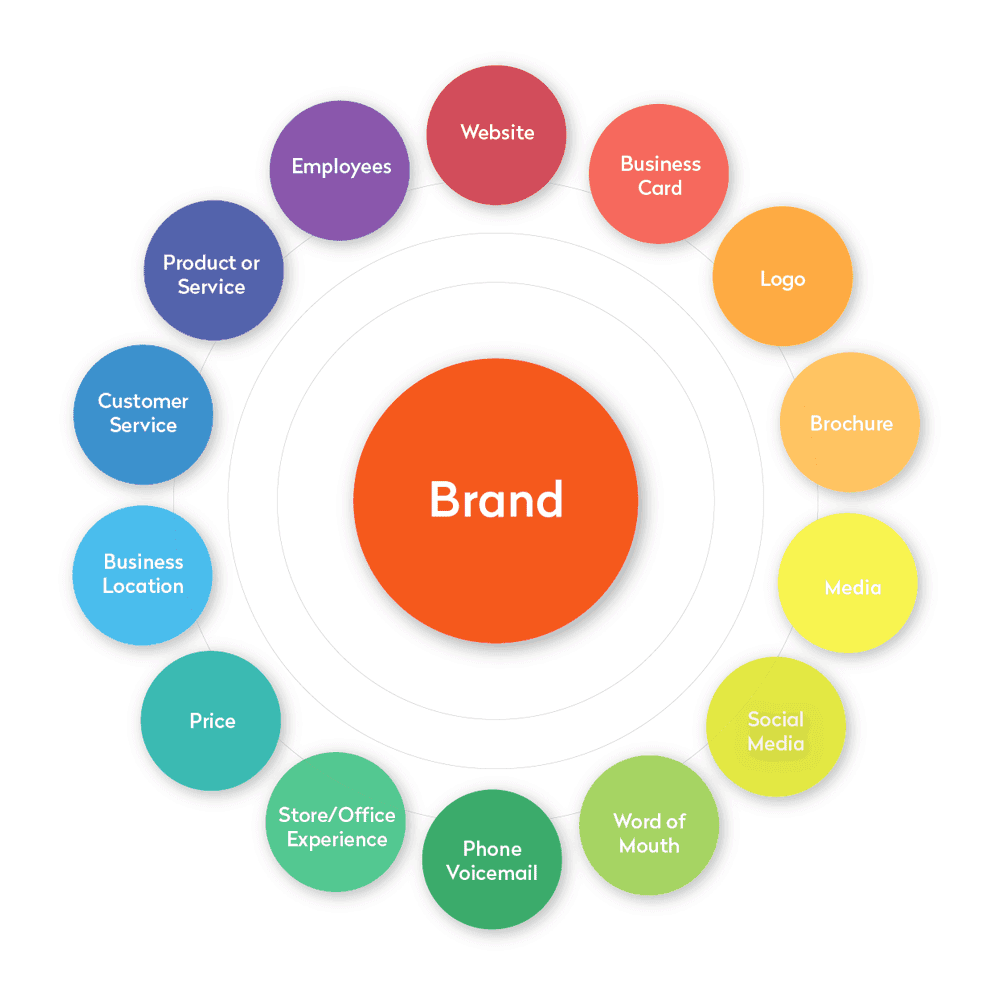
Brand management is working when buyers describe the firm the way the firm intended. Template usage and asset compliance show that the system is running; only buyer evidence shows that the brand is landing.
Most firms measure the first and assume the second. A perfectly compliant proposal can still promise partner-led service that the client never sees after signing.
65% of customers say they have switched loyalty after a brand's promise did not match their experience. Compliance is the means. Delivering the promise is the point.
Three evidence loops cover most professional services firms. Win/loss interviews, run by someone other than the pitching partner, are the cheapest brand-tracking method available because they capture what buyers actually believed at the moment of choice.
A short annual perception survey via a panel provider such as YouGov or Attest provides a benchmark among prospects who never received a pitch.
Execution metrics (template adoption, off-brand asset rate, exception volume) tell you where the system leaks. Review all three together, quarterly, with the person who holds the D on positioning in the room.
Where should a firm start?
Start with a minimum viable brand operating system: clear decision rights, one source of truth, workflows that make the approved choice the easy one, and a feedback loop.
Install it before a rebrand launches, not after.
- Write the decision register. One page, using the eight decisions above. Name who decides, who agrees and who is consulted. Get the managing partner to sign it.
- Name one source of truth and retire the rest. Delete superseded templates and logo files rather than archiving them.
- Make the approved choice the easy choice. Locked templates inside the tools fee-earners are already open every day.
- Set the evidence loop. A quarterly review of win/loss findings, template adoption and the exceptions log.
Verdict: Assign the decisions before you buy the software
Brand management in a professional services firm is a decision system first and a software category second.
The tools are worth having. Frontify, Templafy and a decent win/loss process all earn their place.
They only work once someone holds the decision; each tool supports: positioning with the managing partner; distinctive assets protected at the CEO level; templates owned and locked; exceptions bounded; AI use governed; and buyer evidence reviewed by the people who can act on it.
If you are preparing a rebrand, do one thing this week. Draft the eight-line decision register and see how many lines have a name against them. Every blank line is where the new brand will leak.
If you would rather see where it is already leaking, request a free Brand Equity Audit™. It is a structured diagnostic that shows exactly where your brand is losing commercial ground and what to fix first.
Frequently asked questions
What is the difference between brand management and marketing?
Brand management decides and protects what a company stands for and how it presents itself; marketing uses that brand to generate demand. In a professional services firm, marketing runs the campaign and the event, while brand management decides the positioning, claims and templates that those activities must use.
What does a brand manager do in a professional services firm?
A brand manager in a professional services firm usually recommends brand decisions rather than making them all. The role maintains guidelines and templates, handles approvals and exceptions, and reports on buyer evidence, while the managing partner makes decisions on positioning and any changes to distinctive assets.
Is a DAM the same as brand management software?
No, a digital asset management (DAM) platform stores and controls brand files, which is one layer of brand management. It does not decide positioning, check claims, govern AI use or measure perception. Platforms such as Frontify and Bynder support those decisions; they do not make them.
When should brand management be set up during a rebrand?
Brand management should be set up before the new identity launches. Decision rights, locked templates and a single asset library need to exist on launch day; otherwise, fee-earners keep using the old files, and the rebrand starts decaying in its first pitch season.
Can brand management work in a partnership where partners have autonomy?
Yes — brand management in a partnership works when decision rights are explicit, and partners are consulted before decisions are made. Positioning remains with the managing partner; practice heads provide input; and partners retain freedom within agreed-upon limits, such as the tone of client correspondence.
Does brand management need an AI policy?
Yes — any firm whose people draft client-facing content with AI tools needs an AI usage policy as part of brand management. The World Federation of Advertisers identified six GenAI-related IP risks in January 2025, including loss of control over internal data entered into AI tools.
How often should brand guidelines be updated?
Brand guidelines should be reviewed on a fixed cadence, typically annually, and updated whenever the exceptions log shows the same request recurring. Distinctive assets should change rarely and only on a CEO-level decision, because buyer recognition of those assets builds slowly over years of consistent use.
What is a brand operating system?
A brand operating system is the set of decision rights, workflows, tools and feedback loops that turn a brand strategy into consistent behaviour across every touchpoint. Inkbot Design uses the term “brand management built as infrastructure,” where each brand decision has a named owner and a supporting tool.