The Rise of the BrandOps Role in Global Tech Companies
BrandOps is the strategic orchestration of your brand’s assets, workflows, and standards to ensure every touchpoint is consistent and high-impact. In the tech world, it’s the difference between a fragmented mess and a cohesive global powerhouse.
Most tech firms think a great product is enough. It isn’t. Innovation is just the baseline now; the real win is in how you scale that vision without it falling apart at the seams.
The “battlefield” of global tech is littered with companies that had brilliant code but zero operational discipline. They treat brand development as a coat of paint – something the marketing team slaps on at the end. That’s a mistake you’ll regret when your messaging starts looking like a patchwork quilt across different territories.
- Fragmentation: Local teams go rogue with “their version” of the logo.
- Inconsistency: Typography and tone of voice vary from the website to the app.
- Inefficiency: Designers waste hours hunting for the right assets or redoing work that’s already been signed off.
- Centralise assets and governance with BrandOps and a single-source-of-truth DAM to eliminate fragmentation and inconsistent typography, logos and messaging.
- Break silos by embedding BrandOps across ProductOps, MarketingOps and SalesOps so UX, messaging and sales tools align.
- Adopt a "core and flex" model to keep global visual identity stable while permitting local cultural adaptation and relevance.
- Operationalise the brand with dedicated BrandOps roles: Brand Governance Lead, Asset Manager, Messaging Strategist and regional specialists.
- Make BrandOps an operational imperative to boost trust, conversion and investor confidence through measurable consistency, efficiency and AI-enabled governance.
BrandOps as a Strategic Multiplier
BrandOps isn’t just another layer of bureaucracy. It’s the framework that allows your brand identity to breathe and grow. By treating your brand like a product – with its own systems, cycles, and quality control – you drive deep customer loyalty.
| Feature | Without BrandOps | With BrandOps |
| Asset Management | Chaos; files lost in Slack or email. | Centralised, single source of truth. |
| Market Speed | Slow; weeks of back-and-forth for approval. | Rapid, pre-approved templates and clear workflows. |
| Customer Trust | Diluted, the brand feels different in every country. | Unified: a seamless, premium experience globally. |
We often see brands skip this structural step to save time. It always backfires. If you want market leadership, you need the operational muscle to back up your creative vision. You can’t build a legendary company on a foundation of “good enough.”
BrandOps: Beyond Traditional Marketing
In most tech firms, departments are silos. Marketing writes the copy, product builds the UI, and sales says whatever it takes to close the deal. The result? A disjointed mess that confuses the customer and dilutes your authority. BrandOps fixes this by treating the brand as a holistic system rather than a series of disconnected campaigns.

Breaking Down the Silos
You’ve likely seen this: the website looks premium, but the actual software feels like it was built in a different decade. That’s a failure of operational discipline. BrandOps ensures that your brand identity and core messaging are baked into every facet of the business.
- Integrated Product Development: Ensuring the UX/UI aligns with the brand’s visual and emotional promise.
- Sales Alignment: Giving teams the right tools so they don’t have to “freestyle” their own presentations.
- Employee Engagement: Making sure your own people actually understand and live the brand values.
Strategy vs. Execution
The “art” of branding is useless without the “science” of execution. Most agencies will give you a pretty deck and leave you to figure out the rest. We find that the most successful global companies focus less on the “big reveal” and more on the boring-but-vital processes that keep the brand sharp every single day.
| Traditional Branding | BrandOps Approach |
| Focuses on campaigns and launches. | Focuses on systems and scalability. |
| Resides strictly within Marketing. | Permeates Product, HR, Sales, and Ops. |
| Success is often “felt” (subjective). | Success is measured through efficiency and consistency. |
It’s about bringing technical rigour to the creative side of the house. If you aren’t systematising your brand, you aren’t really managing it – you’re just hoping for the best. And in a market this competitive, hope is a terrible strategy.
Why BrandOps is No Longer Optional for Global Tech Companies
BrandOps provides the essential scaffolding to ensure your brand architecture scales globally without losing its soul. In an industry where technological shifts happen overnight, you simply can’t afford to have your website, social presence, and product pulling in different directions.
If your digital touchpoints aren’t perfectly aligned, you aren’t just losing style points; you’re eroding trust. A tech brand’s website is often its first handshake, and its software is the direct embodiment of its promise. If those experiences feel disconnected, the customer instinctively feels something is wrong.
Navigating Global Complexity
The “global” part is where most tech firms trip up. What works in Shoreditch might fall completely flat in Tokyo. BrandOps provides a framework for maintaining a nuanced, consistent brand tone while allowing for local relevance. It’s about being “global yet local” without the typical mess.
- Unified Visual Language: Ensuring logo design, typography, and colour palettes are applied identically from San Francisco to Seoul.
- Clear Positioning: Making complex technology sound simple and compelling, rather than hiding behind jargon.
- Trust Through Consistency: Customers trust what they recognise. If your brand looks and speaks the same way across every channel, you’ve already won half the battle.
Built to Scale
Most companies treat brand growth like a DIY project – adding bits on as they go. It’s a nightmare to manage and even harder to fix later. BrandOps turns your brand identity into a repeatable system.
The Operational Imperative: Why Tech Brands Must Evolve
BrandOps is no longer a luxury; it’s an operational imperative for any tech firm that wants to survive rising acquisition costs and shorter innovation cycles. Your brand can’t just be a mirror of your tech – it has to be the force that shapes perception and builds actual trust before a user even clicks “sign up.”
We’re seeing a shift where product features are easily copied, but a disciplined, well-run brand is almost impossible to replicate. If you’re still treating brand as an afterthought to your dev sprints, you’re already losing.
Killing the Silo: Holistic Brand Management
BrandOps dismantles functional barriers to ensure every department – from engineering to HR – is pulling in the same direction. The old way of working, where Marketing handles the “fluff” and Product handles the “real stuff,” is a recipe for a broken brand promise.
I’ve seen it countless times: a marketing team spends a fortune on a slick campaign, but the second a user logs into the app, the UI feels clunky and the tone shifts entirely. It’s jarring. It’s amateur. BrandOps ensures that your website design, software updates, and even your social media presence are all filtered through a single, unified lens.
- Unified Execution: Every decision is vetted for brand impact, not just functional utility.
- Reduced Friction: Designers and devs stop arguing over “vision” because the framework is already set.
- Total Accountability: When the brand is everyone’s job, the gaps where “average” work hides start to disappear.
Global Scale Without the Identity Crisis
A robust BrandOps framework allows you to maintain a “core and flex” model, keeping your brand architecture solid while adapting to local cultural nuances. Scaling a tech company globally is a nightmare if you’re trying to micromanage every pixel from a head office in London or San Fran.
The goal is a universal brand positioning that feels native everywhere. You keep the logo and the company’s soul identical, but you might tweak the typography or specific imagery to avoid being the “clueless foreigner” in a new market.
| Element | The “Core” (Stays Fixed) | The “Flex” (Adapts Locally) |
| Visual Identity | Logo, primary colours, brand soul. | Local photography, specific UI layouts. |
| Messaging | Core value proposition, mission. | Idioms, local pain points, and regulatory copy. |
| Governance | Centralised BrandOps standards. | Local execution teams with “freedom within a framework.” |
Most brands fail here because they either centralise too much (and become irrelevant locally) or decentralise too much (and become a fragmented mess). BrandOps is the middle ground. It gives your local teams the tools to be relevant without breaking the mother brand. That’s how you build a global icon.
The BrandOps Blueprint: A Framework for Cohesive Global Brand Execution
BrandOps is the operational system that embeds brand thinking into the daily workflows of every department, ensuring vision actually becomes reality. It isn’t about launching more campaigns; it’s about building the plumbing that allows a unified brand to flow through a global enterprise without leaking.
If your brand strategy only lives in a slide deck, it’s useless. BrandOps takes those high-level ideas and hard-codes them into how your teams work, from the dev team’s UI kits to the sales team’s pitch decks.
The Bedrock: Foundational Brand Strategy
You cannot operationalise a mess; BrandOps begins with a crystal-clear brand identity and positioning. Before we talk about workflows, we have to nail the fundamentals: Who are you, and why should anyone care?
In tech, the biggest trap is falling in love with your own features. A solid strategy translates complex “specs” into a narrative that actually resonates with humans. This isn’t guesswork – it’s based on strategic research into your audience and the competitive landscape.
- Core Messaging: Converting jargon into a compelling “why.”
- Brand Architecture: Deciding how your various products and sub-brands sit together so they don’t fight for attention.
- Purpose: Ensuring every tweet, landing page, and software update serves the same singular goal.
Governance at Scale: Managing the Assets
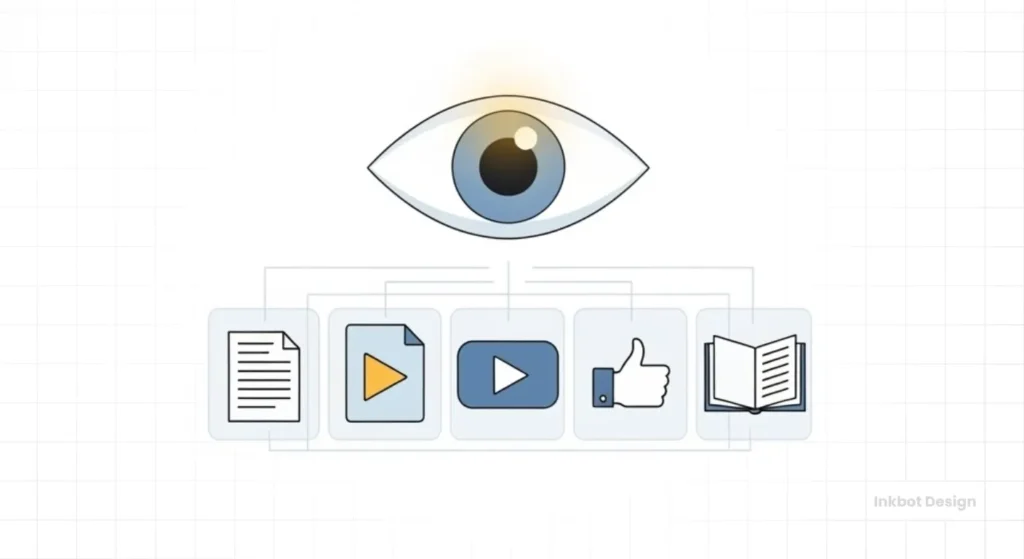
BrandOps implements the centralised systems needed to manage a global library of logos, typography, and brand voice guidelines. For a massive tech firm, asset management is usually a nightmare. Without a system, people use the wrong logo, the wrong font, or, heaven forbid, an outdated version of the value proposition.
We use Digital Asset Management (DAM) and strict version control to stop brand dilution before it starts. It’s about creating a “single source of truth.”
| Asset Type | The Governance Standard |
| Visual Identity | Logo design, palettes, and typography are locked in a central DAM. |
| Brand Voice | Frameworks that dictate tone, ensuring you don’t sound like a robot. |
| Product Imagery | Approved, high-res libraries that reflect the current UI, not last year’s. |
If a designer in Singapore and a dev in London are using different versions of your brand, you’ve already lost. Brand Governance isn’t about being the “brand police” – it’s about removing the friction that leads to mistakes.
Orchestrating the Unified Experience
BrandOps moves beyond static files to orchestrate the entire customer journey, ensuring every touchpoint feels like it comes from the same company. Whether someone is browsing your website, scrolling through your social media, or navigating your product onboarding, the “vibe” must be identical.
Most tech companies fail the “handshake test”: the website (the handshake) feels premium, but the product (the conversation) feels clunky. BrandOps fixes this by mapping the brand to the user journey.
- Seamless Transitions: The visual style on your social channels should flow naturally into the website design.
- Narrative Consistency: The story you tell in an ad must be the same story the customer hears from support.
- Data-Driven Personalisation: Using insights to tailor the experience without losing the core brand soul.
By unifying these disparate moments, you stop being a collection of features and start being a brand people actually trust. It’s the only way to stand out in a market that is increasingly crowded and increasingly cynical.
The Strategic Orchestrator: Connecting the Dots
BrandOps acts as the central nervous system of a tech company, ensuring that internal culture and external communications are perfectly aligned. In a global enterprise, the brand isn’t just a “marketing thing” – it’s the sum of every employee’s output and every customer’s interaction.
If your internal operations don’t match your external promises, the brand will eventually fracture. BrandOps is the glue that prevents that. It elevates you from being a mere vendor of “stuff” to becoming a trusted, influential name in the industry.
Integrating with the “Ops” Ecosystem
For BrandOps to succeed, it must be deeply embedded within the wider operational ecosystem, including ProductOps, MarketingOps, and SalesOps. We see too many tech firms where these departments operate like rival states. BrandOps forces them to talk to each other.
- SalesOps Integration: Real-world customer pain points gathered by sales should directly influence the messaging frameworks created by the brand team.
- ProductOps Alignment: The product roadmap must reflect the brand’s core identity and UX principles from day one, not as an afterthought.
- Unified Touchpoints: Whether it’s the website acting as a lead-gen engine or social media serving as a support channel, BrandOps ensures these elements reinforce your brand positioning rather than contradicting it.
Internal Advocacy: The Brand is Your People
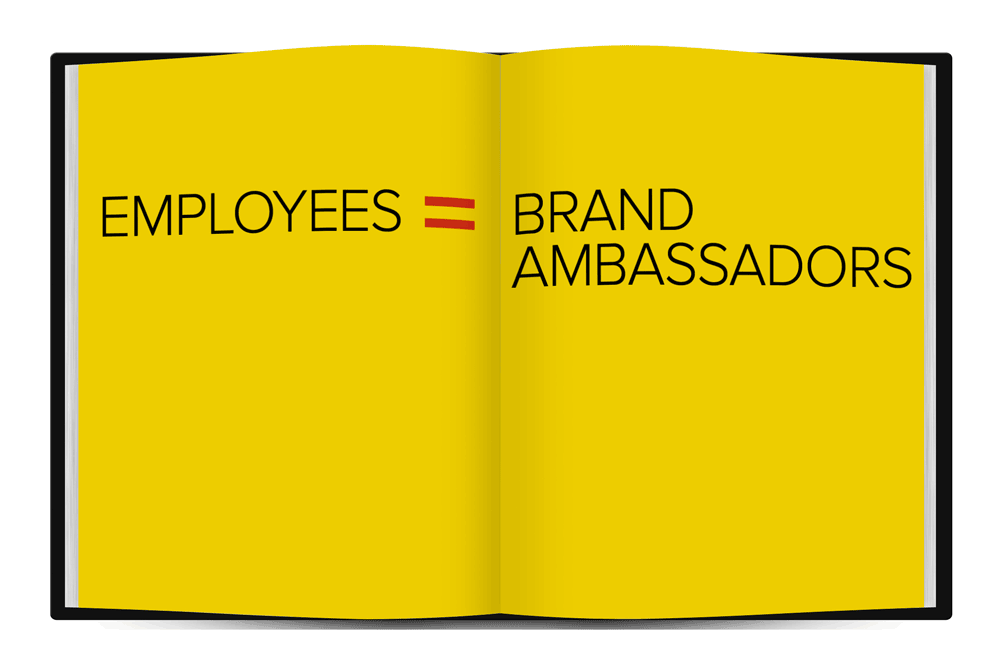
A brand is only as strong as the people who represent it; BrandOps builds a culture where every employee is a brand advocate. If your engineers don’t understand your brand’s commitment to “simplicity,” they’ll keep building complex, bloated features.
Internal alignment is the secret sauce of the world’s most successful tech giants. When the whole team “gets it,” you don’t need a brand manual for every tiny decision – they’ll naturally make the right call.
- Education: Moving beyond a boring PDF to actual training and resources that matter to different roles.
- Ambassadorship: Turning staff into natural representatives of the brand tone in every stakeholder meeting or public interaction.
- Purpose-Driven Dev: Helping technical teams see how their code contributes to the larger brand promise.
Empowering a Global Network of Brand Champions
To scale without losing control, BrandOps empowers a global network of local “brand champions” who bridge the gap between HQ and regional markets. You can’t run the world from a single boardroom. You need people on the ground who understand the local vibe but are fiercely loyal to the core brand.
| The Role of the Champion | The Benefit to the Brand |
| Local Adaptation | Tweaking social media content to hit the right cultural note. |
| Contextual Nuance | Using local research to ensure messaging doesn’t feel “translated.” |
| Identity Protection | Ensuring the logo and core visuals are never compromised for local convenience. |
This “decentralised yet coordinated” approach is the only way to maintain a unified brand architecture in a globalised world. It ensures you’re relevant in every territory while remaining unmistakably you. Most brands skip this and end up with a diluted, confusing mess – don’t let that be you.
Implementing BrandOps: A Roadmap for Global Tech Leaders
Implementing BrandOps is a strategic journey that requires a phased, disciplined approach to integrate brand thinking into the company’s operational DNA. It isn’t an overnight fix; it’s a systematic upgrade that leads to sustained market leadership and global scale.
In the tech world, we often talk about “scaling fast,” but scaling a brand without an operational framework is just scaling chaos. If you want to avoid the common pitfalls of fragmented identity and wasted resources, you need a clear path forward.
Assessing Brand Maturity and Identifying Gaps
The first move is an honest audit of your current brand maturity to find where the “leaks” are occurring. You can’t build a roadmap if you don’t know where you’re currently failing. We look for the friction points that frustrate your team and confuse your customers.
Most tech firms suffer from “fragmented ownership” – Marketing thinks they own the brand, but Product is building something that looks completely different. We look at:
- Asset Governance: Is your logo design and typography being used consistently, or is it a free-for-all?
- Messaging Consistency: Does your website promise one thing while your social media and sales decks say another?
- Privacy and Perception: How do your data protocols affect your brand’s trust and reputation?
A Phased Approach to Integration
Don’t try to boil the ocean; a phased rollout allows for iterative wins and avoids organisational burnout. We find that a gradual integration is far more effective than a “big bang” relaunch. You build the infrastructure first, then you scale the experience.
- Phase 1: The Foundation. Establish a central “source of truth” for all brand assets (DAM) and lock down your core brand identity guidelines.
- Phase 2: Operational Integration. Start plugging BrandOps into ProductOps and MarketingOps. This is where the brand starts influencing the actual software development and campaign execution.
- Phase 3: Measurement and AI. Use data analytics to track brand performance. With nearly 70% of marketers already integrating AI, it’s time to automate your brand governance and personalisation at scale.
Defining Roles: The BrandOps Dream Team
A successful BrandOps function requires a dedicated team that bridges the gap between creative vision and technical execution. You cannot simply “tack this on” to a junior designer’s plate. It requires a collaborative hub of specialists who understand both the “art” of the brand and the “science” of operations.
| Key Role | Responsibility |
| Brand Governance Lead | Ensures the brand architecture and positioning are followed globally. |
| Asset Manager | Maintains the library, version control, and accessibility of all visual elements. |
| Messaging Strategist | Oversees tone of voice and ensures a unified narrative across the website and social media. |
| Regional Specialists | Manages the “flex” for local markets while protecting the “core” brand. |
By defining these roles, you ensure the brand strategy is actually actionable. It’s about moving away from subjective opinions (“I don’t like that shade of blue”) and toward operational standards (“This does not meet our accessibility or brand guidelines”). That is how you win in 2026.
The Future is Operational: Why BrandOps Wins
BrandOps is the engine that converts brand strategy into measurable market dominance. In the global tech arena, having a “cool” product is just the entry fee. The companies that stick – the ones that become global icons – are those that treat their brand with the same operational rigour they apply to their code.
It’s time to stop thinking of a brand as a series of disconnected marketing stunts. To win in 2026, you need a holistic, data-informed ecosystem where your brand identity is protected, your messaging is sharp, and your customer experience is seamless from the first website visit to the thousandth app login.
The Bottom Line on Operational Branding
When you operationalise your brand, you aren’t just making things “look pretty.” You’re building a framework that lets you scale quickly without your identity falling apart. BrandOps gives you the tools to navigate diverse global markets, leverage AI for personalisation, and maintain trust through rock-solid governance.
- Strategic Global Expansion: Move into new territories with a “core and flex” model that works.
- Customer Loyalty: Build deep trust by being the most consistent player in the room.
- Investor Confidence: Show the market that your brand is a managed asset, not a happy accident.
- Conversion and Growth: Clearer messaging and a unified website design lead to higher conversion rates – it’s that simple.
Stop Guessing, Start Operating
We often see tech leaders wait until their brand is a fragmented mess before they act. Don’t be that person. Most brands skip this level of discipline and spend the next five years trying to fix the damage.
For any technology brand looking to lead, embracing BrandOps is no longer a “nice-to-have” strategic option. It’s a fundamental requirement. You can have the best tech in the world, but if you can’t operationally deliver your brand promise, you’re just another vendor. If you want to be a leader, build the engine that makes your brand unstoppable.
