Brand Tone of Voice: Why Your Brand Needs to Speak Up
Last year, I was scrolling through my Instagram feed, mindlessly tapping through the usual barrage of adverts. Suddenly, one caught my eye. It wasn’t the flashy graphics or the promise of a miracle product that stopped me.
It was the words.
“Hey there, fellow sleep-deprived entrepreneur! Fancy a cuppa that’ll kick your productivity into overdrive without the jitters? We’ve got you covered, mate.”
I chuckled. Then I tapped. Then I bought it.
That, my friends, is the power of brand voice.
In a world where we’re bombarded with thousands of marketing messages daily, a distinct brand tone of voice is your secret weapon. It makes you memorable, relatable, and—most importantly—human.
But here’s the kicker: most businesses get it wrong. They sound like everyone else or, worse, like a soulless corporate robot.
Don’t be that business.
🔰 TL;DR: Your brand’s tone of voice is its personality in words. It’s how you connect with your audience, stand out from the crowd, and build lasting relationships. This post will show you how to develop a distinctive brand voice that resonates with your target market without spending a fortune on fancy consultants or copywriters. We’ll cover everything from identifying your brand’s core values to implementing your voice across all touchpoints. Get ready to transform your brand communication and watch your engagement soar! 🚀
- Distinct brand voice is essential to stand out in a crowded marketplace and create lasting customer relationships.
- Brand tone of voice reflects personality, influencing emotional connections and driving customer engagement.
- Inconsistency in voice can confuse customers, diluting overall brand impact.
- Regular audits and feedback ensure your voice evolves with audience preferences and market changes.
- Utilising AI can streamline brand voice development while maintaining human creativity and insight.
What Exactly is Brand Tone of Voice?

Your brand tone of voice is how you say what you say. It’s the personality and emotion behind your words. It’s the difference between:
“We offer innovative solutions to optimise your business processes.”
and
“We’ll help you kick inefficiency’s butt and skyrocket your productivity. Boom! 💥”
It has the same message but a wildly different impact.
Your tone of voice encompasses:
- Word choice
- Sentence structure
- Rhythm and pace
- Humour (or lack thereof)
- Level of formality
- Use of jargon or slang
- Emotional undertones
Get it right, and you’ll have customers hanging on your every word. Get it wrong, and you’ll be white noise in a sea of competitors.
Why Bother with Brand Voice?
“But Stuart,” I hear you say, “I’m selling gadgets, not writing novels. Why should I care about brand voice?”
Let me count the ways:
- Stand out from the crowd: In a world of me-too brands, a unique voice makes you memorable.
- Build trust and loyalty: A consistent voice helps customers feel like they know you, fostering trust and repeat business.
- Attract your tribe: The right voice will resonate with your ideal customers, drawing them to you like moths to a flame.
- Boost engagement: A compelling voice encourages interaction, shares, and word-of-mouth marketing.
- Increase conversions: When your voice connects emotionally with customers, they’re more likely to buy.
- Streamline your content creation: A clear voice guide makes it easier for your team to create on-brand content consistently.
Still not convinced? Consider this: According to a 2023 study by the Content Marketing Institute, brands with a well-defined voice saw a 33% increase in customer engagement and a 27% boost in brand loyalty.
Numbers don’t lie, folks. 📊
Finding Your Brand’s Unique Voice

Now that we’ve established why brand tone of voice matters, let’s dive into the nitty-gritty of crafting yours.
Step 1: Know Thyself (and Thy Audience)
Before speaking, you need to know who you are and who you’re talking to.
Start by defining your brand’s:
- Core values
- Personality traits
- Mission and vision
- Unique selling proposition
Then, get crystal clear on your target audience:
- Demographics
- Psychographics
- Pain points
- Aspirations
- Communication preferences
Pro tip: Create detailed buyer personas. Give them names, backstories, favourite TV shows—the works. The more real they feel, the easier it is to speak to them.
Step 2: Audit Your Current Voice
It’s time for some brutal honesty. Gather examples of your current communications—website copy, social media posts, emails, etc.
Ask yourself:
- Is our voice consistent across channels?
- Does it reflect our brand values?
- Does it resonate with our target audience?
- How does it compare to our competitors?
Be ruthless. If your voice isn’t cutting it, it’s time for a change.
Step 3: Define Your Voice Characteristics
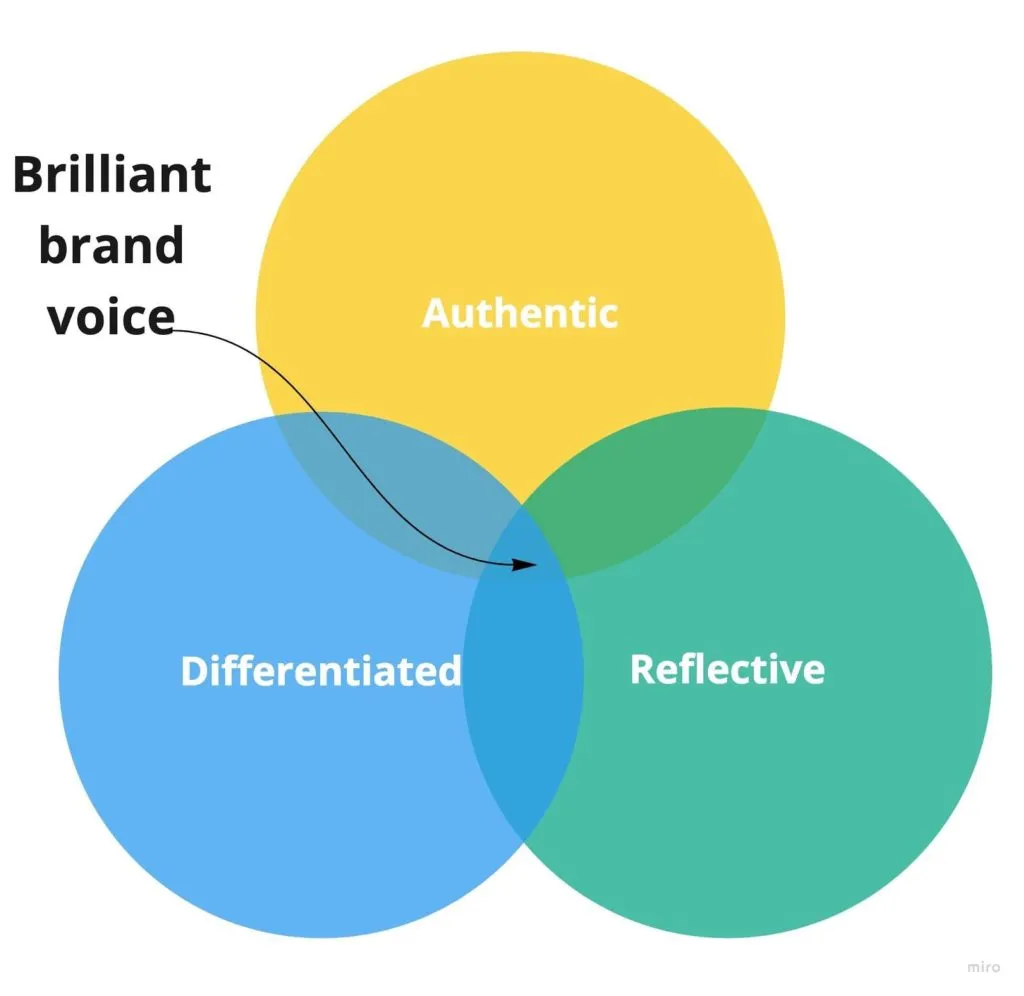
Now for the fun part. Choose 3-5 characteristics that define your voice based on your brand personality and audience.
For example:
- Witty but not snarky
- Confident but not arrogant
- Friendly but professional
- Direct but not rude
- Playful but not childish
These will be your North Star when crafting communications.
Step 4: Create Your Voice Chart
A voice chart is your brand’s vocal blueprint. It outlines how to apply your voice characteristics in different scenarios.
Here’s a simple template:
| Characteristic | Do | Don’t |
| Witty | Use clever wordplay and pop culture references | Resort to sarcasm or mean-spirited jokes |
| Confident | Make bold statements backed by facts | Brag or put down competitors |
| Friendly | Use “you” and “we” to share personal anecdotes | Overshare or get too informal |
This chart will be your team’s go-to guide for staying on-brand.
Implementing Your Brand Voice: Where the Rubber Meets the Road
You’ve done the groundwork. Now it’s time to put your shiny new voice into action.
Website Copy: Your Digital Front Door
Your website is often the first interaction people have with your brand. Make it count.
- Rewrite your homepage to reflect your new voice
- Infuse product descriptions with personality
- Craft an “About Us” page that tells your brand story in your unique voice
Remember: every word is an opportunity to reinforce your brand identity.
Social Media: Where Your Voice Can Shine
Social platforms are perfect for showcasing your brand tone of voice. They’re informal, immediate, and interactive.
- Tailor your voice to each platform (LinkedIn vs TikTok)
- Engage with followers in your brand voice
- Create platform-specific content that highlights your personality
Pro tip: Use a social media calendar to plan posts that consistently reflect your voice.
Email Marketing: Personal Communication at Scale
Email is intimate. It’s a direct line to your customer’s inbox. Use your voice to make every email feel like a personal message.
- Craft subject lines that demand to be opened
- Write body copy that’s engaging and on-brand
- Sign off in a way that reinforces your personality
Customer Service: Your Voice in Action
How you handle complaints and queries speaks volumes about your brand. Ensure your customer service team is fluent in your brand voice.
- Create response templates that embody your voice
- Train your team to adapt the voice to different situations
- Encourage authentic interactions within brand guidelines
Common Pitfalls (and How to Avoid Them)

Even the best-laid voice plans can go awry. Here are some common traps and how to sidestep them:
Inconsistency: The Brand Voice Killer
Inconsistent voice confuses customers and dilutes your brand impact.
Solution: Create a comprehensive style guide and conduct regular voice audits.
Trying Too Hard: The Cringe Factor
Forced humour or slang can make you sound like the proverbial dad at a teenage party.
Solution: Be authentic. If a phrase feels unnatural, it probably is.
Ignoring Context: The Tone-Deaf Trap
Using the same voice for a product launch and a crisis response is a recipe for disaster.
Solution: Develop voice variations for different contexts and channels.
Staying Static: The Relevance Risk
As your brand evolves, your voice should, too.
Solution: Regularly review and refresh your voice to keep it aligned with your brand and audience.
Measuring the Impact of Your Brand Voice
“What gets measured, gets managed,” as the saying goes. Here’s how to gauge the effectiveness of your brand voice:
- Engagement metrics: Track likes, shares, comments, and click-through rates
- Sentiment analysis: Monitor the emotional tone of customer interactions
- Brand recall: Conduct surveys to measure how memorable your brand is
- Conversion rates: Compare pre and post-voice change conversion data
- Customer feedback: Directly ask customers how they perceive your brand communication
Use these insights to refine and improve your voice continuously.
The Future of Brand Voice: AI and Beyond
As we hurtle towards an AI-dominated future, you might wonder: “Will brand voice even matter in the age of ChatGPT?”
Spoiler alert: It’ll matter more than ever.
As AI-generated content becomes ubiquitous, a unique, human brand voice will set you apart. It’ll be the difference between sounding like everyone else and being unmistakably you.
But here’s the exciting part: AI can also be a powerful tool in crafting and maintaining your brand voice. From analysing vast amounts of customer data to ensuring consistency across thousands of touchpoints, AI will be your brand voice’s best friend—if you use it right.
Your Call to Action: Find Your Voice, Change Your Brand
There you have it, folks—the whys, hows, and what-nows of crafting an unforgettable brand tone of voice.
Now it’s your turn.
Take a hard look at your brand communications. Are they as distinctive and compelling as they could be? If not, it’s time for a voice makeover.
Remember:
- Know your brand and your audience inside out
- Define your unique voice characteristics
- Create a comprehensive voice guide
- Implement consistently across all touchpoints
- Measure, refine, repeat
Your brand has something unique to say. Make sure it’s heard.
So, what are you waiting for? Go forth and speak up. Your audience is listening. 🎤
FAQs: Your Burning Brand Tone of Voice Questions Answered
How long does developing a brand tone of voice take?
It depends on your brand’s complexity, but expect to spend 2-4 weeks on initial development and another 1-2 months refining and implementing.
Can I have multiple brand voices for different products or audiences?
While your core voice should remain consistent, you can develop variations for different product lines or audience segments.
How do I maintain brand voice consistency across a large team?
Create a comprehensive style guide, conduct regular training sessions, and use tools like Grammarly or the Hemingway App to enforce voice guidelines.
Should my brand voice be the same on all social media platforms?
Your core voice should be consistent but adapt slightly to fit each platform’s unique culture and audience expectations.
How often should I review and update my brand voice?
Conduct a thorough review annually, with minor tweaks as needed based on performance data and market changes.
Can I use AI to help develop my brand voice?
AI can be a valuable tool for analysis and consistency, but the core of your voice should come from human insight and creativity.
What if my brand voice isn’t resonating with my audience?
Gather feedback, analyse engagement metrics, and be prepared to pivot. Your voice should evolve with your brand and audience.
How do I balance professionalism with personality in my brand voice?
Define clear boundaries in your voice chart and provide plenty of examples to guide your team.
Can a strong brand voice impact my bottom line?
Absolutely. A consistent, engaging voice can improve customer loyalty, increase conversions, and boost word-of-mouth marketing.
How do I convince my boss/team that we need to focus on brand tone of voice?
Present case studies of successful brands, share relevant statistics, and, if possible, run a small pilot project to demonstrate the impact.