Asset Management Branding: Make Your Firm Easier to Evaluate
Asset management branding should help prospective clients evaluate an investment business. Start by defining the audience, investment approach, supporting evidence and limitations. Then translate those decisions into messaging, identity and investor materials. This guide explains what to change, what to retain and how to assess progress without promising asset growth.



On this page9 min left
- What does asset management branding need to do?
- Decide what business the brand is explaining
- Build a claim-to-evidence system.
- How do you explain an investment difference?
- What should an investment brand say about AI?
- Design the materials investors use to evaluate you
- How should the website and pitch deck work together?
- Keep claims and qualifications together.
- Choose between a refresh, repositioning and a new architecture
- Measure comprehension before claiming commercial impact
- Start with the claim your evidence supports least
- Questions people ask
Asset management branding should help a prospective client work out what your business does, how investment decisions are made and whether the proposition deserves closer examination. Start there, before commissioning a new identity.
The pressure to explain a genuine difference is real.
Deloitte warns in its 2027 Investment Management Outlook, published in 2026, that reliance on the same leading AI models could make investment analysis more alike.
Deloitte identifies proprietary information and human judgement as possible sources of differentiation. That is a reason to explain your expertise properly, not to hide it behind reassuring language.
For a wealth management partner reviewing financial services branding, the useful question is practical: what should an appropriate prospect be able to check before arranging a meeting?
What does asset management branding need to do?
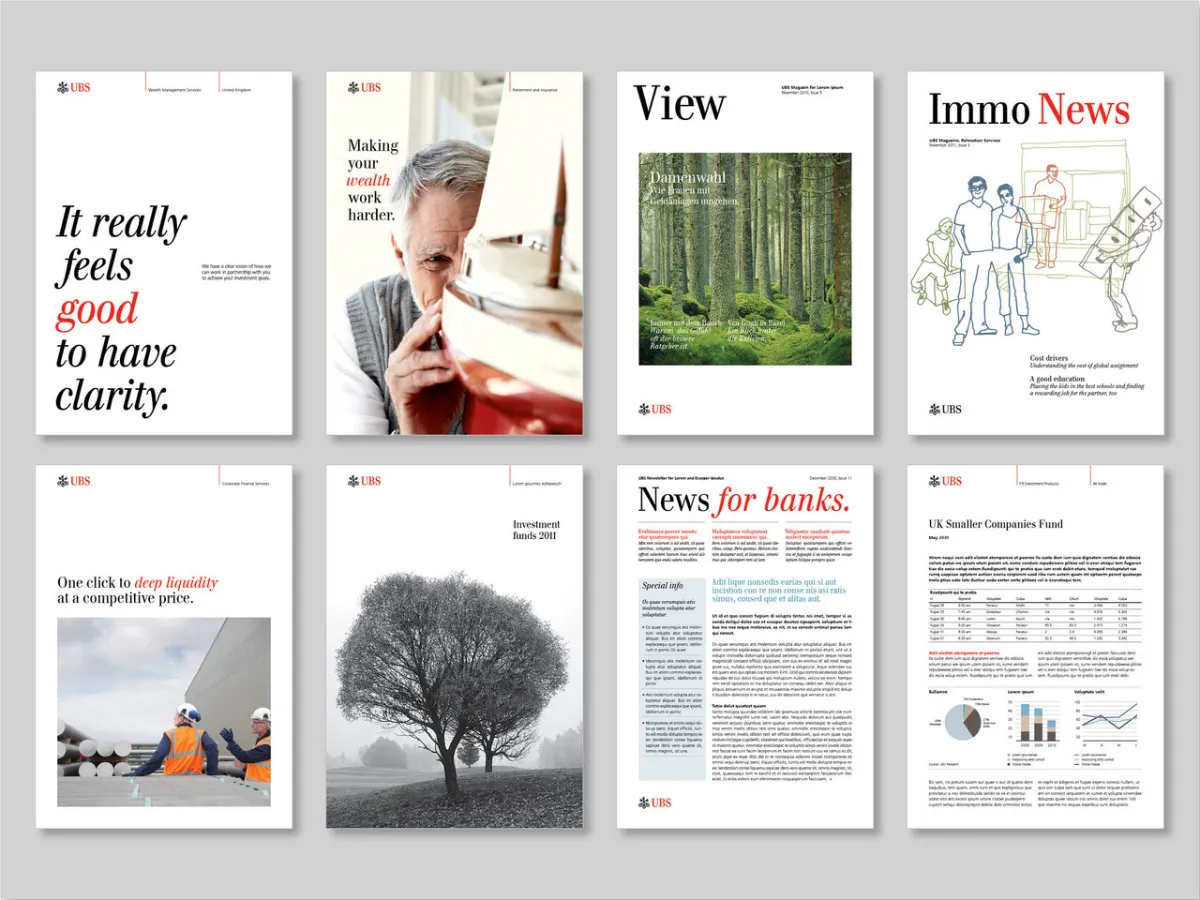
Asset management branding connects an investment business’s positioning, language and visual identity. The practical job is to explain the audience, investment approach and supporting evidence, while making relevant limitations visible. Branding cannot establish suitability for an individual investor or serve as a substitute for investment due diligence.
- State who the business serves.
- Explain how investment decisions are made.
- Connect material claims to evidence and limitations.
Asset management branding defines how an investment firm communicates its positioning, investment approach and evidence through messaging, identity and investor-facing materials.
The practical test is whether a reader can identify who makes investment decisions, how those decisions are made and what evidence supports the description. A polished page that leaves those questions unanswered still leaves the evaluation work to the prospect.
That test also gives design a proper brief. Typography should make the explanation readable. Charts should make comparisons understandable. Page structure should put important qualifications where readers encounter the associated claim.
“Looks more established” is too vague to approve against. “A prospective client can distinguish the planning service from the investment-management service” is something a team can examine.
Decide what business the brand is explaining
Before discussing colours, write down who does what.
Does the business provide financial planning? Select third-party managers? Make discretionary investment decisions? Offer several services through separate entities?
Those differences change the message. A business selecting external funds should describe the selection and oversight process rather than leave readers with the impression that every underlying investment decision is made internally.
Use a short commissioning brief:
- Identify the priority audience.
- Describe the service and investment responsibilities.
- Name the decision the prospect is trying to make.
- List the documents available to support the proposition.
- Appoint the commercial decision-maker and specialist reviewers.
Be precise about the audience without pretending that wealth determines every information need. A business owner approaching retirement may need an explanation of the relationship between planning and investments.
An investment adviser assessing a manager may need more technical detail about portfolio construction.
The same homepage should not attempt to answer both questions at full depth. Keep a common proposition, then provide clearly labelled routes into the relevant detail.
If the partners cannot agree on the audience or service, pause the visual work. A designer cannot resolve an unsettled business decision through typography. The next task is financial advisory positioning, with the identity following the agreed position.

Build a claim-to-evidence system.
Use a working document that connects each important claim to an observable decision, supporting material and a limitation. This is a proposed editorial method, not a validated scoring model.
Start with claims already in circulation. Take the homepage, introductory presentation and investment-process document. Highlight phrases such as “risk-managed”, “independent thinking” and “long-term conviction”.
Then ask what a prospect could inspect to understand each phrase.
How do you explain an investment difference?
An investment difference needs an explanation of what changes in the decision process. Naming a philosophy is only the beginning. Describe the consequence of that philosophy and identify the material a prospect can review.
Consider a hypothetical investment boutique that describes its approach as patient ownership of a concentrated portfolio.
The working framework might look like this:
Working field | Hypothetical content |
|---|---|
Claim | Patient ownership of a concentrated portfolio |
Decision consequence | Holdings are selected with an intended multi-year ownership period |
Supporting material | A documented investment process and suitably reviewed portfolio examples |
Limitation | Concentration can increase exposure to individual-company outcomes |
Review owner | The investment lead and designated compliance reviewer |
The example does not establish that concentration is desirable or that the boutique produces better returns. The example shows what the words commit the business to explaining.
Compare that with “a distinctive investment philosophy”. A reader cannot tell which decisions follow from the phrase. The adjective does the work that the explanation should do.
If the available evidence does not support the intended claim, change the claim. Do not ask the design team to make the unsupported version more persuasive.
What should an investment brand say about AI?

Explain the role of the technology and the responsibility that remains with people.
Deloitte’s 2027 Investment Management Outlook suggests that shared large language models could contribute to more similar investment thinking.
Deloitte identifies proprietary information and human judgement, including fieldwork and institutional knowledge, as potential sources of differentiation.
The branding implication is narrower than “AI does not differentiate”. Technology may be relevant. The useful explanation is what the technology helps the business do and what remains distinctive about the inputs, interpretation and decisions.
For example, a hypothetical manager might use AI to organise research documents while retaining human responsibility for evaluating the investment case. If that accurately describes the process, explain the division. Do not replace the explanation with “AI-powered investing”.
Apply the same scrutiny to proprietary research. Does “proprietary” mean an internally maintained dataset, interviews conducted by the investment team or simply a report written in-house? State the relevant distinction without disclosing confidential material.
This also creates a limit on the brand promise. A technology description should not imply that errors, uncertainty or investment losses have been removed. The communications task is to explain the existing process.
“Our clients come through referrals. Why change this?”
A referral does not settle what the referred person has understood.
The proportionate response is to test the existing explanation before buying a rebrand. Ask someone unfamiliar with the business to review the website and introductory deck, then describe the service back to them.
If the description is accurate and the materials remain usable, a messaging correction may be enough. There is no editorial reason to recommend replacing a recognised identity simply because a branding project is available.
“We cannot publish our investment edge.”
You do not need to publish every model or research input.
Set a boundary between public explanation, information available during an appropriate diligence process and confidential material. A public description can explain the questions an investment committee asks without publishing the committee’s entire research file.
The aim is sufficient explanation for the reader’s next decision. Confidentiality is a real constraint; confidentiality should not become an excuse for saying nothing.
Design the materials investors use to evaluate you
Build the identity against actual documents before approving a presentation of logos.
Choose a small working set: a relevant webpage, introductory deck, investment-process explanation and reporting sample. Include the documents the team genuinely uses, rather than inventing applications because the mock-ups look impressive.
For each application, specify the reader’s question and the information needed to answer it.
Application | Design checkpoint |
|---|---|
Homepage | Can the reader identify the business and intended audience? |
Investment-approach page | Can the reader follow the decision process? |
Introductory deck | Does the proposition match the website? |
Team biography | Is responsibility explained alongside experience? |
Reporting sample | Are periods, labels and qualifications legible? |
Contact route | Does the reader understand the next step? |
How should the website and pitch deck work together?
Give the website, introductory deck and investment-process document the same approved description of the decision process. If the website says “capital preservation” while the deck leads with concentrated growth, resolve the investment proposition before adjusting the layouts.
Consistency here means agreement about the substance. The website and deck need not contain identical copy.
A webpage may introduce the approach and direct readers towards detail. A meeting presentation may answer a specific audience’s questions. Both should explain the same business.
Use plain labels. If a page covers the investment process, call it “Investment process”. Making readers guess whether “Our perspective” contains a process or a collection of market commentary adds work without adding meaning.
For implementation choices, treat financial adviser website design as a separate specification exercise. Agree the content and reader tasks before choosing functionality.

Keep claims and qualifications together.
Build space for necessary qualifications into the template. Do not approve a dramatic headline treatment and discover afterwards that the associated explanation cannot fit.
Create a record for material claims containing the wording, supporting source, reviewer and review date. The record is a suggested governance tool, not regulatory certification.
Likewise, a legible chart is not automatically an appropriately presented investment communication. Design review and specialist review answer different questions.
Use the same separation of responsibilities when planning FCA marketing compliance. Ask the designated reviewer which materials and claims require approval before production begins.
Before final approval, ask team members to create a document from the templates without the designer present. If a routine reporting page breaks the hierarchy or forces qualifications into unreadable text, the system needs another round of work.
Choose between a refresh, repositioning and a new architecture
Match the intervention to the problem.
A visual refresh is a reasonable starting recommendation when the proposition remains accurate, but the files, layouts or templates are difficult to use. Retain recognisable assets unless the review identifies a reason to change them.
Repositioning is the more relevant task when the audience, service or reason for consideration has changed. A new colour palette will not explain why a former generalist now concentrates on a particular client situation.
Brand architecture concerns the relationship between names and offers. Consider architecture when acquisitions or separate service brands leave prospects unsure who provides what.
For an acquired investment business, compare what each name helps the audience understand. Does the acquired name identify a specialist capability? Does the parent name clarify ownership? Would an endorsed arrangement explain both?
Do not decide on an organisation chart alone. Examine client-facing descriptions, recognition among relevant audiences and the practical consequences for documents and systems.
Budget for implementation as well as design. A naming change can require changes to reporting templates, presentations, signage and digital systems. List those dependencies before agreeing the launch date.
Measure comprehension before claiming commercial impact
Set the evaluation criteria before launch.
Start with whether the materials communicate the intended proposition. Ask a prospective-client proxy to explain the service after reviewing the materials. Record the answer before correcting it.
A longer website visit tells you little if the reader still cannot distinguish financial planning from discretionary investment management.
Use practical checks:
- Can the reader identify the intended client?
- Can the reader describe who makes investment decisions?
- Can the reader locate supporting information?
- Can the reader identify a relevant limitation?
- Can the internal team produce accurate materials from the templates?
These are proposed diagnostic checks. They are not validated predictors of revenue.
Record commercial indicators separately. Track enquiries against an agreed definition of fit, note the referral or campaign source, and document reasons prospects give for proceeding or declining. Keep the same definitions before and after launch.
Do not attribute a change in assets under management to branding by subtraction from a headline total. Examine subscriptions, redemptions, market movement, acquisitions and other material changes before interpreting the result.
A short review window may tell you that a form is broken or that prospects misunderstand the service. The same window may be inadequate for judging a business with a long appointment process.
If enquiries fall, investigate audience, distribution and tracking alongside the new materials. If enquiries rise, apply the same discipline. Neither direction identifies the cause by itself.
Start with the claim your evidence supports least
A useful first exercise requires no new name and no design presentation.
Place the homepage next to the introductory deck and the investment-process document. Select the most commercially important claim. Write down what the claim means, which decision follows from the claim and what a prospect can inspect.
If the answer remains vague, fix that explanation first.
If an independent assessment would help, request Inkbot Design’s free Brand Equity Audit™, a written review of positioning, messaging, visual consistency and relevant digital visibility.
Today, take one important claim and identify the evidence that allows a prospect to examine it.
Questions people ask
How much should an investment business budget for branding?
Build the budget around scope rather than a generic market estimate. Separate research and positioning from identity development, then list implementation requirements such as the website, reporting templates and presentations. Obtain comparable proposals against the same brief. A design fee alone does not describe the cost of putting the work into use.
Can an investment manager explain its approach without disclosing confidential research?
Yes — an investment manager can describe decision responsibilities, research categories and review procedures without publishing every model or input. Agree on what belongs in public materials, what can be shared during appropriate diligence and what remains confidential. Have the relevant specialists review the boundary before publication.
Should a wealth management business keep its existing logo?
Yes — retain the logo when existing recognition is useful and the identified problem lies elsewhere. Unclear service descriptions or contradictory investment messages require work on the proposition. Replace or revise the mark when the review identifies a specific identity problem, rather than treating replacement as the default deliverable.
Can an internal marketing team run the project?
Yes — an internal team can coordinate evidence gathering, document review and implementation if the team has capacity and a clear decision-maker. External help becomes more relevant when leadership cannot agree on positioning, when the identity requires specialist work, or when acquisitions create naming complexity. Specialist compliance review remains a separate responsibility.