Financial Adviser Website Design: Costs, Platforms and Finding the Right Agency
A financial adviser’s website is not successful simply because it generates more enquiries. It succeeds when it helps suitable prospects understand your expertise and helps unsuitable prospects recognise the mismatch before they book a meeting. Here is the process for building a site that qualifies your pipeline.



On this page8 min left
- What Is Financial Adviser Website Design?
- Phase 1: Positioning Before Pixels (The Prerequisite)
- Phase 2: Architecting the Qualification Engine
- Phase 3: Platform Selection and the Template Trap
- Phase 4: Structuring for FCA Marketing Compliance
- Phase 5: Accessibility as a Commercial Imperative
- Phase 6: Understanding the True Cost Structure
- The Verdict
- Questions people ask
A financial adviser’s website is not successful simply because it generates more enquiries.
It is successful when it helps suitable prospects understand your expertise and helps unsuitable prospects recognise the mismatch before they ever book a meeting.
If you run an independent financial advisory practice, raw lead volume is a commercial liability when those leads fall below your minimum asset threshold.
You do not need a digital brochure; you need a qualification engine.
This exact friction is the central discipline of financial services branding.
Getting this right requires specific platform choices, a rigorous approach to compliance architecture, and a design process that prioritises firm positioning long before anyone looks at a colour palette.
What Is Financial Adviser Website Design?
Financial adviser website design is the process of architecting a digital presence that establishes regulatory trust, communicates specific financial expertise, and qualifies prospective high-net-worth clients before they initiate contact.
- Qualification architecture: Using copy, form fields, and user experience (UX) to intentionally filter out prospects who do not fit the firm’s target demographic.
- Compliance integration: Structuring service pages, disclaimers, and ongoing advice explanations to satisfy stringent FCA marketing regulations.
- Platform sovereignty: Selecting content management systems that offer complete data ownership, security, and back-office integration.
Financial adviser website design is the process of architecting a digital presence that establishes regulatory trust, communicates specific financial expertise, and qualifies prospective high-net-worth clients before they initiate contact.
Phase 1: Positioning Before Pixels (The Prerequisite)

Most website redesigns fail because the firm tries to solve a strategic positioning problem with graphic design.
If three partners at your firm describe your core proposition differently during a pitch, a new logo and a faster homepage will simply amplify that confusion.
You must define the exact commercial ground you intend to hold before commissioning a digital build.
According to the Financial Conduct Authority (FCA), just 8.6% of UK adults—approximately 4.6 million people—received regulated financial advice about investments, saving into a pension, or retirement planning in the 12 months to May 2024.
The market is highly concentrated. Your website must speak to a very specific, wealthy sliver of that demographic, and it must do so with absolute clarity.
Inkbot Design's work with The Technical Traders illustrates why financial website design must start with brand strategy and positioning. The challenge was to translate a sophisticated investment methodology into a clear, reassuring proposition for private investors.
We moved the brand away from the high-adrenaline conventions of retail trading and towards a calmer wealth-stewardship identity.
We carried that approach through the website, the member interfaces, and the marketing materials.
Visually, this meant replacing aggressive, dashboard-style data visualisation with abundant negative space, controlled typographic hierarchies, and a muted colour palette that signalled institutional stability.
The documented outcome was a unified brand and digital experience built securely around their ‘Asset Revesting’ proposition.
If you skip this prerequisite step, you will end up evaluating design concepts based on whether you personally like the shade of blue, rather than whether the aesthetic signals competence to your specific ideal client.
A pretty website attached to an undefined brand is a waste of capital.
Phase 2: Architecting the Qualification Engine
The prevailing wisdom in digital marketing dictates that you should remove all friction from a website to maximise conversions. That advice is fatal for wealth management firms.
When your business relies on high-value, long-term relationships, a contact form that generates fifty enquiries from individuals with £10,000 to invest costs your partners hours of wasted consultation time.
Your website must be designed to politely deter those clients while rolling out the red carpet for the right ones.

The Mechanisms of Digital Friction
You design for qualification by introducing deliberate friction points into the user journey.
The first mechanism is the explicit statement of your target audience and minimum asset requirements.
Burying your minimums in an FAQ accordion wastes everyone's time.
Placing "Specialist advisory for private clients with portfolios exceeding £500,000" in the hero section of your homepage instantly qualifies the traffic.
The second mechanism is the intake architecture. A standard contact form asks for a name, an email address, and a free-text message.
A qualification engine asks the prospect to select their primary financial anxiety from a specific list (e.g., "Inheritance tax planning," "Exiting a business," "Managing a defined benefit transfer"). It forces the user to categorise themselves.
The Default Approach | What It Costs | The Better Approach | Why |
|---|---|---|---|
Hiding minimum asset requirements to cast a wider net. | Wasted initial consultation hours with unsuitable prospects. | Stating the minimum threshold clearly on the homepage and service pages. | Respects the prospect's time and protects the partners' schedules. |
Generic "Contact Us" forms asking only for a name and email. | High volume of vague enquiries that require manual follow-up to qualify. | Intake forms requiring selection of specific service needs and asset brackets. | Forces the prospect to self-qualify before a partner ever picks up the phone. |
Using complex financial jargon to sound authoritative. | High bounce rates from overwhelmed prospects seeking clarity. | Plain-English explanations of complex tax and investment strategies. | Intelligence is demonstrated by making the complex accessible rather than confusing. |
Focusing homepage copy on the firm’s history and awards. | Prospects leave because they cannot immediately see how you solve their problem. | Focusing homepage copy entirely on the client’s specific financial anxieties. | Wealthy clients care about their money, not the year your firm was founded. |
Burying fee structures until the second physical meeting. | Trust erosion when prospects feel the firm is opaque about costs. | Outlining the fee methodology (if not exact pricing) on a dedicated page. | Transparency is the ultimate trust signal in financial services. |
A premium fee is required for a premium digital signal.
You cannot expect a prospect to pay bespoke wealth-management fees if your primary digital asset refuses to set boundaries or openly state its standards.
Phase 3: Platform Selection and the Template Trap
"Can we just use a Wix or Squarespace template to keep the budget down?" is a frequent question from firms looking to control their initial capital expenditure.
Yes — if you run a local coffee shop. No — if you manage millions of pounds of client wealth.
Platform selection dictates technical ownership, scalability, and long-term marketing agility. Relying on closed software-as-a-service (SaaS) builders introduces restrictions that eventually cripple growing advisory firms.
The Sovereignty Deficit
When you build on proprietary platforms, you rent your digital presence.
If the platform changes its pricing model, alters its core feature set, or experiences catastrophic routing failures, you have zero recourse.
Independent financial advisory (IFA) firms require total ownership of their digital assets. Open-source systems, properly configured and secured, provide that sovereignty.
This becomes a critical issue when integrating back-office systems. A bespoke open-source build enables complex API integrations with platforms such as Salesforce Financial Services Cloud or Intelliflo.
You can build secure, authenticated client portal logins directly into your architecture.
Closed platforms severely limit this technical freedom, forcing you to rely on clunky, third-party embeds that look unprofessional and compromise the user experience.
The Template Problem
Templates are mathematically designed to appeal to the broadest possible denominator. A generic template makes your firm look entirely interchangeable with the IFA down the street.
When a prospective client is deciding whether to trust you with their retirement portfolio, generic visuals subconsciously signal a generic, commoditised service.
If your website uses the same layout, the same stock imagery of compasses and handshakes, and the same typography as an amateur blog, the prospect assumes your financial advice is equally off-the-shelf.
Phase 4: Structuring for FCA Marketing Compliance
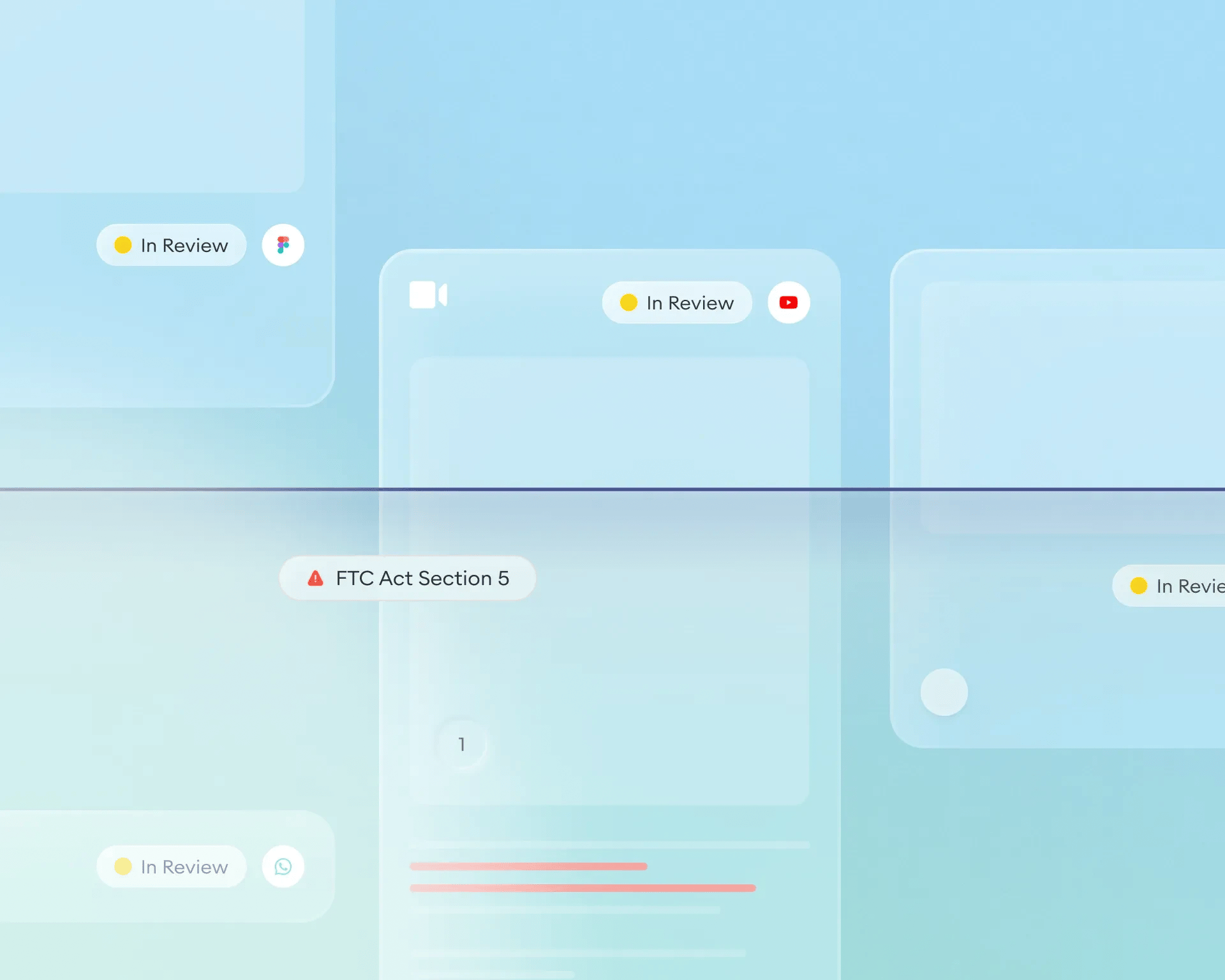
Treating FCA compliance as an afterthought in website design inevitably leads to expensive rebuilds; architecture must cleanly separate initial planning from ongoing advice.
Financial websites operate in a heavily regulated environment. The FCA’s March 2026 review criticised cosmetic changes to communications that failed to address underlying confusion. For financial adviser websites, a cleaner layout is not enough if visitors still struggle to understand the service.
For financial adviser websites, the implication is straightforward: a cleaner layout is not enough if visitors still struggle to understand the service, its limitations, or the next step.
Architecting Ongoing Advice
The FCA’s 2025 review of ongoing advice services highlighted the importance of clearly explaining what clients receive and when.
That makes service copy a substantive part of an adviser website project, not placeholder text to add after the design is formally approved.
Your website architecture must cleanly separate initial planning services from ongoing wealth management.
The design must accommodate detailed breakdowns of exactly what an ongoing review entails, the frequency of those reviews, and the associated costs, making the boundaries of each distinctly visible without overwhelming the user with walls of text.
This requires sophisticated information architecture—using tabbed interfaces, clear progressive disclosure, and distinct page hierarchies.
Targeted Support and Clarity
The introduction of targeted support in April 2026 makes clarity about service scope increasingly important.
The FCA describes the new service as filling the gap between generic guidance and individualised advice.
Adviser websites therefore need to explain the firm’s own proposition precisely, rather than relying on broad, unactionable promises of ‘financial support’.
If your firm offers this intermediate level of support, the digital journey must clearly indicate that the user is not receiving comprehensive, regulated advice before they engage.
Phase 5: Accessibility as a Commercial Imperative
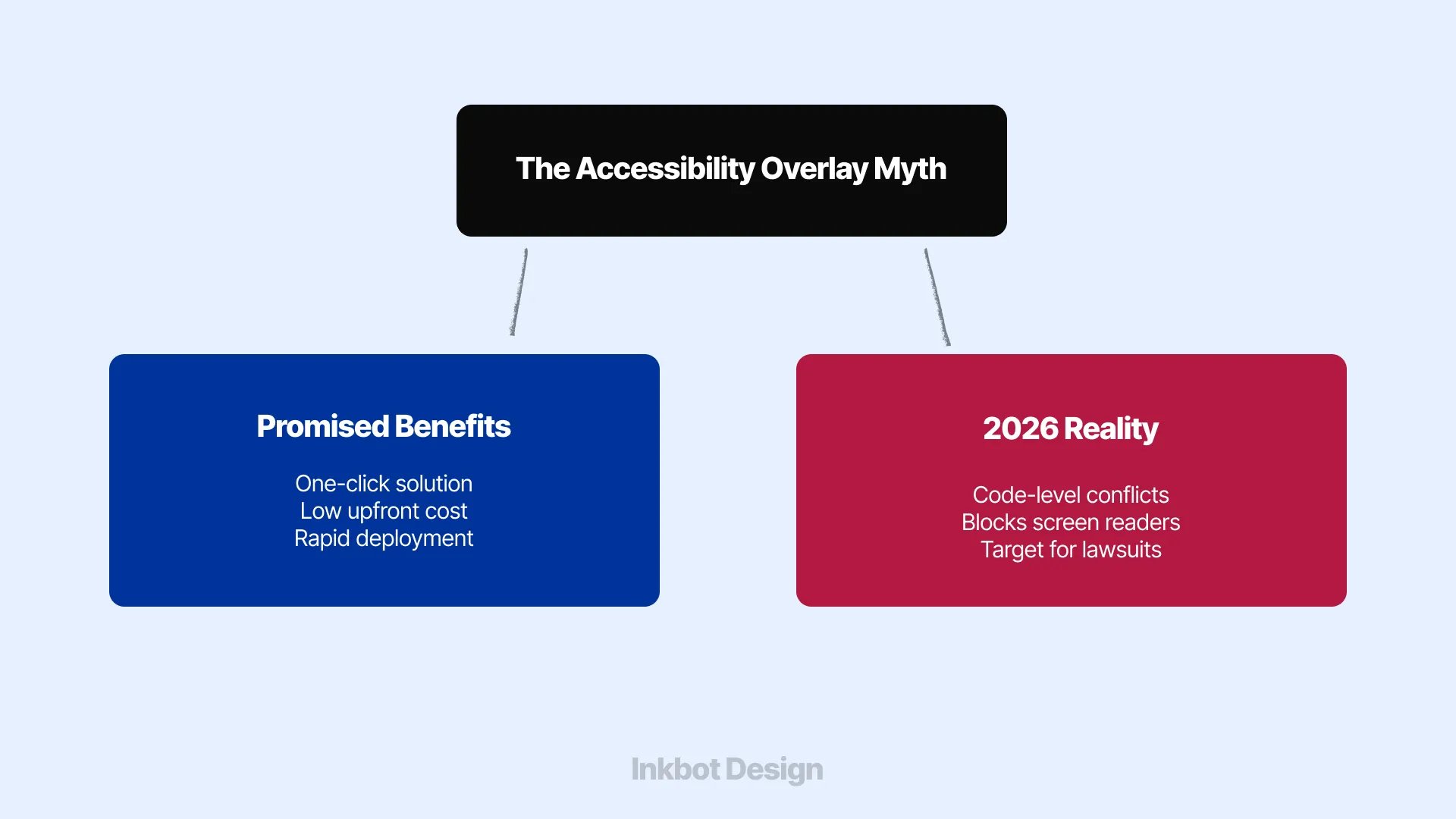
WebAIM’s February 2026 analysis of one million homepages detected WCAG accessibility failures on 95.9% of the pages tested.
For a financial adviser, poor accessibility is not just a technical failure; it is a profound failure of client care with direct commercial consequences.
Consider the demographics of high-net-worth wealth management.
A significant portion of the target audience is over the age of sixty. If a 65-year-old prospect with mild macular degeneration cannot read the light-grey-on-white text detailing your inheritance tax service, they leave.
If your navigation menus require highly precise mouse movements that frustrate someone with minor motor tremors, they leave.
You lose the mandate before you ever receive the email.
Accessibility dictates colour contrast ratios, typography sizing, hierarchical heading structures, and keyboard navigability.
A competent digital agency treats WCAG 2.2 compliance as a baseline requirement for financial websites, ensuring that your digital presence is usable by the demographic that actually holds the wealth.
Phase 6: Understanding the True Cost Structure
Partners routinely ask why a website build requires both a substantial upfront capital expenditure and an ongoing monthly retainer.
The upfront cost covers strategic positioning, custom UX/UI design, technical development, API integration, and compliance-ready copywriting.
The ongoing monthly fee is not a tax for existing; it is operational insurance.
Security and Infrastructure Patching
Open-source platforms require relentless vulnerability patching.
Financial firms are high-value targets for automated exploitation.
A monthly retainer ensures your core content management system, PHP environments, and server-level security protocols are updated the moment a patch is released.
Technical SEO and Performance Monitoring
Page speed and server response times degrade without active management as databases bloat and browsers update their rendering engines. Furthermore, search engines continuously adjust their crawling parameters.
An ongoing technical retainer ensures your XML sitemaps, schema markup, and Core Web Vitals remain optimised, protecting your organic search visibility.
If an agency offers to build your site and hand over the keys with zero ongoing maintenance requirements, they are effectively handing you a complex, high-performance machine and walking away before the first service is due.
In a heavily regulated financial environment, unmaintained infrastructure compromises operational resilience.
The Verdict
A beautiful website that generates fifty enquiries from people with £10,000 to invest is a failure for a firm with a £250,000 minimum asset threshold.
Your digital presence must execute the hardest part of your sales process: filtering the pipeline. The right agency makes your expertise clearer; the right budget pays for the strategic work needed to achieve that transparency.
Stop asking how to get more people to use your contact form. Start asking how to ensure only the right people want to.
The first step is understanding exactly what signals your current brand is transmitting to the market. Request a free Brand Equity Audit™ to identify where your digital presence is losing commercial ground today, and receive a structured diagnostic on how to fix it.
Questions people ask
Why does a financial adviser website cost an upfront fee and a monthly subscription?
The upfront fee covers strategic positioning, custom development, and compliant copywriting. The monthly subscription covers critical security patching, server maintenance, and technical performance monitoring, which are non-negotiable for a business handling sensitive financial data.
Do we need a specialist financial adviser platform?
No. While specialist platforms exist, they often restrict your ability to scale, implement custom CRM integrations, or execute advanced SEO strategies. A properly secured open-source CMS provides ownership, flexibility, and longevity without locking you into a proprietary vendor.
Will a website template make our firm look generic?
Yes. Templates are built for mass appeal. When high-net-worth prospects evaluate wealth managers, generic aesthetics subconsciously signal a commoditised, unremarkable service. Custom design differentiates your firm and justifies premium advisory fees.
How will compliance review work when we update the site?
Your agency should build approval workflows directly into the content management system. This allows your compliance officer to review, amend, and approve changes in a staging environment before any financial promotion goes live to the public.
How do we assess an agency’s understanding of our clients?
Look past their portfolio aesthetics. Ask the agency how they intend to visually and structurally separate your firm from your closest regional competitors. If they cannot articulate the specific anxieties and desires of a high-net-worth investor, they cannot design an effective site for one.
Can we track enquiries and customise landing pages for specific campaigns?
Yes, provided the site is built on an open architecture. A proper build allows your marketing team to rapidly deploy dedicated landing pages for specific seminars, whitepapers, or targeted support campaigns, while routing the analytical data directly into your back-office systems.
Who handles maintenance and security after the launch?
A credible digital agency will require a monthly technical retainer to manage this. They monitor server uptime, apply critical software patches, manage DNS routing, and maintain the site’s technical SEO health, ensuring the platform remains secure and visible.
What is the most common mistake financial firms make with their websites?
Failing to state their minimum asset requirements clearly. Firms often hide this information for fear of alienating traffic, resulting in partners wasting hours conducting initial consultations with prospects who will never become profitable clients.