FCA Marketing Compliance: A Brand-System Guide
FCA marketing compliance is usually treated as a disclaimer added at the end of a campaign. For financial advisory firms courting high-net-worth clients, that framing is dangerous. Compliance shapes the claim you make, the evidence behind it, the page hierarchy, the audience, and the approval workflow. Treat it as a system.
 By Stuart Crawford
 Reviewed by Tabitha Ayers
11 min read

On this page11 min left
- What FCA Marketing Compliance Really Covers
- The Real Cost of Treating Compliance as a Disclaimer
- Where FCA Compliance Actually Begins
- Building a Financial Promotion as a System
- The Promotion Environment Beyond Your Website
- The FCA's 2026 Signals
- Where Compliance Needs Judgement, Not a Checklist
- The Verdict
- Frequently asked questions
A risk warning at the bottom of a landing page is the last thing that happens in a compliant financial promotion.
It is not the first, and treating it as the whole job is why the Financial Conduct Authority (FCA) amended or withdrew nearly 20,000 financial promotions from authorised firms in 2024, against under 600 in 2021.
That is not a drafting problem scaling up. It is a signal that firms are building promotions in the wrong order, and the regulator is catching the result.
For an independent advisory or wealth firm selling to high-net-worth clients, a withdrawn promotion is not a compliance footnote. It is a trust event.
The same clarity that satisfies the FCA is the clarity that persuades a cautious HNW prospect, which is why compliance sits squarely inside corporate finance branding rather than beside it.
Get the system right, and the two goals stop competing. Get it wrong, and you lose both at once.
What FCA Marketing Compliance Really Covers
FCA marketing compliance is the requirement that every financial promotion a firm communicates — website, email, social post, advert, brochure, third-party endorsement — is clear, fair and not misleading, with benefits and risks presented in balance and claims backed by evidence. It governs the whole communication, not the disclaimer within it.
- It applies wherever a promotion invites or induces someone to engage in investment activity, regardless of channel or format.
- It holds the firm responsible for the substance of the promotion: the claim made, the prominence of the risk, and the audience addressed.
- It is enforced continuously, through amendment and withdrawal demands, not only at authorisation.
FCA marketing compliance requires every financial promotion to be clear, fair, and not misleading across claim, evidence, information hierarchy, audience and approval workflow — not the risk warning alone.
This article treats FCA compliance as one facet of financial advisory brand positioning, because the decisions that make a promotion compliant are the same ones that make a brand credible.
The Real Cost of Treating Compliance as a Disclaimer
The disclaimer model fails because it assumes the problem lives in the wording. The FCA's own intervention figures say otherwise.
In the fourth quarter of 2024 alone, FCA action led to 3,697 promotions being amended or withdrawn by 78 authorised firms — roughly 47 corrections per firm in a single quarter. Firms with sign-off processes still generated that volume.
A final-stage check catches typos in the risk warning. It does not catch a proposition that overclaims before the risk warning is ever reached.
Cost compounds beyond the correction itself. A promotion pulled after launch means wasted media spend, a stalled campaign, and — for a firm whose entire pitch to a HNW client is prudence — a visible lapse in the one quality it sells.
The prospect who sees a withdrawn advert does not think “drafting error.” They think, “If they are loose here, where else?”
“A financial promotion withdrawn by the regulator does more damage than the campaign it replaced could ever have earned. For a firm selling judgement to wealthy clients, a compliance failure is a public demonstration of the exact flaw the client fears most.”
There is a second, quieter cost. Firms that fear the FCA over-correct, stripping promotions of anything distinctive until every advisory firm's marketing reads identically.
That is not compliance. That is surrender dressed as caution, and it leaves the firm invisible in a market where trust is won by standing for something specific.
Where FCA Compliance Actually Begins
FCA compliance begins with the proposition and the audience, not the disclaimer. This is the whole argument, and the FCA has now said it clearly.
In May 2026, the FCA published findings from a review of 10 authorised firms that approve financial promotions for unauthorised businesses. It found some firms needed to improve how they assess promotions, apply the Consumer Duty, and evidence their decisions.
The stronger firms shared one habit: they applied the Consumer Duty from the beginning of the approval process, not as a final-stage compliance check.
Read that as a design instruction. If the strongest approvers start with whether the audience can genuinely understand the proposition, then compliance is decided before a single line of copy exists. Three things have to be settled first.
The claim you are allowed to make. Before anyone opens Figma, the firm has to know what it can say and prove. A wealth manager that wants to lead with “consistent outperformance” needs the performance record, the timeframe, and the caveats already in hand — or the claim shrinks to what the evidence carries. That shrinking is not a compliance tax. It is the brand deciding, honestly, what it actually stands for. The firm that skips it is designing a page around a sentence it cannot defend.
The evidence that stands behind the claim. “Clear, fair and not misleading” is an evidentiary standard, not a tone. If a promotion states a benefit, the firm needs documentation supporting it before publication, not after a challenge. Firms that decide the claim first and hunt for evidence second have already built the failure in.
The audience being addressed. A promotion aimed at UHNW clients carries different assumptions about sophistication than one aimed at the mass retail market, and the balance of benefits versus risks shifts accordingly. Get the audience wrong and even accurate copy becomes misleading, because prominence and framing are judged relative to who is reading.
Settle those three, and the risk warning becomes what it was always meant to be: the honest completion of a message that was already balanced.
Skip them, and the risk warning becomes a fig leaf over a promotion that was misleading in its bones.
In 17 years of brand work across 21 countries, the pattern I see most is a firm arriving with a finished campaign and a quiet legal worry, asking for a compliance “polish.” The polish is never the problem.
The proposition beneath it was never true enough to withstand a hard look — and no amount of careful wording can fix a claim the firm cannot stand behind.
Building a Financial Promotion as a System

A compliant financial promotion is a communication system designed so that the intended audience understands the proposition, its limitations and its risks before acting.
That definition converts compliance from a wording task into a structural one, and it maps onto the five layers a firm actually controls.
Claim. Fix what the promotion asserts and confirm the firm can stand behind every word of it. This is upstream of design. If the claim needs qualification, the qualification is part of the claim, not an afterthought bolted below it.
Evidence. Assemble the proof for the claim before building, and keep it retrievable. When the FCA asks a firm to evidence a promotion — as the 2026 review shows it does — the firm that documented its basis at the point of creation answers in an afternoon. The firm that did not spend a fortnight reconstructing a decision nobody recorded.
Information hierarchy. This is where branding and compliance become one discipline. Risk must be prominent, not merely present, and prominence is a design decision: type size, position, contrast, sequence, and whether a reader on a phone sees the warning without scrolling past the hook. A promotion that buries risk in grey 9-point text at the footer fails the “fair” test even if every word is accurate. The page's visual hierarchy either serves understanding or defeats it.
Audience. Build the promotion for the specific reader identified upstream, and hold the whole system to their comprehension. The test is not “is this technically true” but “will this reader understand the proposition and its risks before acting?” That is the Consumer Duty standard the FCA now expects at the start of approval, not the end.
Workflow. A promotion is not a one-off artefact. It must be approved, updated when facts change, and archived — with a record of who approved what, on what evidence, and when. The 2024 intervention volume indicates that promotions are under ongoing scrutiny, so treating review as a one-time legal sign-off rather than an operational process is the structural error underlying most withdrawals.
The Default Approach | What It Costs | The Better Approach | Why |
|---|---|---|---|
Write copy, add risk warning last | Misleading proposition survives to launch | Fix the claim and evidence first | The disclaimer can't rescue an unbalanced message |
Risk warning present but small | Fails “fair” on prominence | Design risk into the visual hierarchy | Prominence is judged, not just presence |
One audience for all promotions | Accurate copy reads as misleading | Match the balance to the specific reader | Framing is judged relative to who reads it |
Legal sign-off at the end | ~47 corrections per firm per quarter (FCA, Q4 2024) | Consumer Duty applied from the start | The FCA's stronger approvers already do this |
Publish and forget | No evidence trail when challenged | Approve, update, and archive records | Promotions live under continuing FCA scrutiny |
The Promotion Environment Beyond Your Website
The firm's compliance exposure extends to every public-facing asset, not just its own pages.
In 2024, the FCA issued 2,240 alerts about unauthorised firms and individuals, suspended, removed, or blocked more than 1,600 websites, interviewed 20 unauthorised influencers under caution, and issued 38 alerts against finfluencer social media accounts.
The public promotion environment now includes social profiles, paid campaigns, influencer activity and third-party endorsements — and a firm's brand can be impersonated within it.
Of the 584 unauthorised-firm alerts the FCA issued in Q4 2024, 11% involved clone scams — fraudsters using a legitimate firm's name, address or firm reference number to appear genuine. For a wealth firm, that means brand assets are also part of the security perimeter.
A clear, consistently applied brand identity is not vanity here; it is what lets a client tell the real firm from the clone.
The FCA's 2026 Signals
Two 2026 developments confirm the direction. In April 2026, the FCA led an international week of action against illegal finfluencers involving 17 regulators.
In the UK, it issued 34 warning alerts, updated 14 more, sent 120 account-takedown requests to social-media platforms, and identified 1,267 illegal financial adverts — adverts that reached at least 2,338,372 UK accounts.
Notably, for any firm relying on external promotion, 66% of those adverts came from firms or individuals already on the FCA Warning List.
The FCA also secured a guilty plea from former Geordie Shore cast member Aaron Chalmers and began criminal proceedings against two further individuals.
The second signal is the May 2026 approver review already cited: the regulator's message that approvers must do more than check whether wording is technically accurate.
Both point in the same way. The FCA is moving enforcement upstream — toward who is promoting, to whom, and whether the audience can actually understand what they are being sold. A firm whose compliance model still rests on a disclaimer is defending the wrong line.
Where Compliance Needs Judgement, Not a Checklist
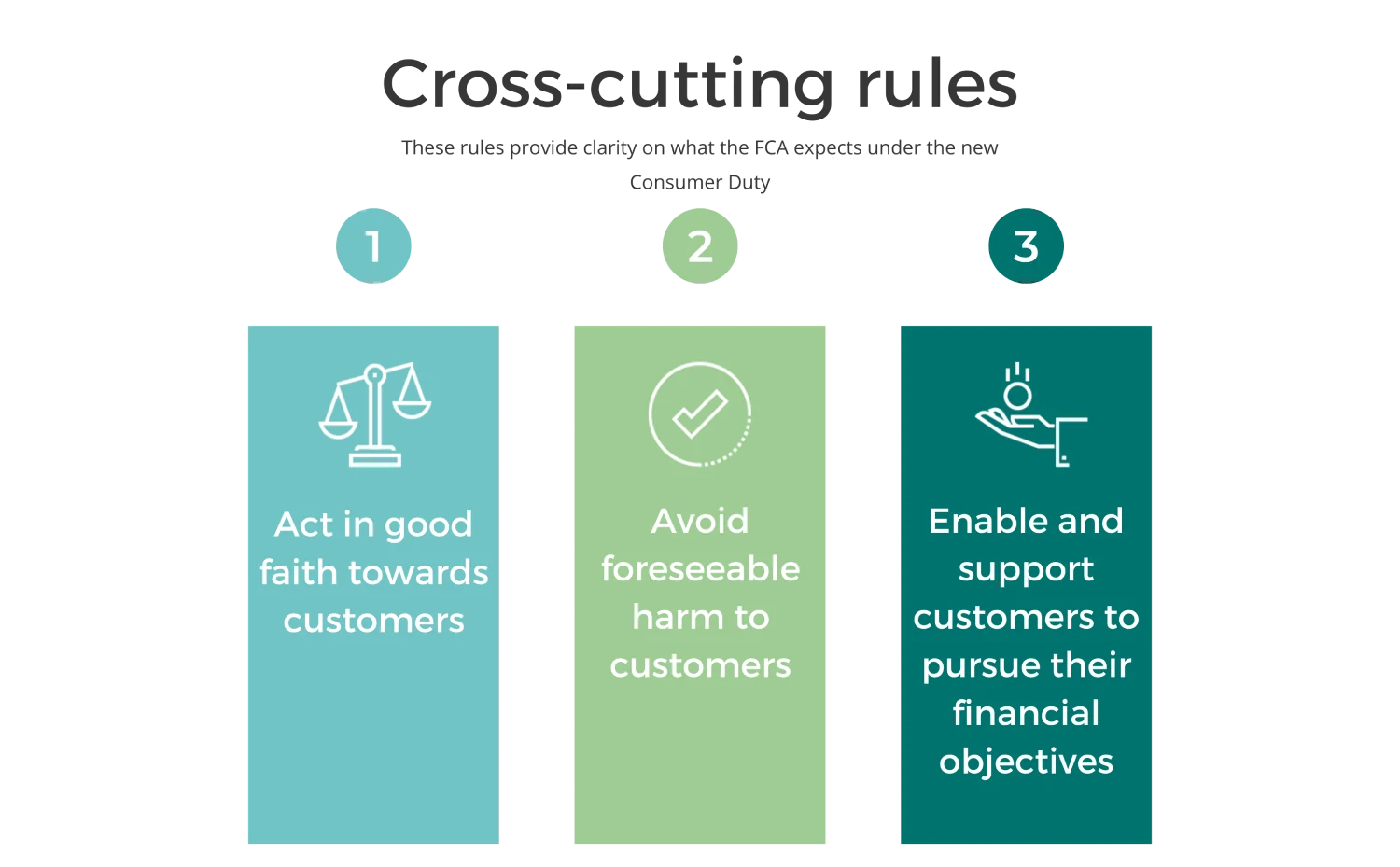
The layers can be systematised. The line between “confident” and “misleading” cannot be fully automated, and this is where experience earns its fee.
Deciding whether a claim about past performance is fairly framed for a particular audience, whether a risk warning is prominent enough given the page's emotional pull, whether a case study implies a typical result it should not — these are judgement calls a template cannot make. An AI-generated competitor article will not even flag.
A skeptical Partner will raise two objections here.
First: “We already have compliance sign-off, so this is solved.”
The Q4 2024 figure answers it — firms with sign-off still averaged dozens of corrections a quarter, because sign-off at the end cannot fix a decision made wrong at the start.
Second: “Building all this in will make our marketing bland and slow.”
The speed argument is not a promise; it is arithmetic. A firm that settled its claim, evidence and audience before design has nothing left to relitigate at sign-off — approval becomes confirmation, not investigation.
A firm that skipped those decisions discovers them at the worst moment: after the media is booked, when fixing the proposition means rebuilding the campaign.
The upstream work is not extra work. It is the same work done whether it is cheap or expensive.
The Verdict
The disclaimer is the easiest part of a financial promotion to get right and the least important to get right first.
Everything that actually causes a withdrawal — an overclaim, an unevidenced benefit, a risk buried below the fold, a promotion aimed at the wrong reader — is decided before the risk warning is written.
The FCA's own 2026 review of approvers says as much: the strong ones apply the Consumer Duty from the start. Compliance is not the wording. It is the system that produces the wording.
For a firm whose brand promise to high-net-worth clients is judgement, that reframe is a gift, because the discipline that satisfies the regulator is the same discipline that signals credibility.
Do one thing this week: take your most important live promotion and check whether its claim, evidence and audience were settled before the copy was written. If they were not, that is where your exposure lives.
If you want a structured view of where your brand is helping or hurting that credibility, request a free Brand Equity Audit™. This diagnostic identifies exactly where the brand is losing commercial ground and what to do about it.
Frequently asked questions
What counts as a financial promotion under FCA rules?
Any communication that invites or induces someone to engage in investment activity counts as a financial promotion. That includes websites, emails, social posts, adverts, brochures and third-party endorsements. The format is irrelevant; the inducement is what triggers the rules so that a single LinkedIn post can qualify.
Why does the FCA withdraw so many financial promotions?
The FCA amended or withdrew nearly 20,000 promotions from authorised firms in 2024, up from under 600 in 2021. Most failures trace to an unbalanced proposition, an unevidenced benefit, or risk warnings that are present but not prominent — problems decided before the disclaimer is written.
When should compliance be involved in a marketing campaign?
From the beginning. The FCA's May 2026 approver review found that stronger firms apply the Consumer Duty at the start of the process rather than as a final check. Involving compliance only at sign-off catches wording errors but misses the proposition and audience problems that actually cause withdrawals.
Is my firm responsible for influencer promotions of its products?
Yes — if a communication promotes your regulated products or services, it may constitute a financial promotion for which you are accountable. In April 2026, the FCA identified 1,267 illegal financial adverts that reached over 2.3 million UK accounts and pursued influencers directly, resulting in Aaron Chalmers's guilty plea.
How can a compliant promotion still persuade high-net-worth clients?
The clarity the FCA demands and the clarity that wins HNW trust are the same. A promotion that states a provable claim, balances benefit against risk, and makes the proposition genuinely understandable reads as confident and credible — the opposite of the vague, over-hedged marketing that fear produces.
What is a clone scam, and why does it matter for my brand?
A clone scam is when fraudsters use a legitimate firm's name, address, or firm reference number to appear authorised. In Q4 2024, 11% of the FCA's unauthorised-firm alerts involved clones. A distinct, consistently applied brand identity helps clients distinguish the real firm from an impersonator.