The Best Professional Services Logo Design Agency Isn’t the One With the Best Portfolio
A managing partner rings three agencies, requests portfolios, and picks the one whose work looks sharpest on screen.
Six months later, the new mark sits handsomely on the website and does nothing measurable — the same pitches are lost to the same competitors, and the fee premium the rebrand was meant to justify never materialises.
The logo was never the problem. The selection criterion was.
Professional services buyers do not choose a firm because of a logo. They choose after reducing perceived risk: are these people credible, do they understand a problem like mine, can I trust their judgement, will hiring them make me look sensible internally?
A logo contributes by creating coherent recognition and signalling fit. It cannot rescue vague positioning. The logo design agency worth your money is the one that understands this before it opens a design file — and that capability is rarely visible in a portfolio.
The stakes are commercial, not cosmetic. LinkedIn’s reporting on the 2025 Edelman–LinkedIn B2B Thought Leadership Impact Report found that more than 40% of B2B deals stall due to misaligned buying groups.
When a deal involves a general counsel, a CFO, and a procurement lead who each need to feel confident, an identity that only works in a polished brand-presentation slide is a liability, not an asset.
- Choose an agency that can diagnose what clients must believe, not one selected for portfolio aesthetics alone.
- Verify the agency can pressure-test differentiation and build an identity system that performs across proposals, reports, recruitment and partner touchpoints.
- Resolve positioning and partner alignment first; if partners disagree, it is a brand-architecture problem, not a logo project.
How to Choose a Professional Services Logo Design Agency
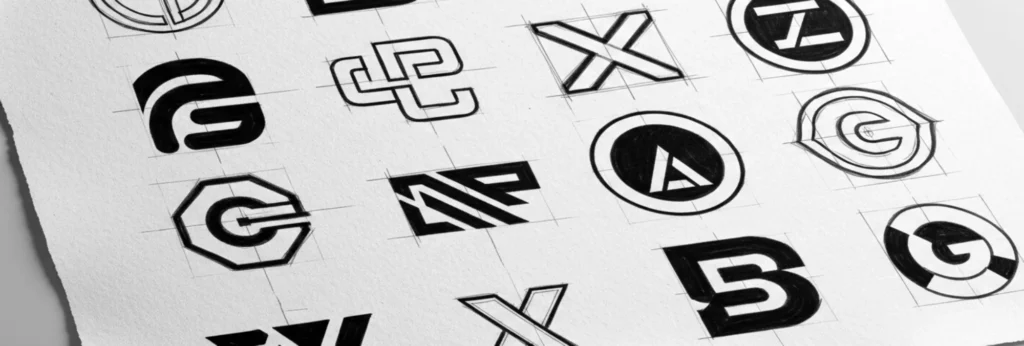
The right agency is chosen in five stages: diagnose what clients must believe before they buy, pressure-test the firm’s actual differentiation, assess the agency’s system thinking over its aesthetics, run a live brief against a real high-trust scenario, then verify the identity holds up where confidence is genuinely formed.
Aesthetic preference decides the last 5%. The first four stages decide whether the money was well spent.
- Portfolio quality is a filter, not a selection criterion — it tells you the agency can execute, not that it can diagnose.
- The agency’s diagnostic questions matter more than its design samples; listen for whether it interrogates your positioning before discussing marks.
- An identity system, not a logo, is the deliverable that earns fees across proposals, reports, recruitment, and partner activity.
A professional services logo design agency should be chosen for its ability to diagnose the client’s required beliefs and build a usable identity system, not for portfolio aesthetics alone.
What You Need in Place Before You Brief Anyone
You cannot brief an agency to fix positioning you have not defined.
The honest entry condition most guides skip: if three partners describe the firm differently in the same pitch, no logo will resolve that — it will only make the confusion look tidier.
Sort the strategic questions first, or hire an agency to sort them with you.
Two things must exist before a brief is worth writing. First, a defensible answer to why us over the firm down the road — specialism, judgement, outcomes, sector understanding, or service model. Second, internal agreement on who the firm is actually for.
Where either is missing, the project is not a logo project. It is a positioning project wearing a logo project’s clothes, and an agency that cannot tell the difference will hand you an attractive answer to the wrong brief.
This matters more in a consolidating market.
A National Bureau of Economic Research working paper published in December 2025 found that private-equity investment in accounting increased sharply after 2020, extending to both CPA-licensed audit firms and non-CPA advisory practices, particularly among large mid-tier PCAOB-registered firms.
Capstone Partners’ July 2026 accounting-services M&A update reports that sector-specific private-equity capital raised reached $12.7 billion year to date, up 16.1% year on year.
When firms merge, “we need a new logo” is frequently the visible symptom of an unresolved decision regarding the masterbrand, the endorsed brand, and legacy equity.
1 — Diagnose What Clients Must Believe Before They Buy
The first stage is not visual. It is establishing what a prospect must believe to hire the firm, because the identity’s entire job is to make those beliefs easier to earn. An agency that skips straight to mood boards has skipped the only part that determines whether the work pays off.
How to know it is done right: the agency can articulate, in a sentence, the specific belief the identity must support for your sector — “this firm handles complex cross-border disputes without drama” reads differently from “this firm is a safe, established pair of hands.” Those are different briefs producing different marks.
The failure mode here is the agency that treats every professional services firm as the same —brief, safe, blue, serif, trustworthy—and hands you the same reassuring wallpaper it handed the last three.
“A logo cannot make a firm credible. It can only make an already-credible firm easier to recognise and quicker to trust. Any agency that sells you the reverse is selling decoration and calling it strategy.”
2 — Pressure-Test the Firm’s Actual Differentiation
The second stage tests whether the differentiation you believe you have survives contact with scrutiny.
The identity system will amplify whatever positioning it sits atop; amplifying a vague position produces a louder, vaguer position. This is where a competent agency earns its fee before designing anything.
Thomson Reuters’ 2026 Future of Professionals research found that 78% of corporate clients consider AI-enabled quality improvements by professional services providers essential. Yet, only 6% say most or all of their providers currently deliver them.
That gap is a warning about capability claims generally. Brief an agency to make you “look innovative”, and you invite the client to test whether the innovation is real.
The right agency asks what has actually changed in the client experience before it attempts to express anything visually — because an identity that promises what the firm cannot evidence corrodes trust faster than a plain one ever could.
Watch what happens to the mark when it leaves the pitch deck.
A firm’s identity has to hold together on a 40-page expert report and a partner’s LinkedIn header, not just a hero image — which is where a responsive logo system built to adapt across formats either proves itself or falls apart.
Coherence across those surfaces is the test. A mark that only performs in a case-study mock-up has failed it.
3 — Assess System Thinking Over Aesthetics
This is measurable, not theoretical. Buying-group misalignment stalls more than 40% of B2B deals, per LinkedIn’s reporting on the 2025 Edelman–LinkedIn research, because different stakeholders form confidence at different touchpoints.
This is not abstract. Buying-group misalignment stalls more than 40% of B2B deals, per LinkedIn’s reporting on the 2025 Edelman–LinkedIn research, because different stakeholders form confidence at different touchpoints.
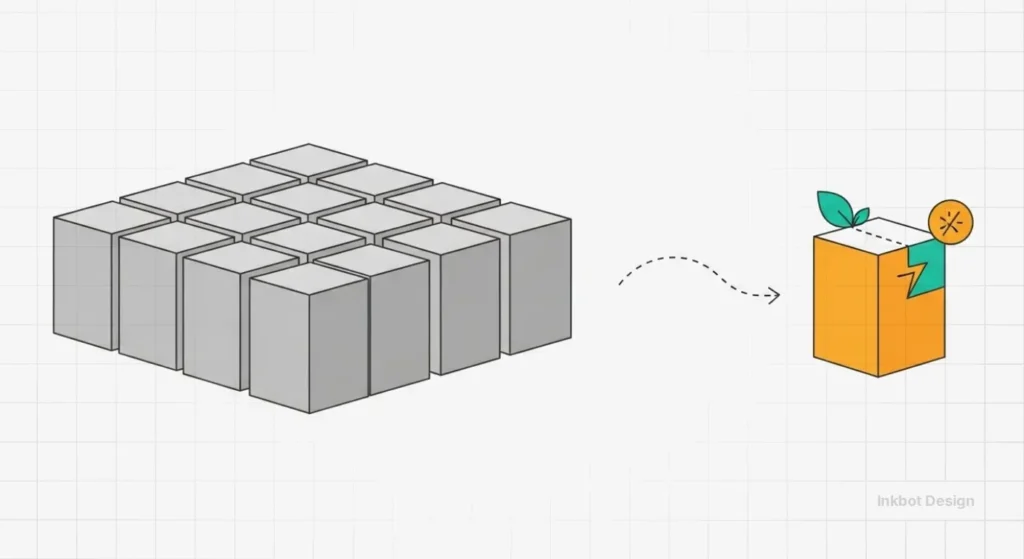
The identity has to carry credibility to all of them. Ask a prospective agency to show how an identity performs where confidence is actually formed — proposal decks, sector materials, thought-leadership content — not only on a website homepage.
How the mark behaves at the logo placement point across every client touchpoint reveals whether the agency built a system or a single pretty artefact.
The failure mode: an agency that dazzles in the pitch with three beautiful logo routes and cannot answer how the system governs a junior associate building a proposal deck at 9 pm.
That governance gap is where identities quietly disintegrate.
Where This Requires Judgement, Not a Checklist
A checklist can guide every stage above. The judgement layer cannot.
In 17 years of brand work across professional services firms, the pattern I see most often is that the decision hinges on one question a checklist never asks: can this agency tell when a logo project is really a brand-architecture project, and will it say so even though the smaller brief is the easier sale?
That diagnostic honesty is the whole game, and it is rarer than it should be, because the smaller brief is always the easier sale.
The agencies that earn repeat work are the ones willing to tell a merging firm it needs a brand-architecture decision before it needs a mark — even when that is the harder conversation.
Baker Tilly projects that the US architecture industry’s revenue will rise from about $65.2 billion in 2026 to $72.1 billion by 2030, with acquisitions a likely route to growth — more firms will face exactly this architecture-versus-logo question. They most likely will not recognise it until they have paid for the wrong answer.
A Worked Example — A Mid-Tier Litigation Practice Rebrands
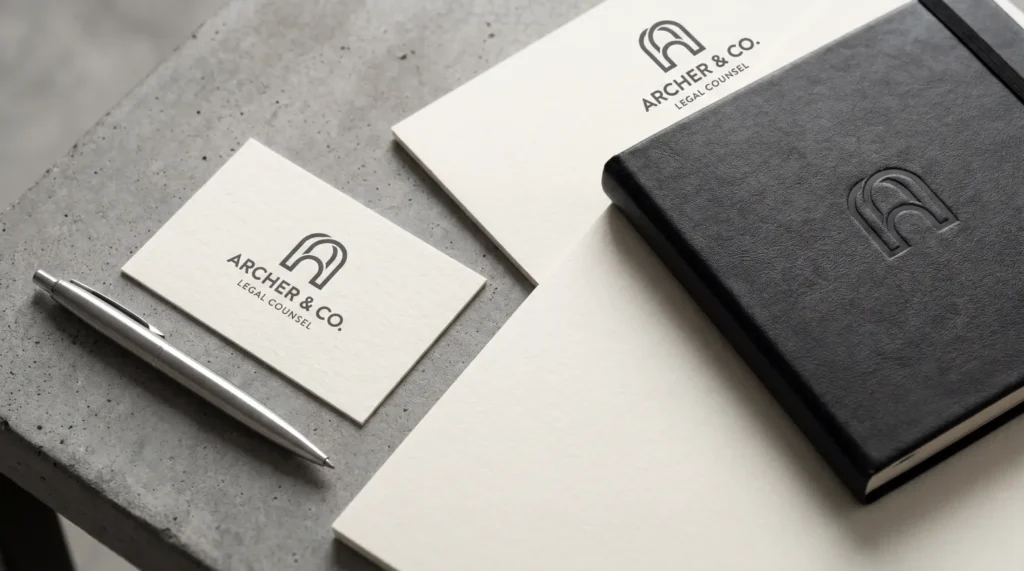
Consider a 90-partner UK litigation practice pursuing premium work after two lateral hires in cross-border disputes.
Thomson Reuters reports law-firm worked rates grew 7.4% in 2025 against 2.8% inflation, and its State of the U.S. Legal Market 2026 reports average law-firm profit growth of 13.0% in 2025. This firm wants its identity to make premium rates coherent.
Run the stages.
- Stage one: the required belief is that this firm handles high-stakes complexity without theatre — sober, precise, senior.
- Stage two: pressure testing reveals that the “cross-border” claim rests on two recent hires, not a track record, so the identity must signal capability without overclaiming.
- Stage three: the system must carry that sobriety into expert reports and pitch documents, where the deals are actually won, not merely onto a website.
The resulting logo does less visible work than the firm expects — a restrained wordmark, sober and precise.
That restraint is the point: the reasoning in stages one to three is what makes the premium coherent, and the mark’s job is only to carry it consistently.
An agency selected on portfolio aesthetics would have produced something more striking and reasoned through none of it.
The Step Everyone Does in the Wrong Order

Here is the sequence correction that the whole article has been building toward. Firms assess the logo first and the agency’s diagnostic capability last — or never.
That is precisely backwards.
The visual mark is the final 5% of the value and the first thing buyers of design instinctively judge, which is why the instinct misleads them.
Intelligent people hold the portfolio-first view for a sound reason: a portfolio is visible, comparable, and reassuring, whereas diagnostic capability is invisible until you are already working together.
You can line up three portfolios and rank them in an afternoon. You cannot rank diagnostic honesty from a website. So the rational-seeming shortcut is to judge what you can see.
The evidence says the shortcut fails. When 78% of clients value provable quality improvements and only 6% believe providers deliver them (Thomson Reuters, 2026), and when over 40% of deals stall on buying-group misalignment (Edelman–LinkedIn, 2025), the identity’s job is to reduce perceived risk across a fragmented audience — a job that depends entirely on the diagnosis nobody could see in the portfolio.
Assess agencies on the questions they ask you in the first meeting, not the logos they show you. An agency that interrogates your positioning before discussing colour is demonstrating the one capability that determines whether your investment returns anything.
“Choose the agency that asks the hardest questions about your firm before it shows you a single design. The portfolio proves it can execute. The questions prove it knows what to execute — and only one of those is worth paying a premium for.”
The Verdict
The best professional services logo design agency is not the one with the most impressive marks in its portfolio.
It is the one that can diagnose what your clients must believe before they buy, pressure-test whether your firm can actually support those beliefs, and build an identity system that makes them easier to earn across every high-trust interaction — the proposal, the expert report, the recruitment page, the partner’s LinkedIn feed.
Portfolio quality tells you an agency can execute. It tells you nothing about whether it will execute the right thing.
The market is making this more consequential, not less. Private-equity consolidation is turning logo refreshes into brand-architecture problems firms have not named. Rising fees demand identities that make a premium coherent.
A fragmented buying group means credibility has to survive contact with a dozen touchpoints, not one homepage. Every one of those pressures rewards diagnostic capability and punishes decoration.
So change what you assess. Stop ranking portfolios and start ranking the questions an agency asks you in its first meeting — because the firm that interrogates your positioning before discussing your logo is the only one demonstrating the capability your investment actually depends on.
If you want to know precisely where your current brand is losing commercial ground before you brief anyone, request a free Brand Equity Audit™. This structured diagnostic identifies where the brand is costing you deals and what to do about it.
FAQs
Why shouldn’t I choose a logo agency based on its portfolio?
A portfolio proves an agency can execute visually, not that it can diagnose what your clients must believe before they buy. For professional services firms, that diagnostic capability — invisible in any portfolio — determines whether the identity reduces buyer risk or just looks good on a homepage.
What is the difference between a logo and a brand identity system?
A logo is a single mark. A brand identity system governs how that mark, typography, colour, and layout work together across proposals, reports, recruitment, and partner content. For professional services firms, the system earns fees; the logo alone rarely does.
How much should a professional services rebrand cost?
Cost varies with scope, but the meaningful figure is what the rebrand protects or unlocks — pitch win rates, fee premiums, recruitment. A cheap logo that fails to carry credibility across touchpoints costs more than a considered system, because lost pitches dwarf design fees.
Is a logo redesign worth it for an accountancy firm?
Yes — where the firm is repositioning, merging, or pursuing premium work and its current identity undermines those beliefs. With accounting private-equity capital reaching $12.7 billion in 2026 (Capstone Partners), many firms need brand-architecture decisions that a logo redesign alone cannot resolve.
Why do professional services rebrands fail?
They fail when the firm briefs a logo before defining its positioning. The identity amplifies whatever it sits on; amplifying a vague position produces a louder vague position. The failure is almost always sequence — designing before diagnosing — not the design itself.
When should a firm rebrand rather than refresh?
A firm should rebrand when its positioning has genuinely changed — after a merger, a strategic repositioning, or a move upmarket. A refresh suits a still-accurate position that looks dated. Rebranding an unchanged position wastes money; refreshing a changed one leaves the mismatch in place.
What questions should I ask a logo design agency?
Ask what your clients must believe to hire you, how the identity will perform in a proposal versus a homepage, and whether your project is a logo project or a brand-architecture project. An agency that interrogates positioning before discussing colour is demonstrating the capability that matters.
Is it true that a better logo lets a firm charge more?
No — a logo alone does not justify a premium. A coherent identity system makes an existing rationale for premium fees — specialism, judgement, outcomes — quickly intelligible across the buyer journey. The premium comes from the substance; the identity makes the substance easier to recognise and trust.
How do I know if my project is really a brand-architecture project?
If your firm has merged, acquired, or launched new service lines, you likely face decisions about masterbrand, endorsed brands, and legacy equity before you need a mark. An agency that cannot identify these will design an attractive answer to the wrong brief.
What makes professional services branding different from other branding?
Professional services sell intangible expertise, trust, and judgement, so the identity’s job is to reduce perceived risk in a high-trust purchase. The buyer is assessing credibility and fit, not aesthetics. An identity that works only in a pitch slide fails where confidence is actually formed.
How long does a professional services rebrand take?
Timelines vary with scope, but the diagnostic and positioning work should precede design and often takes longer than the visual execution. Rushing to a logo before the strategic questions are settled is the most common reason rebrands disappoint, regardless of turnaround speed.
Should partners be involved in agency selection?
Yes — because buying-group misalignment stalls over 40% of B2B deals (Edelman–LinkedIn, 2025), and internal disagreement about the firm’s identity mirrors that risk. Involving partners early surfaces conflicting views of the firm before an agency has to reconcile them in a market.
