Specialist Consulting Branding: Sell the Risk You Reduce, Not the Service You Run
Specialist consulting branding fails when firms brand the service line instead of the decision risk their clients fear. This guide gives the ordered method that makes expertise legible, risk tangible, and buying easier for a narrow enterprise audience — so the right buyers shortlist you before a single sales conversation begins.
 By Stuart Crawford
 Reviewed by Tabitha Ayers
Updated 14 min read
On this page14 min left
- How Specialist Consulting Branding Is Achieved
- What You Need in Place Before You Start
- Stage 1 — Define the Decision Risk You Reduce
- Stage 2 — Make One Narrow Expertise Legible
- Stage 3 — Translate Expertise Into Tangible Proof
- Stage 4 — Engineer the Buying Journey to Lower Friction
- Stage 5 — The Judgement Layer: Where the Method Needs a Human
- The Sequence Error That Ruins the Result
- The £8m Regulatory-Change Consultancy
- Where This Stands Now
- The Verdict
- Frequently asked questions
A £6m change-management consultancy in Manchester lost a public-sector transformation pitch last year to a firm half its size. Same methodology. Weaker case studies.
The difference was legibility: the smaller firm's brand said, in effect, we de-risk board-level restructures under regulatory scrutiny, and the buying committee — seven people, each personally exposed if the programme failed — chose the firm that made the danger feel handled.
That is the whole game. Specialist consulting branding is not a beauty contest between capabilities. It is a contest over who makes a nervous buyer feel the downside is covered.
Most firms get this backwards. They brand the service line — strategy consulting, operational excellence, digital transformation — and wonder why the market treats them as interchangeable.
Gartner reports that 61% of B2B buyers now prefer a rep-free buying experience, which means your brand does the persuading long before a human does. If it only announces what you do, it forfeits the moment that actually decides the shortlist.
How Specialist Consulting Branding Is Achieved
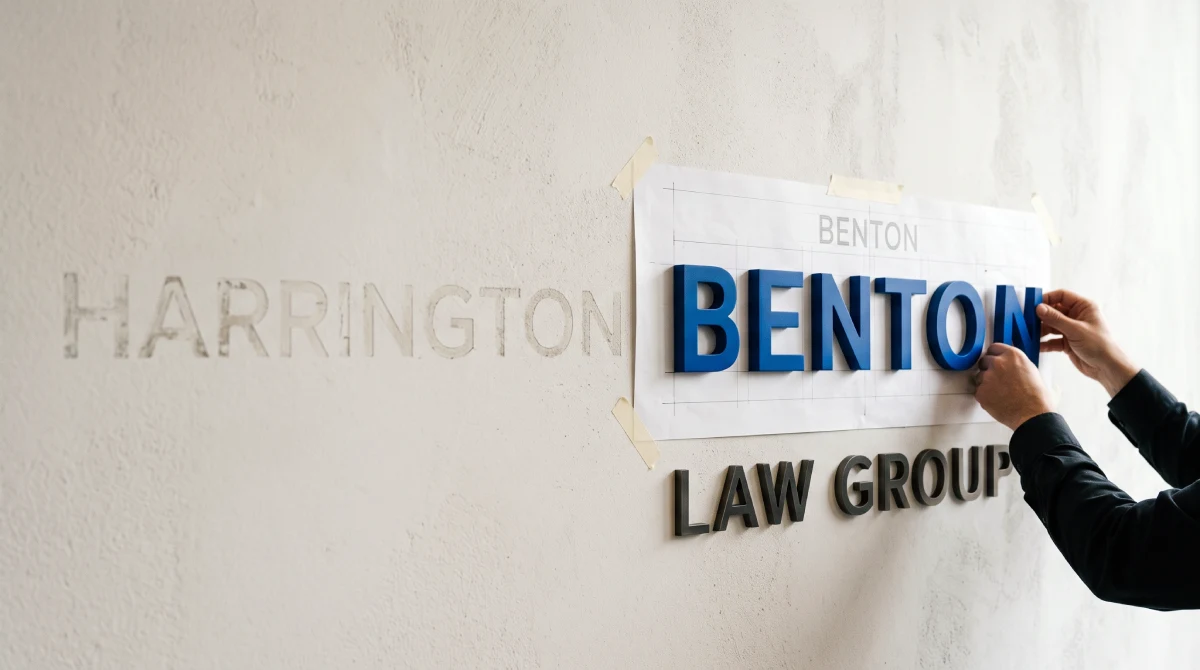
Specialist consulting branding is achieved in five stages: define the decision risk you reduce, make one narrow expertise legible, translate that expertise into tangible proof, engineer the buying journey to lower friction, and hold the position against the pull to sound broader. The sequence matters more than any single stage.
- The brand's job is to reduce perceived risk for a specific buyer facing a specific high-stakes decision.
- Legibility beats differentiation: buyers must grasp what you are best at in seconds, not admire how distinctive you sound.
- Proof and buying-friction reduction are branding functions, not sales afterthoughts.
Specialist consulting branding succeeds by making a narrow expertise legible and the client's decision risk tangible, not by sounding broader or more premium.
This sits within the wider discipline of B2B Consulting Brand Strategy, which governs how professional-services firms convert reputation into pipeline.
What You Need in Place Before You Start
You cannot brand a decision risk you have not named, and most firms skip straight to visual identity before doing this honest work. Three prerequisites hold, or the rest collapses.
First, a genuinely narrow audience. Source Global Research reports the US consulting market grew 2.9% in 2024 to $103.8bn and is forecast to rise 6% in 2025 — a growing market, but one where IBISWorld counts roughly one million management-consulting businesses in the US alone.
Broad positioning in a market that size is invisibility. You need one buyer type you understand better than any generalist can.
Second, a real point of expertise, not a claimed one. Branding cannot manufacture credibility the market will not believe. The angle only works when your firm can actually carry it under scrutiny.
Third, a named decision risk. Not “we help firms grow” but “we prevent post-merger integration failures in regulated financial services.” The narrower the risk, the more legible the brand — and the fewer buyers you fight for.
“Specialist consulting branding cannot invent expertise a firm does not have. It can only make real expertise legible faster than competitors make theirs. When a brand strains past what the market will believe, the market does not reward the ambition — it discounts the whole claim, including the parts that were true.”
Stage 1 — Define the Decision Risk You Reduce
Name the specific fear your ideal client carries into the buying decision, because that fear is what they are actually paying to remove.
A board commissioning a restructuring consultancy is not buying slides; they are buying protection against a visible, career-ending failure. Get the risk wrong and every downstream branding choice misfires.
You know this stage is done when you can complete the sentence “our clients hire us because they are afraid that ___” with something specific enough to exclude most firms. “Afraid of wasting money” fails — everyone fears that. “Afraid of a regulator-visible programme failure during a live merger” passes.
The failure mode here is branding the capability instead of the anxiety. Source Global Research found 92% of clients expect to use more outside help around risk — demand is organising itself around risk reduction, yet most consulting brands still lead with methodology.
Firms in high-stakes verticals such as aerospace and defence brand strategy understand this instinctively, because the cost of a wrong decision there is measured in more than money.
Stage 2 — Make One Narrow Expertise Legible
Reduce your expertise to a single claim a stranger could repeat accurately after one exposure, because that repeatability is what survives a buying committee's internal discussion.
When the champion who met you explains your firm to six colleagues you never meet, the brand has to travel through their words intact. If your positioning needs a paragraph, it will not survive the retelling.
This is where “stand out” advice actively harms firms. Distinctiveness prizes the clever and the unexpected; legibility prizes the instantly understood.
BCG's own revenue release shows AI and tech services now exceed 40% of BCG revenue — the largest consultancy in the world grew by making specific, legible capability claims in high-demand areas, not by sounding broadly excellent.
The done-right test: a peer outside your sector reads your homepage headline and can tell you who you are for and what danger you handle.
If they say “so you do consulting,” you have failed. The failure mode is the premium-vagueness trap — sounding elevated and expensive while communicating nothing a buyer can act on.
Stage 3 — Translate Expertise Into Tangible Proof
Convert your claimed expertise into evidence a risk-averse buyer can verify without trusting you, because trust is exactly what they do not yet extend. Named clients, specific outcomes, sector-precise case studies and third-party signals do the work that adjectives cannot.
McKinsey's 2026 AI trust research shows responsible-AI maturity is improving but remains uneven across organisations — buyers in emerging-risk categories are actively hunting for proof of governance, not assertions of it.
Proof is a branding function, not a sales-deck afterthought, because 32% of B2B buyers now use generative AI chatbots to discover vendors, according to EMARKETER — nearly level with web search and peer referral. Your proof has to be legible to a machine summarising you to a buyer you will never speak to.
You know this stage works when a sceptical prospect could rebuild your credibility case from public evidence alone. The failure mode is proof-by-adjective: “trusted,” “leading,” “proven” — words that describe nothing and convince no one who reasons for a living.
This is equally true when a firm undertakes a B2B PR agency rebranding, where credibility signals are the entire product.
Stage 4 — Engineer the Buying Journey to Lower Friction
Design the path from first contact to enquiry so a cautious buyer can advance without a sales conversation, because most of them now insist on exactly that.
Gartner's finding that 61% prefer a rep-free buying experience — rising to 75% in some of Gartner's buying research — means the brand must carry the buyer through consideration alone. Every unanswered question is a point where they leave.
Friction reduction is brand work: the clarity of your service explanation, the specificity of your case studies, the ease of understanding what happens next. A firm publishing genuine thought leadership strategy gives the rep-free buyer the material to build internal conviction before they ever raise a hand.
The stage is done when a buyer could reach “I want to talk to this firm” without you having said a word to them.
The failure mode is the gated everything — forcing a call before the buyer is ready, which the rep-free majority reads as friction and answers by choosing a firm that made it easier.
Stage 5 — The Judgement Layer: Where the Method Needs a Human

The stages above are ordered, but the calibration between them is judgement, not rote — specifically, judging how narrow to go and how far a claim can stretch before the market stops believing it. This is where experience separates from process.
In 17 years of brand work, the pattern I see most often is firms who narrow their positioning intellectually but lose nerve at execution, hedging the headline so it still technically welcomes everyone.
The judgement that cannot be systematised is the credibility ceiling: the exact point where a firm's claim outruns what its proof can carry.
Push past it and you trigger discounting — the buyer distrusts the ambitious claim and, by extension, the true ones beside it.
Firms in technically exacting fields such as structural engineering brand strategy tend to respect this ceiling, because their audiences punish overreach immediately.
The Sequence Error That Ruins the Result
Most specialist consulting branding fails for one reason: firms brand the service line before — or instead of — defining the decision risk they reduce.
They run the stages in the wrong order, starting with what they do rather than why the client is afraid, and the result is a brand that is polished, premium, and forgettable.
Intelligent practitioners hold the opposite view for a defensible reason. The “differentiate and stand out” school comes from decades of B2C marketing where attention is the scarce resource and distinctiveness wins it.
In consumer categories, being noticed is most of the battle. Consulting buyers are not scrolling; they are shortlisting under pressure, and their scarce resource is not attention but confidence. That is why the same advice inverts.
The evidence sits in how the market spends. Source Global Research's finding that 92% of clients expect more outside help around risk, and BCG's concentration of over 40% of revenue in specific high-demand services, both point the same way: money follows legible, risk-reducing specialism, not broad distinctiveness.
IBISWorld's roughly one million US consulting businesses is the backdrop — in a market that crowded, the firm that names the buyer's exact fear is the only one that gets remembered.
The firms that win specialist positioning are rarely the most distinctive. They are the most legible — the ones whose single claim survives being repeated by a champion to a committee that never met them. Distinctiveness is a designer's ambition. Legibility is a buyer's need. When they conflict, the buyer wins, and the buyer is choosing on risk.
Before you touch identity, messaging, or website, write one sentence naming the specific decision risk your ideal client fears and the specific expertise that removes it. Everything else is downstream of that sentence. If you cannot write it, you have a positioning problem no visual rebrand will solve.
Two Objections an MD Will Raise
“Narrowing costs us work we currently win.”
It costs you work you win by accident and cannot repeat. A legible risk-reducing position does not shrink your market; it makes you the obvious choice inside a defined one, where referral networks stop being your only pipeline. The £6m Manchester firm was already losing the narrow pitches — it just had not connected the loss to its broad brand.
“Our buyers are too sophisticated to be swayed by ‘branding'.”
Precisely why this works. Sophisticated buyers are risk-processing machines; they are more sensitive to overreach, not less. A brand that makes real expertise legible and refuses to overclaim is the one that survives their scrutiny. Vague premium positioning fails hardest with exactly the buyers you most want.
The £8m Regulatory-Change Consultancy
Consider a firm doing £8m in regulatory-change advisory for UK financial-services clients, winning entirely by partner referral and losing every competitive pitch to more focused rivals. Running the sequence:
- Stage 1 names the risk — boards fear a regulator-visible compliance failure during major change programmes.
- Stage 2 makes it legible — the brand claims one thing: “we prevent regulatory failure during financial-services transformation.” Not “consulting excellence.” One risk, one sentence.
- Stage 3 replaces adjectives with three named-outcome case studies and a governance track record a machine can summarise.
- Stage 4 rebuilds the site so a rep-free buyer can reach conviction alone — service clarity, sector-specific proof, an obvious next step.
- Stage 5 is the judgement call: the firm can credibly own “regulatory-change specialists” but not “the UK's leading transformation consultancy” — the second outruns its proof and would trigger discounting.
The brand holds at the believable ceiling. The pitches it was losing on legibility, it now competes on evenly.
Where This Stands Now
The buying context has shifted in ways that make legible, risk-led branding more decisive than a few years ago.
Gartner finds 61% of B2B buyers — 75% in some of Gartner's research — now prefer a rep-free buying experience, which moves the entire trust-building burden onto the brand before any human conversation. The brand is no longer the opener for the sale; increasingly, it is the sale until the final stage.
Vendor discovery is also changing shape. EMARKETER reports 32% of B2B buyers worldwide now use generative AI chatbots to find new vendors, nearly matching both web search and peer recommendation at around 33% each.
For a specialist consultancy, that raises the value of legible, extractable positioning — a brand an AI summariser can render accurately in one line is a brand that survives the new discovery layer.
The market's structure reinforces the same conclusion.
Source Global Research reports US consulting grew 2.9% to $103.8bn in 2024 with 6% forecast for 2025, while attention and spend concentrate in hyper-specialised, outcome-focused firms. BCG's over-40% revenue share in AI and tech services shows the pattern at the top of the market.
McKinsey's 2026 AI trust research — responsible-AI maturity improving but uneven — explains why: in emerging-risk categories, buyers reward firms whose brands prove governance and lower downside, not firms that merely sound advanced.
The through-line across every data point is the same. Money moves toward legible risk reduction.
The Verdict
The firms that win specialist positioning are not selling the service line printed on their homepage. They are selling the removal of a specific fear from a specific buyer's decision, and their brand exists to make that removal legible before a sales conversation ever happens.
That is the reframe this guide has argued from the first line: brand the decision risk you reduce, not the service you run.
Everything followed from it. The prerequisites forced an honest, narrow audience and a real, named risk. The five stages sequenced the work so legibility came before polish and proof came before persuasion.
The evidence — Gartner on rep-free buying, EMARKETER on AI discovery, Source Global Research and BCG on where consulting money actually concentrates — pointed consistently in one direction. Specialist consulting branding works when it makes expertise legible, risk tangible, and buying easier for a narrow audience.
It fails the moment it strains to sound broader, smarter, or more premium than the market will believe, because sophisticated buyers discount overreach and remember clarity.
The single action to take today: write the one sentence that names the decision risk your ideal client fears and the expertise that removes it.
If it takes a paragraph, it is not yet a position. If it welcomes everyone, it protects no one. When you have that sentence, and only then, the visual and verbal brand has something true to make legible.
If you want an outside read on exactly where your brand is losing commercial ground, request a free Brand Equity Audit™ — a structured written diagnostic, delivered without a sales call, that identifies where your positioning is costing you pitches and what to change first.
Frequently asked questions
What is specialist consulting branding?
Specialist consulting branding is the practice of positioning a consultancy around a narrow expertise and the specific decision risk it reduces for a defined buyer, rather than around the service line it sells. It makes expertise legible and downside feel manageable before any sales conversation begins.
Why do specialist consultancies lose pitches to smaller firms?
Smaller firms often win because their brand is more legible — it names the buyer's exact fear and the expertise that removes it. A larger firm with broader positioning reads as interchangeable to a buying committee choosing on confidence, so the clearer, narrower competitor takes the shortlist.
How is specialist consulting branding different from generic B2B branding?
Generic B2B branding optimises for differentiation and awareness. Specialist consulting branding optimises for risk reduction and legibility, because consulting buyers choose under pressure and are buying protection against a high-stakes decision, not admiring distinctiveness. The scarce resource is the buyer's confidence, not their attention.
What should a consulting brand communicate before the first sales call?
It should communicate the specific decision risk it reduces, one narrow expertise stated so plainly a stranger could repeat it, and verifiable proof through named outcomes. Gartner reports 61% of B2B buyers prefer a rep-free experience, so the brand must build conviction before any human conversation.
Is niche positioning actually better than broad positioning for consultancies?
Yes — in a market IBISWorld sizes at roughly one million US consulting businesses, broad positioning is invisibility. Narrow, risk-led positioning makes a firm the obvious choice inside a defined market. Source Global Research finds 92% of clients expect more outside help around risk, and spend concentrates in specialists.
How narrow should a consultancy's positioning be?
Narrow enough that you can name the buyer's specific fear and exclude most competitors, but not narrower than your proof can support. The test: complete “clients hire us because they fear ___” with something specific. If the sentence welcomes everyone, it is too broad to be legible.
What is the biggest mistake in specialist consulting branding?
The biggest mistake is branding the service line instead of the decision risk. Firms lead with methodology and capability when buyers are choosing on downside reduction. Running the sequence in the wrong order — polish before positioning — produces a brand that is premium, expensive-looking, and completely forgettable.
Can branding create credibility a consultancy does not yet have?
No — branding can only make real expertise legible faster than competitors make theirs. When a claim outruns what the firm's proof can carry, the market discounts the whole position, including the true parts. Sophisticated buyers are especially sensitive to overreach and punish it immediately.
How does AI vendor discovery affect specialist consulting branding?
EMARKETER reports 32% of B2B buyers now use generative AI chatbots to discover vendors, nearly matching web search and peer referral. This raises the value of legible, extractable positioning — a brand an AI tool can summarise accurately in one line survives the new discovery layer that opaque, broad positioning does not.
When should a consultancy rebrand its positioning?
When referral networks stop scaling and the firm loses competitive pitches it should win, the positioning is failing to travel. Declining win rates against more focused rivals, or interchangeability in a buying committee's mind, are the clearest signals that a firm is branding the service rather than the risk.
Does specialist positioning shrink a consultancy's market?
No — it changes which work the firm wins reliably. Broad positioning wins accidental work that cannot be repeated; narrow, risk-led positioning makes the firm the obvious choice inside a defined market and reduces dependence on referral. The market feels smaller but converts far more predictably.
How do you prove expertise without relying on adjectives?
Replace claims with evidence a sceptic can verify independently: named clients, specific measurable outcomes, sector-precise case studies, and third-party governance signals. McKinsey's 2026 AI trust research shows buyers in emerging-risk categories actively hunt for proof of governance rather than assertions, so verifiable evidence outperforms “trusted” or “leading.”