How Can Reviews and Testimonials Improve Your Marketing
Put yourself in the shoes of a customer who has to choose between two brands.
One brand has numerous positive customer reviews and testimonials, while the other does not. Which one would you choose? The brand with the most user reviews and customer testimonials, right?
Even if the product and its quality are the same, most customers tend to prefer buying from brands they can trust.
A brand with more user reviews and customer testimonials is considered more trusted. If your business has few positive reviews and testimonials or needs to learn how to collect and utilise them to your advantage, turbocharging your marketing and sales, then this article is for you.
In this article, you will learn everything you need about using reviews and testimonials to take your marketing and sales game to the next level.
- Positive reviews enhance customer trust and influence purchasing decisions.
- Social proof from testimonials boosts brand credibility and conversion rates.
- Authentic user feedback provides transparency and builds community.
- Effective use of reviews in marketing strategies increases visibility and engagement.
- Timely responses to negative reviews can mitigate reputation damage.
What are User Reviews and Testimonials?
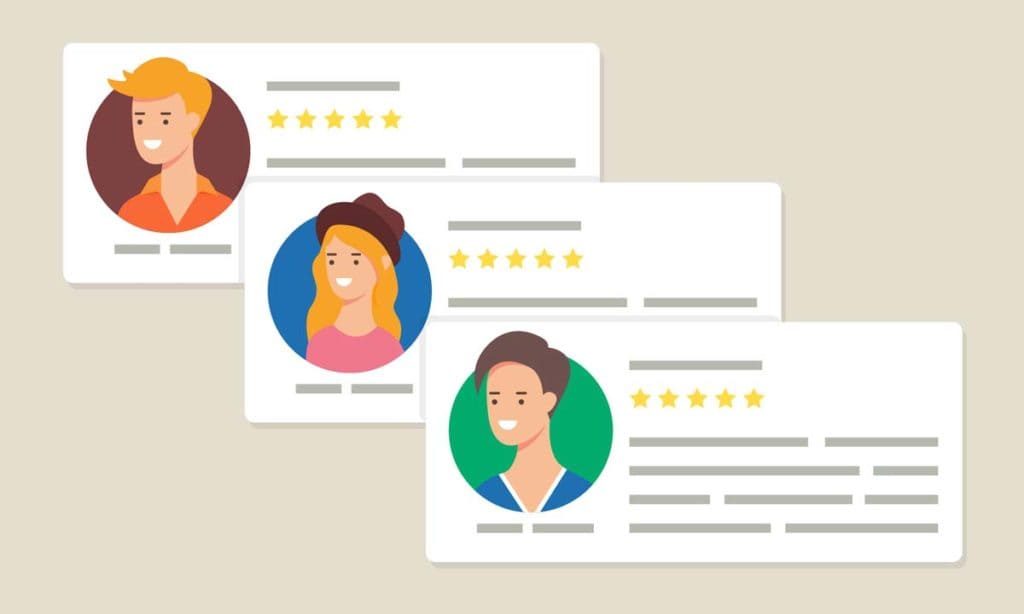
User reviews and testimonials are types of customer feedback that users share about your product and service.
User reviews are generic and informal, while customer testimonials are specific and formal and usually focus on a result the customer has achieved after using your product or service.
Why Are User Reviews Important For Marketing and Sales?
Here are some reasons user reviews and testimonials are crucial for your marketing and sales success.
- Trust
- Credibility
- Validation of claims
- Social Proof
- Increases search visibility
- Influences purchase decisions
What is Social Proof?
Social proof is a concept introduced by psychologist Robert Cialdini.
It revolves around how individuals respond in uncertain social situations.
Psychologists and mental health counsellor Dr Williams explain that social proof occurs when people find themselves in uncomfortable situations and seek guidance on acceptable behaviour from observing others.
Rather than relying on personal knowledge or intuition, individuals look to their peers for guidance on how to act.
An example cited by Dr Williams is the phenomenon of cell phone use, where individuals tend to mirror the behaviour of those around them, demonstrating the impact of social proof in shaping actions.
Social proof becomes a potent tool in marketing by capitalising on the human inclination to conform. The desire to fit in and make decisions endorsed by peers influences public behaviour and purchasing choices.
By leveraging social proof, marketers tap into the psychological need for acceptance, making it a compelling force that shapes consumer decisions and actions.
What are The Advantages of Social Proof?
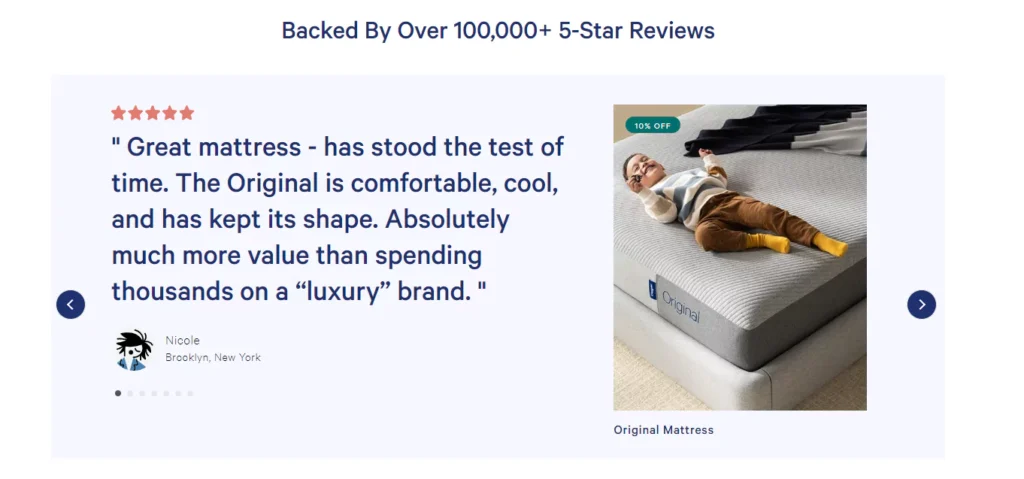
Here are some of the advantages of social proof.
1 – Boost Conversions and Sales
People are influenced by other people’s opinions, especially if they come from someone who has already used the product or service they plan to buy. It helps businesses convert more prospects into leads and leads into paying customers.
Data shows that 58% of customers are willing to pay more for a product or service with more positive reviews.
2 – Builds Credibility
Social proof, such as favourable reviews and testimonials, can boost your business’s credibility and establish your brand as a trusted business. Also, you can further enhance this credibility by incorporating strategies to embed Google reviews on the website. As a result, customers are more willing to do business with your brand.
3 – Minimises Customer Anxiety
According to research, 74% of customers say that a positive review is. It helps build trust. The direct consequence of this increase in trust is that customers are less likely to hesitate about buying from your brand and more open to making a purchase.
What are The Different Types of Social Proof?
Social proof can be categorised into three different types.
Expert Endorsements
As the name suggests, expert endorsement is all about getting approval from an expert or a credible authority in the industry.
Celebrity Endorsements
Celebrity endorsement is just like influencer marketing, where you get a celebrity on board so they can promote your product and services and share their positive experience with your brand.
User Reviews and Testimonials
This type of social proof is more geared towards providing user feedback about your products and services.
But don’t just stop there, right?
There are a few other psychological triggers you can pull.
Wisdom of the Crowd
Look, this one’s dead simple.
Big numbers are impressive.
When you see “over 1 million downloads” or “the UK’s favourite,” it screams safety.
It tells a new customer, “Listen, a massive crowd of people already took the risk, so you don’t have to.”
You’re just making the decision easier for them.
Wisdom of Your Friends
This is when you see that your mate has liked a page on Facebook or is following a brand on Instagram.
It’s a quiet, powerful endorsement.
You trust your friends’ judgment more than some random ad, don’t you?
It’s a personal recommendation without them having to say a word.
Certifications
Think of these as your badges of honour.
Got an industry award?
Slap it on the homepage.
Do you have a secure payment seal, such as Trustwave or Norton?
Show it off at checkout.
It just reassures people, telling them, “We’re legit, your money’s safe, and we know what we’re doing.”
How User Reviews Can Help You Build Trust?

Here are three ways in which user reviews can help build trust.
Authenticity and Transparency
User reviews are usually shared by real users who have experienced the product or service.
This makes user reviews more authentic, making prospects more likely to believe them. Genuine user reviews also offer transparency, as they highlight both the pros and cons of a particular product or service.
Product and Service Quality Insights
Prospects want to gather as much information about the product or service before making a purchase. They want to know about the product and service quality. User reviews can help businesses provide that to their prospects and encourage them to make a buying decision.
Community
User reviews can also give prospective buyers a sense of community. They can see that many people have already purchased the product and read about their experiences.
They can tap into the experiences other users have with your product and service and decide whether they want to buy it.
This also makes them feel like they are part of a community of hundreds of others who have made a purchase, rather than being the only person buying a product.
How Do User Reviews Influence Consumer Behaviour?
There are three main ways in which user reviews can influence consumer behaviour.
1 – Social Validation
Humans need validation for their actions. This can come in many forms, but social validation is among the most powerful. When many people have taken a particular action, it validates its credibility and gives it more social acceptance.
This also applies to purchase decisions. When a product has numerous positive user reviews, it lends it social validation, indicating that it is worth the money. This persuades prospective buyers to purchase and experience the product or service themselves.
2 – Authority
Prospects tend to think that a more authoritative brand creates a product with more positive reviews. User reviews can cement your brand’s authority in the consumer’s mind. Once they see you as an authority in your industry, they trust you more and are more likely to purchase your business.
3 – Likability
Suppose a particular product receives numerous five-star ratings and positive reviews. In that case, it automatically makes prospects believe that people like it more than a product with fewer positive reviews. This paints a positive picture of the product, with more positive user reviews and ratings in the prospects’ minds, which nudges them to make a purchase.
What Does Data Say About the Influence of User Reviews?
According to user review statistics,
- 95% of customers read reviews online before making a purchase
- 94% of customers say that they have avoided a brand due to a negative review
- 92.4% of customers said that reading a trusted review increases their likelihood of making a purchase
- 89% of customer say checking for reviews is an integral part of their buying journey
- 88% of customers who read user reviews say it influences their buying decisions.
- 49% of customers trust user reviews as much as a personal recommendation.
- 40% of users say reviews build credibility for a product
- An average user reads ten reviews before trusting a business
- One review can increase the likelihood of the user clicking the buy button by 65%
- Displaying user reviews can increase conversions by 270%
- Expensive items with reviews converted 190% better than lower-priced items.
How Do Reviews Actually Help Your SEO?
Right, so you’ve got reviews. Good.
But are they doing anything for your Google ranking?
You bet they are.
Look, Google’s job is to show people the best, most relevant results.
What’s a better signal of that than a load of happy customers talking about you?
Every time someone leaves a review, they’re writing free, keyword-rich content for your website.
They use real-person language and phrases you might not even think of.
That’s gold dust.
Then you’ve got the flashy stuff, like schema markup.
It’s a bit of code that enables the display of those little gold stars next to your listing in the search results.
Let’s be honest, who are you going to click?
The one with five stars or the one with nothing?
It’s a no-brainer.
Your click-through rate skyrockets.
And if you’re a local business?
Mate, it’s everything.
More positive reviews on your Google Business Profile can help you rise in the map pack.
Simple as that.

How do you utilise user reviews and testimonials in your marketing efforts?
Here are some ways businesses can utilise user reviews and testimonials in their marketing efforts.
1 – Website Content
Businesses can either include testimonials on the home page or have a separate page on their website for testimonials.
Some companies do both, while others incorporate user reviews and testimonials into their website copy. You can take any of these approaches based on your business needs.
2 – Social Media Campaigns
There are numerous ways to leverage user reviews on social media. You can include it in social media posts, use it as user-generated content, or make it part of a video where your satisfied customers share their positive experiences with the world.
This can boost social media reach and engagement on your branded page.
3 – Email Marketing
Incorporating user reviews into emails can be an effective way to convert your email subscribers into paying customers.
When your email subscriber reads an email with a positive user review, it automatically moves them further down the marketing funnel. As a result, they are more likely to make a purchase.
You can even send remarketing and retargeting emails that contain user reviews to those who have abandoned their cart or are still in the sales process.
How To Showcase Testimonials In Promotional Material?
Here are two ways you can use it to showcase user testimonials in your promotional materials.
1 – Case Studies
Case studies are an excellent way to demonstrate expertise, build trust and credibility and attract new customers.
By highlighting how customers benefited from your product and services and how your product and services helped your customer solve their pain points, you can easily attract new customers.
Businesses can also throw an element of storytelling into the mix, making it more enjoyable for your prospects.
2 – Success Stories
Like case studies, customer success stories can also help businesses highlight the positive aspects of their products and services. It allows them to demonstrate how their clients benefited from their service and achieved their goals.
These customer success stories make your brand stand out and improve customer satisfaction.
How Brands Are Leveraging User Reviews?
Want to see user reviews in action in real life? Here are some natural-world examples of brands leveraging user reviews to their advantage.
Molekule
Molekule converted user reviews into headlines for their website pages.
This allowed them to bring authenticity to their brand. Moreover, it makes their copy stand out and gives their website content a refreshing new look. You can also convert user reviews into images and upload them to your website, as Soylent did.

Derma E
Derma E took things to a new level by incorporating user reviews into its packaging. Their innovative approach highlighted their customer satisfaction and increased the number of user reviews.
They included the QR code at the front insert of the product and accompanied it with a user instruction guide and user reviews.
At Home
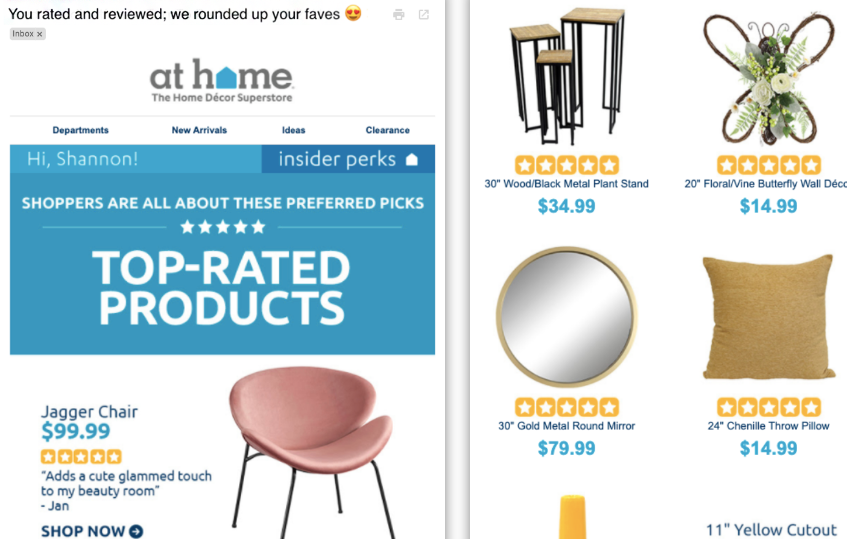
At Home integrated user reviews perfectly into their email marketing campaign. With a meticulously crafted subject line, “You rated and reviewed; we rounded up your faves”, they managed to grab the attention of their subscribers immediately.
Not only that, but it also encourages prospects to click and open their emails. When users open the email, they see their top-rated products, accompanied by star ratings and user reviews.
Healthy Choice
Healthy Choice also does a great job of featuring user reviews as social media posts.
Shindigz
Shindigz has also tried its luck by converting user reviews into Instagram story highlights.
Continental Tires
Have you run out of social media post ideas? If so, you can learn from Continental Tires, which converted its user reviews into Instagram stories.
How Do You Get More Reviews Without Begging?
The fact is, most of your satisfied customers remain quiet.
They’re busy.
It’s often the unhappy ones who find the time to shout the loudest.
You need a system to encourage the happy ones to talk.
Don’t do it manually, that’s a mug’s game.
You need to automate it.
Set up an email or SMS to be sent automatically, possibly seven days after they receive their product.
That’s a sweet spot.
They’ve had time to use it, but the initial excitement hasn’t completely worn off.
The message needs to be simple: “How are you finding it? Let us know what you think here.”
Link them directly to the review page.
No faffing about.
If you want to take your reviews seriously, consider using a service like Trustpilot, Yotpo, or PowerReviews.
They handle this for you.
They send the requests, collect the feedback, and provide you with a simple dashboard to view what’s happening.
It becomes a machine for building trust.
How To Persuade Users To Share Reviews?
Here are some ways to entice users to review your products and services.
Make It Hassle-Free
Most customers won’t bother leaving a review because it is too cumbersome to write one. You can make it easy for them by providing a review template they can follow and leave a review within minutes.
Incentivising Genuine Feedback
One of the most effective ways to encourage customers to write a review for your product is to offer them an incentive. It can be a discount code they can avail of on their next purchase or some cashback.
Feature Reviews
Users are more likely to leave a product review when they know your brand will highlight it in their marketing materials and other channels.
Provide them with the assurance that their review will be shared across multiple promotional channels, and they are more likely to comply with your review request.
How To Increase Sales With User Testimonials?
Here is how you can harness the power of user testimonials to boost your sales.
Place User Testimonials Strategically
Instead of randomly placing user testimonials on your page, place them strategically.
For instance, if a user testimonial highlights the benefit of a particular product feature, place it exactly where you have written content to highlight that specific benefit. This reinforces the point and boosts your conversion rate.
Tell Stories
You can share user reviews in the form of stories, as they can better relate to your prospects. This enables them to connect more deeply with your brand, ultimately leading to long-term customer relationships.
Use Visuals
Visual content, such as images and videos, can have a significantly greater impact than textual content. People tend to remember more of your brand message if they consume it in visual rather than textual form.
Why Are Video Testimonials a Game Changer?
Look, text testimonials are good.
But video testimonials are in a different league entirely.
You just can’t fake the look in someone’s eye when they’re genuinely explaining how your service solved a massive problem for them.
It’s raw, it’s real, and it connects on an emotional level that words on a screen can’t touch.
When a potential customer sees a real person, not a stock photo model, talking about their success, they see themselves reflected back.
They think, “If it worked for them, it can work for me.”
It just smashes through scepticism.
Plus, people would rather watch a 60-second video than read a wall of text.
Add one to your landing page and see what happens to your conversion rate.
It’s one of the highest-leverage things you can do for your marketing.
What Are Some of the Biggest Challenges In Collecting User Reviews?
Two of the biggest challenges businesses experience when it comes to user reviews are:
Fake and Biased Reviews
Businesses need help managing fake and unbiased reviews. They have little control over user reviews and depend on users’ mercy. If a user writes a biased or fake review, it can dent their business reputation, but they cannot do much about it.
Here’s a thought that sounds mental, but it’s true.
A few bad reviews can actually help you.
Think about it.
When you see a product with 500 reviews and every single one is a perfect five-star masterpiece, your nonsense detector goes off, doesn’t it?
It just looks fake.
People are smart.
They know nothing is perfect for everyone.
A couple of three or four-star reviews make the entire page of reviews look more authentic.
It shows you aren’t just deleting the feedback you don’t like.
Honestly, customers trust a 4.7-star rating far more than a perfect 5.0.
It feels real.
Besides, those negative reviews are a form of free consulting.
They are telling you exactly what’s wrong with your product or your delivery service.
Listen to them, fix the problem, and your business gets stronger.
Warren Buffett once said, “It takes 20 years to build a business reputation and 5 minutes to ruin it.”
Handling Negative Reviews
One negative review requires 40 positive reviews to nullify the impact. That’s how damaging a negative review could be for your business. 56% of customers said that a business’s response to negative reviews changed their perception of it.
Additionally, 55% of users expect companies to respond to negative customer reviews within a week. This puts businesses in the right spot as they must respond quickly and efficiently to negative reviews.
How To Respond To Negative Reviews?
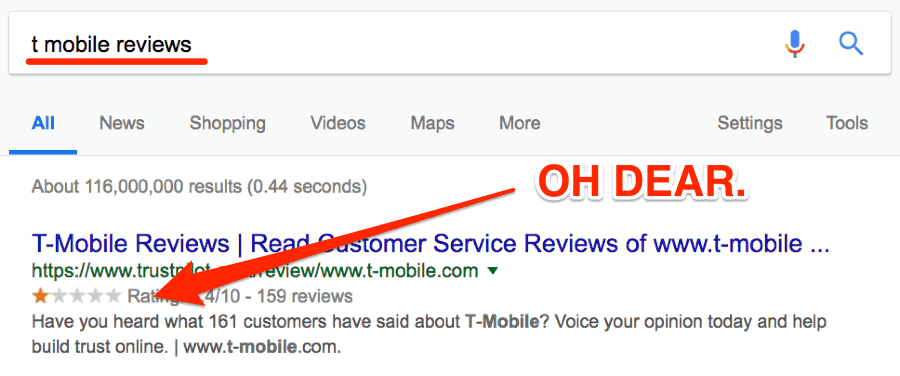
Have negative reviews? Here is how to respond to them.
Thank Customers for Highlighting Issues
If a customer has highlighted an issue in your product or service, you should thank them instead of taking it personally. Inform them about the steps you are taking to resolve the issue.
This will not only calm your frustrated customers but also demonstrate to them that your brand takes their feedback seriously and is taking steps to correct the problem.
Show Empathy
When a customer has a poor experience with your product or service, this leaves a bad taste in their mouth. You can reduce their pain by empathising with your angry customers.
Tell them that you can feel the ordeal they are going through and ensure it does not happen to anyone again. When these customers see that you care about their pain points and understand how they feel, it makes them less likely to be aggressive towards your brand.
Deliver a Personalised Response
Another mistake most businesses make is writing a generic response to every negative customer review.
This makes the situation even worse. Instead, you are better off writing a personalised and authentic response to every negative review your brand receives. Keep the response focused on the issue the user is highlighting, rather than beating around the bush.
Speed Does Matter
As mentioned, customers expect brands to respond quickly to negative user reviews. Ignoring negative reviews altogether or delaying the response can only add insult to injury.
The longer your business takes to respond to these negative reviews, the more time angry users have to vent their frustration and spread the word to others. By responding to negative user reviews promptly, you can prevent the situation from escalating.
Conclusion
User reviews and testimonials can significantly impact your business. Cheerful customer reviews and high star ratings can act as a catalyst for attracting new customers and building your brand’s credibility.
On the other hand, negative reviews can tarnish your business’s reputation. You can prevent damage by responding efficiently to these reviews.
How do you use reviews and testimonials to improve your marketing and sales efficiency? Share it with us in the comments section below.