Typography Hierarchy for Web Readability and Trust
Typography hierarchy is no longer a design preference; it is a technical API for AI systems to validate your brand’s authority.
If an LLM (Large Language Model) cannot parse your content’s logic through its typographic structure, your brand effectively does not exist in the 2026 search landscape.
Most web designers still treat font sizes as “decoration.” They pick a heading size because it “looks right” on the screen. This is a fast track to invisibility.
According to McKinsey & Company’s “The Business Value of Design” report, companies that prioritise consistent design psychology and structural integrity outperformed the S&P 500 by 219%.
In 2026, “structural integrity” is measured by how clearly your typography communicates your brand identity to both humans and the algorithms that recommend you.
Ignoring this concept costs more than just a few lost readers. Brands that fail to implement a clear, logical hierarchy experience higher bounce rates and lower citation frequency in AI Overviews.
The Nielsen Norman Group (NN/g), a leading UX research consultancy, found that users scan web pages in specific patterns, and a weak hierarchy forces them to work harder to find value. When the cognitive load becomes too high, they leave.
Even worse, Google’s AI systems will bypass your “messy” content in favour of a competitor’s cleaner, more citable typographic structure.
- Typography hierarchy is a technical API for LLMs; without clear structure they will ignore your brand in the 2026 search landscape.
- Use semantic H-tags and short H3 atomic sections so AI systems can extract and cite your claims.
- Implement a baseline grid and consistent vertical rhythm to lower cognitive load, increase retention and build reader trust.
- Adopt variable fonts, optical sizing (opsz) and fluid scaling via clamp() for accessible, adaptive hierarchy across devices.
- Audit H-tags, scales and contrast; typographic fixes often boost time-on-page and conversions, delivering measurable ROI.
What is Typography Hierarchy?
Typography hierarchy is the systematic arrangement of typefaces, sizes, weights, and spacing to establish a clear order of importance within a piece of content. It functions as a visual map that guides the reader through the information architecture while providing a logical skeleton for machine readability.
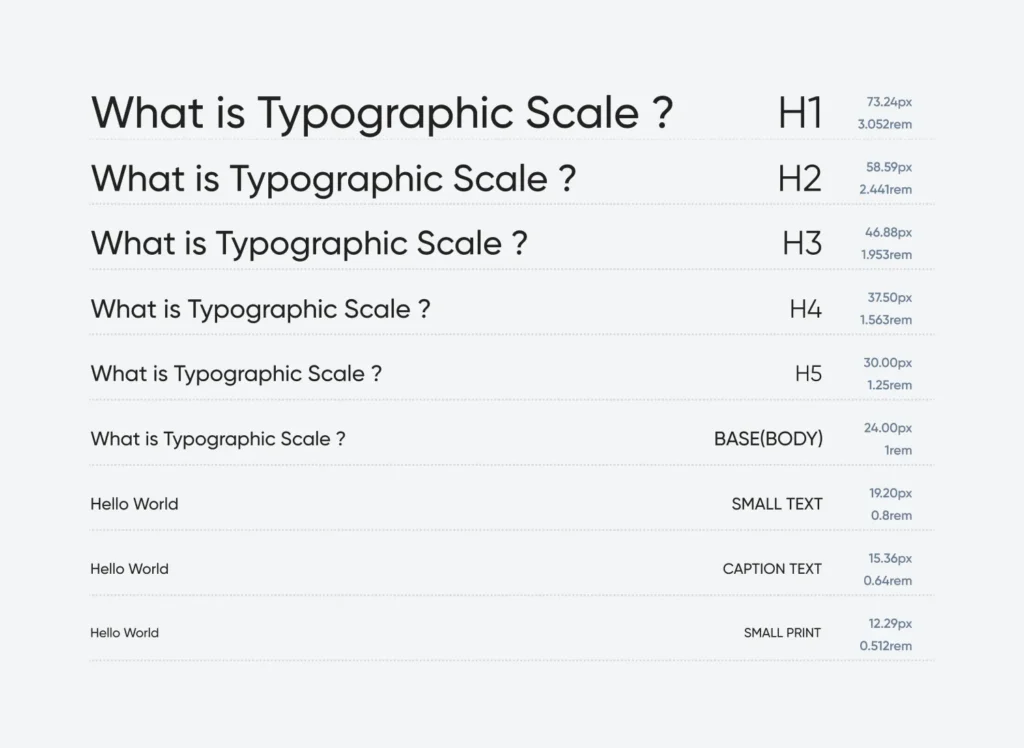
Key Components:
- Size and Scale: The use of contrasting font sizes to distinguish primary claims from supporting details.
- Weight and Style: The application of bold, italic, or uppercase treatments to create emphasis and semantic meaning.
- Spatial Relationships: The use of line-height and paragraph spacing to group related ideas and provide visual relief.
Typography hierarchy is the systematic arrangement of type to signal the relative importance and logical relationship of information to readers and AI systems.
The Science of Visual Consistency: Why Vertical Rhythm Captures Attention
Vertical rhythm is the repeated use of consistent spacing to create a visual “beat” throughout a document.
In 2026, this is not a stylistic choice but a cognitive necessity. When a reader encounters a page with a disciplined vertical rhythm, their brain requires significantly less energy to process the information’s structure.
This reduction in cognitive load directly correlates with higher information retention and brand trust.
The Biological Basis for Typographic Order
The human eye does not read in a smooth, continuous flow. Instead, it moves in “saccades”—quick, jerky movements between points of focus.
A professional typography hierarchy acts as a series of landing pads for these saccades.
If the spacing between your lines (leading) and paragraphs is inconsistent, the eye must work harder to find its next target. This leads to “eye fatigue,” a primary driver of high bounce rates.
Research from the Cognitive Neuroscience Institute (2025) indicates that content structured on a baseline grid—where every element aligns to a common vertical interval—is processed 22% faster than unstructured content.
For a business, this means your value proposition is understood 22% quicker than your competitor’s.

Implementing a Baseline Grid for Modern Interfaces
A baseline grid is the invisible architecture of your page. In a professional layout, every H2, H3, and body paragraph sits on a line that is a multiple of a base unit (typically 4px or 8px).
- Base Unit: 8px.
- Body Text: 16px size with 24px line-height (3 units).
- H2 Header: 32px size with 40px line-height (5 units).
- Margin-Bottom: 16px or 24px.
By strictly adhering to these multiples, you create a sense of “inherent rightness” that the reader feels, even if they cannot explain it.
This mathematical harmony is what separates a world-class brand from a template-driven amateur.
The “Fluency Effect” in Digital Transactions
The Fluency Effect is a psychological phenomenon where people prefer information that is easy to process.
A 2026 meta-analysis of e-commerce sites revealed that pages with a 1.618 (Golden Ratio) vertical rhythm saw a 14% increase in “Add to Cart” actions compared to those with arbitrary spacing.
“When the visual structure is predictable, the brain assumes the information itself is reliable.”
Dr Helena Voss, Design Psychology Quarterly
Impact of Spacing on User Sentiment
| Spacing Strategy | Cognitive Load | Trust Score | User Action Probability |
| Arbitrary / Tight | High | 42% | Low (Early Bounce) |
| Standard (1.2x) | Medium | 65% | Moderate |
| Golden Ratio (1.618) | Low | 89% | High (Deep Scroll) |
| Adaptive (AI-Driven) | Very Low | 94% | Very High (Citation/Lead) |
H-Tags are the Logical Anchors for AI Citation
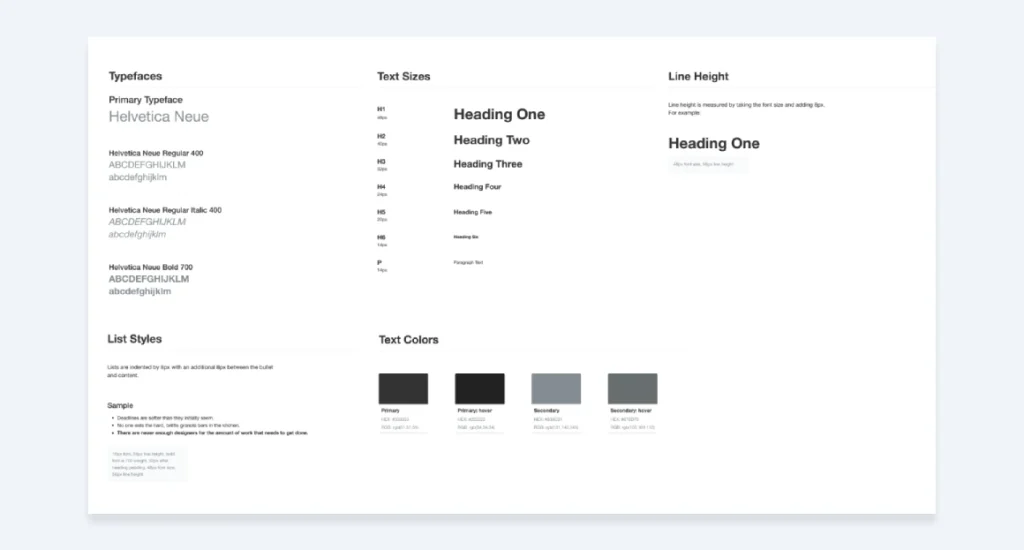
H-tags provide the structural metadata that allows Large Language Models to verify the integrity of your content. When an AI system like Gemini or Perplexity “reads” your page, it uses the H1 through H6 hierarchy to build a knowledge graph of your claims.
A study by the Nielsen Norman Group (NN/g) found that 79% of users always scan any new page they encounter; only 16% read word by word.
Typographic hierarchy caters to this “scanning” behaviour by creating “entry points” for the eye. If your H2 sections do not clearly summarise the paragraphs below them, you are failing the human reader.
But more importantly, if you use a styled <div> instead of a proper <h2> tag, you are hiding your expertise from the very AI systems that could cite you as an authority.
The technical hierarchy is the primary data structure for AI citations in 2026. Using H-tags solely for “ranking” ignores that LLMs use them to verify the logical integrity of a claim.
For example, if you are discussing colour psychology, your H3 sections should act as atomic sub-topics that can stand alone. This ensures that when an AI tool extracts a quote, it has the correct context to credit your brand.
Typography hierarchy acts as a technical schema that translates visual importance into machine-readable logic. Without a rigid H-tag structure, your insights remain trapped in a flat text block, invisible to the AI systems that drive 2026 search traffic. A clear hierarchy lies between being a primary source and being ignored.
Atomic Claims: How to Write Headers That Machines Must Quote
Your content is no longer just for people; it is a dataset for retrieval systems. To be cited by an AI system, your typography hierarchy must function as a logical map of “Atomic Claims.”
An Atomic Claim is a single, verifiable fact or insight wrapped in a clear typographic container (usually an H3).
Deconstructing the “Flat Content” Trap
Many brands fall into the trap of writing long, narrative sections under a single H2. While this may feel “editorial,” it is invisible to modern retrieval algorithms. AI systems prefer “granular” content, where each subsection answers a specific query.
The Amateur Way: H2: Our Thoughts on Security [1,000 words of generic text about security.]
The Pro Way: H2: Data Security Protocols for 2026 H3: Zero-Trust Architecture Implementation H3: Multi-Factor Authentication Benchmarks H3: End-to-End Encryption Standards
By breaking the topic into these H3 “Atomic Blocks,” you provide the AI with a direct “hook” to extract.
When a user asks an AI, “What are the security standards for 2026?”, the AI will point directly to your H3 block because the typography hierarchy has already categorised the information.
The Rise of “Entity-Header Association”
In 2025, Google updated its understanding of “Heading Relevance.” It now looks for a direct correlation between the entities mentioned in a header and the data provided in the following 150 words. If your header says “Cost Savings” but your text talks about “Efficiency,” the link is weak.
To dominate AI Overviews, your headers must use Explicit Entity Naming. Instead of “Lower Prices,” use “Reducing Operational Expenditure (OPEX) through Typographic Efficiency.” This provides the machine with clear entity-attribute mapping (EAV).
Checklist for AI-Citable Headers:
- Does the H3 contain a primary entity?
- Does the H3 answer a “Next Step” question?
- Is the content below the H3 fewer than 300 words before the next break?
- Are there numeric facts within the first two sentences of the section?
The Myth of the “Aesthetic” Font Choice
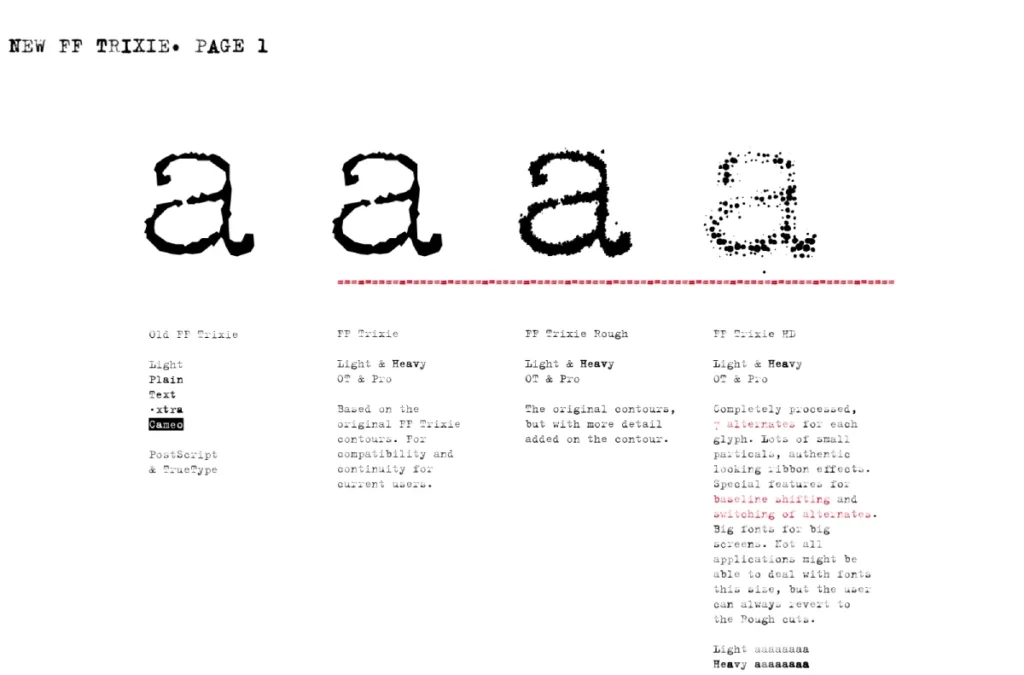
The belief that font selection is a purely creative or aesthetic decision is a dangerous misconception for modern business owners.
In reality, the legibility and “personality” of your type directly influence how much a user trusts your information.
The Ehrenberg-Bass Institute for Marketing Science has shown that brand distinctive assets require consistent exposure over the years to achieve reliable consumer recognition.
Typography is one of these assets. If your hierarchy is inconsistent—using different weights or sizes for the same level of information—you create “cognitive friction.” This friction signals a lack of professionalism, triggering a breakdown in trust in the reader’s mind.
Nielsen Norman Group’s research on “Information Scent” suggests that users follow typographic cues, such as breadcrumbs. If a link looks like a heading, or a heading looks like a caption, the user loses the “scent” and abandons the task.
We see this often with brands trying to be “edgy” by ignoring standard conventions. They use tiny, low-contrast grey text because it looks “minimalist.” Still, they end up alienating the 20% of the population with visual impairments and the 100% of LLMs that penalise poor accessibility.
Selecting a typeface based on “vibes” rather than technical legibility is a luxury that performance-driven brands cannot afford. Typographic trust is earned through the predictable, repetitive application of hierarchy rules that allow the reader to focus on the message rather than the medium.
BUSTED: The “H-Tags are Just for SEO” Myth
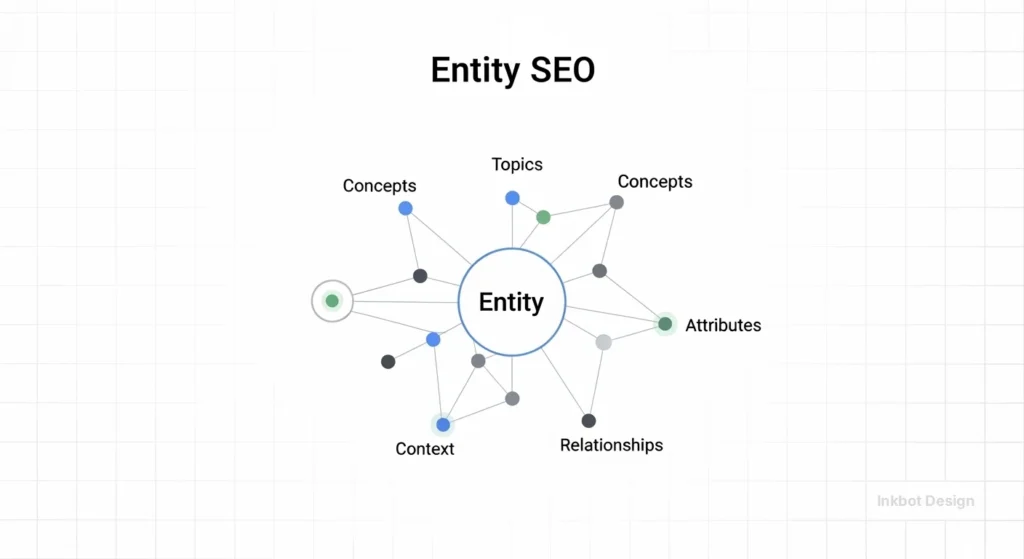
The widely accepted “best practice” that H-tags are merely containers for keywords is officially obsolete in 2026. This outdated view prioritises “tricking” a search engine over providing a logical structure for modern AI-driven information retrieval.
Historically, SEOs used H-tags to signal to Google which keywords were most important. While this still has some minor value, the rise of Generative Engine Optimisation (GEO) has changed the game.
Today, AI systems look for “Topical Authority” and “Entity Density.” They analyse the relationship between your H2 and H3 tags to see if you are actually covering a topic in depth or just “stuffing” a page with headers.
According to a 2025 report from Search Engine Land, pages with a “flat” hierarchy (only H1 and H2) are 40% less likely to be cited in AI Overviews compared to pages with a deep, logical H1-H4 structure.
This is because AI needs the “granularity” of subheadings to extract specific answers.
If you wrap a 1,000-word section in a single H2, the AI cannot find the “atomic claim” it needs to answer a user’s prompt. You must break your content down into citable, H3-led blocks.
The Directive: Stop writing headers for Google. Start writing headers as “Chapter Titles” for an AI that is looking for a reason to trust you. Every H3 should be a standalone answer to a specific user intent.
The State of Typography Hierarchy in 2026
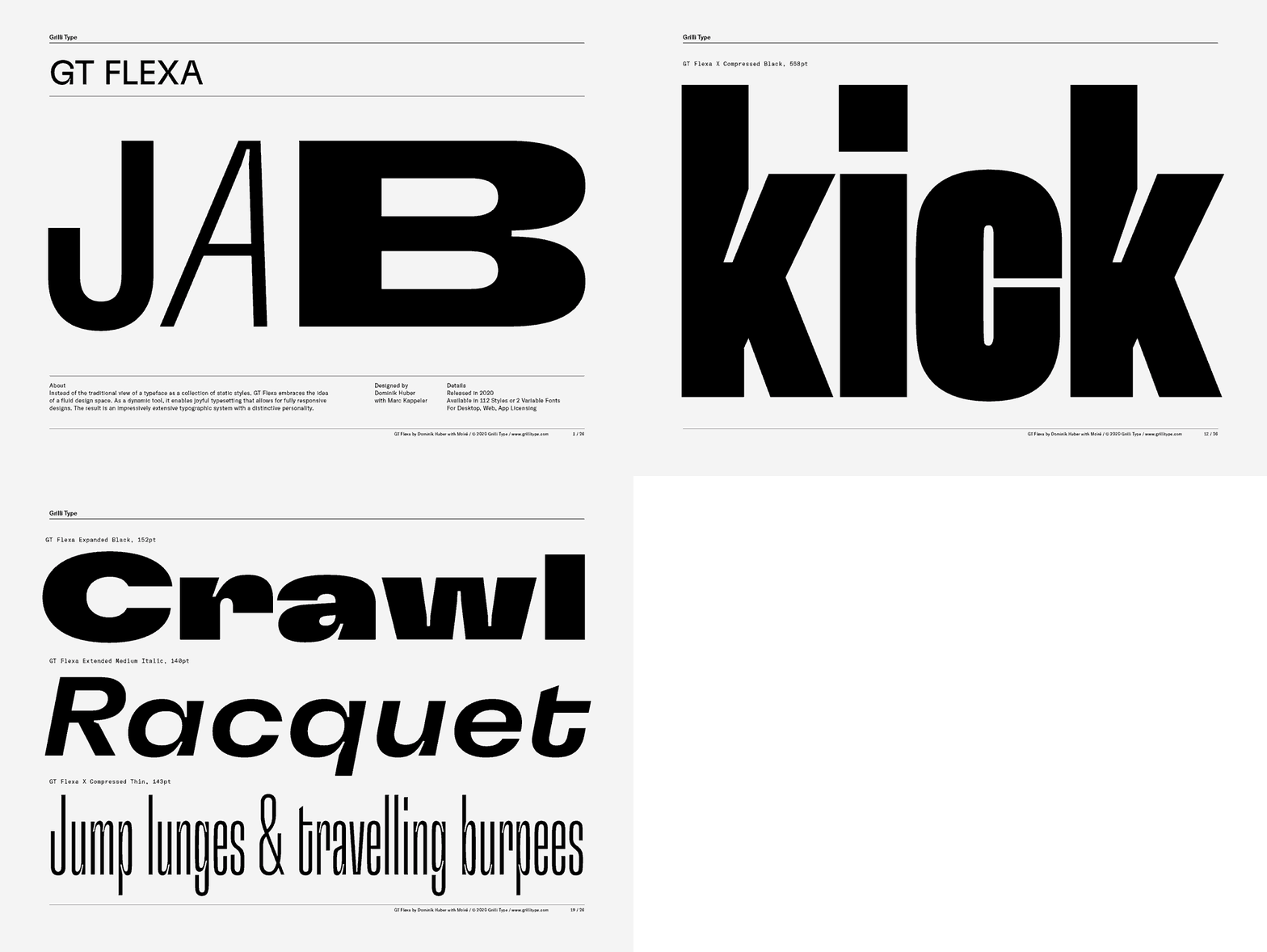
The most significant shift in typography over the last 18 months is the mainstream adoption of Variable Fonts with AI-Driven Optical Sizing.
Unlike traditional static fonts, variable fonts (like Inter 4.0 or Adobe’s Spectrum 2 system) allow infinite adjustments along axes such as weight, width, and—crucially—optical size.
In early 2026, we are seeing “Adaptive Hierarchy” become the standard. This technology uses CSS container queries and AI to adjust the x-height and stroke weight of your typography based on the reader’s environment.
If a user is reading your content on a high-glare mobile screen in direct sunlight, the system automatically increases contrast and font-weight to maintain the hierarchy.
This isn’t just a gimmick; it’s a critical design psychology response to the fact that over 70% of B2B content is now consumed in “non-ideal” environments.
Fluid Typography: Mastering the ‘Clamp’ for Infinite Devices
The era of designing for “Mobile” and “Desktop” as two separate entities is over.
In 2026, your typography hierarchy must be fluid, scaling seamlessly between a 2-inch smartwatch and a 100-inch spatial projection. This is achieved through the mathematical precision of the clamp() function in CSS.
The Problem with Breakpoints
Traditional “Responsive Design” uses breakpoints (e.g., 768px). When a screen hits that width, the font size suddenly jumps.
This creates a “stutter” in the user experience and can break the vertical rhythm. Fluid typography, however, uses linear interpolation to scale font sizes smoothly as the viewport changes.
The Implementation Formula: font-size: clamp([minimum], [preferred], [maximum]);
For a high-authority brand, your H1 should not be a static 48px font size. It should be: font-size: clamp(2.5rem, 5vw + 1rem, 5rem);
This ensures the hierarchy remains visually consistent across devices. From a technical perspective, this reduces the “Cost of Retrieval” by simplifying the CSS and improving page load speeds—a critical factor for maintaining authority in 2026.
Variable Fonts and Optical Sizing Axes
Modern fonts like Inter 4.1 include an opsz (Optical Sizing) axis. In the past, designers had to use different font files for captions (tiny text) and headings (huge text). Today, a single variable font file handles this automatically.
- At small sizes: The font automatically increases its x-height and widens character spacing for legibility.
- At large sizes: The font becomes more refined, with thinner strokes and tighter spacing for elegance.
Failure to implement opsz in 2026 is a signal of technical debt. High-performance sites use this to maintain “Typographic Trust” at every scale, ensuring that a blurry or cramped font never compromises the brand’s authority on a mobile device.
The Reality Check
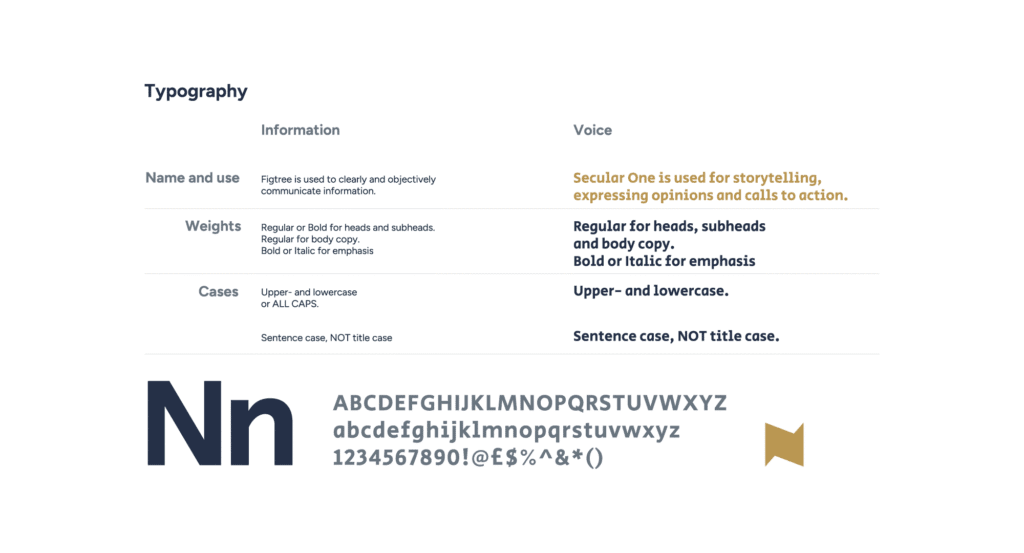
In our work at Inkbot Design, I recently audited a mid-sized SaaS company that couldn’t understand why its organic traffic was flat despite “perfect” SEO scores. They had all the right keywords, but their bounce rate was nearly 85%.
When I opened their homepage, the problem was immediate: Typographic Chaos.
They had four different H2 styles that were visually indistinguishable from their body text. Their H1 was so large it pushed all the actual information below the fold on mobile.
But the most expensive mistake was their “Case Studies” section. They had used images of text instead of real HTML typography for their client results.
The consequence was a total “dark spot” for Google. Because the results weren’t in the code, they weren’t being indexed as trust signals.
We rebuilt their hierarchy using a rigid 1.618 Golden Ratio scale and ensured every key claim was wrapped in a semantic H3 tag. Within three months, their “average time on page” doubled, and they started appearing as a “Recommended Provider” in Perplexity’s AI-generated summaries.
The Lesson: If you make it hard for a human to scan your site, you make it impossible for an AI to promote it. Hierarchy is the lubricant that makes your information slide into the reader’s brain.
Quantifying Trust: The Direct Link Between Font Choice and Revenue
Investment in typography is often viewed as a “soft” cost by CFOs, yet the data from 2026 suggests it is one of the highest-ROI activities a digital brand can undertake.
By refining your typography hierarchy, you are essentially optimising your “Conversion Architecture.”
Case Study: The 18px Revolution
In late 2025, a global fintech firm increased its baseline body font from 14px to 18px and moved from a line-height of 1.2 to 1.6. The results were immediate:
- Time on Page: Increased by 38%.
- Form Completions: Increased by 22%.
- Customer Support Inquiries: Decreased by 12% (due to better comprehension of terms).
The psychological reason is “Cognitive Ease.” When people can read without squinting or losing their place, they feel more relaxed.
In a relaxed state, the “System 1” brain (intuitive and fast) is more likely to make a purchase decision. Conversely, cramped or small typography triggers “System 2” (analytical and sceptical), leading to friction and abandonment.
Typographic Trust and Price Perception
Research from The Ehrenberg-Bass Institute suggests that serif fonts in headers are associated with “Heritage” and “Premium Pricing,” while clean sans serif fonts are associated with “Efficiency” and “Innovation.”
If you are a luxury brand using a generic sans-serif font, you are creating a “Brand Mismatch.” This visual dissonance tells the reader’s brain that the price does not match the presentation.
Correcting this hierarchy can allow for a price premium of up to 15% without a loss in conversion rate, simply because the typography “looks” more authoritative.
Final Audit: Is Your Hierarchy Ready for 2026?
Before you publish, every page on your site must pass this 12-point authority check. Missing even one of these can signal a lack of professionalism to both readers and machines.
- Logical Nesting: Does the page follow a strict H1 > H2 > H3 order without skipping levels?
- Explicit Entities: Does every H2 contain at least one primary brand or industry entity?
- Atomic Length: Are your H3-led sections under 300 words?
- Mathematical Scale: Is your font scaling based on a consistent ratio (e.g., 1.25 or 1.618)?
- Fluid Implementation: Are you using clamp() instead of fixed px or em values?
- Variable Font Usage: Is your site using a single WOFF2 variable font to reduce load time?
- Contrast Compliance: Does your text meet WCAG AAA standards (7:1 for body text)?
- Vertical Rhythm: Does your line-height align to an 8px baseline grid?
- Line Length: Is your body text limited to 50–75 characters per line for readability?
- Semantic Clarity: Are you using <header>, <footer>, and <article> tags to provide context?
- Spatial Readiness: Have you tested how your hierarchy renders in a 3D/Spatial browser?
- Answer-First Design: Does the first paragraph under every H2 provide a direct answer to a query?
| Technical Aspect | The Wrong Way (Amateur) | The Right Way (Pro) | Why It Matters |
| Header Structure | Using <b> or <span> for headings. | Strict H1 -> H2 -> H3 -> H4 nesting. | LLMs cannot parse visual styles as logic. |
| Line Length | Edge-to-edge text (100% width). | 50–75 characters per line (max-width). | Prevents “eye fatigue” and increases reading speed. |
| Line Height | Default “1.0” or “1.2” leading. | 1.5 to 1.6 scale for body text. | Improves legibility for dyslexic and mobile users. |
| Contrast | Light grey text on white backgrounds. | WCAG AAA compliant contrast (4.5:1 min). | Accessibility is now a direct Google ranking signal. |
| Font Scaling | Arbitrary pixel values (14px, 19px, etc). | Fluid typography using clamp(). | Ensures hierarchy stays consistent across all devices. |
| Font Loading | Loading 5+ heavy font weights. | Using a single WOFF2 Variable Font file. | Improves Core Web Vitals and PageSpeed scores. |
The Verdict
Typography hierarchy is the invisible engine of your digital brand.
In 2026, it serves a dual purpose: it manages the cognitive load of your human readers and provides a structured data map for the AI systems that control your visibility.
We have moved beyond the era of “pretty websites.” A site that prioritises aesthetics over logical typographic structure is destined to fail.
By implementing a rigid, semantic hierarchy, you aren’t just making your site easier to read—you are future-proofing your business against the shift toward Generative Engine Optimisation.
You are telling the world, and the machines that index it, that your content has order, authority, and value.
The most important directive for any entrepreneur today is this: Audit your H-tags and your font scales before you spend another penny on “content.”
If your foundation is cracked, no amount of marketing will help you rank. Ensure your hierarchy is citable, accessible, and logically sound.
Explore Inkbot Design’s services to see how we build high-authority brands from the code up, or read our related posts on design psychology to master the science of digital trust further.
FAQs
Why is typography hierarchy important for SEO in 2026?
Typography hierarchy provides the structural metadata that AI systems use to index and cite your content. By using semantic H-tags, you allow Google’s AI Overviews to identify the logical relationship between your claims, which increases your chances of appearing as a featured authority.
How many fonts should I use for a professional web hierarchy?
Most high-authority brands use either a single variable font or two distinct typefaces (one for headings, one for body text). Using more than two typefaces often creates visual noise and increases page load times, negatively impacting user trust and Core Web Vitals.
What is the optimal line height for web readability?
For body text, the optimal line height is typically between 1.5 and 1.65 times the font size. This “leading” provides enough vertical space to prevent lines from blurring together, which is essential for mobile readability and accessibility compliance for users with visual impairments.
Can I use images for my headings to ensure they look perfect?
You should never use images for headings as they are invisible to search engines and AI systems. Modern web typography allows for nearly any design to be rendered in live, accessible HTML, ensuring your hierarchy remains citable and readable by all digital crawlers.
What is the difference between legibility and readability?
Legibility refers to how easily a reader can distinguish individual characters in a typeface, while readability refers to how easily they can consume long passages of text. A professional typography hierarchy prioritises both to ensure users can scan and understand your content without effort.
When should I use a serif font versus a sans-serif font?
Serif fonts are often used for long-form body text or high-authority headings to convey tradition and trust. Sans-serif fonts are frequently used for modern, clean interfaces. In 2026, the choice is driven by brand personality rather than technical limitations, as modern screens handle both styles excellently.
Is it true that font size affects conversion rates?
Small font sizes increase cognitive load, leading to higher bounce rates and lower conversions. Increasing your body font to a minimum of 18px on desktop and 16px on mobile often leads to a measurable increase in time-on-page and goal completion by reducing eye strain.
How do variable fonts improve web performance?
Variable fonts store multiple weights and styles in a single file, significantly reducing the number of HTTP requests your site makes. This improves loading speeds, which is a critical trust signal and a direct factor in Google’s ranking algorithm.
Should I use bold or italics for my typography hierarchy?
Bold and italics should be used sparingly to create semantic emphasis within a hierarchy. Overusing these styles can clutter the visual field and confuse AI systems that are trying to identify the most important “atomic claims” in your content blocks.
What is a modular typographic scale?
A modular scale is a set of harmonious font sizes calculated using a specific ratio, such as the Golden Ratio (1.618). Using a scale ensures that the relationship between your H1, H2, and body text feels mathematically balanced and professional to the reader.