
Brand Guidelines Guide: Building a Brand Operating System
A £15m commercial law firm in London finished a complete brand identity update, received a slick 120-page brand guidelines document from their agency, saved the file to a shared folder, and watched their fee earners revert to using mismatched PowerPoint decks within three months.
That trajectory represents the quiet death of most corporate rebrands. When a professional services firm invests £50,000 to £150,000 in positioning, the assumption is that publishing a brand guide will secure compliance. It will not.
Static reference manuals fail because they ask busy partners, practice leaders, and marketing managers to act as full-time brand managers.
To build a firm that commands premium fees and scales predictably, you must rethink your asset infrastructure. Modern brand identity design requires an active decision-making system rather than a passive reference manual.
- Replace static PDF guides with a cloud-hosted brand operating system that embeds visual, verbal and operational rules into daily tools like PowerPoint and Word.
- Use locked templates, central DAM, automated approvals and AI guardrails to empower non-designers, remove central bottlenecks and ensure on-brand asset creation.
- Consistent, enforced brand execution speeds turnaround, reduces perceived client risk and raises revenues and tender win rates for 50 to 200 person professional services firms.
What Are Brand Guidelines?
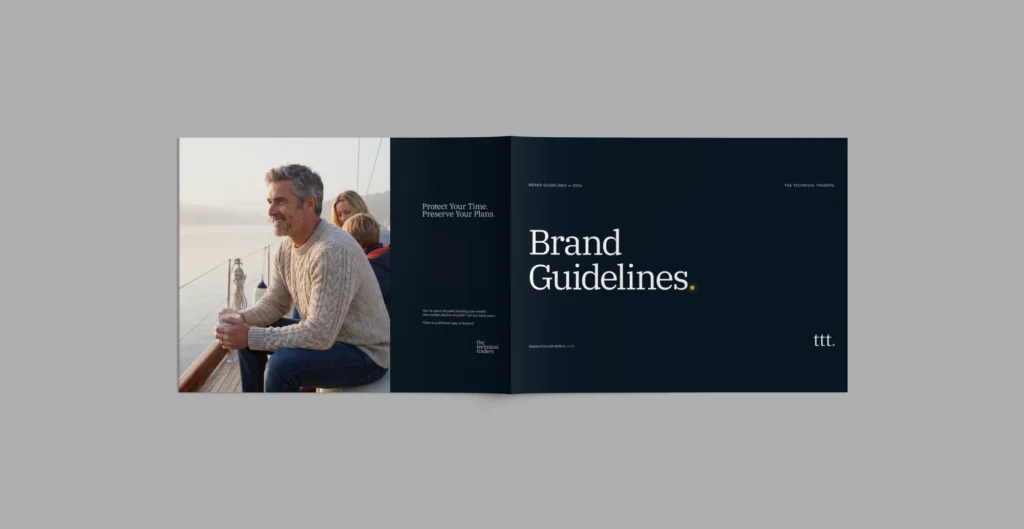
Brand guidelines are the codified operational, visual, and verbal rules that dictate how an organisation presents itself across all touchpoints. They establish clear parameters for logo usage, colour palettes, typography, tone of voice, and layout templates, ensuring consistent market execution.
Effective brand guidelines serve as a commercial risk-management system that protects brand equity and accelerates market communication.
Modern brand guidelines contain three core structural components:
- Visual Identity Standards: Exact specifications for mark placement, colour codes, typographic scales, and photographic treatments.
- Verbal Governance Frameworks: Context-specific messaging rules, terminology choices, and tone parameters for pitch decks, proposals, and thought leadership.
- Operational Asset Architecture: Digital templates, asset permission layers, and governance workflows that allow teams to create compliant assets without manual review.
Modern brand guidelines operate as an executable control layer that automates compliance, eliminates production friction, and maintains commercial authority across distributed teams.
Brand Operational System Architecture
- Logo Clearspace Rules
- Hex/RGB/CMYK Codes
- Typographic Scales
- Image Treatment Rules
- Sector Lexicon Rules
- Pitch Deck Tone Shift
- Technical vs. C-Suite Tone
- Value Proposition Blocks
- Locked Figma/Canva Templates
- Automated DAM Access
- Microsoft 365 Integration
- AI Copy System Prompts
The Commercial Stakes for 50–200 Person Professional Services
For a UK professional services business employing 50 to 200 people, brand inconsistency is not an aesthetic issue. It is a commercial leak.
When an engineering consultancy, IT management firm, or corporate accountancy expands across multiple regional offices, the primary driver of fee compression is fragmented market positioning.
According to research published by Lucidpress, consistent brand presentation across all public platforms increases company revenue by up to 23%.
When prospects encounter consistent visual and verbal authority across pitch documents, executive LinkedIn profiles, client reports, and website touchpoints, perceived risk drops. Lower perceived risk translates directly into higher win rates and reduced price sensitivity.
Data from Marq’s brand enablement research indicates that organisations maintaining rigorous brand consistency experience a 10%-20% lift in top-line revenue growth compared to competitors with fragmented market execution.
“When a firm’s visual and verbal market signals fragment, prospective clients interpret the inconsistency as operational risk. Brand guidelines are not designed to satisfy the aesthetic preferences of a marketing committee; they are engineered to eliminate perceived risk during high-ticket B2B procurement.
Consider the operational impact of asset production speed. Marq’s customer benchmarks demonstrate that moving from manual brand review processes to structured brand enablement cuts content turnaround times from weeks down to under a single day.
When a 12-partner advisory firm can generate pitch decks, proposal documents, and sector reports in hours while remaining 100% compliant with brand standards, market responsiveness becomes a clear competitive advantage.
The Anatomy of a Modern Brand Operating System
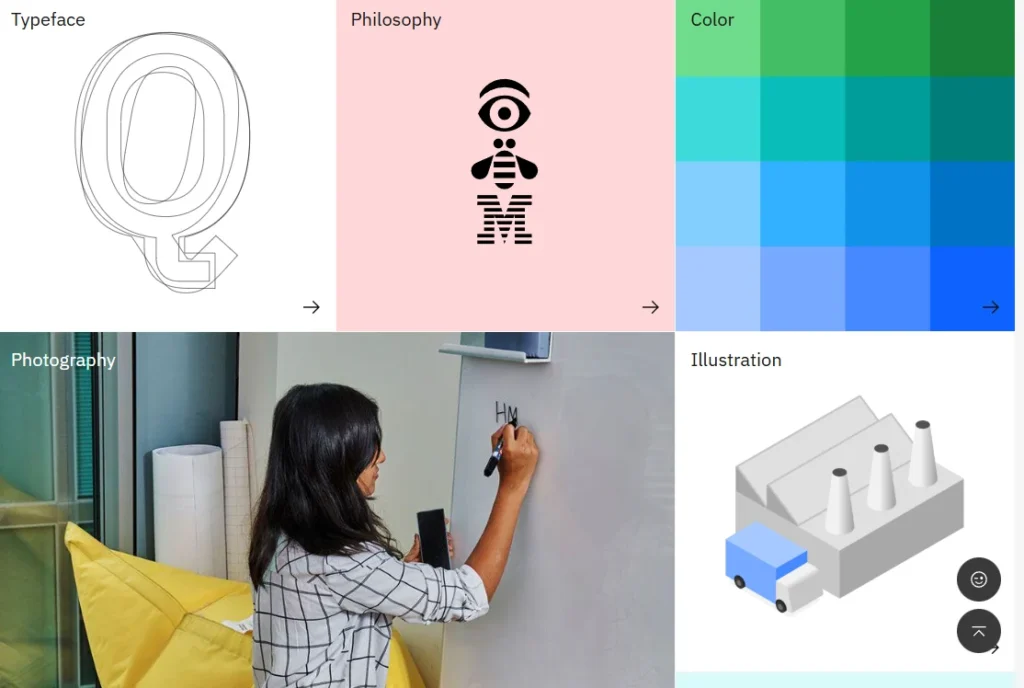
To build a brand operating system that your organisation will actually use, you must look beyond basic logo rules.
You can review real-world execution standards across our brand guidelines examples to see how high-growth firms structure their visual and verbal rules.
A complete brand operating system covers three core areas.
Visual Standards: Beyond the Vector File
Visual standards must provide clear instructions for both digital and print environments, eliminating ambiguity for non-designers.
- Logo Mechanics and Isolation Boundaries: Specify absolute minimum sizes for print and screen, clear space margins based on proportional grid units, and explicit incorrect usage examples.
- Colour Palettes with Digital Hex Coordinates: Define primary, secondary, and accent colours, along with exact Hex, RGB, CMYK, and Pantone codes. Specify strict accessibility contrast ratios to satisfy Web Content Accessibility Guidelines (WCAG 2.2) standards.
- Typographic Scales and Hierarchy Rules: Establish exact font families, line heights, letter spacing, and paragraph margins for both web applications and Microsoft Office software.
Verbal Governance: Voice, Tone, and Contextual Messaging
Verbal governance ensures that every piece of written communication sounds like it comes from the same professional authority.
- Positioning Statements and Value Propositions: Provide short-, medium-, and long-term core messaging blocks that define what the firm does, who it serves, and why its model outperforms competitors.
- Sector Lexicon and Vocabulary Rules: List mandatory terminology, forbidden buzzwords, and clear preferences for industry-specific jargon.
- Contextual Tone Matrices: Outline explicit shifts in tone depending on the medium—showing how to move from an authoritative tone in a legal whitepaper to a conversational tone on LinkedIn.
Execution Architecture: Templates, Digital Asset Management, and Guardrails
Operational execution architecture turns passive rules into daily employee habits.
- Centralised Asset Management (DAM): Store vector logos, photography libraries, icons, and approved graphics in a single, permission-controlled cloud repository.
- Self-Serve Locked Templates: Provide slide decks, proposal layouts, social graphics, and report covers built inside tools like Canva, Figma, or Microsoft PowerPoint with locked core branding elements.
- AI Generative Guardrails: Document specific system prompts, tone parameters, and review workflows for employees using AI tools to write copy or generate visual concepts.
For a deeper analysis of visual styling rules, consult our guide on building a comprehensive brand style guide.
Where Professional Services Firms Get It Wrong
The primary reason corporate rebrands fail to deliver expected returns is that management teams confuse brand documentation with brand adoption.
Professional services leaders typically make three strategic mistakes when deploying brand guidelines:
- Relying on Centralised Gatekeepers: Forcing every proposal, document, and graphic through a central marketing manager creates production bottlenecks. Fee earners bypass the bottleneck by creating off-brand assets themselves.
- Treating Guidelines as Static Artefacts: Publishing a PDF file once and storing it on a drive guarantees it will be outdated within six months as new channels and document formats emerge.
- Ignoring Microsoft 365 Integration: Most B2B employees spend their workday inside Microsoft Word and PowerPoint. If your brand guidelines only exist as Adobe Creative Cloud assets, your staff will revert to default system fonts and misaligned layouts.
Rebuilding Brand Governance for a 120-Person Consultancy
To understand how an operating system model works in practice, examine the transformation of a 120-person mid-tier management consultancy based in Manchester.
The Problem
The consultancy operated across five UK offices following a period of rapid acquisition. Pitch collateral was completely fragmented. Regional partners used outdated slide decks, inconsistent colour shades, and varying value propositions.
Producing a custom 40-page proposal required two weeks of back-and-forth edits between consultants and a single graphic designer. The firm’s win rate on competitive tenders sat at 35%, with prospect feedback citing inconsistent quality across pitch teams.
The Operational Overhaul
The consultancy abandoned its static 80-page brand guide PDF and implemented a dynamic brand infrastructure:
- Centralised Digital Brand Portal: Replaced the PDF with an accessible cloud portal that contained all asset variations, clear usage rules, and downloadable collateral.
- Native PowerPoint & Word Template Architecture: Built master decks with locked background layouts, native colour swatches, and pre-formatted typography styles accessible to all fee earners.
- Cloud DAM Integration: Deployed a central asset repository connected directly to template software, allowing non-designers to drop pre-approved case study graphics into proposals.
- Generative AI Style Guardrails: Codified clear copy prompts for internal AI tools to ensure generated report summaries matched the firm’s tone of voice.
The Commercial Result
Within four months of deploying the new operating framework, content production turnaround dropped from two weeks to four hours.
Proposal win rates increased from 35% to 48% over a 12-month period, which management attributed directly to improved pitch presentation quality and faster response times.
To explore how your business can deploy a similar execution framework, review our dedicated brand operating systems service page.
The Operating System Shift

The traditional approach to brand guidelines relies on manual policing. Design agency teams create a static document, hand it to a client, and expect employees to memorise visual and verbal rules.
This model worked when corporate marketing consisted of four print advertisements and two annual brochures. It breaks down completely in modern distributed working environments.
Modern brand governance frameworks, such as those established by Frontify, frame brand management as an active corporate business control layer rather than an aesthetic guide.
Governance is the system of workflows, permissions, and tools that maintains brand consistency while empowering non-designers to publish content independently.
Leading digital asset management platforms like Aprimo show that automated approvals, locked templates, smart fields, and automated compliance checks represent the standard for high-performing brand teams.
Non-designers should be able to self-serve content within pre-approved parameters rather than waiting on central design teams for routine edits.
| Governance Dimension | The Default Approach (Static PDF) | The Modern Approach (Operating System) | Commercial Benefit |
| Format & Access | 100-page static PDF on a shared drive | Cloud-hosted digital brand portal | 100% asset access across all teams |
| Asset Creation | The centralised design team creates all files | Staff self-serve using locked templates | Reduces turnaround from weeks to hours |
| Brand Enforcement | Manual review by marketing gatekeepers | Automated template lockouts & smart guardrails | Eliminates off-brand collateral entirely |
| Verbal Integrity | Abstract voice adjectives (e.g., “bold”) | Contextual tone matrices & AI prompt guardrails | Ensures consistent B2B pitch tone |
| System Updates | Requires costly PDF redesigns | Real-time global updates in the cloud portal | Instant alignment across regional offices |
The Verdict
Static PDF brand guidelines no longer protect brand value. Treating brand guidelines as a passive reference manual guarantees that your visual and verbal identity will fragment as your firm scales.
For a 50–200-person UK professional services business preparing for a growth phase, an acquisition, or a market repositioning, brand guidelines must serve as an operating system.
By combining cloud-hosted brand portals, locked-template architectures, automated asset permissions, and clear AI guardrails, you create an environment where non-designers can effortlessly produce compliant, high-converting assets.
The single most important action you can take today is to audit your firm’s current marketing touchpoints. Identify where fee earners are creating custom documents, where proposal decks diverge from core standards, and where manual review processes slow down sales cycles.
To identify exactly where your brand execution is losing commercial ground, request a free Brand Equity Audit™.
We provide a structured diagnostic that evaluates your brand touchpoints, flags compliance risks, and lays out a clear roadmap to turn your brand guidelines into a high-performing operating system.
FAQ
What are brand guidelines?
Brand guidelines are documented rules detailing visual, verbal, and operational standards for an organisation. They govern logo usage, colour palettes, typography, tone of voice, and templates to ensure a consistent market presentation, protect brand equity, and eliminate friction in asset production across all internal and external communication channels.
What is the difference between brand guidelines and a style guide?
Brand guidelines cover the complete identity system, including visual elements, verbal positioning, brand values, and operational template rules. A style guide is a narrower subset focused specifically on editorial standards, grammar rules, formatting conventions, and brand terminology for written content creation.
Why do traditional PDF brand guidelines fail?
Traditional PDF guidelines fail because they are static documents stored on shared drives and ignored by busy employees. They create approval bottlenecks, lack integrated templates for daily tools like PowerPoint, and require manual policing rather than offering automated guardrails that make compliant asset creation easy.
How do brand guidelines impact company revenue?
Yes — consistent brand presentation directly drives revenue growth. Research shows consistent brand presentation across platforms increases revenue by up to 23%. Consistency reduces perceived client risk, accelerates proposal creation, and enables professional services firms to command higher fee premiums in competitive tenders.
What should be included in B2B corporate brand guidelines?
B2B corporate brand guidelines must include primary and secondary logos, colour codes with accessibility standards, typographic hierarchies, core positioning statements, contextual voice rules, locked collateral templates (PowerPoint, Word, Canva), digital asset management taxonomies, and generative AI copy prompt parameters.
How often should brand guidelines be updated?
Brand guidelines should exist as a living digital system updated continuously in real time. Major structural reviews should occur annually, but cloud-hosted brand portals allow marketing teams to add new templates, collateral designs, and AI parameters instantly without distributing revised static files.
Should small to mid-sized businesses have brand guidelines?
Yes — mid-sized businesses with 50 to 200 employees require brand guidelines even more than enterprise firms. Distributed teams without dedicated internal design resources risk rapid brand fragmentation, which directly undermines market authority and inflates asset turnaround times during the pitching process.
How do you enforce brand guidelines across distributed teams?
Enforce brand guidelines by embedding them directly into daily software workflows rather than relying on manual policing. Provide self-serve, locked templates in PowerPoint, Word, and Canva, store assets in a cloud-hosted digital asset management platform, and establish clear digital approval paths.
What are AI generative brand guardrails?
AI generative brand guardrails are documented parameters, prompt structures, and voice guidelines that govern how employees use generative AI tools. They ensure AI-written copy aligns with corporate tone standards and that generated visual concepts conform to core brand rules.
How much do professional brand guidelines cost to build?
For a 50–200 person UK professional services firm, comprehensive brand guidelines built as part of an operating system typically cost between £15,000 and £45,000. This investment covers visual engineering, verbal messaging frameworks, digital template creation, and portal integration.
Can non-designers create marketing materials using brand guidelines?
Yes — a modern brand operating system is designed specifically to empower non-designers. By deploying locked templates with pre-approved layout grids, approved colour palettes, and embedded typography styles, staff can generate professional, compliant collateral without designer intervention.
How do brand guidelines speed up marketing production cycles?
Brand guidelines speed up production cycles by replacing manual design reviews with pre-approved templates and centralised asset libraries. Industry data indicates that adopting structured brand enablement tools reduces asset turnaround times from weeks to under a single day.
