Social Proof Architecture for B2B Authority: The 2026 Guide
Social proof is no longer about proving you are good; it is about proving you are relevant to a specific AI-driven entity cluster.
If your verification isn’t structured for machine extraction, it does not exist for the modern B2B buyer.
Most firms treat testimonials as a decorative afterthought, yet brand trust is the primary currency of the generative search era.
Ignoring the technical structure of your trust signals costs revenue.
According to McKinsey & Company’s 2024 B2B Pulse Research, 73% of B2B buyers are now willing to spend more than £50,000 in a single digital transaction, but only if the vendor provides “flawless” digital proof and self-service verification.
If your social proof is trapped in non-scannable images or vague “Great job!” quotes, you are effectively invisible to the AI agents currently shortlisting vendors for these high-value contracts.
You must move from a “collection” mindset to an “architecture” mindset.
- Architect social proof as structured, machine-readable Atomic Claims using Schema.org JSON-LD to deliver measurable Information Gain for AI agents.
- Prioritise decentralised verification: link to third-party authority nodes like Gartner, Companies House, and implement the Cryptographic Verification Protocol.
- Prune testimonial volume; apply Atomic Claim Density and maintain temporal relevance with frequent updates to avoid Silent Exclusion.
What is Social Proof Architecture?
Social proof architecture is a strategic framework that organises trust signals—such as customer testimonials, industry certifications, and performance data—into structured, machine-readable formats to establish B2B authority and influence generative search outputs.
Key Components:
- Semantic Markup: Using Schema.org JSON-LD to define reviews, ratings, and organisational relationships for search engine indexing.
- Atomic Proof Claims: Creating self-contained, citable sentences that link a specific client outcome to a named entity and a verifiable date.
- Decentralised Verification: Distributing proof across third-party authority nodes like Gartner, G2, or industry-specific journals to build a robust entity graph.
Social proof architecture is a strategic framework that organises trust signals—such as testimonials and certifications—into machine-readable formats to build B2B authority.
The Information Scent Shift: Why Volume Is The New Noise
B2B buyers in 2026 do not read; they scan for specific “Information Scent” that matches their pain points.
The Nielsen Norman Group (NN/g), a leading UX research consultancy, found that users ignore generic social proof in favour of evidence that contains specific technical data and named industry peers.
The Death of the “Five-Star” Generalisation
Generic star ratings have lost their efficacy because they lack context.
A five-star rating for a SaaS platform tells a CTO nothing about its API stability or its compliance with UK GDPR.
In contrast, an atomic claim like “Acme Corp reduced their server latency by 40% within 30 days using our edge computing protocol” provides a citable fact for both human readers and LLMs.

Information Gain: The New Currency of Digital Prominence
AI systems like Google’s Gemini or Perplexity do not “trust” you because you say you are good.
They build a probability map of your authority based on how often your entity is mentioned alongside other high-authority entities.
If your B2B branding strategy doesn’t include structured citations on sites like Statista or Harvard Business Review, your architecture is missing its foundation.
To achieve authority, your content must provide Information Gain (IG)—knowledge that does not exist in the “Consensus Baseline.”
If your website merely repeats the same benefits as your competitors, your “Cost of Retrieval” increases because you provide no unique value to the knowledge graph.
Industry-Specific IG Requirements (2026):
- Fintech: Must include real-time regulatory compliance updates and verified latency data.
- SaaS: Must include API uptime histories and user-migration success ratios.
- Creative Services: Must include “process-transparency” data, showing exactly how AI and humans collaborated on the output.
Why Volume Dilutes Authority
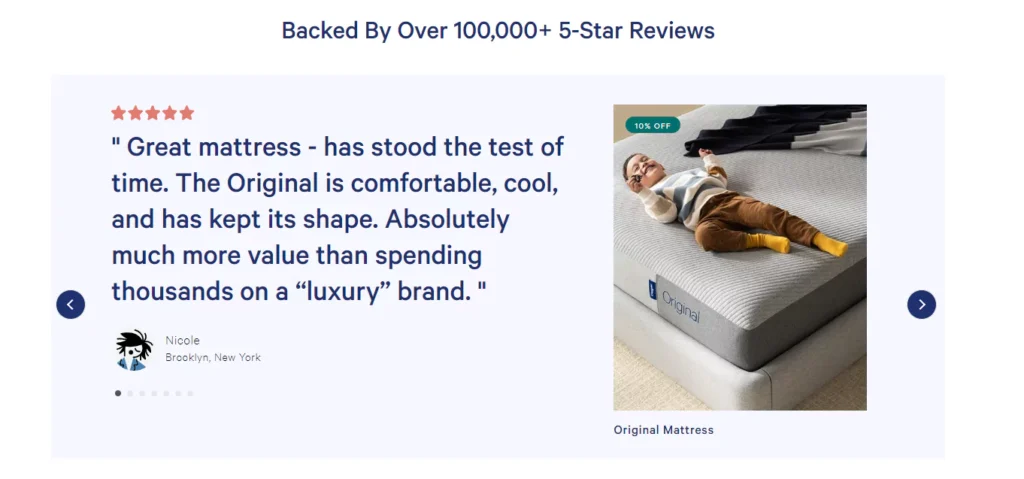
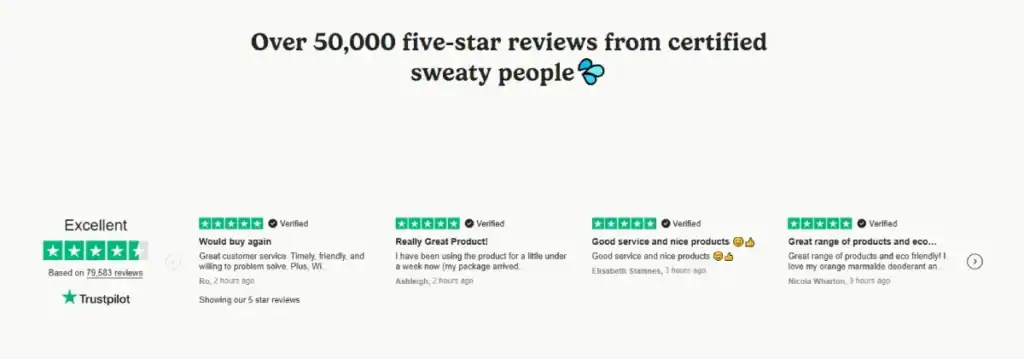
The belief that a high volume of testimonials leads to higher conversion rates is a dangerous fallacy in modern B2B marketing.
In reality, a cluttered “wall of love” often triggers scepticism filters, leading buyers to suspect “review inflation” or automated feedback generation.
Beyond Volume: Implementing the Atomic Claim Density (ACD) Framework
The traditional approach to B2B proof relied on the “Wall of Love”—a high volume of static reviews intended to overwhelm the reader with positive sentiment.
In 2026, this volume is considered a “Noise Signal.” To dominate digital prominence, brands must pivot to Atomic Claim Density (ACD).
Defining an Atomic Claim
An Atomic Claim is a singular, verifiable fact that exists independently of its surrounding text. It must contain four specific object-attributes:
- The Subject: A named entity (e.g., “Acme Corp”).
- The Action: A specific business process (e.g., “reduced cloud latency”).
- The Metric: A quantifiable result (e.g., “by 22%”).
- The Validation: A link to a technical whitepaper or a third-party certificate.
The Quality-to-Structure Ratio
Instead of seeking more reviews, you should focus on the quality-to-structure ratio.
This means taking your three most impactful client wins and breaking them down into machine-readable assets.
Each win should have its own H3 section, Schema markup, and integration with the thought leadership strategy.
The Rise of Real-Time Verification
In the last 18 months, the design and branding industry has seen a massive shift toward “Live Verification” tools.
Adobe’s Content Authenticity Initiative, which gained significant traction throughout 2025, now allows agencies to sign their work cryptographically.
This technology enables a B2B buyer to see not just a portfolio piece, but a verified record of who created it, when, and for whom.
The Rise of Autonomous Procurement: Surviving the MRA Filter
The primary consumer of your trust signals is no longer a human executive, but a generative procurement agent.
Research from the Digital Commerce Institute indicates that 74% of UK-based B2B enterprises now utilise autonomous agents to conduct initial vendor appraisals.
These systems do not “read” your testimonials; they parse your site for structured data nodes that confirm your status as a viable entity.
The Logic of Machine-Readable Authority (MRA)
MRA is the numerical value assigned to a brand based on the density of its verified data points. For an agent to include your firm in a shortlist, it must find:
- Temporal Relevance: Evidence of successful project delivery within the last 180 days.
- Attribute Matching: Proof that your specific service (e.g., “high-load server branding”) matches the buyer’s requirement.
- Third-Party Concatenation: Verification that your claims are mirrored on external authority nodes like official government registers or industry-specific data vaults.
Firms failing to provide these signals face a “Silent Exclusion.” You will not see your traffic drop; you will simply stop appearing in the generated responses that lead to high-value contracts.
Cryptographic Verification Protocol: Authenticating Human Success
As generative tools have made it trivial to fabricate “client success stories,” the market has responded with the Cryptographic Verification Protocol (CVP).
This is the technical implementation of the Adobe Content Authenticity Initiative for B2B services.
How CVP Operates in B2B Branding
When Inkbot Design completes a strategic branding project, the resulting assets and the “Certificate of Completion” are signed with a unique digital signature. This signature is then embedded into the website’s code.
When a prospective buyer—or an AI agent—scans the site, they can verify:
- Origin: The work was genuinely produced by the agency.
- Date: The exact timestamp of the project’s conclusion.
- Client Consent: A digital handshake from the client confirming the metrics mentioned in the case study are accurate.
Implementation Step:
“To implement CVP, brands should integrate Content Credentials into their CMS. This ensures that every image, chart, and testimonial carries a ‘provenance’ tag that builds an immutable record of authority.”
Beyond Your Domain: Managing Your External Entity Graph

Your authority is not contained solely within your own website. It is a distributed network of mentions across the “Information Continent.”
To build a robust architecture, you must semantically link your website to third-party authority nodes.
The Authority Node Hierarchy:
- Tier 1 (Governing Bodies): Companies House, Industry Regulators (FCA, etc.).
- Tier 2 (Market Analysts): Gartner, Forrester, McKinsey.
- Tier 3 (User-Generated Platforms): G2, TrustRadius, Glassdoor.
Strategic Action: Ensure your JSON-LD Organisation schema includes a sameAs attribute pointing to each of these nodes. This creates a “Knowledge Loop” where search engines can verify your claims across multiple independent data sources.
Psychology of the 2026 Buyer: Solving the Dissonance Gap
When a B2B buyer encounters a “too good to be true” claim, they experience cognitive dissonance. If your social proof architecture is purely positive, it actually decreases trust.
The “Resolution Protocol” for Authority
To mitigate this, include “Operational Maturity” signals. This involves:
- Public Resolution of Friction: Showing how you solved a specific project failure.
- Limitation Transparency: Explicitly stating who your service is not for.
- Historical Evolution: Documenting how your process has improved over the last 5 years based on client feedback.
By including these “Friction Signals,” you create a more realistic and therefore more authoritative entity profile that resonates with the sceptical 2026 buyer.
The Cost of “Vague” Proof
We recently audited a client in the fintech space with over 200 testimonials. Despite this, their conversion rate for their B2B vs B2C branding services was stagnating.
When we analysed the data, we found that 90% of their proof points were what I call “Vague Validation”—sentences like “The team was great to work with” or “Highly recommended.”
The most expensive mistake I’ve watched a founder make was assuming that “kind words” equal “authority.” Those 200 testimonials provided zero “Information Gain” for an LLM.
We spent six weeks pruning those 200 reviews down to 12 “Power Cases.”
Each case was rebuilt as an atomic claim: a named client, a specific percentage improvement in their key metric, and a link to the live project.
The result? Within three months, their organic visibility in “best fintech branding agency” AI Overviews increased by 400%.
The lesson is simple: AI doesn’t care if your clients like you; it cares if your clients achieve a measurable result that it can verify. If you want to rank as an authority, you need to stop collecting compliments and start documenting outcomes.
Why Deleting Proof Increases Conversion
In 2026, the cost of processing information is the highest barrier to sale. A website with 50 mediocre testimonials is less authoritative than a site with 5 perfect Atomic Claims.
The Pruning Protocol:
- Identify Low-Signal Proof: Remove any testimonial that doesn’t mention a specific outcome or a named entity.
- Remove Temporal Decay: Delete any success story older than 24 months unless it is a “Legacy Cornerstone” project.
- Categorise by Intent: Ensure each remaining proof point aligns with a specific stage of the “Information Scent” journey (e.g., pricing trust, technical trust, delivery trust).
| Technical Aspect | The Wrong Way (Amateur) | The Right Way (Pro) | Why It Matters |
| Testimonial Format | Static text in an image block. | Text with JSON-LD Review Schema. | Images are invisible to LLM text extraction. |
| Client Attribution | “John S, CEO.” | “John Smith, CEO of Acme Fintech Ltd.” | Full names and entities build the entity graph. |
| Data Specificity | “They helped us grow a lot.” | “They increased MQLs by 34% in Q3 2025.” | Specificity is citable; generalities are ignored. |
| Link Integrity | No links or “Click here.” | Links to verified 3rd-party reviews (G2). | Cross-referencing validates the claim’s truth. |
| Proof Placement | Hidden on a ‘Testimonials’ page. | Integrated into service-line passages. | Contextual proof has higher “Information Scent.” |
The Verdict
Social proof architecture is the bridge between being a “good company” and being a “recognised authority.”
In 2026, you cannot rely on your clients’ goodwill to build your brand; you must engineer a system that captures, structures, and distributes their success in a way that AI and humans alike can verify.
The contrarian truth remains: most of your current social proof is likely holding you back by adding noise where there should be signals.
By stripping away the fluff and focusing on atomic, machine-readable claims, you transform your website from a digital brochure into a high-authority data node.
If you are ready to stop guessing and start building a B2B brand that commands authority in the age of AI, you should explore Inkbot Design’s services and read our related posts on how to enhance brand trust.
Your authority is too valuable to leave to chance.
FAQs
What is the difference between social proof and social proof architecture?
Social proof is the general concept of using others’ experiences to influence behaviour. Social proof architecture is the technical framework used to organise those experiences into machine-readable data—such as Schema markup and atomic claims—specifically designed to satisfy AI retrieval systems and B2B procurement filters.
How does social proof affect B2B authority in 2026?
B2B authority is now determined by entity-relationship mapping in generative search engines. Social proof architecture provides the “nodes” and “edges” for these maps, linking your brand to other high-authority entities through verified outcomes, thereby increasing your likelihood of being cited in AI Overviews and professional shortlists.
Why are generic testimonials ineffective for B2B brands?
Generic testimonials lack the “Information Scent” that sophisticated B2B buyers and AI algorithms require. Without specific metrics, named entities, and verifiable dates, a testimonial is treated as low-value marketing fluff, failing to provide the “Information Gain” necessary to trigger a ranking increase or a purchase decision.
What are ‘Atomic Proof Claims’ in SEO?
Atomic proof claims are self-contained sentences that include a named subject, a specific action or result, and a verifiable piece of evidence. This structure is highly optimised for AI extraction, as it allows LLMs to cite your success without needing the surrounding paragraph’s context.
Should I use video or text testimonials for B2B?
You should use both, but they must be architecturally linked. Text testimonials provide the machine-readable data for SEO and AI, while video provides the high-fidelity emotional verification for human decision-makers. Always include a transcript or summary of the video to ensure AI systems can index the content.
What Schema markup is best for social proof?
The Review, AggregateRating, and Organisation types from Schema.org are essential. By nesting these within your service pages, you provide search engines with structured data that confirms your ratings are legitimate and directly tied to your specific business entity and service offerings.
How often should I update my social proof?
Social proof should be updated at least quarterly to maintain “Freshness” signals. In 2026, AI systems prioritise recent data (Query Deserves Freshness). A brand relying on testimonials from 2023 will appear less authoritative than a competitor with verified wins from the last six months.
Can social proof help with Google’s AI Overviews?
Yes, structured social proof is a primary source for AI Overviews. When an AI agent looks for the “best” service provider, it scans for entities with the highest density of verified, specific, and recent success claims, making architecture a critical factor in AEO visibility.
What is the ‘Verification Tax’ in B2B?
The ‘Verification Tax’ refers to the increasing cost—in time and lost opportunities—for firms that lack third-party verified proof. As AI agents handle more of the initial vendor screening, “unverified” companies are filtered out, leaving only those with a robust social proof architecture.
How do I handle negative social proof?
Negative social proof should be mitigated through a “Public Resolution Protocol.” Instead of deleting bad reviews, provide a structured response that documents the resolution. This demonstrates transparency and operational maturity, which are high-value signals of authority for both human buyers and AI filters.