Renaming a Company Without Losing What Clients Trust
Renaming a company starts with deciding what customers must still recognise and experience afterwards. Preserve the behaviour that earns trust, transfer useful recognition cues, and retire heritage that serves only internal attachment. This guide gives professional services leaders a practical framework for choosing a name and managing the change responsibly.
 By Stuart Crawford
 Reviewed by Tabitha Ayers
12 min read

On this page12 min left
- How do you rename a company without losing what matters?
- Do you actually need a new company name?
- What are the legal and regulatory steps for renaming a UK company?
- Can we grow beyond the founder without becoming impersonal?
- How do we sound established without sounding generic?
- Preserve the promise; prove the continuity
- Questions people ask
Before commissioning a list of words, decide what clients must still be able to rely on after the old name disappears.
A new name cannot compensate for weaker service, nor does keeping a founder’s surname prove that a relationship remains personal.
When firms work with Inkbot Design on brand positioning and identity architecture, the starting brief is always what the business must preserve and what the current name actively prevents:
- Keep trusted behaviours: Protect the partner access, review standards, and responsiveness clients actually buy.
- Bridge useful recognition signals: Carry over visual, verbal, or structural cues that help existing clients and referrers verify continuity.
- Retire unsupported attachments: Move founder nostalgia or legacy labels out of the foreground when evidence shows they no longer aid client confidence.
Established names can be replaced deliberately. Aviva’s 2008–2010 migration from legacy brands, including Norwich Union, was delivered on time and under budget, according to a historical case study published by WARC.
That case documents a disciplined transition, not proof that a name change alone improves commercial performance.
If you need a brand naming agency, the useful starting brief is what the business must preserve and what the current name prevents. A list of words comes later.
How do you rename a company without losing what matters?
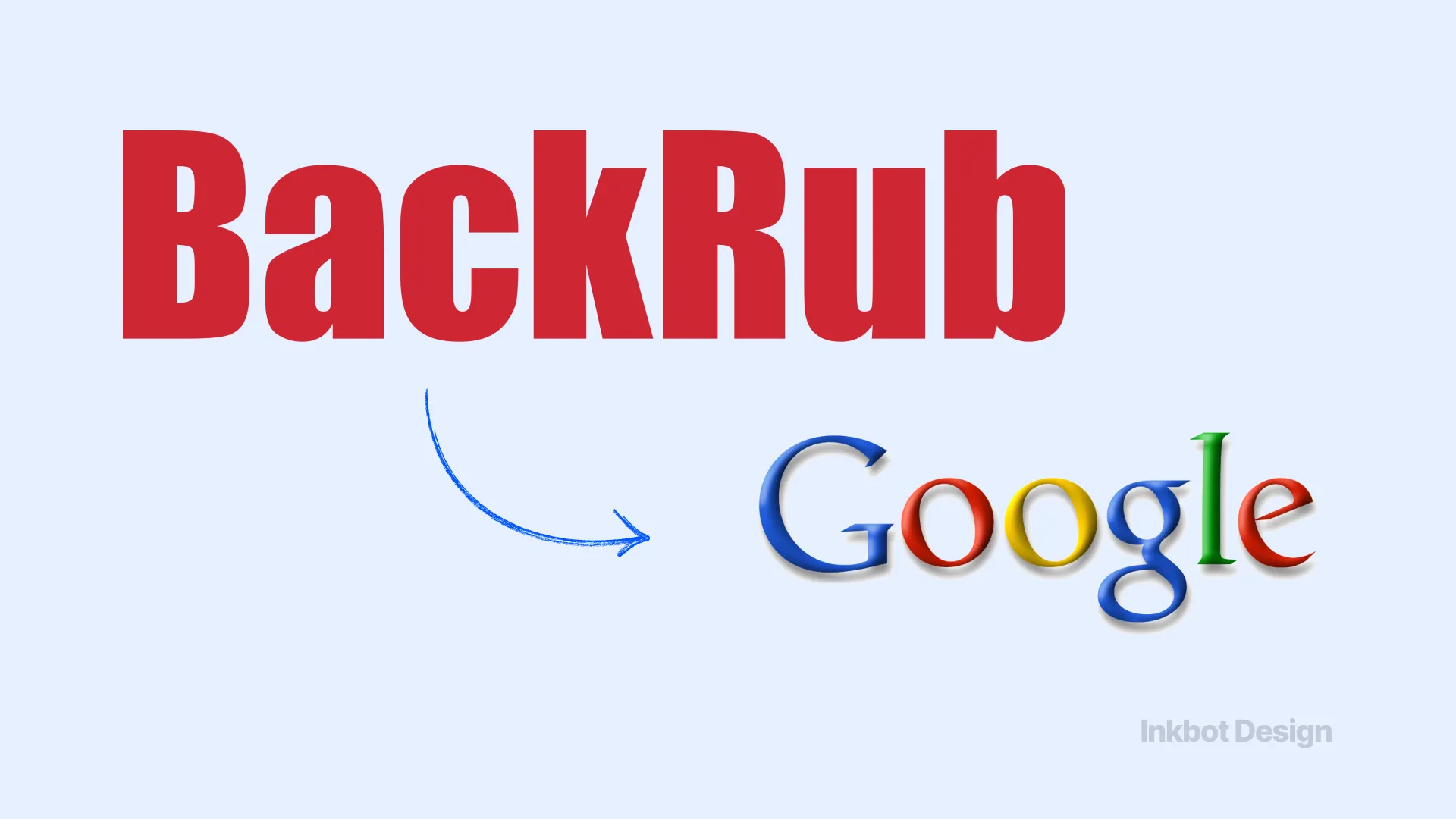
Renaming a company requires a business case, naming criteria and a continuity plan.
Identify the service promises clients value, distinguish those promises from familiar branding, then evaluate candidate names and prepare the transition before announcing the change.
- Keep trusted behaviours.
- Bridge useful recognition signals.
- Retire unsupported attachments.
Renaming a company requires a justified business case, clear naming criteria and a transition that preserves trusted service and customer recognition.
Do you actually need a new company name?
Rename a company only when the existing name creates a specific commercial, strategic, or legal obstacle that better positioning or a visual refresh cannot solve.
For a UK professional-services firm, valid triggers include a merger that requires a shared identity, a name that materially misrepresents the current practice (such as a former partner's sole name or an outdated specialism), or an intellectual property conflict that requires qualified legal advice.
“We want to look bigger” is not a sufficient brief until you test whether the evidence shows that the name (rather than weak positioning) is holding the firm back.
Write the obstacle as a single testable sentence:
“Our current name leads prospective clients to assume we only handle routine compliance, whereas our growth depends on corporate advisory.”
Test that claim against enquiry logs, lost-pitch feedback, and client interviews.
If the misunderstanding stems from unclear website copy or inconsistent credentials, changing the name is an expensive distraction.
Apply the counterfactual test: if renaming were off the table, what would you fix first?
In WARC’s Aviva case summary, legacy brands were retired because research showed they lacked the structural potential to unify as a single global brand—not because a board disliked how a name sounded in a meeting.
If your leadership team cannot write a one-paragraph commercial rationale explaining why the current name obstructs strategy, pause the naming project.
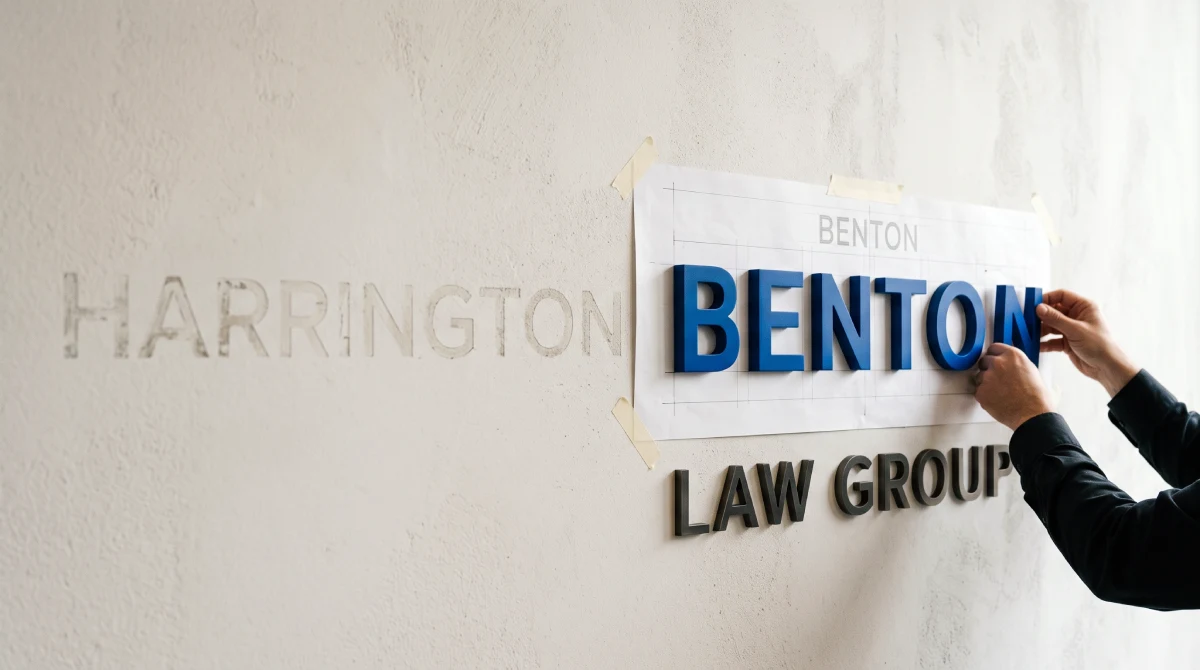
What do clients value that must remain true?
Separate what clients trust (service behaviours) from how they spot you (recognition cues) and what leadership feels sentimental about (heritage).
Those categories deserve different treatment.
WARC’s marketing glossary describes brands through the associations people hold, while distinguishing the visual, verbal and other cues that help trigger brand recognition.
That distinction matters here: the reason a client trusts an adviser and the colour that helps the client recognise an email are different assets.
Use this proposed decision framework before generating names:
Existing element | Asset category | Evidence to seek | Recommended treatment |
|---|---|---|---|
A partner explains difficult advice directly | Trusted behaviour | Specific client accounts of when this mattered | Preserve and assign named responsibility |
Clients can reach an accountable adviser during a dispute | Trusted behaviour | Escalation records and client feedback | Preserve; test deputy cover arrangements |
A familiar proposal cover or report layout | Recognition signal | Can clients identify the firm without the name? | Retain or bridge during transition |
The founder’s surname | Behaviour, signal, or attachment | What does the surname signify to current buyers? | Decide from client evidence, not habit alone |
A long-standing service label | Recognition signal or descriptor | Do clients and referrers use the term accurately? | Retain, clarify, or retire |
A founding-date story | Heritage | Does the date influence mandate selection? | Keep proportionately on an About page, out of the foreground |
This is an editorial tool, not a research-validated scoring model. Its purpose is to stop different arguments being settled with the same vague instruction: “Protect the heritage.”
What would customers actually miss?
Ask clients about a recent moment when the firm earned its fee. “What happened?” is more useful than “What are our values?”
A finance director describing an adviser who challenged an acquisition assumption has given you a behaviour to preserve.
A client recognising the firm’s distinctive report format has identified a useful signal. Neither answer tells you that every historical element deserves protection.
Useful interview prompts include:
- What would make you hesitate to recommend us?
- What must the renamed business continue doing?
- Which parts of our identity help you recognise us?
- What do you personally associate with the founder?
- What would you be relieved to see change?
Do not treat a few supportive interviews as a representative survey. Record who was asked, which client groups are missing and where answers conflict.
A long-standing client may value direct access to a founder. A newer client may barely know the founder’s name. Both answers can be true.
What are the legal and regulatory steps for renaming a UK company?
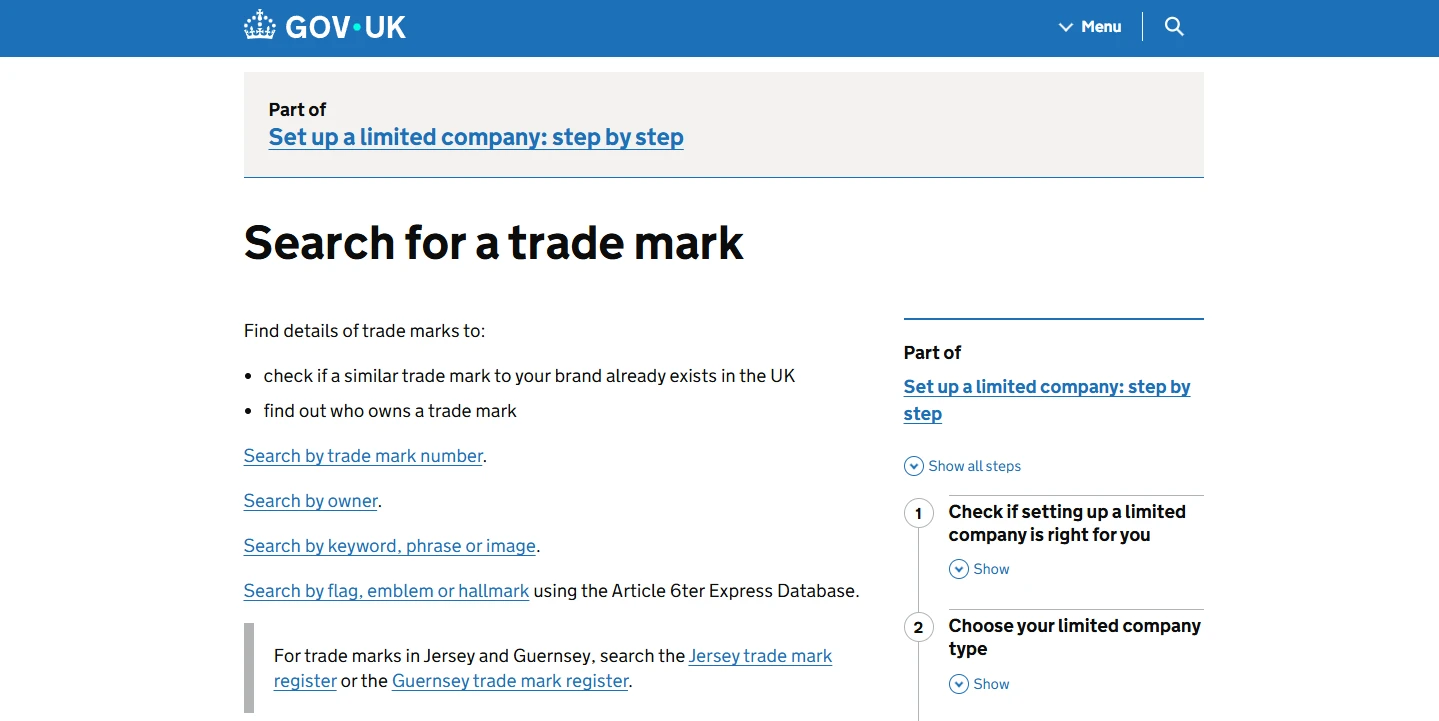
In the UK, changing a registered limited company name requires a special resolution by shareholders (or board authority under the articles of association) and the filing of Form NM01 with Companies House, along with trademark clearance and regulatory notifications.
Before announcing a new trading or registered name, complete four governance checks with qualified legal and compliance advisers:
- Trademark and passing-off searches: Check the UK Intellectual Property Office (UKIPO) trademark register and the Companies House register before committing to a creative rollout. A name available for use as a domain name or for company registration can still infringe an earlier-registered mark.
- Companies House filing: Pass a special resolution (75% shareholder majority) and submit Form NM01 (or file online) with the applicable fee. The name change takes legal effect only when Companies House issues the Certificate of Incorporation on Change of Name.
- Regulated sector notifications: UK law firms, accountancy practices, and financial advisers must notify their supervisory bodies—such as the Solicitors Regulation Authority (SRA), ICAEW, or the Financial Conduct Authority (FCA)—and update client engagement letters, professional indemnity insurers, and statutory letterheads.
- HMRC, banking, and statutory records: Notify HMRC (Corporation Tax, VAT, and PAYE), update company bank mandates, and revise website footers to display the registered company name, registration number, and registered office address as required under the Companies Act 2006.
How do you protect SEO and AI-search visibility during a rename?
Protect organic search traffic and AI-search citations by mapping one-to-one 301 redirects from every legacy URL, updating canonical tags and structured data, and synchronising entity profiles across Google Business Profile and industry directories.
When a rename involves a domain change, treating the move as a simple DNS switch can wipe out years of search equity.
Coordinate technical SEO alongside the brand launch:
- One-to-one 301 redirects: Map every legacy URL directly to its exact equivalent on the new domain rather than redirecting everything to the homepage, and update internal links so they point straight to canonical destinations.
- Search Console and canonical alignment: Update self-referencing canonical tags, XML sitemaps, and submit the Change of Address tool in Google Search Console.
- Entity and directory reconciliation: Update your organisation name, URL, and sameAs links across Google Business Profile, Companies House, LinkedIn, Clutch, Trustpilot, and sector directories (such as the Law Society or ICAEW), so search engines and AI answer engines connect the new name to your existing reputation.
Can we grow beyond the founder without becoming impersonal?
Yes, provided the business transfers accountability rather than merely removing the founder’s name.
“The personal relationship is the business” is a serious objection.
In an advisory firm, a client may be buying someone’s judgement under pressure. Replacing that relationship with a general contact form would be a deterioration, no matter what the new identity looks like.
Break the objection into observable commitments.
If the founder promises direct access, identify who answers when the founder is unavailable. A shared inbox is not a succession plan.
Assign an accountable adviser and test whether that adviser has the authority and client knowledge to resolve the issue.
If the founder remembers the client’s commercial priorities, decide how those priorities are recorded, updated and shared appropriately. A new account lead should not need the client to retell the entire history.
If the founder challenges weak recommendations before work leaves the building, define the review responsibility. “Everyone owns quality” is not a useful instruction when nobody has final authority.
The rename can then describe a business that has genuinely changed, rather than announce a capability the firm hopes to develop afterwards.
Does the founder’s surname have to disappear?
No. Keep the surname if the name still serves the strategy, ownership permits its use, and clients recognise it usefully.
A surname is not automatically a liability. An invented name is not automatically scalable. The relevant question is whether the business can deliver its promise independently of one person, and whether the name supports the intended future.
If the surname carries recognition but leadership wants a different identity, consider a temporary connection between old and new names. If the surname creates a specific legal or ownership problem, take qualified advice before making any transition promise.
The professional services naming governance guide covers the adjacent questions of ownership, partner change and naming architecture.
My recommendation is to make the relationship transferable before asking clients to accept the symbol of that transfer. Test the new account arrangements while the old name is still familiar.
How do we sound established without sounding generic?
Define “established” as something a buyer can observe. Otherwise, the naming brief becomes a collection of words that sound expensive.
For a consultancy, being established may mean the ability to handle larger mandates without relying on a single partner. For an accountancy practice, the relevant confidence may concern a defined specialism, senior oversight or continuity through an acquisition.
The name can support that impression. The name cannot supply the evidence.
Use criteria that connect to the intended buyer:
- Can someone hear the name once and make a reasonable attempt to find it?
- Is the name sufficiently distinguishable from relevant competitors?
- Does the name fit the intended service range without describing capabilities the firm lacks?
- Can the name work alongside a precise service description?
- Can the business use and protect the name following qualified review?
- Will the name still make sense under the agreed growth plan?
Do not trade distinctiveness for a pile of category words. “National Strategic Advisory Partners” may sound familiar because the vocabulary is familiar.
That does not establish that buyers will recognise your business.
WARC’s discussion of B2B branding distinguishes between being identified and having a clear meaning.
The practical implication is to evaluate the name alongside the description and evidence that explain the business, rather than expecting the name to do every job.
How much meaning must the name carry?
Give the name a defined job. Do not require one word to explain your history, every service line and the next decade of ambition.
A candidate name should be evaluated in the circumstances where clients will encounter it: a referral, an email introduction, a proposal, a search result and an invoice.
Proposed test tasks are more useful than “Which one do you like?”
Read the name aloud without showing the spelling. Ask participants how they would search for it. Show the name with the proposed service description and ask what the business appears to do.
Place the name beside relevant competitors and ask whether participants confuse the identities.
Keep the limits clear. This is a practical editorial test plan, not a validated prediction of future brand performance. Participant selection and the presentation of alternatives can affect what you learn.
The Consignia rebrand (2001–2002) also warrants accurate context.
Royal Mail and Parcelforce were intended to remain familiar UK customer-facing brands. At the same time, Consignia was introduced as the corporate umbrella for international expansion—before later WARC commentary documented the 2002 reversion to Royal Mail Group.
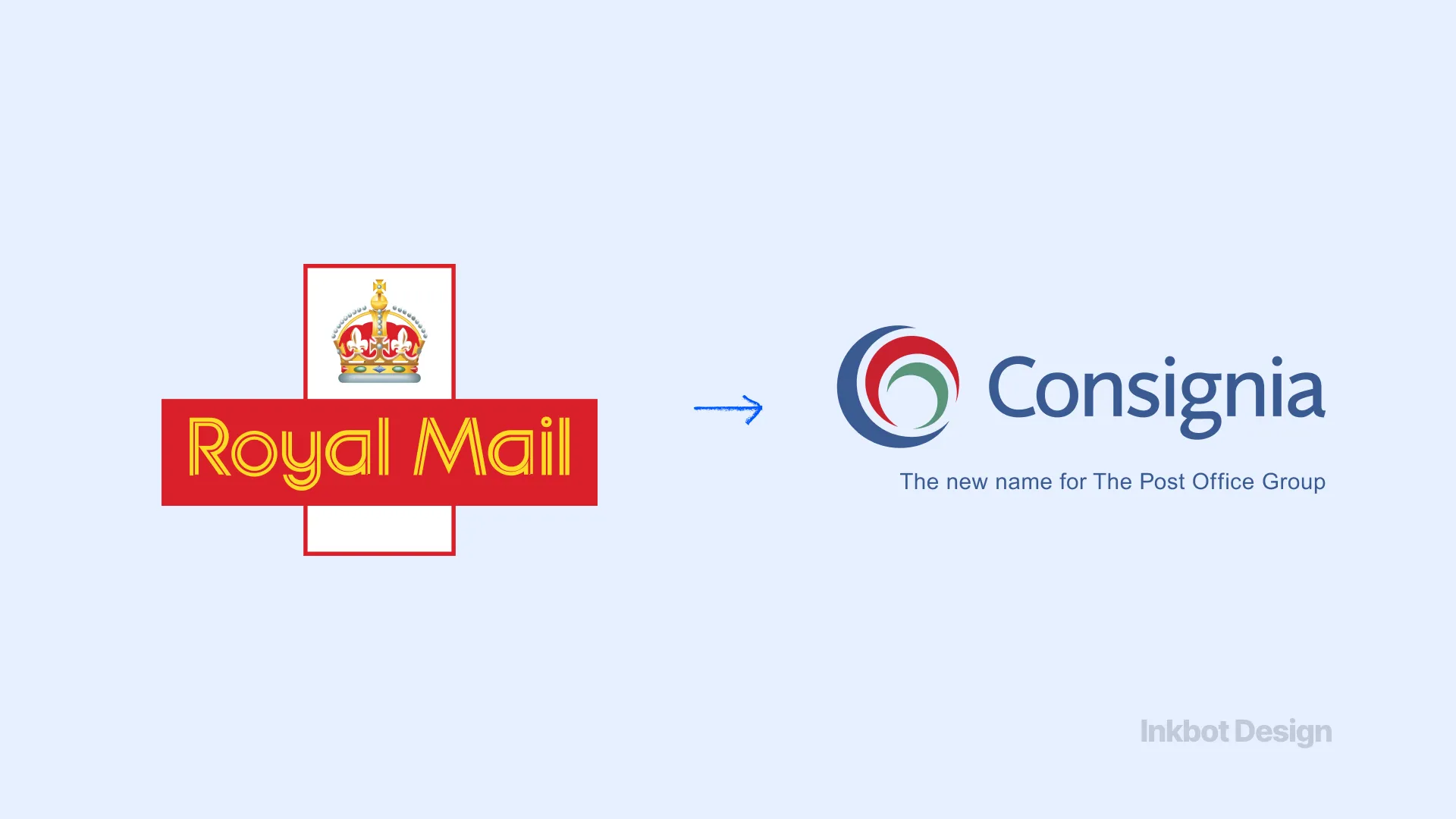
A clever rationale can explain a name’s etymology without making the name usable. Evaluate what clients can spell, search, and understand—not how persuasive the naming presentation sounds in a boardroom. For the step-by-step selection and screening workflow, follow our brand naming process.
How will people who know the old name find us?
Plan the connection between the identities before announcing the replacement.
A client should be able to follow an old referral, recognise the new identity and confirm that the same intended business is behind both. That requires coordination across the website, email, directory listings, partner profiles and the materials people already hold.
Build a transition register with an owner and completion test for each dependency:
- Old website addresses and important landing pages.
- Old email addresses and contact routes.
- Search and directory profiles.
- Proposals circulating during the change.
- Referral partners’ records.
- Client portals and supplier records.
Have the technical owner specify how old addresses will behave and how failures will be monitored. The right implementation depends on whether the domain changes, how the website is built and what systems send email.
Retain familiar cues selectively. The IPA’s Virgin Media O2 case, published through WARC, describes a new visual badge alongside the familiar Bubl character.
The broader campaign reported commercial improvements, but the case does not isolate the contribution of retaining that character.
Set conditions for removing temporary old-name references. Look for unresolved contact failures, client confusion and outdated referral routes. Do not select an arbitrary removal date simply because the launch campaign has ended.
Ask someone outside the project to follow an old referral to the renamed business—record where that person hesitates.
How will customers recognise our emails, invoices and payments?
Explain the operational change in language clients can verify.
A rename announcement should distinguish the trading identity from the legal entity, the account contact and any payment arrangements. Do not claim those details are unchanged unless the relevant owners have checked.
Prepare the answers before sending the announcement:
- What name will appear on correspondence?
- Which entity is providing the service?
- Will the client’s contact change?
- What will appear on invoices?
- Does the client need to amend a supplier record?
- How should the client verify an unexpected request?
Where payment details change, have finance and security specialists approve the verification procedure. Do not rely on an unfamiliar email being accepted as sufficient proof.
Equally, avoid an inaccurate reassurance. “Everything else stays the same” is easy copy to write and difficult copy to defend if account ownership, contracts or payment instructions are changing.
Use a rehearsal. Ask someone outside the project to receive the announcement, locate the firm, identify the account contact and check an invoice. Record the point at which that person hesitates. Fix that point before launch.
Brief reception, account teams and finance staff before clients hear the news. Each team should know what has changed, what has not and where uncertain questions go.
Preserve the promise; prove the continuity
The preservation decision belongs before the naming presentation.
Keep the service behaviours clients rely on, carry useful recognition cues into the transition, and retire historical material when evidence no longer supports its role—rather than because a new identity demands a clean break.
A business can change its name and remain personal. Equally, a business can keep its name and become unrecognisable in every way that matters.
If client evidence shows that your existing name still works, keep it and fix the positioning, messaging, or visual identity that actually needs attention.
If you want an objective outside diagnostic before committing to a rename, request Inkbot Design’s free Brand Equity Audit™.
Delivered as a 2-to-3-page written diagnostic report within a target turnaround of two working days (48 hours)—with no sales call and no obligation—it examines your firm’s identity gaps, visual trust, messaging logic, entity consistency, and AI-search visibility.
It is a practical starting point for deciding whether your current brand is holding you back, not a substitute for legal trademark clearance or technical migration engineering.
Before commissioning candidate names, write down what clients would genuinely miss if your firm disappeared tomorrow—then assign named responsibility for delivering it.
Questions people ask
What should a company's budget rename include?
A company rename budget should separate strategic branding and naming fees from legal and technical implementation costs. Build an itemised inventory covering trademark and legal clearance, brand positioning and identity design, website and email domain migration, client and supplier communications, document templates, signage, and internal leadership time. At Inkbot Design, core brand positioning and visual identity work is delivered through the fixed-fee Brand Equity Blueprint™ (£7,500), while brand naming, linguistic screening, and website development are scoped separately to match project complexity.
How long does it take to rename a company?
Renaming an established company typically takes between 8 and 20 weeks from initial diagnostic to external launch, depending on trademark clearance, regulatory notifications, and technical complexity. While core brand positioning and visual identity architecture under Inkbot Design’s Brand Equity Blueprint™ typically take 4–6 weeks, additional time is usually required for UK IPO trademark searches, Companies House filings, domain redirects, and updates to client-facing templates and portals.
When should we announce the new company name?
Announce the new name only when legal approvals, client explanations, and operational dependencies are verified and ready. Client-facing partners, reception, and finance teams must be briefed on how to answer questions—and how clients can verify updated payment details—before external communications go out. Where an acquisition or regulatory timetable restricts preparation, launch essential legal changes first and phase non-critical brand touchpoints through a controlled transition.
Should employees vote on the new name?
No—use employee participation to gather practical evidence and stress-test candidates rather than running a popularity vote. Ask client-facing staff to flag pronunciation problems, potential confusion with competitors, or conflicts with how services are actually delivered, while keeping final selection accountable to a defined leadership owner and written naming criteria.
Can we rebrand without changing the company name?
Yes—retaining your existing name is often the lower-risk commercial choice when the name still fits your strategy, and the real obstacle is outdated positioning, unclear service architecture, or inconsistent visual presentation. A name change introduces legal, operational, and search-migration work, so your business case should prove why a less disruptive positioning and identity overhaul is insufficient.