Podcast Guesting Strategy: Turn Appearances Into Authority
Podcast guesting works best when it is managed as a disciplined authority and conversion channel, not a race for appearances. Start with the commercial outcome, reject poor-fit shows even when their audience appears large, and build every interview around a credible point of view and a relevant next step.



On this page8 min left
A strong podcast guesting strategy is not a volume exercise. It is a visibility channel designed to put a clear point of view in front of the right decision-makers, then turn that attention into authority, conversations, and commercial opportunities.
For a professional services firm, the value rarely comes from appearing on the largest available show. It comes from reaching listeners who recognise a relevant problem, understand the cost of leaving it unresolved, and have the authority to act.
That changes how I would approach guesting. Instead of measuring success by bookings alone, I would treat every appearance as part of a controlled conversion system: target the right audience, offer a differentiated perspective, make a useful next step available, and review what happened after publication.
A podcast appearance is not the asset. The trust created during the conversation, and the route you provide for listeners to act on it, are the assets.
Build the Strategy Before Pitching

Define the business outcome first
Podcast guesting can support brand awareness, authority, lead generation, partnerships, recruitment, and referral relationships. It is usually less effective when the objective is vague.
Before building a prospect list, define one primary campaign outcome and one supporting outcome. For example, a consultancy may want to generate qualified strategy calls while also improving visibility among referral partners. A law firm may prioritise niche expertise in a regulated sector over immediate enquiries.
Use a simple decision framework:
Campaign objective | Best podcast type | Suitable listener action | What to avoid |
|---|---|---|---|
Brand authority | Respected industry and leadership shows | Read a perspective piece or subscribe | Broad entertainment shows with weak buyer relevance |
Qualified leads | Niche buyer-focused shows | Download a diagnostic or book an exploratory call | Generic CTAs that send visitors to a homepage |
Partnerships | Peer and ecosystem podcasts | Request an introduction or partnership discussion | Shows focused only on consumer audiences |
Recruitment | Profession and career-focused shows | View roles, culture, or expert content | Overly promotional interviews |
This is where positioning matters. A guest who says, “We help businesses grow,” will blend into the archive. A guest who can explain a specific commercial problem, such as why professional services firms lose pricing power when their positioning is indistinguishable, gives the host a more usable episode premise.
The episode should reinforce the same strategic territory as your wider brand. That means enhancing brand credibility through evidence, clarity, and useful insight rather than repeating promotional claims.
Set a guesting readiness threshold
Do not begin outreach simply because someone is available to interview. A weak first appearance can create more friction than no appearance at all.
I would delay outreach until these six items are ready:
- A one-sentence positioning statement that states who you help, what problem you address, and what makes your perspective distinct.
- Three interview angles, each answering a real audience question.
- Four to six proof points, examples, frameworks, or observations that can be explained without disclosing confidential client information.
- A listener destination that matches the conversation, such as a briefing, assessment, newsletter, event, or consultation page.
- A concise media kit with biography, headshot, approved links, topic descriptions, and scheduling contact.
- A recording environment that is dependable enough not to burden the host’s production process.
The threshold is not about polish for its own sake. It protects the host’s audience. If your point of view, evidence, and next step are unclear, you cannot expect listeners to connect the interview to a credible reason to engage further.
Choose your route to the host
Not every campaign needs cold outreach. The right route depends on your reputation, network, urgency, and the type of show you want.
Route | Best use case | Main advantage | Main limitation |
|---|---|---|---|
Cold outreach | New category, targeted niche, repeatable campaign | Scales across a defined list | Requires strong relevance and persistence |
Warm introduction | Established network, partnership goals, high trust shows | Reduces the initial trust barrier | Cannot be manufactured on demand |
Reverse guesting | Thought leadership campaigns and adjacent audiences | Produces more original angles | Requires deeper archive research |
Reverse guesting is especially useful when every competitor appears to be pitching the same subject. Reviewing guests on related shows can reveal relevant people and complementary conversation angles.
For example, if a show recently featured an operations consultant discussing growth systems, a branding specialist could propose the missing strategic question: how does a firm’s market position affect whether those growth systems command premium pricing?
Select Shows Using Evidence, Not Audience Size
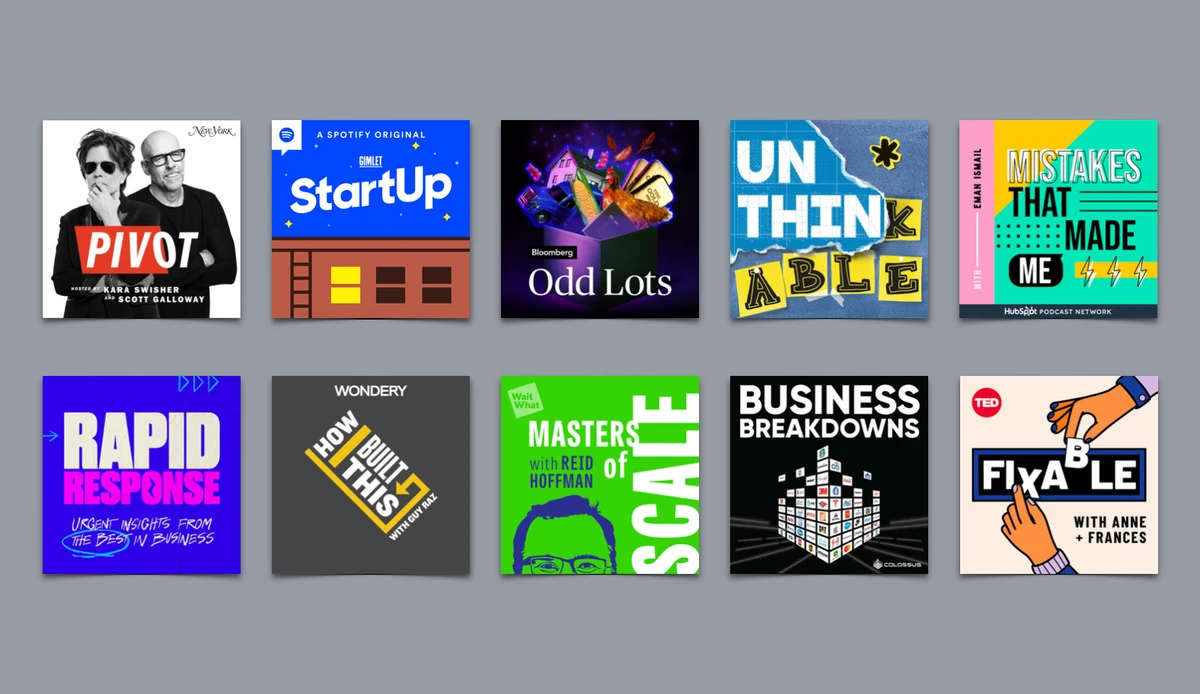
Screen activity and commercial relevance
A show with a large historical following is not necessarily a useful prospect. The host may have stopped publishing, changed direction, or stopped accepting outside guests.
Start with a show activity check. Review the latest episode date, publishing rhythm, guest format, and contact route. Then look for signs that the show still serves the audience you want to reach.
I would score every prospect before pitching rather than trusting instinct alone:
Criterion | Weight | What to verify |
|---|---|---|
Audience fit | 35% | Job titles, sectors, buyer maturity, recurring listener problems |
Topic fit | 25% | Whether your angle naturally belongs in the show’s editorial territory |
Show activity | 15% | Recent publication, consistent release pattern, active contact details |
Host and format fit | 15% | Interview depth, tone, question style, guest treatment |
Conversion potential | 10% | Whether listeners can realistically take your intended next step |
Score each category from 1 to 5, multiply each score by its weight, and prioritise shows with a total score of 3.5 or higher. This is not a scientific prediction model. It is a discipline that prevents audience size bias.
A niche podcast for managing partners may reach fewer people than a broad entrepreneurship show. Yet if its listeners are precisely the people who buy strategic brand work, its commercial value may be far greater.
Use archive gap analysis to earn attention
Listening to one recent episode is useful. Studying the archive is where better pitches are built.
Reviewing recent episodes, recurring topics, previous guests, and uncovered subjects improves show selection and the relevance of pitches.
The practical implication is that you should not pitch what the host has already covered repeatedly unless you can offer a genuinely different frame.
Build an archive map with four columns:
- Recurring themes: What does the show return to repeatedly?
- Overused advice: Which topics are covered, but only at a surface level?
- Missing voices: Which perspectives are absent, such as buyers, operators, or specialists from adjacent disciplines?
- Outdated assumptions: Which episodes may need a 2026 update due to changes in market conditions, technology, regulation, or buyer behaviour?
Suppose a business podcast has several episodes about marketing lead generation but none about fee resistance in professional services.
The pitch should not be “I can talk about branding.” It could be: “Why firms mistake a pricing problem for a lead generation problem, and the positioning changes that make premium fees easier to defend.”
That is a show-specific editorial idea, not an interchangeable sales pitch.
Make compliance part of outreach design
For UK-based organisations, outreach should not be treated as a purely commercial messaging task. The UK GDPR and the Privacy and Electronic Communications Regulations (PECR) may affect how personal data is sourced, used, and stored, and how marketing communications are sent.
The legal position can depend on the recipient, the communication channel, whether the contact is acting in a corporate or individual capacity, and the purpose of the message. Legal advice is sensible before running scaled outreach, particularly where contact data is purchased, scraped, or reused across campaigns.
Operationally, I would apply four safeguards:
- Contact people in their professional role using clearly relevant, limited outreach.
- Record where contact information came from and why the person is an appropriate recipient.
- Keep the message specific to the show, concise, and easy to decline.
- Maintain suppression and opt-out records so a declined contact is not repeatedly pursued.
This is not merely risk management. It improves the pitch. A carefully targeted message is more likely to be welcome than a sequence sent to every visible host email address.
Convert Bookings Into Commercial Outcomes

Design the conversation, not just the pitch
Once a booking is confirmed, the work shifts from prospecting to performance. The most effective interviews feel natural, but that does not mean they are unplanned.
Guesting should be managed across preparation, performance, promotion, follow-up, and results review. That is the right operating model because the interview itself is only one stage of a longer audience journey.
Prepare a concise conversation brief for every appearance:
- The audience problem the episode should help solve.
- Three core messages you want listeners to remember.
- Two short stories or examples that make abstract advice concrete.
- One respectful counterpoint or misconception worth challenging.
- One primary CTA that makes sense after the interview.
A good soundbite does not need to be theatrical. It needs to be clear. “A brand is not a visual refresh; it is the reason a buyer believes one firm is worth more than another” is more memorable than a long explanation of design deliverables.
The host’s style matters too. A rapid-fire founder show requires concise answers and strong examples. A long-form leadership interview allows more context and nuance.
Understanding brand voice archetypes can help a guest maintain a consistent communication style while still adapting to the host’s tone and audience expectations.
Match the CTA to listener intent
A weak CTA is one of the most common ways a strong interview loses commercial value. “Visit our website” makes the listener do too much work.
They must remember the name, locate the correct page, decide what matters, and infer the next action.
Instead, match the CTA to the episode topic and the listener’s readiness.
Listener state | Better CTA | Why it works |
|---|---|---|
Curious but early stage | Subscribe to a specialist briefing or newsletter | Creates permission for continued education |
Diagnosing a problem | Download a relevant assessment or guide | Gives a practical next step without high commitment |
Actively evaluating options | Book a focused consultation | Supports a direct commercial conversation |
Potential referral partner | Request a partnership conversation | Separates ecosystem value from buyer conversion |
Use a unique landing page, memorable URL path, or campaign-specific form field for each major appearance. This gives you a reasonable attribution trail without pretending that every prospect will convert in a single session.
Measure the full funnel
There is no reliable universal benchmark for podcast guesting leads, bookings, or revenue. Outcomes vary sharply by audience, offer, episode quality, distribution, and sales cycle.
A five-listener niche episode could create one high-value referral. A popular broad show could create traffic but no qualified conversations.
Measure the chain, not just downloads:
Stage | Useful measure | Diagnostic question |
|---|---|---|
Outreach | Positive replies and booking rate | Are the targets and episode angles credible? |
Publication | Host promotion, listener response, clip engagement | Did the message resonate with the audience? |
Traffic | Tagged visits, landing page conversions, direct searches | Did listeners take a next step? |
Pipeline | Qualified enquiries, booked calls, referral introductions | Did attention reach relevant decision makers? |
Commercial outcome | Opportunities, revenue, partnerships, recruitment outcomes | Did the campaign support the stated objective? |
Review results at both episode and campaign level. One appearance can underperform because of timing or weak distribution. A pattern across ten appearances is more informative.
Treat the host relationship as a long-term asset
After publication, promote the episode promptly and make it easy for the host to share your assets. Then follow up with something more useful than “Thanks for having me.”
Send a short note that includes:
- Appreciation for the specific conversation or question that stood out.
- A link to your promotion assets or clips, if relevant.
- Any listener feedback that may be useful to the host.
- A clear offer to introduce a future guest, provide an update, or support a related topic.
Hosts often know other hosts, event organisers, and specialists. The relationship should not be reduced to one appearance. Still, avoid treating every thank-you note as an immediate request for referrals. Credibility compounds when the follow-up is proportionate and useful.
Conclusion
Podcast guesting works best when it is managed as a disciplined authority and conversion channel, not a race for appearances. Start with the commercial outcome, reject poor-fit shows even when their audience appears large, and build every interview around a credible point of view and a relevant next step.
The strongest campaigns make brand expertise easier to hear, remember, and act on. That is the practical value of crafting a compelling brand narrative: it gives every conversation a clear through line rather than a collection of disconnected talking points.
Questions people ask
What is a podcast guesting strategy?
A podcast guesting strategy is a planned system for selecting relevant shows, earning bookings, preparing useful conversations, promoting appearances, and measuring outcomes. It differs from occasional guest appearances because each episode supports a defined audience, message, CTA, and business objective.
Is podcast guesting better for awareness, leads, authority, or partnerships?
It can support all four, but one should be primary. Authority is often the most realistic early outcome because a good interview demonstrates how you think. Lead generation works best when the audience is tightly aligned, and the CTA matches the episode. Partnership-focused guesting is useful when hosts and listeners sit within your referral ecosystem.
How many podcasts should we pitch each month?
Start with a manageable, high-quality batch of 10 to 20 carefully scored prospects. The right volume depends on the niche, team capacity, and the amount of research each show needs. If personalisation becomes generic, reduce the number. A smaller list of strong fits is preferable to a large campaign that damages brand perception.
What should a podcast guest pitch include?
Keep it short: why the show is relevant, why your perspective serves its listeners, two or three distinct episode angles, brief credibility context, and simple scheduling information. The strongest pitch makes the host’s editorial decision easier rather than presenting a long biography.
Is a large podcast always better than a small niche show?
No. A smaller show can be more valuable if its listeners match your buyers, referral partners, or future hires. Choose reach when broad category awareness is the objective. Choose niche relevance when you need qualified conversations, professional credibility, or strategic partnerships.
What should we do if a host asks for payment to appear?
Treat paid appearances as sponsorship decisions, not earned media. Ask for audience information, distribution details, promotional commitments, disclosure terms, and expected deliverables. Only proceed if the audience fit and commercial case are clear. Do not assume a paid placement creates authority simply because it produces an interview.
How do we recover from a low-performing appearance?
Diagnose the failure point. Weak traffic may indicate poor promotion or an unclear CTA. Good traffic but poor enquiry quality may indicate a mismatch between the show audience and your offer. Strong engagement but weak conversion may mean the landing page or follow-up path needs work. Repurpose the useful parts, record the lesson, and adjust the next prospect list rather than abandoning the channel after one result.