Logo Trademark Distinctiveness: Clear Isn’t Always Distinctive
A descriptive business name can communicate a service clearly while offering limited exclusivity. A distinctive logo may help protect the overall identity without creating ownership of the wording itself. Before approving a rebrand, separate category information from source identifiers, then ask a trade mark attorney what each proposed registration covers.


On this page7 min left
“I want a descriptive name. Can the logo make it protectable?”
Potentially, as a combined sign. But a distinctive logo does not automatically give your firm exclusive rights to the descriptive words it contains.
UK-published guidance explicitly draws that distinction: protection for a distinctive composition does not confer standalone exclusivity over its descriptive wording.
That is the central question behind logo trademark distinctiveness: does the identity tell clients whose service this is, or merely what service is available?
The difference matters before partners approve the rebrand.
BioID’s typography and added symbols did not supply the required distinctive character, as the UK Intellectual Property Office’s examination guide explains.
A font treatment can change the appearance without fixing the underlying problem.
For the wider rights picture, start with logo ownership. Here, the focus is narrower: which part of the identity might identify your firm?
What is logo trademark distinctiveness?
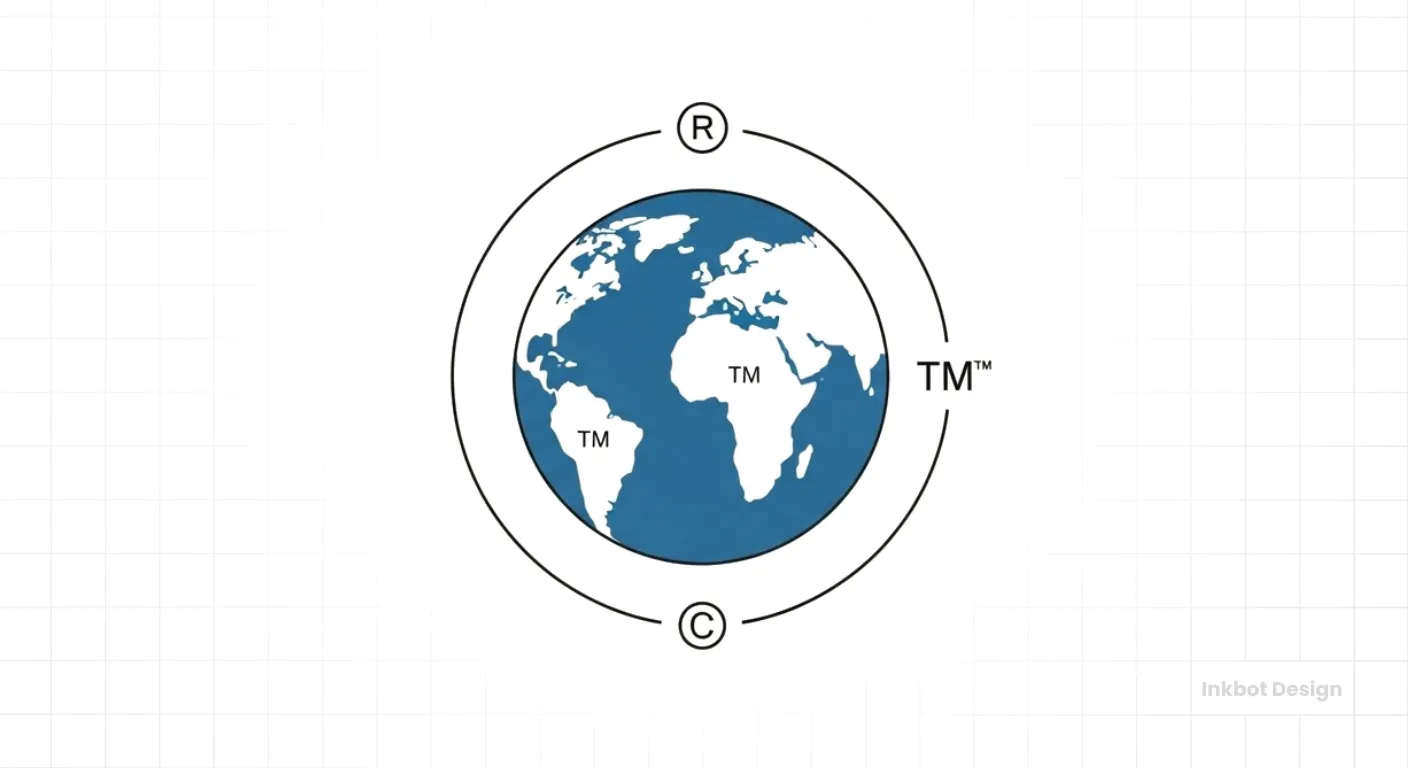
Logo trademark distinctiveness concerns whether a sign can distinguish one business’s goods or services from those of another.
The UK Intellectual Property Office, the government body responsible for UK trade marks, describes that function as a “badge of origin”. The assessment concerns the sign and the particular goods or services claimed.
- Generic wording names the category rather than identifying one supplier.
- Descriptive wording communicates a characteristic of the goods or services and can face registration objections.
- Distinctive figurative elements may make a combined sign registrable without granting exclusive rights in the descriptive wording alone.publishing+1
Logo trademark distinctiveness concerns whether customers perceive a sign as identifying one business rather than merely describing its services.
“I want a descriptive name. Can the logo make it protectable?”
A distinctive figurative element may make the combined sign registrable. That does not automatically give the business exclusive rights in descriptive words on their own.
UK-published Common Practice makes both points: a recognisable distinctive device can contribute sufficient character, while protection concerns the overall composition.
So ask a more precise question.
Protectable as what?
A descriptive name presented with an independent symbol is a different proposition from the same wording typed in a standard font. Neither should be approved on the assumption that “the designer has made it unique”.
Which parts of the logo are actually distinctive?
Assess the wording, device and overall composition separately during design review, while remembering that the legal assessment considers the sign as a whole. The separation helps explain the design rationale; it is not a substitute for that legal assessment.publishing+1
Take a hypothetical accountancy practice using the placeholder wording “Regional Tax Advisers”. Assume, solely for this example, that the wording is descriptive of the proposed services. No availability search has been performed.
Compare two concepts:
- The wording in a standard typeface, inside a rectangular border.
- The wording beside an independently designed symbol with a specific, recognisable construction.
The second concept gives an attorney something different to assess. The first relies on treatments that official guidance generally regards as insufficient: ordinary typography and basic framing shapes do not reliably confer distinctive character. The second still needs assessment of the actual symbol, its prominence and the composition.
Cover the wording and inspect the remaining device. What is left?
The exercise can expose a weak design rationale; it cannot establish registrability or replace evidence of consumer perception. Use the result to improve the brief for professional logo design, then obtain legal advice on the proposed sign.
Will changing the font or adding a symbol solve the problem?
No automatic fix follows from changing the font or adding a symbol. In the BioID example discussed by the UK Intellectual Property Office, ordinary Arial lettering, variations in boldness, a full stop and the registered-trade-mark symbol did not provide the required source-identifying character.
That does not mean typography never contributes to distinctiveness. The question is whether the actual treatment helps the whole sign identify a commercial source, rather than merely decorating descriptive matter. UK guidance requires case-by-case assessment.
For partner approval, ask the designer to identify the proposed source-identifying feature in plain English.
“The navy feels trustworthy” answers a different question.
“Is descriptive clarity worth more than exclusivity?”
Keeping descriptive wording can be a rational commercial choice. A specialist tax practice may want its services to be immediately apparent. A post-merger consultancy may also have reasons to retain familiar wording rather than rename the business during an already complicated transition.
Those are business judgements, not evidence that the wording qualifies for registration.
The trade-off is accepting limits on exclusivity while developing an identity around elements that can do more source-identifying work.
The US Supreme Court’s Booking.com decision illustrates that protection and weakness can coexist: the judgment explained that registration would not create a monopoly over “booking”, and recorded Booking.com’s acknowledgement that the mark was weak.
A descriptive identity is therefore not automatically a failed identity. Nor should clarity be used to excuse a design with no considered source identifier.
If the name already has recognition, ask an attorney whether evidence supports acquired distinctiveness: recognition gained through use rather than inherent characteristics.
The United States Patent and Trademark Office calls this "secondary meaning"; UK guidance also recognises "acquired distinctive character".
Familiarity asserted in a boardroom is not the same as evidence suitable for an application.
The practical decision is whether to retain the wording with understood limits, strengthen the broader identity, or consider a name change. Make that decision before commissioning every rollout asset.
“Would adding ‘.com’ solve it?”
Adding “.com” does not automatically make wording registrable.

On 30/06/2020, the US Supreme Court rejected a proposed rule that every combination of a generic term and “.com” must be generic. In United States Patent and Trademark Office v. Booking.com B.V., the meaning of the complete term to consumers was decisive.
The judgment did not establish the reverse rule. Adding a domain suffix does not automatically create a non-generic mark, and a non-generic mark does not automatically have strong protection. The Supreme Court expressly distinguished eligibility from a monopoly over shared descriptive language.
For a UK firm, Booking.com is a useful warning against shortcuts, not a UK registration strategy. The UK Intellectual Property Office explains that decisions of other national courts are not binding on the UK Registrar.
Choose a domain because the address suits the business. Ask separately whether the complete sign can function as a trade mark in the relevant territory and services.
“Should I register the name or the logo?”
Ask for an assessment of the name, symbol and complete lock-up separately. Prioritise the assets the business actually uses and needs to defend, subject to eligibility, clearance and budget.
The UK Intellectual Property Office distinguishes a word mark from a figurative mark. A figurative mark may be an image alone or a combination of words and figurative elements; graphic features and stylisation change what is being submitted.
A filing decision should therefore begin with the intended asset:
- The name, if protection for the wording is the objective.
- The standalone symbol, if the business uses that device independently.
- The combined logo, if the composition is an important identifier.
These are questions for assessment, not a recommendation that every firm file three applications.
If the wording is descriptive and the distinctive contribution comes from the artwork, registration of the composition does not create standalone rights in those words. That limitation should be understood before the certificate becomes shorthand for “the name is protected”.
Is a distinctive logo automatically clear to use?
No. Distinctive character and conflict with earlier rights are separate questions. The UK Intellectual Property Office’s examination guide distinguishes absolute grounds, including lack of distinctive character and descriptiveness, from relative grounds concerning earlier rights.
A newly invented name or unusual symbol can still require assessment against earlier marks. The approval brief should request both a view on registrability and an appropriate clearance review.
Use the separate guide on trademarking a logo for the filing process.
If expansion includes the United States, review the USPTO and UKIPO trade mark differences rather than carrying a UK assumption into a US application.
For a merger, also confirm which entity should own the applications. Keep the rights documentation alongside the identity files; the adjacent issue is addressed in the logo IP assignment guidance.
Identify the source identifier before approving the artwork
A descriptive identity need not be discarded simply because the wording explains the service. The approval decision should record what explains the category, what might identify the firm, and what protection an attorney recommends seeking.
Use three columns: category information, potential source identifier, intended protection. Attach the proposed artwork and relevant services. Ask the designer to complete the first two columns and the attorney to assess the third.
For a commercial review of where your identity is losing ground, request a free Brand Equity Audit™. The audit is a branding diagnostic, not legal clearance.
Before approving rollout, identify the source-identifying element and obtain advice on the protection it might support.
Questions people ask
What if the logo changes after we apply?
A logo redesign should trigger a review of the filed representation and proposed use. UK rules permit only limited amendments to an application; changes that substantially affect the mark’s identity cannot simply be treated as corrections. Ask an attorney whether the redesign requires a new application before adopting the revised artwork.
Is a generic-looking logo legally generic?
No. Calling artwork “generic-looking” is a design criticism, not a completed legal assessment. The United States Patent and Trademark Office uses “generic” for the common name of the relevant goods or services. UK assessment also considers whether the actual sign lacks distinctive character or is descriptive or customary.
Why can the same word be distinctive for one business but descriptive for another?
Distinctiveness depends on the relevant goods or services. The United States Patent and Trademark Office illustrates the distinction with Apple for computers, where the word is arbitrary, and “apple” for apples, where the word names the product. Assess wording against the services your firm actually intends to claim.
When should legal review happen during the design project?
For a rebrand, the practical recommendation is to review shortlisted names and artwork before committing to rollout. This sequencing allows legal advice to inform the design decision. Request separate consideration of distinctive character and earlier rights, because the UK Intellectual Property Office treats those as different grounds of assessment.