USPTO vs UKIPO Trademark Differences for Startups
Most entrepreneurs treat trademarks as a global “set and forget” task. In reality, the gap between US and UK intellectual property law is a minefield. From the USPTO’s strict “Use in Commerce” audits to the UKIPO’s post-Brexit priority rules, getting this wrong results in undefendable assets and wasted capital.
 By Stuart Crawford
 Reviewed by Tabitha Ayers
15 min read
On this page15 min left
- What Are the USPTO vs UKIPO Trademark Differences?
- Why the US is Harder for Startups
- Post-Brexit Ghosts: The UKIPO’s Crowded Registry
- The “Global Trademark” Myth: Why Territoriality Still Wins in 2026
- The Myth of the “Exact Match” Domain
- 2026: The State of AI and Intellectual Property
- The £10,000 Mistake
- Categorisation Logic: Navigating NICE Classes 9, 35, and 42
- Financial Commitment: 2026 Fee Structure & AI Surcharges
- The Verdict
Filing a US trademark is a legal liability management exercise, not a badge of honour.
If you are a UK startup founder, you likely view the USPTO (United States Patent and Trademark Office) and the UKIPO (United Kingdom Intellectual Property Office) as two sides of the same coin. They aren't.
One is a pragmatic administrative body; the other is a rigorous auditor that will strip you of your rights if you cannot prove you are actually making money on American soil.
Most founders rush to secure “global protection” before they have even finalised their Business names. This is a strategic suicide mission.
According to the World Intellectual Property Organization (WIPO) 2024 Indicators, nearly 30% of international trademark applications face significant delays or abandonment due to territorial mismatches.
You do not need a US trademark because you have a website; you need one because you have a US tax footprint.
What Are the USPTO vs UKIPO Trademark Differences?
USPTO vs UKIPO trademark differences refer to the distinct legal requirements, filing fees, and maintenance obligations between the United States Patent and Trademark Office and the United Kingdom Intellectual Property Office. These differences dictate how a brand secures and defends its intellectual property in its respective jurisdictions.
Key Components:
- Basis of Filing: The USPTO requires “Use in Commerce” or a “Bona Fide Intent to Use” supported by future evidence, whereas the UKIPO primarily requires a “Bona Fide Intention” to use the mark.
- Examination Rigour: US examiners frequently issue “Office Actions” regarding the specificity of goods, while UK examiners focus more on absolute grounds for refusal.
- Maintenance: The USPTO mandates a “Declaration of Use” between the 5th and 6th year, a requirement that does not exist in the UKIPO system.
USPTO trademarks require “Use in Commerce” proof, while UKIPO marks rely on “Bona Fide Intention,” making US registrations harder to maintain for startups.
Why the US is Harder for Startups
The United States operates on a “First-to-Use” philosophy, while the UK leans toward “First-to-File” with caveats.
This distinction is the single most expensive lesson a UK startup can learn. In the UK, if you register a mark with the UKIPO, you have a five-year grace period before anyone can challenge your registration for non-use.
The USPTO is not so generous. If you file a Section 1(a) application, you must provide “Specimens of Use”—actual photos of your products in the US market or screenshots of your US-facing e-commerce store.
If you file under Section 1(b) (Intent to Use), you must eventually pay more fees to prove that use before the mark is even registered.
The USPTO's 2025 “Trademark Modernisation Act” updates have empowered examiners to demand more proof than ever.
A study by the Columbia Law Review in late 2024 found that 40% of small business applications faced challenges regarding the authenticity of their specimens.
If you are using a premium domain name to sell to a UK audience, the USPTO does not care. They want to see US invoices and US shipping labels.
The USPTO's “Use in Commerce” requirement serves as a gatekeeper, privileging established trade over mere brand registration. Unlike the UKIPO, which grants rights based on intent to trade, the US system requires tangible evidence of market activity, making it a high-maintenance asset for startups without a clear American distribution strategy.
Post-Brexit Ghosts: The UKIPO’s Crowded Registry
Since 2021, the UKIPO has become a significantly more complex environment for new brand owners.
When the UK left the European Union, the government automatically created “comparable” UK trademarks for every existing EU trademark. This added over 1.4 million registrations to the UK database overnight.
For a startup seeking brand naming services, this means the “clearing” process is twice as difficult. You aren't just competing with active UK brands; you are competing with “cloned” marks from Spanish, German, and French companies that may have no intention of ever trading in Belfast or London, yet their rights remain valid for years.
The UKIPO remains faster than the USPTO. A standard, unopposed UK application can be registered in about 3 to 4 months. The USPTO is currently averaging 8 to 10 months for the first examination alone.
However, the UK's speed is a double-edged sword. Because the UKIPO does not refuse marks based on “Relative Grounds” (earlier similar marks), the onus is entirely on you to monitor the registry and oppose newcomers.
The UKIPO's post-Brexit registry is inflated by millions of cloned EU marks, creating a high density of “phantom” rights that complicate the trademark clearing process for new startups. While the UK system offers faster registration paths than the USPTO, it shifts the burden of enforcement and monitoring entirely onto the trademark owner.
The “Global Trademark” Myth: Why Territoriality Still Wins in 2026
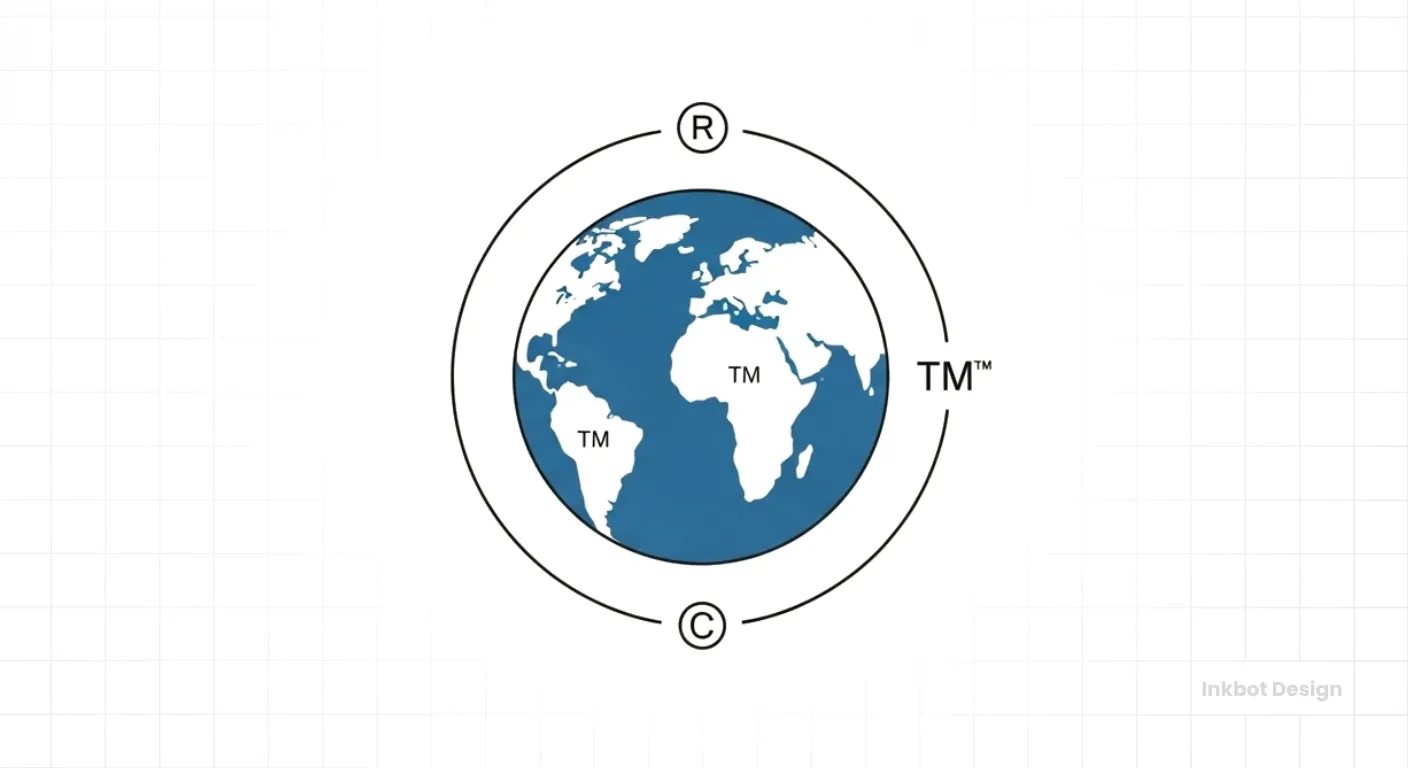
The most persistent lie in the branding industry is that a “World Trademark” exists. It does not. Even the Madrid Protocol—a system that allows you to file one application to cover multiple countries—is simply a bundle of individual national applications.
In 2026, many startups believe that because their brand is “on the blockchain” or has a global social media presence, territorial laws are becoming obsolete. This is false.
The 2013 legal battle between Sky UK and Microsoft over the name “SkyDrive” showed that even a trillion-dollar company can be forced to rename a global product due to a local trademark conflict. Microsoft was forced to rebrand globally as “OneDrive” because it could not resolve the dispute in the UK courts.
Filing everywhere is a recipe for bankruptcy. Each jurisdiction has its own “Standard of Confusion.” What the USPTO considers “confusingly similar” might be perfectly acceptable to a UKIPO examiner.
Startups should prioritise jurisdictions where they have physical inventory or significant marketing spend.
Global brand protection is a legal fiction; trademarks remain strictly territorial assets governed by national laws that often contradict one another. Startups that pursue broad international filings without local market activity frequently end up with a portfolio of “naked” registrations that offer no real protection in high-stakes litigation.
The Digital Specimen: Proving Use in a Borderless Economy
For a SaaS founder or digital service provider, the USPTO's “Use in Commerce” requirement is the most frequent point of failure.
Unlike the UKIPO, which accepts a declaration of intent, the United States demands tangible proof that the mark is associated with a service currently available for purchase by American citizens.
What Qualifies as a Valid 2026 Specimen?
In 2026, the USPTO clarified its stance on digital specimens through updates to the Trademark Modernisation Act. A simple homepage or “Coming Soon” screen is no longer sufficient.
- Software as a Service (SaaS): You must provide a screenshot of the user dashboard showing the Trademark in the header, alongside a copy of a US-based invoice or a “Payment Success” screen that references a US dollar transaction.
- Mobile Applications: A link to the Apple App Store or Google Play Store is required, but the specimen must specifically show the “In-App Purchase” functionality. The USPTO now uses automated bots to verify that the app is downloadable in the US region.
- Physical Goods via E-commerce: Photos must show the mark on the actual product or packaging. Digital mock-ups (Photoshop renders) are flagged by the USPTO‘s new Image Authenticity AI, leading to an immediate Office Action and potential fraud investigation.
The UKIPO Perspective on Evidence
The United Kingdom operates on a more lenient initial registration path but a stricter post-registration audit. You do not need to show proof of use to get your certificate.
However, if your mark is not used in trade within five years, it becomes a “Naked Registration.”
Under the Trade Marks Act 1994, any competitor can file for Revocation for non-use, placing the burden of proof on you to provide five years of historical trading data.
The United States Patent and Trademark Office privileges the consumer's perception of the mark as a source identifier.
If a US consumer cannot buy the product, the mark does not exist in the eyes of the law.
The UK Intellectual Property Office privileges the applicant's right to reserve a brand name, provided they have a genuine plan to launch.
The Myth of the “Exact Match” Domain
Many founders believe that owning the .com domain grants them an inherent right to the trademark. This is the “Domain Supremacy” myth.
In reality, trademark law and domain registration operate in distinct legal spheres.
While the Uniform Domain-Name Dispute-Resolution Policy (UDRP) allows trademark owners to claw back domains bought in “bad faith,” it does not protect you if a company in a different industry holds a similar trademark.
A software company and a clothing brand can often share the same name without infringement, but only one can own the .com.
The USPTO has recently increased its scrutiny of “domain-only” specimens. In 2025, the office issued a directive stating that a holding page on a website is insufficient for “Use in Commerce.”
You must show the “path to purchase.” If a customer cannot add a product to a cart and check out with a US zip code, your trademark application is a house of cards.
2026: The State of AI and Intellectual Property
As of April 2026, the intersection of AI and trademarks has reached a boiling point.
The USPTO and UKIPO have both introduced AI-assisted search tools that are far more sensitive than the old keyword-based systems.
These tools now identify “conceptual similarity”—meaning if your logo looks like another brand's logo, even if the names are different, you will likely receive an automated objection.
Furthermore, the rise of AI-generated brands has flooded both registries. According to a 2025 Gartner report, 15% of all new trademark filings in the US are now “speculative,” generated by AI agents looking to squat on potential brand names.
This has led to the USPTO's new “Anti-Squatting” fees, introduced in January 2026, which penalise applicants who file in more than five NICE classes without proof of varied business operations.
In response to UK startups, the UKIPO has launched an “AI-Pre-Check” tool. This allows you to run your name through a machine-learning model that predicts the likelihood of opposition before you pay the £170 filing fee.
It is a massive win for transparency, but it also means your competitors are using the same tools to find and block your path.
Artificial Intelligence & IP: The 2026 Registration Crisis
As of April 2026, the USPTO and UKIPO have diverged significantly on how they handle AI-generated brand assets.
This divergence creates a “protection gap” for startups using automated naming and design tools.
Registrability of AI Logos
The USPTO's 2025 Directive on AI Authorship states that any mark created “without significant human intervention” is ineligible for Copyright protection, though it may still be registered as a Trademark.
However, because the USPTO requires a source-identifying function, many AI-generated logos are deemed too “generic” or “conceptually similar” to existing works in the database.
- US Risk: The USPTO‘s Conceptual Similarity Tool (CST) now compares the “latent vector” of your logo against the entire registry. If your AI-generated icon shares a 90% visual similarity with a registered mark in a related class, your application is blocked before human review.
- UK Opportunity: The UKIPO has taken a more pragmatic approach. Their AI-Pre-Check tool allows founders to iterate on designs. If the AI tool flags a conflict, the applicant can modify the logo in real time before official submission.
AI-Generated Naming & Squatting
The rise of “Agentic Squatting”—where AI agents automatically file trademark applications for trending keywords—has forced the USPTO to implement the Identity Verification Mandate. Every 2026 application must be signed by a verified human “Natural Person” or a licensed US attorney.
A Gartner study from January 2026 revealed that 30% of UK startups unknowingly use brand names that are “Conceptual Matches” to US-registered entities.
While the words differ (e.g., “Skyward” vs “CloudUp”), the AI-driven search models used by examiners now treat them as confusingly similar because they occupy the same “semantic space” in the consumer's mind.
The £10,000 Mistake
I once audited a client—a promising fintech startup from London—who had spent £12,000 on a “Global Intellectual Property Strategy” before even launching their beta.
They had registered their name in the US, China, and the EU.
By the time they actually started scaling to the US eighteen months later, they had pivoted their product from “Personal Savings” to “Corporate Payroll.” Because their USPTO filing was specifically for “Consumer Savings Software,” their registration was useless for their new business model.
Even worse, because they hadn't used the mark for the original purpose, a competitor filed a “Petition to Cancel” for non-use, and my client had no evidence to defend it.
The lesson? Trademarks are not static. They are living legal documents that must reflect your current trade, not your aspirations. In 2026, I tell every founder: secure your home market (UKIPO) immediately, but do not touch the USPTO until you can show me a US dollar in your bank account.
Categorisation Logic: Navigating NICE Classes 9, 35, and 42
Choosing the wrong NICE Class is the most expensive mistake a startup can make.
In 2026, the boundaries between software, retail, and services have blurred, leading to a high rate of Office Actions regarding “Indefinite Descriptions.”
The “Tech Trinity” for Startups
- NICE Class 9: This is for “downloadable” products. If you have a mobile app or a desktop client, you must file here. The USPTO is increasingly strict: if your software is web-based only (SaaS), a Class 9 filing will be rejected as “incorrectly classified.”
- NICE Class 42: This is the home of SaaS and Cloud Computing. It covers “Software as a Service” and “Platform as a Service.” For most 2026 tech startups, this is the primary class.
- NICE Class 35: This covers “Business Management” and “Online Marketplaces.” If your platform allows others to sell goods (like an Etsy or Amazon clone), you need Class 35 in addition to Class 42.
The Multi-Class Trap
Filing in three classes triples your USPTO fees ($1,050 vs $350). In the UK, it only increases the fee from £170 to £270. Consequently, UK founders often over-file in the UK, but then realise they cannot afford the same coverage in the US.
Use the UKIPO to “test” your class descriptions. Once the UK examiner accepts your wording, use that exact language for your USPTO filing under the Paris Convention priority claim. This reduces the risk of a US examiner finding your description “vague” or “over-broad.”
Filing Like a Pro vs The Amateur Path
Technical Aspect | The Amateur Way | The Pro Way | Why It Matters |
|---|---|---|---|
Filing Timing | Files globally on day one. | Files UKIPO first; USPTO only when US-ready. | Prevents “Non-Use” cancellations. |
Class Selection | Selects 10 classes “just in case.” | Selects 1-2 core classes with precision. | Reduces filing fees and audit risk. |
Specimen Quality | Uses a “Coming Soon” logo. | Uses photos of boxed products or live checkout. | Essential for USPTO registration. |
Search Strategy | Searches Google only. | Uses AI-driven conceptual similarity tools. | Catches “visual” similarity conflicts. |
Maintenance | Forgets to check the 5-year mark. | Sets automated alerts for “Declaration of Use.” | Prevents accidental loss of rights. |
Financial Commitment: 2026 Fee Structure & AI Surcharges
The cost of entry for brand protection has shifted from a flat administrative fee to a dynamic, risk-adjusted pricing model.
In 2026, both the United States Patent and Trademark Office (USPTO) and the United Kingdom Intellectual Property Office (UKIPO) introduced tiered structures that penalise administrative inefficiency and speculative filings.
UKIPO Pricing: The Efficiency Model
The UKIPO remains one of the most cost-effective registries globally when the applicant utilises its digital-first infrastructure.
As of April 2026, a standard digital application for a single NICE Class remains £170. However, the introduction of the “AI-Verified Path” offers a £20 discount for applicants who pass the preliminary automated search without flags.
- Standard Online Application: £170 (Includes one class)
- Additional Class Fee: £50 per class
- Paper-Based Surcharge: £100 (Designed to discourage non-digital filings)
- Right Start (Examination Only): £100 upfront + £100 upon success
USPTO Pricing: The Risk-Adjusted Model
The USPTO has significantly raised barriers for international applicants to combat the 15% rise in speculative filings observed in 2025.
The TEAS Plus system has been replaced by the Unified Electronic Filing System (UEFS), which requires more granular data at the point of submission.
- Standard UEFS Filing: $350 (Approx. £275) per class
- AI-Generated Content Surcharge: $150 (Applicable if the mark was generated via generative models without human modification)
- Statement of Use (Section 1(b)): $100 per class
- Extension Requests: $125 per six-month window
Comparison of Estimated Initial Costs (2026)
Registry | Base Fee (1 Class) | AI Surcharge | 3-Class Total | Avg. Processing Time |
|---|---|---|---|---|
UKIPO | £170 | None | £270 | 3.5 Months |
USPTO | £275 | £118 | £825 | 11 Months |
EUIPO | £730 | None | £905 | 5 Months |
According to the World Intellectual Property Organisation (WIPO) 2026 Finance Report, the USPTO's new “Anti-Squatting” fees have reduced junk filings by 22% in the first quarter alone.
For a UK startup, this means less “registry noise” but higher scrutiny on your own application's validity.
If you cannot provide a Global Legal Entity Identifier (GLEI) during filing, the USPTO now mandates a $200 identity verification surcharge for non-US residents.
The Verdict
Filing a trademark is not a “set and forget” task. The differences between the USPTO and UKIPO are not just administrative; they are philosophical.
The UKIPO rewards the intention to build a brand, while the USPTO rewards the reality of having built one. For a startup in 2026, the most dangerous move is to treat these registries as a single entity.
Start with a laser-focused UK filing. Use the UKIPO's speed to establish your priority date. But when you look toward the American market, do so with your eyes open to the “Use in Commerce” requirements.
Don't waste capital on a US registration that will be cancelled before you even book a flight to New York.
If you are currently struggling to navigate the complexities of brand naming or international protection, we can help. Explore Inkbot Design's services and ensure your brand is built on a foundation that lasts.
FAQs
How much does a UK trademark cost in 2026?
The UKIPO currently charges a minimum of £170 for a digital application in one class. Each additional class costs £50. These fees are non-refundable, regardless of whether your application is successful or opposed by a third party.
What is the “Use in Commerce” requirement for the USPTO?
The USPTO requires applicants to provide “Specimens of Use” showing the trademark as used in real-world trade with US consumers. This includes product packaging, labels, or e-commerce websites where customers can purchase goods for delivery within the United States.
Can I use my UK trademark to stop someone in the US?
No, trademark rights are territorial. A UK registration only protects within the United Kingdom. To stop an infringer in the US, you must hold a valid US trademark or rely on “Common Law” rights, which are difficult and expensive to prove in court.
What is the Madrid Protocol?
The Madrid Protocol is an international treaty that allows a brand owner to file a single application through their home office (like the UKIPO) to seek protection in over 120 member countries. It simplifies the filing process but does not guarantee global approval.
How long does it take to get a UK trademark?
An unopposed UK trademark application typically takes between 3 and 4 months from filing to registration. This timeline includes a formal examination by the UKIPO and a mandatory two-month “Opposition Period” where third parties can challenge the mark.
How long does a US trademark application take in 2026?
As of 2026, the USPTO is experiencing significant backlogs, with initial examinations taking 8 to 10 months. The time from filing to registration can range from 12 to 14 months, especially if the examiner issues an “Office Action” requiring clarification.
What happens if I don't use my UK trademark?
If a UK trademark is not used for a continuous period of five years after registration, any third party can apply to have the mark revoked for non-use. This is a common tactic competitors use to clear a path for their own brands.
What is a “Section 8 & 15” filing in the US?
These are mandatory maintenance filings required by the USPTO between the 5th and 6th year of registration. You must provide a “Declaration of Use” and specimens to prove the mark is still active, or your registration will be permanently cancelled.
Is it true that Brexit changed UK trademarks?
Yes, post-Brexit, EU trademarks no longer protect brands in the UK. The UK government created “cloned” UK registrations for existing EU holders, but all new applications must be filed separately with the UKIPO and the EUIPO for full European coverage.
Can I trademark a domain name?
You can trademark a domain name only if it functions as a brand identifier for goods or services. Registering a domain does not automatically grant trademark rights; you must show the domain is used to sell products, not just as a web address.