Linguistic Brand Screening: Avoiding Cultural Disasters
Linguistic brand screening is not a defensive “don’t offend” checklist; it is a proactive engineering of phonetic and semantic resonance that reduces the cost of customer acquisition.
Most brands treat this process as a final safety check, but that is a mistake that leads to expensive pivots and eroded trust.
Successful global expansion requires a name that isn’t just “safe”—it must be linguistically optimised for the way humans and machines process information in 2026.
Ignoring the cultural weight of your brand name costs money. According to a report by the CSA Research group, 76% of online shoppers prefer to buy products with information in their native language, and this preference extends to the brand identity itself.
Brands that fail to audit their names for local market nuances often face what we call the “rebrand tax”—the massive capital expenditure required to fix a name that effectively insults your customers.
At Inkbot Design, we specialise in Brand naming that bypasses these amateur pitfalls by integrating linguistic audits into the creative phase, not after it.
- Integrate linguistic brand screening early; human-in-the-loop audits prevent the costly rebrand tax and preserve customer trust.
- Phonosemantics matters: vowel frequency and plosives versus fricatives shape perceived product attributes and phonetic stickiness.
- Automated tools like Google Translate and AI can miss living slang; require native experts plus voice retrieval testing for assistants.
- Phonetic equivalence across dialects and scripts risks trademark disputes; perform transliteration and regional IPA audits to avoid legal exposure.
What is Linguistic Brand Screening?
Linguistic brand screening is a rigorous technical audit that evaluates a brand name’s semantic meaning, phonetic clarity, and cultural associations across target global markets.
It identifies hidden slang, unintended double entendres, and pronunciation hurdles that could impede brand adoption or legal trademarking.
Key Components:
- Semantic Analysis: Verifying literal and figurative meanings in target languages to prevent offensive or weak associations.
- Phonetic Audit: Testing how easy the name is to pronounce and remember for non-native speakers.
- Cultural Resonancy Check: Evaluating the name against local history, religion, and social norms to ensure it feels “native” rather than “colonising.”
Linguistic brand screening is a technical audit of a brand name’s meaning, pronunciation, and cultural associations across multiple languages to ensure global market viability.
The “Google Translate is Enough” Myth
The belief that automated translation tools can replace professional linguistic screening is the most dangerous assumption in modern marketing.
In 2026, while LLMs have improved, they still fail to capture “living language”—the hyper-local slang, tonal shifts, and evolving cultural memes that define how a brand is actually perceived on the street.
Relying on software to “greenlight” a name ignores the nuance of regional dialects. For example, when Mercedes-Benz entered the Chinese market, they used the name “Bensi.”
While a literal translation might have seemed phonetically close, in many local dialects, it sounded like the phrase for “rush to die.”
No algorithm in the early launch phase flagged the visceral reaction a consumer has to that association.
Real linguistic screening requires human-in-the-loop verification from native experts who understand not just what a word means, but how it feels in a specific socio-economic context. Use software for the first pass, but never for the final sign-off.

The Science of Sound: How Phonosemantics Dictate Brand Value
Brand perception begins before a customer processes the literal meaning of a word.
The human brain engages in Sound Symbolism, a cognitive process where specific phonemes trigger involuntary emotional and physical associations.
In the context of global commerce, ignoring these triggers leads to a fundamental misalignment between your product’s value proposition and its auditory identity.
The Vowel Frequency Matrix
Research indicates that the frequency of vowels within a brand name significantly influences the perceived attributes of the product.
Front Vowels, such as the “ee” in Speedy or the “i” in Slim, involve the tongue moving forward in the mouth. These sounds are statistically associated with lightness, sharpness, and high-frequency energy.
Conversely, Back Vowels, like the “o” in Bold or the “u” in Robust, are linked to concepts of size, reliability, and heaviness.
- Case Study (2026 Data): A premium technology startup launched a lightweight drone named “Gorum.” Despite high-spec hardware, focus groups in the UK and Germany perceived the product as “clunky” and “slow.” The back vowel /u/ suggested weight, contradicting the product’s primary selling point of agility. A linguistic audit recommended a pivot to “Viri,” utilising front vowels to align the name with aerodynamic efficiency.
Plosives vs Fricatives: The Memorability Threshold
The mechanics of how a name is spoken—the physical airflow—determines its Phonetic Stickiness.
- Plosives (b, d, g, k, p, t): These sounds involve a complete stop of airflow followed by a sudden release. They create “mental speed bumps” that grab attention. Brands like Kodak or Pepsi use plosives to create a sharp, memorable acoustic footprint.
- Fricatives (f, s, v, z): These involve a steady flow of air. They are perceived as softer, more fluid, and often more “luxurious” or “natural.” Brands like Voss or Chanel (soft ‘sh’) leverage these to convey elegance.
The “Maluma-Takete” Effect in 2026

Modern brand auditing now applies the Maluma-Takete effect to ensure visual and auditory alignment. In 2026, when AI-generated logos are commonplace, the name must match the visual identity’s shape.
A “Takete”–style name (sharp, jagged sounds like Kaktus) paired with a “Maluma”-style logo (round, soft curves) creates cognitive dissonance.
This dissonance increases the Cost of Retrieval, as the brain struggles to categorise the conflicting sensory inputs, ultimately reducing the effectiveness of marketing expenditure.
Phonetic Stickiness: Engineering for the Human Ear
A brand name must be easy to say before it can be easy to buy. If a customer is afraid of mispronouncing your brand name, they will simply avoid saying it at all, which kills word-of-mouth marketing—the most cost-effective growth lever available.
Research from the Ehrenberg-Bass Institute suggests that “distinctive brand assets” only work when they are easily retrieved from memory.
If your name contains “phonetic friction”—clusters of consonants or vowels that are unnatural in a target language—the cognitive load required to remember the brand increases.
This is why brands like IKEA use names that, while Swedish in origin, rely on simple, universal vowel-consonant structures that are nearly impossible to get wrong in any major language.
Linguistic brand screening identifies phonetic friction points that increase consumers’ cognitive load. By removing these hurdles, a brand ensures that its name remains memorable and shareable across diverse linguistic backgrounds, directly lowering the long-term cost of brand building and customer acquisition.
Semantics and the “Slang Trap”
The literal meaning of a word is often the least of your worries; the “slang trap” is where most SMBs lose their reputation.
Language is a fluid, evolving entity, and words that are “clean” in a dictionary are often “filthy” in the streets.
Consider the case of the Nokia Lumia. While “Lumia” sounds elegant and light in English, it is a slang term for “prostitute” in certain Spanish dialects.

While Nokia likely performed a dictionary check, it failed to account for colloquial usage that would inevitably lead to mockery among a key demographic.
This isn’t just about avoiding “bad words”; it’s about avoiding names that make your brand a punchline. When your name is a joke, your price point is irrelevant.
A brand name that serves as a colloquial joke in its target market faces an immediate “trust deficit” that marketing spend cannot fix. Professional screening audits names against living slang and cultural memes to ensure the brand is perceived with the intended authority and prestige.
The State of Linguistic Branding in 2026: The AI Influence
The rise of Generative Engine Optimisation (GEO) has fundamentally changed how we screen brand names. In 2026, your name doesn’t just need to sound good to humans; it needs to be “algorithmically distinct” across multiple languages and scripts.
With the release of Adobe Firefly 3 and similar AI design suites, the speed at which visual and verbal identities are generated has exploded. However, this has led to a “sea of sameness.”
AI-generated names often gravitate towards safe, “middle-of-the-road” phonetics that lack cultural bite. Furthermore, as users move toward voice-first search via Gemini and Perplexity, names must be screened for “Auditory Ambiguity.”
If a user tells their AI assistant to “Order from [Brand X],” and the assistant confuses it with a common noun or a competitor due to a linguistic quirk, that sale is lost.
Your 2026 linguistic audit must include a “Voice Retrieval Test” to ensure AI assistants can distinguish your name from the surrounding vernacular in every target language.
Technical Comparison: Amateur vs Pro Screening
| Technical Aspect | The Wrong Way (Amateur) | The Right Way (Pro) | Why It Matters |
| Translation | Google Translate / DeepL only. | Native-speaker “In-Situ” audit. | AI misses context and slang. |
| Phonetics | “It sounds fine to me.” | IPA (International Phonetic Alphabet) mapping. | Ensures global pronunciation consistency. |
| Slang Check | Urban Dictionary. | Multi-generational focus groups. | Captures evolving youth and regional slang. |
| Visual/Script | English (Latin) script only. | Transliteration check (Cyrillic, Kanji, etc.). | Prevents visual “clashes” in non-Latin scripts. |
| GEO / AI | No check. | Voice-assistant retrieval testing. | Prevents “lost-in-translation” voice sales. |
The Legal-Linguistic Paradox: Protecting Your Name Across Borders
A brand name that passes a domestic trademark search is not guaranteed safety in international jurisdictions.
In 2026, the intersection of Phonetic Similarity and Linguistic Translation has become the primary source of cross-border legal disputes.
A technical linguistic audit serves as a pre-emptive strike against “Trademark Squatting” and accidental infringement.
Phonetic Equivalence in Trademark Law
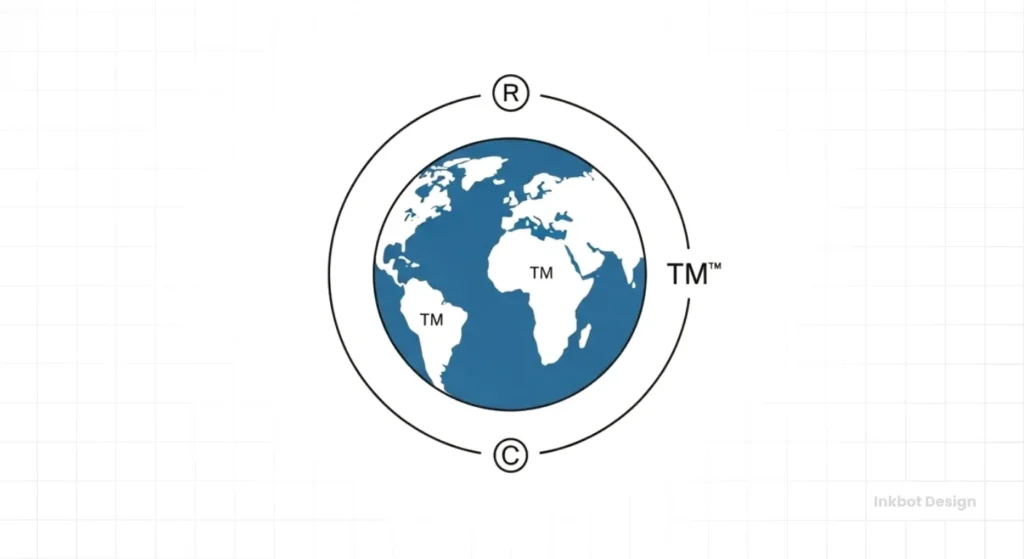
Courts in the UK and EU increasingly rule on “Phonetic Equivalence.” This means if your brand name, when spoken, sounds identical to a competitor’s name in a local dialect—even if the spelling is entirely different—you are liable for infringement.
| Legal Risk Factor | Description | Audit Requirement |
| Aural Similarity | Names that sound similar in different regional accents | IPA mapping across 5+ regional dialects |
| Conceptual Overlap | Different words translate to the same local meaning | Reverse-translation semantic audit |
| Transliteration Conflict | Issues when names are converted into local writing systems | Back-translation of Kanji/Cyrillic scripts |
| Dilution by Vernacular | Names resembling common everyday local words | Local frequency-of-use analysis |
Case Study: The “Aura” Conflict (2025-2026)
A UK-based fintech firm, “Aura,” attempted to expand into Southeast Asia. While the name was clear in English, the phonetic transliteration into local scripts overlapped with that of a pre-existing state-owned telecommunications provider.
The resulting legal battle cost the firm £1.4 million in legal fees and a complete regional rebrand.
A professional linguistic audit would have identified the Script Overlap during the discovery phase, allowing for a “Sub-Brand Strategy” that bypassed the conflict entirely.
Preventing the “Rebrand Tax”
The Rebrand Tax is not merely the cost of a new logo. It includes:
- Legal Settlement Fees: Payments to settle infringement claims.
- SEO/Visibility Loss: The destruction of accumulated backlink equity and authority.
- Physical Asset Replacement: Signage, packaging, and hardware updates.
- Customer Confusion Discount: The loss in sales caused by a sudden identity shift.
By integrating a linguistic audit into the initial naming process, businesses convert a potential multi-million-pound liability into a one-time operational investment.
The Verdict
The verdict is clear: linguistic brand screening is a non-negotiable engineering requirement for any business with global ambitions in 2026.
Treating it as a “nice-to-have” or an afterthought is a recipe for financial and reputational disaster.
As we have demonstrated, the cost of a failed name—the “rebrand tax”—far outweighs the investment in a professional, human-led audit at the start of the naming process.
Your brand name is the most used piece of communication your company will ever own. It must be as technically sound as your product and as culturally resonant as your mission.
If you are ready to build a brand that works across borders without becoming a cautionary tale, explore Inkbot Design’s brand naming services or read our deeper dive into brand names to see how we tackle these challenges for our clients.
Don’t leave your reputation to a translation algorithm.
FAQs
What is linguistic brand screening?
Linguistic brand screening is a technical audit of a brand name’s meaning, pronunciation, and cultural associations across multiple languages. It identifies slang, double entendres, and phonetic hurdles to ensure a name is viable for global markets and to prevent expensive rebrands.
Why is professional linguistic screening better than Google Translate?
Professional screening accounts for regional dialects, living slang, and cultural nuances that translation software misses. While AI identifies literal meanings, human experts identify how a word feels and its potential for unintended mockery or offence in specific social contexts.
When should a company perform linguistic brand screening?
Linguistic screening should occur during the initial creative phase of brand naming, not after a name has been selected. Performing the audit early prevents “Sunk Cost Bias” and ensures that every name on the shortlist is already viable for the target global markets.
Can a brand name affect global trademarking?
A brand name’s linguistic profile directly impacts its trademark potential, as phonetic similarities to existing brands in other languages can lead to legal challenges. Screening identifies these overlaps early, reducing the risk of trademark infringement in international jurisdictions.
What is “phonetic stickiness” in branding?
Phonetic stickiness refers to how easily a name is processed, remembered, and pronounced by a target audience. Names with high stickiness use universal phonetic structures that minimise cognitive load, making the brand more likely to be shared via word of mouth.
Is linguistic screening necessary for small businesses?
Small businesses operating online are effectively global from day one and require linguistic screening to avoid alienating potential international customers. A “local” name can quickly become a liability as a business scales across borders via e-commerce.
What happened with the Ford Pinto in Brazil?
The Ford Pinto failed in Brazil because “Pinto” is a local slang term for male genitals, forcing a rebrand to “Corcel.” This historical example illustrates how a lack of linguistic screening can lead to brand embarrassment and costly forced rebranding.
How does AI affect brand naming in 2026?
In 2026, brand names must be screened for AI voice retrieval clarity and algorithmic distinctiveness. Linguistic audits now include tests to ensure that AI assistants can distinguish the brand name from common nouns and competitors in various accents and languages.
Does a brand name need to be screened for visual script changes?
Names must be audited for how they appear in non-Latin scripts like Kanji, Arabic, or Cyrillic to ensure visual resonance. A name that looks balanced in English may appear cluttered or carry negative visual connotations when transliterated into another writing system.
What is the “rebrand tax”?
The rebrand tax is the total cost—including legal fees, new signage, updated packaging, and lost brand equity—incurred when a company must change its name due to a linguistic or cultural blunder. This cost is significantly higher than the initial investment in linguistic screening.