How AI Recommends Brands: Memory, Retrieval and Reputation
AI recommendations emerge from a combination of model knowledge, information retrieval and available evidence. Brands cannot control proprietary recommendation systems, but they can improve how clearly their expertise is represented across the web. Understanding these mechanisms helps professional services firms build credible positioning before competitors dominate the conversation.
 By Stuart Crawford
 Reviewed by Tabitha Ayers
11 min read

On this page11 min left
- AI visibility is partly a brand positioning problem
- How AI systems remember and retrieve information about brands
- Why independent sources influence AI recommendations
- Why a recognisable brand can still be overlooked
- How professional services firms can become credible recommendations
- The Verdict: Build a reason to be recommended
- Questions people ask
AI recommendations are shaped by what models have learned, what they can retrieve and the evidence available to support an answer.
A professional services firm can have an established reputation, a strong website and years of experience yet remain absent from an AI-generated shortlist.
That absence warrants investigation, especially when a smaller competitor emerges in its place.
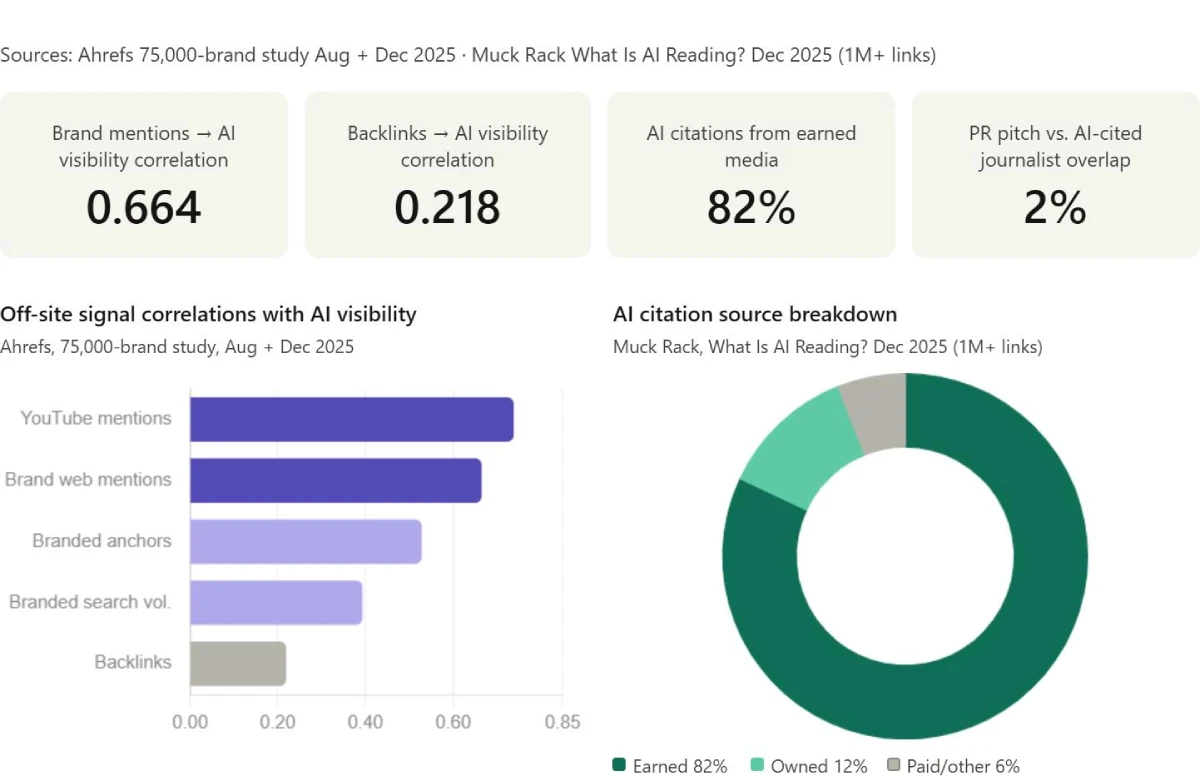
Muck Rack's May 2026 What Is AI Reading? study analysed more than 25 million cited links across 17 industries. Earned media represented 84% of citations, while journalism accounted for 27%.
84%
These figures describe citation sources, not the percentage of recommendations caused by earned media. Still, they pose a problem for businesses that rely almost entirely on their own websites.
Understanding generative engine optimisation means understanding the different ways AI systems acquire and use information about a brand.
For professional services firms, the commercial question is straightforward: can an AI system identify what your organisation does, recognise the clients it serves and find credible evidence explaining why someone should choose it?
AI visibility is partly a brand positioning problem
AI systems recommend brands by interpreting a user's request against information available to them. That information can come from model training, external retrieval, structured data and other sources. The precise combination varies between platforms and queries.
A recommendation therefore depends on more than whether a company appears somewhere online.
Consider a managing director asking ChatGPT:
Which UK branding agency understands the commercial challenges facing established professional services firms preparing for expansion?
The system needs to identify relevant agencies, understand their areas of expertise and find information supporting their suitability.
An agency describing itself as a creative studio, digital agency, design consultancy and marketing partner without explaining its primary commercial specialism creates an interpretation problem.
The information exists. The positioning is unclear.
Three distinctions matter:
- Parametric memory contains information encoded during model training.
- Retrieval systems can introduce external information when answering a query.
- Third-party evidence can help substantiate a brand's expertise and relevance.
AI recommendations emerge from information learned during training, retrieved from external sources and interpreted against the user's specific question and context.
This distinction matters commercially. A brand can be technically accessible without being sufficiently differentiated to deserve a recommendation.
How AI systems remember and retrieve information about brands
AI systems can use two fundamentally different information pathways: parametric memory and retrieval-augmented generation.
Understanding the distinction prevents businesses from treating every AI visibility problem as an SEO issue.
Parametric memory: what an AI model has learned
Parametric memory refers to information encoded within a model's parameters during training.
A language model learns statistical relationships between words, concepts, entities and information encountered in its training material. It can consequently develop associations between organisations, industries, individuals and specialist subjects.
For example, a model might associate an established accountancy practice with corporate taxation because that organisation has appeared repeatedly in relevant material.
However, this does not mean the model maintains a searchable database of every company it has encountered.
Nor can a business directly instruct a general-purpose language model to remember a new positioning statement simply by publishing it on its website.
Model training and updating are controlled by the model provider. The exact information retained, its weighting and its subsequent influence on individual answers are not normally visible to marketers.
This creates an important limitation.
A professional services firm cannot assume that a website rebrand will immediately change what an existing model has learned about the organisation.
Retrieval-Augmented Generation: finding information at answer time
Retrieval-Augmented Generation (RAG) allows an AI system to retrieve relevant external information and use it when generating an answer.
The general process involves three stages:
- Retrieval: The system searches an available information source for relevant material.
- Augmentation: Selected information is added to the context used to generate the answer.
- Generation: The model produces a response using the supplied information and its existing capabilities.
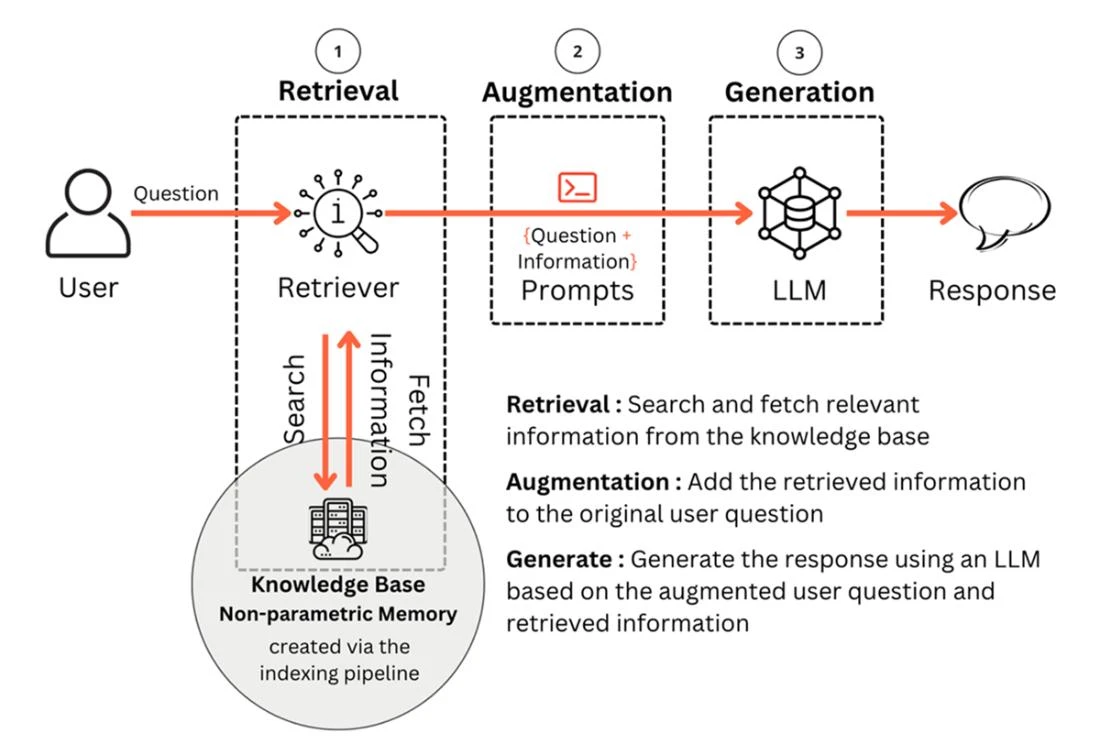
A system might search for professional services agencies, retrieve relevant company pages and third-party coverage, then use those materials to formulate a shortlist.
The exact architecture differs between providers. Some systems use search engines, some use proprietary retrieval infrastructure, and others combine multiple information sources.
The distinction between memory and retrieval is essential.
A business might be absent from a model's learned associations but discoverable through a live search. Equally, a model might recognise a well-established brand without needing to retrieve its website for every question.
Neither route guarantees inclusion in the final answer.
Why query fan-out changes the information being retrieved
Query fan-out describes the process of expanding a user's original question into multiple related searches.
A request for a specialist legal branding agency could lead to searches covering:
- Branding agencies specialising in professional services.
- Legal sector brand positioning.
- Law firm marketing and differentiation.
- UK branding consultancy experience.
- Evidence of specialist industry knowledge.
These searches can uncover information the original query did not explicitly mention.
This is one reason topical coverage matters. A firm's website might explain its logo design service perfectly while providing very little evidence of its understanding of law firm positioning, partner relationships or professional services growth.
A competitor with a clearer body of relevant information may become easier to retrieve.
The practical implication is to examine information across the entire brand ecosystem, not just the homepage.
For a broader technical examination of this subject, see Inkbot Design's guide to AI-ready brand architecture.
Why independent sources influence AI recommendations
A company's website explains what the company wants people to believe about it. Independent sources provide evidence of how that expertise is recognised elsewhere.
That distinction matters.
2026 research found that earned media accounted for 84% of cited links across its sampled ChatGPT, Claude and Gemini responses. Journalism represented 27%, while paid and advertorial content accounted for just 0.3%.
This uses a broad definition of earned media, encompassing sources outside a brand's direct control, including journalism, Wikipedia and third-party corporate content.
The figures should not be interpreted as evidence that 84% of AI recommendations are caused by PR coverage. They measure the composition of cited links.
The distinction is important. Citation share is not recommendation share.
Third-party credibility provides evidence beyond the company website
Imagine two hypothetical professional services consultancies competing for a particular type of corporate client.
Both publish similar service descriptions. Both have professional websites. Both describe themselves as experienced specialists.
However, one also has independently published research, relevant industry coverage and clearly attributed contributions from its senior professionals.
The other relies almost entirely on self-authored marketing material.
The first organisation has a wider body of independently accessible evidence. That does not guarantee a recommendation, but it gives retrieval systems more external material with which to assess its claims.
This is where earned media becomes relevant to brand strategy.
A useful distinction exists between:
- Brand-owned information: Website pages, service descriptions, reports and company publications.
- Earned information: Independent journalism, editorial coverage, interviews and external recognition.
- Third-party references: Industry directories, professional associations, research publications and other relevant organisations.
A firm needs accurate information it controls and credible evidence it does not entirely control.
Why paid visibility is not a substitute for independent recognition
The 2026 analysis found that paid and advertorial content accounted for 0.3% of cited links.
This is a useful reason to question the assumption that buying more promotional placement will automatically improve AI citation visibility.
It does not establish that advertising has no indirect influence on brand awareness, search demand or subsequent editorial coverage.
A paid campaign might introduce a brand to journalists, prospective clients or industry commentators. Those interactions can produce independent coverage later.
The distinction is between purchasing exposure and earning recognition.
For a professional services business, an independently published article that explains a partner's expertise on a relevant regulatory or commercial issue may provide more useful evidence than a generic sponsored announcement.
Inkbot Design's article on closing the authority gap explores the wider relationship between external credibility and AI visibility.
Different AI platforms do not cite the same sources
The research also found substantial differences between the sampled platforms.
AI platform | Responses containing citations |
|---|---|
ChatGPT | 96% |
Gemini | 82% |
Claude | 55% |
A response without a visible citation does not prove that the model relied exclusively on parametric memory.
The figures also illustrate why measuring one AI platform is insufficient. A brand appearing in one platform's cited answers may be absent from another's.
A professional services firm should measure its visibility across the systems its prospective clients actually use.
Why a recognisable brand can still be overlooked
Recognition and recommendation are different outcomes.
An AI system might know that a consultancy exists without having enough relevant evidence to identify it as an appropriate choice for a specific client.
That distinction exposes three common brand problems.
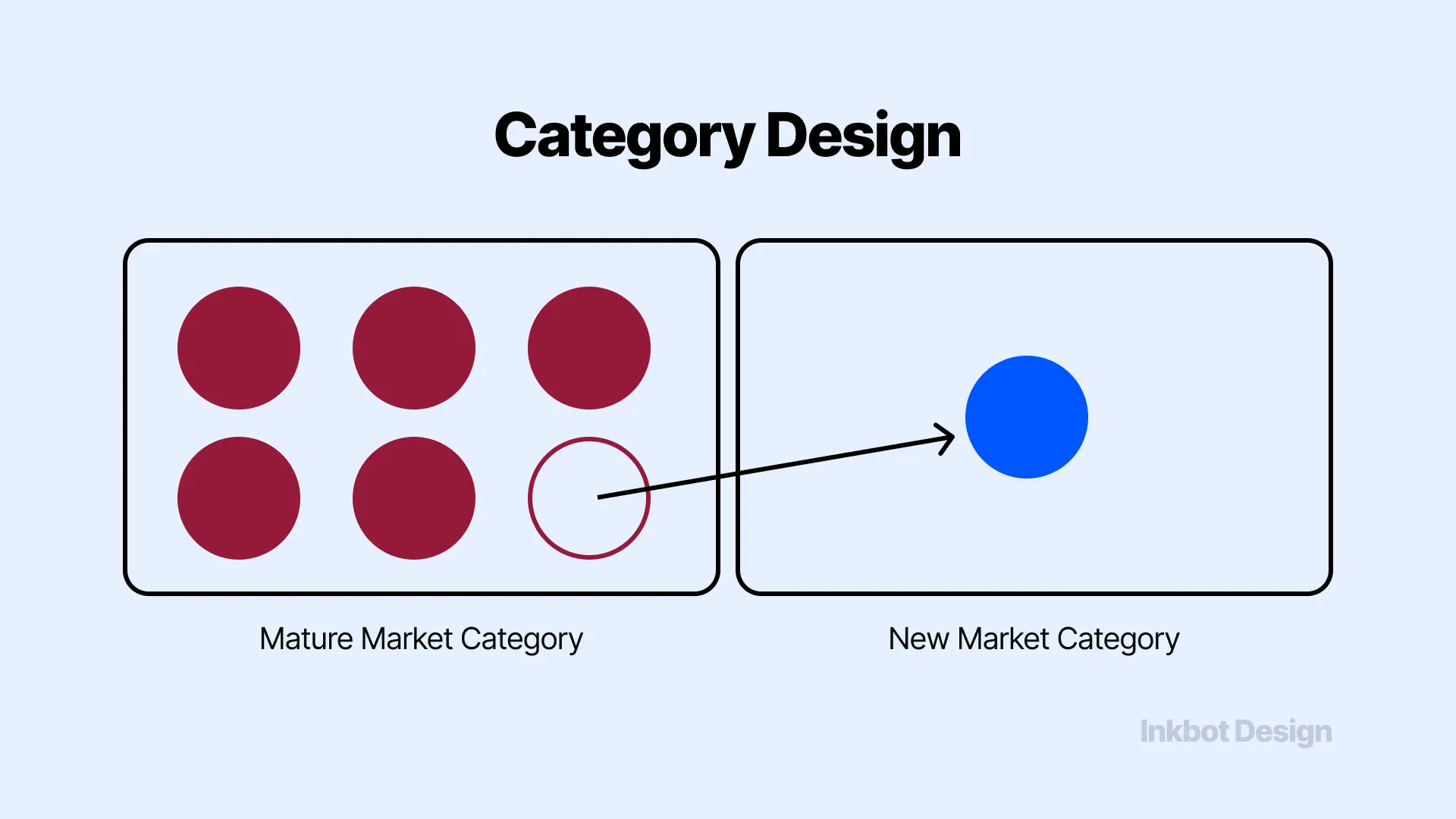
Category confusion makes recommendations harder to justify
A business needs a recognisable category.
If an organisation describes itself using several overlapping labels, its intended market position becomes harder to interpret.
Consider a hypothetical 80-person consultancy that describes itself as a management consultancy, transformation partner, technology specialist and business advisory practice.
Each description might be accurate. Together, they provide little clarity about the organisation's principal area of expertise.
A buyer searching for a specialist operational restructuring consultancy needs a clear reason to include that business.
A brand architecture and positioning review should establish:
- The primary category in which the organisation competes.
- The specific problems it is qualified to solve.
- The clients it is best equipped to serve.
- The evidence supporting its specialist claims.
This is not a recommendation to remove every secondary service. A multi-disciplinary practice can retain several capabilities while maintaining one coherent market position.
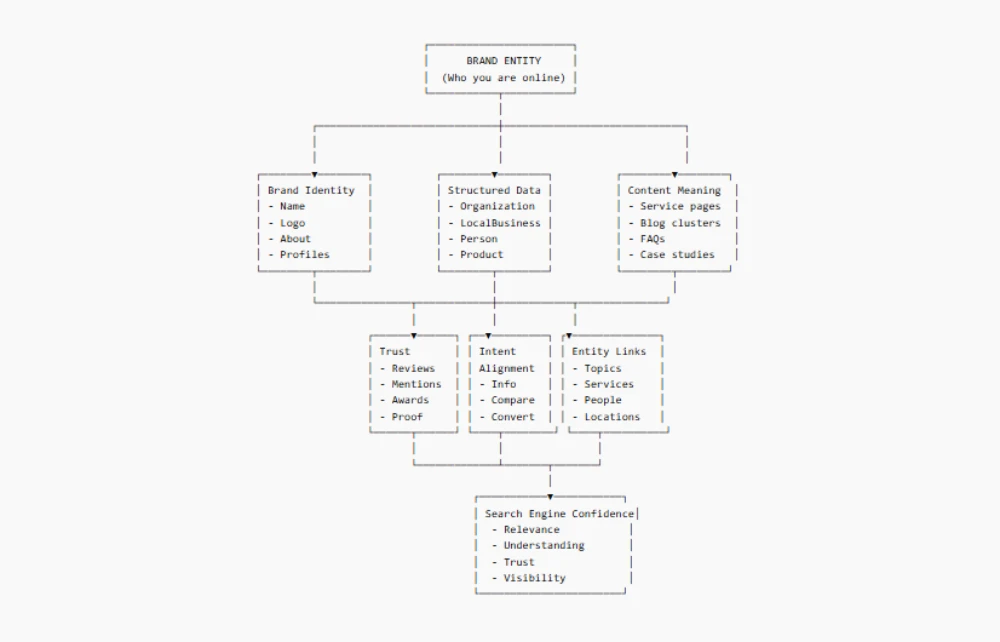
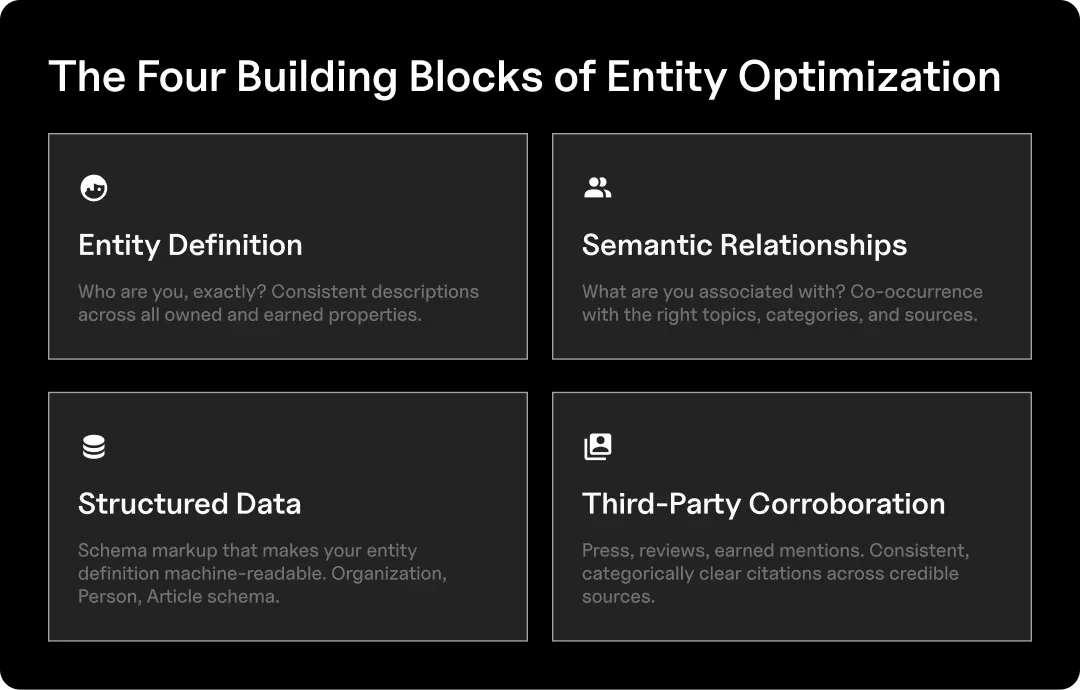
Entity inconsistency creates conflicting brand information.
An entity is a recognisable person, organisation, place or concept.
For a professional services business, the organisation's name, location, leadership, services and areas of expertise should be represented consistently across relevant sources.
Imagine a firm that uses three different descriptions across its website, industry directory listings and partner biographies.
One calls it a corporate law specialist. Another describes it as a commercial advisory practice. A third refers to a general legal services provider.
Those descriptions might not be factually wrong, but they communicate different market positions.
The problem becomes more serious when information is outdated.
A firm that has completed a merger or repositioned its services needs its external identity to reflect the current organisation.
Inkbot Design's guide to brand entity consistency examines how businesses can maintain coherent information across the web.
Weak differentiation gives AI little reason to prefer one brand
Professional services firms frequently use similar language.
Experienced team. Client-focused approach. Tailored solutions. Industry-leading expertise.
These descriptions are easy to publish. They are also difficult to distinguish.
If five competing consultancies claim the same capabilities, the language does little to establish which one is most suitable for a particular client.
A stronger position connects a defined client problem with a demonstrable area of expertise.
For example, a hypothetical 12-partner accountancy practice might specialise in financial reporting and transaction readiness for privately owned businesses preparing for acquisition.
That is more useful than calling itself a full-service accountancy firm.
The specialism creates a clearer buying context. Supporting evidence can then demonstrate whether the firm genuinely delivers that expertise.
How professional services firms can become credible recommendations
No verified checklist guarantees an AI system will recommend a particular company.
However, managing directors can improve the quality, consistency and accessibility of the information available about their organisations.
Five practical areas deserve attention.
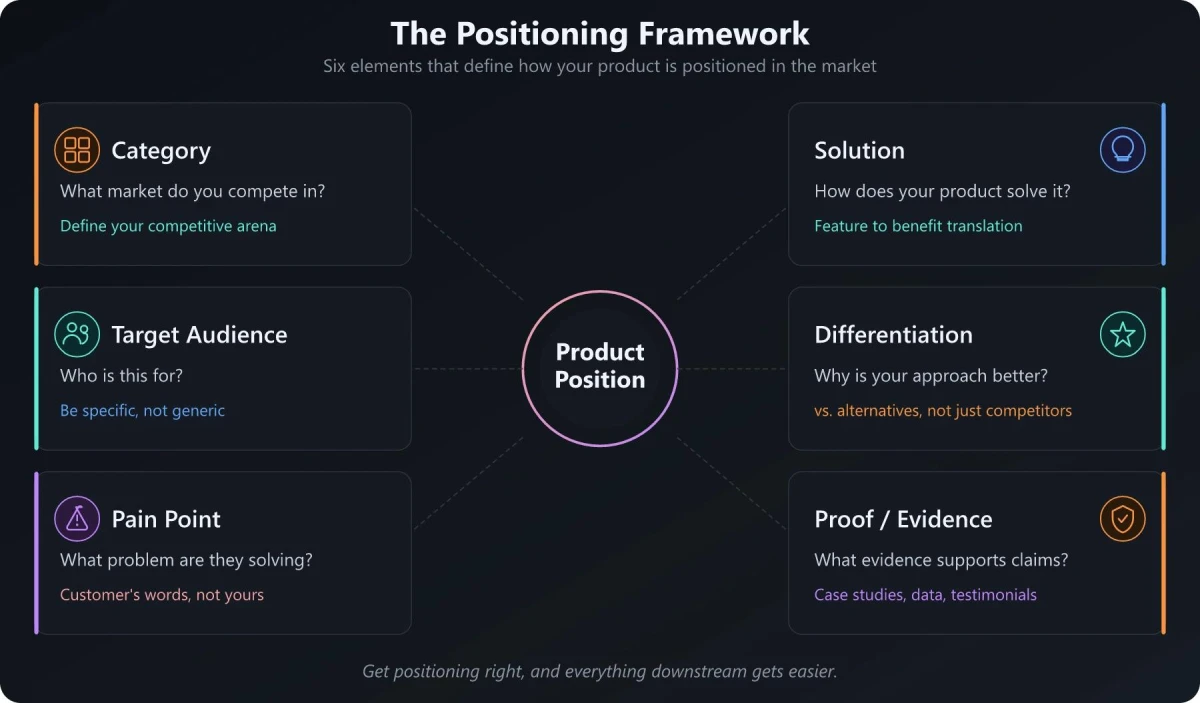
1. Establish one defensible market position
Start with the question:
What should a prospective client recommend us for?
The answer should identify a recognisable service category, a defined audience and a commercially relevant problem.
For example:
Positioning element | Hypothetical example |
|---|---|
Category | Corporate tax advisory |
Audience | UK mid-market businesses |
Problem | Complex tax requirements during acquisitions |
Differentiation | Specialist transaction and restructuring expertise |
Supporting evidence | Relevant partner credentials and documented work |
The example is illustrative, not a proven AI ranking formula.
A rebrand should establish this position before visual identity development begins. Otherwise, the business risks producing a more polished version of the same unclear message.
2. Make the organisation's expertise explicit
A website should communicate what the organisation does in language that clients recognise.
Each principal service should have a clear explanation of:
- The problem it addresses.
- The type of client it serves.
- The expertise involved.
- The commercial situation in which it is appropriate.
- Supporting evidence or credentials.
This is particularly important when the organisation has multiple practice areas.
Inkbot Design's guide to AI-scannable whitepaper design covers how to present specialist information in professional reports.
3. Build evidence outside the website
Independent recognition should support the organisation's actual market position.
Relevant opportunities include:
- Contributing specialist commentary to industry publications.
- Publishing original research.
- Participating in professional association discussions.
- Securing relevant editorial coverage.
- Publishing substantive partner interviews.
- Maintaining accurate professional directory information.
The objective is not to generate mentions indiscriminately.
A mention connecting a partner to a genuine specialist subject is more relevant than an unrelated reference to the company name.
4. Maintain consistent brand information
Audit how the organisation appears across its website and external sources.
Check its name, services, leadership, locations, specialist descriptions and current positioning.
For firms that have recently merged or changed their market focus, this exercise is particularly important.
An outdated directory profile can continue presenting a previous service offering long after the organisation has moved on.
Technical accessibility also matters. Important information should be available in crawlable page content, and relevant structured data should accurately reflect visible information.
However, schema markup cannot turn an unclear or unsupported brand claim into a credible recommendation.
5. Measure recommendation suitability, not just mentions
A brand mention is not necessarily a positive commercial outcome.
A company might appear in AI responses because it is being criticised, compared unfavourably or discussed in an unrelated context.
Measurement should therefore examine the quality of the representation.
A practical assessment can examine:
Assessment | Question |
|---|---|
Recognition | Does the AI identify the correct organisation? |
Category | Does it understand the firm's principal specialism? |
Relevance | Does it mention the brand for appropriate buying situations? |
Evidence | Does it provide credible supporting sources? |
Accuracy | Are the services, locations and leadership details correct? |
Competitiveness | Which competitors appear alongside the brand? |
Run comparable prompts across multiple platforms and repeat them over time. Record the prompt, date, platform, response and cited sources.
AI responses are variable. A single successful answer is not proof of sustained visibility.
OpenAI's shopping documentation provides an interesting example of how product recommendations can involve user context, structured metadata and third-party information. At the same time, merchant ordering uses separate considerations such as availability, price and quality.
These disclosures concern shopping, not professional services recommendations, so they should not be treated as a complete explanation of how AI selects agencies or consultancies.
The distinction reinforces an important point: suitability for and recommendation and the subsequent ordering of available options are not necessarily the same decision.
The relevant task is to ensure that the brand's stated expertise, visual identity and external reputation communicate the same commercial proposition.
The Verdict: Build a reason to be recommended
AI visibility is influenced by multiple information pathways. Parametric memory, external retrieval and third-party evidence all play different roles.
Professional services firms cannot directly control what proprietary AI models learn or guarantee which organisations appear in generated answers.
They can control the clarity of their positioning, the accuracy of their published information and the quality of the evidence supporting their expertise.
The research makes the external credibility issue difficult to dismiss. The 2026 study found that earned media accounted for 84% of sampled AI citations. That is a reason to take independent recognition seriously, not a promise that PR coverage will produce recommendations.
The next step is to examine whether your brand gives a prospective client a clear reason to choose you.
Inkbot Design offers a free Brand Equity Audit™ to identify where your positioning, identity and brand communication may be losing commercial ground.
Start with the reason a buyer should recommend your business. Then make sure the evidence supports it.
Questions people ask
How does ChatGPT decide which companies to recommend?
ChatGPT can use information learned during model training, external search results, available third-party information and the context of the user's question. The precise combination varies by task. OpenAI does not publish a universal ranking formula for recommending professional services companies.
Does AI remember my company's website?
Not necessarily. Publishing a page does not guarantee that its information will be included in a model's training data. AI systems may retrieve website information during a query, while future model training and updating follow separate processes.
Do backlinks influence AI recommendations?
Backlinks can help search discovery and contribute to a website's broader authority profile. However, there is no universally verified formula for AI recommendations. Relevant third-party references and independently supported expertise provide a more meaningful objective than simply accumulating links.
Can a small professional services firm compete with larger brands in AI search?
Yes, potentially. A smaller firm can have a clearly defined specialism and credible supporting evidence. However, the evidence does not establish a guaranteed advantage for smaller organisations. Visibility depends on the platform, query, competition and available information.
Does PR improve AI visibility?
PR can increase AI's visibility by creating independently published content about a business. The May 2026 study found that earned media accounted for 84% of sampled AI citations. This is an observed citation share, not proof that PR causes an AI system to recommend a particular company.
Should professional services firms optimise for ChatGPT or Google first?
Neither should be treated as the only destination. Professional services firms should maintain accessible, accurate information across their website and relevant external sources, then measure visibility across the AI platforms their prospective clients use.