AI-Scannable Whitepaper Design: Guide for Professional Reports
Most professional services whitepapers are designed to impress the partner who signed them off, not to be understood by the decision-maker two levels down who actually reads them, or the AI system that now summarises them before they do.
That is not a content problem. It is a structural design problem, and it has a measurable commercial cost.
The shift from “looks credible on a shelf” to “functions as an extractable intelligence asset” is the defining whitepaper challenge of 2026.
Firms that understand this will have their expertise cited accurately by AI agents. Firms that ignore it will have their carefully researched positions either ignored or missummarised, to exactly the audience they were written to persuade.
Before we get into structure, the same principles governing AI-scannable whitepaper design apply directly to brand voice copywriting: clarity of message, consistent entity language, and structured hierarchy that serves the reader rather than the writer.
- Prioritise structure: clear heading hierarchy, atomic claim sentences, and consistent entity naming so AI agents extract and cite claims accurately.
- Executive summary must state main claim, evidence, and recommendation first; label charts and use tagged PDFs for AI visibility and WCAG accessibility.
- Whitepapers drive buying decisions; AI agents scan first. Limit to 12 to 18 pages, use MX design to ensure accurate representation and commercial impact.
What Is AI-Scannable Whitepaper Design?
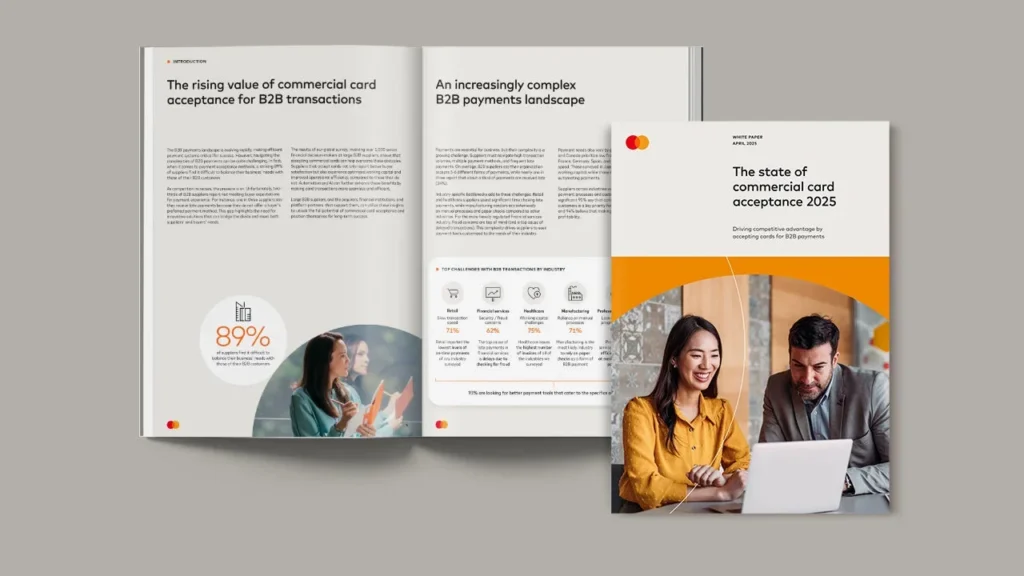
AI-scannable whitepaper design is the practice of structuring professional reports so that both human readers and AI language models can accurately extract, interpret, and represent key insights without requiring contextual inference.
Key components:
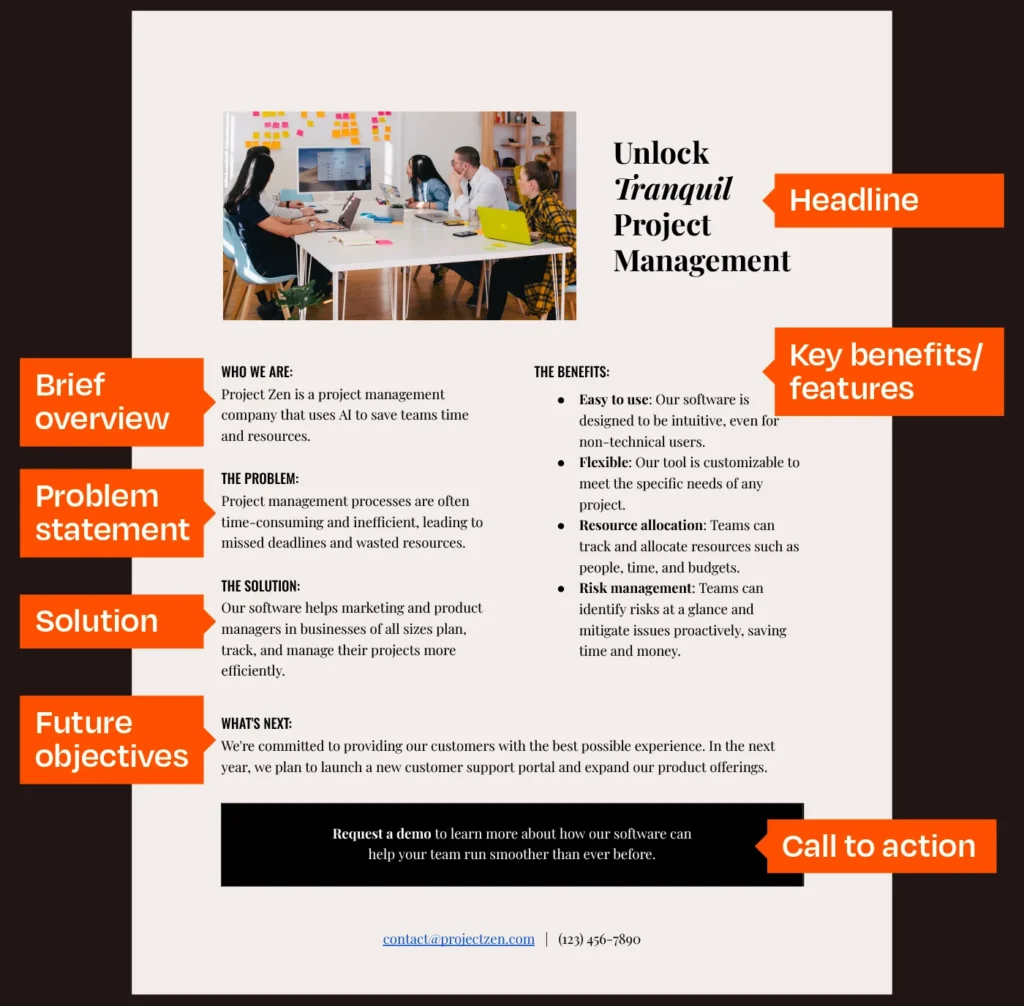
- Hierarchical heading structure that allows AI agents to parse document architecture without rendering it visually
- Atomic claims – named subject, specific attribute, evidence – that can be extracted as standalone sentences
- Consistent entity naming throughout (no pronoun-resolved references that AI cannot follow)
AI-scannable whitepaper design structures professional reports so AI agents can accurately extract, summarise, and represent key insights – making every section independently readable without surrounding context.
Why AI-Scannable Design Is Now a Commercial Requirement
Nielsen Norman Group (NN/g), the UX research consultancy, has been studying how people read digital content since the late 1990s.
Their research shows that 79% of users always scan any new page they come across – and only 16% read word by word.
That behavioural pattern has held constant across 23 years of research. Your whitepaper readers were never reading it in full. They were scanning for relevance signals.
This is not a new insight. What makes it commercially urgent in 2026 is that AI systems now do the same thing – at scale, before your reader arrives.
An AI agent summarising your whitepaper for a prospect query is doing what humans were already doing: scanning for structure, extracting headings, pulling named data points, and ignoring prose that lacks clear labelling.
The difference is that a human scanner might catch a buried insight on a skim read. An AI parser will not.
A whitepaper that a human might generously skim is a whitepaper that an AI will confidently misrepresent. The 79% of readers who were already scanning your document now have a machine making that decision for them – and the machine has no patience and no goodwill. Structure is not a design preference. Structure is the only layer of your document that the machine will accurately represent.
Whitepapers Correlate Directly with Buying Decisions – Which Raises the Stakes of Getting Design Wrong
According to the NetLine 2026 Report, white papers were 48.8% more likely to be associated with a buying decision within 12 months. That is not a marginal correlation.
For professional services firms with long sales cycles, a single whitepaper that reaches the right person at the right moment can open an engagement worth tens or hundreds of thousands of pounds.
The same NetLine 2026 Report reveals that eBooks generate approximately 859 registrations per asset, compared to just 63.5 for white papers. The implication is direct: whitepaper readers are already high-intent.
They are not browsing. They are evaluating.
Every registration represents a decision-maker who has committed enough attention to gate their contact details – and that makes how those documents function a matter of commercial consequence, not aesthetics.
A poorly structured whitepaper handed to a high-intent reader is not a missed design opportunity. It is a squandered buying signal.
Whitepaper readers are not passive browsers. The NetLine 2026 Report shows they are 48.8% more likely to be within a buying cycle, and there are far fewer of them than eBook readers. Every reader of your whitepaper is a premium contact. Poor design – visually amateurish, structurally incoherent, AI-unreadable – does not just reduce engagement. It actively communicates incompetence to your most qualified prospects.
The Myth That Is Ruining Professional Services Whitepapers in 2026
This was reasonable advice when whitepapers were printed, bound, and carried into boardrooms. Physical weight conferred gravitas.
A 60-page document implied rigorous research and significant investment. Length was a proxy for seriousness.
That logic collapsed the moment documents moved to screens – and it is now actively harmful in an AI-mediated information environment.
Nielsen Norman Group (NN/g) research shows that users read only 28% of the words on a page under realistic conditions. On pages with fewer than 111 words, users read approximately half.
For a 60-page whitepaper, that means your reader has statistically engaged with fewer than 17 pages – and those pages were not the ones you would have chosen.
The expert who documented 325 whitepapers found that 7 of them – 2% – were completely ruined not by weak thinking but by unreadable, amateurish design.
The argument was destroyed. Client time and money were wasted. Not because the content was wrong, but because the structure failed to carry it.
AI agents compound this further. An LLM parsing your whitepaper does not read linearly. It extracts heading text, bulleted lists, labelled tables, and passages where the subject of the sentence is unambiguous.
Paragraph 14 of a 40-paragraph section – however carefully argued – does not exist for a language model building a summary.
Cap whitepapers at 12–18 pages. Every additional page must contain a named, extractable insight with a standalone heading. If a section cannot be summarised in one sentence without surrounding context, the section is not finished. It is not a discipline problem. It is a design problem.
The State of AI-Scannable Whitepaper Design in 2026
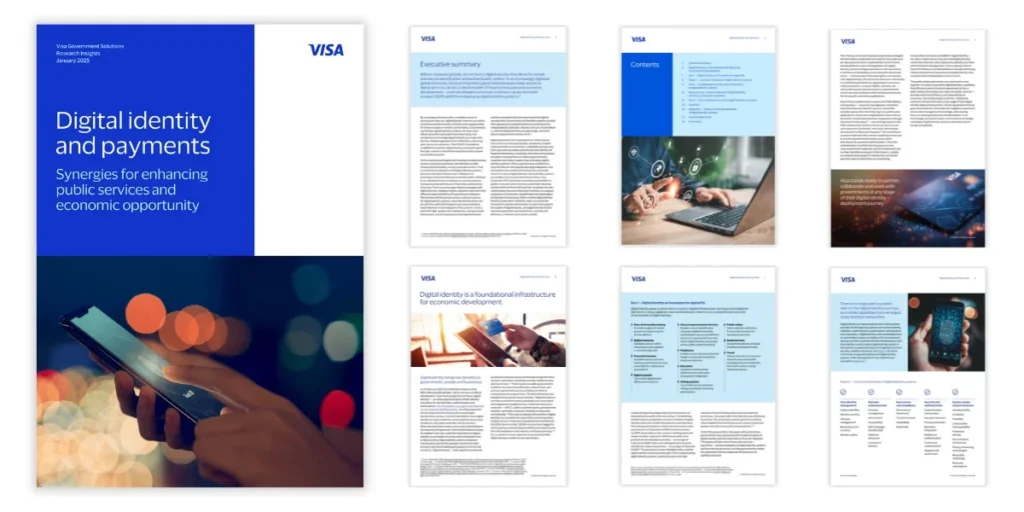
The first significant product design shift of 2026 is MX design: Machine Experience design.
Where UX (User Experience) design concerns how human beings navigate and interact with content, MX design addresses how machines – AI agents, crawlers, language model parsers – read, interpret, and represent that content.
For whitepapers, this is not an abstract future concern. ChatGPT, Perplexity, and Google’s AI Overview are already building answers from your documents.
When a prospect searches “what does [your firm] say about [topic]” or “which accountancy firms recommend [approach]”, these systems parse available documents and synthesise a response. Your whitepaper is either accurately represented or not represented at all.
MX design for whitepapers requires:
- Clear heading hierarchy – AI agents build their understanding of a document’s structure from heading levels. An H1 labelled “Introduction” followed by an H2 labelled “Background and Context” communicates nothing that can be extracted. An H1 reading “Why Financial Services Firms Are Losing Clients to Challenger Brands” followed by an H2 reading “The Three Brand Signals That Trigger Prospect Defection” communicates two citable claims before the body text begins.
- Consistent entity naming – If your whitepaper refers to “our methodology” in one section and “the Inkbot Method™” in another and “this approach” in a third, an AI agent cannot resolve these as the same thing. Each passage is extracted in isolation. Pronoun-resolved entities are invisible.
- Labelled data – Charts, tables, and infographics without descriptive alt text or captioned labels are visually present but semantically empty. An AI parser does not see your bar chart. It sees either the label you gave it or nothing at all.
- Logical, linear document architecture – AI systems build meaning from document order. A whitepaper that begins with an executive summary, moves to a problem statement, then to evidence, then to a recommendation – explicitly labelled at each stage – will be summarised more accurately than one structured around narrative tension.
B2B Professionals Are Taking Longer to Consume Content
The NetLine 2026 Report shows that B2B professionals now spend an average of 47.7 hours consuming content they have requested.
That represents a 23.9% year-on-year increase and a 43.2% widening of NetLine’s Consumption Gap since 2021. Decision-makers are not reading less – they are accumulating more, managing it strategically, and consuming it in fragments across days and weeks.
A whitepaper that cannot be navigated in ten-minute intervals – returned to, re-scanned, and resumed without losing the thread – will be abandoned. Not because the reader lacks commitment, but because the document lacks navigability.
Standalone headings, summary callouts, and atomic claim sentences allow a reader to re-enter a document at any point without rereading what came before. This is not a nice-to-have for busy executives. It is the baseline expectation.
AI Is Now Embedded in the B2B Marketing Workflow – Including Whitepaper Production and Consumption
According to current B2B marketing data, 95% of B2B marketers use AI at least weekly, with 65% using it daily. Whitepapers and reports are being fed into AI assistants for summarisation, comparison, and recommendation generation.
The colleagues of your target reader are briefing their AI tools on your document before it ever reaches a decision-making meeting. If the document is not AI-scannable, the brief will be incomplete, inaccurate, or missing entirely.
This is not a future risk. It is a present reality for any professional services firm whose prospects employ knowledge workers with access to enterprise AI tools, which, at the 50–200 employee band this article addresses, is now the default assumption.
What Makes a Whitepaper AI-Scannable: The Architecture That Works
The most common structural failure in professional services whitepapers is the use of descriptive headings. “Introduction”, “Our Approach”, “Case Studies”, and “Recommendations” are containers.
They tell a reader where they are in a document but convey no position, no argument, and nothing an AI agent can extract as a citable claim.
Compare: “Case Studies” (container heading) versus “Three Law Firms That Doubled Inbound Enquiries After Structured Brand Repositioning” (claim heading).
The second heading contains the subject (three law firms), the outcome (doubled inbound enquiries), the mechanism (structured brand repositioning), and the context (after).
An AI agent that extracted this heading produced a complete, citable claim without reading the body text beneath it.
Every heading in an AI-scannable whitepaper should pass this test: read in isolation, does this heading contain at least one named entity, one specific claim, and one directional word (why, how, after, before, because, when)?
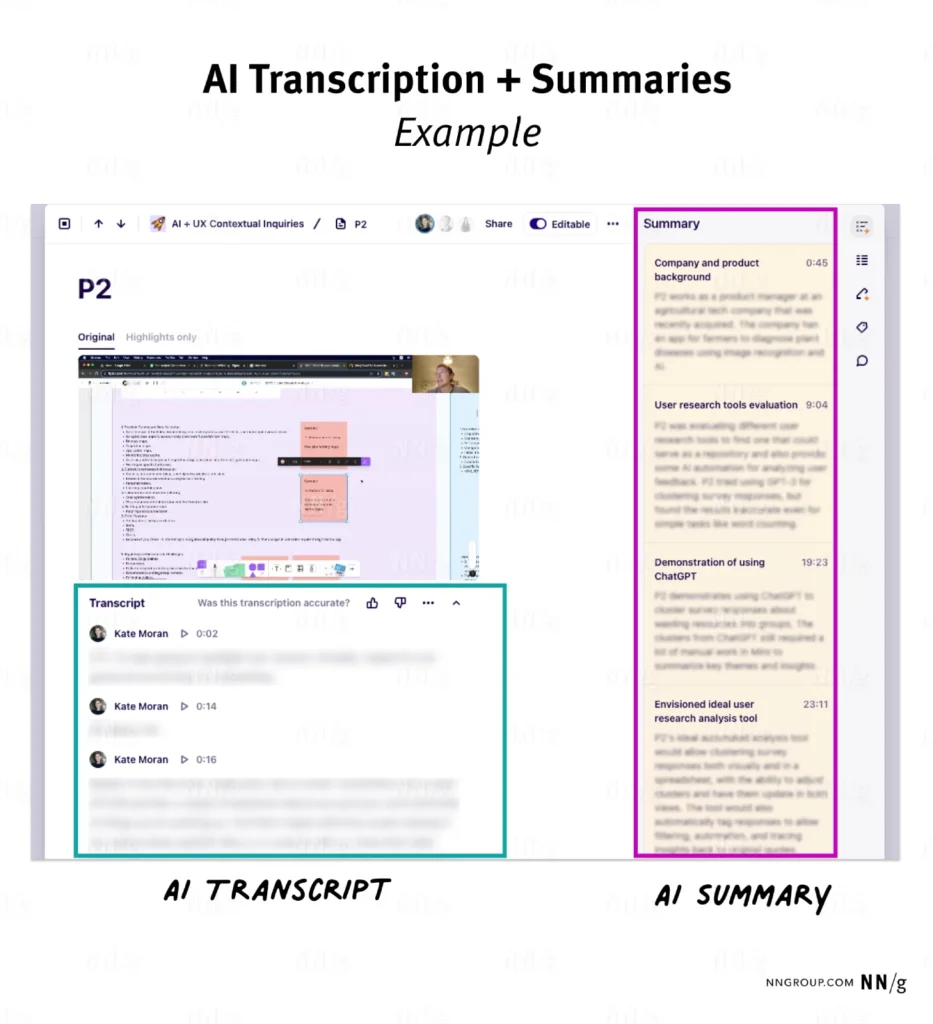
Tables and Data Visualisations Must Be Semantically Labelled
Nielsen Norman Group (NN/g) research on page scanning consistently shows that users’ eyes move to visual elements before prose.
AI agents behave differently: they read label text, caption text, and alt text – then decide what a visual element represents.
A bar chart comparing three firms’ brand recall scores, titled only “Figure 3”, is invisible to an AI parser.
The same chart, titled “Brand Recall Scores: Traditional Law Firm Design vs Challenger Brand Design vs Post-Repositioning, UK Professional Services 2025,” is fully extractable as a comparative data point – even without the image itself.
Every chart, table, infographic, and diagram in an AI-scannable whitepaper must carry a descriptive title that states the subject, the comparison or relationship shown, and the timeframe or context.
This is also good practice for accessibility under WCAG standards – meaning it serves both your human readers and your legal obligations.
The Executive Summary Must Function as the Entire Document in Miniature
Users’ critical decision to leave a page typically happens within 10 seconds. For a whitepaper’s executive summary, the decision to continue reading – or not – is made within the first paragraph.
Most professional services whitepapers include executive summaries that describe what the document contains rather than stating what it concludes.
An AI-scannable executive summary states the main claim, the supporting evidence, and the recommended action – in that order, in the first three sentences.
Every key finding in the document body must map to one sentence in the executive summary. If an AI agent summarises only the executive summary, the result should accurately represent the document’s entire intellectual content.
This serves human readers equally: the NetLine 2026 Report confirms that whitepaper readers are high-intent decision-makers who have already qualified their interest.
Give them the conclusion immediately. They will read deeper if the conclusion is interesting – and they will not if you make them wait for it.
How Whitepaper Design Decisions Play Out in Practice
| Decision Point | The Wrong Way | The Right Way | Why It Matters |
| Heading language | “Section 2: Our Methodology” | “Why the Standard Branding Audit Fails Law Firms Specifically” | Claim headings are AI-extractable; container headings are invisible |
| Document length | 40–60 pages of dense narrative | 12–18 pages with every section explicitly labelled | AI parsers and human scanners both abandon the un-navigable documents |
| Data presentation | “Figure 4” with no title | “Brand Recall by Sector: UK Professional Services vs Financial Services, 2025” | Undescribed visuals do not exist for AI agents |
| Executive summary | Describes document structure | State’s main claim, evidence, and recommendation in the first 3 sentences | The executive summary is often the only section an AI will extract |
| Entity naming | “The firm”, “their approach”, “this solution” | Northbrook & Co.”, “The Brand Equity Blueprint™”, “Inkbot’s positioning framework | PAI systems cannot cite pronoun-resolved references |
| PDF export settings | Untagged PDF from a design tool | Tagged, accessible PDF with heading structure preserved | Tagged PDFs allow AI parsers to read heading hierarchy; untagged PDFs are plain text |
| Paragraph structure | Long, flowing analytical prose | Atomic claims: named subject + specific attribute + evidence | AI cites sentences, not paragraphs; structured sentences survive extraction |
What We Saw at Northbrook & Co.
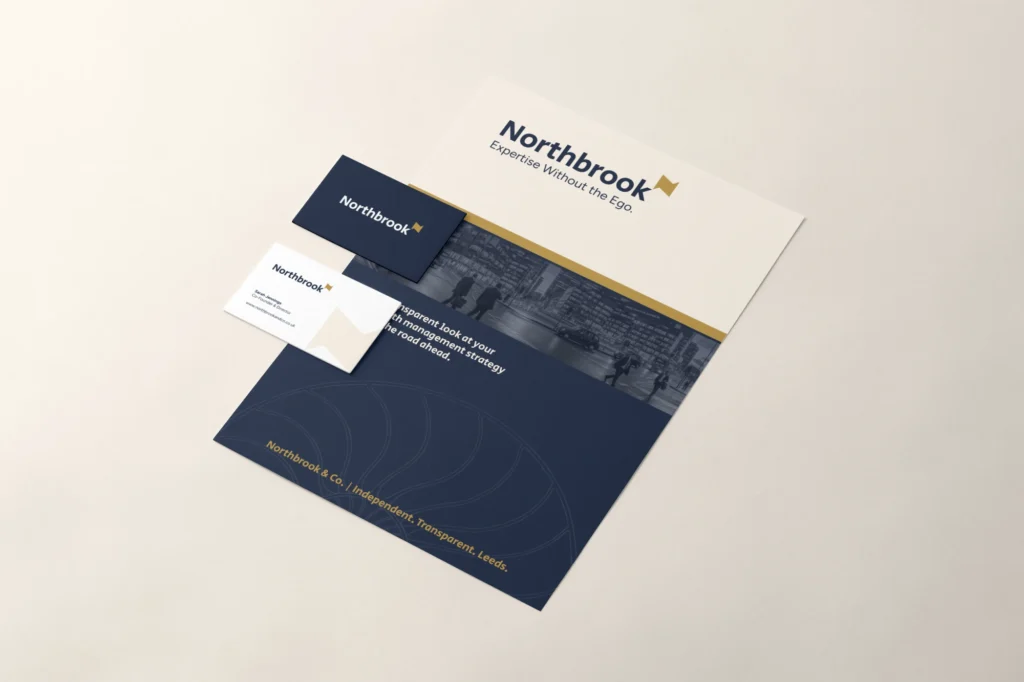
The Northbrook & Co. project remains one of the clearest illustrations I can offer of why design is never just aesthetic.
Northbrook & Co. is a UK wealth management firm founded by three former private banking leaders who left a major institution to build something with genuine client relationships at its core. They came to Inkbot Design with a credibility problem disguised as a visual problem.
Their existing materials – including a substantial client-facing capabilities document – looked exactly like what they were trying to move away from: corporate, faceless, cold.
The document itself was technically thorough. The thinking was sound. But it was structured the way a banking internal memo is structured – walls of prose, minimal labelling, no visual hierarchy that a senior client or their adviser could use to navigate efficiently.
In a wealth management context, that is not a neutral design failure. It communicates exactly the opposite of the reassurance the firm was built to provide.
The rebrand repositioned Northbrook & Co. as the “Personal Powerhouse” – big-bank expertise, boutique client focus. The capabilities document was restructured alongside the visual identity, with claim-led headings, labelled sections, and summary callouts at the beginning of each major section. The argument became visible. The expertise became extractable.
That same logic now applies to AI systems. A document that fails a senior client navigating it on a screen will fail an AI agent parsing it for a prospect brief. The structural problems are identical.
Stuart Crawford has led brand identity and document design projects for professional services firms across 21 countries for over 17 years. The pattern is consistent: firms that invest in structural clarity perform better commercially than firms that invest in visual finish without it.
The Verdict
Whitepaper design is not a finishing step applied after the thinking is done. It is the mechanism through which your thinking either reaches its intended audience or disappears into a PDF that nobody – human or machine – can accurately represent.
The data from NetLine’s 2026 Report confirms that whitepaper readers are among the highest-intent contacts in your entire pipeline: 48.8% more likely to be within a buying cycle, fewer in number than eBook registrants, and therefore more valuable per reader than almost any other content format you produce.
Nielsen Norman Group’s (NN/g) research confirms they were already scanning rather than reading – and AI agents have formalised that scanning behaviour at an industrial scale.
The professional services firms that will win in an AI-mediated information environment are not the ones with the longest whitepapers or the most polished visual design. They are the ones with the clearest heading hierarchy, the most atomic claim sentences, and the most consistently named entities.
Those are the documents AI systems cite. Those are the documents prospects recommend to colleagues. Those are the documents that arrive in a pitch-support meeting, having already done the credibility work.
Every whitepaper you publish is now a brief that AI systems read before it reaches your prospect. The question is whether that brief represents your expertise or obscures it.
If you are not certain your current brand materials – including your reports and whitepapers – are communicating the right thing to the right people, the Brand Equity Audit™ is the appropriate starting point.
It is a structured diagnostic that identifies exactly where your brand is losing commercial ground and what to do about it. No obligation. No sales process disguised as advice.
Frequently Asked Questions
What is an AI-scannable whitepaper design?
AI-scannable whitepaper design is the practice of structuring professional reports using labelled headings, atomic claim sentences, consistent entity naming, and semantically tagged visuals so that AI language models can accurately extract, summarise, and cite the document’s key insights without rendering it visually.
Why do professional services firms need AI-scannable whitepapers?
Professional services prospects increasingly use AI tools – ChatGPT, Perplexity, Google AI Overview – to research firms before engaging directly. A whitepaper that AI cannot accurately parse will either be misrepresented or ignored, removing it from the research process entirely. Structural design determines whether your expertise reaches your prospect.
How is AI scanning different from human scanning?
Human scanners use F-pattern or Z-pattern eye movement to identify visual hierarchy and extract meaning from layout. AI parsers read heading text, list items, labelled data, and atomic claim sentences in document order. Visual layout is largely invisible to AI; semantic labelling is not. The same structural disciplines address both behaviours.
What is the ideal length for an AI-scannable professional services whitepaper?
A 12–18 page maximum, where every section carries a claim-led heading and a standalone opening sentence, outperforms a 40-page document with dense narrative prose. According to Nielsen Norman Group (NN/g) research, users read at most 28% of words on any given page – and AI parsers do not read comprehensively either.
How should headings be written to improve AI citation rates?
Each heading should contain a named entity, a specific claim, and directional language. “Our Research Methodology” fails this test. “Why Traditional Brand Audits Produce Inaccurate Results for Law Firms” passes it. Claim headings are extractable as standalone citable sentences; container headings are not.
What happens when an AI agent encounters a poorly structured whitepaper?
AI agents presented with unstructured documents – dense prose, container headings, pronoun-resolved entities, unlabelled visuals – will either produce a vague summary that misrepresents the document’s claims, or omit the document from synthesis entirely. Both outcomes mean your expertise does not reach the prospect.
Is the visual design of a whitepaper less important than its structure?
Visual design matters for human credibility signals: a whitepaper that looks amateurish communicates incompetence regardless of content quality. The expert who reviewed 325 whitepapers documented 7 cases (2%) where amateurish visual design destroyed an otherwise sound argument. Both structural and visual quality are required; neither substitutes for the other.
How do professional services whitepapers connect to buying decisions?
The NetLine 2026 Report shows that white papers were 48.8% more likely to be associated with a buying decision within 12 months than other content types. They generate only 63.5 registrations per asset, compared to approximately 859 for eBooks, meaning each reader is a significantly higher-intent contact.
What is MX design, and how does it apply to whitepaper production?
MX design – Machine Experience design – is the 2026 discipline of structuring content for AI agents rather than only for human readers. For whitepapers, MX design requires consistent entity naming, claim-led headings, labelled data visualisations, and atomic sentence structures that AI systems can extract and cite independently.
Should whitepapers be published as PDFs or on web pages for better AI discoverability?
Both formats serve different functions. A tagged, accessible PDF preserves heading hierarchy for AI parsers and supports document-level citation. A web-based version enables real-time AI crawling and indexing. For maximum reach, publish both: a structured web version for AI visibility and an accessible tagged PDF for direct distribution.
How does the Consumption Gap affect whitepaper design decisions?
The NetLine 2026 Report shows B2B professionals now take 47.7 hours to consume requested content – a 23.9% year-on-year increase. Readers return to documents across multiple sessions. Standalone headings, summary callouts, and clear section labelling allow re-entry without rereading, which increases the proportion of the document each reader engages with.
When should a professional services firm commission a new whitepaper rather than redesigning an existing one?
Redesign an existing whitepaper when the thinking is sound, but the structure fails to carry it. Commission a new one when the intellectual position itself needs updating. If an email marketing campaign is distributing an existing whitepaper to warm prospects, the structural quality of that document directly affects conversion from click to conversation – email marketing campaign design and whitepaper design are part of the same commercial chain.
