Digital Brand Equity Isn’t a Perception Problem. It’s an Indexability Problem.
Digital brand equity used to mean recognition and reputation. In 2026, it means something more specific: whether a brand’s signals are clean enough for search engines and AI systems to read, reconcile, and repeat correctly. For UK professional services firms, that distinction is starting to decide who gets shortlisted.
 By Stuart Crawford
 Reviewed by Tabitha Ayers
Updated 10 min read
On this page10 min left
- What Is Digital Brand Equity?
- Why This Matters for a Firm Preparing to Rebrand
- Share of Search: The Metric That Predicts Before Sales Do
- Digital Brand Sentiment: Why Tone Now Outranks Volume
- Where People Get It Wrong
- The Indexability Problem, Paid Off
- Two Objections Worth Answering Honestly
- The Verdict
- Frequently asked questions
A 12-partner tax advisory firm in Leeds ranked first for its own name on Google. It still didn't appear when a prospective client asked ChatGPT to recommend a mid-sized tax advisory firm in Yorkshire.
Two competitors did. Neither had a stronger reputation. Both had cleaner, more consistent digital signals.
That gap – not the firm's actual standing in the market – is what decided who got the enquiry.
This is where digital brand equity now lives: not in how well a firm is regarded, but in how legible that regard is to the systems now standing between a firm and its next client.
A brand audit exists precisely to find that gap before a competitor's AI visibility closes it for good.
What Is Digital Brand Equity?
Digital brand equity is the measurable commercial value a brand holds in digital environments, calculated through three real-time signals – share of search, digital brand awareness, and digital brand sentiment – rather than through annual surveys or lagging financial valuation.
Researchers publishing in the Journal of Business Research in 2025 proposed this framework explicitly because classic brand equity metrics fail to capture how fast digital brand perception now moves.
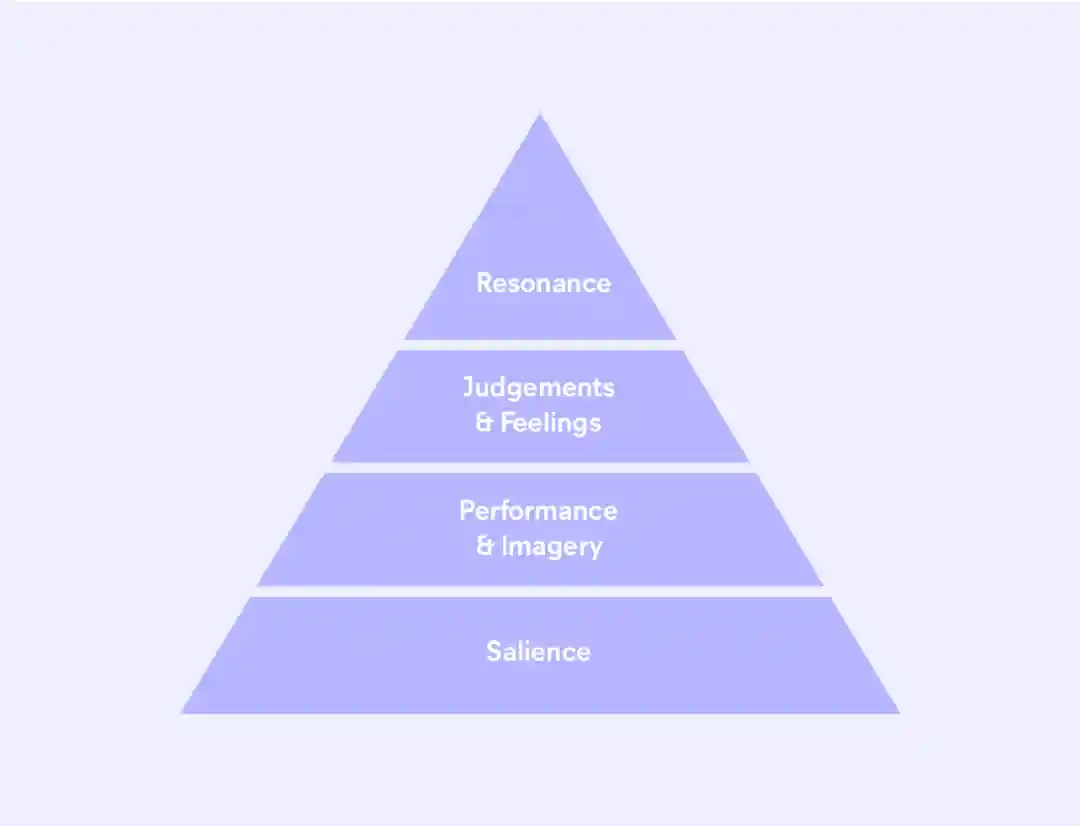
Three components make it up:
- Share of Search – the proportion of category search volume a brand captures relative to competitors, tracked continuously rather than surveyed once a year.
- Digital Brand Awareness – the degree of familiarity a brand has built in digital spaces, specifically, which determines whether it enters a buyer's consideration set at all.
- Digital Brand Sentiment – the tone of online conversation about the brand, which shapes both human trust and, increasingly, how AI systems characterise it in a generated answer.
Digital brand equity measures a brand's real-time commercial value using three trackable signals: share of search, digital brand awareness, and digital brand sentiment.
Why This Matters for a Firm Preparing to Rebrand
A rebrand ahead of a growth phase, acquisition, or market repositioning is usually justified on visual and positioning grounds – a tired identity, an unclear proposition, a name that no longer fits the client base.
Those are real problems. They are not the whole problem anymore.
Semrush's 2026 AI Visibility Index analysed 126 million AI search prompts to measure how brands actually surface in generative answers – a scale of measurement that makes clear this is no longer a niche concern sitting outside mainstream SEO.
At the same time, GPTBot's share of web crawl traffic rose from 5% to 30% year-over-year, alongside a 96% overall rise in AI crawler traffic.
A firm can rebrand its visual identity perfectly and still be invisible to the layer of the internet now doing an increasing share of the recommending.
For a Managing Partner weighing a repositioning before an acquisition, the practical stakes are clear: due diligence increasingly includes a review of a digital footprint, and buyer-side researchers now use AI tools as a first pass before opening a website.
A brand that reads clearly to a person but ambiguously to a machine – inconsistent entity names across LinkedIn, the website, and Companies House filings, for instance – creates friction at exactly the moment a firm wants to look most coherent.
The firms losing ground in AI search are rarely the ones with weak reputations. They are the ones whose reputation exists in a form machines cannot parse.
Share of Search: The Metric That Predicts Before Sales Do
Most professional services marketing still measures success in impressions, click-through rate, or social engagement.
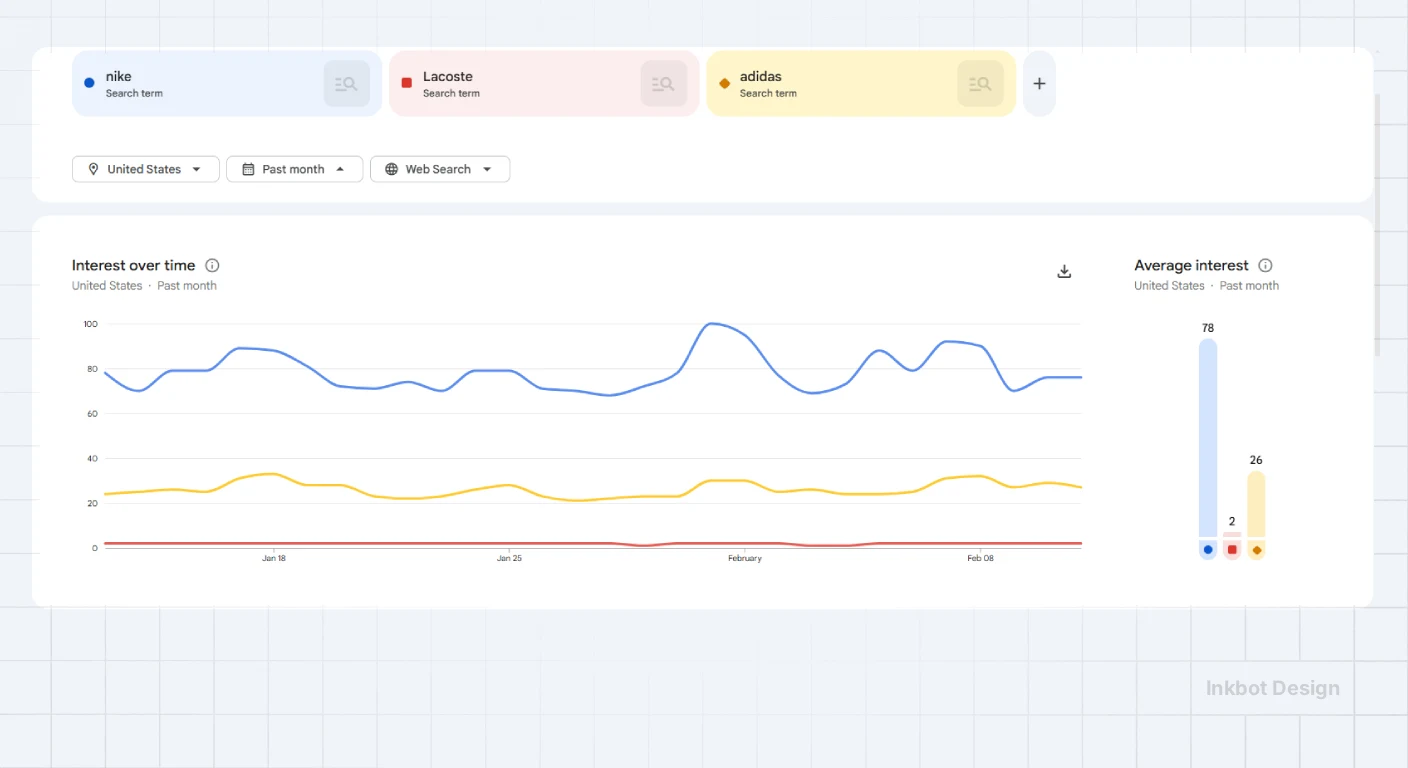
Share of Search asks a different question: of everyone searching for a firm in this category, what proportion searches for this firm by name?
The 2025 Journal of Business Research framework treats this as a leading indicator rather than a lagging one.
Proactive search behaviour – someone typing a firm's name rather than a generic category term – signals genuine consideration before a purchase decision, which the research links directly to future sales and market share movement.
A quarterly client-satisfaction survey tells a firm what happened. Share of Search tells a firm what is about to happen.
For a 50–200-person advisory firm, this is trackable without an enterprise martech budget: a Google Trends comparison against two or three named competitors, tracked monthly against category search volume.
It won't produce a McKinsey-grade dashboard. It will show, in real time, whether a repositioning is moving the market's actual search behaviour or just refreshing a logo nobody was searching for anyway.
A closer look at the share of search as a standalone metric covers how to build that tracking properly.
Digital Brand Sentiment: Why Tone Now Outranks Volume
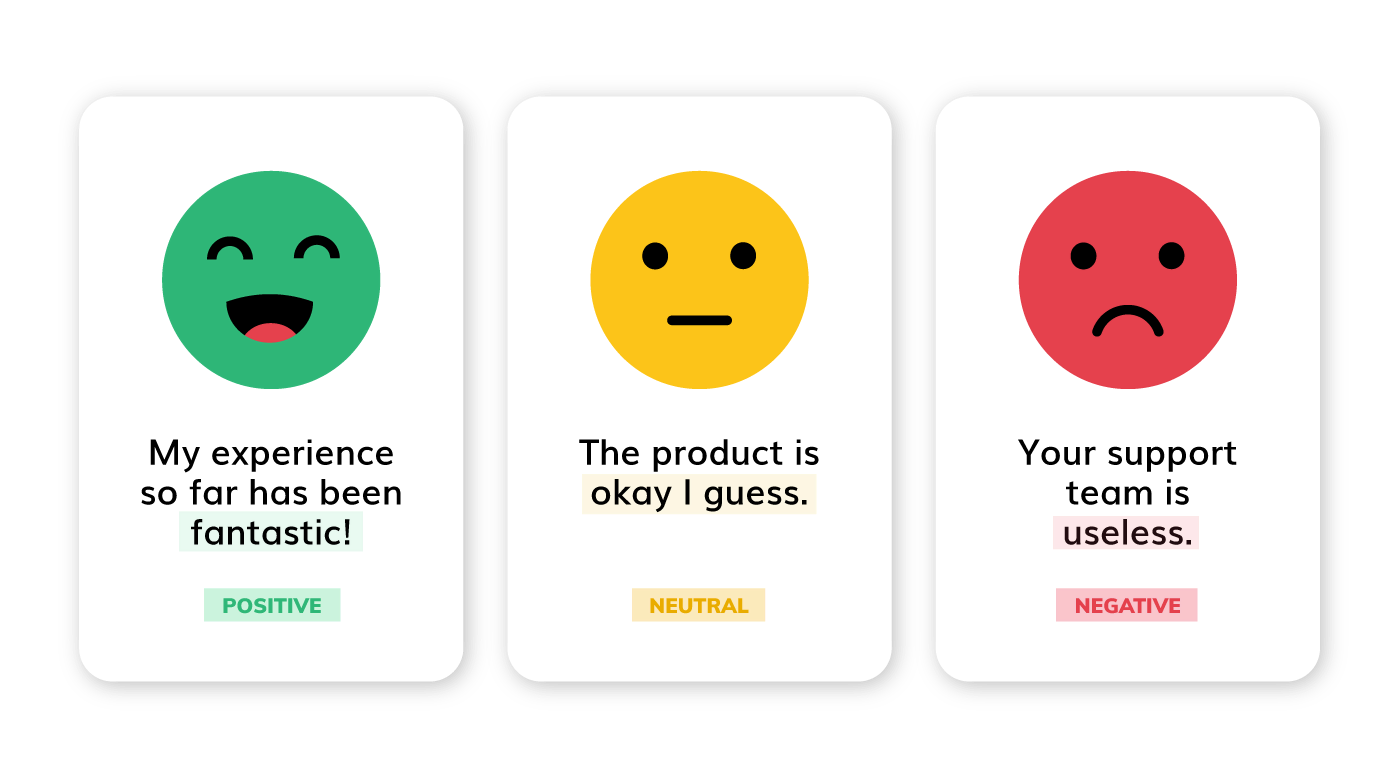
Digital Brand Sentiment measures the tone of online conversation about a brand – positive, negative, or neutral – and the 2025 research links it directly to purchase probability and brand image, independent of how much conversation exists at all.
A firm mentioned frequently but negatively is not building digital brand equity. It is spending attention against itself.
This matters more, not less, once AI systems are doing some of the summarising.
A 2025 SSRN paper on AI and branding found that artificial intelligence can improve customer engagement, personalisation, and brand perception – but a separate 2025 study found something sharper: AI tools alone did not directly increase purchase intentions. Brand equity acted as the mediating factor.
In plain terms, AI does not manufacture trust in a brand that hasn't earned it. It amplifies whatever sentiment already exists.
For professional services, sentiment sources are narrower than consumer retail – client testimonials, LinkedIn commentary, review platforms relevant to the sector, and press coverage.
Auditing all four for tone consistency before a rebrand is cheap. Discovering a mismatch after a rebrand launch is not.
Where People Get It Wrong
The common mistake is not ignoring digital brand equity. It's measuring the wrong layer.
Most firms that engage with this topic at all still default to social media engagement – likes, shares, follower counts – as a stand-in for brand strength.
The 2025 Journal of Business Research paper is explicit on this point: marketers should stop relying solely on social vanity metrics and instead integrate Share of Search, Digital Brand Awareness, and Digital Brand Sentiment as the real, trackable constructs.
A firm with 4,000 LinkedIn followers and a fragmented presence across its own website, directories, and Companies House filing will still lose out to a smaller competitor with 400 followers and a clean, consistent digital footprint.
Follower count was never the mechanism. Machine-readable consistency is.
A second, quieter mistake compounds the first: treating crawl budget as infinite.
Industry analysis has flagged that many sites waste crawl budget on low-value pages, leaving the pages that actually carry commercial weight – service pages, case studies, the pages a buyer or an AI system would need to cite – under-crawled relative to thin blog posts and tag archives.
A firm can produce excellent content and still fail to get it indexed in time to matter, simply because no one audited which pages a crawler bothered to reach.
The Indexability Problem, Paid Off
The prevailing view – reasonably held by most senior marketers – is that brand equity is still primarily a perception exercise: build recognition, build trust, and the digital channels will follow.
That view isn't wrong. It's incomplete in a way that didn't matter as much three years ago.
It's incomplete because perception and machine-readability have quietly decoupled. A brand can be genuinely respected by the humans who know it and still be functionally invisible to the systems now doing an increasing share of the recommending on a buyer's behalf.
Ahrefs' 2025 analysis of tens of thousands of brands identified measurable, observable factors that correlate with whether a brand gets mentioned in AI overviews at all – meaning citation in AI search is not simply a function of how famous or well-liked a brand is.
It's a function of whether the brand's signals are structured in a way a retrieval system can find, reconcile, and trust enough to repeat.
That's the indexability problem. Brand equity is the human-side asset – what people believe about a firm. Algorithmic salience is the distribution-side multiplier – whether that belief can survive being compressed into an AI-generated answer, a search snippet, or a voice response.
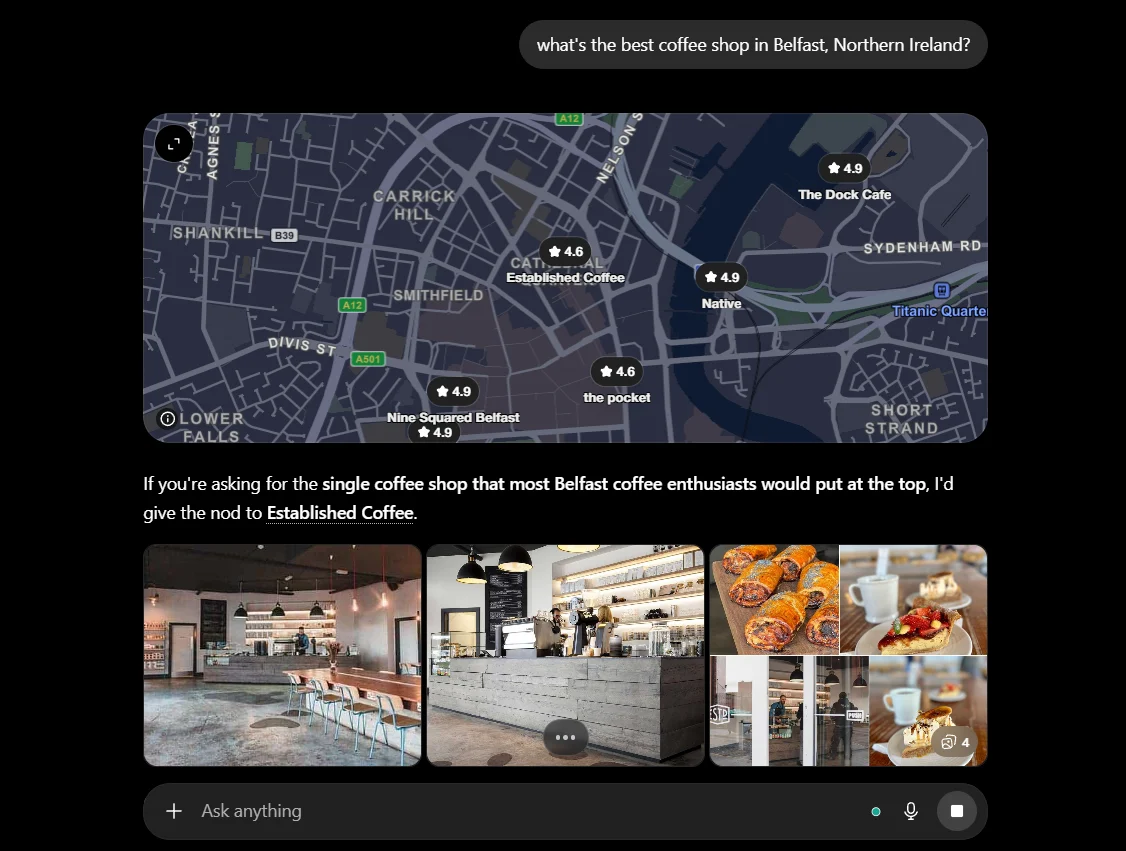
A firm can have the first without the second. Increasingly, firms are being shortlisted or excluded almost entirely on the second.
Kantar's June 2026 practical guidance is direct about the implication: brands need to optimise specifically for large language models and AI search to maintain visibility, and content strategy needs to be redesigned around driving genuine AI citations – not simply ranking on a results page that fewer buyers are scrolling through in the traditional sense.
The practical shift industry guidance now recommends is measuring “share of recommendations” – how often a brand gets named or quoted in AI-generated answers – as a KPI sitting alongside, not replacing, traditional traffic metrics.
The replacement directive is specific: audit entity consistency (the same firm name, description, and credentials across the website, directories, LinkedIn, and Companies House) before investing further in content volume.
Volume built on top of a fragmented entity compounds the fragmentation. It does not fix it.
Two Objections Worth Answering Honestly
“This sounds like another SEO trend that'll be irrelevant in eighteen months.”
The specific tactics may shift. The underlying mechanism – that automated systems need consistent, verifiable signals to trust and repeat a claim – is not a trend. It's how retrieval systems work, and it predates generative AI by a decade in the form of Google's own knowledge graph.
“Our firm gets plenty of referral business. We don't need to be found by AI.”
Referral business is unaffected by this directly – until the person receiving the referral does exactly what buyers now do by default: types the firm's name into a search engine or an AI assistant to double-check the recommendation before calling.
A referral that gets contradicted or thinned out by weak digital signals at that moment has a lower chance of converting than one that gets confirmed and reinforced.
The Verdict
Digital brand equity was never really about being liked online.
It's about being legible – to search engines first, and now to the AI systems increasingly standing between a firm and the client who was about to call.
The three-part framework – Share of Search, Digital Brand Awareness, Digital Brand Sentiment – gives a firm something to actually track month to month, rather than something to feel vaguely good or bad about.
But tracking it without addressing entity consistency and machine-readability is measuring a problem without fixing its cause.
A firm can improve all three of those metrics and still lose the AI-generated recommendation to a competitor whose signals simply reconcile more cleanly.
The single action worth taking today: pull up the firm's name in three places – Google, LinkedIn, and an AI assistant – and check whether the description, credentials, and positioning match.
If they don't, that inconsistency is costing more shortlist appearances than a tired logo ever did. A structured brand audit is designed to identify exactly that gap before a competitor's cleaner signals it.
Frequently asked questions
Is digital brand equity the same as brand awareness?
No – brand awareness is one of three components. Digital brand equity also includes share of search and digital brand sentiment, combined into a single measurable construct rather than treated as separate metrics.
How is digital brand equity measured?
It's calculated as a function of three trackable inputs: share of search, digital brand awareness, and digital brand sentiment, per the framework proposed in the Journal of Business Research in 2025.
Why doesn't my firm appear in AI search results?
Usually, because entity signals – the firm's name, description, and credentials – are inconsistent across the website, LinkedIn, and directories, making the brand harder for retrieval systems to reconcile confidently into one answer.
What's the difference between share of search and brand awareness?
Share of search measures proactive behaviour – people actively searching for a brand's name. Brand awareness measures passive familiarity. Share of search is considered the stronger predictor of near-term sales.
Do I need a rebrand before an acquisition or growth phase?
It depends on whether the current brand's positioning and digital signals can support the scrutiny that due diligence and buyer-side research now bring, including AI-assisted checks on the firm's digital footprint.
Is social media engagement still a useful brand metric?
No – research explicitly recommends against relying on social vanity metrics like likes and shares, in favour of share of search, digital brand awareness, and digital brand sentiment as more predictive constructs.
How often should digital brand sentiment be tracked?
Continuously, where possible, since sentiment can shift faster than quarterly or annual review cycles allow a firm to respond to.
Can AI tools directly increase client enquiries?
Not directly – 2025 research found brand equity mediates the relationship between AI and purchase intention. AI amplifies existing brand strength; it doesn't create it from nothing.
What is “share of recommendations” in AI search?
An emerging KPI measuring how often a brand is named or quoted in AI-generated answers, proposed as a companion metric to traditional organic traffic as AI search adoption grows.
Is entity consistency really that important for a smaller firm?
Yes – Ahrefs' 2025 analysis of tens of thousands of brands found measurable factors, including consistency signals, correlated with AI overview mentions, regardless of overall brand size or fame.
Should the crawl budget be a concern for a 50–200-person firm?
Yes, where content volume is high. Industry analysis recommends auditing which pages actually get crawled and prioritising revenue-relevant pages, since low-value pages can absorb crawl budget that commercial pages need.