LinkedIn Business Development for Law Firm Partners Is a Reputation-Conversion System
LinkedIn business development for law firm partners rarely fails on effort. It fails on framing. Treating LinkedIn as a content channel produces posts, likes, and no instructions. Treating it as a reputation-conversion system — surfacing the commercial judgment partners already demonstrate in matters — is what gets a firm shortlisted and instructed.
 By Stuart Crawford
 Reviewed by Tabitha Ayers
11 min read
On this page11 min left
- What LinkedIn Business Development Actually Is for Law Firm Partners
- Why Intelligent Partners Treat LinkedIn as a Content Channel
- Why Content-Framed LinkedIn Produces Activity Without Instructions
- What This Means for Your Firm — and the Conduct Line You Cannot Cross
- “Our Partners Are Fee-Earners, Not Content Creators”
- LinkedIn Business Development, Reframed: The Position to Adopt
- The Verdict
- Frequently asked questions
Your partners are posting.
The likes are coming from other lawyers, recruiters, and the occasional legal marketer.
The instructions are not.
If that describes the last 12 months of your firm's LinkedIn activity, the problem is not effort, cadence, or writing quality.
It is that the whole exercise has been framed as content marketing when the job it needs to do is reputation conversion.
What LinkedIn Business Development Actually Is for Law Firm Partners

LinkedIn business development for law firm partners is a reputation-conversion system: a disciplined method for turning the commercial judgment partners already demonstrate in matters, client conversations, and referral relationships into repeated, visible evidence — without breaching professional conduct or confidentiality.
It is not a publishing schedule. It is not lead generation in the direct-response sense.
- Its unit of value is evidence of judgment, not reach.
- Its audience that matters is buyers and referrers, not the peer lawyers who supply most of the engagement.
- Its outcome is being remembered — and shortlisted — when a risk, transaction, or dispute becomes pressing.
LinkedIn business development for law firm partners works as a reputation-conversion system that turns demonstrated expertise into visible evidence of commercial judgment before a client has an active brief.
This connects directly to how the firm presents itself everywhere else a buyer checks — the law firm website design a prospect lands on after a partner's post has to carry the same signal, or the impression collapses on arrival.
LinkedIn is one facet of the broader discipline of commercial law firm branding, and it fails when it is treated as a channel isolated from the rest of the firm's positioning.
Why Intelligent Partners Treat LinkedIn as a Content Channel
The content-marketing framing is not stupid. It is the logical read of the platform, and it is why capable people default to it.
LinkedIn presents itself as a publishing tool.
It rewards posting frequency, surfaces engagement metrics prominently, and every guide a partner reads — from vendor blogs to LinkedIn's own coaching — prescribes the same sequence: optimise the profile, post regularly, share thought leadership, engage with prospects, measure leads.
That advice is internally consistent and easy to action. A busy partner who wants a defensible way to “do LinkedIn” will reasonably adopt it.
The framing also has real evidence to back it up. In Edelman and LinkedIn's 2024 study of 3,484 management-level professionals across seven countries, 73% of B2B decision-makers said an organisation's thought leadership was a more trustworthy basis for assessing its capabilities than its marketing materials and product sheets.
More than half engage actively: 52% of decision-makers and 54% of C-suite executives reported spending over an hour a week reading or viewing it.
So the instinct to produce thought leadership is not wrong—the instinct to treat producing it as the whole job is where it breaks.
Why Content-Framed LinkedIn Produces Activity Without Instructions
The content framing fails because it optimises for the wrong audience and the wrong moment.
Posts written to chase engagement often get more engagement, and on LinkedIn, the readily available engagement comes from peers — other solicitors, legal marketers, recruiters — who will never instruct the firm.
The metric moves. The pipeline does not.
The Edelman–LinkedIn 2024 data shows what buyers actually do with thought leadership, and none of it is “like the post.”
- More than 75% of B2B decision-makers said a piece of thought leadership had led them to research a product or service they had not previously considered.
- 86% said they would be moderately or very likely to invite an organisation that consistently produces high-quality thought leadership into an RFP.
- Nine in ten said they would be more receptive to later outreach from such an organisation.
These are shortlist and receptivity effects — they happen off-platform, later, when a need surfaces. A firm measuring likes is measuring the one thing the buyer never does.
There is a measurement failure underneath this. In the same research, 42% of thought-leadership producers said they had no process for measuring effectiveness, and only 29% could link sales leads back to individual pieces.
So the typical firm is producing content, counting the wrong number, and concluding either that LinkedIn works (the likes are up) or that it doesn't (no clients came) — both from the same broken instrument.
“LinkedIn does not convert readers into clients. It converts a partner's demonstrated judgment into a place on a shortlist that forms months before a brief exists. A firm that measures likes is auditing the applause while the actual decision — who gets invited to pitch — happens somewhere it never looks.”
What This Means for Your Firm — and the Conduct Line You Cannot Cross
If LinkedIn is a reputation-conversion system, the partner's job changes from “produce content” to “make commercial judgment visible” — and for solicitors, that has a hard boundary that generic B2B advice never mentions.
Everything a partner posts operates inside SRA conduct rules, legal professional privilege, and client confidentiality. You cannot convert a live matter into a LinkedIn post.
What you can convert is the reasoning — the judgment a partner brings to a class of problems, stripped of any identifying client detail. The raw material is not the case; it is the decision the client had to make and the commercial trade-offs around it.
The cost of getting this wrong is now higher than it was two years ago, because the legal market has changed underneath partners.
Thomson Reuters reports that clients moved work from the most expensive firms to lower-cost alternatives through 2025, with firms outside the Am Law 100 charging, in many cases, 40% less.
Corporate buyers are scrutinising value harder — Thomson Reuters found clients spent less per hour on the average legal service in 2025 than in 2024, despite a 7.3% rise in worked rates, and 52% of corporate legal respondents believe more work will move in-house over the next five years.
The question every buyer now asks is “why this partner, this firm, at this price?”
LinkedIn is where that answer is either visible or absent. A partner who uses it to demonstrate sector knowledge, commercial judgment, and a credible point of view on issues such as AI-enabled delivery is answering the question. A partner posting reposted legal news is not.
The AI visibility for law firms dimension compounds this: the same judgment that convinces a human buyer is what makes a partner citable when a prospect's research now runs through an AI assistant first.
“Our Partners Are Fee-Earners, Not Content Creators”
The strongest objection a Managing Partner will raise is real: partner time bills at several hundred pounds an hour, and asking rainmakers to write posts is asking them to convert billable hours into a channel that has so far returned likes.
That objection is correct about the current return. It is wrong about the cause.
The return is poor because the activity is miscast as content production, which is slow, creatively demanding, and off-mission for a litigator.
Reframed as reputation conversion, the input is not writing; it is the judgment the partner already produces every day in client conversations.
The playbook a senior legal business-development professional described on the r/LawFirm forum makes the point: their system was 20–30 targeted messages every other day to referral sources — CPAs, financial advisers, realtors — tracked on spreadsheets, not a content calendar.
That is relationship work, and it is closer to what partners already do than “posting” ever was.
The second objection — “won't this breach confidentiality?” — is answered by the conduct line above: you convert reasoning, never the matter.
LinkedIn Business Development, Reframed: The Position to Adopt

Here is the position that survives scrutiny.
LinkedIn business development for law-firm partners is not a content marketing exercise measured by reach and engagement.
It is a reputation-conversion system measured by shortlist inclusion, referrer recall, and receptivity to contact later — the effects that the Edelman–LinkedIn 2024 data show buyers actually experience.
The steelman held that thought leadership is trusted and consumed by senior audiences, and the evidence agrees.
But the consensus stops one step too early. It treats producing content as the objective, when producing content is only the raw input.
The conversion — from expertise, to visible evidence of judgment, to a place on a shortlist — is the part the checklist articles omit, and it is the only part that moves business.
The Default Approach | What It Costs | The Better Approach | Why |
|---|---|---|---|
Post on a content calendar | Partner hours, peer likes | Publish reasoning from real matters (anonymised) | Buyers assess judgment, not frequency |
Measure likes and impressions | False read on ROI | Track shortlist inclusion and referrer recall | 86% RFP effect happens off-platform |
Write for reach | Engagement from non-buyers | Write for named buyer and referrer segments | Peers don't instruct; buyers and referrers do |
Repost legal news | Indistinguishable from every firm | Translate change into a client decision | “Why this partner at this price?” needs an answer |
Treat posts as the endgame | No follow-up | Use visibility to warm direct outreach | 90% more receptive after quality content |
Firms that want to see where their brand is losing this specific ground — where the judgment exists but never becomes visible evidence — can start with the firm's client trust signals and its law firm case studies, the two places where demonstrated judgment converts fastest.
The Verdict
Stop treating your partners' LinkedIn presence as a content problem, because it never was one.
The reason a year of posting elicited applause rather than instructions is not that the posts were bad or the cadence was off.
It is that the entire effort was pointed at reach when it should have been pointed at conversion — turning the commercial judgment your partners already demonstrate in matters into evidence a buyer or referrer can see and remember.
The evidence carries the shift.
Edelman and LinkedIn's 2024 research shows senior buyers trust thought leadership over marketing material, research providers after encountering it, and — critically — invite consistent producers into RFPs and grow more receptive to later contact. None of that is a like.
All of it happens off-platform, later, only when a legal need becomes pressing. A firm measuring engagement is auditing the wrong number while the actual decision forms are elsewhere.
And in a 2025 market where clients are moving work to cheaper firms and interrogating value harder, the partner who has made their judgment visible is the one who answers “why you, at this price?” before the question is even asked.
Do one thing today: pick your two partners with the strongest matter experience and audit what their LinkedIn presence currently proves about their commercial judgment — not how often they post.
If you want that audited properly, request a free Brand Equity Audit™ — a structured diagnostic that identifies exactly where your firm's brand is losing commercial ground on LinkedIn and everywhere else buyers look, and what to do about it.
Frequently asked questions
Why do our partners' LinkedIn posts get likes but no new clients?
Because likes come from peers — other lawyers, recruiters, marketers — who never instruct the firm, buyers and referrers act off-platform and later research the firm and shortlist it when a need arises. Engagement measures the wrong audience at the wrong moment.
What is LinkedIn business development for a law firm, really?
It is a reputation-conversion system: turning the commercial judgment partners already show in matters and client conversations into visible, repeated evidence, so buyers and referrers remember and shortlist the firm when a legal need becomes pressing. It is not a content-publishing schedule.
How is reputation conversion different from content marketing?
Content marketing optimises for reach and engagement. Reputation conversion optimises for shortlist inclusion and referrer recall. The first counts likes; the second turns demonstrated expertise into evidence that a buyer weighs when choosing counsel: same posting activity, entirely different objective and measurement.
Is LinkedIn worth the time for a mid-size UK law firm?
Yes — if measured correctly. In Edelman–LinkedIn's 2024 research, 86% of B2B decision-makers said they would likely invite consistent thought-leadership producers to participate in an RFP. That shortlist effect, not likes, is the return. Measured as content marketing, LinkedIn will look like wasted partner time.
How do solicitors post on LinkedIn without breaching confidentiality?
SRA conduct rules, privilege, and confidentiality prohibit the disclosure of client details. What is publishable is the judgment behind a class of problems — the commercial trade-offs and decisions — stripped of any identifying information about a specific client or case.
What should law firm partners actually post about?
Commercial judgment on decisions clients face: how a regulatory change alters a business choice, what a transaction structure trades off, how to weigh a dispute's commercial risk. Not reposted legal news, which is indistinguishable across firms and demonstrates no judgment of the partner's own.
How do you measure LinkedIn business development for a law firm?
Track shortlist inclusion, referrer recall, and receptivity to direct outreach — not likes or impressions. Edelman–LinkedIn 2024 found 42% of thought-leadership producers had no effectiveness measurement, and only 29% could link leads to specific pieces. Measure relationship movement and influence enquiries instead.
Is it true that posting more often improves results?
No — frequency without judgment produces peer engagement, not instructions. Consistency matters only insofar as it accumulates evidence of a partner's commercial thinking. Ten posts that demonstrate judgment outperform fifty that repost news, because buyers assess the quality of thinking, not the cadence.
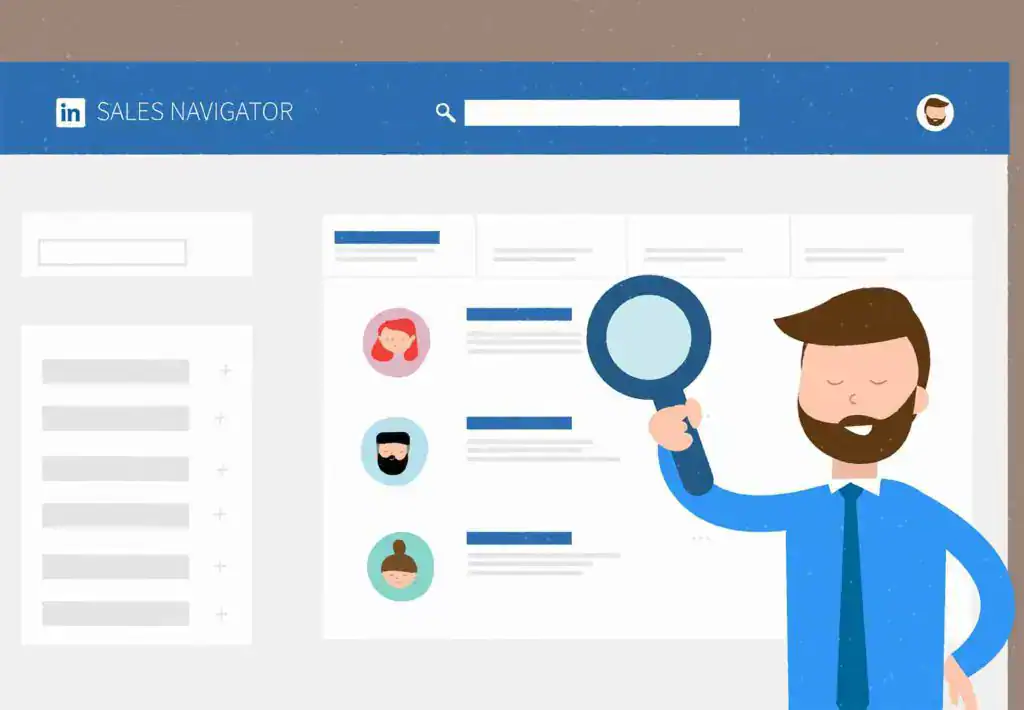
Should partners use LinkedIn Sales Navigator?
Only as relationship infrastructure, not a lead spigot. Its value is segmenting referrers and buyers so partners convert reputation with the right audience. A senior legal business developer described on r/LawFirm sending 20–30 targeted messages every other day to referral sources — that discipline, not the tool, drives results.
When does LinkedIn activity actually turn into instructions?
Later, and off-platform. Buyers research and shortlist when a risk, transaction, or dispute becomes pressing, drawing on impressions formed months earlier. Edelman–LinkedIn 2024 found that over 75% of decision-makers researched a provider after encountering its thought leadership. The conversion lags the content, sometimes by many months.
What's the difference between LinkedIn for lead generation and for business development?
Lead generation attracts prospects at the point of need. Business development, for law firms, builds the reputation that makes the firm a considered option before the need arises. LinkedIn suits the second far better than the first, which is why direct-response framing disappoints.
Does thought leadership justify higher legal fees?
Sometimes — among a specific subset. Edelman–LinkedIn 2024 found that among decision-makers who researched a provider after its thought leadership, 60% said high-quality thought leadership made them more willing to pay a premium. The condition matters: this applies to research-triggered buyers, not all buyers indiscriminately.