Colour Psychology in B2B Branding: Looking Credible Without Blending In
Colour psychology can inform a B2B rebrand, but colour associations cannot tell you which palette will win business. Professional services leaders need a different test: whether the identity fits their positioning, identifies their business and works in practice. Start by deciding what to retain, refine and validate before approving change.



On this page9 min left
- Colour should support positioning, recognition and use.
- Does Colour Psychology Actually Drive B2B Buying Decisions?
- Can Professional Services Firms Trust Colour-Meaning Charts?
- Does the identity suggest the right kind of business?
- Can buyers identify your business?
- Does the identity work beyond the presentation?
- Can we improve our palette without replacing it?
- Can an Established B2B Firm Modernise Its Palette Without a Full Rebrand?
- Approve a colour system, not a psychological promise
- Questions people ask
Your upcoming rebrand needs colours that support the positioning, not a guarantee that blue means trust.
Colour psychology can inform the brief, but a colour association cannot tell a professional services business which palette will win over a client.
There is a practical distinction here. HubSpot reports that changing a call-to-action button from green to red increased clicks by 21% in one single test.
HubSpot also warns that what works for one company may not work for another. That is a reason to investigate an application, not repaint the business red.
For a leadership team preparing for growth, the useful question is what the palette needs to preserve, communicate and make usable.
Colour should support positioning, recognition and use.
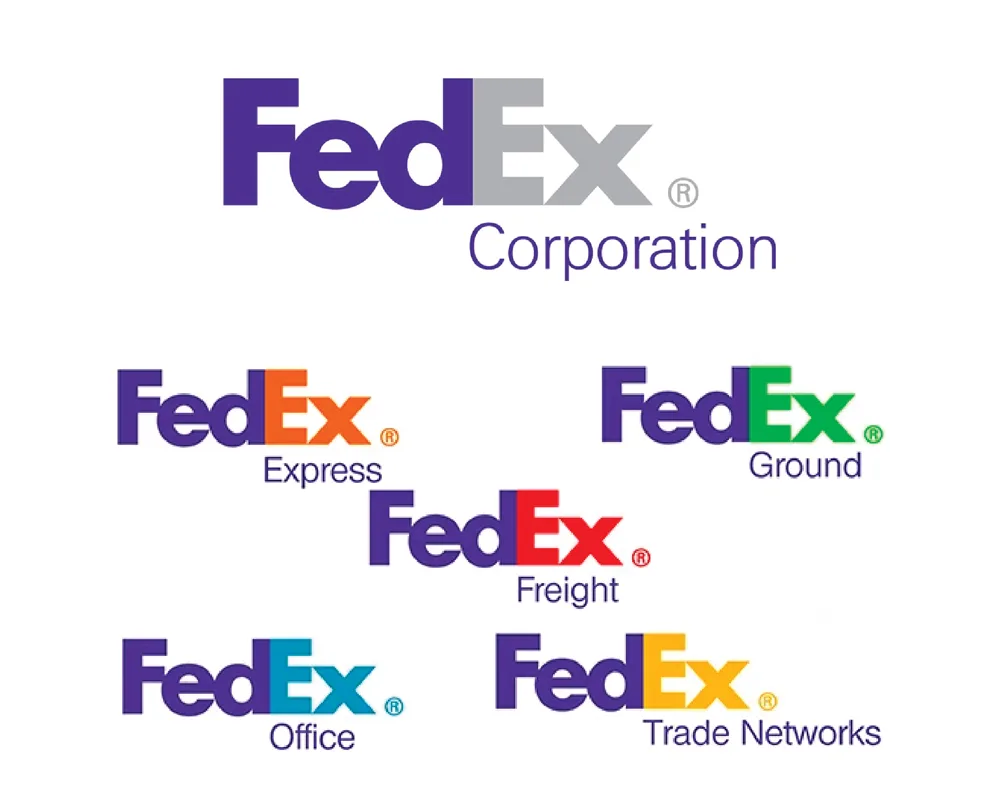
Colour psychology examines relationships between colour, perception, emotion and behaviour. For a B2B rebrand, use colour associations as questions to investigate rather than instructions to follow.
Assess whether the proposed identity suggests the intended kind of business, identifies your particular business and works across the materials buyers actually use.
- A colour association does not establish a purchasing outcome.
- An unusual palette does not establish brand recognition.
- A readable colour combination does not establish a persuasive proposition.
Colour psychology examines how colour relates to perception, emotion and behaviour; brand decisions also require audience context, recognition and usability.
Colour is one part of brand psychology. The wider brand semiotics framework considers how colour works alongside typography, imagery and language to communicate meaning.
Treat the three checks below as an approval framework, not a formula for predicting sales.
Does Colour Psychology Actually Drive B2B Buying Decisions?
No standalone colour can guarantee a B2B purchasing outcome. While colour psychology proves that hue influences immediate human perception, enterprise buyers make high-consideration decisions based on perceived capability, risk mitigation, and institutional trust. Colour supports business results only when it reinforces positioning, ensures distinctive recognition, and maintains complete technical usability.
To evaluate whether a proposed palette change will deliver commercial value, leadership teams must isolate three distinct categories of evidence:
- Interpretation Evidence (Perception): What attributes do buyers associate with the colour in isolation? (e.g. "Does this dark slate suggest corporate stability or technical coldness?")
- Attribution Evidence (Recognition): Does the colour treatment help buyers correctly identify your firm among competing alternatives? (e.g. "Do buyers recognise this colour as Northbrook, or do they mistake it for a competitor?")
- Behavioural Evidence (Commercial Action): Does the visual presentation alter decision-making in live environments? (e.g. "Does this proposal layout increase RFP shortlist progression?")
A buyer's statement that a tender document "looks established" is interpretative evidence. A prospect correctly identifying an unbranded report cover is recognition evidence. A signed engagement letter is commercial evidence. Colour charts conflate these levels; strategic brand management keeps them strictly separate.
Can Professional Services Firms Trust Colour-Meaning Charts?
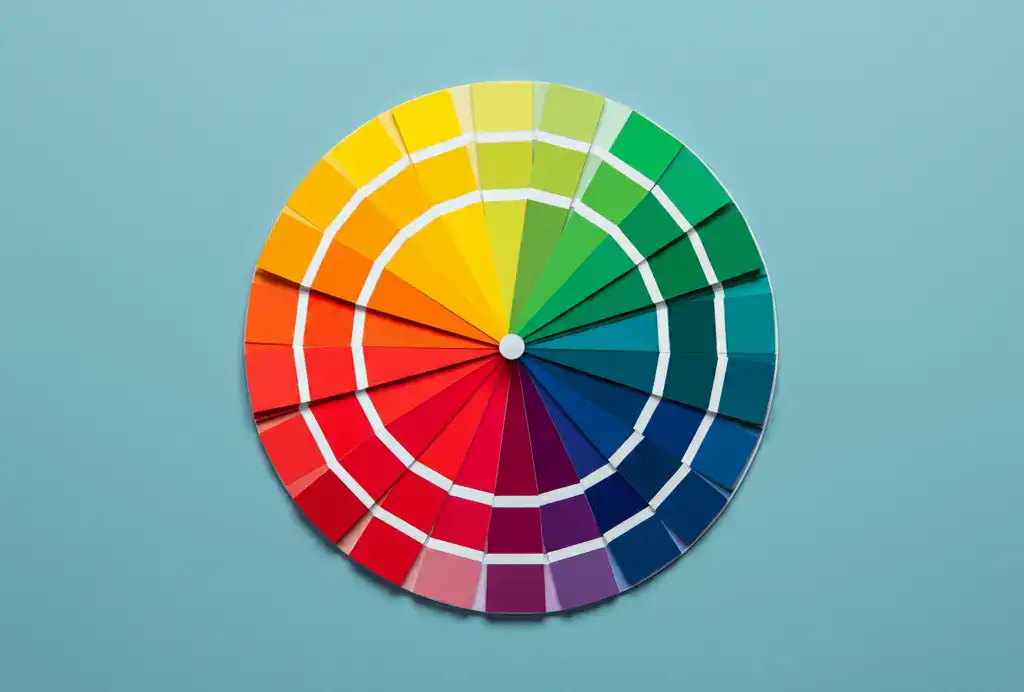
Colour-meaning charts should be used to generate creative hypotheses, never to approve a corporate rebrand. Standard infographics assert that blue communicates trust, red signals excitement, and green suggests growth. In high-consideration B2B markets, these universal claims fail because they ignore competitive saturation, cultural geography, and brand attribution.
As documented by Professor Jenni Romaniuk and Professor Byron Sharp at the Ehrenberg-Bass Institute for Marketing Science (Distinctive Brand Assets, Oxford University Press), an identity asset must satisfy two empirical criteria to build brand equity:
- Fame: The proportion of buyers in the category who know that the visual asset belongs to your specific business.
- Uniqueness: The degree to which the asset brings only your business to mind, rather than triggering associations with your competitors.
Selecting "trustworthy blue" for a mid-market accountancy practice or law firm typically offers little in terms of uniqueness. If six competitors within a two-mile radius or the same Legal 500 tier use an identical navy palette, the colour functions as category wallpaper rather than a distinctive asset. The firm incurs what Inkbot Design calls the Obscurity Tax™ - spending marketing capital only to build mental availability for the broader category rather than their own firm.
Evaluating Core B2B Colour Spectrums: Convention vs Distinctiveness
Colour Family | Dominant B2B Sectors | Category Signalling (The Convention) | Commercial & Distinctiveness Risk |
|---|---|---|---|
Deep Navy & Cobalt | Corporate Law, Banking, Management Consultancy | Institutional stability, regulatory competence, risk aversion. | High saturation; zero uniqueness. Dilutes brand attribution in tender shortlists. |
Forest & Sage Green | Wealth Management, Accountancy, ESG Advisory | Fiscal stewardship, sustained growth, ethical governance. | Medium saturation. Poor contrast when pale tints are applied behind body text. |
Slate, Charcoal & Monochrome | B2B SaaS, Architecture, Specialist Boutiques | Technical precision, modern authority, editorial restraint. | Can appear austere or transactional without rich supporting typography or imagery. |
Terracotta, Ochre & Warm Accents | Challenger Consultancies, Boutique Advisory | Human collaboration, strategic agility, independent thinking. | Must be balanced against strong neutral anchors to avoid appearing informal or unestablished. |
Does the identity suggest the right kind of business?
Category interpretation asks whether buyers read the proposed identity in a way that fits the business you intend to be.
Take a hypothetical 100-person accountancy and advisory firm expanding its corporate-finance work. The leadership team wants to appear capable of handling more complex transactions without distancing existing accountancy clients.
Presenting three colour swatches will not resolve that brief. Presenting a transaction-advisory page, credentials deck and report cover gives buyers something relevant to interpret.
Ask what services the business appears equipped to provide. Ask which parts of the presentation informed that answer. If buyers repeatedly interpret the direction as a consumer financial app, investigate the overall identity before blaming a single bright accent.
This is a diagnostic recommendation, not a claim that any particular palette will produce that response.
Personality needs the same discipline. “More energetic” could mean stronger contrast, more active photography or shorter headlines. Agree on what needs changing before asking colour to carry the entire repositioning.
The Kapferer brand identity prism can help define the identity the palette is meant to express. Use that work to sharpen the brief, not produce another set of adjectives nobody can approve objectively.
Can buyers identify your business?
Brand attribution asks whose identity buyers think they are seeing.
Separate fame from uniqueness. That distinction prevents a common approval error: treating a colour that feels familiar as evidence that the colour belongs to your brand. Familiarity might concern the category or another business.
For the hypothetical accountancy firm, show an existing colour treatment without the name and ask which businesses come to mind. Record competing associations rather than accepting a vague “looks familiar”.
Test a proposed direction differently. A new palette cannot be expected to carry the same learned recognition as an established identity before launch. Assess potential confusion and strategic fit; do not pretend a preference exercise predicts future recognition.
Keep the claims honest.
A respondent preferring the new coral accent is evidence of preference. A respondent's correct identification of the existing green treatment is evidence of attribution. Those findings address different questions and should be placed in different columns of the decision record.
Does the identity work beyond the presentation?
Functional use asks whether the colour system helps people read and interpret the material.
Nielsen Norman Group, the user-experience research consultancy, recommends sufficient colour contrast, visual cues in addition to colour and identifiable interactive elements. These are practical implementation requirements, not personality claims.
Ask the design team to show the palette on:
- A service page with body text and links.
- A proposal containing tables and footnotes.
- A financial chart with several series.
- A report cover and an internal page.
- A form with an error message.
A direction might work beautifully on a large colour field and fail in a chart legend. That does not necessarily invalidate the brand colour. It may mean the supporting system needs different shades, labels or rules.
Colour also interacts with form. If the concern is that the identity feels overly playful, examine the psychology of shapes in logo design alongside the palette. Changing both at once without defining the problem makes the approval discussion harder to interpret.
The commercial discipline is to identify which part of the system needs to change and why. “It feels wrong” starts the investigation. It cannot finish it.
Can we improve our palette without replacing it?
Yes. First establish whether the problem concerns the colour itself, its application or the wider positioning.
Testing a logo and its components can reveal how much each colour contributes to the logo’s strength. The same guidance cautions that tweaking an asset may not solve weak distinctiveness, particularly when uniqueness is the problem.
That gives a leadership team a better starting point than “The brand needs to look more modern.”
Ask what is demonstrably failing.
If buyers recognise the existing identity but cannot read the proposal text, replacement is a large answer to a smaller problem. If the palette is repeatedly mistaken for a competitor's, adjusting the shade may leave the underlying similarity unchanged.
Can an Established B2B Firm Modernise Its Palette Without a Full Rebrand?
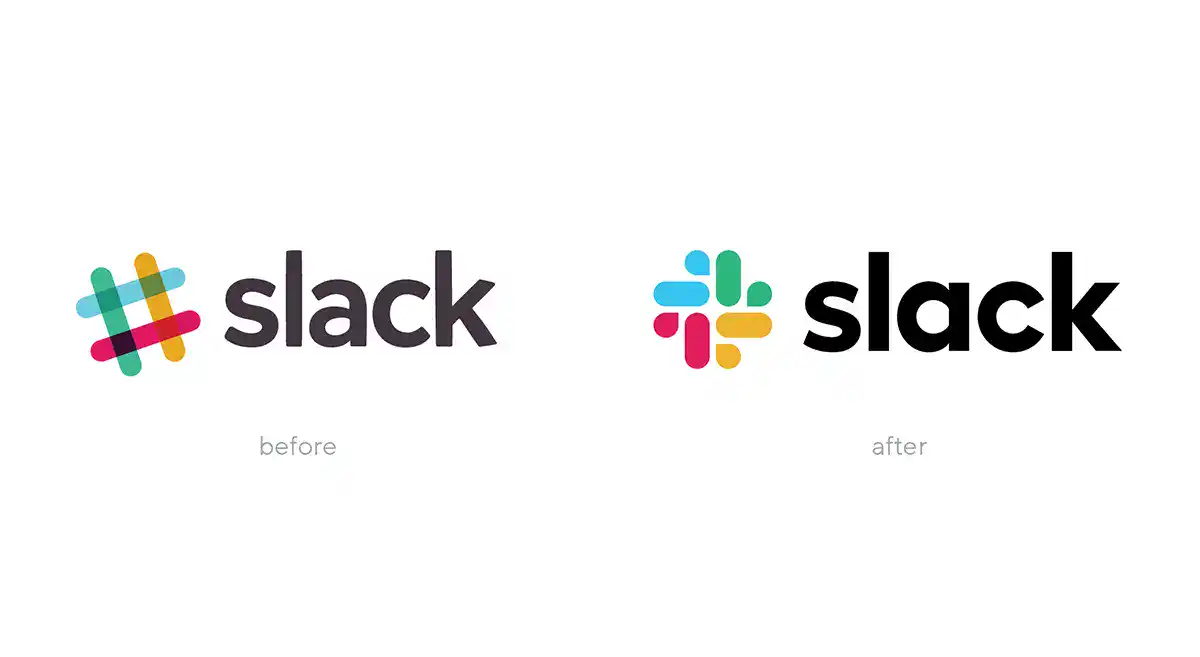
Yes. Most professional services firms do not need to replace their core brand colour; they need to refine how it is applied. If existing clients already recognise your primary hue, abandoning it destroys established mental availability. A disciplined visual refresh typically retains the recognised primary anchor while replacing muddy secondary tones, updating digital contrast pairings, and establishing strict typography rules.
The Decision Framework: Retain, Refine, or Replace Your Corporate Palette
Observed Brand Situation | Strategic Recommendation | Commercial Rationale | Decision Trigger to Pivot |
|---|---|---|---|
Existing colour treatment is correctly attributed by 60%+ of active clients and targets. | Retain the primary cue; modernise supporting elements. | Protects existing distinctive brand assets and hard-won mental availability. | Documented evidence that the cue actively repels an essential new target market. |
Primary colour is recognisable, but white or grey text pairings fail digital contrast audits. | Refine application rules; adjust background shades. | Resolves legal and usability risks without discarding established brand equity. | The core hue cannot achieve a 4.5:1 ratio against any legible typography pairing. |
Buyers repeatedly confuse the visual identity with direct regional competitors. | Assess wider identity system; adjust supporting colours. | Uniqueness failure usually stems from similar typographic and layout execution, not hue alone. | Competitor holds prior, dominant trademark or insurmountable market share in that shade. |
A strategic merger or acquisition combines two legacy visual identities. | Audit asset equity before selecting a master palette. | Prevents internal political compromise from erasing the more valuable commercial brand. | Data proves neither brand holds durable recognition; justifies a new identity system. |
Partners complain the firm’s presentation feels "dated" or "tired". | Diagnose the specific failure before altering colour. | "Dated" perceptions usually stem from cluttered layouts, stock imagery, or serif typography rather than colour. | Buyer perception research isolates the specific colour tone as the primary driver of negative perceptions. |
Practical Experience: Restructuring Colour Equity at Northbrook
In client work led by Inkbot Design for Northbrook, a financial-sector firm requiring a comprehensive identity system, the primary challenge was establishing institutional authority without lapsing into generic corporate tropes.
Rather than introducing high-risk novelty colours that would conflict with conservative financial expectations, the engagement focused on precision engineering:
- Preserving Category Reassurance: Selecting an authoritative primary palette that communicated fiscal discipline and institutional durability.
- Engineering Accessibility: Establishing strict typographic colour pairings to ensure all documentation, pitch decks, and digital assets complied with WCAG 2.1 Level AA contrast standards.
- System Specification: Documenting the exact CMYK, RGB, and digital hex colour tokens across comprehensive brand guidelines, preventing brand drift across internal teams and external suppliers.
This engagement demonstrated that commercial impact in B2B branding rarely stems from radical chromatic novelty; it comes from eliminating visual inconsistency, securing technical legibility, and protecting brand recognition across all client touchpoints.
How much research is enough for our budget?
The right scope depends on the decision’s uncertainty and the consequences of getting it wrong. A minor application repair and a post-merger identity replacement do not need identical research plans.
The Ehrenberg-Bass Institute recommends understanding the existing strength of distinctive assets rather than treating identity elements in isolation. Nielsen Norman Group recommends testing visuals with users alongside accessibility checks. Neither source supplies a universal research budget for your rebrand.
Start with the uncertainty that could change your decision.
For a modest palette refinement, one might ask whether the proposed text pairings remain readable. For a repositioning, the question is whether relevant buyers interpret the new direction as the intended type of adviser. For a merger, it might be which existing cues retain useful recognition.
“We cannot afford extensive experimentation”
Then avoid commissioning research that cannot alter the approval.
For the hypothetical accountancy firm, a focused plan would:
- Compare the existing identity with the actual alternatives buyers consider.
- Document which visual elements the team proposes to retain.
- Produce realistic applications of the shortlisted directions.
- Ask relevant buyers about interpretation, confusion and attribution.
- Check essential colour combinations and document remaining uncertainties.
This is a proposed discovery plan, not a statistically representative survey. A small qualitative exercise can expose misunderstandings; it cannot estimate how common those responses are across the market or prove that future sales will increase.
If the decision requires that level of certainty, commission appropriately designed research and account for the additional cost.
Partner preferences remain legitimate inputs. Partners need to use the identity. Keep those preferences separate from claims about what buyers recognise.
“Can we just A/B test the website?”
Use a website experiment when the question concerns a measurable website response and the test can support a useful conclusion.
HubSpot’s reported button test illustrates the distinction: a specific variation produced more clicks in that setting. The result does not approve a complete corporate palette or explain its meaning to every audience.
For a professional-services site, define the relevant action before launching an experiment. A button click may be a useful intermediate measure, but the business might care more about completed, qualified enquiries.
If traffic is insufficient for an informative test within a practical period, do not announce a winner after a handful of responses. Use application checks and buyer interviews for diagnosis, and leave the performance claim unmade.
The research should retire a named risk. Otherwise, the team is collecting opinions using the attached methodology.
Approve a colour system, not a psychological promise
Approve the direction only when the team can explain what the palette is intended to communicate, which existing cues deserve protection and how the colours will work in the materials buyers use.
For a limited readability problem, a disciplined refinement may be enough. Where the uncertainty concerns positioning, buyer interpretation or a merger, resolve that question before commissioning another set of swatches.
If the unresolved question extends beyond the palette, Inkbot Design’s free Brand Equity Audit™ offers a structured diagnostic of where the brand may be losing commercial ground and what to address.
Before approving creative work, write the evidence required to retain, refine or replace the palette.
Questions people ask
Why does a logo colour often fail when used as website body text?
Logo colours fail as body text because brand identity marks and typographic text serve different optical functions. A vibrant primary colour that appears legible in a bold, large-scale icon often lacks sufficient luminance contrast against white or pale grey digital backgrounds. Under WCAG 2.2 accessibility standards, body text requires a minimum contrast ratio of 4.5:1. Strategic brand guidelines maintain the recognised logo hue for display assets while establishing deeper, accessible shades (such as slate or charcoal) for running text.
Can colour alone distinguish complex information in financial charts?
No. Relying entirely on colour to differentiate data series violates accessibility guidelines and can lead to interpretation errors in high-stakes reporting. Nielsen Norman Group recommends providing supplementary visual cues, including direct text labels, distinct dashed-line patterns, and textured fills. This ensures that readers with colour-vision deficiencies or those reviewing printed monochrome documents can accurately interpret multi-series data without relying on a colour legend.
What essential specifications should a professional-services colour guide contain?
A practical B2B colour specification must define exact digital and physical colour values, along with approved pairing rules. At a minimum, brand guidelines should specify: digital HEX codes, screen RGB values, print CMYK formulas, and Pantone (PMS) matching swatches. Crucially, the guide must include an approved contrast matrix demonstrating which text-and-background combinations meet WCAG 2.1 Level AA compliance across slide decks, financial tables, and web templates.
Should a firm's marketing accent colour also be used for interface error messages?
No. Marketing accents should never be co-opted for interface system warnings. If a firm uses an energetic coral or red accent to highlight CTAs and key brand headings, reusing that same colour for form validation errors or negative financial warnings creates cognitive friction. Usability standards require system status alerts to pair distinct, conventional functional cues (such as warning icons and explicit copy) rather than relying on a shared brand accent.