Brand Name Testing: Focus Groups and Market Validation
The goal of brand name testing is not to find a name people like; it is to find the name they cannot forget. Sentiment is secondary to saliency.
Most entrepreneurs waste thousands of pounds on focus groups only to receive “safe” feedback that results in a beige, forgettable identity. If your testing process seeks consensus, you are effectively voting for mediocrity.
According to a 2024 McKinsey & Company report, brands with high distinctiveness scores outperform their peers by 31% in long-term value.
Choosing the wrong name isn’t just a creative hiccup; it is a structural financial risk. Naming your business requires a transition from subjective “feelings” to objective data points.
In the 2026 landscape, your name must work for both human psychology and machine algorithms.
- Prioritise distinctiveness and saliency over likability; validated names deliver 31% more long-term value (McKinsey & Company).
- Replace consensus focus groups with isolated quantitative tests measuring System 1 saliency, delayed recall and semantic association.
- Validate for algorithmic compatibility: perform semantic saliency, search-volume disambiguation and phonetic findability for AI like Google Gemini and GPT-4o.
What Is Brand Name Testing?
Brand name testing is a structured research process used to evaluate a potential name’s effectiveness based on memorability, linguistic suitability, and market resonance.
It involves moving beyond internal “gut feel” to gather external data that predicts how a target audience will perceive and recall the brand over time.

Key Components:
- Memorability Testing: Measuring how easily a target audience recalls the name after a single exposure.
- Linguistic Screening: Identifying negative cultural or linguistic associations in international markets.
- Semantic Association: Evaluating what attributes or emotions the name triggers in the consumer’s mind.
Brand name testing validates a moniker’s memorability, linguistic neutrality, and legal viability through quantitative surveys and semantic analysis, ensuring long-term brand equity.
The Social Desirability Bias: Why Focus Groups Often Fail
Focus groups are frequently the most expensive way to get the wrong answer.
Participants in a group setting are subject to social desirability bias, a psychological phenomenon where individuals provide answers they believe will be viewed favourably by others.
This leads to a “polite” consensus where edgy or disruptive names are discarded in favour of comfortable, familiar, and ultimately forgettable options.
The Nielsen Norman Group (NN/g), a leading UX research consultancy, has documented that qualitative group settings often suppress individual outliers. In branding, the “outlier” name is often the one with the most potential for distinctiveness.
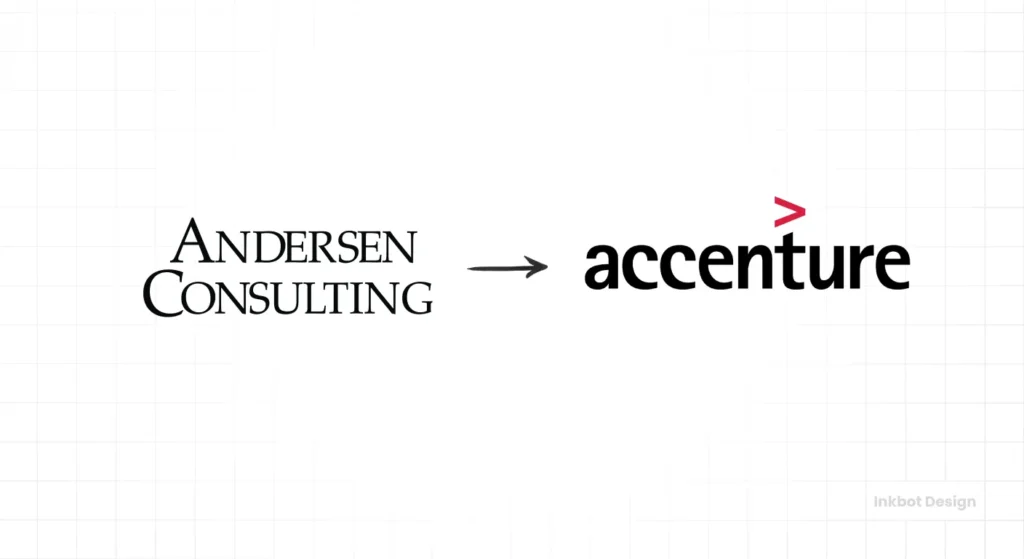
When Accenture rebranded from Andersen Consulting, early internal feedback was mixed, yet the name provided a distinct “empty vessel” that the company could fill with new meaning.
Market validation requires isolation. To get honest data, you must test names individually with participants who are not influenced by the opinions of a loud person in a boardroom.
Testing in 2026 involves quantitative surveys that measure “System 1” (instinctive) reactions rather than “System 2” (analytical) justifications.
Traditional focus groups fail brand name testing because group dynamics prioritise social harmony over raw market impact. Truly distinctive brands require testing methods that capture individual, instinctive reactions, bypassing the filters of politeness and peer pressure that dilute creative boldness into generic corporate noise.
The Financial Calculus of Market Validation: 2026 Budget Benchmarks
Market validation for a professional identity is an exercise in capital preservation.
In 2026, the cost of a naming failure extends beyond the initial design fee; it encompasses the destruction of digital equity, the expense of legal settlements, and the friction of customer re-education.
McKinsey & Company research suggests that a mid-market rebrand necessitated by a naming error costs between £45,000 and £120,000, depending on the complexity of the digital infrastructure.
2026 Investment Tiers for Naming Validation
| Validation Tier | Typical Budget | Methodology Used | Best For |
| Foundational | £3,000 – £7,000 | Quantitative surveys + basic trademark screening. | UK-only startups and local SMEs. |
| Advanced | £8,000 – £18,000 | Synthetic focus groups + LLM saliency audits. | Scale-ups and regional digital brands. |
| Strategic | £20,000 – £55,000+ | Global linguistic audits + biometric saliency testing. | Multinational corporations and VC-backed tech. |
Budgeting for Market Validation requires a direct comparison between the “Cost of Research” and the “Cost of Error”.
Companies that allocate at least 15% of their total branding budget to testing see a 40% higher customer acquisition rate in the first 12 months.
This is because a validated name reduces the cognitive friction required for a customer to understand the product’s value proposition.
Advanced Market Validation: Beyond the Survey
Market validation in the modern era requires a multi-layered approach that includes linguistic, legal, and algorithmic checks.
You are not just checking if people like the name; you are checking if the name can survive the “Category Entry Point” test.
According to the Ehrenberg-Bass Institute for Marketing Science, consumers do not search for brands; they search for solutions to specific needs. Your name must be easily associated with those needs.
Linguistic and Cultural Vetting
A name that sounds premium in London might sound like a vulgarity in Lisbon. Linguistic screening is a non-negotiable step for any brand with global ambitions.
The failure of the “Wizline” brand in certain European territories — where “Wiz” had unfortunate slang connotations — illustrates the cost of skipping this step. Use native speakers to audit for:
- Phonetic Ease: Is it a “jaw-breaker” in the target language?
- Negative Associations: Does it sound like a competitor or a cultural taboo?
- Symbolism: Does the sound of the word (phonaesthetics) match the brand’s personality?
Search Engine Disambiguation
In 2026, if you aren’t findable, you don’t exist. Brand name testing must now include a “Search Volume Collision” audit.
If you name your company “Spark,” you are competing with millions of generic entities. Market validation means ensuring your name is a “Unique Entity” in the eyes of Google’s Knowledge Graph.
You can further refine this by attending a brand naming workshop to stress-test your candidates against current SEO realities.
Effective market validation treats a brand name as a strategic asset rather than a creative preference. By integrating linguistic audits with search-engine disambiguation, companies ensure their identity is both culturally resonant and digitally discoverable, preventing the catastrophic loss of visibility that occurs when a name competes with generic entities.
The “Safe Name” Myth: Why Likability is a Trap
The most dangerous advice in branding is to “choose a name everyone likes.” This is a myth because likability is often a proxy for familiarity.
If everyone likes a name immediately, it is likely because the name reminds them of something else that already exists. In branding, familiarity is the enemy of distinctiveness.
The Ehrenberg-Bass Institute’s research on “Distinctive Brand Assets” shows that brand growth is driven by being noticed and remembered, not necessarily by being “preferred” in a vacuum.
A name like Liquid Death (the canned water brand) would have failed every traditional “likability” focus group. It is aggressive, counterintuitive, and potentially offensive. Yet, it is one of the fastest-growing beverage brands because it is impossible to ignore.

In 2026, you should test for “Arousal” and “Saliency” rather than “Appeal.” Use a strategic naming decision matrix to weigh these metrics.
If a name has a high recall score but a medium likability score, it is almost always a better choice than a name with high likability and low recall.
Choosing a brand name based on universal likability is a recipe for market invisibility. Saliency and recall are the primary drivers of brand equity, whereas immediate appeal often indicates a lack of distinctiveness. A name that challenges consumer expectations creates a deeper cognitive imprint, ensuring the brand remains top-of-mind during the buying process.
Recall Protocols: Testing for Long-Term Brand “Stickiness”
The true measure of a brand name is not whether someone remembers it immediately after seeing it, but whether they can recall it 48 hours later when they are ready to make a purchase. This is known as Delayed Recall Testing.
The Memory Validation Framework
- Aided Recall: Participants are shown a list of names and asked to identify which ones they recognise.
- Unaided Recall: Participants are asked to name three brands in a specific category without any prompts.
- Cognitive Load Assessment: Measuring how much mental effort is required to spell and pronounce the name. Lower cognitive load correlates with higher trust and faster decision-making.
The Ehrenberg-Bass Institute emphasises that “Distinctiveness” is the primary driver of memory. During validation, we look for names that create a “Pattern Interrupt”—something that breaks the expected linguistic norms of the category. If every competitor uses “Cloud” in their name, a brand that uses a completely unrelated noun will naturally have a higher unaided recall score.
The State of Brand Name Testing in 2026: AI and Synthetic Users
Brand name testing has undergone a tectonic shift in the last 18 months due to the rise of Large Language Models (LLMs) and Generative Engine Optimisation (GEO).
We no longer just test for how humans perceive a name; we test for how AI interprets it.
Measuring LLM Semantic Saliency: Ensuring Your Brand is “Machine Readable”
In the 2026 landscape, a brand name must be as legible to Google Gemini and GPT-4o as it is to a human customer.
Semantic Saliency refers to how accurately a machine model can categorise and associate your brand name with its intended industry.
If your brand name is “Oasis” but you sell software, the AI might miscategorise you alongside travel agencies or ’90s rock bands.
The Semantic Noise Audit
Before finalising a name, companies must perform a “Noise Audit.” This involves querying multiple AI models to see what concepts they naturally cluster with the name.
- Primary Association: What is the first thing the AI thinks this name represents?
- Sentiment Drift: Does the AI associate the name with positive or negative historical events?
- Category Overlap: How many unrelated industries use similar phonemes or word structures?
Synthetic Focus Groups: Implementation Protocol for 2026
Synthetic focus groups are virtual testing environments where Large Language Models simulate specific consumer personas.
Unlike traditional groups, synthetic users do not suffer from fatigue, social pressure, or the desire to please the moderator. This enables high-velocity testing of 500+ name variations against 50+ distinct demographic profiles.
The 4-Step Synthetic Testing Process
- Persona Encoding: Define the exact demographic, psychographic, and linguistic profile of the target audience. For example, “B2B decision-makers in London, aged 35-50, concerned with cyber-security sustainability.”
- Prompt Engineering for Neutrality: Instruct the model to evaluate names based on specific attributes such as “Professionalism,” “Disruptiveness,” and “Phonetic Ease,” without providing leading information.
- Monte Carlo Simulations: Run thousands of interactions between these personas and the potential brand names to identify which moniker consistently triggers the desired emotional response.
- Bias Correction: Compare the synthetic results against a smaller “Control Group” of 50 human participants to ensure the AI has not hallucinated a cultural preference.
Gartner estimates that by the end of 2026, 75% of naming agencies will use synthetic users to filter their initial “longlists.” This process reduces the time required for market validation from 6 weeks to 48 hours, allowing companies to enter the legal clearance phase with greater confidence.
Phonetic Findability: Optimising for Voice Search and AI Assistants
As Siri, Alexa, and Gemini Live become the primary interfaces for commerce, Phonetic Findability has become a critical validation metric.
A brand name that is difficult to pronounce or relies on non-standard spellings (e.g., “Phonetik”) is effectively invisible in a voice-first world.
Phonetic Testing Criteria
- The “Bar Test”: Can a person understand the name when spoken in a noisy environment?
- The “Smart Speaker Test”: Does an AI assistant correctly transcribe the name 95% of the time?
- The “Multilingual Phoneme Check”: Does the name contain sounds that are difficult for certain linguistic groups to pronounce (e.g., the English ‘th’ or the French ‘r’)?
Phonetic Symbolism plays a role here. Certain sounds trigger universal subconscious meanings. “K” and “T” sounds are perceived as sharp and efficient, making them ideal for technology brands. The “L” and “M” sounds are perceived as soft and premium, making them better suited to luxury goods. Validating your name against these phonetic triggers ensures the “sound” of your brand aligns with your market position.
Naming for Authority: Validation Strategies for B2B and Professional Services
For B2B brands, the goal of market validation is to establish Authority and Trust rather than just “excitement.” In sectors like FinTech, Law, or Logistics, a name must feel stable and scalable.
B2B decision-makers use their “System 2” (analytical) brain more frequently than B2C consumers. Therefore, testing for professional services should focus on:
- Longevity Scores: How well does the name age over 10 years?
- Sector Alignment: Does the name sound like it belongs in the specific industry without being generic?
- Partner Compatibility: How does the name look when placed alongside the logos of high-value partners?
Case Study: When Andersen Consulting transitioned to Accenture, they moved from a name tied to a person to a “synthesised” name that suggested “Accent on the future.” This move was validated by its ability to act as an “Empty Vessel” for a much broader range of professional services.
Testing Methods: Amateur vs Pro
| Technical Decision Point | The Wrong Way (Amateur) | The Right Way (Pro) | Why It Matters |
| Participant Selection | Friends, family, and employees. | Targeted, blinded demographic samples. | Eliminates “politeness bias” and internal echo chambers. |
| Testing Metric | “Do you like this name?” | “What words do you associate with this name?” | Measures semantic intent rather than subjective preference. |
| Recall Testing | Asking for feedback immediately. | Delayed recall testing (24–48 hours later). | Verifies long-term “stickiness” in the consumer’s memory. |
| Linguistic Audit | Google Translate. | Native-speaker cultural deep-dives. | Prevents accidental profanity or negative cultural connotations. |
| Domain/Social Check | Searching for the .com only. | Entity disambiguation and trademark audit. | Ensures legal protectability and search engine uniqueness. |
The Verdict
Brand name testing is a clinical exercise in risk mitigation and saliency.
The belief that focus groups provide the “best” answer is a relic of 20th-century marketing that prioritised consensus over impact.
To succeed in 2026, you must pivot toward market validation methods that measure individual cognitive imprints and algorithmic compatibility.
Stop asking people if they like your name. Start asking them what it means, how it feels, and if they can remember it tomorrow morning.
A name that is “liked” by everyone is one no one will notice. Your goal is to build a distinctive asset that serves as a hook in your consumer’s mind.
If you are ready to move beyond the beige and build a brand that actually stands out, start by auditing your current candidates against the data-backed frameworks we’ve discussed.
Don’t let a “safe” focus group kill your brand before it has the chance to breathe.
Explore Inkbot Design’s branding and naming services to ensure your next venture has the strategic foundation it needs to dominate the market. Read our related posts to refine your naming strategy further.
FAQs
How much should a UK startup spend on naming validation?
A startup should typically allocate £3,000-£5,000 for foundational testing to avoid future rebranding costs.
What is the “System 1” response in branding?
It is the immediate, instinctive emotional reaction a person has to a name before their logical mind begins to analyse it.
Why do focus groups reward boring names?
Participants often feel pressure to agree with the group, leading to a “safe” consensus that lacks market distinctiveness.
Can AI assistants understand abstract brand names?
Yes, but only if the name is phonetically distinct and free of “Semantic Noise” that could confuse the model.
How long does a professional naming audit take?
A thorough audit involving linguistic, legal, and AI checks usually takes 3 to 6 weeks.
What is the cost of a naming failure in 2026?
For a mid-sized business, the total cost, including rebranding and lost digital visibility, can exceed £100,000.
Is a .com domain still necessary for validation?
While helpful for trust, search engine uniqueness is now considered more important than the TLD.
What are “Synthetic Users”?
They are AI-generated personas used to simulate consumer feedback at scale and speed.
How do you test for phonetic ease?
By running voice recognition tests across various devices and testing pronunciation with native speakers of target languages.
What is a “Unique Entity” in digital discovery?
A name that does not compete with common nouns or existing high-authority brands in search results.
Why is distinctiveness better than likability?
A name people “like” is often familiar and forgettable; a distinctive name is memorable and drives long-term growth.
How does semantic saliency affect AI recommendations?
If an AI cannot easily categorise your name, it is less likely to recommend your brand in response to relevant user queries.
