The Strategic Naming Decision Matrix: Longlist to Shortlist
Stop treating brand naming as a creative exercise. Successful names are strategic assets built on trademark defensibility, linguistic data, and entity clarity. This guide introduces the Strategic Naming Decision Matrix to help you filter a chaotic longlist into a high-performance shortlist that ranks and resonates in 2026.
 By Stuart Crawford
 Reviewed by Tabitha Ayers
Updated 11 min read
On this page11 min left
- What Is The Strategic Naming Decision Matrix?
- The Descriptive Name Trap: Why Your Name Shouldn't Explain What You Do
- Stage 1: The Linguistic Screen and Phonosemantic Audit
- The “Qwikster” Myth: Why You Can't Just Change It Later
- Machine Discovery: Naming for Artificial Intelligence and Knowledge Graphs
- The £50,000 Mistake
- The Strategic Naming Comparison Table
- The Verdict
Data, not creativity, is the primary driver of successful naming.
Most founders treat naming as an art project, but in 2026, it is a search for a unique, defensible entity in a crowded digital graph. If your name isn't built for a search engine or a Large Language Model (LLM) to identify it with absolute certainty, your brand effectively does not exist.
Choosing a name based on a “gut feeling” or a friend's vote is a recipe for an expensive rebrand.
According to the Ehrenberg-Bass Institute for Marketing Science, brand distinctive assets require consistent exposure over the years to achieve recognition. Changing a name because it was poorly researched at launch destroys that equity.
How to name your business requires a systematic approach: filter your ideas through the Strategic Naming Decision Matrix to ensure your final choice is commercially viable and technically sound.
What Is The Strategic Naming Decision Matrix?
The Strategic Naming Decision Matrix is a structured evaluation framework for objectively ranking potential brand names against specific criteria, including trademark availability, linguistic resonance, and digital discoverability.
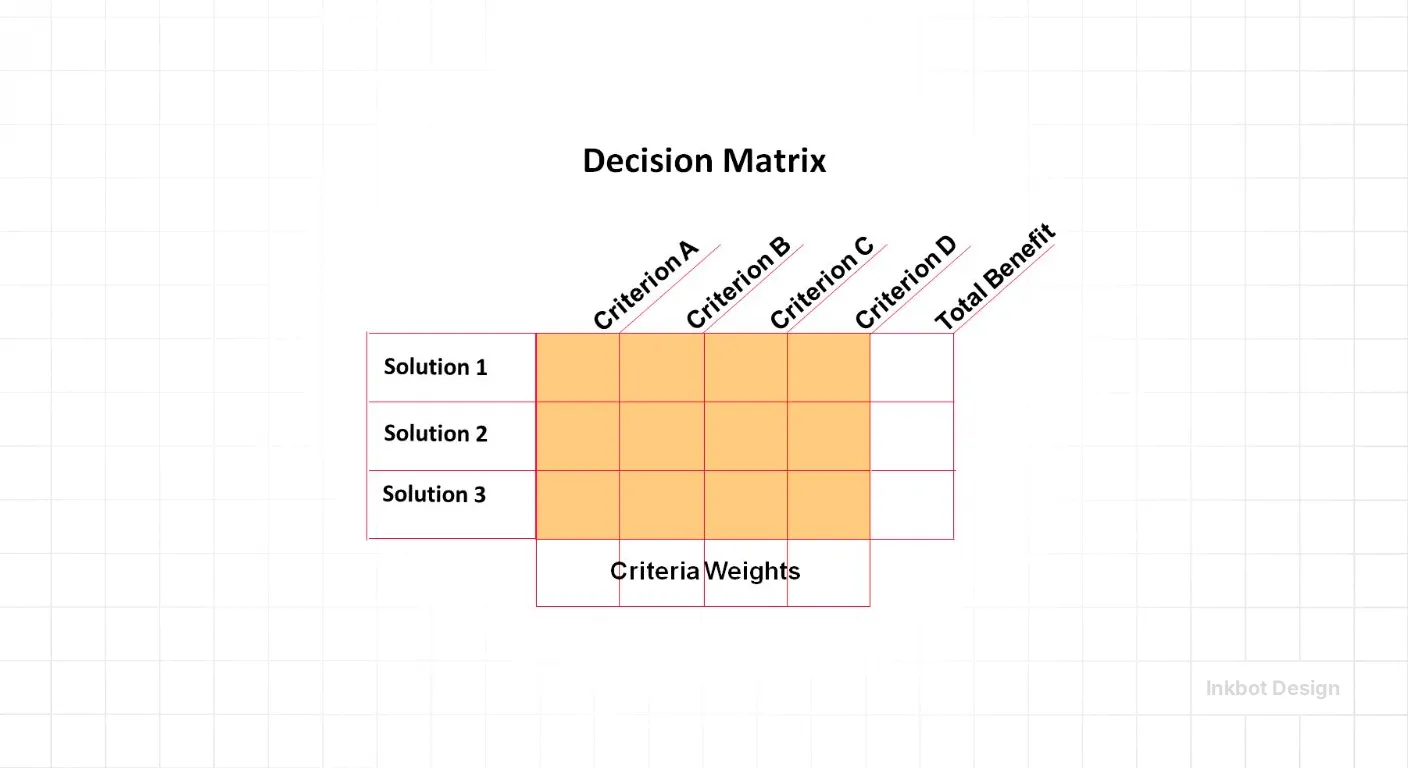
Key Components:
- Legal Defensibility: The ability to register the name as a trademark within specific international classes.
- Linguistic Fitness: The evaluation of phonosemantics, ease of pronunciation, and cultural neutrality across global markets.
- Semantic SEO Compatibility: The likelihood of the name becoming a dominant entity in search results and AI knowledge bases without competing with generic dictionary terms.
The Strategic Naming Decision Matrix is a data-driven framework that filters brand names based on trademark defensibility, linguistic appeal, and semantic SEO compatibility.
The Descriptive Name Trap: Why Your Name Shouldn't Explain What You Do
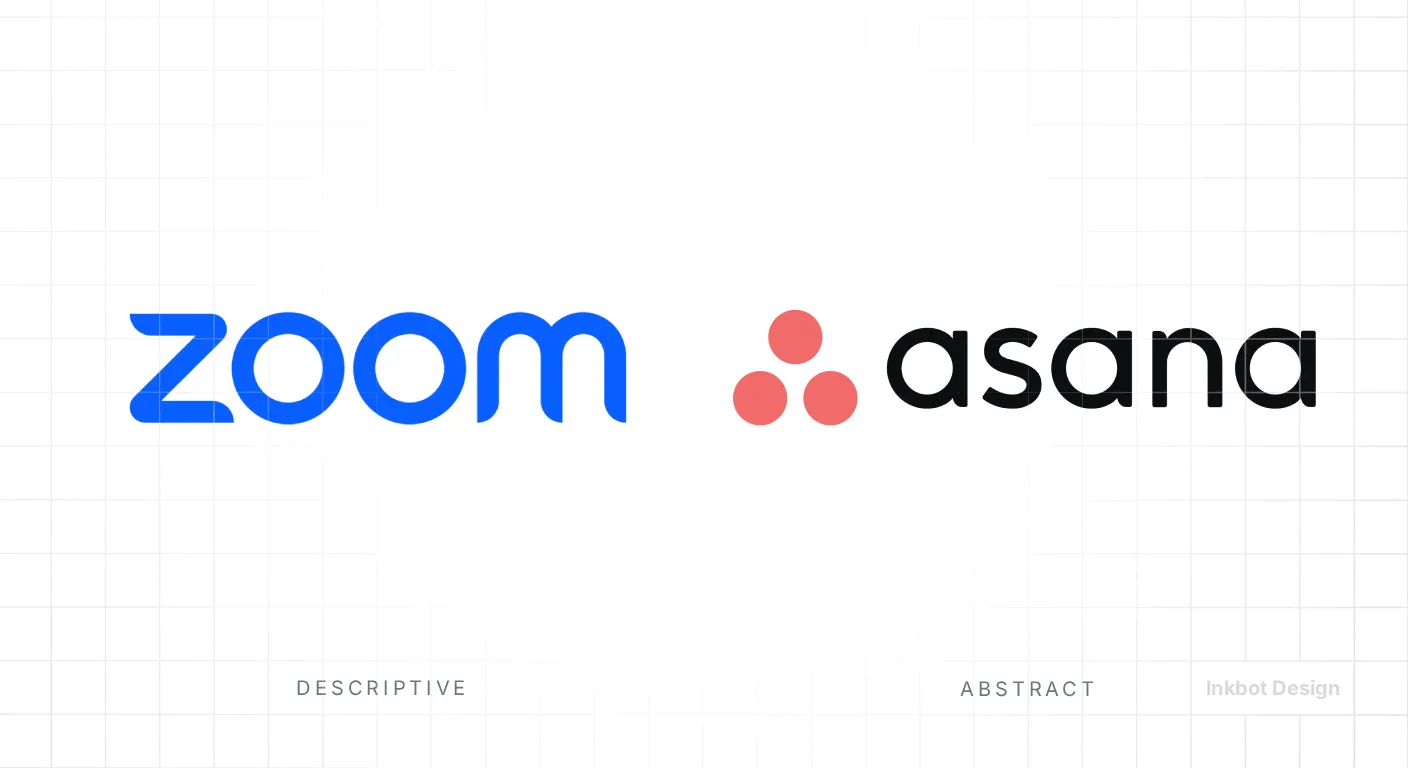
Descriptive names are nearly impossible to own as unique brand entities. While it might feel intuitive to name a company “The London Web Design Agency,” this choice creates a ceiling for growth and a floor for trademark protection.
According to the World Intellectual Property Organisation (WIPO), “descriptive marks” are the most frequently refused for registration because they describe a characteristic of the service rather than acting as a source identifier.
The Trademark Dead End
A descriptive name cannot be registered as a trademark unless it has acquired “secondary meaning” through years of intensive use. This means you are spending money to market a name you do not legally own.
McKinsey & Company found that companies with strong, distinctive brands outperform their peers by 73% in total shareholder return. A descriptive name dilutes that strength by blending into the background noise of your competitors.
The Keyword Cannibalisation Myth
Founders often choose descriptive names, thinking it helps with SEO. This is an obsolete strategy. Modern search engines, including Google, prioritise entities.
If your name is “Best Coffee Shop,” you are competing against every local listing for that phrase. If your name is “Starbucks,” you own the entity.
When a user searches for your brand, they should find you, not a list of your competitors.
A descriptive name is a marketing tax that you pay every single month. By choosing a name that explains your category rather than identifying your unique entity, you forfeit legal protection and force your SEO strategy to compete against the dictionary rather than your actual rivals.
Stage 1: The Linguistic Screen and Phonosemantic Audit
Every name carries a “sound symbolism” that triggers subconscious emotional responses before the reader even processes the meaning. This is known as phonosemantics.
A study published in the Journal of Consumer Research demonstrated that certain vowel sounds are naturally associated with size, speed, and luxury.
The Power of Plosives
Names containing “plosive” consonants—P, T, K, B, D, G—are more memorable. Think of brands like Kodak, Google, or TikTok. These sharp sounds create a “stop” in the breath, forcing cognitive attention.
Nielsen Norman Group (NN/g) research suggests that lower cognitive load during brand recall is directly correlated with higher consumer trust. If the name is hard to say, the brain perceives the brand as “difficult.”
Cultural Faux Pas Prevention
Your name must be neutral or positive in every market you intend to enter. The Pew Research Centre notes that 60% of small businesses now have customers outside their home country. A name that sounds professional in Belfast might be an insult in Berlin.
A formal linguistic screen checks for “hidden” meanings in the top 10 global languages to prevent a “Nova” (Chevrolet's famous “no va” or “it doesn't go”) situation.
Branding is the science of memory. Names built on plosive consonants and open vowels reduce cognitive friction during recall, allowing a brand to occupy more mental real estate with less advertising spend.
The “Qwikster” Myth: Why You Can't Just Change It Later
The most dangerous advice in startup culture is “just launch with any name and change it later.” This ignores the massive cost of “switching friction.”
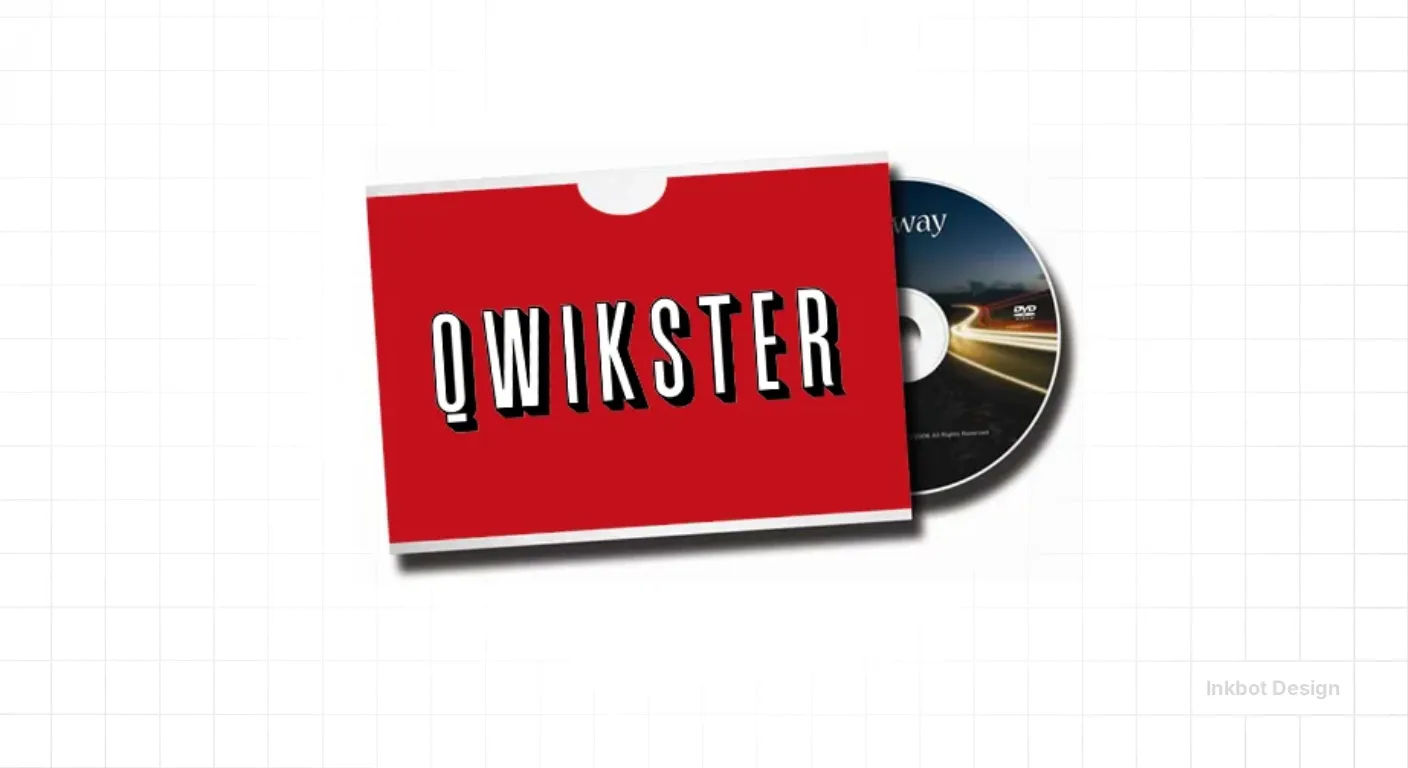
In 2011, Netflix CEO Reed Hastings tried to spin off his DVD-by-mail business into a new brand called Qwikster.
The move was a disaster, resulting in the loss of 800,000 subscribers and a nearly 30% drop in stock price.
The Destruction of Brand Equity
Every dollar spent on a name builds “mental availability.” When you change that name, you reset your progress to zero.
According to WARC (World Advertising Research Centre), it takes an average of five to seven years for a new brand asset to reach full “distinctiveness” in a consumer's mind.
A rebrand isn't a fresh start; it is a funeral for your previous investments.
The Technical Debt of Renaming
Beyond the mental loss, the technical cost is immense. 301 redirects, updated trademarks, new signage, and social media handle migrations create “information rot.”
If you don't use a Brand Naming service to get it right the first time, you are essentially scheduling a future financial crisis.
Rebranding is a high-risk surgical procedure with a low success rate. The belief that a name is temporary ignores the reality of cumulative brand equity; every name change is an intentional act of corporate amnesia that confuses both customers and search algorithms.
Machine Discovery: Naming for Artificial Intelligence and Knowledge Graphs
In 2026, the primary “consumer” of your brand name is often an algorithm before it is a human. Large Language Models (LLMs) and generative engines use a process called Entity Disambiguation to distinguish your brand from other concepts in their training data.
If your name is semantically “noisy,” your brand will suffer from Information Rot, where AI systems attribute your reviews, features, or products to a competitor.
Solving the Retrieval Gap
The Retrieval Gap occurs when an AI system cannot confidently isolate your brand as a unique entity. This happens most frequently with Descriptive Names.
If you name your company “The Sustainable Packaging Co,” an AI system perceives this as a category description rather than a brand.
Consequently, when a user asks for a recommendation, the AI may list your competitors because it cannot distinguish your brand from the general topic of sustainable packaging.
The Strategic Naming Decision Matrix prioritises Suggestive or Abstract names because they create a “clean” entry in the global knowledge graph.
A unique name like “Zulily” or “Monzo” has zero semantic overlap with common dictionary terms, allowing machines to index and retrieve brand-specific data with 100% accuracy.
Knowledge Graph Integration
To achieve dominance in AI Overviews, your name must conform to the JSON-LD Schema. This involves:
- Unique String Identification: Ensuring the name does not compete with high-volume generic keywords.
- Attribute Alignment: Choosing a name that allows for clear Entity-Attribute-Value (EAV) mapping (e.g., Brand -> hasProduct -> UniqueFeature).
- Semantic Proximity: Ensuring your brand name is mathematically “close” to your core industry terms in vector space without being buried by them.
Predicting Entity Collision
Before finalising a name, we perform an Entity Collision Audit. This involves querying existing LLMs to identify the associations already associated with your shortlisted names.
If a name is already heavily associated with a negative event, a failed company, or a vastly different industry, it is discarded.
According to Gartner, brands that proactively manage their “Entity Clarity” see a 45% higher citation rate in generative search results.
Machine Readability Score by Name Type
Name Category | Example | Machine Accuracy | Discovery Risk |
|---|---|---|---|
Abstract / Invented | Rolex, Sony | 99% | 🟢 Minimal |
Suggestive | Pinterest, Netflix | 85% | 🟡 Moderate |
Descriptive | Best Buy, General Motors | 40% | 🔴 High |
Generic | Apple, Amazon | 95%* | 🟢 Minimal (requires massive authority) |
*Note: High accuracy for Apple/Amazon is due to historical data and immense authority, not the name type itself. New brands cannot replicate this without billion-dollar budgets.
The £50,000 Mistake
In our work at Inkbot Design, we consistently see founders fall in love with a name before they check the legal data. I once audited a client who had spent £50,000 on a high-end web design and initial stock for a luxury candle brand.
They had “the perfect name.” It was poetic, it was short, and they had bought the .com.
But they hadn't performed a comprehensive trademark search in the US or the UK. Within three weeks of launch, they received a “Cease and Desist” from a global cosmetics firm that owned a similar mark in the same class.
The founder was devastated.
They had to pulp all their packaging, change their social handles, and start from scratch. The most expensive mistake I've watched a founder make is assuming that “having the domain” is the same as “owning the brand.” It isn't.
A domain is a piece of digital real estate; a trademark is a legal deed.
If you don't own the deed, your house can be demolished at any time. We now insist that every client runs their longlist through a full legal screening before a single pixel is designed.
The Strategic Naming Comparison Table
Technical Decision Point | The Wrong Way (Amateur) | The Right Way (Pro) | Why It Matters |
|---|---|---|---|
Search Intent | Uses high-volume keywords (e.g., “Fast Delivery”) | Creates a unique entity (e.g., “Zipline”) | Unique entities own the “Brand Search” results. |
Legal Filter | Checks if the .com is available. | Conducts a multi-class trademark search. | Domains do not provide legal protection against lawsuits. |
Phonetics | Focuses on “meaning” or puns. | Uses plosive consonants (P, K, T) for recall. | Sound symbolism dictates brand “stickiness” in memory. |
Global Scale | Ignores non-English meanings. | Performs a linguistic screen in top markets. | Prevents offensive or embarrassing translations. |
AI Compatibility | Uses common dictionary words. | Selects “Synthesised” or “Suggestive” names. | LLMs can disambiguate unique entities more accurately. |
Operationalising the Matrix: A Quantitative Scoring Framework
The Strategic Naming Decision Matrix is a weighted scoring system designed to remove emotional bias from the boardroom.
Instead of asking, “Do we like this name?”, we ask, “Does this name meet the technical requirements for commercial success in 2026?”
Each candidate on your longlist must be scored across four primary pillars on a scale of 1–10.
Pillar 1: Legal Defensibility (Weight: 40%)
This is the most critical pillar. If you cannot own the name, the other pillars are irrelevant.
- 1–3: High risk; similar names exist in the same class.
- 4–7: Moderate risk; needs specific “disclaimers” or narrow registration.
- 8–10: Low risk; clear path to trademark ownership in primary markets.
Pillar 2: Linguistic Fitness (Weight: 20%)
Evaluates how the name sounds and its ease of use.
- Score based on: Presence of plosive consonants, vowel balance, and lack of negative meanings in the “Global 10” languages.
Pillar 3: Digital Real Estate (Weight: 20%)
Assesses the availability of handles and the “search landscape.”
- Score based on: .com or relevant TLD availability, social media handle consistency, and the lack of “dominant entities” already using the name.
Pillar 4: Semantic Clarity (Weight: 20%)
Measures how easily machines and AI systems can index the name.
- Score based on: Uniqueness versus dictionary terms and the absence of “Entity Collision” in LLM training data.
The Verdict
Data-driven naming is the only way to build a resilient brand in 2026.
Most founders fail because they treat naming as a creative whim. Still, the Strategic Naming Decision Matrix proves that successful brands are built on the foundations of legal defensibility, linguistic data, and entity clarity.
Stop guessing. Your gut is a liability, not an asset, in global commerce.
By moving from a chaotic longlist to a data-validated shortlist, you ensure that your brand is more than just a word; it is a defensible asset that search engines and AI systems can identify, index, and recommend with 100% certainty.
The stakes are too high to get this wrong. If you are ready to build a brand that ranks and resonates, explore Inkbot Design's brand naming services or read our other guides on how to name your business to take the next step in your brand's evolution.
FAQs
How do I use the Strategic Naming Decision Matrix to filter my longlist?
The matrix scores each name on a scale of 1–10 across four pillars: Legal Defensibility, Linguistic Fitness, Visual Potential, and Digital Availability. Names that score below a 7 in any category are discarded, ensuring only commercially viable candidates reach your final shortlist for deeper trademark review.
Why is legal trademarking more important than domain availability?
Domain ownership does not grant legal rights to use a brand name in commerce. A trademark is a legally enforceable right that prevents others from using a name that is confusingly similar to the mark. Using a name without a trademark, even if you own the domain, leaves you vulnerable to expensive litigation and forced rebranding.
What is the difference between a descriptive and a suggestive name?
A descriptive name (e.g., “Cold Ice Cream”) defines the product, making it legally weak and hard to own. A suggestive name (e.g., “Arctic”) hints at a product's quality without naming it directly, offering a balance between consumer understanding and strong legal defensibility.
How does phonosemantics affect brand name recall?
Phonosemantics is the study of how specific sounds trigger subconscious emotional responses. Brands using plosive consonants like ‘K' or ‘B' create sharp, memorable interruptions in speech that improve cognitive retention. Research shows that names with these sounds are recalled more frequently than those with softer, “fricative” sounds.
Is it true that I need a .com domain to rank on Google in 2026?
Google treats most Top-Level Domains (TLDs) equally for ranking purposes, meaning a .io, .co, or .app can rank as well as a .com. However, .com remains the global standard for consumer trust and “type-in” traffic, reducing the risk of users accidentally visiting a competitor's site.
When should I hire a professional naming agency?
Hiring a professional agency is necessary when the cost of a naming failure—such as a legal lawsuit or a failed rebrand—exceeds the cost of the naming service. Professional agencies provide linguistic screening, multi-jurisdictional trademark searches, and entity disambiguation audits that most entrepreneurs cannot perform themselves.
How is my brand name compatible with AI search?
AI compatibility depends on entity uniqueness. If your name is shared by thousands of other businesses or common objects, an LLM will struggle to isolate your brand data. A unique, non-dictionary name is more likely to be cited accurately by AI Overviews and generative engines like Perplexity.
What are the most common naming mistakes for SMB owners?
The most frequent errors include choosing a name based on a personal pun, failing to check international trademarks, and selecting a name that is too narrow for future expansion. These mistakes create “brand ceilings” that limit the business's ability to expand into new categories or markets.
Can I use AI tools to generate my brand name?
AI tools are excellent for high-volume brainstorming, but cannot perform complex legal or linguistic audits. A name generated by AI must still be filtered through the Strategic Naming Decision Matrix to ensure it is not already trademarked or semantically polluted by existing entities.
Why is a name change so expensive after launch?
Renaming a business requires replacing all physical and digital assets, including signage, packaging, websites, and legal documents. More importantly, it destroys “mental availability,” forcing you to spend significant marketing capital to re-educate your audience on your new identity.