Brand Architecture Audit: How to Find the Decisions Behind the Sprawl
Most brand architecture audits inventory logos, name the sprawl, and change nothing. The sprawl is a record of decisions — every orphan sub-brand was approved by someone with the authority to approve it. Audit the decision rights first, the assets second, and the structure holds after the rebrand ends.
 By Stuart Crawford
 Reviewed by Tabitha Ayers
Updated 18 min read
On this page18 min left
- How a Brand Architecture Audit Is Done
- Before You Start: The Entry Conditions Most Guides Skip
- The Judgement Layer: Where the Process Stops Being Steps
- The Two Objections a Managing Partner Will Raise
- The Step Everyone Does in the Wrong Order
- Where This Stands in 2026
- The Verdict
- Frequently asked questions
A 140-person accountancy firm can run seven brands without a single person having decided to. The tax team commissioned a wordmark for a seminar series in 2019.
A partner brought a client-facing identity with them from a merger and never retired it. Someone in corporate finance built a microsite. None of these was mistakes at the time.
Each one was approved by someone with the authority to approve it — and that is the finding your brand architecture audit needs to produce, because the logos are not the problem. The permissions are.
Forrester Research, the technology and marketing research firm, reported that 63% of brands experienced a rights or compliance issue in their marketing ecosystems within the last year, and 41% attributed it to poor internal visibility.
Read that second figure carefully.
Not poor design. Not weak guidelines. Nobody could see what was being decided or by whom.
That is a governance reading, and it means the standard audit — inventory the assets, map the touchpoints, present the deck — diagnoses the rash and ignores the infection.
This is the method we use at Inkbot Design, a brand architecture agency working with professional services firms across 21 countries.
It takes six stages. Most of the value sits in stages two and three, which most audits skip entirely.
How a Brand Architecture Audit Is Done
A brand architecture audit is completed in six stages: inventory the brands, map the decision rights, trace each sub-brand to its approval, model the target structure, pressure-test it against real scenarios, and install the governance that holds it. The audit's output is a set of decision rules and named owners, not a slide of logos.
- The inventory is evidence, not the finding. Every brand asset is the visible end of a decision chain that the audit must reconstruct.
- Decision rights are the diagnostic. Where approval authority is undefined, sub-brands appear without anyone having chosen to create them.
- The audit fails if it ends with a recommendation. An audit that does not name owners and approval thresholds results in a rebrand that decays on the same schedule as the previous one.
A brand architecture audit examines how a firm's brands relate, who holds authority to approve changes, and where decision gaps allow unmanaged sub-brands to appear.
Before You Start: The Entry Conditions Most Guides Skip
Three conditions must be met before a brand architecture audit yields anything usable. Skip them, and you will run a six-week exercise that ends in a polite deck nobody will act on.
You need a senior sponsor with the authority to remove a partner's brand.
Not to ask a partner to retire their identity. To remove it. If the Managing Partner will not commit to that in advance, the audit's findings become negotiable, and negotiable findings are decoration. This is the single most common reason audits fail in partnership-structured firms, and it fails before stage one.
You need access to the decision record, not just the asset library.
Board minutes, partner meeting notes, marketing budget approvals, and the email chain in which the microsite was signed off. The DAM tells you what exists. The decision record tells you how it got there. If the firm cannot produce the second, that absence is itself the first finding — and a substantial one.
You need agreement on what the structure is for.
A firm consolidating before a sale wants a legible single asset. A firm building service-line specialisms for lateral hires wants distinct sub-brands with clear endorsement. Both are valid architectures. They are not the same architecture, and an audit run without that decision fixed will produce recommendations pointing in two directions at once.
“An audit whose findings a partner can decline is not an audit. It is a consultation. The difference is authority, and authority is decided before the work starts, not after the recommendations land.”
Stage 1: Inventory the Brands — and Date Them
The inventory answers one question: what brand-bearing entities does this firm currently operate? Every wordmark, sub-brand, service-line identity, event brand, microsite, acquired-firm name still in circulation, and partner-personal identity used in client-facing work.
The instruction most guides miss: date every item. Not when it was designed — when it was approved, and by whom, as far as anyone can recall. A brand architecture audit that produces an updated inventory has produced a photograph.
A dated inventory produces a timeline, and a timeline shows clustering. When four sub-brands appear in eighteen months, something changed in the firm's decision-making during that window—usually a merger, a new practice head, or a marketing lead who has left.
How you know it is done right: every item on the list has a name attached to its origin, or is explicitly marked “origin unknown”. The unknowns are data. In a firm of 150 people, an identity that nobody can account for is a governance gap you have just located precisely.
The failure mode at this stage: stopping at the logo file. Verbal architecture — how partners describe the firm in a pitch — is architecture. Gartner peer commentary in 2025 highlighted that many organisations struggle with inconsistent value propositions and teams that are not aligned from product through sales. If three partners describe the firm in three ways in the same room, that is an architectural finding that no asset inventory will ever surface.
Stage 2: Map the Decision Rights
This is the stage that separates a brand architecture audit from a brand asset review. The question is not “what do we have?” It is “who can create more of it?”
Build the map against four authorities, and for each one name a person, not a role that nobody occupies:
Authority | The Question | Where It Usually Breaks in a 50–200 Person Firm |
|---|---|---|
Create | Who can commission a new brand-bearing asset? | Any partner with a budget line. Nobody thinks of it as brand authority. |
Approve | Who signs off before it goes live? | Undefined. Assumed to be marketing. Marketing assumes it is the partner. |
Enforce | Who can compel the removal of a non-compliant asset? | Nobody. This is the most common blank cell in the entire map. |
Retire | Who decides a brand is finished and removes it? | Nobody, which is why acquired-firm names persist for a decade. |
Arbitrate | Who resolves it when two partners disagree? | The Managing Partner, informally, reluctantly, and inconsistently. |
The map is complete when every cell contains a named individual or the word “nobody”. The “nobody” cells are the audit's primary finding.
Forrester Research's 41% internal-visibility figure describes exactly this condition at scale: firms are not failing to enforce standards, they are failing to locate who is meant to.
The failure mode at this stage: filling the map with the org chart rather than with observed behaviour. The org chart says the Marketing Director approves brand assets. Ask when they last declined one. If the answer is never, the Marketing Director does not hold approval authority — they hold production responsibility, and someone else holds the veto. Map what happens, not what is written down.
Stage 3: Trace Every Sub-Brand to Its Approval
Take the dated inventory from stage one and the decision map from stage two and run them against each other.
For each brand-bearing entity, answer: which authority created this, and did that authority exist at the time?
The results sort into three categories, and each demands a different remedy.
Sanctioned: approved by someone who held the authority, for a reason that still holds. Keep it, document it, move on. In most firms, this is a minority of the portfolio.
Sanctioned-but-expired: approved legitimately for a purpose that has ended. The 2019 seminar series brand was for a series that ran twice. These are the easiest wins in the audit, because nobody defends them — they persist through inertia, not politics.
Unsanctioned: created because no authority existed to prevent it. This is the diagnostic category. Every unsanctioned brand marks a specific gap in the decision map, and the gap will produce more of them regardless of what you do to the asset. Delete the sub-brand and leave the gap, and a new one will appear within the year.
The forensic step matters because the remedy differs entirely. A sanctioned-but-expired brand needs a retirement decision. An unsanctioned brand needs a governance rule. Treat both as design problems, and you will redesign your way back to the same portfolio.
“Every unmanaged sub-brand in a professional services firm is a receipt. It records a moment when someone needed a brand decision made, found nobody empowered to make it, and made it themselves. The asset is disposable. The moment repeats.”
Stage 4: Model the Target Structure Against Real Constraints
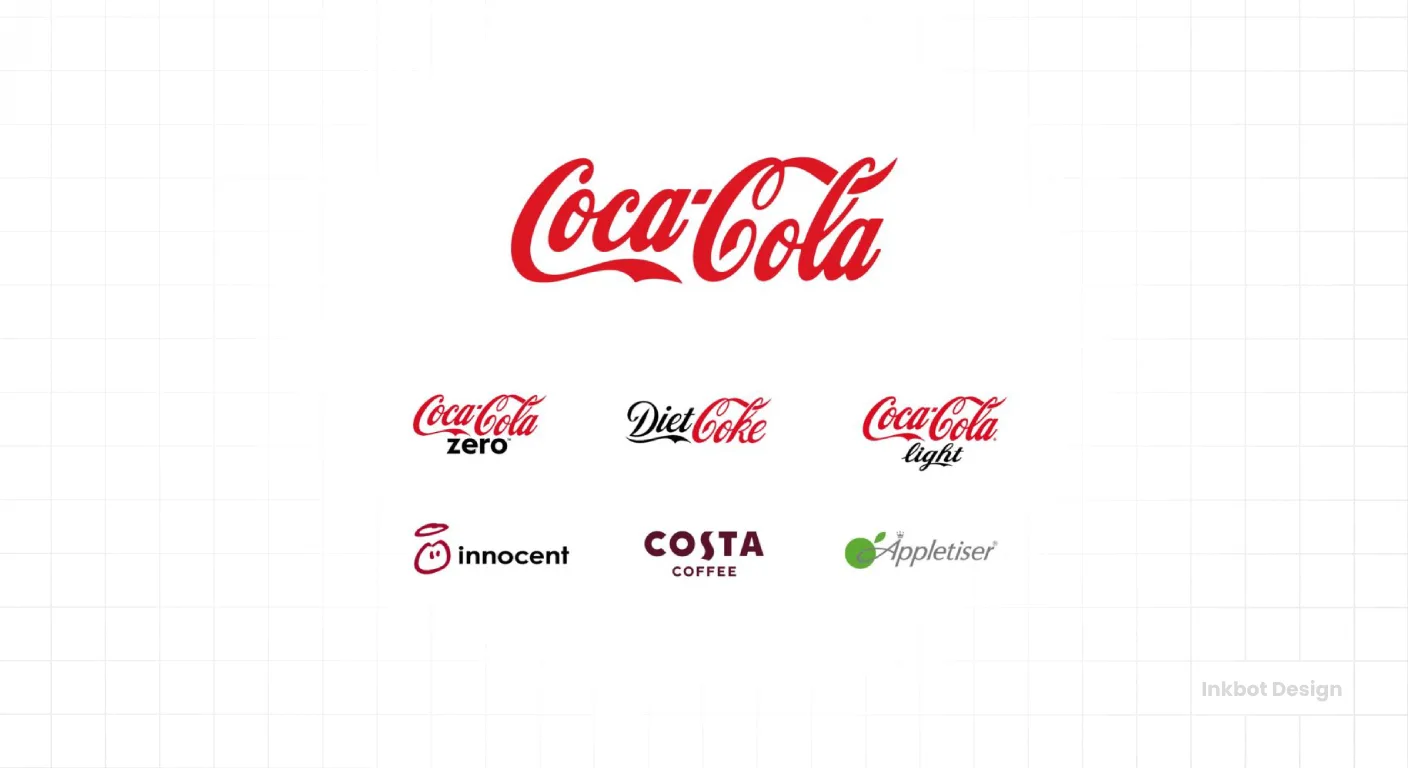
Only now does the architecture question — branded house, house of brands, endorsed, hybrid — become useful. Asked at stage one, it is a theory exercise.
Asked here, it is constrained by evidence: you know what exists, who can change it, and which gaps produced it.
For UK professional services firms in the 50–200 range, the realistic options narrow fast. A house of brands requires marketing capacity that most firms of this size lack and are unlikely to develop.
The genuine decision is usually between a strict masterbrand — one name, service lines as descriptors, no sub-identities — and a masterbrand with endorsed specialisms where a practice area genuinely competes in a distinct market with distinct buyers.
The test for an endorsed sub-brand is commercial, not sentimental: does this practice area win work from buyers who would not otherwise consider the firm, and would it lose that work under the masterbrand?
A forensic accounting practice selling to litigation solicitors might pass that test. A tax team selling to the same clients as the audit team does not, however strongly its partner feels about the identity they built.
How you know it is done right: you can state the rule for what qualifies as a sub-brand in one sentence, and apply it to a hypothetical new practice area without ambiguity.
The failure mode at this stage: designing the structure around the current partner roster. Partners leave. Architecture built to accommodate a specific individual's preferences becomes a liability the day they retire, and every firm that has carried a departed founder's sub-brand for six years knows exactly what this cost is.
Stage 5: Pressure-Test the Structure Against Scenarios
An architecture that works on the current portfolio is not an architecture. It is a tidy-up. The structure has to withstand events, and in a 50–200-person professional services firm, those events are predictable.
Run the proposed structure against four:
- You acquire a 20-person practice with a known regional name. What happens to that name, on what timeline, and who decides? A structure without an integration rule will default to keeping the name indefinitely, which is how firms accumulate.
- A lateral hire arrives with a book of business and a personal brand. Does the architecture absorb it, endorse it, or refuse it? Decide now, because deciding during the negotiation means the answer is yes.
- A practice area doubles and begins to ask for its own identity. What is the threshold? Revenue? Buyer distinctness? Nothing?
- A practice area fails and needs to be closed. Who retires the brand, and how quickly does it leave the website?
Scenario four is where most structures quietly fail. Retirement authority is rarely assigned, so brands accrete permanently.
Recent industry commentary on global brand consistency notes that brands often fragment when local teams adapt logos, tone, and messaging without strong guardrails — the same mechanism operates inside a single UK firm, with practice areas playing the role of local teams.
Stage 6: Install the Governance That Holds It
The audit's deliverable is not the structure. It is the governance that keeps the structure from decaying, and this is the stage most audits treat as an afterthought, called “implementation”.
Four components, all of which must name people:
Decision rules. Written, one page, in plain English. “A new sub-brand requires approval from the Managing Partner and the Marketing Director jointly, and requires evidence of a distinct buyer group.” Not principles. Rules with thresholds.
Named owners. Every cell of the stage-two map is filled. In particular, the enforce and retire cells were blank.
Mechanical guardrails. 2026 coverage from brand operations and digital asset management vendors points to template locking, asset centralisation, role-based permissions, and review workflows as the practical response to inconsistency. These matters are problematic because they make the governance rule the path of least resistance rather than a policy someone has to remember.
A review cadence with teeth. Annual, with a named owner and a standing agenda item. A review that can be skipped will be skipped.
Governance framing is not a marketing affectation. A branded-content governance report published on UAL Research Online treats governance as an operational discipline in practice rather than a style-guide exercise, which aligns with what actually determines whether a rebrand survives its second year.
The Judgement Layer: Where the Process Stops Being Steps
Six stages will produce a defensible audit. They will not tell you what to do when the evidence and the politics disagree, and in professional services firms, they disagree constantly.
When an unsanctioned brand is commercially successful, the forensic reading says it is a governance failure. The P&L says it wins work.
The judgment: separate the asset from the gap. Keep the brand if it earns its place under the stage-four test, and close the gap that allowed it to appear, because the next one will not be successful.
When the equity partner is the governance gap, the map says “nobody” in the enforce cell because, in practice, the answer is “not against a partner”. Naming that in an audit document is a career decision for whoever writes it.
The judgment: name it in the room before you name it on the page, and get the Managing Partner's commitment before the document exists. Audits that ambush partners get shelved, and a shelved audit is worse than no audit — it inoculates the firm against trying again.
When the timeline is an acquisition.
Integration compresses everything. The honest counsel is often to make a fast, imperfect structural decision and install the governance properly afterwards, rather than run a thorough audit that concludes after the acquired name has already calcified in the market.
The Two Objections a Managing Partner Will Raise
“This is a marketing problem, and we have a Marketing Director.”
No. A Marketing Director cannot create approval authority that they were not given, and cannot enforce against an equity partner. Forrester Research's finding that 41% of brand compliance failures trace to poor internal visibility describes an organisational condition, not a marketing performance issue. Asking marketing to fix it is asking the person with the least authority in the room to overrule the people with the most.
“We rebranded four years ago. We are not doing that again.”
You are not being asked to. A brand architecture audit that finds a governance gap and installs a rule may recommend no visual change at all — the output is a one-page decision rule and five named owners. The reason the last rebrand decayed is precisely that it changed the assets and left the permissions untouched.
The Step Everyone Does in the Wrong Order
The prevailing model, articulated clearly by Martin Roll in his brand architecture framework, runs as follows: audit the current state, evaluate the portfolio, decide on the framework, set naming guidelines, implement and disseminate.
Intelligent practitioners hold this order for a good reason — you cannot decide on a framework without knowing what exists, and implementation must follow the decision. The logic is sound.
The order is still wrong, and it is wrong at one specific joint. Governance sits at position five, described as implementation and dissemination — brand books, training, guidelines. That places governance downstream of the framework decision, as the mechanism for rolling out a structure already chosen.
Governance is not the delivery mechanism. It is the diagnostic.
The evidence points hard at this. Research found that 63% of brands experienced a rights or compliance issue within the last year, and 41% attributed it to poor internal visibility — a visibility problem, not a framework problem. These firms have brand books. They have guidelines. What they do not have is a legible answer to who decided.
Gartner peer commentary in 2025 similarly located the problem in misalignment running from product through sales, which is a decision-flow description rather than a design description.
Current industry writing on brand governance keeps identifying the same failure modes — outdated assets, distributed teams, manual review bottlenecks, regional drift — every one of which is a process failure wearing a design costume.
Run governance at stage five, and you produce a structure designed in ignorance of who can protect it. A governance gap produced the sprawl you audited.
Redesign around it, and the gap will produce the sprawl again, on roughly the same timeline, and the next audit will find a portfolio that looks remarkably like the one you just cleaned up.
“A brand architecture audit that maps assets and skips decision rights has audited the symptom. The portfolio is not the disease. It is the record of the disease, and reading it as a design problem guarantees you will treat it as one — expensively, thoroughly, and twice.”
Map the decision rights at stage two, before you model any structure. The structure you design should be constrained by who can actually protect it, not by what looks coherent on a slide. Governance is not implementation. It is the second stage of the audit, and everything after it depends on what it finds.
Where This Stands in 2026
Brand consistency is now being framed as a growth and revenue issue rather than a design issue.
2026 industry coverage repeatedly ties consistency to trust, recognition, and conversion, particularly for organisations scaling across channels and markets — which moves the brand architecture audit from a marketing budget line to a commercial one, and changes who should be in the room when the findings are presented.
AI-generated content has sharpened the governance question considerably.
A January 2026 industry analysis highlighted that customers increasingly expect consistent experiences across channels while many brands still struggle to deliver them, and that pressure compounds as content volume rises.
A firm producing four pieces of content a month can govern by taste. A firm producing forty cannot, and taste-based governance fails silently — nobody notices the drift until a buyer does.
Regional and international expansion remains the sharpest pressure point. Recent commentary on global brand consistency notes that brands fragment when local teams adapt logos, tone, and messaging without strong guardrails, especially in multi-market growth.
For a UK professional services firm opening a Dublin or Manchester office, the mechanism is identical, and the timeline is faster, because the new office has a practice head who needs marketing material before the governance conversation has happened.
The practical response has consolidated around brand guardrails and centralised asset control. 2026 coverage from brand operations and DAM vendors points to template locking, asset centralisation, role-based permissions, and review workflows — all of which are governance implemented mechanically rather than socially.
That distinction matters: a rule enforced by a permission setting does not require anyone to have an uncomfortable conversation with a partner.
The market is watching more closely than firms assume. A July 2026 consumer-facing investigation into the year's biggest brand disappointments demonstrates that brand execution and trust remain visible well beyond marketing departments.
The Verdict
The sprawl in your portfolio is not a design failure. It is a decision record, and every item on it was approved by someone with the authority to do so — usually because no one had been given the authority to say no.
That is the finding that a brand architecture audit exists to produce, and that a conventional asset-inventory audit is structurally incapable of reaching.
The six stages hold in that order for one reason: stage two constrains everything after it. Map the decision rights before you model the structure, and stage four's architecture will be one that the firm can actually protect.
Model first, and you will design something elegant that decays the moment a partner with a budget line decides they need a logo for a seminar series.
The stage-two map is also the cheapest diagnostic in the entire process. Five cells — create, approve, enforce, retire, arbitrate. Name a person in each. Not a role. A person.
If you cannot fill the enforce cell, you have found the mechanism that produced every unmanaged brand in the firm, and you did so in twenty minutes without commissioning anything.
Do that today. Draw the five cells on a page and try to fill them from memory. The blanks are your audit's first finding, and if the exercise is uncomfortable, it was worth doing.
When you want the full picture — where the architecture is costing you commercially and what to fix first — request a free Brand Equity Audit™ from Inkbot Design.
It is a written diagnostic delivered within 48 hours—no sales call. If the structure is sound and the governance is the problem, the audit will tell you.
For the wider discipline this sits inside — decision rules, ownership, and enforcement across the whole identity — see our work on brand governance for professional services firms.
Frequently asked questions
What is a brand architecture audit?
A brand architecture audit examines how a firm's brands relate to one another, who holds authority to approve or retire them, and where decision gaps allow unmanaged sub-brands to emerge. The output is a set of decision rules with named owners, not a portfolio of redesigned assets.
How long does a brand architecture audit take for a 100-person firm?
Typically four to six weeks for a firm of 50–200 people, assuming access to both the asset library and the decision record. The decision-rights mapping stage consumes the most calendar time because it requires interviews rather than document review.
What's the difference between a brand architecture audit and a brand audit?
A brand audit assesses how a brand performs in terms of perception, positioning, and equity. A brand architecture audit assesses how multiple brands within one organisation relate, and who governs those relationships. A firm with one brand needs the former—a firm with seven needs both.
Is it true that a brand architecture audit always leads to a rebrand?
No — a governance-first brand architecture audit frequently recommends no visual change at all. The most common output is a one-page decision rule and a set of named approval owners. Visual change follows only where the structure itself is commercially wrong.
Why do sub-brands keep appearing after we have already consolidated?
Sub-brands reappear because consolidation removed the assets and left the decision gap that gave rise to them. Where nobody holds authority to refuse a new brand, someone with a budget line will eventually commission one, and consolidation resets the portfolio without changing that mechanism.
When should a professional services firm run a brand architecture audit?
Before an acquisition, before a growth phase requiring lateral hires, or when partners describe the firm differently in the same pitch. Running one immediately after a merger is the highest-value timing, because the acquired firm's name has not yet calcified in the market.
Who needs to be involved in a brand architecture audit?
The Managing Partner or CEO has the authority to remove a partner's brand, the Marketing Director, and every practice head who controls a budget line. A brand architecture audit run without the senior sponsor produces findings that partners can decline, which makes them recommendations rather than findings.
How do we decide whether a practice area deserves its own sub-brand?
Apply a commercial test: does the practice area win work from buyers who would not otherwise consider the firm, and would it lose that work under the masterbrand? A forensic accounting practice selling to litigation solicitors may pass. A tax team selling to existing audit clients does not.
What does a brand architecture audit cost?
Cost varies with portfolio size and the state of the decision record. The dominant variable is interview volume — mapping decision rights across a partnership requires speaking to every budget holder, and a firm with fifteen practice heads costs materially more than a firm with four.
Does brand architecture matter for firms with fewer than 200 employees?
Yes — smaller firms fragment faster because governance is informal and every partner holds an effective budget line. A 140-person accountancy firm can operate seven brands without any single person deciding to do so, which is a structural condition, not a scale condition.
What happens to an acquired firm's name during a brand architecture audit?
The audit assigns retirement authority and a timeline, both of which are usually absent. Acquired names persist for years because no one has the authority to retire them, not because a decision was made to keep them. Assigning the retirement owner resolves it.
Can our Marketing Director run a brand architecture audit internally?
A Marketing Director can run the inventory. The decision-rights map is harder because it requires documenting that the Marketing Director does not hold the authority they are assumed to hold, and naming which partners operate outside of approval. That work usually needs external authorship.