Advertising Text: Captivating Copy That Converts
Bad advertising text is an expensive hobby.
Good ad copy is a sales machine.
The only job of the words in your ad is to make you more money than you spent.
It’s not about being clever or winning awards; it’s a system for turning a reader into a buyer through a powerful call-to-action (CTA).
Forget “knockout copy.” This is a strategic breakdown of how to write brutally effective, profitable ad copy that works.
- Advertising copy aims to capture attention and induce action through captivating, concise phrases.
- Successful ads connect with core human motivations, emotions, and pain points to resonate deeply.
- Conciseness and creativity are crucial; impactful messages often use clever wordplay and storytelling.
- Effective calls-to-action are essential for converting interest into tangible consumer actions.
The Advanced Psychology of Persuasion: Beyond the Basics
To master Advertising Text, one must move beyond the surface-level “wants” of the consumer and tap into the cognitive biases that govern human decision-making.
In 2026, we focus on Behavioural Economics—understanding that humans are not rational actors, but rather rationalising ones.
The Power of Loss Aversion
Synthesised by Daniel Kahneman, Loss Aversion suggests that the pain of losing something is twice as powerful as the joy of gaining it. Instead of saying, “Gain £500 in savings this year,” your text will often convert better by saying, “Stop losing £500 a year to inefficient [X].” Framing your product as a “leak-plugger” rather than a “growth-driver” can fundamentally shift your conversion rates.
The Zeigarnik Effect: Creating the “Open Loop”
This is the psychological drive to complete a task or find the answer to an unfinished thought. In copywriting, we use this to craft “The Hook.” By stating a surprising fact or a partial story in the headline, you create an “Open Loop” in the reader’s brain that can only be closed by clicking the ad. For example: “The one ingredient 90% of ‘healthy’ snacks are hiding.” The reader must click to resolve the tension.
Social Proof 2.0: The Authority Bias
While the original text mentioned “being part of the crowd,” modern Advertising Text uses Specific Social Proof. General claims like “Trusted by thousands” are now filtered out by savvy users. Instead, use “The choice of 450+ Chartered Accountants in London.” This combines Social Proof with Authority Bias—we are more likely to follow the lead of people we perceive as experts or peers.
The Goal Gradient Effect
People are more motivated to complete a task as they get closer to the end. Your ad copy should reflect this by showing the reader they are already “on the way.” Instead of “Start your journey,” use “You’re 70% of the way to [X]—just complete this final step.” This reduces the perceived Cognitive Load of taking action.
A 2025 study by the Institute of Practitioners in Advertising (IPA) found that B2B ads lead with a “Value-First” gift—such as a specific, un-gated insight or a micro-tool—achieved a 40% higher long-term brand recall than ads that led with a standard sales pitch. In 2026, the best advertising text doesn’t ask for a click; it earns it by solving a micro-problem in the ad itself.
The Art of Being Brilliantly Brief
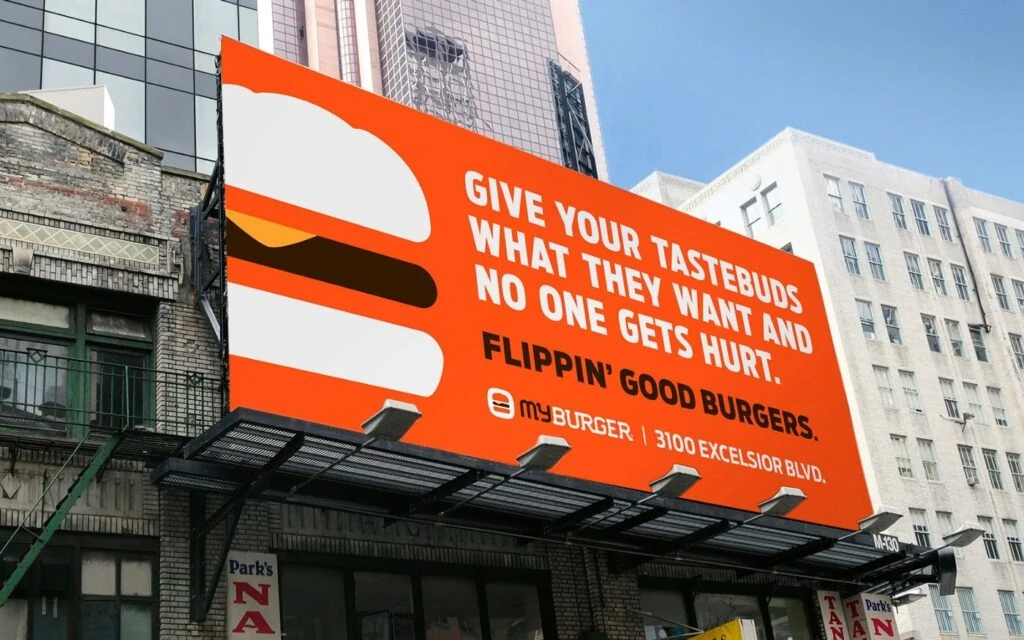
For advertising to succeed in our fast-moving world full of distractions, it must be efficient. Advertisers are now expected to capture attention with phrases and slogans that are shorter than ever before.
Persuasive ad copy should be brief. Writers of such texts as these should think like poets or lyricists whose words say much more than what meets the eye but remain clear enough for anyone to understand.
The DDB’s worldwide famous ‘Think Small’ campaign for Volkswagen demonstrates how less can do more. These two words instantly attract your attention, make you wonder, and present VW as an opposite-minded brand.
Nowadays, customers see 50-400 marketing messages daily! That’s why “Just Do It” by Nike has been one of the most successful slogans ever – it’s simple yet quietly motivating, which allows people to catch on quickly while giving this phrase different meanings throughout various campaigns.
Indeed, being concise doesn’t mean you have to give up depth. As shown in the headline for “Think Small,” a few words can imply much more when skillfully executed. It takes creativity to create such concentrated persuasiveness.
Platform Mastery: Tailoring Text in 2026
In 2026, the concept of a “universal” ad headline is extinct. The environment in which your Advertising Text lives dictates its DNA.
A reader browsing LinkedIn is in a “striving” mindset, while a user on TikTok is in a “discovery” or “escapist” mindset. To win, your copy must adapt to the “native” language of the platform without losing its persuasive core.
Google Search: The Precision Strike
On Google, the searcher has already expressed an intent. Your text is not there to create desire; it is there to prove you are the most relevant answer. The 2026 standard for Google Ads requires a focus on “Atomic Answers.” Your headlines must match the query with surgical precision while your descriptions provide the “proof of life”—specific data points, such as “over 14,000 satisfied UK SMEs” or “Next-day delivery on orders before 4 PM.”
Meta (Facebook & Instagram): The Pattern Interrupt
Meta remains a visual-first environment, which means your text has a single mission: to provide the context for the visual. The “Headline” here is actually the last thing they see. The primary text above the image must use a “hook” within the first 40 characters before the “See More” truncation. Effective Meta copy in 2026 relies on the “Problem-Agitation-Solution” (PAS) framework. You identify a relatable frustration, make the reader “feel” the friction of that problem, and then present your product as the inevitable relief.
TikTok & YouTube Shorts: The Scripted Authentic
Writing for short-form video is a unique discipline. This isn’t just advertising text; it’s a script for a performance. The text overlays on TikTok ads need to be punchy, rhythmic, and high-contrast. The first 1.5 seconds of text must provide a reason to stop scrolling—usually a “counter-narrative” hook like “Stop buying [X] for your [Y]” or “The secret to [Z] no one tells you.”
LinkedIn: The Authority Play
B2B advertising on LinkedIn requires a shift from “Selling” to “Consulting.” Your copy should sound like it was written by a peer, not a promoter. Use industry-specific terminology (Nomenclature) that signals you belong in the room. Instead of “Save money on HR,” use “Optimise your human capital overheads to improve EBITDA.” This specificity builds immediate trust with high-level decision-makers.
According to 2025 performance data from Global Ad Metrics, copy that uses platform-specific slang or formatting (e.g., using “POV:” on TikTok or “Thread 🧵” style on LinkedIn) sees a 22% higher Click-Through Rate (CTR) than standardised brand copy. The “Uncanny Valley” of advertising—where an ad looks too much like an ad—is the primary killer of conversion in 2026.
| Platform | Primary Intent | Ideal Character Count (Hook) | Key Persuasion Lever |
| Google Search | Transactional | 30 (Headline) | Utility & Speed |
| Meta Reels | Discovery | 40 (Primary Text) | Curiosity & Emotion |
| Professional | 120 (Intro) | Authority & Logic | |
| TikTok | Entertainment | 15 (Overlay) | Relatability & Urgency |
| YouTube | Educational | 25 (Title) | Value & Outcome |
The Process: How Knockout Copy Gets Created
Then what does it take to write advertising text that is both short and catchy? Though every creative process has unique steps, a few standard stages are shared by all persuasive copywriting.
1 – Knowing the Audience
Before getting started, professional writers do in-depth research on their target audience. They try to find as much information as possible about the person they write for. This includes things like:
- Basic demographics such as age range or gender identity
- Their most significant challenges and desires
- The way they think, feel, and what motivates them
- What language resonates with them – slang or formal speech?
This allows the writer to understand what people already believe, so they can use those beliefs when crafting messages for them. It also lets them get inside someone’s head from square one.
2 – Articulating the Core Benefit + Unique Value Proposition (UVP)
Once there’s a solid understanding of who will be reading it, it comes to figuring out what should go into this copy. What is most important about my product? Why should anybody buy anything from me instead of anyone else?”
The answer lies somewhere between these two questions. Or maybe somewhere outside either one altogether… hmm…
In any case, having determined an audience brings with it certain expectations about how best to communicate with them, namely knowing their interests and recognising where your self-interests may be served better by addressing different points entirely (or something).
Thus, identifying key benefits becomes crucial at some point during this process because otherwise, you’re just wasting time trying!
3 – Concept Development
Now we get creative! With an understanding of who we’re talking to and why our offering matters, let’s explore all kinds of concepts for effectively communicating this message.
We could frame benefits statements differently by:
- Making bold claims (“Crispiest fries on Earth!”)
- Asking thought-provoking questions (“Are you tired of being overweight?”)
- Employing imaginative metaphors or analogies (“Nighttime Snacker’s Best Friend”)
- Creating an aura of novelty/exclusivity (“Introducing…”)
- Hinting at rebellion/counter-culture connotations
This stage should generate a wide range of ideas before converging on the most appropriate creative concept to resonate with the target audience.
4 – Revising and Refining
Once there is a clear overarching theme, it’s all about refining through multiple drafts – experimenting with words until they sound just right; re-arranging phrases so they flow smoothly together; adjusting tones or structures for maximum impact – things like that!
But even when everything seems perfect in one version, writers keep reviewing things, looking for ways to improve them. Some questions they might ask themselves include:
- Does this sentence have enough stopping power? Will it grab attention?
- Is this catchy enough for people to remember?
- Does this feel personally meaningful to someone reading it?
- Could anyone possibly misinterpret what I am trying to say here?”
- Does the language used seem credible enough, given who my audience is?”
- What else could be done here? How else can I inspire desire and action?”
It’s essential throughout these stages that feedback from other stakeholders (e.g., clients) remains constant, so collaborate with team members responsible for shaping messages over time.
Advanced Copywriting Workflows
The 2026 copywriter does not “write” in a vacuum; they “direct” Large Language Models like Claude 4 or GPT-5 to generate the raw material, which is then refined through a rigorous human-led process.
The danger of using unedited AI output for your Advertising Text is the “Averaging Effect.” Because AI predicts the most likely next word, it often produces the most cliché, “Consensus” version of an ad—exactly the type of noise that consumers have learned to ignore.
The “Prompt-to-Polish” Workflow
To create advertising gold, the process begins with Zero-Party Data. Feed the AI your actual customer interviews, support tickets, and sales transcripts. Do not ask it to “write an ad for a blender.” Ask it to “analyse these 50 customer complaints about our competitors’ blenders and write 10 headlines that position our product as the solution to their specific noise and cleaning frustrations.”
The Red-Teaming Phase Once the AI generates its first draft, the human expert performs a “Vulnerability Audit.” We look for:
- Semantic Satiety: Words the AI overuses (e.g., “unlock,” “unleash,” “comprehensive,” “tapestry”). Replace these with high-impact, sensory-specific verbs.
- Logic Gaps: AI often makes bold claims without supporting evidence. This is where you insert your Unique Value Proposition (UVP) and hard data.
- Tone Drift: Ensure the brand voice remains consistent. An AI might start a paragraph sounding like Nike and end it sounding like a Victorian novelist.
Dynamic Creative Optimisation (DCO)
In 2026, we also use text as a modular system. Instead of one fixed ad, we write “Component Copy”—5 different hooks, 5 different benefit statements, and 5 different Calls-to-Action.
The ad platform’s Machine Learning algorithms then mix and match these in real-time to see which combination resonates with specific audience segments. Your job as the writer is to ensure that every possible combination makes logical and grammatical sense.
For content involving AI assistance, using an AI humanizer can be invaluable, helping humanize AI text to be polished, emotionally resonant copy.
Through iteration based on real-world input alongside continuous optimisation efforts, some compelling stuff will eventually come out!
Mastering the Craft: Tips for Writing Advertising Gold
While ad copy development provides a proven framework, execution requires serious writing chops. Here are some essential tips for mastering the art of captivating advertising text.
Leverage Persuasive Techniques
Skilled copywriters become students of all the persuasive devices, rhetorical appeals, and psychological principles that make messages more influential.
For example:
- Use repetition, rhymes, alliteration or cadences to make the copy stickier
- Appeal to aspirations and make the reader the hero
- Employ concrete details, specifics and tangible benefits to build credibility
- Create a sense of urgency or scarcity to prompt immediate action
- Use rhetorical questions to spur personal reflection and desire
- Incorporate power words like “amazing”, “proven”, and “revolutionary.
- Leverage “because” to provide compelling justifications
- Project an aspirational, authoritative brand voice
Innovative application of such time-tested persuasion techniques in fresh ways can supercharge advertising copy’s impact.
Tell a Compelling Story
Stories are one of the most powerful tools in a skilled copywriter’s belt. Writers forge deeper cognitive and emotional resonance with the reader by wrapping critical benefits in a narrative hook.
For example, consider how MasterCard’s long-running “Priceless” campaign portrays special moments and life experiences made possible by their brand in short, compelling vignettes. Beyond overtly selling, the ads immerse you in the priceless feeling of making memories with loved ones.
Stories allow writers to “show” rather than “tell” the value an offering provides in an inherently engaging way. And by deftly aligning the narrative with the audience’s hopes and perspectives, the brand message becomes personally motivating.
Embrace Creativity and Wordplay
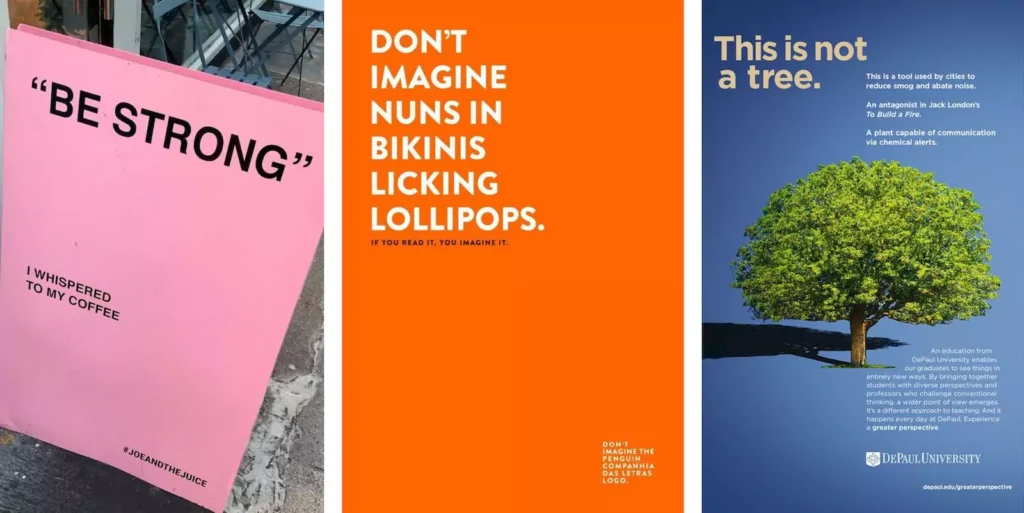
The best advertising writing transcends mundane utility and becomes its form of irreverent, imaginative self-expression. The freedom to play, experiment, and truly revel in the artistry of language separates exceptional copy from stale, forgettable noise.
That’s why so many iconic campaigns embrace clever wordplay, unexpected metaphors, delightful turns of phrase, and messaging that breaks conventions.
Whether subverting expectations or reframing perspectives in an original way, injecting that spark of unbridled creativity grabs attention and sticks in memory.
Take the famous “Where’s The Beef?” campaign for Wendy’s. Those three simple words, delivered with curmudgeonly enthusiasm, managed to cut through the saturated fast-food market by poking fun at the sparse offerings of competitors.
It distilled a relatable consumer insight into an unforgettable catchphrase through a sassy personality.
Or look at how some Skittles ads tap into a delightfully absurdist, subversive tone by featuring objects like “Lamb & Inexpensive Seats” paired with uncomfortably intimate close-ups of old men’s mouths speaking non-sequiturs.
Yes, it’s weird (and polarising), but it amplifies the brand’s fun, unconventional spirit.
Such playful, surprising, and artfully constructed copy not only engages but becomes inherently valuable IP that fuels extended conversations and sharing for a brand. When skillfully executed, wordsmithing transitions from mere messaging into truly unforgettable cultural imprints.
Study Proven Control Samples
Even the most gifted writers must learn from what’s been empirically successful. That’s why many aspiring copywriters study proven “control” samples of proven ads, promotions, and marketing campaigns that have withstood the ultimate test – generating measurable results and ROI.
Exhaustively analysing and deconstructing these pieces of breakthrough copy provides invaluable lessons in how top writers approach:
- Activating opening hooks and attention-grabbers
- Establishing credibility and brand trust
- Logical argumentation flows and persuasive sequencing
- Potent calls-to-action that compel response
- Overcoming friction through pre-emptive objection handling
- The art of arousing consumer emotions and desires
- Mastering tone, diction, pacing, and other qualitative techniques
By intimately studying the most successful messages, you better understand why specific rhetorical approaches and copyrighting conventions are consistently compelling.
Emerging Formats: How Copy Evolves for New Channels
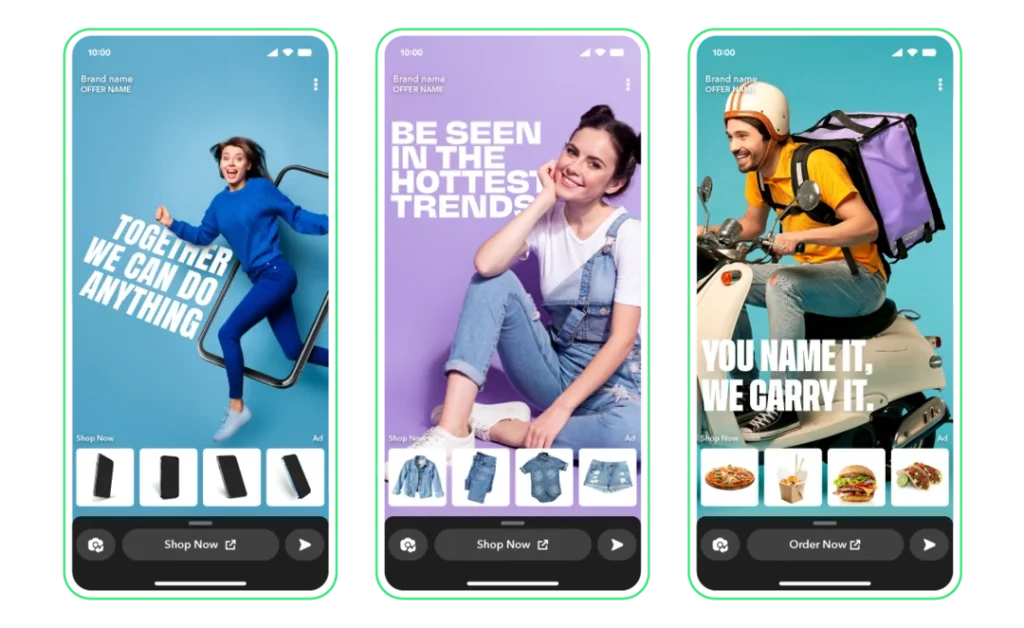
While the core principles of crafting compelling advertising text remain constant, formats and mediums continually evolve – requiring writers to adapt and extend their skills.
The Content Marketing Revolution
In today’s world of fragmented media and empowered consumers, traditional interruptive advertising has lost much of its effectiveness. People have become remarkably adept at tuning out blatant product propaganda.
Instead, brands must adopt a new approach to creating genuinely valuable, engaging content that enriches people’s lives. Rather than self-centred selling, this content marketing methodology puts the audience’s interests first through insights, education, entertainment, inspiration, and meaningful narratives.
For writers, this requires an even more immersive grasp of the audience’s mindset and challenges. The ability to tell evocative, relevant stories that foster a genuine human-to-human connection becomes paramount.
Shifting from pithy slogans to crafting nuanced, in-depth content is an entirely different muscle to flex.
They are yet straddling this line between providing contextual value while tastefully weaving in brand narratives and offers, creating fertile creative space.
Through deft, artful integration, writers can take people on a more cohesive journey where persuasive elements feel like natural, consequential next steps rather than programmatic plug-pushing.
Social Media Dynamics
The rise of social media also necessitated significant shifts in how copywriters communicate brand stories and promotional messages. Beyond condensing concepts into Tweet-sized nuggets, capturing each platform’s unique voice, vernacular, and cultural dynamics is critical.
Writing an impactful Instagram caption that integrates visual and verbal elements requires different framing skills than witty Twitter threads. Another distinct mode is crafting an immersive Facebook Live experience through enthusiastic delivery and audience interactivity.
The feedback loops, sharing dynamics, and tastes of each social channel demand adapting copywriting to fit the context. A one-size-fits-all messaging approach is a non-starter in this hyper-fragmented digital universe.
The SEO Content Frontier
Of course, the ever-expanding sphere of search and SEO continues pushing writers into new creative frontiers. While volumes have been written on this topic, the imperative of organically integrating target keywords and topic signals into written work adds another layer of creative constraint.
Not only must the copy achieve all the messaging, brand tonality, and persuasion benchmarks, it must now do so while weaving in keyword phrases and semantic concepts with utmost density and thematic relevance.
While far from blatant keyword stuffing, strategically saturating copy with precise search verticals forces writers to up their creative game.
Finding stylish ways to insert relevant terms like “advertising text” in a readable, flowing way is an art. Developing that seamless integration of topical focus with resonant storytelling and strategically placed CTAs defines excellent SEO writing.
When Push Comes to Shove: Remember the Call-to-Action!

For all the artfulness and virtuosity required in crafting mesmerising advertising text, always maintain its prime directive – persuading people towards a desired action or behaviour.
Even the most ingenious wordsmithing ultimately rings hollow if it fails to drive meaningful responses and results for the brand.
That’s why the climax of any compelling advertising copy is the clear, concise, and persuasive call to action. This is where all that preceding sorcery of storytelling, benefit articulation, emotion-rousing, and psychological button-pushing converts into measurable value for the business.
Effective CTAs catalyse momentum by:
- Using active, commanding language that spurs readers to take the next step
- Reiterating the key promised benefit or reward to reinforce the desire
- Instilling time sensitivity and urgency to prompt an immediate response
- Making any next steps glaringly evident and easy to follow
- Overcoming final friction points and lingering objections
- Transitioning fluidly yet distinctly from the primary body copy
Whether it’s “Subscribe Now!”, “Get a Free Quote Today”, “Donate to Support the Cause”, or countless other CTAs, these rousing closers seal the deal. They convert engaged users into actionable outcomes that drive business growth.
Even the most spellbinding ad copy rings hollow without that crucial culminating nudge over the conversion finish line.
The Future of Writing for Advertising
In many ways, the timeless art of crafting persuasive advertising text has remained constant for decades. At its core, connecting with audiences through distilled messaging fueled by human truths will forever be paramount.
However, a myriad of technological forces will undoubtedly push the boundaries of advertising copy and branded content in fascinating new directions over the coming decade:
- Advances in hyper-personalised messaging enabled by data and dynamic content
- The spatial dimensions of new immersive formats like augmented reality
- Potential interactions with synthetic voices and conversational AI writing
- More seamless integration of text, audio, visual, and sensory storytelling channels
- Text gaming and branching, second-person narrative arcs
- Progressive and interactive sequencing of story revelations
- Behavioural targeting and personalisation of CTAs on an individual level
- Machine learning and genetic algorithms optimising copy in real-time
As new marketing frontiers emerge through radical technological advances, the very nature of how we communicate messages in written form to shape perceptions and incite behaviours will evolve. Future copywriters must incorporate new creative dimensions and modalities into their craft.
Yet, regardless of how advertising texts manifest amidst technological upheaval, the core skills of radical empathy, imaginative expressiveness, and psychological insight required to connect with humans will endure.
Even as formats and techniques transform, the art of persuasion through masterful communication is eternal.
Frequently Asked Questions About Advertising Text
Even after comprehensively exploring the art, psychology and craft of exceptional advertising copy, many questions still linger. Here are some common inquiries about crafting captivating text for marketing and advertising:
What are the most essential qualities of excellent ad copy?
Simplicity and concision to quickly capture attention
Relevance to the target audience’s needs and mindset
Compelling benefits and value propositions
An engaging, memorable hook or creative concept
Emotive storytelling to foster personal connections
Clear, motivating calls-to-action to drive response
Seamless integration of branding and key messaging
How can I learn to write more creative, original advertising text?
Immerse yourself in studying brilliant campaigns across industries, experiment constantly by writing spec ads, read poetry and fiction to expand your creative muscles, observe how brands connect with pop culture, and continually seek fresh perspectives.
What are effective ways to grab attention with opening lines?
Provocative questions or commands
Shocking facts or statements
Vivid sensory details to immerse readers
Applying creative twists to common words/phrases
Expressing a contrarian or counterintuitive viewpoint
Speaking to a specific fear, want or desire
How much should I focus on SEO and keywords in ad copy?
While SEO is crucial for content discovery, prioritise resonance over keywords. Supplement persuasive copy, incorporating relevant terms and semantic context rather than shoehorning words.
What practical ways can ensure the copy resonates with different genders/demographics?
Research the specific audiences deeply, speak to them in their voice/vernacular, understand their unique cultural lenses, work with diverse teams and get feedback to identify blind spots.
Do you have any tips for writing compelling calls to action?
Emphasise core benefits, instil scarcity/urgency, use active voice commands, highlight ease of next steps, address lingering objections, and simplify desired actions.
How can writers keep copy fresh for ongoing campaigns?
Evolve messaging and concepts based on real-time performance data, tap into current trends/events, experiment with new tones/angles, and continually refresh to avoid going stale.
Where can writers find inspiration or overcome creative blocks?
Seek input from non-marketing creatives, consume art/media wildly different from your norms, change environments, take breaks to recharge, and practice creativity-expanding exercises like improv.
When should you bring in specialists versus handling ad copy yourself?
A seasoned copywriter consultant can be invaluable if you lack an intimate audience/offering knowledge, storytelling capabilities, persuasive writing skills, or just need a fresh creative perspective.
How do I know if my advertising text is high-quality?
The ultimate quality benchmark is real-world performance metrics like attention, recall, response rates and ROI. If the right audiences connect and convert, the writing achieves its mission.