Rolling Ads: Are Vehicle Graphics an Effective Marketing Tool?
Let’s dive into rolling ads—one of the best forms of mobile advertising that turns vehicles into moving billboards. Have you ever been stuck in traffic, only to have your gaze caught by an intriguing design on a transit bus or delivery van? That’s the magic of rolling ads!
These graphics can either cover the entire vehicle (known as a full wrap) or be smaller decals placed strategically. The charm lies in their ability to attract the attention of pedestrians and drivers alike.
In an age of digital ads flashing at every corner, rolling ads bring a freshness that cuts through the noise. It’s like putting your brand on wheels and sending it out to capture audiences on the go!
- Vehicle graphics significantly boost brand visibility, generating thousands of daily impressions in busy urban environments.
- They provide a cost-effective advertising alternative, with one-time investments yielding long-term returns.
- Incorporating modern technology, like augmented reality, enhances engagement and interaction with potential customers.
History and Evolution of Vehicle Graphics
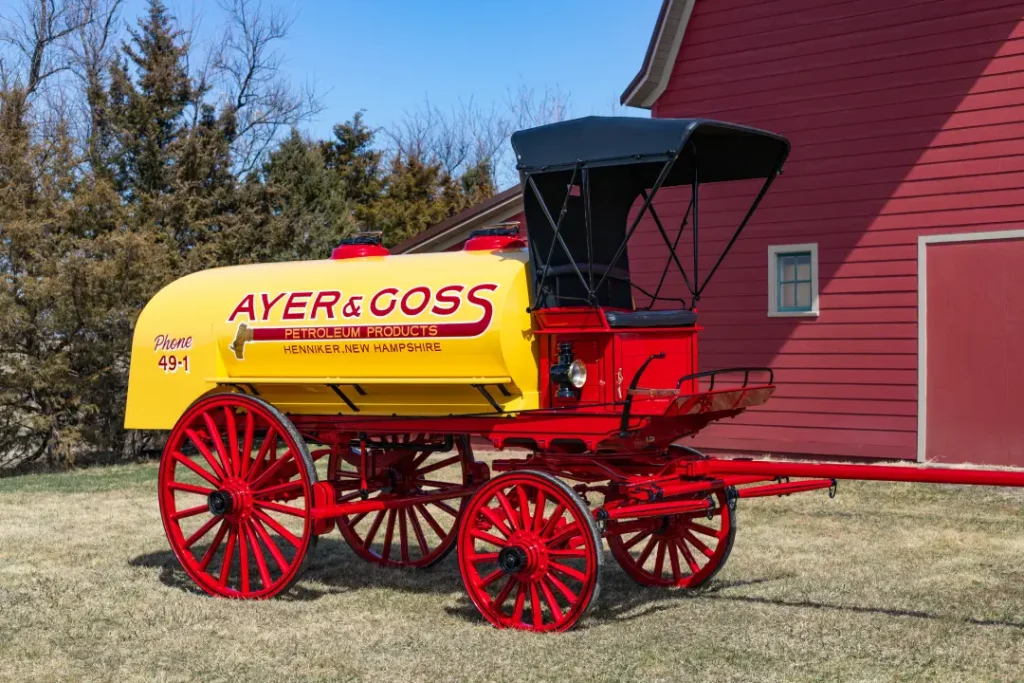
Now, let’s backtrack a bit. The evolution of vehicle graphics has been quite the ride. It all started in the early 1900s when companies began painting their delivery vehicles with simple logos and branding. Back then, it was all about making a statement when people were still awed by cars.
Picture this: a horse-drawn wagon in your town, adorned with basic lettering and imagery to promote local businesses. Fast forward to the 1950s and 60s, when cars were seen as more than just transportation.
They became a symbol of freedom and flair! Isn’t it funny how people sometimes name their cars? That kind of personal connection began to influence how companies viewed vehicle branding.
By the 1980s, the game changed with the introduction of vinyl graphics. Suddenly, vehicle graphics could be vibrant, detailed, and visually appealing. Today’s graphics leverage high-quality materials and advanced printing techniques, enabling intricate designs that withstand the test of time and the elements.
Cast vs. Calendered Vinyl: What’s the Difference and Why It Matters
Not all vinyl is the same. Cast and calendered films behave very differently on real vehicles.
Cast: Liquid cast, thin, and very comfortable. It hugs complex curves, resists shrinkage, and keeps colour stable for longer.
Calendered: Rolled, thicker, and with more memory. It suits flat panels and gentle curves, and it can shrink back over time.
Manufacturers specify these use-cases for a reason. 3M and Avery Dennison position cast films for full wraps and tight recesses, while calendered films are for flat sides and simple applications under budget or short-term needs, as outlined in their product bulletins and application guides.
Here’s a quick recap of the evolution:
- Early 1900s – Simple logos and painted designs.
- 1950s-60s – Rise of personalisation and branding.
- 1980s – Introduction of vinyl graphics.
- Today – High-quality, durable, and creative designs.
By integrating artistry and technology, rolling ads have transformed public spaces into canvases for brands. Just think about it—if you could turn your car into an advertisement, wouldn’t you want to try it?
Benefits of Vehicle Graphics
Increased Brand Visibility
Now that we’ve zoomed through the history of vehicle graphics, let’s talk about why you should seriously consider them for your brand.
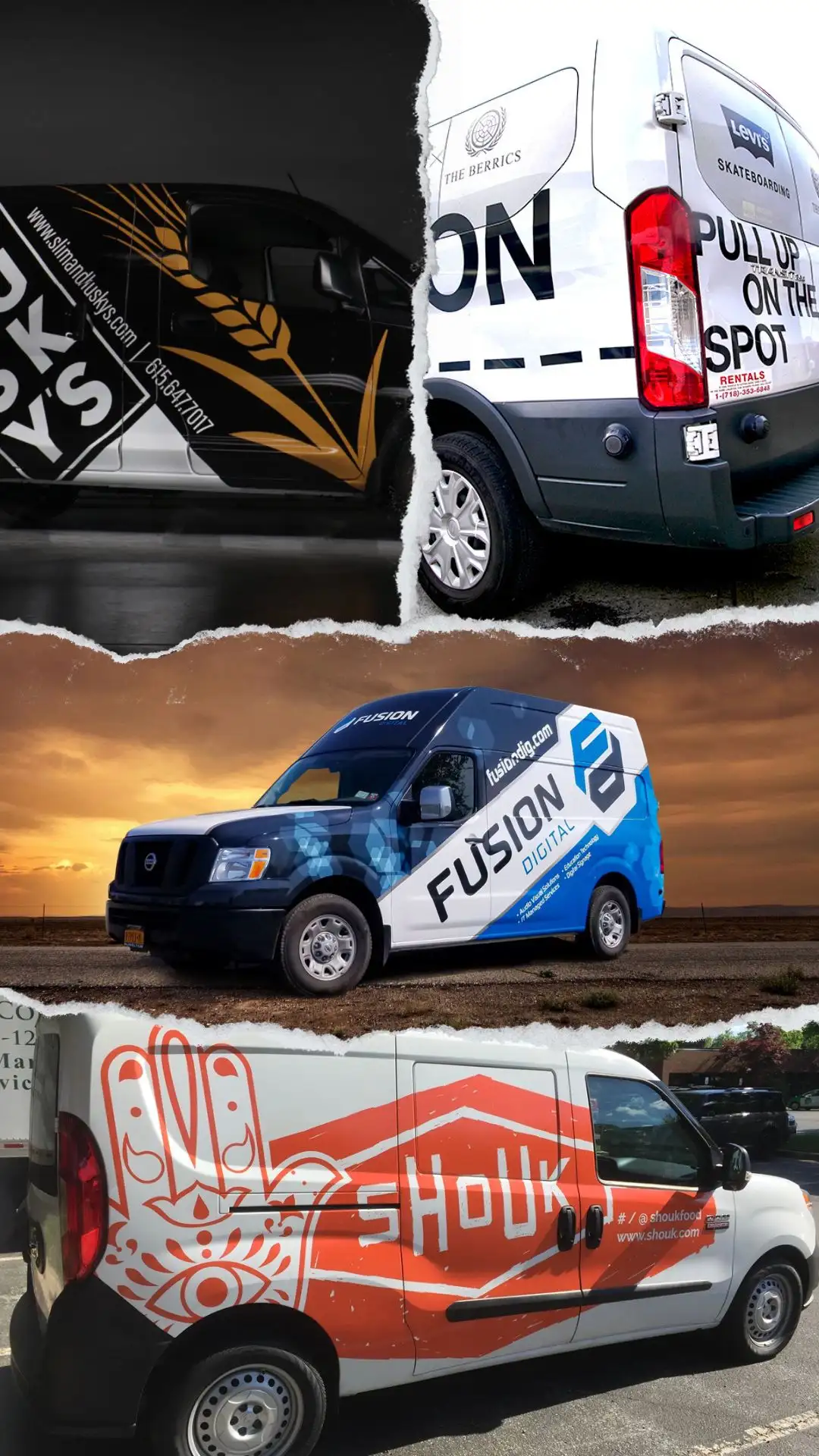
First up: increased brand visibility. Think about it—when your vehicle is wrapped in eye-catching graphics, it’s not just any car on the road; it’s a mobile advertisement! Imagine your delivery truck cruising through town, boldly showcasing your brand’s logo and colours.
You’d be surprised at how many eyes it catches—especially in busy urban areas, where people are always looking for a distraction! Here are some points to consider:
- Awareness: Studies show that vehicle graphics can generate a staggering 30,000 to 70,000 impressions per day, depending on traffic conditions.
- Target Reach: Your moving billboard isn’t confined to a single location; it moves throughout the day, reaching different demographics.
- Cost-Effective Impressions: Unlike static ads, your message travels far and wide, maximising exposure without the need for repeated investment.
Cost-Effectiveness Compared to Traditional Advertising Methods
Now, let’s tackle the favourite topic of many business owners: cost. Let’s face it—advertising can be pricey. However, vehicle graphics offer a cost-effective alternative to traditional strategies such as billboards or print ads. Let’s break it down:
- One-Time Investment: Vehicle graphics are a one-time cost that can last several years. For example, consider the price of a billboard. You’ll be paying monthly for a limited viewpoint.
- Low Maintenance: Once installed, quality vehicle graphics require minimal upkeep. Just a wash now and then, and they’re good to go!
- Highly Durable: Made from materials designed to withstand the elements, these graphics can endure sun, rain, and snow without fading.
Typical Lifespan and Warranty Factors for Wrap Films
Service life depends on the film system, exposure, and care. A matched film and overlaminate on vertical panels lasts significantly longer than the same print on horizontal surfaces, which receive more UV and heat.
3M Graphics Warranties and Avery Dennison’s ICS Performance Guarantee both tie coverage to the exact film, overlaminate, climate zone, and substrate condition. OEM paint in good condition is required, and unapproved plastics or poor resprays void support.
- System matters: Use manufacturer-matched film and overlaminate for durability and warranty eligibility.
- Orientation: Vertical surfaces outlast horizontal ones by years under the same climate, per manufacturer warranty matrices.
- Climate: Hot, high UV regions shorten life. Always check your supplier’s regional warranty charts.
To put things in perspective, a single vehicle wrap can produce an estimated 16 million impressions over its lifespan. When you compare that to a newspaper ad that might only be seen once or twice, it’s a no-brainer. Vehicle graphics offer an exciting and budget-friendly way to turn heads and increase your brand’s visibility. So, what’s holding you back?
Types of Vehicle Graphics
Full Vehicle Wraps
Let’s shift gears and dive into the different types of vehicle graphics. First up on our tour: full vehicle wraps. If you want to make a statement and ensure your brand isn’t just seen but remembered, a full wrap might be the way to go!
Picture this: your entire vehicle, from bumper to bumper, transformed into a captivating visual feast. It’s like dressing your car in a piece of art! Here’s why full wraps can be so powerful:
- Maximum Coverage: A full wrap allows intricate designs that turn your vehicle into a mobile billboard. Every inch can showcase your brand, colours, and messaging.
- Impactful Visibility: Imagine driving around town with everyone noticing your vibrant wrap. You’ll stand out in a sea of plain cars, making an easily memorable impression.
- Brand Recognition: Consistent exposure with a full wrap can amplify brand recall. It’s as if your company is saying, “Hey, I’m here! Notice me!”
Partial Wraps and Vinyl Decals
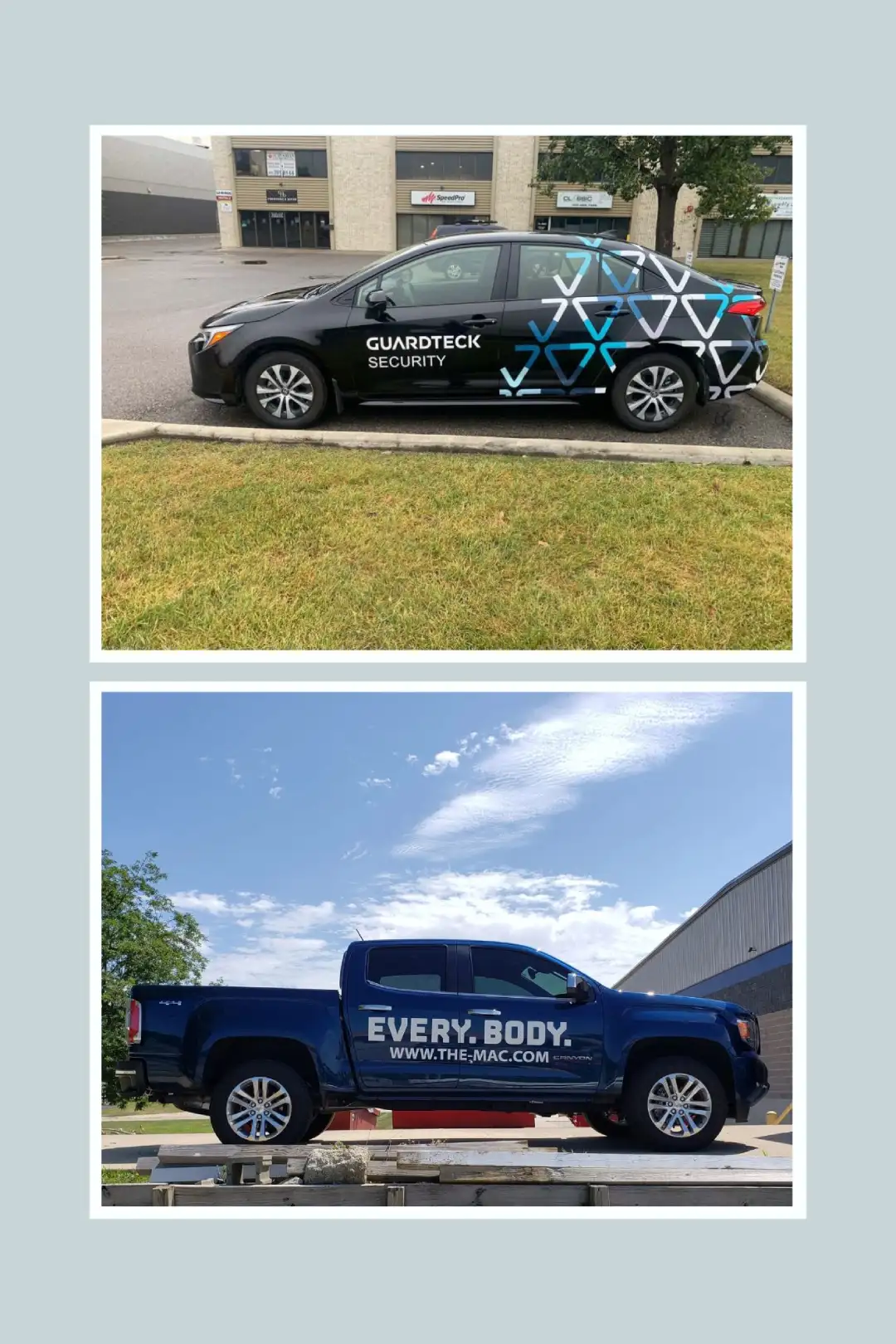
Now, if complete vehicle wraps feel a bit too much for your needs, then allow me to introduce you to partial wraps and vinyl decals. These are perfect for businesses looking for a stylish yet subtle way to promote themselves.
- Flexibility: Partial wraps let you choose which sections of your vehicle to cover, allowing you to highlight key areas without going overboard.
- Budget-Friendly: Since you’re not covering every inch of the vehicle, partial wraps are generally more cost-effective than full wraps. It’s like having your cake and eating it too!
For example, if you run a plumbing business, you could opt for a partial wrap that proudly showcases your logo and contact information on the sides of your van. It’s professional, sleek, and effective! Vinyl decals, on the other hand, are like the cherry on top. They are perfect for smaller designs and can be placed almost anywhere on your vehicle, offering versatility.
- Quick Installation: Decals are typically more straightforward and faster to install than wraps, making them a convenient option if you need a quick fix.
- Customisation: You can create decals ranging from fun slogans to intricate logos—whatever matches your style!
Whether you go for a full wrap or prefer partials and decals, the right vehicle graphics can significantly enhance your marketing efforts. It’s all about choosing what aligns best with your branding vision. So, which one resonates with you?
Spot Graphics and Cut Vinyl Lettering vs. Printed Wraps
Printed wraps deliver photos and gradients. Cut vinyl lettering uses pre-coloured films for crisp logos and text with excellent colour stability.
Choose cut vinyl for simple branding, fleet numbering, and compliance marks. Pick printed wraps for imagery, fades, and complex visuals.
- Durability: Solid colour cast films for cut lettering are very stable over time. Printed films rely on ink and often need an overlaminate for UV and abrasion resistance, as advised by 3M Product Bulletins.
- Cost and lead time: Cut vinyl is faster for small runs and updates. Printed wraps suit full liveries where imagery drives recall.
- Maintenance: Lettering is easy to replace panel by panel. Printed panels require colour-managed reprints to match.
Installer Certification and System Warranties
A certified installer reduces risk. Surface prep, panel alignment, and post-heat technique decide whether your wrap lifts at edges or looks sharp for years.
Manufacturer programmes and partner networks confirm training on specific films. This is also a common condition for eligibility under 3M and Avery Dennison warranty schemes, which require approved materials and proper application.
Designing Effective Vehicle Graphics
Elements of a Successful Design
Now that we’ve explored the types of vehicle graphics, let’s dive into designing compelling ones. A flashy wrap is only as good as its design! So, what makes a design successful? Here are a few key elements to consider:
- Simplicity: Less really is more. You want your message to be clear and easy to understand. Complex designs can overwhelm you, so keep it clean. Think of bold images and punchy text rather than intricate patterns.
- Colour Contrast: Choose colours that grab attention while contrasting nicely. You want your graphics to pop against your vehicle’s base colour. For example, a bright yellow logo on a dark blue van can be striking!
- Legible Fonts: Your audience has mere seconds to absorb your message. So, select easy-to-read fonts. Avoid script fonts, which look lovely but become illegible while riding down a highway!
- Accessibility and Legibility: Prioritise high contrast and adequate letter height for quick reads at speed. Keep copy short, and place key info on flat, unobstructed areas to avoid distortion across seams and handles.
- Call to Action: Don’t forget a clear call to action. It could be your website, phone number, or an engaging slogan. “Order Now!” or “Call Us Today!” can drive potential customers to engage.
Design and Production Specs That Improve Results
Great wrap design fails without solid production files. Set up right, and installs go faster with fewer surprises.
- Vector first: Supply vector logos. For imagery, target roughly 100 to 150 dpi at the final output size, which most large-format print workflows accept for close-up clarity.
- Safe areas and bleed: Keep key content away from seams, fuel doors, and door handles. Add adequate bleed for panel overlaps, and plan panelisation for installers.
- Knifeless where possible: Use knifeless tape to reduce the need for blade cuts on paint. Your body shop will thank you.
- Colour proofing: Convert brand colours with care. Spot-to-CMYK shifts, especially in bright oranges and greens, require managed print profiles. Request press proofs.
Debunked best practice: Packing every inch with text reduces recall. OAAA creative guidance promotes minimal copy and bold hierarchy for outdoor media, which holds true on moving vehicles.
Wrong Way vs Right Way
| Wrong Way | Right Way |
|---|---|
| Paragraphs of copy on doors | 7 words or fewer with a clear call to action |
| Low contrast over busy photos | High contrast blocks with clean negative space |
| No bleed, guesswork on panels | Template-based panel layouts with defined overlaps |
| No overlaminate on printed wraps | Matched overlaminate for UV and abrasion, per manufacturer guidance |
Importance of Consistent Branding
Moving on, let’s talk about the importance of consistent branding. Consistency is key if you want your vehicle graphics to harmonise with your overall marketing efforts. Here’s why:
- Brand Recognition: Consistent colour schemes, logos, and messaging help build brand awareness. When your vehicle aligns with your storefront, website, and social media, your audience begins to form an image of what your brand represents.
- Professionalism: A unified brand image showcases professionalism. Think about it—would you trust a business with mismatched branding? A vehicle that screams, “We know what we’re doing,” fosters trust and credibility.
- Long-term Loyalty: Consistent branding helps establish a loyal customer base over time. Familiarity breeds trust, and customers are more likely to choose you over competitors when they recognise your truck driving around.
Remember the earlier example of my friend’s eco-friendly cleaning service? We ensured her branding—colours, fonts, and messaging—was consistent across her business cards and social media.
That repetition worked like magic, and she quickly became a local favourite! Effective vehicle graphics require successful design elements and consistent branding to capture attention and attract customers. So, are you ready to take your designs to the next level?
Fleet Branding Standards Checklist
A simple standard keeps every van in tune with your brand. It also speeds up onboarding for new vehicles.
- Placement maps: Approved layouts by vehicle model, with logo sizes and clear space.
- Colour specs: Pantone, CMYK, RGB, and print profiles for consistency across suppliers.
- Type and layout: Font families, weights, and minimum sizes for legibility.
- Safety and reflectivity: Where reflective markings are required, integrate them cleanly without fighting the brand.
- Change control: A sign-off process so any local edits are checked before print.
I once audited a multi-city fleet in which three suppliers used different shades of red. A basic spec pack fixed it in one production cycle, and customer recognition improved almost overnight.
Measuring the Effectiveness
Tracking ROI through Increased Leads and Sales
Now that we’ve covered the essential design elements, let’s move on to an equally important aspect: measuring the effectiveness of your vehicle graphics.
You’ve invested time and money into this advertising strategy—so how do you know if it’s paying off? One of the most straightforward ways to gauge success is by tracking your return on investment (ROI) through increased leads and sales. Here’s how you can do it:
- Set Clear Goals: Before rolling out your graphics, define what success looks like. Is it a specific number of leads, website visits, or sales? Having clear goals to measure against will make tracking much more manageable.
- Use Unique Phone Numbers: Assign a unique phone number for inquiries from your vehicle ads. This way, you can easily track how many calls come from potential customers who have seen your advert.
- Landing Pages: Create a unique landing page on your website with a special offer or promotion. Include a mention of your vehicle graphics in your online marketing. This will help you see where your traffic is coming from.
- Review Sales Data: After launching your vehicle graphics, compare sales data from before and after the campaign. You can likely attribute some of that growth to your flashy new design if there’s a noticeable uptick.
Practical Tracking Tools for ROI (QR, UTMs, Call Tracking)
If you can’t attribute, you can’t optimise. Put simple tracking in place before your wrap hits the road.
- QR + UTM: Use a QR code that lands on a UTM-tagged URL. Your analytics platform will attribute sessions to the wrap campaign.
- Call tracking: Assign a wrap-only number. Providers route calls to your main line while logging source performance.
- Short domains and promo codes: Memorable URLs and codes make word of mouth measurable. Tag these in your CRM.
- Benchmark windows: Compare equal pre- and post-periods. Nielsen’s OOH studies show outdoor media contributes to search and store visits, so expect a halo across channels.
I recall partnering with a friend to promote her fitness classes with a vinyl decal on her car. After tracking how many inquiries came through the unique contact info we used, it was clear that her attendance spiked significantly!
Surveys and Customer Feedback
Another excellent way to measure effectiveness is through surveys and customer feedback. Direct feedback can provide invaluable insights into how your audience perceives your vehicle graphics. Here’s how to gather valuable information:
- Post-Sale Surveys: After a customer makes a purchase, send them a quick survey asking how they heard about you. Ensure to include an option for “vehicle graphics” to track its impact.
- Social Media Engagement: Leverage your social channels. Post photos of your vehicle graphics and ask your followers what they think. Their comments can help you gauge your design’s effectiveness.
- In-Person Conversations: If you contact customers (like at an event or pop-up shops), ask them how they found you. Sometimes, it’s as simple as a friendly chat to uncover valuable data.
A client of mine once ran a survey that revealed nearly 40% of new customers had first noticed her brand through her vehicle graphics. That feedback validated her investment and inspired her to double down on her advertising strategy!
In summary, tracking ROI through increased leads and using surveys for feedback should be integral to your strategy. This data will guide your ongoing marketing efforts, ensure you’re heading in the right direction, and maximise your return on investment!
Case Studies and Success Stories
Examples of Companies Benefiting from Vehicle Graphics
Now that we’ve explored measuring effectiveness, let’s focus on real-world examples of companies benefiting from vehicle graphics. It’s one thing to talk about potential; it’s another to see it in action! Take AGC Landscaping, for instance. They launched a vibrant wrap featuring lush green imagery and bold text outlining their services.
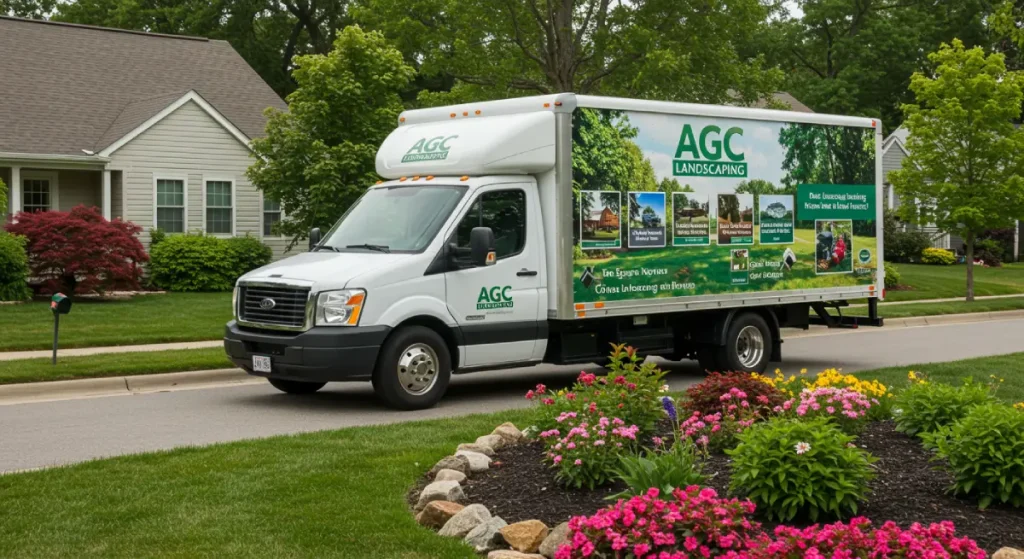
- Results: Within three months, they reported a 40% increase in inquiries. Their trucks became synonymous with quality landscaping in their local area!
Another brilliant example is Fresh Eats, a food delivery service that opted for partial wraps on its vans. By showcasing mouth-watering images of their meals, they:
- Attracted a younger audience through Instagram posts featuring the wrap.
- After the wrap went live, I saw a 25% bump in new sign-ups.
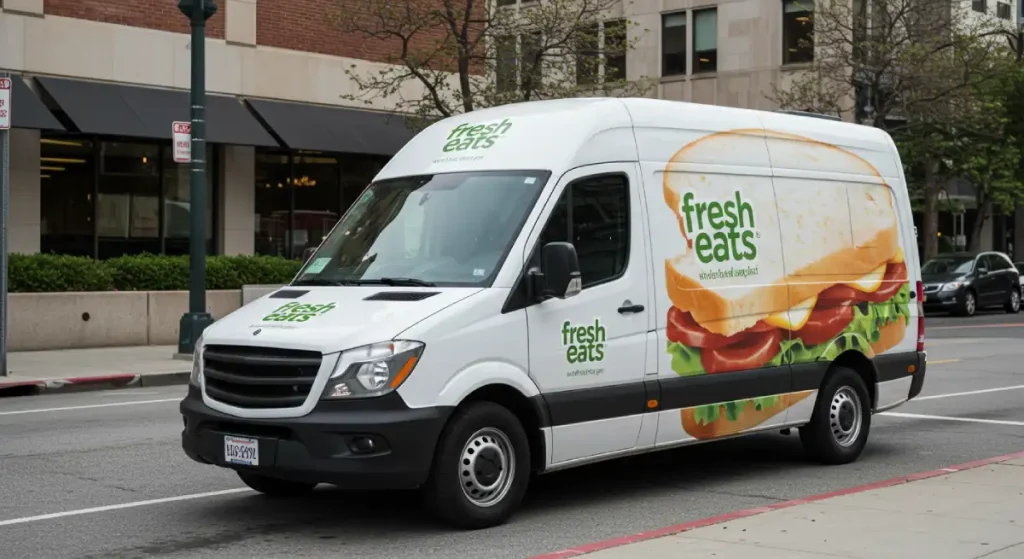
These real examples underscore how a well-designed graphic isn’t just decoration; it’s a powerful tool for generating tangible business results. Just think about walking down the street and seeing a vehicle that encapsulates everything your brand stands for—it sticks in your memory like your grandma’s secret cookie recipe!
Real-World Branded Fleets Seen at Scale
Some fleets are so consistent that a glimpse is enough. Your brain joins the dots within seconds.
- Red Bull: The can-topped Minis became mobile sampling icons, building awareness through street-level presence.
- UPS: The brown trucks and uniforms reinforce brand memory across millions of daily drops, a long-running study in consistency.
- DHL: Yellow vans with red type are unmistakable, supporting fast recognition across borders.
- FedEx: The purple and orange wordmark scales on everything from vans to aircraft with crisp legibility.
These examples show that repetition and clarity, not visual noise, build recall at speed.
Impact on Local vs. National Businesses
Now, let’s dive into the impact of vehicle graphics on local versus national businesses. There’s a distinct difference in how these strategies unfold for each type of operation:
- Local Businesses: For local enterprises, vehicle graphics are about visibility within the community. They serve as a constant reminder of brand presence. A regional plumbing company might have its trucks show up at job sites, becoming an immediate fixture in neighbourhoods. This helps build trust and recognisability, reinforcing that they are the go-to for plumbing needs.
- National Businesses: On the other hand, national companies use vehicle graphics to gain broader visibility. Think of FedEx or Coca-Cola, whose branded vehicles travel extensively across regions.
- Broader Reach: While local businesses use vehicle graphics to foster community connections, national brands can use them to reinforce their unified image across various markets. Their ads create a sense of familiarity, even if a customer spots their vehicles thousands of miles from their headquarters.
I remember when a small tech start-up leapt into vehicle graphics. Their single van, adorned with sleek graphics, quickly became a common sight at tech events. Before long, they became the town’s go-to tech support, contributing to rapid growth and eventual expansion.
In short, the effectiveness of vehicle graphics can vary according to the scale of your business. Still, one thing remains clear: whether you’re a local enterprise or a national brand, there’s ample opportunity to amplify your message and drive results through impactful vehicle graphics!
Potential Challenges and How to Overcome Them
Dealing with Adverse Weather Conditions
Now that we’ve seen the success stories, we must know the potential challenges of rolling out vehicle graphics. One significant issue is dealing with adverse weather conditions. Rain, snow, and sun can be a real test for vehicle wraps. But fear not! There are ways to navigate through this storm! Here’s how you can tackle weather-related challenges:
- Choose High-Quality Materials: Invest in graphics made from durable, weather-resistant materials. Opt for vinyl that withstands UV rays, rain, and snow. This will protect your design and ensure it stays vibrant over time.
- Proper Installation: Ensure that the vehicle graphics are professionally installed. A skilled installer understands how to apply graphics to minimise lifting or peeling due to harsh weather.
- Regular Maintenance: Keep an eye on weather forecasts and wash your vehicle after severe weather to help remove any salt, grime, or dirt. A clean surface will help maintain the integrity of the graphics.
Care and Maintenance Best Practices (Post-Install)
The first 48 hours matter. Adhesives are still settling, so avoid washing during this period, as recommended by 3M and Avery Dennison care guides.
- Wash method: Hand wash with mild detergent. Avoid abrasive brushes and harsh chemicals that attack overlaminates.
- Pressure washing: If you must, keep the nozzle moving, hold a safe distance, and avoid edges.
- Contaminants: Remove bird droppings and tree sap promptly with approved cleaners to prevent staining.
- Finish rules: Do not wax matte or textured films. Use finish-specific products if required.
I remember when a friend who runs an HVAC business had peeling on his truck after heavy rain. He saw a marked improvement after swapping to a recommended high-quality vinyl and redoing the installation. It just goes to show—sometimes, you get what you pay for!
Addressing Legal Restrictions and Regulations
Next up is the need to navigate through the legal restrictions and regulations that can impact vehicle graphics. Governing bodies often have rules about what you can display and where you can display it. Ignoring them can lead to hefty fines or, worse, having your beautiful graphics covered up! Here’s how to traverse this terrain successfully:
- Research Local Laws: Do your homework before committing to your vehicle graphics. Check local regulations around advertising signage on vehicles. Some areas may have restrictions on size, noise, or even content.
- Get Permits if Necessary: Certain municipalities require permits for commercial vehicles displaying advertising. Please don’t skip this step; it can save you time and money in the long run.
- Consult with Professionals: If you’re unsure about the legal landscape, it’s worth consulting a marketing or legal expert who is familiar with local regulations. They can guide you through what’s allowable, ensuring you’re all set before you hit the road.
Legal Do’s and Don’ts (UK/EU Focus): Windows, Plates, Lights, and Conspicuity
UK rules are clear on visibility. The front windscreen must let at least 75 per cent of light through, and the front side windows at least 70 per cent, per UK Government guidance on tinted windows.
- Do not obstruct: Number plates and lights must remain clear and legible. Keep sensors and cameras free for ADAS systems.
- HGV markings: For certain heavy goods vehicles, UNECE Regulation 104 requires reflective contour markings. Your graphics cannot compromise these.
- Glass areas: Opaque films on front glass are not allowed. Use perforated window film only where permitted, and within transmission limits.
Removal and Paint Considerations
Good wraps come off clean when removed on time. Leave them too long, and the adhesive hardens, which adds labour and risk.
Use controlled heat and a steady peel to lift film. Adhesive removers help with residue, but wraps are designed for OEM paint in sound condition, as film makers state in their technical data sheets.
- Document condition: Photograph panels before installation. Poor resprays and failing clear coats can fail during removal.
- Service life: Plan debranding inside the film’s warranted life for smoother results and lower costs.
When I worked with a local delivery service, we decided to create bright, jazzy graphics. After checking the local laws, we discovered we could only display some aspects on particular vehicles.
With a little adjustment, we made it work—and it turned out to be a win-win! In conclusion, while challenges like weather conditions and legal regulations can create bumps in the road, proactive measures ensure your vehicle graphics achieve their intended impact.
With some planning, you can breeze through any obstacles and maximise your advertising efforts!
Future Trends in Vehicle Graphics
Integration of Technology like Augmented Reality
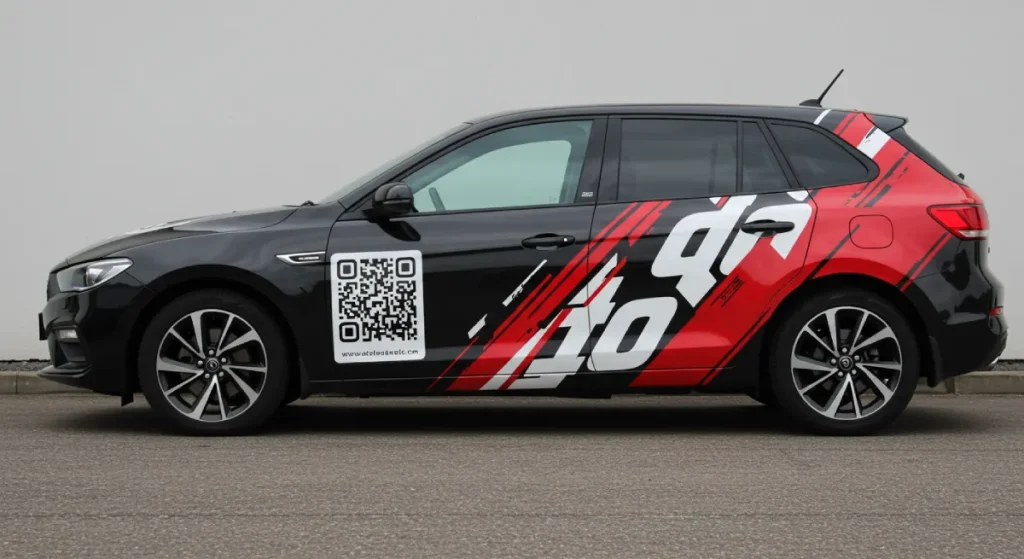
Now that we’ve discussed potential challenges, let’s pivot to the exciting future trends in vehicle graphics. Integrating technology, like augmented reality (AR), is one trend. Imagine this: you’re driving down the street, and that vibrant wrap on your vehicle suddenly comes alive! Here’s how AR is changing the game:
- Interactive Experiences: Customers can scan your smartphone graphics and unlock interactive experiences. Think of access to videos, promotional offers, or even a fun animation about your brand!
- Enhanced Engagement: AR can turn passersby into active participants. They could interact with your brand in a memorable way. Picture them aiming their camera at your van and seeing a quirky video. It’s engaging and shares your mission in an innovative way!
- Data Collection: With AR, businesses can gather data on customer interactions, informing future marketing strategies. By tracking engagement metrics, you can fine-tune your approach for optimal impact.
I once saw a local tour company use AR graphics on their buses. When people scanned the logo, they could view the tour route and hear customer testimonials. It not only made a significant impression; it also boosted bookings!
Sustainability and Eco-Friendly Solutions
Another major trend gaining traction is the focus on sustainability and eco-friendly solutions. Consumers become more eco-conscious and drawn to brands that reflect those values. Here’s how the vehicle graphics industry is adapting:
- Eco-Friendly Materials: There’s a growing availability of biodegradable and environmentally friendly vinyl options that reduce environmental impact. High-quality eco-materials can deliver stunning designs while keeping your carbon footprint low.
- Sustainable Printing Practices: Many companies are moving towards using eco-friendly inks and solar-powered printing processes. This not only reduces harmful emissions but also enhances the brand image.
- Recycling and Reusability: More businesses are considering the life cycle of their graphics. Creating wraps that can be easily removed or recycled is becoming a priority. Imagine being able to replace your vehicle graphics without contributing to landfill waste!
A friend recently switched to eco-friendly materials for their delivery van graphics. They effectively marketed it, telling customers how they reduced their environmental impact. That alone attracted a wave of new, eco-friendly-minded customers.
In summary, vehicle graphics are evolving faster than ever, driven by exciting innovations such as augmented reality and a shift towards sustainability.
Keeping your finger on the pulse of these trends ensures your business stays relevant and impactful, and who wouldn’t want that? The future of vehicle graphics is not just about looking good; it’s about making a difference!
Conclusion
As we cruise to the end of our journey through the world of vehicle graphics, let’s take a moment to recap the benefits and effectiveness this advertising strategy offers.
- Increased Brand Visibility: We’ve established that vehicle graphics can generate thousands of impressions daily, boosting your brand recognition like few other methods can.
- Cost-Effectiveness: With a one-time investment that lasts for years, vehicle graphics offer far better ROI than traditional advertising methods. Customers started pouring in like my old friend’s bakery once he wrapped his delivery van!
- Variety of Options: Whether you choose a full wrap, a partial wrap, or vinyl decals, the flexibility lets you curate what works best for your brand and budget.
- Engagement and Interaction: As discussed, integrating modern technologies, such as augmented reality, opens new avenues for engagement that traditional methods can’t offer.
When you stack these benefits against traditional forms of advertising, it becomes clear that vehicle graphics are not just a fleeting trend—they’re a powerful tool for any marketer aiming to make a lasting impression!
Final Considerations for Implementing Vehicle Graphics in Marketing Strategies
As you ponder implementing vehicle graphics into your marketing strategy, consider these final thoughts:
- Clarity of Message: Ensure your graphics convey a clear and straightforward message. A confused viewer is unlikely to act on your call to action!
- Target Audience: Know your audience. Are you aiming for locals or a broader market? Tailor your graphics to resonate with your desired customers.
- Stay Updated on Trends: Keep an eye on emerging trends like sustainability and AR. Adapting to new technologies and practices will keep your brand relevant and appealing.
- Legal Compliance: Don’t forget to research local regulations. Ignoring them could land you in hot water, and trust me, no one wants to deal with that!
Reflecting on my experiences, I see that vehicle graphics can be a game-changer for businesses of all sizes. They offer more than just flashy visuals—they encapsulate your brand’s essence and uniquely connect with potential customers.
So, as you think about taking this route for your business, remember that with careful planning and creativity, you hold the keys to unlocking your brand’s potential on wheels!
