Startup Rebranding: How to Pivot Your Scale-up Brand
Rebranding isn’t an exercise in soul-searching; it’s a tactical decision to kill off your old self before the market does it for you.
Within the scale-up and startup industry, it’s technically more of a liquidation of your brand debt.
If your brand identity still reflects your once ‘scrappy’ energy from pre-seed funding, you are likely coming across as an amateur to the very investors you need to attract.
There is a measurable risk to all this; getting it wrong can be a disaster. Brands that abandon what makes them distinctive often wreck their brand equity, with case studies showing substantial declines in recognition and value when core assets are dropped.
Basically… when you change too much, too fast, you break the mental shortcut in your customer’s brain that leads to sales. You have to approach rebranding as a technical migration of trust, not a creative art project that you do over the weekend.
- Rebranding is a tactical liquidation of Brand Debt to align perception with product and win Series B investors.
- Use a Iterative Migration: introduce typography, then palette, then logo to prevent amygdala triggers and churn.
- Perform technical reconciliation: map citations, implement SameAs schema and monitor AI mention rate to avoid discovery vacuum.
- Design for machines and humans: choose high-symmetry, high-contrast, legible assets optimised for computer vision and LLM discovery.
- Budget for strategy, legal and technical migration; avoid the big reveal and hire experts for complex pivots.
What is Startup Rebranding?

At its most basic level, startup rebranding is the strategic overhaul of a company’s visual identity, messaging and brand positioning to reflect the pivot in their business model, change in target audience and reflect their scale.
It has a few key components:
- Entity Reconciliation: It aligns the brand’s digital footprint across both search engines and AI/LLM models to ensure the authority is transferred.
- Distinctive Brand Asset Audit: You must identify which visual elements, such as colours, patterns, and fonts, hold the most ‘memory equity’ with existing customers.
- Brand Debt Liquidation: Replacing the outdated, lo-fi assets with high-performance systems that stand up to enterprise-level competitors.
Startup rebranding is basically just the process of aligning a scale-up’s visual identity and market position with its new business model to ensure growth continues.
The ‘Scrappy Startup’ Tax: Is your Origin Story Holding you Back?
I see many startups and scale-ups that suffer a ‘brand perception tax’ because their brand hasn’t kept pace with the maturity of their product. You could have a world-class SaaS platform, but if your logo looks like a £5 Fiverr PNG, serious business owners will view you as a liability.
This gap, between product/service quality and brand perception, is what we call “Brand Debt”.
Multiple studies, including McKinsey‑related research, suggest that companies with consistent brand messaging can achieve up to 23% higher revenue growth compared with those with fragmented approaches.
For a startup, especially, maintaining this consistency is really hard during periods of rapid growth – you add a new feature here, hire a new marketing director, and before you notice it, your brand is a Frankenstein-monster of conflicting styles.
Rebranding allows you to ‘refactor’ your brand’s code, creating modular systems that can handle the next 5-10 years of growth and expansion.
“Startup rebranding functions as your strategic reset to eliminate the perception tax associated with early-stage brands. By liquidating brand debt, scale-ups can align their external brand image with their internal maturity. This directly impacts their ability to secure Series B funding and close higher-level contracts.”
Market Capture: How a Rebrand Can Overtake Legacy Competitors
Rebrands aren’t always a defensive move. I’d consider it more of an ‘offensive’ move to claim the modern standard in your industry.
We see many legacy companies that suffer from Visual Rigidity, where they simply can’t change their visual look without alienating a massive, older user base. As you scale, your agility is your weapon!
Identifying the Legacy Gap
Start by analysing your top 3-5 competitors.
- Are they using modern design language, or do they sound like they’re from 2010?
- Does their website feel cluttered? Does it perform well on your phone?
- Is their look across platforms (websites, social, ads) consistent, or are there shifts?
Your new identity should be aiming for Hyper-Clarity. The brand that is easiest to understand tends to win the most attention.
Research on B2B SaaS user experiences suggests that simplifying interfaces and reducing visual clutter can meaningfully improve trial‑to‑paid conversion rates. Your rebrand should act like a “refactoring” of your users’ experience: stripping out friction points that competitors are too slow to fix. (Source)
Rebranding a Startup for the £100m+ Valuation

We get a lot of startups that are moving towards the Series C, or an IPO, where the brand is shifting from ‘attracting early adopters’ to ‘reassuring the enterprise partners’.
The scrappy identity was a badge of honour in the early days. Now it’s a liability when pitching to 50-year institutions and wealth investors.
In 2026, these institutional investors prioritise Capital Efficiency and Operational Maturity.
Your Checklist:
- Visual Gravitas: Replace the vibrant neon palettes with deeper, more stable hues to signal longevity.
- Governance Documentation: Publicly publish your Brand Governance Report outlining how your brand handles data privacy, ethical AI use, and environmental sustainability.
- Standardise the Assets: Ensure that every office uses the same brand assets in order to prevent ‘brand fragmentation’. An inconsistent brand signals a lack of internal control to the auditors.
PwC’s 2026 capital‑markets commentary suggests that companies with clear, disciplined narratives—reflected in brand, financial story, and governance—often command higher valuation multiples in public markets. Investors increasingly treat a cohesive, credible brand story as a proxy for operational and management discipline; if your visual systems are fragmented, investors may infer that your internal processes are equally chaotic.
Warning: Why your Rebrand ‘Launch’ will Likely Fail.
The “Big Rebrand Reveal” is pretty much a relic of the 20th-century advertising world. Founders still love the idea of the ‘Ta-da!’ moment, but this approach is entirely flawed for scale-ups that have an existing user base.
Sudden change triggers what’s called the ‘amygdala hijack’ – it’s a primitive survival mechanism, where, in the case of a rebrand, users view the new look as a LOSS of something familiar. It takes a while for the new look to feel comfortable.
It’s the cliché case study, but it’s the ultimate warning: Tropicana redesigned its packaging in 2009, breaking the mental shortcut shoppers used to distinguish it on the shelf. By removing the iconic orange straw, the brand saw a 20% drop in sales in just 7 weeks.
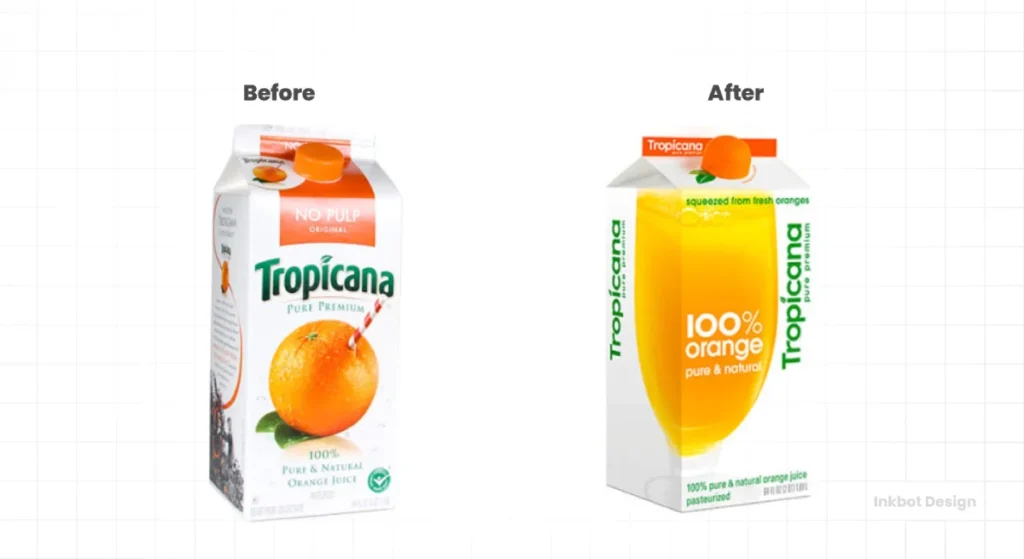
Today, the smart approach is an Iterative Migration.
You introduce the new typography in-app and let users get used to it. A month later, you convert into the new colour palette across all media. By the time the new logo arrives, users will already feel at home with the new aesthetic.
The Pivot Psychology: Protecting the User Base
Humans are hardwired to prefer the familiar. It’s a survival mechanism we’ve known since the late 80s called the ‘Status Quo Bias’.
When you change up your brand, you’re basically telling your customers that the ‘home’ they’ve grown accustomed to has been demolished. Preventing churn at this point requires building familiarity iteratively.
A 3-Step Migration Framework:
- The Hybrid Phase (Months 1-2): This is the introduction of the new typography whilst keeping existing elements, such as the logo, in place. You are ‘priming’ the user’s brain for change without triggering full-fledged alarm responses.
- The Palette Shift (Months 3-4): Gradually transition the UI colours – if you’re moving from say blue to orange, introduce the subtle accents first.
- The Final Consolidation (Months 5-6): Launch the new logo once the supporting visual language is accepted as the ‘new normal’.
Tracking Your Brand’s AI Mention Rate
Success in a startup rebrand is no longer measured solely by website traffic.
It is measured by your Mention Rate and Sentiment Polarity within generative search engines like Gemini, ChatGPT, and Perplexity.
If an AI is asked to “recommend a supply chain solution,” and it mentions your old brand name instead of the new one, your pivot has failed at the technical level.
Measuring the ‘Mention Gap’:
- Baseline Audit: Use monitoring platforms like GenOptima or Brand Radar to query major models with your industry’s primary “discovery prompts.”
- Citation Mapping: Identify which third-party sites (Reddit, industry journals, news archives) the AI is using as its primary source for your brand facts.
- Consensus Building: If different AI models give conflicting information about your name or mission, you have a Consensus Deficit. You must push verified, machine-readable facts across multiple authoritative platforms to “force” the models into a single, updated conclusion.
Recent research on generative‑AI recommendations shows that AI‑generated brand lists almost never repeat, with less than 1% likelihood of getting the same list twice for an identical prompt. To increase the odds of appearing prominently in these lists, your brand should be cited in multiple independent, high‑authority sources that AI models use to assess credibility—ideally at least three to four such references, though there is no fixed “Top 3” threshold.
The Technical Migration Blueprint
When a brand changes its name or digital location, it undergoes a Knowledge Base Reset.
Search systems and AI discovery models view a name change as a new, untrusted entity unless specific technical protocols are followed.
Failure to reconcile these data points results in a “discovery vacuum” in which your old brand is dead, and your new brand is invisible.
1. Data Point Reconciliation (Mapping the Footprint)
You must create a Global Asset Inventory. This includes every location your brand is mentioned: social profiles, investor directories (Crunchbase, Pitchbook), and news archives.
AI Response Engines derive trust from the consistency of these citations.
If your LinkedIn profile says “NewBrand” but your Companies House filing still says “OldBrand,” your digital presence’s trust score drops.
2. Implementing Structural Data Connections
To maintain your presence in AI-driven search results, you must update your organisation’s code-based markers.
- SameAs Property: Use code to explicitly state that “Brand B” is the same as “Brand A.”
- Founder Linkage: Link the individual profiles of your leadership team to the new brand to transfer “Person-based authority.”
- Location Integrity: If you have physical offices, ensure the Google Maps data is migrated, not just renamed. A rename can sometimes trigger a verification loop that hides your business for weeks.
3. The 180-Day Monitoring Phase
Technical transitions are not “set and forget.” You must monitor your discovery impressions daily for the first six months.
- Phase 1 (Days 1-30): Watch for old brand name appearances in AI summaries.
- Phase 2 (Days 31-90): Monitor for “broken link” signals in your referral traffic.
- Phase 3 (Days 91-180): Measure the rise of the new name in Direct Search Volume.
Optimising for Computer Vision and AI Clarity
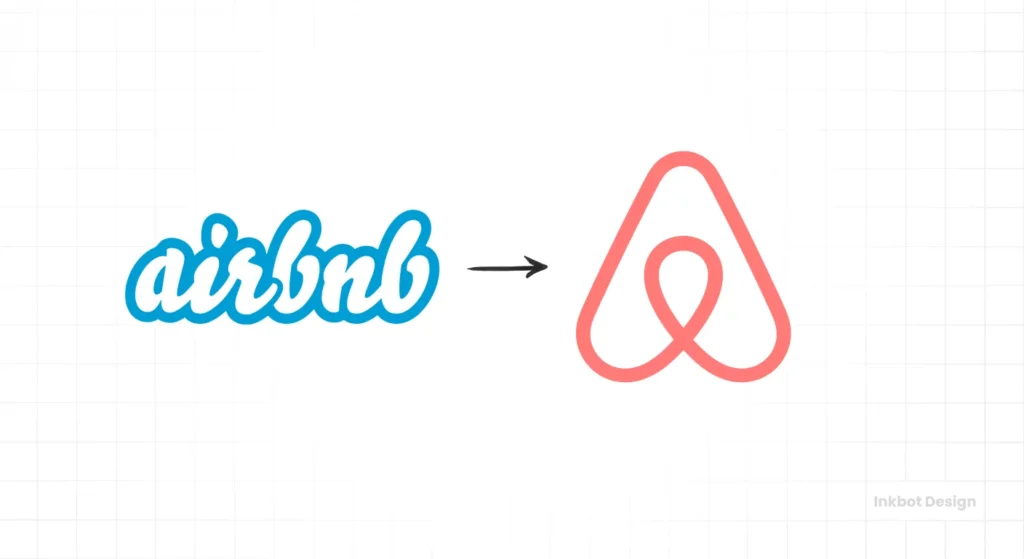
Today, your logo is processed more often by Machine Learning models than by human eyes. It appears in tiny favicon slots, AI-generated comparison tables, and social media thumbnails.
A “beautiful” logo that is too complex for an algorithm to categorise is a failure of modern design.
The Principles of High-Legibility Assets:
- Geometry over Complexity: Use clear, closed shapes. Algorithms identify circles, squares, and triangles with 99% accuracy. Abstract, “wispy” lines are often ignored or misinterpreted.
- Variable Weight Typography: Your chosen font must remain legible at 8px. This is critical for mobile discovery and accessibility compliance.
- High-Contrast Colour Pairs: Use colours that maintain their distinctiveness even when viewed through Blue Light Filters or in “Greyscale Mode.”
Evidence from visual‑perception and computer‑vision research indicates that symmetrical logos are easier for both people and AI systems to recognise, supporting stronger indexing in visual‑search engines such as Google Lens and Pinterest. For a startup, this makes visual clarity and symmetry subtle yet meaningful levers in discovery‑driven brand growth. (Source.)
The Internal Purge: Removing Legacy Artefacts
A successful brand pivot requires the total removal of old visual and verbal signals within your organisation.
If your Series B pitch deck uses the new logo but your internal product documentation or employee handbook still carries the “scrappy” seed-round aesthetic, you are maintaining Visual Debt.
This inconsistency leads to a fragmented message when employees interact with external clients or candidates.
The Liquidation Checklist:
- Software & Tooling: Update logos and colour schemes in Slack, Jira, Notion, and GitHub.
- Legal Documentation: Refresh employment contracts, non-disclosure agreements, and partnership templates with the new corporate identity.
- Sales Enablement: Audit every slide deck and case study. Old “success stories” often go un-updated, serving as a ghost of the old brand that confuses new enterprise prospects.
The Employee Adoption Curve
Research from the Chartered Institute of Personnel and Development (CIPD) in late 2025 suggests that employees take an average of four months to stop using an old company name in casual conversation.
To accelerate this, management must provide “Brand Migration Toolkits” that include pre-written email signatures, updated LinkedIn banners, and clear guidelines on the new Mission Statement.
Navigating the ‘Discovery Dip’
Every major brand pivot follows a predictable performance curve. When you change your name or domain, search engines and discovery models must re-evaluate your authority.
You will likely experience a 15% to 40% drop in impressions during the first 60 days. This is not a failure; it is a “re-indexing” phase.
The 2026 Performance Stages:
- Stage 1: The Disruption (Days 1–30): High volatility. Your old brand still appears in AI overviews, but your new brand is starting to gain “Zero-Click” visibility.
- Stage 2: The Reconciliation (Days 31–90): The discovery models begin to “bridge” the two identities. Your sameAs code and citation updates are now taking effect.
- Stage 3: The Dominance (Days 91+): If the rebrand was technically sound, your new “Institutional” identity should begin to outrank your old “Scrappy” one, specifically for high-value commercial queries.
2026 SEO research suggests that brands using structured data, such as JSON‑LD, to reconcile their canonical entities tend to recover visibility faster after migrations than those relying solely on simple URL redirects. This makes schema‑based reconciliation a quiet but powerful lever for protecting and rebuilding traffic in AI‑driven search.
Startup Rebranding in 2026
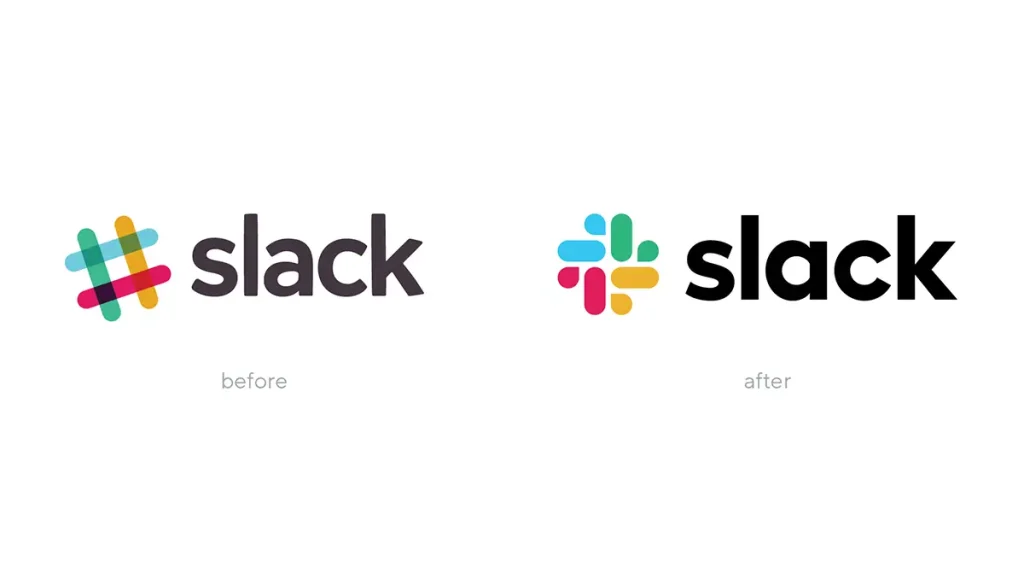
As we move through 2026, the biggest shift in rebranding isn’t visual—it’s Generative Engine Optimisation (GEO).
Branding is no longer just for human eyes; it is for the training data of Large Language Models (LLMs).
When an AI like Gemini or ChatGPT is asked for the “best fintech solution for SMEs,” it relies on a “Brand Sentiment Score” derived from thousands of digital touchpoints.
Recent updates to Adobe Firefly 3 and Canva’s Dream Lab AI have democratised high-fidelity design, meaning that “looking professional” is now the baseline, not a competitive advantage.
To stand out, brands are moving toward “High-Symmetry, Low-Complexity” marks that are easily processed by computer vision.
We are seeing a shift away from the “blanding” trend of the 2010s—where every startup looked like a Sans-Serif clone—toward Hyper-Distinctive Assets.
A notable example from 2025 is the redesign of the AI-native productivity tool, Linear.
They doubled down on a highly technical, almost brutalist aesthetic that clearly sets them apart from the “soft and friendly” look of legacy competitors like Asana and Trello.
This visual “edge” helps them rank better in AI-generated comparisons because their brand entity is more distinct and easier for models to categorise as “pro-tier.”
“Branding is a dual-track strategy: it must trigger emotional trust in humans while maintaining high entity-clarity for AI systems. Brands that successfully navigate this will dominate AI-driven discovery, while those with ‘fuzzy’ identities will be filtered out of the generative response layer.”
2026 Financial Realities: Budgeting for a Market Shift
A successful brand transition requires a capital allocation that reflects both visual and structural changes.
Mid-stage scale-ups (Series A to Series B) typically allocate 3.5% to 7% of their total funding to identity transformation.
In the UK market, the total cost of ownership (TCO) for a rebrand includes legal clearance, technical data reconciliation, and asset production.
Investment Tiers for 2026 Scale-ups:
| Expense Category | Seed Phase (Scrappy) | Scale-up (Strategic) | Enterprise (Dominant) |
| Strategy & Positioning | £2,000 – £5,000 | £15,000 – £40,000 | £75,000+ |
| Visual Identity System | £3,000 – £8,000 | £25,000 – £60,000 | £150,000+ |
| Trademark & Legal | £500 (Basic) | £10,000 – £25,000 | £50,000+ |
| Technical Migration | £0 | £15,000 – £35,000 | £100,000+ |
| Internal Launch/Culture | £0 | £5,000 – £15,000 | £40,000+ |
| TOTAL ESTIMATE | £5,500 – £13,500 | £70,000 – £175,000 | £415,000+ |
The Hidden “Execution Leak”
Research on rebranding shows that many companies waste large portions of their budgets on misaligned revisions, especially when founders prioritise look and feel over positioning.
To lock in direction early, a requirements-style document—including your target investor profile and primary competitors—should be finalised before any design work begins.
The creative‑services market shows that high‑tier design work is becoming more expensive, while generative‑design tools have compressed time‑to‑market for brand projects. As a result, the primary cost is no longer the visual execution but the strategic validation—especially global‑trademark checks in high‑risk regions like Southeast Asia and MENA.
Rebranding A Startup Yourself vs Hiring an Expert
| Technical Aspect | The Wrong Way (Amateur) | The Right Way (Pro) | Why It Matters |
| Asset Migration | Changing everything overnight. | Iterative phased migration. | Reduces user “loss aversion” and churn. |
| SEO Strategy | Wildcard 301 redirects. | 1:1 URL mapping + Schema reconciliation. | Prevents 30%–50% traffic drops. |
| Logo Design | Following current “Blanding” trends. | Creating distinctive, high-contrast assets. | Increases brand recall and AI recognition. |
| Trademarking | Checking “is the .com available?” | Multi-jurisdictional legal clearance. | Avoids catastrophic Cease and Desist orders. |
| Typography | Choosing “pretty” fonts with poor legibility. | High-readability fonts with variable weights. | Affects mobile UX and accessibility scores. |
The Verdict
Startup rebranding is the most dangerous and most necessary move a scale-up will ever make.
It is the only way to shed the skin of an “early-stage experiment” and assume the identity of a market leader.
But remember: your brand is not yours—it belongs to your customers’ memory structures.
If you destroy those structures in the name of “creativity,” you destroy your business.
The contrarian truth is that your origin story is likely a liability.
Killing your “scrappy” past self isn’t a betrayal of your roots; it’s a prerequisite for your future.
You must stop paying the Brand Debt tax and start investing in a visual and technical system that can scale to £100m and beyond.
If you’re ready to stop guessing and start building a brand that survives the 2026 market, you should explore Inkbot Design’s services and read related posts to see how we handle technical brand pivots for high-growth startups.
FAQ
Why do most startup rebrands fail?
Most failures stem from the “Big Reveal” fallacy, in which brands change too many distinctive assets at once. This triggers consumer loss aversion. According to the Ehrenberg-Bass Institute, retaining “memory anchors” like specific colours or shapes is vital to maintaining sales during a transition.
When is the right time for a startup to rebrand?
The right time is when your Brand Debt—the gap between your product’s quality and its visual perception—begins to hinder sales or recruitment. If enterprise clients or Series B investors view your “scrappy” aesthetic as a risk, you are already rebranding too late.
How much does a startup rebranding cost in 2026?
Costs vary based on the scale of the pivot, but for a mid-stage scale-up, expect to invest between £30,000 and £150,000. This includes strategy, trademark audits, visual identity, and technical SEO migration. Skimping on the audit phase usually results in much higher legal or recovery costs later.
Will rebranding help my SEO?
Rebranding can improve SEO in the long term by strengthening your brand’s identity and authority. However, in the short term, it creates a high risk. You must use the sameAs Schema and 1:1 301 redirects to ensure Google understands that the new brand inherits the old brand’s trust.
Is it necessary to change my domain name during a rebrand?
No, and you should avoid it if possible. Domain changes are the most disruptive part of a rebrand for SEO. If your current domain is “on-brand” enough to stay, keep it. Only move domains if the old name is a significant barrier to growth or has legal issues.
What is Brand Debt?
Brand Debt is the accumulated cost of using low-quality, inconsistent, or “scrappy” visual assets that no longer reflect your company’s maturity. Like technical debt in code, brand debt must eventually be “refactored” through a rebrand to allow for further scaling.
How do AI search engines handle rebranding?
AI engines like Gemini and Perplexity rely on knowledge graphs. If you rebrand, you must update all external citations (socials, Crunchbase, directories) simultaneously to ensure the LLM doesn’t see conflicting data, which could lower your “Brand Sentiment Score.”
What are distinctive brand assets?
Distinctive assets are non-verbal cues (colours, shapes, sounds, fonts) that trigger brand recall. For example, the “Nike Swoosh” or “Tiffany Blue.” A successful rebrand identifies these assets and preserves them while updating the surrounding identity.
Should I involve my customers in the rebranding process?
Directly asking customers “what they like” is often counter-productive, as they cannot envision a future state. Instead, use “Implicit Association Testing” to see which of your current assets are most distinctive. Design for their subconscious, not their conscious opinion.
How does a rebrand affect my current partnership agreements?
Most agreements require a “Notice of Change” formal letter. Ensure your legal team reviews clauses regarding “Assignability” to ensure your contracts move seamlessly to the new brand entity.
What is the ‘Memory Anchor’ in a logo?
It is the specific part of your logo that people remember when they close their eyes. For Apple, it is the ‘bite.’ If you remove the anchor during a rebrand, you lose all previous brand recognition.
Can AI design my entire rebrand?
AI can generate options, but it cannot perform a Global Trademark Audit or ensure your brand aligns with the specific psychological needs of a Series B investor. Human strategy is the “moat” that protects the brand.


