Startup Marketing: 7 Strategies to Survive the Burn Rate
Let’s get the uncomfortable truth out of the way immediately. The most dangerous lie in the entrepreneurial world is “Build it, and they will come.”
They won’t.
You can spend two years coding the most elegant SaaS platform in existence, or designing the most ergonomic chair known to man. However, if you launch it into a vacuum, you don’t have a business; you have a very expensive hobby.
According to data from CB Insights, the number one reason startups fail—accounting for 42% of failures—is a “lack of market need.” However, often the need exists; the market simply doesn’t know you are the solution.
Startup marketing isn’t about catchy slogans or buying Super Bowl ads. It is a desperate, calculated effort to gain attention in a saturated market. It is about acquiring customers for less money than they pay you (CAC < LTV) before your bank account hits zero.
As the Creative Director at Inkbot Design, I have watched brilliant founders burn through their seed rounds because they treated marketing as an afterthought—something to “sprinkle on top” once the code was pushed.
This guide is the antidote to that negligence.
- Prioritise the "Job to Be Done": interview customers to sell the painkiller, not product features.
- Focus intent-based content and bottom-of-funnel SEO to capture high-intent users, not generic trend pieces.
- Use performance marketing to validate messages quickly, but only scale when CAC < LTV and unit economics work.
- Build owned channels—email, referrals, founder brand—and obsess over actionable metrics, not vanity numbers.
What is Startup Marketing?
Startup marketing is the process of acquiring and retaining customers for a new company with limited resources, high growth targets, and often, an unproven business model. Unlike traditional marketing, which relies on established brand equity, startup marketing focuses on rapid experimentation, data-driven pivoting, and scalability.
The Core Components:
- Agility: The ability to kill a failing campaign in 24 hours.
- Growth Hacking: Prioritising creative, low-cost strategies over big-budget media buys.
- Measurement: Obsessive tracking of Unit Economics (CAC, LTV, Churn).
1. The “Jobs to Be Done” Framework (Fixing Your Persona)
Most startups start marketing with a fictional character named “Marketing Mary.” They define her as “Female, 25-34, lives in London, likes coffee.”
This is useless. Knowing someone likes coffee doesn’t tell you why they buy your software.
You need to abandon demographics and embrace Psychographics and the Jobs to Be Done (JTBD) framework, popularised by Harvard Business School professor Clayton Christensen. The theory states that customers don’t buy products; they “hire” them to perform a specific task.
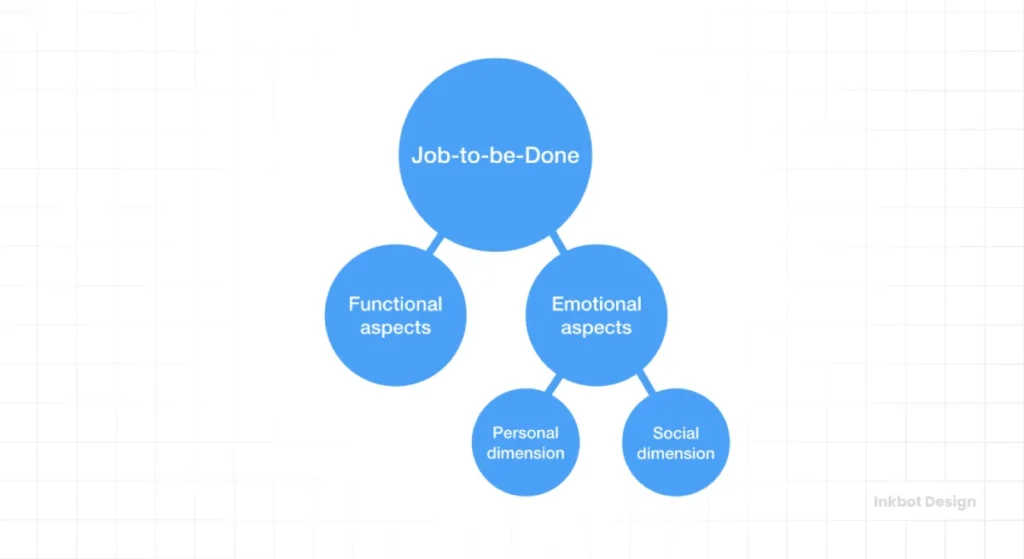
The Milkshake Mistake
Christensen’s famous example involved a fast-food chain trying to sell more milkshakes. They tweaked the flavour, the thickness, and the price. Nothing worked.
When they actually observed the customers, they realised people bought milkshakes at 8:00 AM to survive a boring commute. The “Job” wasn’t “I want a dessert”; the “Job” was “Keep me occupied and full while I drive.”
The Startup Application:
If you are selling project management software, your customer isn’t “hiring” you because they love Gantt charts. They are hiring you because they want to go home on time and stop shouting at their team.
Actionable Step:
Interview your first 10 customers. Do not ask them what they like about the product. Ask them: “What was happening in your life the moment you decided to pay for this?” That specific trigger is your marketing hook.
We often see clients fixated on their product’s features. Your customer doesn’t care about your Python backend. They care about their own pain. Sell the painkiller, not the chemistry set.
2. Intent-Based Content Marketing (The Compound Asset)
Content marketing is often sold as a “free” strategy. It isn’t. It costs time, and in a startup, time is often the most valuable currency.
The mistake most startups make is blogging about “Industry Trends.” If you are a new CRM tool, writing “The Future of Sales in 2026” puts you in competition with Salesforce, HubSpot, and Forbes. You will lose.
The Strategy: Pain-Point SEO
Instead, adopt a “Bottom of the Funnel” strategy. Write content that targets individuals who are already seeking a solution but are dissatisfied with the current options.
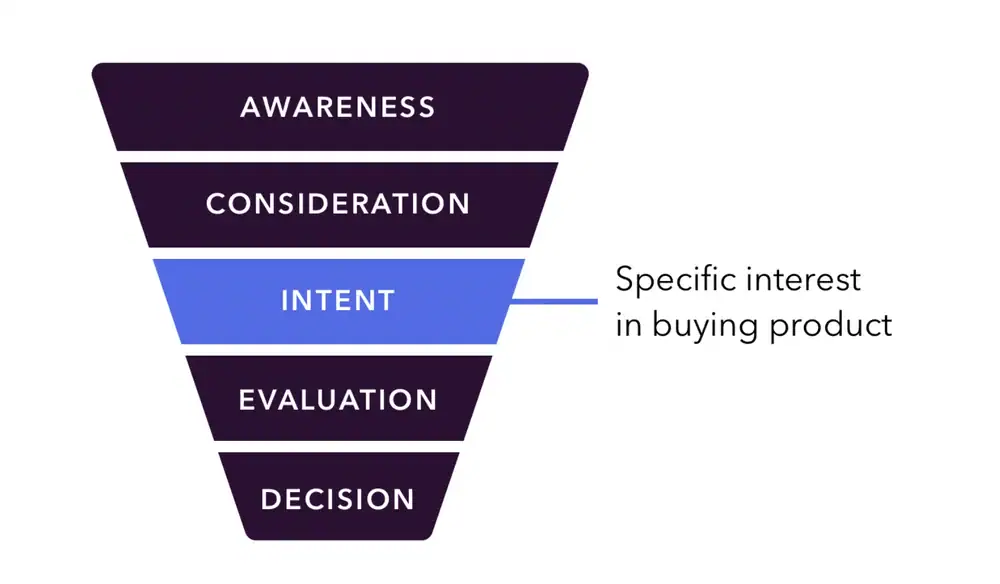
The Hierarchy of Startup Content:
- “Alternative to X” Posts: Capture traffic from your competitors. (e.g., “Best Trello Alternatives for Designers”).
- “How to [Solve Specific Problem]” Posts: (e.g., “How to automate invoices without an accountant”).
- Use Case Studies: Show, Don’t Just Tell.
Real-World Example:
Mint.com didn’t wait for its product to launch. They started a blog offering personal finance tips, specifically targeting young professionals who were unfamiliar with managing their finances. By the time their app launched, they had an email list of 20,000 people waiting to be notified. They built the audience before the product was even developed.
For a deeper understanding of how to structure this, you should review our approach to digital marketing.
3. Performance Marketing: Buying Truth, Not Just Sales
There is a stigma in the “bootstrapped” community that paid ads (PPC) are cheating. This is foolish.
In the early stages, you aren’t just using Google Ads or Meta Ads to make a profit. You are paying to validate your message. Organic traffic takes months. PPC gives you data in hours.
The “A/B Test” Velocity
If you can’t decide between two value propositions—”Save Money” vs. “Save Time”—run two ad sets with a budget of £100 each.
- Ad A: “Cut your accounting costs by 50%.”
- Ad B: “Finish your accounting in 10 minutes.”
Whichever ad gets the higher Click-Through Rate (CTR) is your winner. You have just bought a strategic direction for £200.
| Metric | The Amateur Approach | The Pro Approach |
| Goal | “Get as many clicks as possible.” | “Validate the offer and measure CAC.” |
| Budget | Set it and forget it. | Adjusted daily based on ROAS (Return on Ad Spend). |
| Targeting | Broad audiences (e.g., “Small Business Owners”). | Lookalike Audiences based on current user email lists. |
| Creative | Generic stock photos. | UGC (User Generated Content) or direct product demos. |
Warning: Do not scale ad spend until your unit economics are optimised. If it costs you £50 to acquire a customer who only pays you £30, you are scaling your own bankruptcy.
4. Email Marketing: The Only Asset You Actually Own
Social media is rented land. Algorithms change. Twitter (X) limits reach. Instagram hides posts. If your entire startup marketing strategy relies on a third-party platform, you are vulnerable.
Email marketing is the only channel where you have complete control over reach. According to McKinsey & Company, email is 40 times more effective at acquiring new customers than Facebook or Twitter.
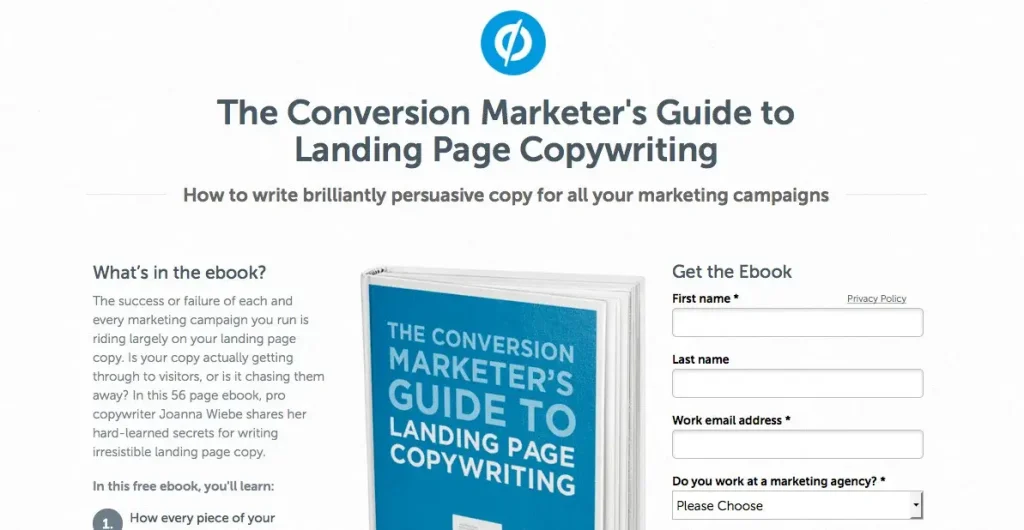
The “Lead Magnet” Exchange
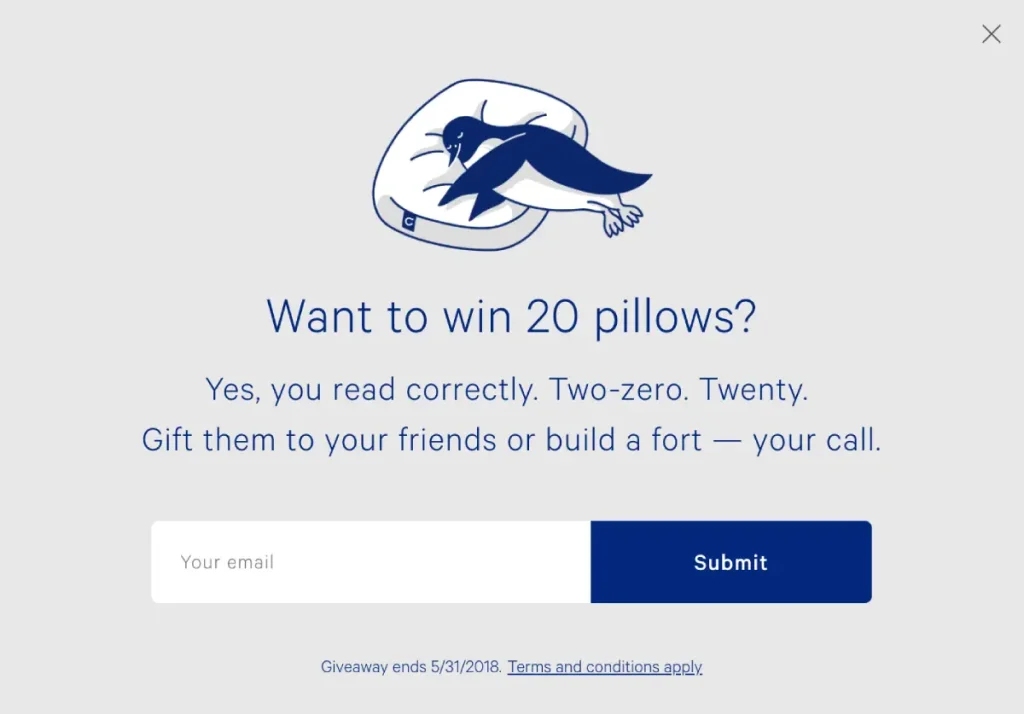
Nobody wants to sign up for your “Newsletter.” That sounds like homework. You must offer value in exchange for the email address.
- SaaS: A free tool or calculator.
- Ecommerce: A 15% discount code.
- Consulting: A white paper or industry report.
Automation is Key:
Set up a “Drip Campaign.” When a user signs up, they should receive a pre-written sequence of 5-7 emails over two weeks that educates them on the problem and introduces your solution. This runs while you sleep.
5. Referral Engineering: The “Dropbox” Effect
“Word of mouth” is great, but you cannot control it. Referral Engineering is the act of incentivising users to become your sales team.

The Double-Sided Loop
The most famous example in history is Dropbox. In their early days, they were struggling with high ad costs. They introduced a simple referral program:
- The User: “Invite a friend and get 500MB of free storage.”
- The Friend: “Sign up and get 500MB of extra storage.”
This double-sided incentive worked because it rewarded both parties. It wasn’t spam; it was a gift. Dropbox grew from 100,000 to 4,000,000 users in 15 months, largely due to this mechanic.
How to Implement:
- Identify what your users value (storage, credits, or premium features?).
- Make the referral process frictionless (One-click sharing).
- Reward both the referrer and the referee.
6. The Founder Brand: Trust Through Transparency
In 2026, people trust people more than they trust logos. The “Corporate Faceless Entity” is dead.
As a founder, you are your company’s most valuable marketing asset. Building a “Founder Brand” on platforms like LinkedIn or X allows you to bypass the scepticism people have for new companies.
Building in Public
Share your journey. Share your wins, but more importantly, share your failures.
- “We crashed the server today. Here is what we learned.”
- “Why we decided to pivot our pricing model.”
This vulnerability creates a psychological bond with your audience. They start rooting for you.

The Evidence:
Look at how Elon Musk (Tesla) or Brian Chesky (Airbnb) operate. They are the primary PR engines for their companies. While you might not have their reach, you can replicate their authenticity. When you request a quote or service, people want to know who is behind the curtain.
Personal Observation: I’ve seen startup founders hide behind a generic “info@company.com” email address because they want to look “big.” Don’t do this. Reply to your own name. “Sent from my iPhone” is actually a status symbol for a hustle-stage startup. It shows you are in the trenches.
7. Data & Analytics: The OODA Loop
The OODA Loop (Observe, Orient, Decide, Act) is a military strategy developed by Colonel John Boyd. It applies perfectly to startup marketing.

You must move faster than your competitors. To do that, you need data. But be careful of Vanity Metrics.
- Vanity Metrics: Facebook Likes, Pageviews, Twitter Followers. These make you feel good but pay no bills.
- Actionable Metrics: Conversion Rate, Churn Rate, CAC, Monthly Recurring Revenue (MRR).
The “One Metric That Matters” (OMTM)
In the early stages, focus on one metric. For Airbnb, it was “Nights Booked.” For Facebook, it was “Daily Active Users.” Identify the one number that, if it goes up, means your business is healthy. Ignore everything else until you fix that number.
The Myth: “Organic Growth is Free”
Let’s dedicate a section to debunking a pervasive myth in the startup community: that organic growth (SEO, Word of Mouth) is “free.”
It is not.
Organic growth costs time. If you spend 20 hours writing a blog post, and your hourly rate as a founder is theoretically £100, that blog post costs £2,000. If it drives zero leads, you have lost £2,000.
Furthermore, organic growth is slow. If you have a runway of six months, you don’t have time to wait for Google to index your site and rank it. You must blend organic efforts with paid acceleration. Do not be afraid to spend money to buy time.
The State of Startup Marketing in 2026
We are currently seeing a massive shift in the digital landscape.
- The Death of Third-Party Cookies: Google and Apple have tightened their restrictions on tracking. You can no longer rely on Facebook to perfectly track every user across the web. This makes First-Party Data (your email list) more valuable than gold.
- AI Saturation: The internet is being flooded with AI-generated content. Generic “ChatGPT” articles are everywhere. To stand out, your marketing must be Hyper-Human. Use video, use audio, use strong opinions. Quality and distinct voice are the new scarcity.
- Community-Led Growth: The smartest startups are moving off open social media and into closed communities (Slack groups, Discord servers). This is where the real conversations happen.
Standout Startup
Your startup is struggling because your messaging is weak and you’re invisible. This book is the ultimate marketing accelerator. It provides you with the exact roadmap used by top VC-backed startups to master the 3 Ps (personas, positioning, and personality) and build a revenue growth engine.
As an Amazon Partner, when you buy through our links, we may earn a commission.
The Verdict
Startup marketing is not about being the loudest; it is about being the most relevant to a very specific group of people.
You do not need a Super Bowl budget. You need:
- A clear understanding of the “Job” your product does.
- Content that solves immediate pain.
- A referral loop that turns users into advocates.
- The discipline to track the data that actually matters.
If you are building something meaningful, you owe it to your product to market it correctly. Do not let your hard work die in obscurity.
Would you like me to audit your current startup marketing strategy and identify your biggest growth bottlenecks?
Frequently Asked Questions (FAQ)
What is the most cost-effective marketing strategy for startups?
Content marketing focused on “high-intent” keywords (solving specific problems) combined with email capture is generally the most cost-effective long-term strategy, as it builds an owned asset rather than renting attention.
How much of my budget should go towards startup marketing?
A common rule of thumb for B2B startups is to allocate 10-20% of revenue to marketing. However, early-stage pre-revenue startups often spend up to 50% of their budget on customer acquisition to find product-market fit.
What is the difference between growth hacking and traditional marketing?
Traditional marketing focuses on brand awareness and broad reach (TV, Billboards). Growth hacking focuses on low-cost, data-driven alternatives (referral loops, viral engineering) specifically designed to grow the user base rapidly.
Why is my startup marketing failing?
The most common reason is a lack of “Product-Market Fit.” Marketing cannot fix a product that nobody wants. Other reasons include targeting the wrong audience, poor messaging, or giving up on channels too quickly before optimising them.
Is social media marketing necessary for B2B startups?
Yes, but the platform matters. LinkedIn is crucial for establishing B2B credibility and fostering effective networking. TikTok or Instagram may be less relevant unless your brand relies heavily on visual culture or recruiting young talent.
What is CAC, and why is it important?
CAC stands for Customer Acquisition Cost. It is the total cost of sales and marketing divided by the number of new customers acquired. If your CAC is higher than the Lifetime Value (LTV) of a customer, your business model is unsustainable.
How can I effectively market my startup with limited financial resources?
Focus on “sweat equity” channels, including direct sales outreach (such as cold emailing), posting valuable content in niche communities (like Reddit and IndieHackers), and leveraging your personal network for warm introductions.
How long does SEO take to work for a new startup?
SEO is a long game. It typically takes 6 to 12 months to see significant traffic from search engines. This is why startups should balance SEO with faster channels, such as PPC or outbound sales, in the early days.
Should I hire a marketing agency or do it in-house?
In the very early stages (Seed), the founder should typically lead marketing efforts to gain a deeper understanding of the customer. Once you have product-market fit and a repeatable process, hiring an agency or a dedicated Head of Marketing becomes necessary to scale.
What is the ‘Founder Brand’ concept?
The Founder Brand is a strategy that utilises the founder’s personal reputation and social media presence to drive awareness for the company. It builds trust faster because humans prefer connecting with other humans rather than faceless corporations.