Naming Agency vs Name Generator: Which Should Your Firm Choose?
A name generator produces options quickly. A naming agency turns those options into a defensible decision by testing positioning, linguistics, legal risk and long-term fit. For a professional services firm facing growth, acquisition, or repositioning, the right choice depends on the consequences—not simply on budget or creative preference.



On this page6 min left
- Which should you choose: a naming agency or a name generator?
- What a name generator actually does
- What a naming agency actually does
- When is a name generator the right choice?
- When is a naming agency worth the investment?
- The costly mistake: confusing availability with viability
- The verdict: choose by consequence, not by cost
- Questions people ask
A name generator is the right tool when you need options.
A naming agency is the better choice when a wrong name would create legal, commercial or reputational risk.
For a professional services firm preparing for growth, acquisition, or repositioning, the decision is less about cost than about consequences.
Which should you choose: a naming agency or a name generator?
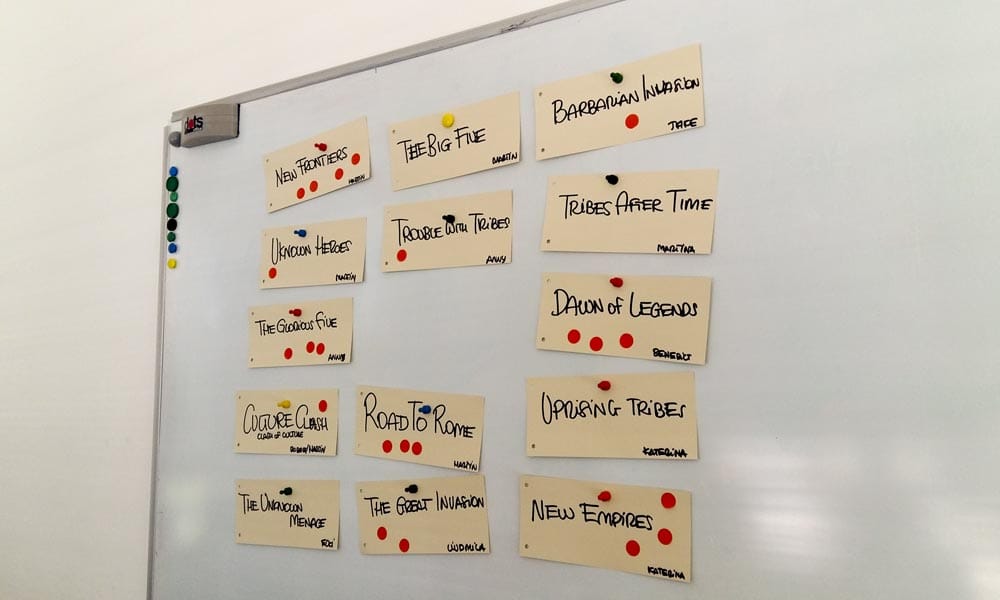
Use a name generator when you need a fast supply of working ideas for an internal project, prototype, product experiment or early brainstorm.
Use a naming agency when the name must support a firm’s market position, survive partner scrutiny, clear legal risk and remain credible through a major change.
A generator answers: “What names could we call this?”
A naming agency answers: “Which name should this business carry, and why?”
That distinction matters because naming is not only an exercise in idea generation. It is an asset-protection and positioning decision.
A name generator can produce hundreds of candidates in minutes; the USPTO reported an average of 5.6 months to first action and 11.7 months total processing time for trademark applications in FY 2025, so the difficult work begins after the ideas exist.
In short: a generator broadens the options; a naming agency reduces the risk of choosing poorly.
- A name generator is best for volume, speed and early exploration.
- A naming agency is best for strategy, filtering, stakeholder alignment and risk screening.
- A hybrid approach can work: generate broadly, then apply structured human and legal evaluation.
A name generator produces naming options quickly; a naming agency provides strategy, screening and decision support to reduce commercial, linguistic and legal risk.
What a name generator actually does
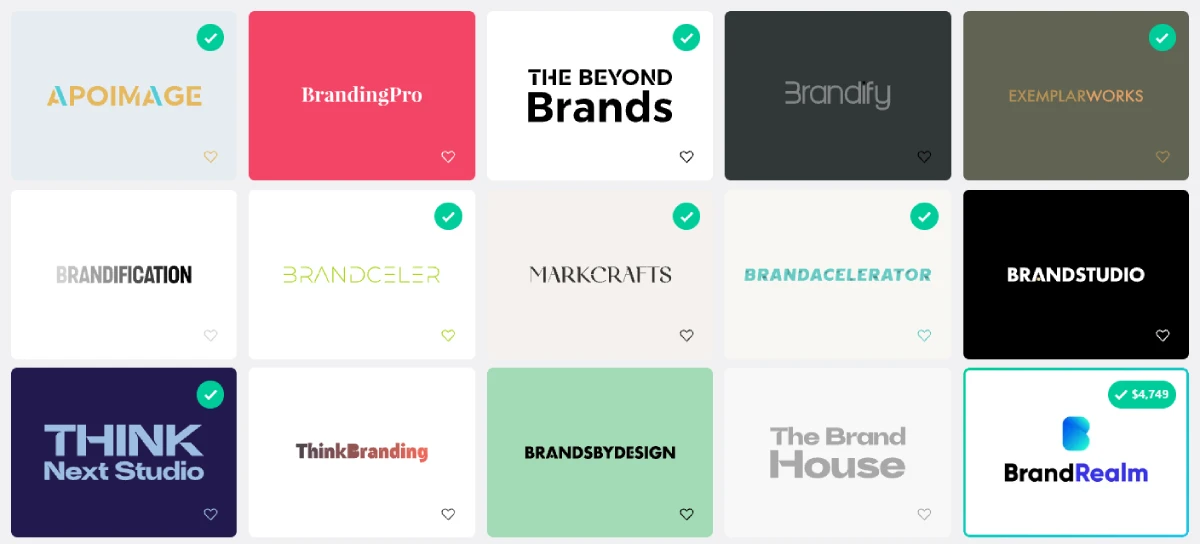
A name generator takes inputs such as keywords, sector, tone or audience and returns a list of candidate names.
Modern AI tools can respond to iterative prompts, suggest variations and, in some cases, check whether an exact-match domain appears available.
That makes generators useful at the front of the process.
They remove the blank-page problem. They can surface naming patterns you would not have considered: invented words, compound names, Latin roots, geographic references or abstract constructions.
The limitation is equally clear. A generator does not know your firm’s competitive position, partner ambitions, client fears, service-line strategy or acquisition plans.
It cannot tell you whether a name sounds credible to a general counsel, a CFO or a prospective acquirer. It produces raw material, not a decision.
AI naming has also become a sizeable market rather than a novelty. One 2026 market estimate valued AI-generated product naming at $1.16 billion in 2025, with projected growth to $3.02 billion by 2030. More businesses will use these tools. Fewer will use them well.
The practical risk is not that a generator produces a bad name. It is that a business mistakes a plausible output for a validated choice.
What a naming agency actually does

A naming agency is a decision system, not simply a source of names. Its value lies in the sequence: understand the business, define naming criteria, generate directions, filter ruthlessly, test the survivors and prepare the chosen name for legal and operational use.
For a professional services firm, that sequence usually includes:
- Positioning work: clarifying what the firm wants to be known for, who it serves and what it must signal in a crowded market.
- Creative territories: developing distinct naming directions rather than one long list of similar words.
- Linguistic screening: checking pronunciation, spelling, unintended meanings and cultural fit across relevant markets.
- Legal pre-screening: identifying obvious conflicts before external trademark counsel is engaged.
- Stakeholder management: giving partners a structured basis to approve, challenge or reject a name.
- Implementation planning: considering how the name will work across domains, pitches, proposals, recruitment and service lines.
This is where an agency earns its fee. The deliverable is not “a name.” It is a defensible decision, with the reasoning, risks and trade-offs made visible.
The most interesting recent development is not AI producing more names; it is AI helping eliminate unsuitable ones.
Pharmaphorum reported that pharmaceutical naming specialist Addison Whitney is developing Ari, an AI tool designed to generate candidates and screen and risk-stratify them against databases of existing names.
That points to the sensible division of labour: machines expand and filter; experienced humans make the strategic call.
A naming agency does not replace judgement with process. It makes judgement harder to avoid.
When is a name generator the right choice?
A name generator is the right choice when the cost of being wrong is low and can be reversed.
Use one for:
- An internal tool, pilot or proof of concept.
- A side project with no external brand investment.
- Early exploration before a formal rebrand brief is in place.
- Generating raw directions for a later strategic review.
- Creating working titles that will not appear in client-facing materials.
A generator can also be useful inside a larger naming process. Ask it for 100 candidates across several prompts, then impose criteria: distinctiveness, pronounceability, relevance, extensibility and legal plausibility.
The generator supplies breadth. Your decision framework supplies discipline.
The boundary is simple: if the name will appear on a proposal, website, engagement letter, office sign or acquisition memorandum, treat it as a strategic asset rather than a brainstorm output.
When is a naming agency worth the investment?
A naming agency is worth considering when the name must carry the business through a material change.
For a 50–200-person professional services firm, those situations are specific:
Firm scenario | Better route | Why |
|---|---|---|
A 12-partner accounting practice launching a temporary tax advisory pilot | Name generator | The name is low-risk, short-lived and unlikely to define the firm |
A 90-person law firm merging with another practice | Naming agency | Partner alignment, legacy equity, conflict risk and client recognition all need structured handling |
A consultancy repositioning from general management advice to AI transformation | Naming agency | The current name may constrain the new proposition and future service lines |
A SaaS scale-up exploring product names before customer research | Name generator | Speed matters and the name can be changed before market commitment |
A financial advisory firm preparing for acquisition | Naming agency | The name becomes part of the asset being valued and transferred |
A regional engineering consultancy entering new European markets | Naming agency | Linguistic, cultural and trademark risks rise with geography |
The common factor is not headcount. It is exposure. The more people, markets, service lines and transactions attached to the name, the more a structured process pays for itself.
Naming decisions also outlast early assumptions. According to the US Bureau of Labor Statistics’ Business Employment Dynamics programme, 34.7% of US business establishments born in 2013 were still operating in 2023.
A name chosen for this year’s service mix may need to describe a very different business in ten years.
The costly mistake: confusing availability with viability
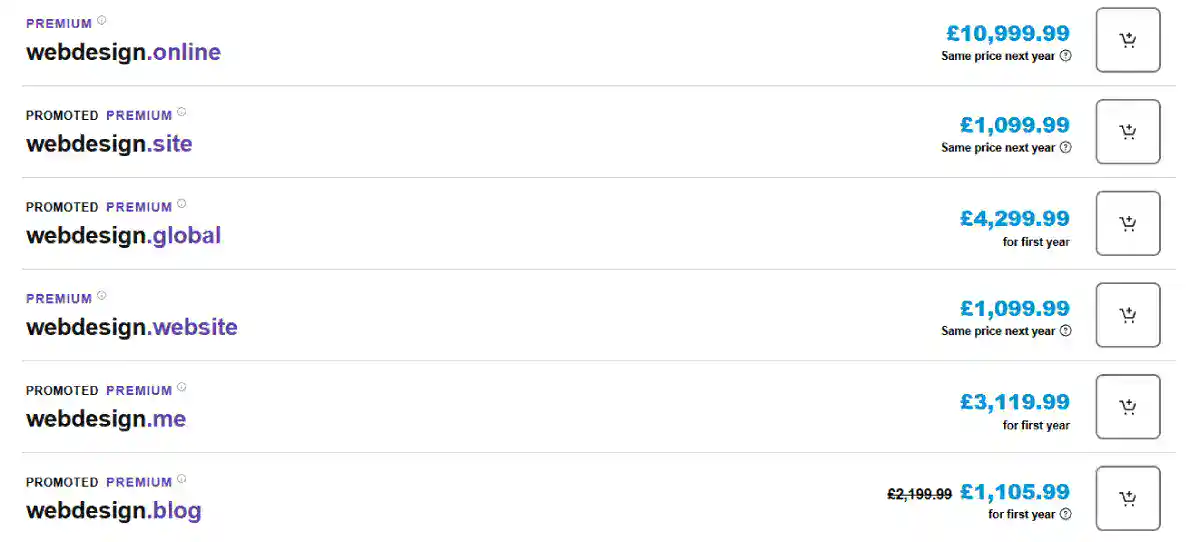
The most common naming error is treating “the domain is available” as proof that the name is safe.
It is not.
A domain can be available while the name conflicts with an existing trademark. A social handle can be free while the name is descriptive, difficult to pronounce or already associated with another firm. A name can test well with partners and still fail with clients.
Trademark demand remains strong: businesses filed more than 824,000 new trademark classes with the USPTO in FY 2025, up 7.4% year over year. More filings mean more competition for distinctive, protectable names, and more reason to screen before building a brand around a candidate.
Before committing to any generated name, complete these checks:
- Define the criteria before generating names.
- Reduce the list to five to ten credible contenders.
- Say each name aloud with a stranger; note spelling and pronunciation problems.
- Check exact-match and near-match domain availability, without treating either as clearance.
- Ask prospective clients or unbiased contacts, not only colleagues.
- Commission an appropriate trademark search before public launch.
A name also has to work in AI-mediated search, not only human memory.
Prompted Brand, a US platform launched to show companies how AI answer engines describe and recommend brands, analysed 207 AI answers across seven engines, including ChatGPT, Google AI Mode, Gemini and Perplexity.
A name is now a retrieval cue as well as a legal and marketing asset.
The verdict: choose by consequence, not by cost
A generator is a tool for producing options. An agency is a system for reducing risk. The mistake is treating naming as an idea problem when it is really an asset-protection and positioning problem.
If the name is temporary, internal or easily changed, start with a generator. If it will define a firm through growth, merger, repositioning or sale, invest in a structured naming process.
For a professional services firm, the practical next step is not to choose a name today. It is to define the criteria a strong name must meet, then decide who is best placed to test candidates against them. Inkbot Design’s brand naming process sets out that structured route from strategy to selection.
If you are unsure where your current brand is losing commercial ground, request a free Brand Equity Audit™. It identifies where the brand is underperforming and what to address next.
Questions people ask
Is a name generator good for business naming?
Yes—for early exploration. A name generator is useful for quickly producing a broad set of candidates, but it does not replace positioning work, linguistic screening, trademark checks, or stakeholder decision-making.
Can I use a name generator and then trademark the name?
Yes, but do not assume availability equals clearance. A generator may produce a name with an available domain, yet the name could still conflict with an existing trademark. Obtain appropriate legal screening before investing in launch or rebrand activity.
What does a naming agency provide that a generator does not?
A naming agency provides strategy, structured filtering, linguistic and legal pre-screening, stakeholder alignment and a reasoned shortlist. Its core value is reducing the risk of choosing a name that cannot support the business in the long term.
Should a professional services firm use AI for naming?
Yes, as part of the process. AI can broaden the options and support early screening, while partners, clients and legal advisers should inform the final decision. The useful question is where AI sits in the workflow, not whether it should be involved.
Is a naming agency worth it for a small firm?
Sometimes. If the firm is stable, locally focused and unlikely to change direction, a disciplined internal process may be enough. If it faces a merger, acquisition, market repositioning, or crowded competitive category, a structured agency process is more likely to justify its cost.