What Is a Minimum Viable Product (MVP)? Guide for Founders
Most business ideas are terrible.
That isn’t cynicism; it is a statistical reality.
According to data from CB Insights, the number one reason startups fail—accounting for 42% of cases—is a lack of market need. They build things nobody wants.
They spend months, sometimes years, polishing a “perfect” product, burning through their savings or investor capital, only to launch to the sound of crickets.
This is the expensive trap that the Minimum Viable Product (MVP) is designed to avoid.
Yet, the term has been butchered. In boardrooms and coffee shops alike, “MVP” has become a lazy shorthand for “a half-finished, buggy product we launched because we ran out of time.” That is not an MVP; that is a bad product.
If you are looking to start an online business, understanding the true mechanics of an MVP is the only thing standing between you and a very expensive hobby. An MVP is not about seeing if you can build it. It is about asking if you should build it.
- Understand your target market to effectively develop an MVP that meets customer needs.
- MVP allows testing of product concepts while minimizing costs and risks.
- Gather customer feedback to refine the product before full-scale development.
- Iterate based on user insights to ensure the product aligns with market demands.
- Launch and scale the MVP to grow user base and improve features based on feedback.
What Is a Minimum Viable Product?
A Minimum Viable Product (MVP) is a version of a new product which allows a team to collect the maximum amount of validated learning about customers with the least effort.
It is the most basic version of your concept that still delivers the core value proposition to the user. It is not a prototype (which tests technical feasibility) or a proof of concept (which tests an idea internally). An MVP is a product released to real market conditions to test a specific hypothesis.
The Three Core Components
- Minimum: It contains only the features essential to solve the core problem. No bells, no whistles, no nice-to-haves.
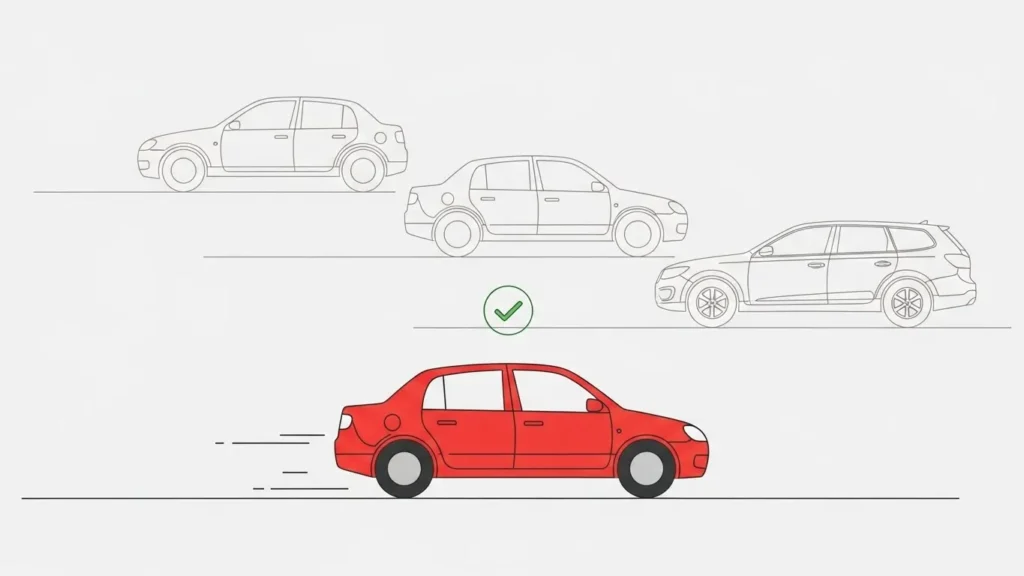
- Viable: It must actually work. It must provide value. A car with three wheels is “minimum,” but it isn’t “viable” because it doesn’t drive.
- Product: It must be something users can interact with, consume, or experience.
Consultant’s Note: Viability is where most entrepreneurs fail. They confuse “Minimum” with “Broken.” If your MVP frustrates the user or fails to solve the immediate pain point, you haven’t tested the market; you’ve just tested their patience.
The Origin Story: Why “Build It, and They Will Come” is a Lie
The concept of the MVP was popularised by Eric Ries in his seminal book, The Lean Startup . Before this methodology took hold, the standard approach to product development was the “Waterfall” model. You would write a massive business plan, raise capital, spend two years building the product in isolation, and then launch with a massive marketing campaign.
This approach worked well for building bridges or skyscrapers, where the requirements are well-defined. In software and modern business, requirements change daily.
The MVP flips this logic. Instead of executing a plan, you are searching for a business model. You accept that your initial idea is just a set of unproven assumptions. The MVP is the instrument you use to test those assumptions.
The Lean Startup
Most new businesses fail because they build something nobody wants. Stop gambling with your time and money. This book is the fix. It’s the Lean Startup framework: a system for continuously testing your vision and adapting quickly. Stop building assumptions and start delivering what customers actually want.
As an Amazon Partner, when you buy through our links, we may earn a commission.
The Feedback Loop
The engine of the MVP is the Build-Measure-Learn feedback loop.
- Build: Create the smallest thing possible to test a hypothesis.
- Measure: Collect hard data on how users interact with it (not what they claim to do).
- Learn: Decide whether to Pivot (change strategy) or Persevere (keep going).
If you skip the “Measure” phase, you are just building random features. If you skip the “Learn” phase, you are just burning cash.
Types of MVPs: You Don’t Always Need Code
One of the most dangerous myths is that an MVP requires software development. In many cases, writing code is the most expensive and slowest way to test an idea. Some of the most successful companies in the world started with MVPs that involved zero engineering.
1. The “Wizard of Oz” MVP
From the front, it appears to be a fully functioning, automated product. Behind the scenes, a human is frantically pulling the levers.
Real-World Example: Zappos.
Founder Nick Swinmurn wanted to test if people would buy shoes online. In 1999, this was a crazy idea. Instead of building a warehouse and buying inventory, he went to local shoe shops, took photos of the shoes, and posted them on a simple website. When a customer ordered a pair, he physically went to the shop, bought the shoes at full price, and posted them.
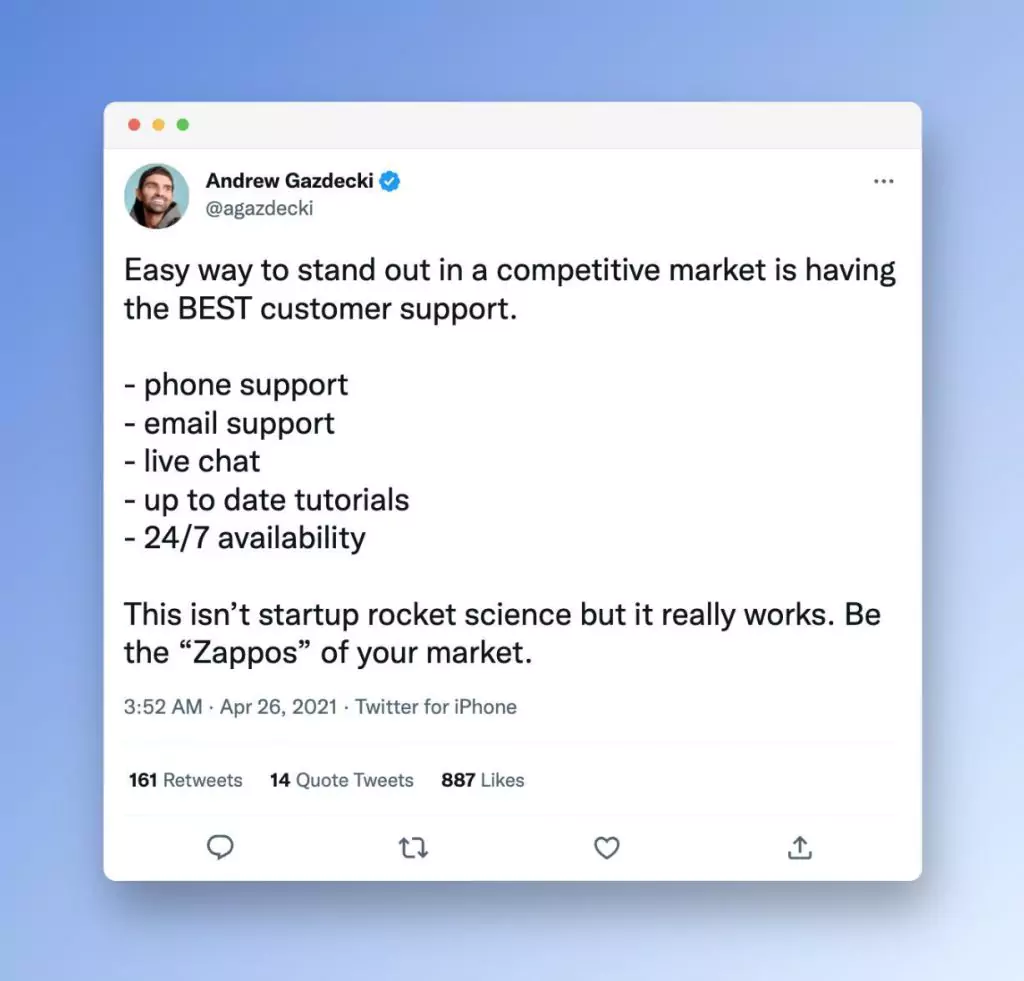
- Hypothesis: People will buy shoes without trying them on.
- Result: Validated. He didn’t make a profit on those sales, but he proved the market existed before spending millions on inventory.
2. The Concierge MVP
Similar to the Wizard of Oz, but you are upfront about the manual nature of the service. You personally solve the customer’s problem to understand the steps required before you automate them.
Real-World Example: Food on the Table (a meal planning service).
Before writing code, the founders found one customer. They went to her house, interviewed her about her food preferences, manually created a shopping list based on local store sales, and even did the shopping for her. They did this until they understood the logic so well that they could write software to replicate it.
3. The Explainer Video MVP
Sometimes, the product is too complex to “fake.” In this case, a video demonstrating the value proposition can serve as the MVP.
Real-World Example: Dropbox.
Drew Houston faced a problem: investors didn’t get it. “There are already cloud storage platforms,” they said. He couldn’t build a stable version quickly because it required complex OS integration. So, he made a 3-minute video narrated by himself, showing exactly how it worked, complete with “insider” jokes for the tech community on Digg.
- Result: The beta waiting list went from 5,000 to 75,000 people overnight. The video was the MVP.
4. The “Smoke Test” (Landing Page) MVP
This is the purest form of demand validation. You set up a landing page describing the product and drive traffic to it using Google Ads. The “Buy” button doesn’t take payment; it redirects to a “Coming Soon” page that requests an email address.
If nobody clicks “Buy,” you have just saved yourself six months of development time. If 5% of people click, you have a baseline conversion rate to show investors.
How to Build an MVP: A Forensic Process
At Inkbot Design, we often see clients wanting to skip straight to the “pretty designs” and brand identity work before they have validated their core offering. While we love design, polishing a turd doesn’t make it a diamond.
Here is the step-by-step process to building an MVP that works.
Step 1: Define the Problem, Not the Solution
Fall in love with the problem, not your solution. Your solution will change; the problem usually remains.
- Bad Problem Statement: “People need a better way to share photos.” (Too vague).
- Good Problem Statement: “Wedding photographers lose 30% of their referral business because delivering photos via USB sticks is slow and annoying for couples.”
Step 2: Identify Your Riskiest Assumption
Every business plan is built on a house of cards called assumptions. You need to find the card that, if pulled, collapses the whole thing. This is often referred to as RAT (Riskiest Assumption Testing).
- Assumption A: We can build the software. (Low risk – you can hire developers).
- Assumption B: We can market it. (Medium risk).
- Assumption C: Photographers are willing to pay a monthly subscription for digital delivery. (High Risk – this is the “Killer” assumption).
Your MVP must test Assumption C. Nothing else matters yet.
Step 3: Determine the “Minimum” Feature Set
List every feature you think you need. Now, cut it in half. Then cut it in half again.
Keep only the features that directly address the Riskiest Assumption.
| Feature | Necessary for MVP? | Reason |
| High-Res Photo Upload | Yes | Core value. |
| Client Gallery View | Yes | Core value. |
| Social Media Sharing | No | Nice to have, but not essential for testing payment. |
| Watermarking Tool | No | Photographers can watermark offline first. |
| Referral System | No | Growth feature, not value feature. |
Step 4: Build and Launch
Speed is the primary metric here. If you are embarrassed by your first release, you launched at the right time. If you are proud of it, you launched too late.
Step 5: The Metric That Matters
Forget “Vanity Metrics” like page views or likes. You need “Actionable Metrics.”
- Did they pay? (The gold standard).
- Did they use it repeatedly? (Retention).
- Did they refer a friend? (Virality).
The “Minimum Lovable Product” (MLP): A Necessary Evolution?
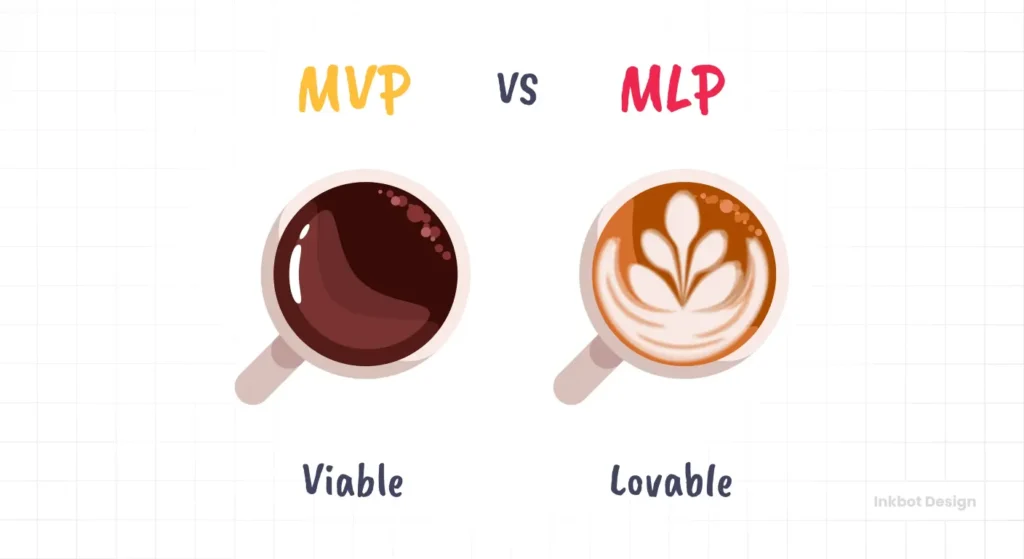
In recent years, a counter-argument has emerged: The Minimum Lovable Product.
The logic is that the market (especially in SaaS and consumer apps) is now so saturated that “barely functional” is no longer enough to capture attention. Users have high standards. If your MVP is ugly and hard to use, they won’t stick around long enough to test the core value.
This is where design becomes a competitive advantage. An MLP doesn’t add more features; it adds emotional resonance. It solves the core problem, but it does so with a level of polish and user experience (UX) that delights the user.
My take: Use the MLP approach if you are entering a crowded market (e.g., a new To-Do list app). Use the classic MVP approach if you are solving a novel problem (e.g., a cure for a disease or a radically new way to buy houses). If the pain is high enough, people will tolerate a clumsy interface. If the pain is low, you need to seduce them with design.
Common MVP Failures (And How to Fix Them)
1. The “Feature Creep” Death Spiral
Founders often think, “If I just add this one extra feature, then they will buy it.” This is a delusion. If the core value proposition isn’t working, adding a chat forum or a dark mode won’t resolve the issue.
- The Fix: strict time-boxing. Commit to a launch date and cut features to meet the date; never move the date to add features.
2. Ignoring the “Viable”
I once audited a client who built an “MVP” for a food delivery service. The app worked, but they had no drivers. Users would place orders, and they would remain pending. They had built the “Product” but not the “Viability” (the operational logistics).
- The Fix: ensure the entire service blueprint works, even if it’s manual.
3. Asking Friends and Family
Your mum will lie to you. She will say your idea is great because she loves you. This is “The Mom Test” failure.
- The Fix: only valid data comes from strangers who exchange value (money or time) for your product.
4. Falling in Love with the Prototype
You spend six months building a prototype. You launch. It fails. Instead of pivoting, you double down because of the “Sunk Cost Fallacy.” You have spent too much time to quit.
- The Fix: Keep the MVP so inexpensive that you are happy to discard it.
The State of MVPs in 2026: AI and No-Code

The landscape of building MVPs has shifted dramatically in the last 18 months. We are seeing a fundamental change in the “Cost of Verification.”
Previously, building a SaaS MVP might cost £25,000 and take three months. Today, with the rise of Generative AI and No-Code tools (like Bubble, Webflow, and Zapier), that same MVP can be built for £500 in a weekend.
The “Prompt-to-Product” Era
Tools are emerging that allow you to describe an application in plain English, and the AI generates the scaffolding, database structure, and basic UI. This means the barrier to entry is lower than ever.
However, this creates a new problem: Noise.
Because it is easier to build, there are more bad products in the market. The technical barrier is gone, which means the Market Validation barrier is higher. In 2026, you cannot differentiate by “having an app.” You can only differentiate based on deep customer insight and brand trust.
If you are building an MVP today, you should be leveraging AI to:
- Generate Landing Copy: Use LLMs to test 50 different value propositions in ads.
- Synthesise Data: Use AI to analyse customer interview transcripts for patterns.
- Code Assistance: Use AI co-pilots to write the boilerplate code for your prototype.
Why You Need Professional Guidance
While the concept of an MVP is simple, the execution is nuanced. It is emotionally difficult to strip your grand vision down to a single button. It is hard to interpret data without bias.
At Inkbot Design, we don’t just make things look pretty. We help businesses define what their “Minimum” actually is. We help you strip away the fluff to reveal the core value, and then we wrap that value in a brand identity that commands trust.
If you are struggling to define your MVP, or you have an MVP that isn’t converting, it might not be a product problem. It might be a positioning problem.
Contact us to request a quote, and let’s turn your assumptions into assets.
The Verdict
The MVP is not a product development strategy; it is a risk reduction strategy.
Every day you spend building a feature that nobody wants is a day of your life that you will never get back. The goal is not to ship software; the goal is to learn.
- Start Small: Smaller than you think.
- Test Fast: If you aren’t going live in 30 days, you are overthinking it.
- Listen Hard: The market is always right, even when it tells you your baby is ugly.
Do not let your ego get in the way of your bank account. Build the MVP. Get the data. Then, and only then, build the empire.
Frequently Asked Questions (FAQ)
What is the difference between an MVP and a Prototype?
A prototype is used to test the feasibility or usability of a product (usually internally). An MVP is used to test the viability of the business model (externally with real customers). A prototype might not work fully; an MVP must solve the core problem for the user.
How much should an MVP cost to build?
Ideally, as little as possible. Some of the best MVPs (like Dropbox’s video or Zappos’ website) cost almost nothing to develop. If you are spending tens of thousands of pounds on an MVP before you have any customer validation, you are likely taking too much risk.
Can a service business have an MVP?
Absolutely. A service MVP typically resembles a “Concierge MVP.” You perform the service manually for a discounted rate or for a small group of beta testers to refine your process, pricing, and package before scaling or hiring staff.
How long does it take to build an MVP?
This depends on the complexity, but the “Lean” philosophy suggests aiming to get something into customers’ hands within weeks, not months. If it takes 6 months, you are likely building too many features.
What happens after the MVP launch?
Once you launch, you enter the “Measure” phase. You collect data on usage and feedback. If the data is positive (Product-Market Fit), you scale and polish. If the data is negative, you Pivot—changing a fundamental aspect of the product or strategy to try again.
Is an MVP just a beta version?
Not exactly. A beta version is usually a feature-complete product that is being tested for bugs. An MVP is often not feature-complete, as it lacks many features planned for the final vision; however, it contains enough to provide value and test the core hypothesis.
Why do I need a brand identity for an MVP?
While you don’t need a massive rebrand, a basic level of professional brand identity establishes trust. If your MVP appears to be a scam, users will be hesitant to sign up, and your data will be skewed. It needs to look credible enough to be “Viable.”
What are the best metrics to track for an MVP?
Avoid vanity metrics, such as “likes.” Focus on retention (do they come back?), engagement (do they utilise the core feature?), and conversion (do they pay or abandon their email?). The Net Promoter Score (NPS) can also be useful for gauging early sentiment.
Can I sell my MVP?
Yes, and you should. Charging for an MVP is the best form of validation. If people are willing to open their wallets for an imperfect product, you have found a genuine pain point. Free users often give false positives.
What is a “Smoke Test” MVP?
A smoke test involves creating a marketing landing page for a product that does not yet exist. You run ads to the page to see if people click “Buy” or “Sign Up.” This tests market demand before you write a single line of code.