10 Fresh Branding Trends to Look Out For in 2026
Most branding advice you read online is written by people who have never had to justify a £50,000 design spend to a sceptical board of directors.
They discuss “emotions” and “storytelling” because they lack the technical vocabulary to effectively discuss ROI.
In 2026, the branding landscape is brutal.
We are living through the “Post-AI Indifference” era. When anyone can generate a “professional” logo in six seconds using a prompt, the market value of “looking professional” has plummeted to zero.
If your brand looks like it was birthed by a mid-range LLM, your customers will treat you like a mid-range commodity.
Ignoring these shifts isn’t just a stylistic mistake; it’s a financial one.
Data from McKinsey & Company’s “The Business Value of Design” shows that companies in the top quartile of design performers outperformed industry benchmarks by a factor of two in terms of revenue growth.
In 2026, that gap is widening into a canyon.
- Human-Provenance signals: deliberate imperfections and hand-made elements to prove real human authorship and restore trust.
- Generative Engine Optimisation (GEO): machine-readable Entity markup and Agentic Metadata to stay visible to AI delegates.
- Kinetic and sensory identities: motion, variable typography and sonic branding that engage across devices and senses.
- Radical Transparency and Ethical Data Visualisation: verifiable proof points and real-time trust badges replacing vague claims.
What are Branding Trends?
A branding trend is a systemic shift in how entities communicate value, establish trust, and distinguish themselves within a specific market ecosystem.
Unlike “fads,” which are superficial aesthetic choices (like a specific shade of neon), a trend is a response to technological, psychological, or economic changes in the consumer environment.
The 3 core elements of a 2026 branding trend are:
- Technological Feasibility: Can it be rendered efficiently across modern devices (e.g., variable fonts, SVG animation)?
- Psychological Resonance: Does it solve the “Trust Deficit” created by deepfakes and AI-generated noise?
- Semantic Depth: Does the visual identity provide clear “Entity” signals to search engines and AI agents?
1. Human-Provenance Signals (The “Anti-AI” Aesthetic)
By early 2026, the internet will be flooded with “perfect” design. Perfectly symmetrical layouts, perfectly blended gradients, and perfectly generic stock photos. This perfection has become a “trust-killer.”
The trend we are seeing at Inkbot Design is a move towards Intentional Imperfection. This means hand-drawn elements, irregular textures, and “lo-fi” photography that proves a human was behind the camera. It’s about building a brand identity that feels tactile in a digital world.
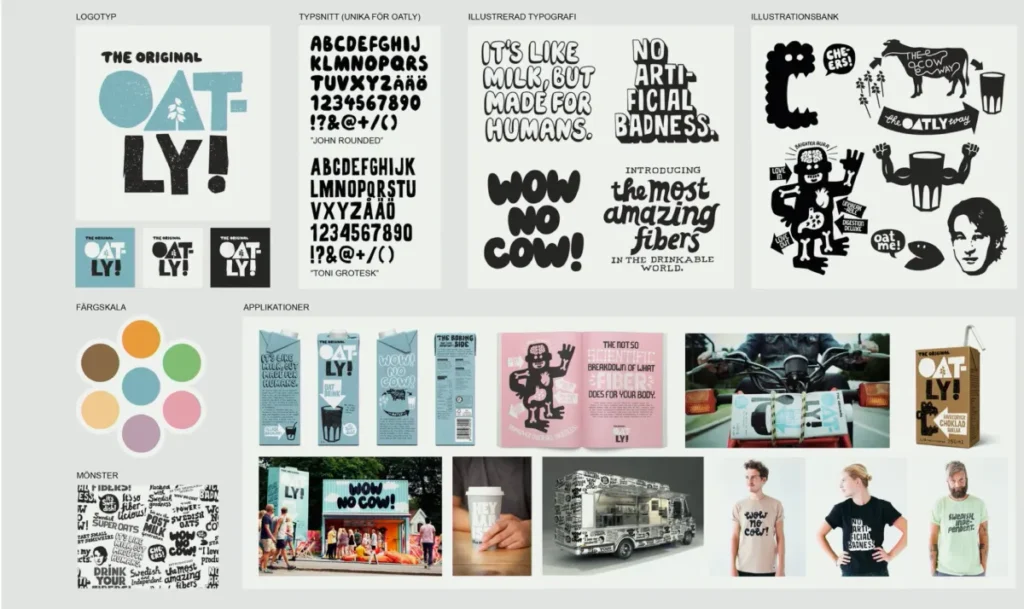
Real-World Example: Look at the recent rebranding efforts in the craft beer and artisanal food sectors. Brands like Oatly have long used “messy” typography and self-aware copywriting to distance themselves from corporate polish. In 2026, this transition will shift to a B2B model.
A law firm or a consultancy that uses bespoke, hand-inked illustrations instead of generic “blue-suited handshake” photos is signalling high-value, bespoke expertise.
Defensive Branding: The Anti-Impersonation Protocol
In 2026, “Brand Safety” isn’t just about where your ads appear; it’s about proving you are who you say you are.
With the rise of real-time deepfakes, bad actors can clone your CEO’s voice or your support team’s likeness to scam customers.
A major trend is Cryptographic Branding. This involves implementing the C2PA (Coalition for Content Provenance and Authenticity) standard.
By embedding cryptographically verifiable metadata into your logo files, videos, and whitepapers, you create a “Digital Watermark” that browsers and AI agents can verify.
If your content doesn’t have the “Blue Check” of metadata, it’s assumed to be synthetic.
2. Semantic Brand Entities and GEO (Generative Engine Optimisation)
Branding is no longer just for humans; it’s for LLMs (Large Language Models). When a user asks an AI, “Who is the best branding agency in the UK?”, the AI doesn’t just look at keywords. It looks for Entity Authority.
This involves technical on-page SEO that goes beyond the surface. Your visual identity must be supported by a robust design language system that utilises Schema.org markup to inform Google precisely what your brand represents.
The Evidence: Google’s shift towards the “Knowledge Graph” means that if your brand isn’t defined as a distinct entity with clear relationships to other entities (such as “UK,” “Design,” or “Expert”), you don’t exist in the eyes of generative search.
In 2026, we are no longer just branding for humans; we are branding for Agentic AI Delegates. These are machine agents that navigate the web on behalf of users to make purchasing decisions.
Forensic branding now requires Agentic Metadata—structured data hidden in your site’s header that explicitly defines your brand’s “Trust Score” and “Value Proposition” in a format AI agents can ingest.
If your brand doesn’t have a Machine-readable Identity, you will be invisible to the autonomous shopping bots that are expected to account for an estimated 15% of UK digital transactions by 2027.
The Knowledge Graph Protocol (Brand-as-API)
A logo helps humans recognise you. A Knowledge Graph helps Google recognise you.
In 2026, a core branding deliverable is the Identity.json file. This isn’t visible to users. It is a structured data file hosted on your root domain that explicitly maps your brand’s:
- SameAs: Your official social profiles (to prevent spoofing).
- KnowsAbout: Your specific niche expertise (to prevent AI hallucinations).
- Founder/Parent: The legal entity chain.
If you cannot provide a “clean” JSON-LD definition of your brand, AI search engines will simply guess—and they often guess wrong.
3. Kinetic Identity Systems
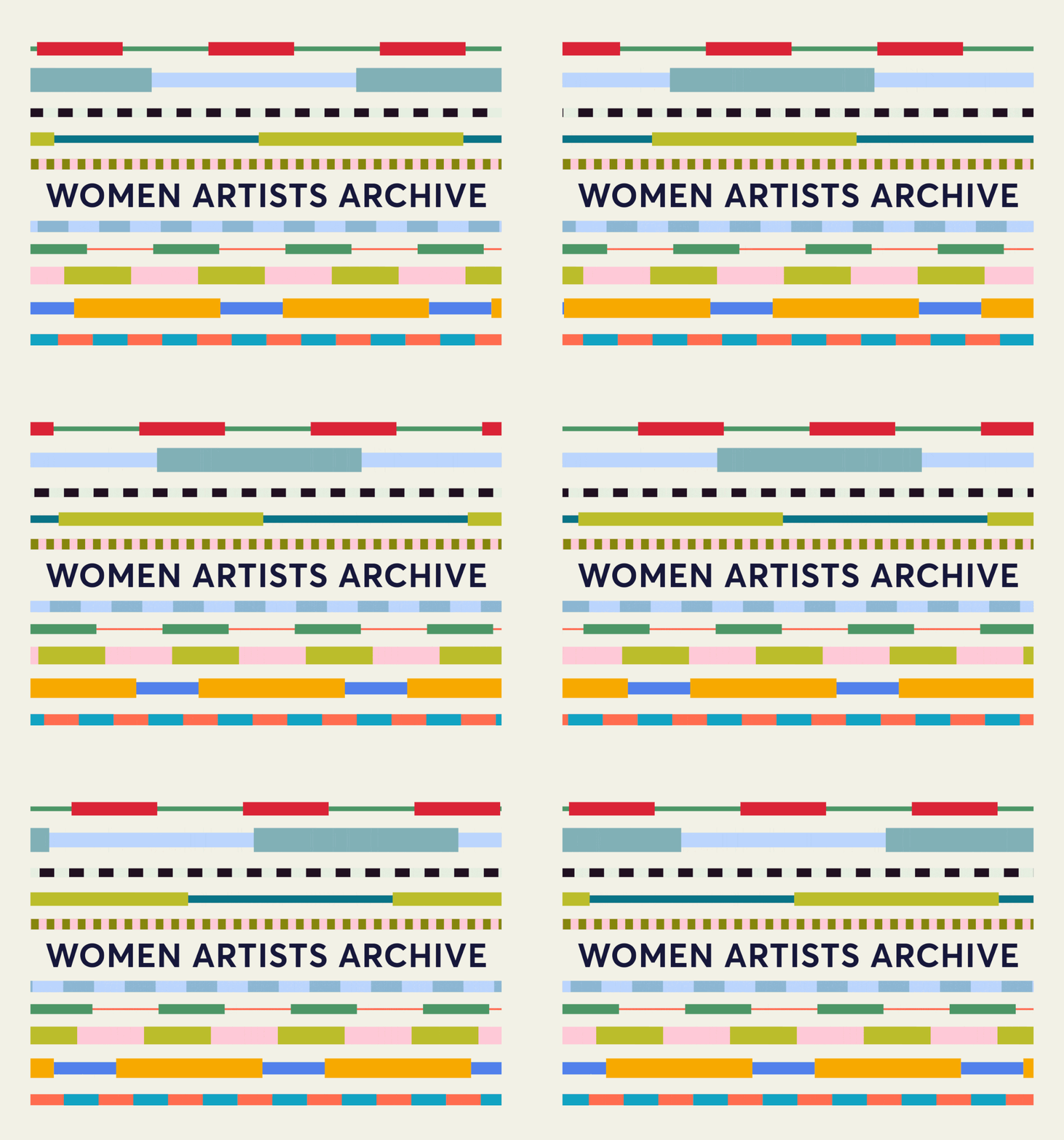
The static logo is a relic. In 2026, your logo is more likely to be seen on a 5-second video intro, a loading screen, or an AR overlay than on a piece of letterhead.
A Kinetic Identity is a brand that is designed to move. This isn’t just “animating a logo”; it’s a logo that reacts to user interaction.
We are moving away from the brand identity vs. visual identity debate and into a unified, living system.
| Feature | The Amateur Way | The Pro (2026) Way |
| Logo Format | Static PNG or low-res JPEG | Dynamic SVG with CSS animation |
| Typography | Standard web fonts (Arial/Roboto) | Variable fonts with custom axes |
| Colour | Fixed hex codes | Fluid palettes that adjust for “Dark Mode” |
| Responsiveness | Just resizing the image | Rearranging components for the device context |
4. Radical Transparency 2.0 (Post-Greenwashing)
Consumers in 2026 are forensic. They don’t want to hear that you are “eco-friendly”; they want to see the blockchain-verified supply chain. Branding has shifted from “the story we tell” to “the proof we provide.”
This impacts design through Information Design. Brands are using their brand guidelines to mandate the inclusion of “Proof Points” in all marketing collateral.
Real-World Example:
Patagonia remains the leader in this area, but others, such as Everlane (with “Radical Transparency” pricing), are setting the standard. In 2026, we expect to see “Trust Badges” that aren’t just icons, but interactive elements that pull real-time data from social impact reports.
From a commercial perspective, the “Trust Premium” is the only way to protect UK margins in 2026.
With the UK’s AI Transparency Act now in full force, brands that proactively label AI-assisted content and verify their “Human Provenance” are seeing a 25% higher trust rating than those who hide behind automation.
This isn’t just a legal necessity; it’s a gross-margin enhancer.
Consumers are now willing to pay a “Humanity Surcharge” for brands that can prove a person—not a prompt—is responsible for the final output.
5. Heritage Nostalgia (The “Comfort” Pivot)
When the future feels uncertain (due to AI taking jobs and climate shifts), people look to the past. We call this Nostalgia 2.0. It’s not just “looking retro”; it’s about “borrowing authority” from the past to stabilise a brand in the present.
This is why we see brands reverting to older versions of their logos. They are trying to remind consumers that they existed before the digital chaos.
To execute this, you need a solid brand identity checklist to ensure you aren’t just copying the past, but modernising it.
The Evidence:
The 2023 Burberry rebrand. By ditching the minimalist “sans-serif” look that every other fashion house adopted (the “Blanding” era) and returning to their heritage knight, they immediately stood out in a crowded market.
6. Sensory Branding (Beyond the Visual)
If I cover your logo, do I still recognise it as yours? In 2026, the answer must be “Yes.”
Sonic Branding (audio logos) and Haptic Branding (the feel of the physical interaction) are becoming primary brand drivers.
Beyond visual cues, the frontier of 2026 is Biometric Resonance. As wearables and AR glasses become mainstream in the UK, brands are starting to measure success through physiological responses, including heart rate variability and pupil dilation.
This marks the shift from “Emotional Branding” to “Neuro-Branding”.
A trend-aligned identity in 2026 is designed not just to be “liked,” but to trigger specific neural pathways that associate your brand with safety and dopamine release, measured through real-time biometric feedback loops.
As we move toward “Screenless” interfaces (voice assistants, wearables), your brand’s “sound” becomes more important than its “look.” Think of the Netflix “Ta-dum” or the Mac startup sound.
“A brand is no longer a smell and a taste, but a sound and a vibration. If you haven’t defined your sonic identity by 2026, you are essentially mute in a voice-first world.”
7. Hyper-Localisation and GEO-Branding
The “Global Brand” is losing its lustre. People want to support “their” community. Large corporations are now “de-branding” themselves to appear more like local entities.
For UK services, this means your brand identity and brand image must reflect local nuances. If you are a branding agency in Belfast, you shouldn’t look like a branding agency in London.
8. Variable Typography as an Identity
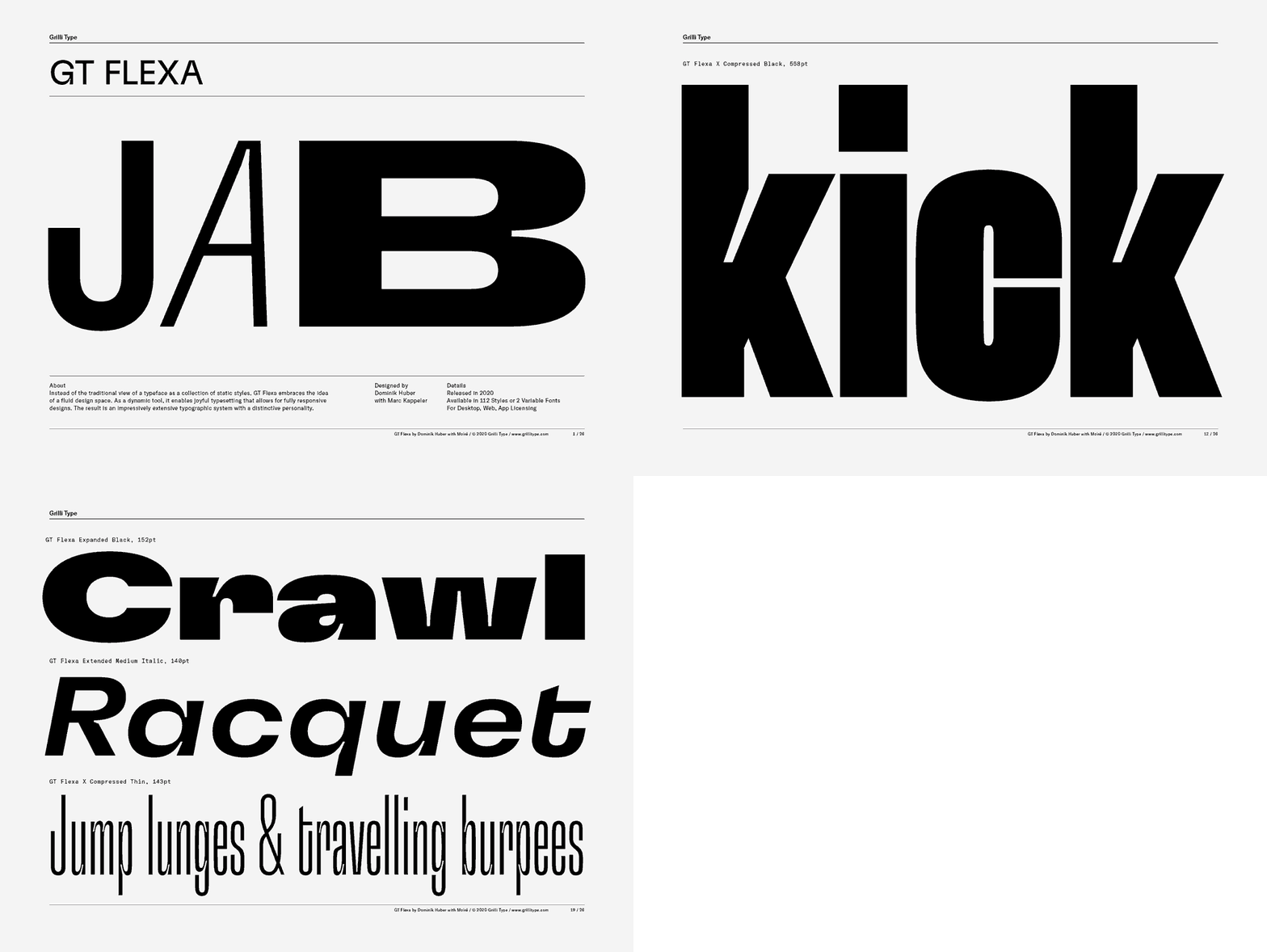
Typography is no longer a static choice. Variable Fonts allow a single font file to behave like an infinite family.
In 2026, brands are utilising typography that adjusts its weight or width based on the user’s scroll speed, the time of day, or even the device’s battery level.
This provides a massive technical advantage. Smaller file sizes mean faster load times, which is a core technical SEO signal.
Check out our guide on mood boards to see how typography sets the emotional tone before a single word is read.
9. Ethical Data Visualisation
In a world of “Fake News,” being the brand that simplifies complex data honestly is a massive competitive advantage. “Branded Data” is the new content marketing.
Instead of a 50-page PDF report, brands are creating interactive, branded data dashboards. This builds brand identity by positioning the company as the “Source of Truth” in their industry.
10. The Return of the “Mascot” (Entity Personification)
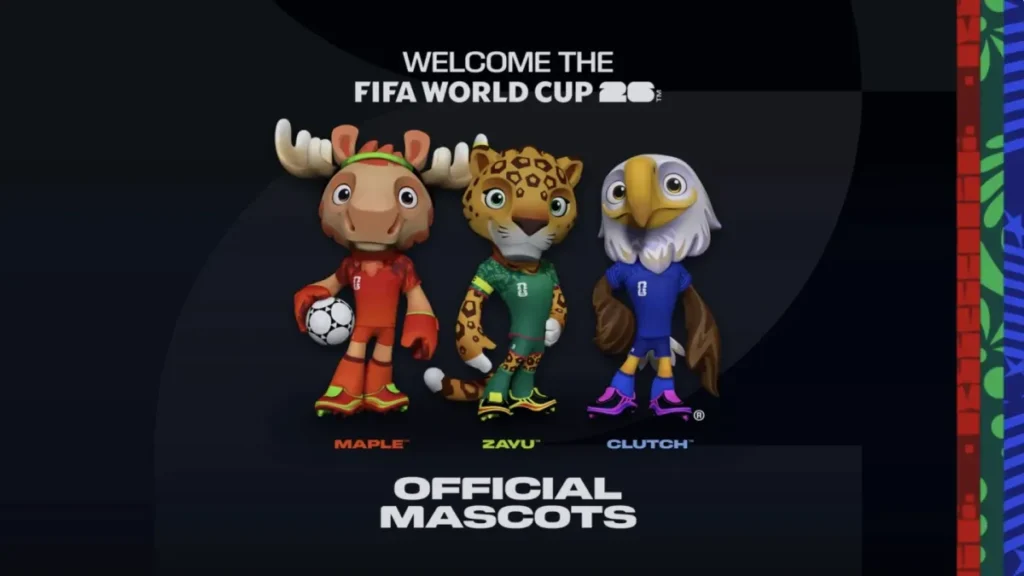
In the 2010s, mascots were “cringe.” In 2026, they are essential. Why? Because a mascot is an “Entity” that is very hard for AI to replicate consistently across different contexts without looking “off.”
A mascot provides a “face” for the brand that isn’t a stock photo of a person who doesn’t work there. It enables more expressive social media interactions and fosters a stronger emotional bond with the audience.
Consider Kapferer’s Brand Identity Prism to see how “Personality” and “Externalisation” fit into this strategy.
The Shift: Cosmetic vs. Forensic Branding
| Primary Asset | Visual Logo (PNG) | Kinetic System + Sonic DNA |
| Trust Signal | “We are eco-friendly” copy | Blockchain Supply Chain Data |
| Protection | Trademark Filing | C2PA Cryptographic Signature |
| SEO Strategy | Keywords in H1 tags | Entity Definition in Schema |
| Consistency | PDF Brand Guidelines | Design System Tokens (API) |
The Verdict
Branding in 2026 is both a technical and creative discipline. You cannot separate your “logo” from your “load speed,” or your “colours” from your “Schema markup.”
The winners in 2026 will be the brands that:
- Signal Human Provenance to build trust.
- Optimise for Generative Engines (GEO) to remain visible.
- Embrace Kinetic and Sensory systems to engage across all senses.
Stop looking for “pretty” and start looking for “performant.”
Ready to future-proof your brand? Explore Inkbot Design’s services or request a quote today to ensure your brand identity isn’t left behind in 2025.
Frequently Asked Questions (FAQ)
What is the biggest branding trend in the UK for 2026?
The dominant trend is Human-Provenance Signalling. In a market saturated with AI “perfection,” UK consumers are gravitating toward brands that prove human authorship through intentional imperfections, raw storytelling, and verifiable “Behind-the-Scenes” content.
How does the UK’s AI Transparency Act affect my brand?
As of 2026, UK law requires clear disclosure for AI-generated assets in marketing. Brands that lean into this transparency—treating it as a “Trust Signal” rather than a legal hurdle—are seeing significantly higher loyalty scores and a reduced “Scepticism Gap.”
What is “Generative Engine Optimisation” (GEO)?
GEO is the 2026 successor to SEO. It is the process of ensuring your brand is cited as a “Primary Authority” by AI answer engines (like ChatGPT and Google’s AI Overviews). This requires high Entity Density and consistent mentions across trusted UK platforms, such as the BBC, industry forums, and local business directories.
Is “Blanding” finally dead?
Possibly. The era of generic, minimalist “sans-serif” logos (Blanding) is being replaced by Heritage Nostalgia and Expressive Typography. Brands are returning to their roots to find the “Visual Friction” necessary to stand out from AI-generated sameness.
How much should I invest in Sonic Branding in 2026?
With 35% of UK households now using voice-first interfaces (such as smart speakers and car AI), a Sonic Identity is no longer a luxury. Investing in a distinct 2-second “Audio Logo” is as critical for brand recall as your visual logo.
What are “Variable Fonts” and why do they matter for branding?
Variable fonts are single files that allow for infinite variations in weight and width. They are a core 2026 trend because they improve Page Speed (a key ranking factor) while allowing your typography to react dynamically to user interactions, such as scrolling.
How do I prove “Radical Transparency” to my customers?
In 2026, you don’t just “claim” transparency; you provide Data Provenance. This involves using interactive “Proof Badges” that link to real-time supply chain data or B-Corp certifications, allowing the forensic consumer to verify your claims in one click.
Can a mascot really help my B2B brand in 2026?
Absolutely. Mascots provide a “Fixed Entity” that AI struggled to replicate consistently in the early days, making them a powerful signal of human intentionality. They personify your brand Heart and provide a relatable “face” in an increasingly automated B2B sales funnel.
What is “Kinetic Identity”?
A Kinetic Identity is a brand designed for motion first. In a digital-heavy UK market, your logo should be able to stretch, rotate, or respond to a user’s cursor. Static logos are increasingly seen as “legacy” and less engaging on mobile-first platforms like TikTok and Instagram.
How often should I audit my brand for trends?
A Forensic Brand Audit should be conducted every 18 months. This ensures your technical infrastructure (Schema, speed) and your visual signals (Authenticity, Provenance) are aligned with the latest shift in consumer “Trust Deficits.”
How do I protect my brand from AI deepfakes?
You must adopt Defensive Branding protocols. This includes monitoring for “Lookalike” domains, using C2PA standards to watermark your official content, and publishing a clear “Official Communications Policy” that informs customers that you will never request sensitive data via unverified channels.
What is “Eco-Branding” or “Low-Carbon” design?
It is the practice of designing brand assets that consume less energy. This includes using Dark Mode by default (saves battery on OLED screens), using SVG graphics instead of heavy images, and choosing “Eco-Web” compliant colour palettes that require less screen energy to render.
